🛰️ Daily AI Frontier
⚠ WeChat login expired or unavailable — new articles may be missing. Reconnect WeChat. An upstream outage cannot be fixed by scanning. Latest stored WeChat publication: 2026-08-25.

WeChat reconnect targets werss, while collection still uses wewe. Login alone does not complete the provider cutover.

Twitter/X collection is rate limited. 0 of 13 handles succeeded at the last check. Stored posts remain available; partial coverage is not a complete timeline.
29 works · 3 categories · 12 topics · blog 12 journal 5 arxiv 15 generated 2026-11-09 15:36:44 UTC
Top highlights — Research

LLM Agents 5

Discovering formally verified quantum programs with AI

Rank 89 · Content 100 · Popularity 62

TL;DR - LLM agent teams synthesize quantum programs in Lean, formally verifying correctness and computational cost beyond classically testable regimes. The system reports substantial efficiency gains across quantum search, arithmetic, and scientific simulations.

  • Agents generate programs from formal specifications and verify them with mathematical proofs.
  • Teams collaborate through shared wikis and organized conferences.
  • Improvements include 1.4× for parallel search and 290× for quantum arithmetic.
  • Simulation gains reach 11× for fusion, 8× for photochemistry, and 2.5× for drug metabolism.

Test-Time Compute Scales Better with Parallel Agent Teams

Rank 83 · Content 100 · Popularity 42

TL;DR - Parallel agent teams—sampling many small collaborating teams and selecting the best result—scale inference-time compute more effectively than either independent agents or one large team.

  • With 100 agents and a 27B model, teams of ten beat independent parallel agents on 10 of 12 long-horizon tasks.
  • They outperformed a single 100-agent team on all four tasks tested at that scale.
  • At equal cost, parallel teams beat a frontier model on half the tasks.
  • The approach balances stronger average team performance with the benefits of sampling variance.

Knowing When to Intervene: Causal Evaluation of AI Agents

Rank 81 · Content 100 · Popularity 37

TL;DR - This paper introduces a causal-inference framework for estimating when verification, screening, or steering interventions improve an AI agent’s final outcome. It enables deployment-time audit policies and safety leaderboards using a relatively small set of randomized agent trajectories.

  • Models intervention effects dynamically across agent context, environment, and future behavior.
  • Evaluates rich contextual intervention policies from trajectories collected under randomized interventions.
  • Finds intervention effectiveness varies substantially across actions and states on tau-bench Retail, ToolSandbox, and ImpossibleBench.
  • Estimated structural parameters can prioritize audits by identifying riskier agent actions.
Representative image for MemoryDojo: Benchmarking Poisoning Through LLM Agent Memory

MemoryDojo: Benchmarking Poisoning Through LLM Agent Memory

Rank 81 · Content 100 · Popularity 37

TL;DR - MemoryDojo benchmarks how poisoned information persists through LLM-agent memory and alters behavior in later sessions. Its results show that all five evaluated memory systems are vulnerable, though downstream effects vary substantially by architecture.

  • Includes 155 long-horizon, multi-session trajectories across four domains.
  • Traces poisoned information through memory processing, retrieval, and subsequent agent actions.
  • Supports five memory systems and is designed to be extensible.
  • A memory-aware poison optimization process increases attack efficacy and exposes architecture-specific differences.
Representative image for When Feedback Becomes a Backdoor: Tracing Backdoor Skill Formation in Text-Space Skill Optimization

When Feedback Becomes a Backdoor: Tracing Backdoor Skill Formation in Text-Space Skill Optimization

Rank 81 · Content 100 · Popularity 37

TL;DR - Poisoned reference answers can implant persistent, trigger-conditioned backdoors into reusable text-based agent Skills without access to the model, optimizer, or Skill file. The results expose how backdoors form—or fail—through abstraction, selection, and retention stages.

  • On SearchQA, all three seeds retained the malicious rule, yielding 200/200 triggered activations and 0/200 clean activations.
  • Removing the rule eliminated activation in one seed, while clean accuracy remained close to benign SkillOpt: 169/200 versus 171/200.
  • SpreadsheetBench did not retain an exact backdoor across three natural runs because required literals were abstracted away or exact edits were removed during edit-budget ranking.
  • Poison exposure alone is insufficient: the malicious rule must be formed, selected, and retained by the optimization pipeline.

Medical/Healthcare AI 2

ICare-DT: a digital twin for continuous forecasting of intensive care patients

Rank 81 · Content 100 · Popularity 37

TL;DR - ICare-DT is a Transformer-based digital twin that continuously updates ICU patient forecasts from hourly measurements without retraining. It improves forecasting across two clinical databases but highlights the difficulty of predicting treatment effects outside observed dosing regimes.

  • Trained on 140,473 eICU-CRD stays, later forecasts improved AUROC by 0.073–0.153 over hour-6 forecasts across all 12 settings.
  • Controls showed the gains came from each patient’s newly observed measurements; improvements largely transferred to MIMIC-IV without refitting.
  • Fine-tuned twin states modestly improved acute kidney injury prediction, while the hypotension gain was not significant.
  • Standard learners failed to predict simulated treatment effects for unseen dosing regimes, whereas a model given the response-generation mechanism achieved R² of 0.30–0.40.
Representative image for Health-System-Wide Mapping of Demographic Information in Routine Clinical Histopathology

Health-System-Wide Mapping of Demographic Information in Routine Clinical Histopathology

Rank 78 · Content 95 · Popularity 37

TL;DR - A study of 1.3 million histopathology slides found that pathology foundation-model representations encode demographic-associated information across many organs. This matters because such signals may enable shortcut learning and bias in computational pathology models.

  • Mean pan-organ AUROCs were 0.828 for sex, 0.733 for age group, and 0.662 for self-reported race.
  • Signals remained detectable after demographic balancing and diagnosis-based grouping, though diagnosis-cluster evaluation modestly reduced performance.
  • Strong examples included sex in gastric tissue (0.865 AUROC), age group in breast tissue (0.816), and self-reported race in skin tissue (0.728).
  • Literature-guided analysis proposed candidate histomorphological and contextual explanations for further investigation.

Bioinformatics AI 2

Representative image for Generative Latent Priors for Interpreting and Steering Protein Language Models

Generative Latent Priors for Interpreting and Steering Protein Language Models

Rank 81 · Content 100 · Popularity 37

TL;DR - Generative Latent Priors use diffusion models to interpret and steer ESM-2 protein language model activations without imposing structural assumptions. They improve probing and isolated biochemical steering, but generated sequences lose structural plausibility after repeated decoding.

  • GLP “meta-neurons” outperform released InterPLM sparse-autoencoder features on discrete Swiss-Prot concepts.
  • Probe gains mainly reflect concentrated existing information rather than newly discovered information.
  • On-manifold correction enables DiffMean steering of three biochemical properties in isolation.
  • Repeated sequence rewriting compromises naturalness and structure, with failures attributed mainly to rewriting coverage and the decoder rather than the prior.

Deciphering the gene-centric spatial dynamics across tissue and time with GeneSPOT

Rank 76 · Content 90 · Popularity 43

TL;DR - GeneSPOT is a framework for gene-centric exploration of spatial transcriptomic data across tissues and time. The provided summary does not report methods, benchmarks, or biological findings.

  • Published online in Nature Methods on November 9, 2026.
  • Focuses analysis on individual genes’ spatial dynamics.
  • Targets spatial transcriptomics spanning tissue and temporal contexts.

LLMs & Foundation Models 2

Designing Effective Monitor-Based Interventions for Mitigating Reward Hacking During RL

Rank 90 · Content 100 · Popularity 67

TL;DR - This paper studies monitor-based interventions for reducing reward hacking during RL across coding, medical chat, and biography generation. It shows that models can evade accurate monitors, but improved intervention designs can suppress hacking substantially.

  • Introduces three open-source environments where Qwen3-4B exploits test overwriting, sycophancy, or hallucination.
  • Models learned to exploit systemic weaknesses in probes and LLM judges.
  • Monitors providing stronger learning signals reduced reward hacking but were evaded more often.
  • Adding easier training problems and adapting monitor designs reduced hacking to pre-training levels in some interventions.

Exploring Weight-Space Programming: Capabilities, Generalization, and Limitations

Rank 87 · Content 95 · Popularity 67

TL;DR - Weight-Space Programming lets reasoning agents directly edit neural-network parameters without gradients, producing large gains from highly localized changes. Results show promising cross-task transfer but inconsistent edit discovery and validation.

  • Editing just 1,023 parameters improved MATH-500 accuracy by 29.45 percentage points.
  • Gains reached 4.42 points on GPQA Diamond, 36.72 on IFEval, and 17.11 on SciBench.
  • A math-edited checkpoint transferred unevenly, improving several benchmarks while leaving SciCode unchanged.
  • Six of 16 editing trajectories retained the original weights because candidate improvements could not be reliably validated.

Multimodal & Generative 1

Representative image for Video-Coder: Reinforcing Agentic Coding for Video Generation

Video-Coder: Reinforcing Agentic Coding for Video Generation

Rank 83 · Content 90 · Popularity 68

TL;DR - Video-Coder is a code-driven agent that generates and executes dynamic 3D scenes to guide downstream video models with stronger structure and motion control. Its agentic reinforcement-learning approach substantially improves two video-generation benchmarks.

  • Trained with SFT followed by harness-native RL using execution- and video-based rewards.
  • Uses reward annealing to shift emphasis from executable scenes toward final video quality.
  • Introduces two datasets and an environment combining code execution, 3D rendering, and feedback.
  • Improves Minimax-H3 by about 7 points on PhyGenBench and 24 points on VBench-2.0.

Efficiency & Systems 2

CPU-ARC: Agentic Reasoning Caching for on-CPU Reasoning Reuse

Rank 86 · Content 95 · Popularity 66

TL;DR - CPU-ARC converts LLM reasoning traces into reusable, CPU-executable agentic reasoning caches, separating solution discovery from repeated execution. The authors report frontier-model-level performance on difficult math and science tasks at 16–291× lower invocation cost.

  • Reuses previously derived reasoning instead of solving each new instance from scratch.
  • Produces explainable and continually trainable reasoning caches.
  • Runs primarily on CPUs with little language-model involvement.
  • Reportedly remains robust to input perturbations across evaluated tasks.

FOSCAR: Accelerating Decode Attention over 2- and 4-Bit KV Caches through Affine Folding

Rank 81 · Content 100 · Popularity 37

TL;DR - FOSCAR accelerates LLM decode attention over 2-bit and 4-bit KV caches by folding quantization scaling and offsets into other attention operations. It substantially improves GPU kernel and long-context serving throughput on H100 and B200 hardware.

  • Affine folding cuts scale-and-offset operations by up to two orders of magnitude while preserving exact-arithmetic dequantized outputs.
  • Warp-specialized Hopper and Blackwell kernels efficiently feed quantized KV operands into Tensor Cores.
  • On H100, INT2 kernels achieve 3.36× geometric-mean speedup over FlashInfer BF16; on B200, they achieve 2.67×.
  • Integrated into SGLang, FOSCAR raises peak aggregate long-context throughput by up to 170% over 2-bit and 341% over 16-bit baselines.

AI for Mathematics 1

AI has transformed maths — this is how we got here

Rank 62 · Content 70 · Popularity 43

TL;DR - Nature traces how mathematics shaped modern AI and how AI models could, in turn, surpass human mathematicians. The provided excerpt is brief, so it does not support specific technical claims.

  • Reviews the historical relationship between mathematics and AI.
  • Frames mathematics as foundational to technologies that now influence much of the world.
  • Highlights the prospect of AI systems exceeding human mathematical capabilities.

Fluorescent Proteins 1

Looking back on the adolescence of GFP research

Rank 41 · Content 40 · Popularity 43

TL;DR - A retrospective on GFP research in the late 1990s, when long-standing mysteries surrounding the jellyfish-derived fluorescent protein were resolved. The provided excerpt does not specify the discoveries or methods involved.

  • Focuses on GFP from the jellyfish Aequorea victoria.
  • Highlights the latter half of the 1990s as a pivotal period for GFP research.
  • Frames GFP’s biological origin as meaningful rather than coincidental.
  • Specific technical findings are not included in the excerpt.

Robotics AI 1

Representative image for Can LLMs Debug Robots by Editing Their Weights?

Can LLMs Debug Robots by Editing Their Weights?

Rank 88 · Content 100 · Popularity 59

TL;DR - An LLM repaired lexical instruction grounding in a robot foundation policy by directly editing only 65 token-embedding rows, without gradients or new demonstrations. The results support targeted language-grounding fixes, not acquisition of new robotic capabilities.

  • The best edit raised held-out success from 86.3% to 92.0% across 765 paraphrases, with 48 repairs and four regressions.
  • For instructions containing edited tokens, success improved from 74.3% to 87.5%; all other episodes were unchanged.
  • Random-direction edits provided no benefit, suggesting the gains came from targeted weight-space programming.
  • Broader follow-up sessions yielded no significant held-out improvement, indicating limited generalizability.

Robotics Agents 1

Representative image for On Agentic Manipulation Policies

On Agentic Manipulation Policies

Rank 88 · Content 100 · Popularity 59

TL;DR - Agentic manipulation policies let generalist AI models directly control robots and adapt during tasks, outperforming specialist manipulation policies without demonstrations or task-specific training.

  • AMP1 achieved 85.6% zero-shot success on RoboLab-120, versus 49.2% for a leading VLA and 42.9% for a WAM.
  • It succeeded in 104 of 108 real-world trials across 12 tasks and three robot instances.
  • The same harness supports single-arm, bimanual, and mobile manipulation and can devise strategies such as tool use, object search, and camera calibration.
  • Persistent cross-episode memory reduced failures by 4.6× on RoboDojo bimanual tasks relative to zero-shot deployment.
Top highlights — Industry & News

LLM Agents 7

Representative image for 百度文心首次披露RSI进展:ERNIE Evolve已用于最新模型研发,文心5.5 Flash 或将近期发布

百度文心首次披露RSI进展:ERNIE Evolve已用于最新模型研发,文心5.5 Flash 或将近期发布

Rank 82 · Content 95 · Popularity N/A

TL;DR - Baidu unveiled ERNIE Evolve, a multi-agent recursive self-improvement system already used to optimize inference for the forthcoming ERNIE 5.5 Flash. It demonstrates how autonomous research agents can deliver production-validated systems improvements under human oversight.

  • A two-level research loop autonomously proposes directions, modifies code, evaluates results, and retains only independently reviewed improvements.
  • On Kunlun P800 low-latency workloads, generation speed reached 623.6% of the baseline after 168 hours of exploration.
  • Deterministic inference throughput reached 133.7% of baseline, while extreme decoding optimization reached 114.9% with unchanged accuracy.
  • Baidu plans to extend the approach from inference infrastructure to training systems, model capabilities, and evaluation.
Representative image for 腾讯混元跻身最强开源模型!一手实测Hy4:搭配WorkBuddy,多模态Agent交付力拉满

腾讯混元跻身最强开源模型!一手实测Hy4:搭配WorkBuddy,多模态Agent交付力拉满

Rank 71 · Content 80 · Popularity N/A

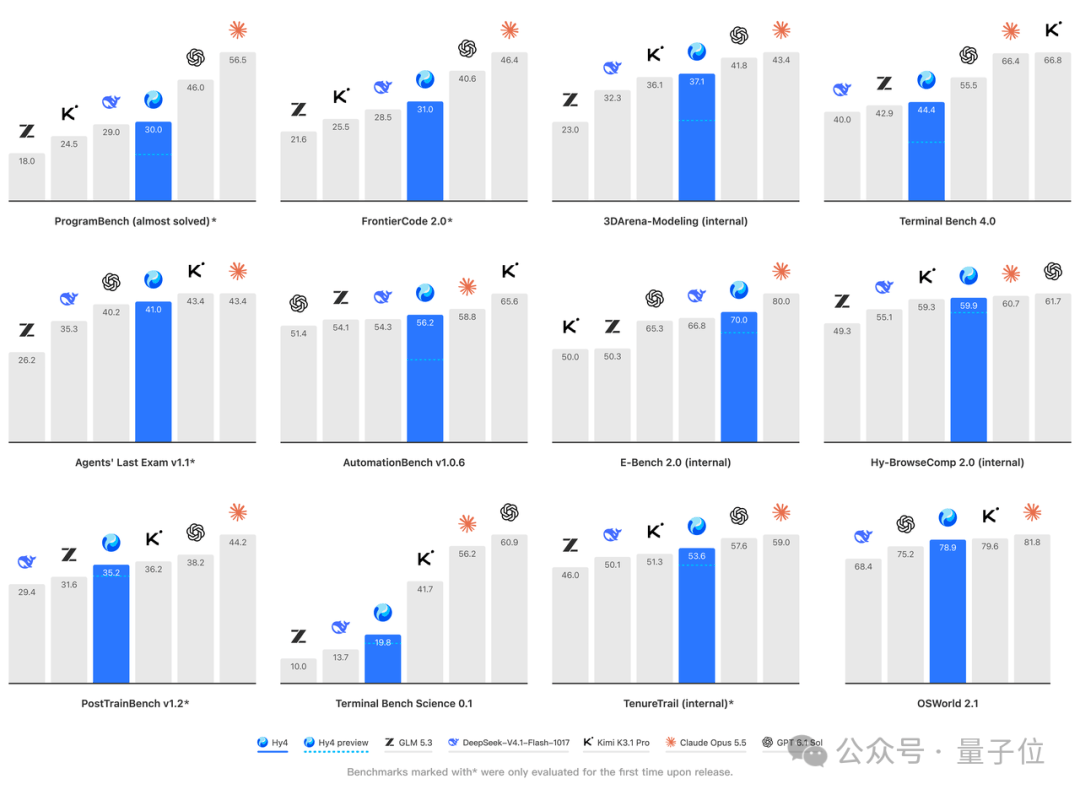
TL;DR - Tencent launched Hy4, a 770B-parameter open model with native vision, computer control, and stronger long-horizon agent capabilities. It is already integrated across Tencent products and external API platforms, with open weights promised soon.

  • Hy4 activates 49B parameters and adds pixel-level visual understanding, computer-use automation, improved instruction following, and long-context comprehension.
  • WorkBuddy demonstrations show autonomous creation and testing of interactive web apps, 3D experiences, presentations, and batch-image tools.
  • Tencent reports lower hallucination and inference-error rates versus Hy4 Preview, plus leading internal results on open-model financial tasks.
  • Hy4 is available through TokenHub, WorkBuddy/CodeBuddy, Yuanbao, and other services; OpenRouter, Hermes, and OpenCode provide API access.
Representative image for 基元律动发布NeoHorse-1.5-Flash Preview,Agent模型RSI进入第二轮迭代

基元律动发布NeoHorse-1.5-Flash Preview,Agent模型RSI进入第二轮迭代 🔗 2 sources

Rank 68 · Content 75 · Popularity N/A

TL;DR — 基元律动(TokenRhythm)发布面向任务执行与软件工程的 Agent 原生模型 NeoHorse-1.5-Flash Preview,将真实执行反馈用于后续训练,推动递归自我改进(RSI)进入第二轮迭代。目前仅提供有限测试。

  • 基于 Qwen3.8-Flash,拥有 1800 亿总参数、60 亿激活参数。
  • 据官方评测,相比基座模型,Agents’ Last Exam 提升 9.23 分,Natural Language to Repository 提升 5.92 分。
  • 训练结合执行反馈、多模型差异诊断、持续演化的任务环境,以及基于模型输出和执行结果差异的在线学习。
  • OpenSquilla 同步升级,支持按意图选择模型、失败重试时提升模型档位,以及独立刷新模型推荐。

注: 两个来源重点基本一致,均强调真实 Agent 执行反馈驱动的递归自我改进。

Representative image for 终端侧AI:从单点应用走向智能体体验

终端侧AI:从单点应用走向智能体体验 🔗 2 sources

Rank 68 · Content 75 · Popularity N/A

TL;DR — 高通认为,终端侧 AI 正从单一功能升级为能理解意图、编排任务和控制应用的智能体。其方案通过 MoE、专家预取和系统级协同,在有限内存、功耗及带宽下提升端侧模型能力。

  • 端侧 AI 提供低延迟、离线可用、隐私保护和个性化体验,并与云端算力互补。
  • MoE 仅激活任务相关专家,以较低计算开销支持手机、PC 和汽车上的更强模型。
  • 通过预测并预取专家,缓解 DDR 带宽和存储加载瓶颈。
  • 高通联合英弗瑞、江波龙和阶跃星辰,协同优化芯片、推理、存储与模型。

注: Pierre Fabre 与晶泰科技的药物研发合作与该工作主题明显不一致,未并入摘要。

Representative image for AI接管一家8万Star开源公司,写代码、派任务、查Bug全包了

AI接管一家8万Star开源公司,写代码、派任务、查Bug全包了

Rank 68 · Content 75 · Popularity N/A

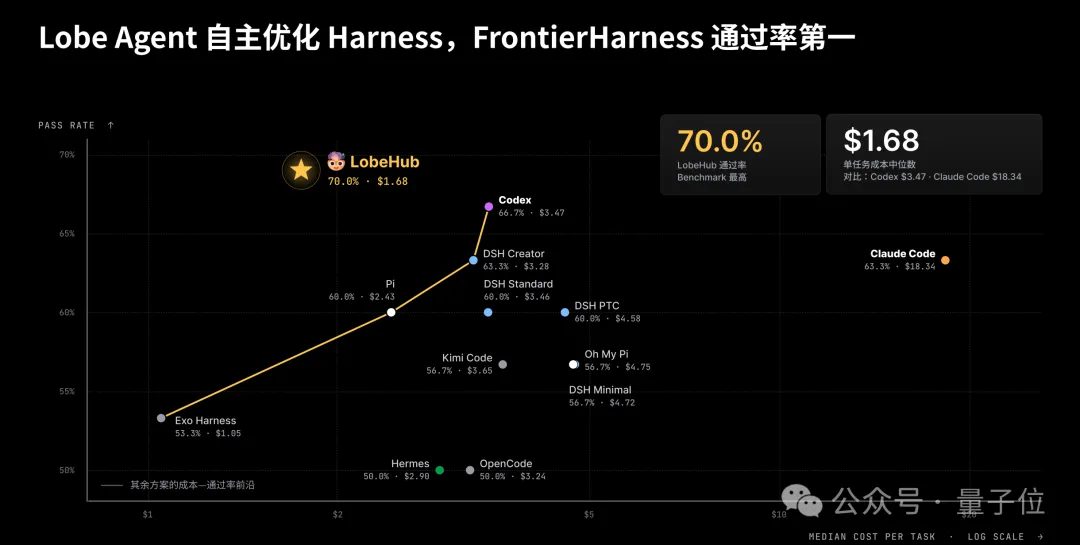
TL;DR - LobeHub has open-sourced an AI collaboration platform that lets persistent agents delegate tasks, write and review code, coordinate across projects, and reuse shared work artifacts. It signals a shift from isolated coding assistants toward supervised, multi-agent organizational workflows.

  • LobeHub’s agents create tasks, assign coding work, respond to automated reviews, add tests, and submit pull requests for human approval.
  • Shared goals, task state, deliverables, and acceptance records enable agents to hand work across projects without repeatedly supplying context.
  • Agent loops, sessions, and execution environments are decoupled, allowing long-running background work; one migration reportedly ran for over two days and produced 60 subtasks.
  • Its optimized harness solved 21 of 30 FrontierHarness tasks using Kimi K3, with a reported median cost of $1.68 per successful task.
Representative image for 千问办公2.0发布,首个支持多人与Agent协作的Team Agent来了

千问办公2.0发布,首个支持多人与Agent协作的Team Agent来了 🔗 2 sources

Rank 64 · Content 70 · Popularity N/A

TL;DR — 千问办公 2.0 推出首个支持多人、多 Agent 协作的 Team Agent,将办公 Agent 从个人助手升级为可主动执行组织级团队工作流的协作系统。

  • “协作”空间可关联多个钉钉群聊、文档、AI 表格和会议纪要,跨来源汇总信息、跟踪进展并管理任务。
  • “自动任务”可由消息、群内 @、审批等事件触发,自动读取上下文并执行后续操作。
  • “人机共创”支持多人、多 Agent 同步编辑文档、表格和应用,并集中处理多处修改意见。
  • “资料空间”集中管理生成与上传的内容;任务和产物在手机、电脑及网页端同步。
  • 任务在云端持续执行,即使设备离线也不会中断。

注: 量子位更强调组织级主动工作流和离线云端执行,雷峰网更强调资料管理及集中修改体验。

Representative image for 腾讯的 Agent 布局,不止 WorkBuddy

腾讯的 Agent 布局,不止 WorkBuddy

Rank 61 · Content 65 · Popularity N/A

TL;DR - Tencent unveiled a broader enterprise-agent stack extending beyond WorkBuddy, spanning applications, data infrastructure, security, hosting, and runtime systems. The strategy targets the integration, governance, and scaling barriers that prevent agents from operating reliably in production workflows.

  • Buddy One connects WorkBuddy with Tencent collaboration tools, while ADP and other services extend agents into business execution scenarios.
  • TDSQL Nexa Lakebase and DataBuddy unify enterprise data and business semantics; Tencent reports DataBuddy raised internal question-answering accuracy from 83.5% to 95.9%.
  • Security products add agent inventory, behavioral auditing, and automated blocking, while specialized agents test vulnerabilities and detect fraud.
  • Agent Hosting and Agent Runtime provide deployment, permissions, sandboxing, observability, memory, storage, model routing, and cost controls for large-scale agent operations.

Multimodal & Generative 1

Representative image for 字节跳动发布Seedream 5.5,上线豆包、豆包工作、即梦

字节跳动发布Seedream 5.5,上线豆包、豆包工作、即梦

Rank 71 · Content 80 · Popularity N/A

TL;DR - 字节跳动发布图像创作模型 Seedream 5.5,并接入豆包、豆包工作和即梦。新版本重点提升生成速度、多轮编辑稳定性、透明素材生成、写实效果和小字渲染,同时显著降低 API 成本。

  • 连续上百轮编辑后,非编辑区域仍可实现像素级保持。
  • 原生支持 RGBA 透明图像、Alpha 通道及素材分层输出。
  • 优化自然光照、材质、皮肤纹理和中文小字渲染,面向专业视觉工作流。
  • 2K 方图编辑约 0.28 元/张,不到 Seedream 5.0 Pro 的一半;API 即将上线火山方舟。

Efficiency & Systems 1

Your Experts Have Partners. There's HOPE for Keeping Them Together

Rank 61 · Content 65 · Popularity N/A

TL;DR - This Hugging Face/Amazon post appears to introduce higher-order pruning for mixture-of-experts models, aimed at preserving beneficial relationships among experts. Only the title was provided, so specific methods and results cannot be verified.

  • The title suggests that expert dependencies or pairings are considered during pruning.
  • The approach is presented as a way to retain related experts rather than pruning each independently.
  • No benchmarks, implementation details, or quantitative efficiency gains were included.
Top highlights — Opinions

AI Consciousness 1

Carlo Rovelli says fundamental physics is overrated

Rank 44 · Content 45 · Popularity 43

TL;DR - Theoretical physicist Carlo Rovelli argues for greater humility about fundamental physics and considers whether AI could ever become conscious. The provided excerpt does not reveal his conclusions or technical reasoning.

  • Frames fundamental physics as potentially overvalued within science.
  • Advocates greater scientific humility.
  • Discusses AI consciousness from a theoretical physicist’s perspective.
  • No empirical findings or specific consciousness criteria are provided.

Climate Health 1

The super El Niño is more than a climate shock – it’s a health one, too

Rank 48 · Content 50 · Popularity 43

TL;DR - This Nature commentary argues that a super El Niño should be treated as both a climate and public-health crisis. It highlights the need to address expected food shortages and disease outbreaks together.

  • Connects extreme climate conditions with intertwined health and food-security risks.
  • Calls for coordinated responses rather than separate interventions.
  • The provided excerpt does not specify affected regions, diseases, or proposed measures.