🛰️ Daily AI Frontier
‹ 2026-07-27

2026-07-28

Today
47 works · 3 categories · 22 topics · blog 21 journal 12 arxiv 15 generated 2026-07-28 14:15:14 UTC
Top highlights — Research
  • Kimi K3: Open Frontier Intelligence introduces an open-weight 2.8T-parameter MoE with native vision, agentic reasoning, and a 1M-token context window.
  • LOCKS reports FullKV-level quality at 100K+ context while attending to roughly 2% of tokens, halving decoding latency at 1M tokens.
  • The Physics of Multi-Turn Long-Horizon Planning maps how training and agentic distillation shape planning generalization—and where capabilities interfere.
  • What do Reward Models Memorize? finds preference models often learn easy examples and dataset shortcuts rather than robust contextual quality.

LLM Agents 1

The Physics of Multi-Turn Long-Horizon Planning: From Pre-training to Post-training via Single- and Multi-Teacher On-Policy Agentic Distillation

TL;DR - This paper studies how foundation-model agents acquire, refine, and combine long-horizon planning abilities in a controlled multi-turn environment. It identifies training-data and distillation strategies that improve generalization while exposing sources of error and capability interference.

  • Explicit chain-of-thought state-transition modeling improves long-horizon generalization; atomic skills alone do not enable composition, but limited long-horizon data can.
  • Suboptimal training trajectories substantially degrade performance as errors compound over longer horizons.
  • On-policy distillation (OPD) is effective across more low-quality and long-horizon settings than GRPO, owing to more consistent update directions.
  • Multi-teacher OPD can integrate compatible or partially shared planning patterns, while conflicting patterns cause severe interference.

Medical/Healthcare AI 3

Representative image for Stress-Testing EEG Foundation Models for Clinical Decoding: Dataset Identity and Targeted Negative Controls

Stress-Testing EEG Foundation Models for Clinical Decoding: Dataset Identity and Targeted Negative Controls

TL;DR - A benchmark of six EEG foundation models finds that clinical decoding performance is highly sensitive to dataset identity, evaluation splits, baselines, and negative controls. Pretraining showed a clear benefit mainly for cross-subject seizure detection.

  • Classical EEG features substantially outperformed frozen REVE embeddings on Korean dementia classification.
  • Frozen embeddings identified datasets almost perfectly but weakly decoded Korean diagnoses, indicating strong dataset-specific signals.
  • Random initialization, random projections, and PCA sometimes matched or exceeded pretrained representations.
  • On CHB-MIT ictal detection, REVE achieved 0.793 AUROC, beating a randomly initialized encoder by 9.2 percentage points.
Representative image for ESRVS: Extreme Semi-Supervised Retinal Vessel Segmentation with a Single Annotated Image

ESRVS: Extreme Semi-Supervised Retinal Vessel Segmentation with a Single Annotated Image

TL;DR - ESRVS segments retinal vessels using only one manually annotated image, propagating supervision with adapted DINOv3 features and refined pseudo-labels. It approaches fully supervised performance while substantially reducing expert annotation needs.

  • Selects a representative image for annotation and builds multi-granular vessel prototypes.
  • Combines prototype similarity with a physics-inspired prior, weighted pseudo-label training, and adversarial refinement.
  • Achieves the best Dice and clDice on six of eight datasets and the best HD95 on all eight among compared semi-supervised methods.
  • Retains 93.7% of fully supervised Dice and 95.1% of clDice on average with Mask2Former.

Medical AI has a measurement problem

TL;DR - Nature highlights a measurement problem exposed by two medical AI assistants: capabilities are advancing faster than reliable evaluation methods. The limited item content frames the challenge but provides no specific results.

  • Existing assessments might not adequately establish which medical AI systems work.
  • Evaluation must keep pace with rapidly evolving assistant capabilities.
  • Trustworthy adoption depends on defining robust measures of real-world effectiveness.

Bioinformatics AI 1

AI proteomics: from protein identification to virtual cells

TL;DR - This Nature Methods Perspective identifies mass spectrometry-based proteomics research areas where AI could enable major advances, spanning protein identification through virtual-cell modeling.

  • Focuses on AI applications in mass spectrometry-based proteomics.
  • Covers opportunities from protein identification to broader virtual-cell models.
  • Presents a forward-looking research perspective rather than new experimental results.
  • The brief provided does not specify particular methods, benchmarks, or findings.

LLMs & Foundation Models 4

Kimi K3: Open Frontier Intelligence

TL;DR - Kimi K3 is an open-weight, 2.8T-parameter Mixture-of-Experts model combining native vision, a 1-million-token context window, and agentic reasoning. It reports frontier-level results and roughly 2.5× better scaling efficiency than Kimi K2, though it still trails the strongest proprietary models evaluated.

  • Activates 104B parameters per token using Stable LatentMoE, routing to 16 of 896 experts.
  • Uses Kimi Delta Attention and Attention Residuals to improve information flow across sequence length and model depth.
  • Post-training applies reinforcement learning across general, coding, and agentic tasks, including million-token rollouts with persistent sandbox state.
  • Full model weights are released for research and broader deployment.
Representative image for UNIFUSION: Adapting Autoregressive Language Models into Discrete Diffusion under a Unified Reverse-Rate Objective

UNIFUSION: Adapting Autoregressive Language Models into Discrete Diffusion under a Unified Reverse-Rate Objective

TL;DR - UNIFUSION converts pretrained autoregressive language models into uniform-noise diffusion models under a unified reverse-rate objective, allowing every token to remain editable during generation. It offers a shared interface across diffusion formulations and improves generation-quality and benchmark results over compared diffusion models.

  • Unifies SEDD, MDLM/GIDD, M2S, and Neural CTMC conditional losses as a generalized KL objective over reverse rates.
  • Converts clean-token predictions into multiple diffusion parameterizations, enabling switches between mask and uniform corruption kernels.
  • Continually pretrains 124M- and 355M-parameter GPT-2 checkpoints for uniform-noise diffusion.
  • Shows improving GenPPL–entropy trade-offs with larger sampling budgets and leads compared diffusion models on WinoGrande, SIQA, and BBH at both scales.

What do Reward Models Memorize?

TL;DR - This paper finds that reward models trained on human preferences memorize easy examples and dataset-specific shortcuts rather than reliably learning contextual response quality. These biases may undermine their ability to evaluate unfamiliar response pairs.

  • Memorization is disproportionately allocated to easy, high-margin preference pairs.
  • Reward models exploit shortcuts such as model identity and user-sampling strategy.
  • They overgeneralize heuristics like response length and compliance to unseen comparisons.
  • Discriminative preference training produces biased judges that struggle with context-dependent quality.
Representative image for Grounding latent algorithm routing in transformer reasoning

Grounding latent algorithm routing in transformer reasoning

TL;DR - ROUTEBENCH shows that dense transformers trained from scratch can learn internal routing behavior that selects among solver families based on the latent data regime. This provides controlled evidence for algorithm-like adaptation during in-context learning, without claiming the behavior generalizes to pretrained LLMs.

  • A 306M-parameter model closed 80.9% of the oracle-routing gap and achieved 84.1 route F1.
  • Routing differentiated ridge-, lasso-, Huber-, and kNN-like strategies associated with shrinkage, sparsity, robustness, and locality.
  • The behavior persisted across natural-language renderings, shuffled examples, lexical paraphrases, and unified four-way routing.
  • Probing and activation patching indicated that route-related internal directions were both decodable and functionally involved in outputs.

Multimodal & Generative 5

Representative image for Spatio-Temporal Conditional Denoising Transformer for Modality-Missing RGBT Tracking

Spatio-Temporal Conditional Denoising Transformer for Modality-Missing RGBT Tracking

TL;DR - SCDT is a denoising transformer for RGB-thermal tracking that reconstructs missing modality information and strengthens weak features using spatial and temporal context. It matters because one model handles both incomplete and complete inputs without architecture or parameter changes.

  • Combines recent-frame cues with long-term modality evolution for temporally consistent representations.
  • Progressively denoises available-modality features to recover reliable multimodal information.
  • Uses noise-modulated adaptation to adjust dynamically to modality availability.
  • Reportedly outperforms prior methods across three public benchmarks.
Representative image for Co-Learning for Missing Arbitrary Modalities in Multi-modal Classification

Co-Learning for Missing Arbitrary Modalities in Multi-modal Classification

TL;DR - This paper introduces two co-learning methods for multimodal classification when arbitrary subsets of modalities may be unavailable at inference. The approaches improve robustness by emphasizing cross-modal collaboration at the feature and decision levels rather than relying primarily on fusion.

  • Supports unspecified missing-modality patterns beyond typical bimodal settings.
  • One method is more robust when only one modality is missing.
  • The other performs better when all but one modality are missing.
  • Experiments on two benchmarks show significant robustness gains across missing-modality conditions.
Representative image for EgoPlay: Event-Triggered Video Editing for Egocentric Streams

EgoPlay: Event-Triggered Video Editing for Egocentric Streams

TL;DR - EgoPlay is an end-to-end diffusion model that detects prompted events in egocentric video and edits only the post-event footage. It improves editing quality over detector-editor pipelines while using less than half their GPU memory.

  • Fine-tunes a pretrained video-to-video diffusion transformer on 106K event-conditioned clip-prompt pairs derived primarily from Ego4D.
  • Jointly learns event recognition, pre-trigger preservation, and pixel-level editing, including negative and multi-event prompts.
  • Provides bidirectional editing and a causal variant for chunk-by-chunk streaming inference.
  • Outperforms EgoEdit by 17.7% in editing quality, 16.9% in visual quality, and 16.4% in background consistency.

Let Me Look at You: Advanced Facial Expression Modeling for Conversational Speech Synthesis

TL;DR - FacialTalker uses facial-expression tokens to generate conversational speech that better reflects visual affect and context. It matters because facial cues are often neglected in expressive, empathetic speech synthesis.

  • AUTokenizer compresses frame-level expressions into discrete tokens supervised by facial Action Unit combinations.
  • DualDPO jointly applies preference constraints to visual and speech token sequences.
  • VSDD-1K provides 1,033+ hours of synchronized real-world conversational video and speech.
  • Objective and subjective experiments report improvements over strong baselines in expression perception, naturalness, expressiveness, and contextual alignment.

Mixture-of-Thought-Tokens: Unifying Perception and Reasoning for Free-form Multimodal Grounding

TL;DR - Mixture-of-Thought-Tokens (Motto) unifies spatial perception and reasoning for free-form multimodal grounding. It matters because existing approaches often trade precise localization for complex reasoning ability.

  • Spatially-Grounded Thought Tokenization aligns special tokens with visual locations for interpretable spatial correspondence.
  • A Context-Adaptive Chain-of-Tokens dynamically switches grounding modes within interleaved reasoning chains.
  • PR-Bench evaluates the gap between perception and reasoning in referring-expression comprehension.
  • The authors report state-of-the-art performance across diverse free-form grounding tasks.

Efficiency & Systems 3

Representative image for From Data to Device: ELMOD An Efficient German-First 2.7B Language Model for Mobile Inference

From Data to Device: ELMOD An Efficient German-First 2.7B Language Model for Mobile Inference

TL;DR - ELMOD is a German-first 2.7B-parameter language model optimized for mobile and resource-constrained inference. It reportedly leads German models below 3B parameters and matches some 7B-model performance.

  • Trained exclusively on public data using 55,000 H100 GPU hours.
  • Uses German-specific preprocessing for morphology, compound words, and orthographic conventions.
  • Quality filtering and rephrasing improved instructional data quality and annealing performance while reducing compute needs.
  • Its compact architecture targets efficient on-device deployment.

LOCKS: Page-Local Compact Key Summaries for Efficient Long-Context Decoding

TL;DR - LOCKS accelerates long-context LLM decoding by using compact, page-local spectral summaries to select which KV-cache pages deserve attention. It matches FullKV aggregate quality at 100K+ context while attending to about 2% of tokens and halves per-token latency at 1M tokens.

  • Each KV-cache page gets a compact summary roughly one-tenth its size, preserving page-specific attention directions.
  • Page selection reads summaries rather than candidate keys or values, then applies attention only to the highest-mass pages.
  • LOCKS outperforms baseline selectors on retrieval-dense and long-form reasoning benchmarks, where shared-basis approaches can degrade sharply.
  • It integrates with unmodified vLLM as a drop-in plugin and supports batched decoding with full CUDA graphs.
Representative image for The SpiNNaker2 chip: a many-core platform for flexible and scalable brain-inspired computing

The SpiNNaker2 chip: a many-core platform for flexible and scalable brain-inspired computing

TL;DR - SpiNNaker2 is a 152-core chip combining conventional deep-learning acceleration with scalable neuromorphic computing. Its low baseline power and event-driven architecture enable efficient exploration of dense, sparse, and brain-inspired workloads on one platform.

  • Delivers up to 4.5 INT8 TOPS or 2.7 INT8 TOPS/W, depending on operating mode.
  • Simulates over 150,000 spiking neurons and 1.8 billion synaptic events per second at a 1 ms time step.
  • Integrates ARM M4F processors, dedicated accelerators, event-routing fabric, Gbit Ethernet, and LPDDR4 support.
  • Consumes less than 250 mW at baseline, supporting efficiency under varying workloads.

Biophotonics 1

All living things emit a faint glow. Could this light be useful?

TL;DR - A Nature article examines ultra-weak light emitted by living organisms and its potential biological uses. These “biophotons” might aid disease diagnosis or represent an undiscovered cellular signalling mechanism.

  • Living organisms emit extremely faint photons.
  • Emission patterns could potentially serve as disease biomarkers.
  • Cellular signalling via biophotons remains a hypothesis, not an established mechanism.

Climate Extremes 1

Deserts face unprecedented flash flooding

TL;DR - This Nature item reports that deserts face unprecedented flash flooding. Only the title and publication metadata are provided, so specific findings and methods cannot be assessed.

  • Published online by Nature on 28 July 2026.
  • Focuses on extreme flash-flood risk in desert environments.
  • No data, geographic scope, causes, or quantitative results are included in the supplied content.

LLM Security 1

Representative image for GAIR Paper 111 | 谁动了我的大模型?IJCAI 2026最新综述揭秘大模型“隐式身份”防伪战

GAIR Paper 111 | 谁动了我的大模型?IJCAI 2026最新综述揭秘大模型“隐式身份”防伪战

TL;DR - An IJCAI 2026 survey unifies LLM fingerprinting and watermarking under an “implicit identity” framework for protecting datasets, models, and generated content. It supports ownership verification, misuse detection, and provenance tracing.

  • Fingerprints extract intrinsic signals; watermarks deliberately embed verifiable signals.
  • The taxonomy spans datasets, models, and generated text, using similarity-based attribution or key-based verification.
  • Evaluation covers claim correctness, benign-transformation robustness, adaptive attacks, and deployment cost.
  • Key challenges include preserving model utility, surviving model or content transformations, and reducing verification overhead.

Science History 1

Why some wool is wavy

TL;DR - Nature’s archive revisits scientific explanations for crimp formation in sheep’s wool and the history of the term “ionosphere.” The excerpt provides no experimental details or specific findings.

  • Examines why some sheep coats develop wavy, crimped fibers.
  • Includes historical context on the word “ionosphere.”
  • No mechanism, data, or conclusions are supplied in the provided text.
Top highlights — Industry & News
  • “Kimi K3 发布 47 页技术报告” unveiled a 2.8T-parameter MoE built for recoverable, multi-hour agent tasks; Alibaba Cloud simultaneously announced Day-0 K3 support on domestic supernodes.
  • “萝卜快跑跑通全球首例右舵全无人” marked Apollo Go’s expansion into London public-road testing, with passenger service targeted for 2027.
  • Agent products moved into deployment: “豆包搜索,走出了豆包” opened agent-ready search APIs, while 360, OPPO, and Alibaba launched enterprise, on-device, and real-time voice agents.
  • “世界模型有触觉了!” introduced Being-H0.8, bringing contact-aware prediction and feedback to robotic manipulation using large-scale video and sensor training.

LLM Agents 6

Representative image for 豆包搜索,走出了豆包

豆包搜索,走出了豆包

TL;DR - ByteDance’s Doubao Search is now available to enterprises and developers as an agent-oriented search service through API, MCP, and Skill integrations. It provides structured, source-aware results that agents can use directly in downstream tasks.

  • Results include authority ratings, timestamps, query-specific summaries, and original Markdown excerpts—not merely links.
  • Agents can constrain searches by time, site, industry, and source authority, reducing webpage parsing and token usage.
  • The service supports structured data for domains such as finance, travel, and entertainment.
  • Volcengine offers 500 free searches per month, followed by usage-based or subscription pricing.
Representative image for 发挥20年安全原生优势,360发布新一代企业智能体工作平台纳米Work

发挥20年安全原生优势,360发布新一代企业智能体工作平台纳米Work

TL;DR - 360 launched Nano Work, an enterprise multi-agent platform designed to automate business tasks while reducing setup, cost, reliability, permission, and data-security barriers.

  • Coordinates specialized AI agents and selects suitable models and execution methods based on each task.
  • Provides cloud-isolated workspaces, permission controls, and data protection as built-in security features.
  • Targets business analysis, product validation, content creation, marketing, research, and project delivery workflows.
  • 360 says it tested agents across 1,000+ internal scenarios and released 166 iterations using more than 56,000 feedback entries.
Representative image for OPPO 宣布启动小布Next计划,开放首个端侧Multi-Agent系统内测

OPPO 宣布启动小布Next计划,开放首个端侧Multi-Agent系统内测

TL;DR - OPPO launched beta testing for Xiaobu Next, an on-device multi-agent system designed to proactively deliver personalized smartphone services. It combines local memory and orchestration with controlled cloud-model access.

  • Performs context understanding, task planning, and agent scheduling locally, using an on-device system-wide memory with user authorization.
  • Supports over 100 system capabilities plus third-party agents, Skills, and MCP services.
  • Coordinates specialized agents across tasks such as job searching, productivity, health, and finance.
  • Prioritizes on-device processing and requires user confirmation for sensitive actions such as payments and sending email.
Representative image for 国内首个!阿里Qoder上线实时语音交互智能体,让Agent像真人一样交流干活

国内首个!阿里Qoder上线实时语音交互智能体,让Agent像真人一样交流干活

TL;DR - Alibaba’s Qoder launched Qoder Voice, a real-time, full-duplex voice agent that can discuss, revise, and execute coding tasks while users continue working. It aims to make agent collaboration more natural than text or turn-based voice interfaces.

  • Powered by the Qwen-Audio-3.0-Realtime speech model, reportedly scoring 84.1 on Artificial Analysis’s Speech-to-Speech Index.
  • Automatically creates tasks, invokes tools, and executes work in the background from spoken instructions.
  • Supports interruption, follow-up questions, requirement changes, and voice-guided refinement of proposed execution plans.
  • Initially available internationally to individual and enterprise subscribers, with a Qoder CN release planned soon.
Representative image for Kimi K3 发布 47 页技术报告,最有价值的创新点是这些

Kimi K3 发布 47 页技术报告,最有价值的创新点是这些

TL;DR - Kimi K3 combines a 2.8T-parameter MoE architecture with infrastructure for agents that can pause, resume, and execute multi-hour tasks. Its significance lies in integrating long-context modeling, asynchronous reinforcement learning, and recoverable environments into one system.

  • KDA compresses long-context state, while periodic Gated MLA layers retain access to detailed context across a 1M-token window.
  • AttnRes retrieves representations from earlier depth blocks; Stable LatentMoE reduces expert communication and balances 896 experts.
  • Partial rollouts prevent slow trajectories from blocking RL updates, while Firecracker microVM snapshots preserve external task state.
  • The claimed 2.5× scaling efficiency reflects combined architecture, data, and training changes—not lower total cost or faster inference.
Representative image for 全球首个Agentic扩散模型来了:边行动边纠错,128K上下文追平自回归

全球首个Agentic扩散模型来了:边行动边纠错,128K上下文追平自回归

TL;DR - InclusionAI released LLaDA2.2, an open-source MoE diffusion language model designed for long-horizon agent tasks. It approaches an autoregressive baseline on seven agent benchmarks while delivering higher throughput and native 128K context.

  • Levenshtein-style KEEP, SUBSTITUTE, DELETE, and INSERT operations let the model revise block-parallel generations during denoising.
  • L-EBPO reinforcement learning uses environmental feedback to optimize editing decisions across multi-turn interactions.
  • BlockRouting limits each block’s expert pool to reduce memory traffic and communication costs at long context lengths.
  • LLaDA2.2-flash averaged 53.83 versus Ling-2.6-flash’s 55.74 across seven agent benchmarks, with 1.64× average BF16 throughput across 11 workloads.

Medical/Healthcare AI 1

Representative image for 老人突发“脑干出血”致残事件追踪:安顿称在消费者病发前已预警,将追究河南明神医公司违约责任

老人突发“脑干出血”致残事件追踪:安顿称在消费者病发前已预警,将追究河南明神医公司违约责任

TL;DR - A consumer AI health watch faces scrutiny after an elderly user suffered a disabling brainstem hemorrhage despite normal displayed readings. The dispute highlights gaps between trend-based risk alerts, clinical monitoring, and reseller claims.

  • The maker says its model analyzes seven days of heart rate, pulse-wave, blood-pressure, and oxygen trends rather than diagnosing acute events.
  • It reports issuing two risk alerts before hospitalization; the family says no acute alarm occurred and emergency blood pressure reached 192/93 mmHg.
  • The manufacturer alleges its partner exaggerated capabilities and improperly charged service fees, and plans to pursue breach-of-contract claims.
  • Litigation over misleading promotion, product responsibility, and medical causation remains unresolved.

LLMs & Foundation Models 3

Representative image for 小米连续8年上榜《财富》世界500强:排名232创新高,“人车家全生态”战略释放增长动能

小米连续8年上榜《财富》世界500强:排名232创新高,“人车家全生态”战略释放增长动能

TL;DR - Xiaomi reached No. 232 on the 2026 Fortune Global 500, citing EV growth and AI integration across its “human-car-home” ecosystem. The company plans major AI investment while its MiMo-V2.5 models gain benchmark recognition and developer adoption.

  • Xiaomi plans to invest RMB 16 billion in AI during 2026 and at least RMB 60 billion over three years.
  • MiMo-V2.5-Pro reportedly tied for first among open-source models on Artificial Analysis intelligence and agent indexes.
  • OpenRouter data reportedly ranked MiMo-V2.5 first in both weekly and monthly global model usage.
  • Xiaomi’s EV and AI innovation businesses generated RMB 106.1 billion in 2025, up 223.8% year over year.
Representative image for 黄仁勋倡议的开源联名信,Anthropic 为何不愿签名?

黄仁勋倡议的开源联名信,Anthropic 为何不愿签名?

TL;DR - An open letter supporting open-weight AI models sparked debate after Anthropic declined to sign. The dispute highlights differing views on whether capability testing can justify permanently releasing model weights beyond developers’ control.

  • Open weights enable local deployment, quantization, fine-tuning, distillation, and reproducible safety research.
  • Signatories support selective, risk-based releases—not mandatory publication of every frontier model.
  • Anthropic’s apparent concern is that external operators can remove safeguards or modify models, while released weights cannot be recalled.
  • Open weights, open protocols such as MCP, and open-source software expose different technical layers and carry different risks.
Representative image for Ilya获黄仁勋50亿美元押注:“是时候Scaling了”

Ilya获黄仁勋50亿美元押注:“是时候Scaling了”

TL;DR - SSI and NVIDIA announced a long-term partnership to scale SSI’s confidential superintelligence research using next-generation Vera Rubin infrastructure. The reported $5 billion investment remains officially unconfirmed.

  • SSI expects the partnership to increase its compute capacity tenfold within a year.
  • NVIDIA reportedly reviewed SSI’s private research before committing to the collaboration.
  • SSI has released no model, paper, demo, or technical results publicly, so its progress cannot yet be independently assessed.

Multimodal & Generative 1

Representative image for Kimi K3、Unlimited OCR包揽全球前二,中国开源模型持续刷屏海外

Kimi K3、Unlimited OCR包揽全球前二,中国开源模型持续刷屏海外

TL;DR - Kimi K3 and Baidu’s Unlimited OCR took the top two spots on Hugging Face’s trending-model chart. Unlimited OCR stands out for efficiently parsing long documents with bounded memory usage.

  • Kimi K3 reached the top trend position shortly after its full model weights were released.
  • Unlimited OCR reportedly surpassed 19,700 GitHub stars and 2.65 million Hugging Face downloads.
  • Its Reference Sliding Window Attention retains the source document while limiting generated-text history.
  • This keeps decoding KV-cache size constant, enabling continuous multi-page parsing without memory growth proportional to output length.

Efficiency & Systems 1

Representative image for 阿里云真武超节点Day0适配Kimi K3大模型,双方展开国产算力合作

阿里云真武超节点Day0适配Kimi K3大模型,双方展开国产算力合作

TL;DR - Alibaba Cloud’s Zhenwu M890 supernode achieved Day-0 support for the nearly 3-trillion-parameter Kimi K3 model. The collaboration demonstrates domestic hardware’s ability to serve massive MoE models with improved latency and throughput.

  • One instance interconnects 64 M890 GPUs at 800 GB/s and provides 9 TB of memory.
  • Joint software-stack and kernel optimizations support up to a 1M-token context.
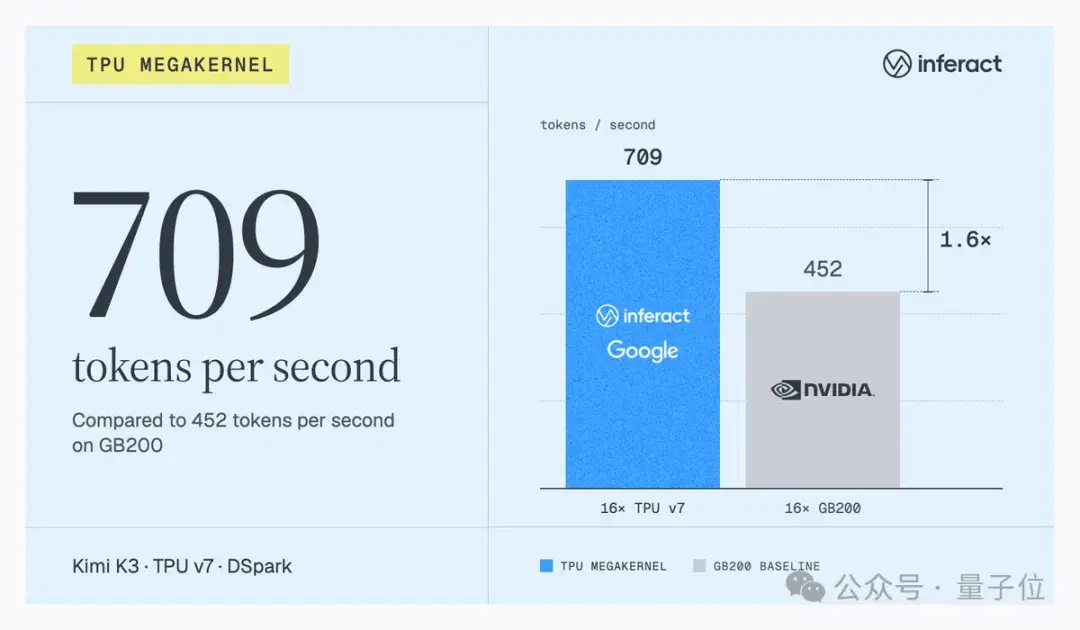
  • Tests reportedly reduced time-to-first-token by about 35% and increased per-GPU decoding throughput by 1.8×.
  • Alibaba Cloud’s Qwen AI platform and Model Studio will offer Kimi K3 APIs.

AI Conference Trends 1

Agentic AI双王论道、Physical AI亮剑不莱梅——IJCAI-ECAI 2026三大最热议题抢先看

TL;DR - A preview of IJCAI-ECAI 2026 highlights three major themes: agentic AI, physical AI, and knowledge-enhanced LLMs. The program signals growing focus on autonomous systems, robotics safety, and more reliable model reasoning.

  • Award talks examine agent evolution, multi-agent societies, governance, and value alignment.
  • Physical AI sessions cover VLA learning, safe robotics, navigation, tactile control, and human-robot collaboration.
  • LLM tracks emphasize graph-based knowledge enhancement, automated kernel generation, and generative-AI robustness.
  • The conference reports 990 accepted papers, 41 workshops, and 27 tutorials.

AI Consciousness 1

Consciousness research is having an AI moment. Will the hype help the field?

TL;DR - Nature examines how speculation about AI sentience is increasing attention on consciousness science. Researchers disagree on whether this heightened interest will advance the field or distort it through hype.

  • AI sentience debates are drawing new focus to consciousness research.
  • The article highlights researchers’ concerns about hype’s influence on the field.
  • The provided excerpt does not describe specific technical findings or experiments.

Autonomous Vehicles 1

Representative image for 萝卜快跑跑通全球首例右舵全无人 伦敦接力开启公开道路测试

萝卜快跑跑通全球首例右舵全无人 伦敦接力开启公开道路测试

TL;DR - Baidu’s Apollo Go and Freenow have begun public-road autonomous-driving tests in London, targeting passenger service in 2027. The rollout expands Apollo Go’s driverless operations into complex right-hand-drive, left-side-traffic markets.

  • The planned service will combine autonomous vehicles with Freenow’s existing fleet.
  • Testing covers both urban and suburban traffic conditions.
  • London follows Apollo Go’s fully driverless testing launch in Hong Kong.
  • Apollo Go reports over 22 million rides across 27 cities globally.

Education AI 2

Representative image for 当AI学会“仿真思维”,教师才能回归育人本质

当AI学会“仿真思维”,教师才能回归育人本质 🔗 2 sources

TL;DR — 两则材料实际描述不同项目:天立启鸣用认知世界模型实现个性化教学并减轻教师负担;海尔智家则用智能体协调家电与机器人,推进家庭自动化,无法合并为单一教育成果。

  • 天立启鸣的 LAM 框架建模学生认知状态,推断知识误区并规划个性化学习路径。
  • 系统自动完成学习诊断、资源匹配、习题调整和课堂分析,已覆盖 150 多所学校、30 多万师生。
  • “认知主权”框架针对推断出的学生敏感认知数据实施分级保护。
  • 海尔“小优 Agent”借助家庭空间知识图谱,在烹饪、洗护、空气和用水等场景中跨设备规划与执行任务。
  • 海尔还结合视觉、语音模型与传感器增强家电感知能力,并称其内部 AI 系统已服务逾 6 万名员工和 1.4 万多个应用。

注: 量子位聚焦教育认知模型,雷峰网聚焦智慧家庭智能体,两者的主体与应用场景并不相同。

Representative image for 当AI学会“仿真思维”,教师才能回归育人本质——从“工具效率”到“认知理解”,教育AI进入深水区

当AI学会“仿真思维”,教师才能回归育人本质——从“工具效率”到“认知理解”,教育AI进入深水区

TL;DR - Tianli Qiming introduced an education-AI framework that models students’ cognitive states rather than merely recommending content, aiming to support personalized instruction while returning teachers’ focus to mentorship.

  • Its LAM feedback loop uses student behavior to infer conceptual or reasoning gaps and plan tailored learning paths.
  • The “one student, one plan” system automates diagnostics, resource matching, exercise selection, and class-level analytics.
  • The company reports deployment across 150+ schools, serving over 300,000 teachers and students.
  • A proposed “cognitive sovereignty” framework treats inferred student mental-state data as protected information.

Embodied AI 1

Representative image for 世界模型有触觉了!50万小时视频,训出首个隐式触觉世界动作模型

世界模型有触觉了!50万小时视频,训出首个隐式触觉世界动作模型

TL;DR - BeingBeyond unveiled Being-H0.8, a tactile world-action model that learns contact-aware robot control from large-scale human video and sensor data. It matters because tactile prediction and feedback enable more adaptive, precise manipulation than vision-only control.

  • Its training pipeline draws on over 500,000 hours of first-person video, with TactoHand generating contact and proximity supervision from footage lacking tactile labels.
  • A universal tactile encoder standardizes heterogeneous contact, proximity, and pressure signals into fixed-format tokens; TopoHand aligns human hands, dexterous robot hands, and grippers.
  • The model predicts interaction consequences in latent space rather than reconstructing future pixels.
  • A slow-fast controller maintains the overall plan while repeatedly using fresh tactile feedback to regenerate short action segments during execution.

Energy Storage 1

Daily briefing: The town heated by one big battery

TL;DR - Nature’s daily briefing highlights a sand battery that can heat Pornainen, Finland, for up to a winter week, demonstrating large-scale thermal energy storage.

  • The sand battery supplies community heating during cold conditions.
  • Its stated storage duration is up to one week in winter.
  • The briefing also flags funding risks for UK physics facilities and scrutiny of MAHA health claims.

Ergonomic Hardware 1

Representative image for 从静态支撑到高承托动态适配,清闲动态人机工学椅 Maxis Pro 重新定义重量级久坐体验

从静态支撑到高承托动态适配,清闲动态人机工学椅 Maxis Pro 重新定义重量级久坐体验

TL;DR - Qingxian Smart launched the Maxis Pro ergonomic chair for larger users and prolonged sitting, emphasizing dynamic support, wider adjustment ranges, and higher load capacity.

  • Segmented recline uses two sets of three-stage springs for progressive support.
  • Rated for up to 181 kg and tested to the BIFMA X5.11 large-office-chair standard.
  • Features expanded headrest, armrest, backrest, and seat dimensions for broader body-size compatibility.
  • Includes a 4,000-rpm ventilation fan and posture-responsive back support, spinal stretching, and five recline settings.

OOD Generalization 1

Representative image for 独揽 IJCAI 2026 两大 Tutorial!清华王鑫团队如何用「OOD泛化」夺取生成式 AI 的国际定义权?

独揽 IJCAI 2026 两大 Tutorial!清华王鑫团队如何用「OOD泛化」夺取生成式 AI 的国际定义权?

TL;DR - Tsinghua researchers will present two IJCAI 2026 tutorials on improving AI robustness under distribution shifts. The tutorials connect OOD generalization with graph learning, multimodal models, diffusion systems, and post-training.

  • T9 combines Graph LLMs with continual learning, architecture search, causality, and invariance.
  • T11 examines OOD robustness in multimodal language models and diffusion-based visual generation.
  • Both tutorials emphasize reliable adaptation to unseen data and scenarios rather than IID benchmark fitting.

Reproductive Medicine 1

Top highlights — Opinions
  • “When physicians and AI work together, who is accountable?” offers a role-based framework for clarifying medical liability in AI-assisted care.
  • “Conversational AI: align commercial incentives with public interests” highlights the need for governance that makes business incentives serve societal goals.
  • “Use AI, but don’t mask it” argues that transparent disclosure should be a baseline for responsible AI use.

Medical/Healthcare AI 1

AI Governance 1

Conversational AI: align commercial incentives with public interests

TL;DR - This Nature commentary calls for aligning conversational-AI business incentives with public interests. Only the title and publication metadata are provided, so its specific proposals cannot be assessed.

  • Frames conversational AI as an incentive-alignment and governance challenge.
  • Highlights tension between commercial objectives and societal benefit.
  • Provides no technical details, evidence, or concrete recommendations in the excerpt.

AI Transparency 1

Use AI, but don’t mask it

TL;DR - This Nature item appears to advocate transparent disclosure of AI use rather than concealing it. Only the title and citation are provided, so its specific arguments cannot be assessed.

  • AI-assisted work should be clearly identified.
  • No methods, evidence, or policy details are available in the excerpt.

Scientific Values 1

Values in science go beyond politics

TL;DR - This Nature commentary appears to argue that scientific values extend beyond political considerations. Only the title and publication metadata are provided, so its reasoning cannot be assessed.

  • Published online by Nature on 28 July 2026.
  • Frames scientific values as broader than partisan politics.
  • No evidence, examples, or specific recommendations are included in the excerpt.