R to @OpenAI: Audio moves through a dedicated fast path, while deeper reasoning and tool use happen…
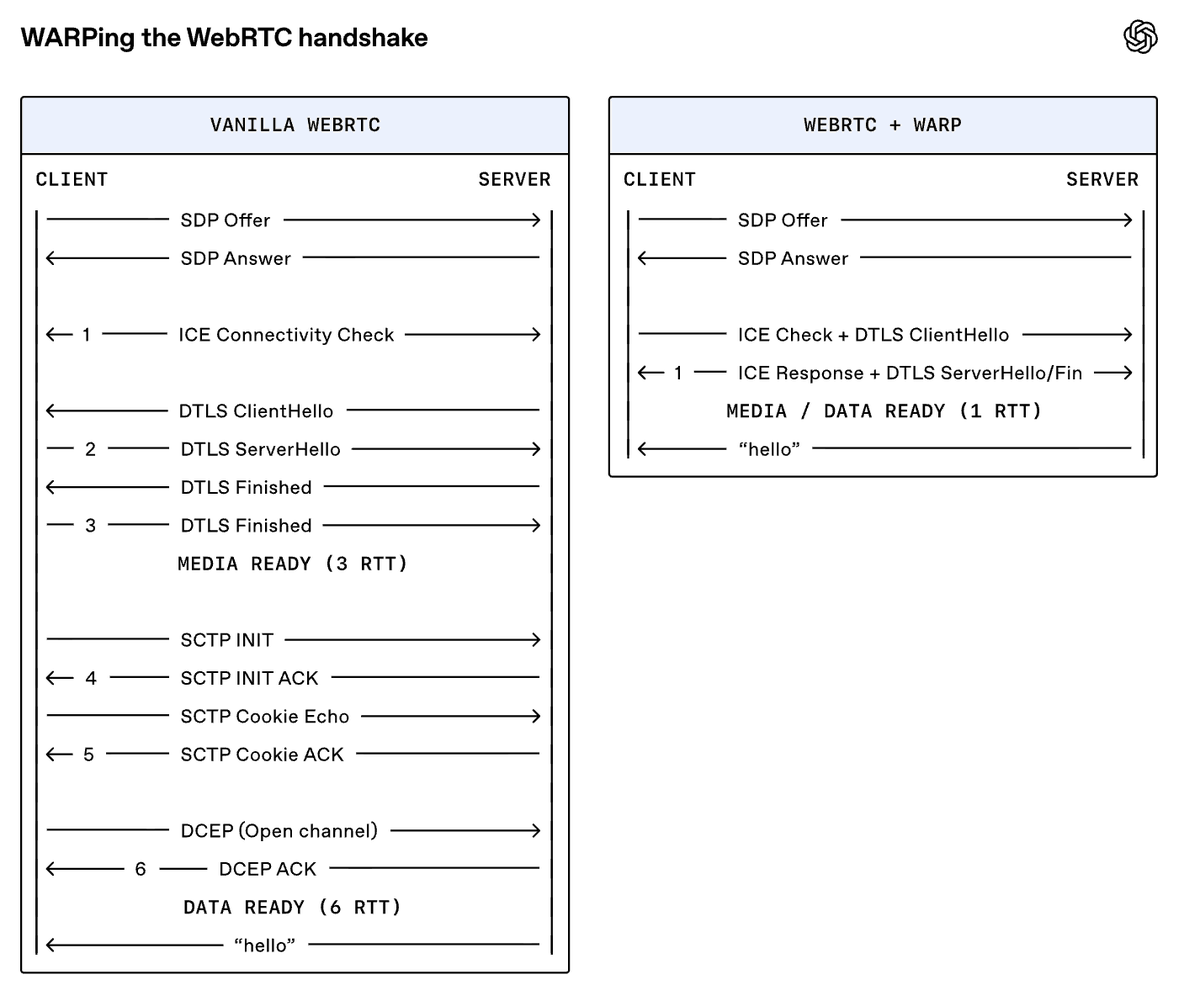
TL;DR - OpenAI describes architectural changes to its voice stack: audio runs on a dedicated low-latency path while reasoning and tool calls execute asynchronously, and voice-session setup was cut from six network round trips to one. It matters because perceived responsiveness in real-time voice assistants is dominated by connection setup and blocking inference, not model quality alone.
- Audio is handled on a separate fast path, decoupling speech I/O latency from slower downstream work.
- Deeper reasoning and tool/function calls run asynchronously so they don't block the conversational loop.
- Voice-session startup was reduced from six network round trips to one, cutting cold-start handshake latency.
- Content is a short official post with no benchmarks or latency figures beyond the round-trip claim; specifics of the implementation are not disclosed.