Jalapeño 跑分炸场,GPU 推理路线开始分裂?
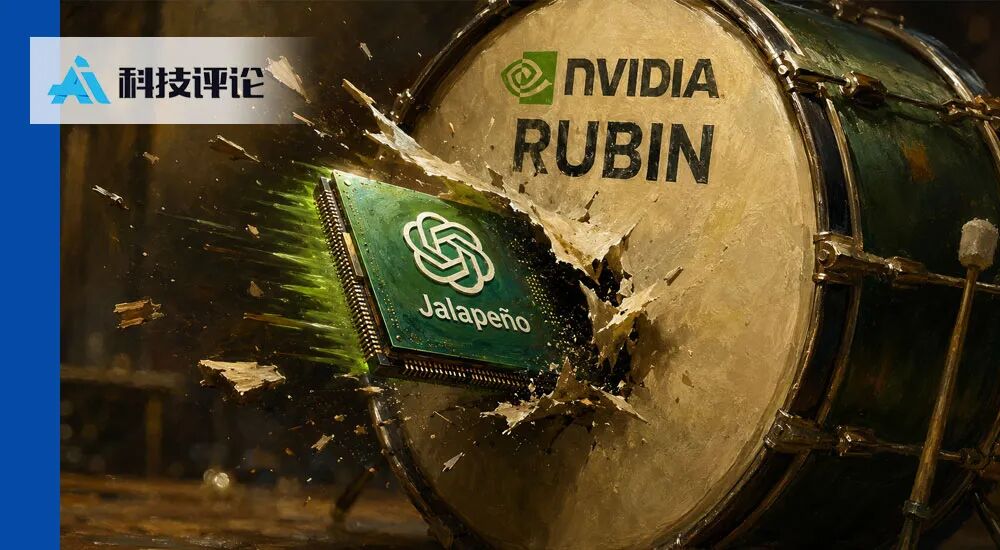
TL;DR - OpenAI, NVIDIA, and Google are pursuing different specialized hardware architectures as LLM inference economics shift from peak FLOPS toward token throughput, latency, and power efficiency. The trend matters because low-latency decoding—especially for long-context agents—is increasingly constrained by memory movement and KV-cache locality rather than raw compute.
- OpenAI’s 700W Jalapeño reportedly improves performance per watt by about 1.5–1.9× and reduces end-to-end latency by 1.7–3.6× across several large models, while retaining one architecture for both prefill and decode.
- NVIDIA’s Vera Rubin system assigns compute-heavy prefill mainly to GPUs and latency-sensitive decode to Groq 3 LPUs, trading greater system complexity for higher per-user token rates.
- Google splits TPU 8 into training-oriented 8t and inference-oriented 8i designs; 8i allocates more resources to HBM, SRAM, shorter network paths, and collective communication acceleration.
- These approaches reflect different partitioning choices—training versus inference, prefill versus decode, or even components within decode—whose benefits must outweigh KV-cache transfers, cross-hardware communication, and scheduling overhead.