OpenAI推理之父最新访谈!数学只是多智能体时代的开胃菜
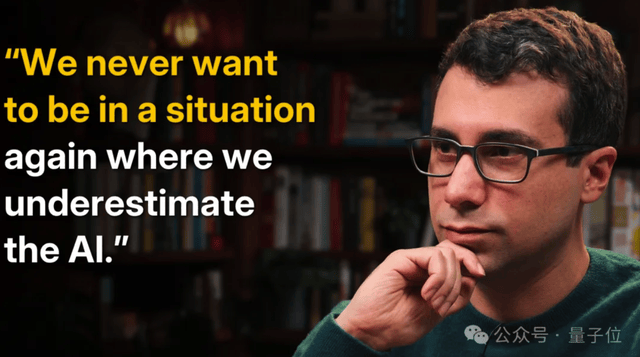
TL;DR - OpenAI researcher Noam Brown argues that multi-agent systems can parallelize test-time compute, but credits the underlying model—not the 10,000-agent setup—for most of a reported Navier–Stokes breakthrough. He sees agent swarms as potentially important for AI research and recursive self-improvement, while emphasizing that their scaling and coordination remain poorly understood.
- OpenAI’s approach gives agents basic peer-to-peer messaging rather than relying on a rigid coordinator-and-subagent scaffold, allowing coordination patterns to emerge dynamically.
- Early tests reportedly show continued gains from 4 to 16 agents, with sublinear speedups that vary by task; mathematics and deep research appear more parallelizable than creative writing.
- The 10,000-agent experiment ran for 88 hours and generated 130 billion tokens, but Brown says no rigorous ablation establishes how much the swarm contributed and estimates its share at under 10%.
- Brown argues AI’s uneven but rapidly improving mathematical capabilities may transfer well to measurable ML optimization tasks, though recursive self-improvement would also be constrained by experiment throughput and compute.