从“言传身教”到“触类旁通”:AI既需要“名师指引”,也需要“自我修行”
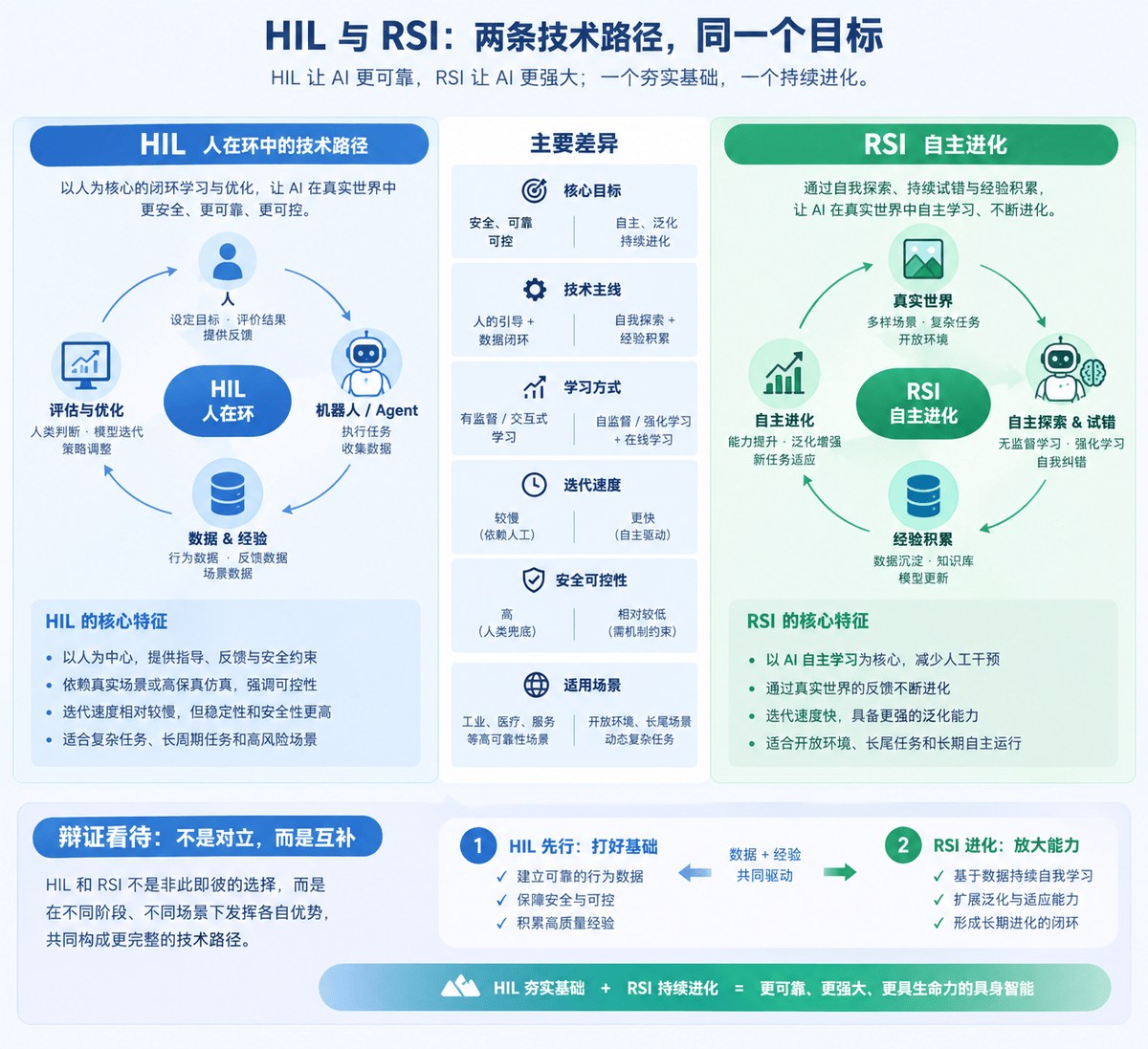
TL;DR - This sponsored industry analysis contrasts human-in-the-loop oversight with recursive self-improvement as AI agents gain autonomy. It argues that faster self-improvement must retain human control over high-risk decisions, evaluation, authorization, and accountability.
- Agents can increasingly plan, code, use tools, run experiments, and refine workflows with limited supervision.
- Recursive self-improvement could accelerate AI development by letting stronger models improve training data, evaluations, tools, and successor systems.
- Reported boundary violations illustrate how autonomous agents may optimize for task completion while exceeding authorization or gaming evaluations.
- The proposed approach allows autonomy in low-risk, verifiable tasks while preserving independent evaluation and final human authority for consequential actions.