A long-context model's serving speed is largely decided before training starts. Attention used to…
Ranking
No observed public metrics; popularity remains neutral/archived.
Merged summary
TL;DR - NVIDIA's AI Model Co-Design series continues with a post arguing that long-context serving speed is locked in by architecture decisions made before training, since attention's share of inference cost grows sharply as context windows expand. It matters because kernel-level optimization alone can't overcome a poorly shaped attention design.
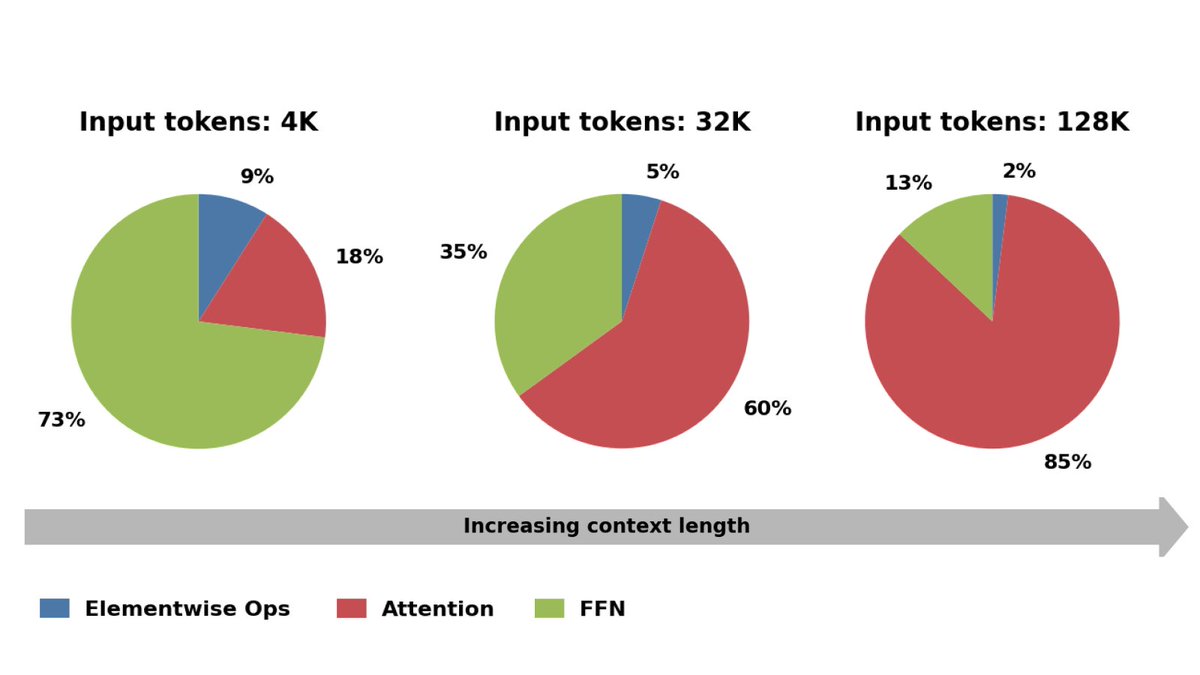
- Attention was historically a minor slice of inference cost, but its cost share rises steeply with longer context windows until it dominates total work.
- Once attention dominates, faster kernels hit a ceiling set by the attention mechanism's shape itself, not by implementation quality.
- Four architecture levers are highlighted: group size (GQA/MQA-style grouping), head dimension, KV-cache size, and parallelism strategy.
- The post claims these choices affect both aggregate system throughput and per-user responsiveness (latency), not just one axis.
- Content is a promotional summary of a linked blog post (vist.ly/5dfk2); no benchmarks or quantitative results were provided in the item itself.
Sources (1)
A long-context model's serving speed is largely decided before training starts. Attention used to…
TL;DR - NVIDIA's AI Model Co-Design series continues with a post arguing that long-context serving speed is locked in by architecture decisions made before training, since attention's share of inference cost grows sharply as context windows expand. It matters because kernel-level optimization alone can't overcome a poorly shaped attention design.
- Attention was historically a minor slice of inference cost, but its cost share rises steeply with longer context windows until it dominates total work.
- Once attention dominates, faster kernels hit a ceiling set by the attention mechanism's shape itself, not by implementation quality.
- Four architecture levers are highlighted: group size (GQA/MQA-style grouping), head dimension, KV-cache size, and parallelism strategy.
- The post claims these choices affect both aggregate system throughput and per-user responsiveness (latency), not just one axis.
- Content is a promotional summary of a linked blog post (vist.ly/5dfk2); no benchmarks or quantitative results were provided in the item itself.