对话郎咸朋:具身也会有“蔚小理”,靠融资实现不了物理AGI
Ranking
No observed public metrics; popularity remains neutral/archived.
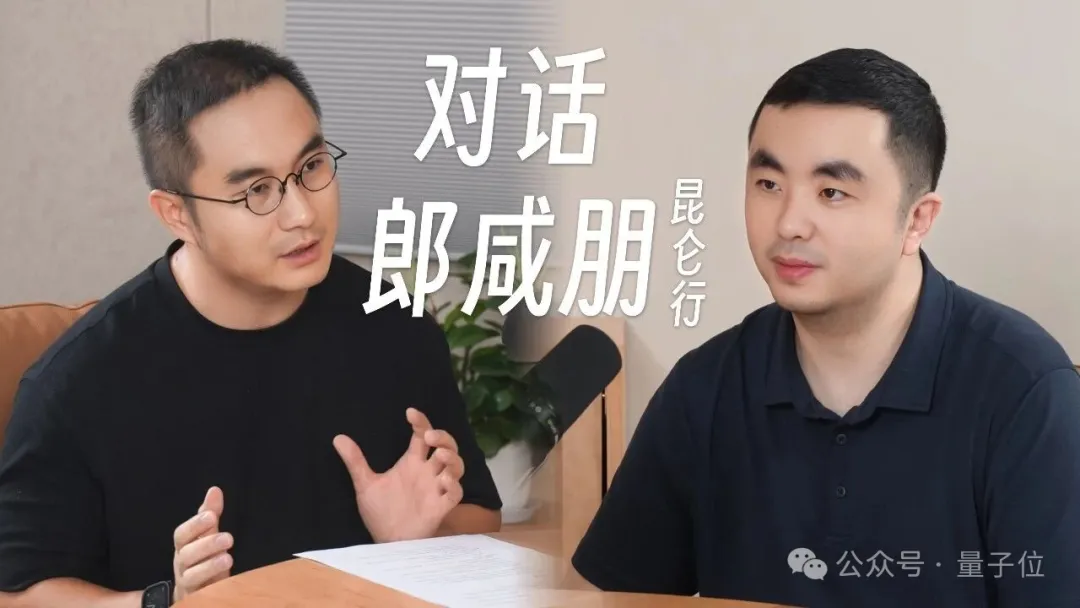
Merged summary
TL;DR - Lang Xianpeng, Li Auto's former autonomous-driving lead, gives his first public interview since founding embodied-AI startup Kunlunxing (昆仑行) in March — a unicorn after three funding rounds in 90 days — arguing the field sits where autonomous driving did in 2015-16 and that venture funding alone can't reach physical AGI.
- Paradigm bet: understanding over imitation. He argues end-to-end/VLA approaches are still imitation learning; Kunlunxing's world model is built on "physical causality," using an MoT architecture whose experts are split by purpose/action/result rather than by modality, plus a proprietary one-way "joint causal attention" so the action expert can't peek at outcomes.
- Data compilation over data acquisition. With data efficiency framed as acquisition × usage efficiency, and robot data acquisition inherently costly, they explicitly label physical quantities (gravity, mass, force, friction), distill mechanisms like Newton's second law, compile them into training samples, and iterate via data feedback — claimed to yield "one brain, many bodies."
- Commercial path and hardware choices. toB first (factory loading/unloading, logistics), home last due to safety; full-size humanoid with in-house joint motors rather than easier wheeled platforms; tactile sensing favored over vision-only for dexterous hands, with in-house hand development undecided.
- Economics claim. Training an operation-capable embodied model may cost tens of billions of RMB, so survival requires self-funding from shipped product revenue; he predicts consolidation into embodied-AI equivalents of NIO/XPeng/Li Auto, and home robots in roughly five years.
Sources (1)
对话郎咸朋:具身也会有“蔚小理”,靠融资实现不了物理AGI
TL;DR - Lang Xianpeng, Li Auto's former autonomous-driving lead, gives his first public interview since founding embodied-AI startup Kunlunxing (昆仑行) in March — a unicorn after three funding rounds in 90 days — arguing the field sits where autonomous driving did in 2015-16 and that venture funding alone can't reach physical AGI.
- Paradigm bet: understanding over imitation. He argues end-to-end/VLA approaches are still imitation learning; Kunlunxing's world model is built on "physical causality," using an MoT architecture whose experts are split by purpose/action/result rather than by modality, plus a proprietary one-way "joint causal attention" so the action expert can't peek at outcomes.
- Data compilation over data acquisition. With data efficiency framed as acquisition × usage efficiency, and robot data acquisition inherently costly, they explicitly label physical quantities (gravity, mass, force, friction), distill mechanisms like Newton's second law, compile them into training samples, and iterate via data feedback — claimed to yield "one brain, many bodies."
- Commercial path and hardware choices. toB first (factory loading/unloading, logistics), home last due to safety; full-size humanoid with in-house joint motors rather than easier wheeled platforms; tactile sensing favored over vision-only for dexterous hands, with in-house hand development undecided.
- Economics claim. Training an operation-capable embodied model may cost tens of billions of RMB, so survival requires self-funding from shipped product revenue; he predicts consolidation into embodied-AI equivalents of NIO/XPeng/Li Auto, and home robots in roughly five years.