WRC2026 | 别急着给机器人更强「大脑」,先补上更省电的神经系统
Ranking
No observed public metrics; popularity remains neutral/archived.
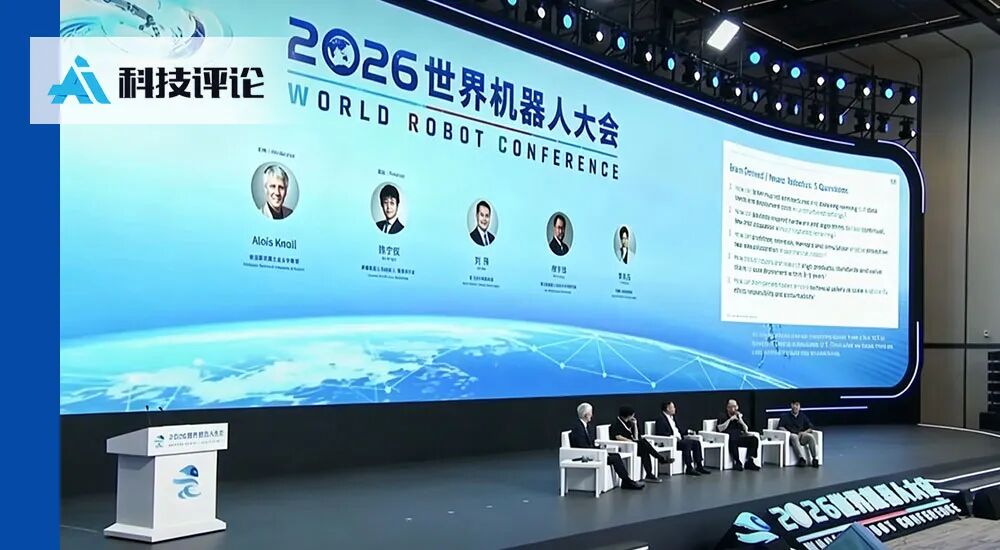
Merged summary
TL;DR - At WRC 2026, industry and academic experts argued that neuromorphic computing should first augment robots’ sensing, preprocessing, and low-level control rather than replace conventional AI “brains.” Event-driven, sparse computation could make large-scale robot deployment more energy-efficient, but software ecosystems and system integration remain major barriers.
- Neuromorphic systems reduce power use through event-driven processing and tighter coupling of computation and memory, avoiding continuous signal processing and costly data movement.
- Sparse workloads such as tactile sensing, sensor preprocessing, and System 0/1 motor-control loops are better near-term targets than dense, complex System 2 reasoning.
- Practical deployment requires low-latency integration across sensors, communications, compute, and actuators, plus programmable hardware for post-deployment adaptation.
- Experts expect adoption to begin in constrained, semi-structured industrial settings, with broader hardware and market maturity estimated at roughly 3–8 years.
Sources (1)
WRC2026 | 别急着给机器人更强「大脑」,先补上更省电的神经系统
TL;DR - At WRC 2026, industry and academic experts argued that neuromorphic computing should first augment robots’ sensing, preprocessing, and low-level control rather than replace conventional AI “brains.” Event-driven, sparse computation could make large-scale robot deployment more energy-efficient, but software ecosystems and system integration remain major barriers.
- Neuromorphic systems reduce power use through event-driven processing and tighter coupling of computation and memory, avoiding continuous signal processing and costly data movement.
- Sparse workloads such as tactile sensing, sensor preprocessing, and System 0/1 motor-control loops are better near-term targets than dense, complex System 2 reasoning.
- Practical deployment requires low-latency integration across sensors, communications, compute, and actuators, plus programmable hardware for post-deployment adaptation.
- Experts expect adoption to begin in constrained, semi-structured industrial settings, with broader hardware and market maturity estimated at roughly 3–8 years.