具身ICL来了创业玩家!上下文成Scaling新赛道
Ranking
No observed public metrics; popularity remains neutral/archived.
Merged summary
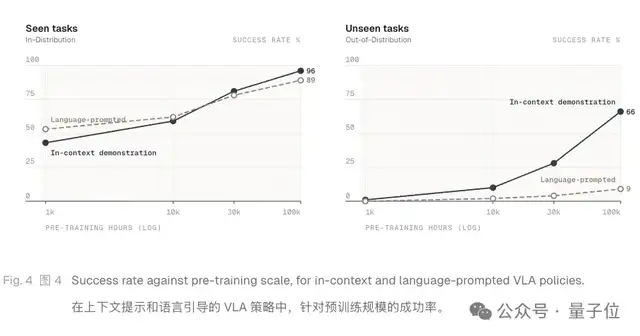
TL;DR - Chinese startup COCO Matrix is developing in-context learning for robots, aiming to shift embodied-AI scaling from simply accumulating task data toward rapid adaptation from demonstrations, interaction history, and self-correction. The approach matters because it could let robots learn new tasks after deployment without task-specific fine-tuning.
- COCO Matrix moves ICL into pretraining and uses task- and action-conditioned visual representations to extract information relevant to each execution stage.
- Its proposed long-context system emphasizes streaming memory, selectively compressing and retaining useful multimodal history rather than continually expanding a fixed context window.
- The company reports over 80% one-shot completion on simple tasks such as grasping after changing the target, while noting that complex-task evaluation is not yet complete.
- A “strong understanding, lightweight generation” experiment reportedly let a roughly 60M-parameter action head outperform a 1.1B-parameter baseline under the same training and compute settings.
Sources (1)
具身ICL来了创业玩家!上下文成Scaling新赛道
TL;DR - Chinese startup COCO Matrix is developing in-context learning for robots, aiming to shift embodied-AI scaling from simply accumulating task data toward rapid adaptation from demonstrations, interaction history, and self-correction. The approach matters because it could let robots learn new tasks after deployment without task-specific fine-tuning.
- COCO Matrix moves ICL into pretraining and uses task- and action-conditioned visual representations to extract information relevant to each execution stage.
- Its proposed long-context system emphasizes streaming memory, selectively compressing and retaining useful multimodal history rather than continually expanding a fixed context window.
- The company reports over 80% one-shot completion on simple tasks such as grasping after changing the target, while noting that complex-task evaluation is not yet complete.
- A “strong understanding, lightweight generation” experiment reportedly let a roughly 60M-parameter action head outperform a 1.1B-parameter baseline under the same training and compute settings.