AI4S青年志① | 摇瓶子的手与调参数的脑:两个95后和一场物质科学的化学反应
Ranking
No observed public metrics; popularity remains neutral/archived.
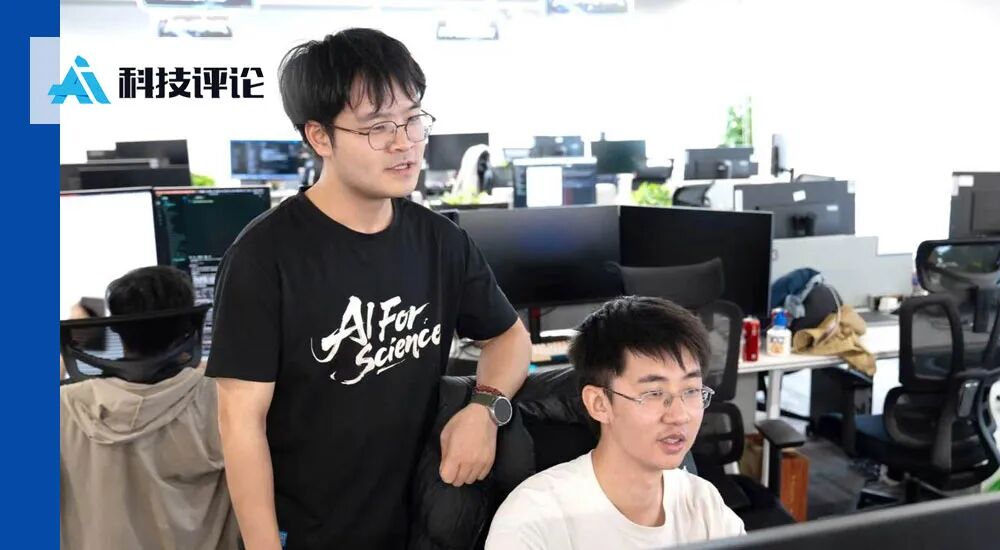
Merged summary
TL;DR - A profile of two young scientists building Golab, an autonomous materials-science R&D platform that links scientific AI models, agent-driven computational tools, and robotic wet labs. Its 120-hour public trial completed 134 of 135 research tasks, highlighting both the potential and current reliability limits of closed-loop AI4S systems.
- Golab supports workflows spanning reaction optimization, drug discovery, molecular design, and materials research, while automating experimental execution and post-reaction separation.
- The platform integrates domain-specific models such as UniTS for 3D transition-state generation and uses accumulated execution errors to improve future agent tool calls.
- In the trial, ligand recommendations raised average yields across four reactions by roughly ten-plus percent; feedback from one failed reaction led the model to propose a different ligand class that performed well in a second wet-lab round.
- The sole unfinished task exposed a key agent weakness: one molecule-level docking error was misclassified as complete tool failure, causing repeated retries and a protective shutdown.
Sources (1)
AI4S青年志① | 摇瓶子的手与调参数的脑:两个95后和一场物质科学的化学反应
TL;DR - A profile of two young scientists building Golab, an autonomous materials-science R&D platform that links scientific AI models, agent-driven computational tools, and robotic wet labs. Its 120-hour public trial completed 134 of 135 research tasks, highlighting both the potential and current reliability limits of closed-loop AI4S systems.
- Golab supports workflows spanning reaction optimization, drug discovery, molecular design, and materials research, while automating experimental execution and post-reaction separation.
- The platform integrates domain-specific models such as UniTS for 3D transition-state generation and uses accumulated execution errors to improve future agent tool calls.
- In the trial, ligand recommendations raised average yields across four reactions by roughly ten-plus percent; feedback from one failed reaction led the model to propose a different ligand class that performed well in a second wet-lab round.
- The sole unfinished task exposed a key agent weakness: one molecule-level docking error was misclassified as complete tool failure, causing repeated retries and a protective shutdown.