AI开始研究Physical AI:FSD级团队亮出首版模型Simate-beta,空降RoboDojo
Ranking
No observed public metrics; popularity remains neutral/archived.
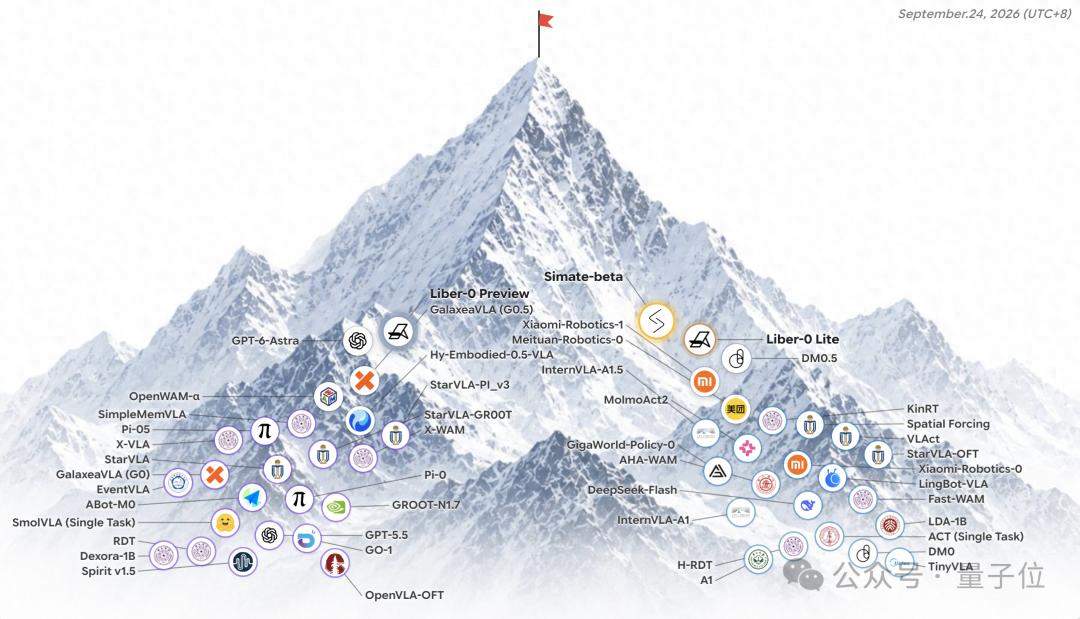
Merged summary
TL;DR - Three-month-old startup Simate unveiled Simate-beta, a general-purpose robotic “fast system” that ranked first on RoboDojo, alongside an AI-native platform for automating physical-AI research. The company aims to accelerate progress toward zero- and few-shot robot operation by combining agent-driven experimentation with integrated training, simulation, evaluation, and hardware testing.
- Simate-beta emphasizes 4D physical perception and hierarchical temporal memory for real-time, long-horizon manipulation; detailed architecture and model size remain undisclosed.
- The company reports a RoboDojo average score of 33.95 and 27.96% success rate without benchmark-specific optimization, while noting that leaderboard and physical-robot results are separate.
- Its stack combines the modular SiPAI model framework, context-aware AutoResearch agents, and infrastructure that runs dozens of research paths concurrently.
- Candidate approaches are screened through world models and simulation before physical testing, with real-world failures fed back into the research context; papers, technical reports, and phased open-source releases are planned.
Sources (1)
AI开始研究Physical AI:FSD级团队亮出首版模型Simate-beta,空降RoboDojo
TL;DR - Three-month-old startup Simate unveiled Simate-beta, a general-purpose robotic “fast system” that ranked first on RoboDojo, alongside an AI-native platform for automating physical-AI research. The company aims to accelerate progress toward zero- and few-shot robot operation by combining agent-driven experimentation with integrated training, simulation, evaluation, and hardware testing.
- Simate-beta emphasizes 4D physical perception and hierarchical temporal memory for real-time, long-horizon manipulation; detailed architecture and model size remain undisclosed.
- The company reports a RoboDojo average score of 33.95 and 27.96% success rate without benchmark-specific optimization, while noting that leaderboard and physical-robot results are separate.
- Its stack combines the modular SiPAI model framework, context-aware AutoResearch agents, and infrastructure that runs dozens of research paths concurrently.
- Candidate approaches are screened through world models and simulation before physical testing, with real-world failures fed back into the research context; papers, technical reports, and phased open-source releases are planned.