HC归来,华为正重新定义AIDC基础设施
Ranking
No observed public metrics; popularity remains neutral/archived.
Merged summary
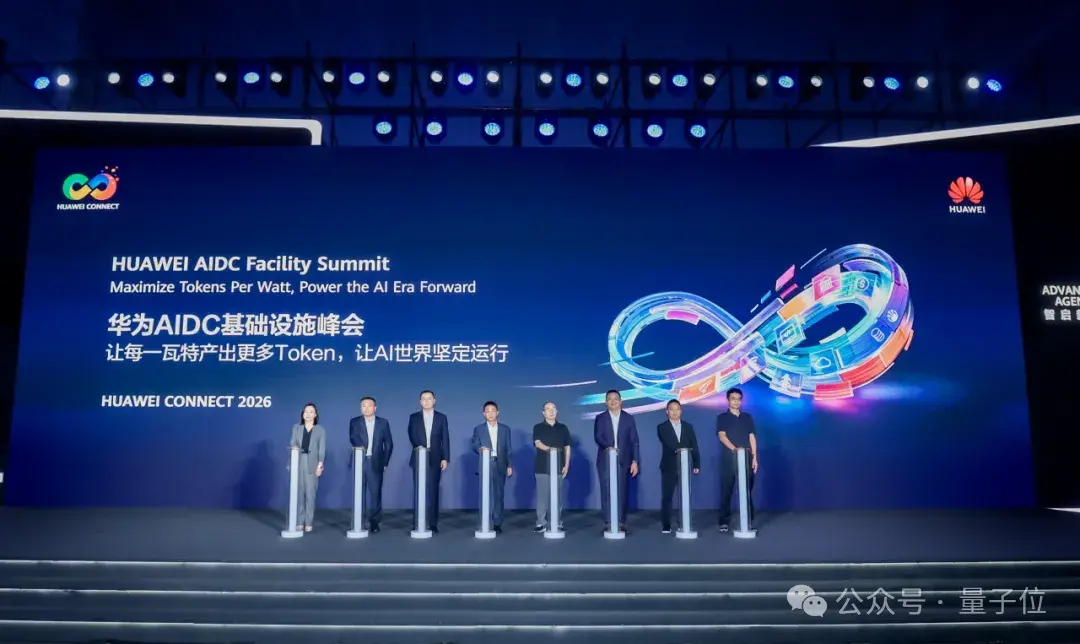
TL;DR - Huawei introduced its AIDC 1.0 infrastructure portfolio, jointly designing power delivery, energy storage, liquid cooling, digital operations, and prefabricated construction for increasingly dense and volatile AI workloads. The strategy shifts data-center optimization from PUE alone toward useful compute output per watt, including Tokens Per Watt (TPW).
- The “source-grid-load-storage” architecture combines grid-friendly UPS systems, intelligent lithium batteries, and grid-forming storage to smooth load spikes, support renewable energy, and improve grid stability.
- New hardware includes a 1,280 kVA UPS with up to 98% double-conversion efficiency and a DC UPS platform supporting 270V, 400V, and 800V architectures.
- AI-assisted liquid cooling uses a thermal management unit for leak detection, coolant-health prediction, predictive maintenance, and workload-aware coordination with Ascend servers.
- Prefabricated power modules reportedly reduce space by 40% and installation time from seven to three days; Huawei and SenseTime also reported delivering an 18 MW power expansion in 45 days.
Sources (1)
HC归来,华为正重新定义AIDC基础设施
TL;DR - Huawei introduced its AIDC 1.0 infrastructure portfolio, jointly designing power delivery, energy storage, liquid cooling, digital operations, and prefabricated construction for increasingly dense and volatile AI workloads. The strategy shifts data-center optimization from PUE alone toward useful compute output per watt, including Tokens Per Watt (TPW).
- The “source-grid-load-storage” architecture combines grid-friendly UPS systems, intelligent lithium batteries, and grid-forming storage to smooth load spikes, support renewable energy, and improve grid stability.
- New hardware includes a 1,280 kVA UPS with up to 98% double-conversion efficiency and a DC UPS platform supporting 270V, 400V, and 800V architectures.
- AI-assisted liquid cooling uses a thermal management unit for leak detection, coolant-health prediction, predictive maintenance, and workload-aware coordination with Ascend servers.
- Prefabricated power modules reportedly reduce space by 40% and installation time from seven to three days; Huawei and SenseTime also reported delivering an 18 MW power expansion in 45 days.