🛰️ Daily AI Frontier
31 works · 3 categories · 12 topics · blog 12 journal 5 arxiv 15 generated 2026-09-02 14:30:22 UTC
Top highlights — Research

LLM Agents 4

Representative image for Harness-of-Harness: Multi-Day Autonomous Software Development with Continual Improvement

Harness-of-Harness: Multi-Day Autonomous Software Development with Continual Improvement

Rank 85 · Content 95 · Popularity 63

TL;DR - Harness-of-Harness (HoH) structures coding-agent runs into iterative planning, coding, testing, and evaluation loops for sustained autonomous software improvement. Across three benchmarks and model-harness pairs, it delivered a 52.25% average relative gain over standalone harnesses and supported a 70-plus-iteration game-development deployment.

  • HoH balances defect repair with capability growth through small, verifiable development increments.
  • It separates implementation-time tests from independent evaluation while constraining outputs rather than prescribing agent workflows.
  • The framework progressively exposes deliverables, tools, and skills, promotes reuse, and maintains versioned project histories.
  • Benchmark gains reached 82.86% after three iterations; the multi-day deployment produced a playable first-person shooter with integrated mechanics, narrative, visuals, and audio.
Representative image for Parsing the Stream: A Live Trace Model for Long-Horizon Agents and Their Observers

Parsing the Stream: A Live Trace Model for Long-Horizon Agents and Their Observers

Rank 83 · Content 100 · Popularity 42

TL;DR - This paper proposes a live trace model that incrementally folds long-horizon agent events into typed state and generates compact views for agents and human observers. It improves monitoring efficiency and accuracy while providing deterministic, auditable state management.

  • Observer views used roughly 14–15× fewer input tokens and cost 5–7× less than budget-capped raw-trace reading, while improving accuracy from 0.48 to 0.85–0.87.
  • On 120-link sequential-dependency tasks, per-step running-state mechanisms completed 30/30 trials versus 8/30 for full-context prompting.
  • A prompt-level scratchpad matched the fold’s task accuracy at lower cost; the fold’s added benefits are deterministic auditability and shared state for observer views.
  • The authors identify eleven candidate trace-folding requirements and demonstrate an order-sensitive task family where folding no longer helps.

Bandits in Prod: Hyperparameter Optimization at Inference Time

Rank 81 · Content 100 · Popularity 37

TL;DR - This paper formulates inference-time configuration tuning on live, noisy requests as Online Hyperparameter Optimization and introduces IMABO, an infinitely many-armed bandit framework. It enables production systems, including LLM agents, to optimize choices without representative validation data.

  • IMABO separates selecting previously sampled configurations via a bandit policy from proposing new configurations via an interchangeable oracle.
  • Its IMOSS policy grows the active configuration set as (t^\beta) and provides an expected cumulative quantile-regret bound of (O(p_\rho^{-1/\beta} + T^{(1+\beta)/2})).
  • Tree-structured Parzen Estimation, incumbent mutation, and a pretrained tabular foundation model all improve over uniform-random configuration proposals.
  • IMABO achieves the lowest cumulative regret across the evaluated settings, spanning classical ML tuning and LLM-agent configuration.

WorldBench: Culturally Grounded Benchmark for Multilingual Agents

Rank 81 · Content 100 · Popularity 37

TL;DR - WorldBench is a multilingual benchmark of 1,600 culturally and persona-grounded workflows for evaluating agents in sandboxed environments. Frontier models achieve only 49.2% Constrained Task Success, exposing brittleness in long-horizon tasks and preserving environment state.

  • Covers seven languages and eight cultures, with tasks refined by language- and culture-specific human annotators.
  • Evaluates realistic multi-step workflows through structured actions in sandboxed environments.
  • Introduces Constrained Task Success (CTS), combining task completion, minimal modification, and complementary metrics via deterministic and LLM-based judging.
  • All evaluated models show substantial gaps between task correctness and environment preservation.

Medical/Healthcare AI 2

When do infections lead to long COVID? Scientists close in on triggers and treatments for post-viral syndromes

Rank 73 · Content 85 · Popularity 47

TL;DR - This Nature article surveys research into why some infections trigger long COVID and other post-viral syndromes, and how those insights might guide treatments. The provided excerpt does not specify particular mechanisms, findings, or therapies.

  • Hundreds of millions of people are reported to have long-term conditions following infection.
  • Researchers are investigating the triggers that determine when an acute infection becomes a persistent illness.
  • The work aims to identify effective treatments for long COVID and related post-viral conditions.

Author Correction: Signalling thresholds and negative B-cell selection in acute lymphoblastic leukaemia

Rank 38 · Content 35 · Popularity 47

TL;DR - This is an author correction to a Nature study on signalling thresholds and negative B-cell selection in acute lymphoblastic leukaemia. The provided content does not specify what was corrected or whether the study’s conclusions changed.

  • Published online in Nature on 2 September 2026.
  • The correction concerns research on B-cell selection mechanisms in acute lymphoblastic leukaemia.
  • No corrected data, methods, results, or conclusions are included in the provided text.
  • Despite the requested AI framing, the available content does not establish an AI or machine-learning component.

Bioinformatics AI 1

Mutating every DNA letter of a genome shows surprising effects — and the limits of AI

Rank 84 · Content 100 · Popularity 47

TL;DR - A genome-wide experiment that mutated every DNA letter in a virus found unexpected biological effects that leading AI models could not reliably predict. The work highlights both the value of exhaustive mutation mapping and current limits of AI-based genomic prediction.

  • Researchers systematically rewrote individual DNA positions across an entire viral genome.
  • The mutations produced biological consequences that were sometimes surprising.
  • Top AI models failed to predict these effects accurately.
  • The brief provided does not specify the virus, experimental methods, models tested, or quantitative results.

LLMs & Foundation Models 5

SMELT: Scaling Laws for Compute-Matched MoE Looped Transformers

Rank 91 · Content 100 · Popularity 70

TL;DR - SMELT is a compute-matched Mixture-of-Experts Transformer that reuses its middle layers to gain effective depth without increasing parameter, FLOP, or KV-cache budgets. Its scaling laws indicate 6.8–18.0% training-FLOP savings on the compute-optimal frontier, with especially strong downstream gains for code.

  • SMELT loops the middle half of its layers twice while matching an unlooped baseline on per-token FLOPs, non-embedding parameters, and KV cache.
  • Scaling experiments cover four model sizes up to 54B non-embedding parameters, with separate Chinchilla-style scaling laws fitted for looped and baseline architectures.
  • Benefits grow with sample length and the number of in-context examples, and downstream improvements exceed what validation loss alone predicts.
  • Mechanistic analysis suggests the second pass reduces attention sinks and shifts attention toward content-relevant tokens.
Representative image for Knowledge Distillation During Mid-Training Favors Reasoning over Factual Recall

Knowledge Distillation During Mid-Training Favors Reasoning over Factual Recall

Rank 88 · Content 100 · Popularity 60

TL;DR - Standard forward-KL knowledge distillation during language-model mid-training improves reasoning but can slow factual recall acquisition. The proposed entropy-routed Switch Distillation preserves most factual recall while delivering stronger reasoning and knowledge performance than next-token prediction.

  • Teacher confidence is higher on procedural data than knowledge-intensive data, creating stage-dependent distillation effects as student knowledge evolves.
  • Switch Distillation uses teacher predictive entropy to distill confident tokens and applies cross-entropy elsewhere.
  • It achieves 1.61–1.71× reasoning and 1.13–1.19× knowledge and commonsense performance while retaining 96.7–96.8% of factual recall versus standard next-token prediction.
  • After post-training, it closes the factual-recall gap while retaining 1.25–1.32× reasoning and 1.13–1.20× knowledge and commonsense gains.
Representative image for From Production Traffic to Post-Training: Building a Self-Hosted LLM That Covers the Corporate Request Mix

From Production Traffic to Post-Training: Building a Self-Hosted LLM That Covers the Corporate Request Mix

Rank 86 · Content 95 · Popularity 66

TL;DR - This paper presents a post-training recipe for consolidating traffic from more than 200 enterprise applications onto one self-hosted LLM. Specialized GRPO experts and model merging close production-specific quality gaps while reducing GPU fragmentation and serving costs.

  • Production errors are grouped into instruction following, function calling, and internal task-distribution gaps, with evaluations stratified to real traffic.
  • Separate GRPO experts avoid cross-domain reward interference and are combined using two-stage SLERP.
  • Domain-specific fixes address semantic collapse, excessive function calls, and reward-driven verbosity.
  • The resulting model reportedly beats a roughly 7× larger baseline on internal Arena, instruction-following, and function-calling evaluations, and serves 116 million monthly requests—50% of platform traffic.
Representative image for LLMPEDIA: Browsing, Verifying, and Comparing the Parametric Encyclopedic Knowledge of LLMs

LLMPEDIA: Browsing, Verifying, and Comparing the Parametric Encyclopedic Knowledge of LLMs

Rank 81 · Content 100 · Popularity 37

TL;DR - LLMPEDIA is an open, browsable audit of encyclopedic knowledge generated from the parametric memory of three LLM families without retrieval. Its sampled factuality rate of 68.4%—over 21 percentage points below MMLU scores—highlights major knowledge gaps hidden by fixed benchmarks.

  • The authors recursively generated roughly 1.3 million articles using GPT-5-mini, DeepSeek-V3.2, and Llama-3.3-70B.
  • Atomic claims were checked against Wikipedia and a curated web stack, then labeled supported, refuted, or insufficiently evidenced.
  • A uniform random sample found 68.4% of claims true and 30.5% insufficient, encompassing both long-tail knowledge and possible hallucinations.
  • The live site supports claim-level inspection, link traversal, cross-model and political-persona comparisons, and guided topic exploration.
Representative image for When Safety Routing Breaks: Understanding Alignment Fragility under Benign Fine-Tuning

When Safety Routing Breaks: Understanding Alignment Fragility under Benign Fine-Tuning

Rank 80 · Content 100 · Popularity 34

TL;DR - This paper explains why benign fine-tuning can rapidly erode LLM refusal behavior: safety alignment relies on a low-rank output-routing mechanism that is easily disrupted. The findings suggest safety representations remain intact, but their routing becomes ineffective.

  • Just 100 benign fine-tuning examples selectively re-sharpen output-side MLP modules, producing high attack success rates with only mild utility loss.
  • The proposed Fisher-geometric account challenges gradient-conflict explanations: alignment flattens safety geometry while preserving an output-routing pathway.
  • A small number of safety examples can restore refusals, indicating that safety-relevant internal representations survive benign fine-tuning.
  • LoRA and ASAM delay early safety collapse by limiting output-side sharpness, but their protection diminishes at larger fine-tuning scales.

Multimodal & Generative 2

Representative image for H3-World: Turning Language Understanding into World Control

H3-World: Turning Language Understanding into World Control

Rank 87 · Content 95 · Popularity 67

TL;DR - H3-World turns the 33B MiniMax-H3 video generator into an interactive world model controlled through temporally grounded language instructions. It achieves precise character and camera control with lightweight adaptation, suggesting pretrained video generators can efficiently acquire interactive control capabilities.

  • Encodes actions as structured character and camera instructions aligned with temporal video latents.
  • Uses temporal attention routing to constrain instructions to intended intervals and reduce control leakage between actions.
  • Trains on 8,000 gameplay samples for 10,000 LoRA steps while updating only 0.199% of parameters.
  • Preserves generation quality and generalizes to unseen scenarios without dedicated action modules.

IntroConformal: Conformal Factuality Guarantees for Large Vision-Language Models via Introspective Signals

Rank 81 · Content 100 · Popularity 37

TL;DR - IntroConformal is a training-free conformal risk control framework that uses a vision-language model’s internal signals to provide finite-sample, distribution-free factuality guarantees. It reduces reliance on external verifiers and better handles confidently incorrect outputs.

  • Derives conformity scores from layer-wise semantic stability in hidden-state representations.
  • Introduces verification probability, based on the model’s self-assessment of claim factuality, as a stronger introspective score.
  • Satisfies conformal risk guarantees across multiple large vision-language model architectures.
  • Reduces abstention while matching or exceeding external-verifier baselines in claim-level discrimination.

Efficiency & Systems 2

Representative image for Efficiently Estimating Optimal Hyperparameter Scaling Laws through Power-Law Entropy Search

Efficiently Estimating Optimal Hyperparameter Scaling Laws through Power-Law Entropy Search

Rank 88 · Content 100 · Popularity 61

TL;DR - Power-Law Entropy Search (PLES) uses cost-aware, multi-fidelity Bayesian optimization to estimate optimal LLM training hyperparameter scaling laws efficiently. It achieves accurate estimates with less than one-tenth the computational budget of grid search and other baselines.

  • PLES selects experiments based on expected reduction in overall scaling-law uncertainty per unit of compute.
  • Its adaptive strategy naturally favors informative, lower-cost small-scale training runs.
  • Evaluations cover synthetic benchmarks, surrogates fitted to real LLM training data, and actual LLM pre-training runs.
  • The method targets scaling-law estimation rather than optimization of a single objective function.

Cheap Verifiers, Large Blind Spots: Measuring the Reliability Cost of Cost-Saving Cascades

Rank 81 · Content 100 · Popularity 37

TL;DR - This paper finds that cost-saving LLM cascades can hide severe reliability failures because the verifier used to route and evaluate answers has substantial blind spots. Fine-tuning students on verifier rejections may worsen or collapse performance while internal metrics remain deceptively stable.

  • Verifier blind-spot rates increased from 0.12 to 0.55 as student size scaled from 0.5B to 32B, but decreased with stronger verifiers.
  • A frontier verifier reduced the blind-spot rate to about 0.05 but escalated 46% of hard-MATH queries, eroding the cascade’s cost advantage.
  • Corrective fine-tuning on rejected answers degraded the small student across both same-family and cross-family teachers.
  • Verifier-based monitoring reported a steady 3% error even as true delivered error reached 32%, showing that in-loop metrics cannot reliably detect degradation.

AI for Materials 1

Autonomous discovery of new structure-plausibility laws for explainable and rapid crystal diagnosis and screening

Rank 81 · Content 100 · Popularity 37

TL;DR - Autonomous agents discovered eight explainable rules for rapidly assessing inorganic crystal plausibility. The rules can identify damaged or difficult-to-synthesize structures and substantially reduce costly DFT validation while preserving nearly all high-performing candidates.

  • Agents generated, tested, and actively refuted two million candidate laws to derive eight Plausibility Rules for Inorganic Structures (PRIS) spanning five physicochemical mechanisms.
  • Experimental structures satisfy PRIS rule sets at rates of 82–99%, compared with 6.5% satisfying Pauling’s rules 2–5 together.
  • The strictest PRIS set detects 87.9% of damaged structures, versus 1.6–3.2% for distance-cutoff screening.
  • In inverse design, PRIS and its synthesis score reduced the DFT queue by up to 67.3% while retaining 99.2% of candidates meeting the DFT-validated bulk-modulus target.

Disaster Monitoring 1

Satellite images before Nepal disaster showed warning signs

Rank 59 · Content 65 · Popularity 47

TL;DR - Satellite imagery showed accelerated movement of a glacier–rock mass days before its collapse in Nepal, which triggered a deadly flash flood. The observation suggests remote sensing could help identify warning signs for similar hazards.

  • Pre-disaster images captured increasing movement in the unstable glacier–rock mass.
  • The acceleration was visible only days before the collapse.
  • The collapse caused a deadly flash flood.
  • The limited content does not specify the satellite system, analysis method, or predictive reliability.

LLM Evaluation 1

BenchMIRT: What are LLM benchmarks actually measuring?

Rank 71 · Content 80 · Popularity N/A

TL;DR - BenchMIRT examines what LLM benchmarks actually measure. Because only the title and source are provided, its methods and findings cannot be summarized reliably.

  • The work focuses on interpreting the capabilities or constructs captured by LLM benchmarks.
  • Its framing questions whether benchmark scores reflect the abilities they are commonly assumed to measure.
  • No specific datasets, methodology, experiments, or results are available in the provided content.

Robotic Foundation Models 1

Representative image for Facet-0: A Robotic Foundation Model for Contact-Rich Precise Manipulation

Facet-0: A Robotic Foundation Model for Contact-Rich Precise Manipulation

Rank 81 · Content 100 · Popularity 37

TL;DR - Facet-0 is a robotic foundation model for contact-rich, sub-millimeter assembly that jointly predicts actions and their expected force/torque consequences. It achieves 82% mean success across five computer-assembly tasks, versus 15% for the strongest baseline.

  • Aligns vision-language semantics and robot kinematics with causal wrist-wrench histories.
  • Uses flow matching to jointly generate action chunks and predicted future wrist-wrench profiles.
  • Applies deployment-based RL with an Action-Wrench Critic, phase-aware rewards, and contact-selective credit assignment.
  • Trained on the 1,000-hour, force-synchronized ManuFacet-1K dataset; reaches 0.5 mm placement accuracy at 50 ms command latency.
Top highlights — Industry & News

LLM Agents 3

Representative image for 建立AI时代“度量衡”:OPPO联合OpenKG推出首个端侧AI记忆评测基准MobileMem

建立AI时代“度量衡”:OPPO联合OpenKG推出首个端侧AI记忆评测基准MobileMem

Rank 75 · Content 85 · Popularity N/A

TL;DR - OPPO and OpenKG introduced MobileMem, an open benchmark for evaluating long-term memory in on-device AI agents. It aims to standardize comparisons under mobile constraints such as limited compute, storage, and privacy requirements.

  • MobileMem uses histories totaling roughly one million tokens to simulate long-term, personalized device use.
  • It evaluates event modeling and retrieval across time, applications, and modalities; multimodal association and reasoning; and evolving user preferences, relationships, and event states.
  • The framework supports different agent architectures and tests components including task understanding, memory retrieval, search, and execution.
  • The MobileMem 1.0 white paper is available, while datasets, tasks, and evaluation tools are planned for phased open-source release.
Representative image for 企业级Agent落地样板间!百融硅基员工批量上岗,按结果领工资

企业级Agent落地样板间!百融硅基员工批量上岗,按结果领工资

Rank 68 · Content 75 · Popularity N/A

TL;DR - BaiRong Intelligent is expanding its enterprise contact-center agents from finance into logistics and securities, pairing vertically trained models with outcome-based pricing. The deployments illustrate how agents can become measurable production capacity rather than software sold by licenses, seats, or tokens.

  • BaiRong’s AICC revenue grew 52% year over year in H1 2026, while revenue from newer scenarios grew 195% from a small base.
  • A logistics deployment scaled from fewer than 1,000 to more than 15,000 calls per day; one major brokerage expanded from roughly 30 to 210 deployed seats.
  • Its stack combines proprietary voice, proactive-dialogue, and document-understanding models with production feedback loops, telephony infrastructure, and field deployment engineers who integrate agents into enterprise workflows.
  • The RaaS model charges for successfully resolved calls or tickets, deployment scale, or business outcomes; BaiRong says resolved logistics calls currently cost over 50% less than traditional human handling.

独家解读丨字节 Seed 大调整,分支背后谁在操盘?

Rank 64 · Content 70 · Popularity N/A

TL;DR - ByteDance reorganized its Seed foundation-model team around centralized pretraining data, reinforcement learning, and separate post-training groups for workplace agents and consumer chat. The shift reflects growing competition around unified multimodal models, reasoning, and agents that execute real tasks.

  • Pretrain Data consolidates text, code, vision, and speech data pipelines to support Omni multimodal and large-scale models.
  • Horizon RL centralizes reinforcement learning for scaling, reasoning, and vision, building on Seed’s DAPO and VAPO work.
  • Product Posttrain-Work targets GUI and office agents, including tool use, computer interaction, and complex task execution for Doubao and Dola.
  • Product Posttrain-Chat focuses on search, dialogue, personalization, safety, and inference costs for consumer-facing products.

LLMs & Foundation Models 2

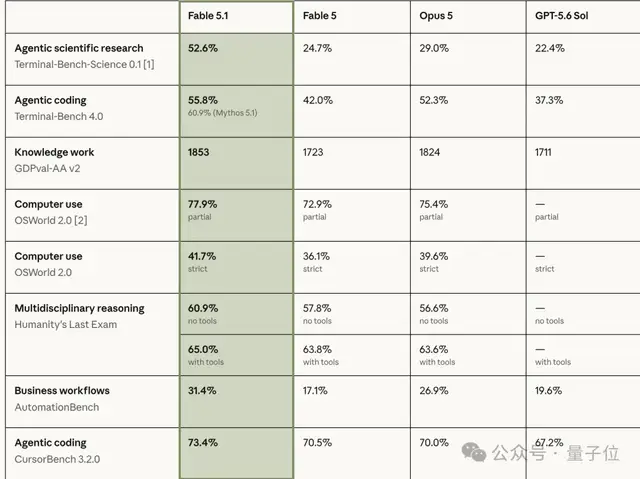
Representative image for Claude最强Fable 5.1发布!8项屠榜,最高降价45%,反蒸馏机制上线

Claude最强Fable 5.1发布!8项屠榜,最高降价45%,反蒸馏机制上线

Rank 75 · Content 85 · Popularity N/A

TL;DR - Anthropic released Claude Fable 5.1 and restricted-access Mythos 5.1, claiming benchmark-leading performance, stronger multi-step reasoning, and workload savings of up to 45%. The release also introduces signed reasoning blocks that prevent developers from altering conversation history while retaining prior chains of thought.

  • Fable 5.1 reportedly ranks first on eight public benchmarks, with notable gains in scientific and coding tasks; Mythos 5.1 targets approved cybersecurity and life-sciences organizations.
  • Cache-read pricing falls 75% to $0.25 per million tokens, while input and output prices remain $10 and $50; Anthropic estimates roughly 25% lower typical costs and up to 45% savings for highly agentic workloads.
  • Demonstrations include experimentally tested protein binders, higher-resolution Venus terrain mapping, and GPU kernels that accelerated seven computational-biology models by up to 2.5× with identical outputs.
  • New cryptographic signatures bind reasoning blocks to the original system prompt, tools, and message history; modified prefixes can trigger an HTTP 400 error or cause invalid reasoning blocks to be dropped.
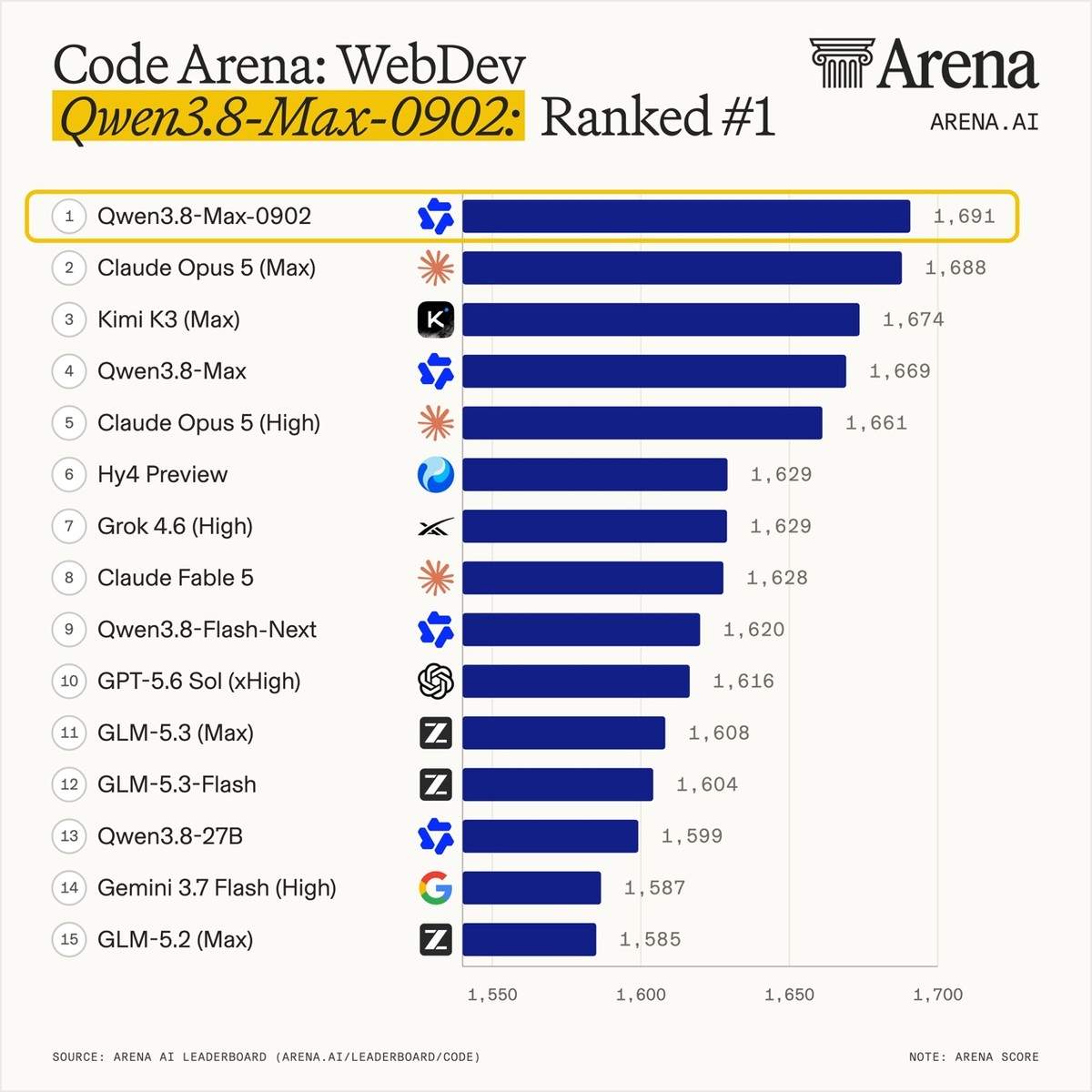
Representative image for 阿里更新旗舰模型Qwen3.8-Max,前端编程能力跃居全球第一

阿里更新旗舰模型Qwen3.8-Max,前端编程能力跃居全球第一 🔗 2 sources

Rank 68 · Content 75 · Popularity N/A

TL;DR — 阿里更新旗舰模型 Qwen3.8-Max,通过针对编程和专业办公工作流的后训练,CodeArena WebDev 得分提升 22 分至 1691,位居所引榜单第一。该模型面向复杂企业、科研及长时智能体任务,并已通过 API 和多款阿里产品开放。

  • 模型总参数量为 2.4 万亿,支持最长 100 万 Token 上下文。
  • 此次更新重点增强智能体编程、前端开发和专业办公任务能力。
  • CodeArena WebDev 排名中,Qwen3.8-Max 以 1691 分领先 Claude Opus 5、Kimi K3 等模型。
  • CodeArena 报告其平均价格为每百万 Token 5 美元,并将其列入价格—性能帕累托前沿。
  • 模型已在通义千问 API 平台上线,并集成至 Qwen Office、Qoder 和千问 App。

说明: 两个来源信息基本一致;量子位更直接强调其前端编程能力登顶,雷峰网则更突出专业工作流和成本优势。

Multimodal & Generative 2

Representative image for 李飞飞发布:全球首个多模态世界模型

李飞飞发布:全球首个多模态世界模型

Rank 82 · Content 95 · Popularity N/A

TL;DR - World Labs introduced Atlas, a multimodal world model that generates camera-controlled imagery, reconstructs 3D scenes, and simulates spatial-temporal environments from images or video. It could support applications ranging from visual effects to scalable real-to-sim training for robots.

  • Atlas uses a multimodal autoregressive diffusion Transformer to process text, images, camera poses, and depth maps within a shared 3D spatial context.
  • From one or more images, it can synthesize new views, output explicit 3D representations, and generate up to one minute of 1440p camera-controlled video.
  • World Labs reports that Atlas outperformed evaluated state-of-the-art video models on camera-controlled generation and specialized open-source models on sparse-view 3D reconstruction.
  • The model can produce realistic RGB and depth observations from a few photos, enabling varied simulated environments for robot training and testing; early access is limited to selected partners.

Introducing agentic video understanding with Gemini

Rank 68 · Content 75 · Popularity N/A

TL;DR - Google DeepMind is introducing agentic video understanding capabilities in Gemini. Based on the title alone, the update appears aimed at enabling Gemini to analyze video through more active, multi-step reasoning, but no implementation details or results were provided.

  • The announcement concerns Gemini’s video-understanding capabilities.
  • “Agentic” suggests a workflow involving iterative reasoning or actions over video, though the specific mechanism is not described.
  • No benchmarks, model specifications, availability details, or demonstrated improvements are included in the provided content.

Efficiency & Systems 2

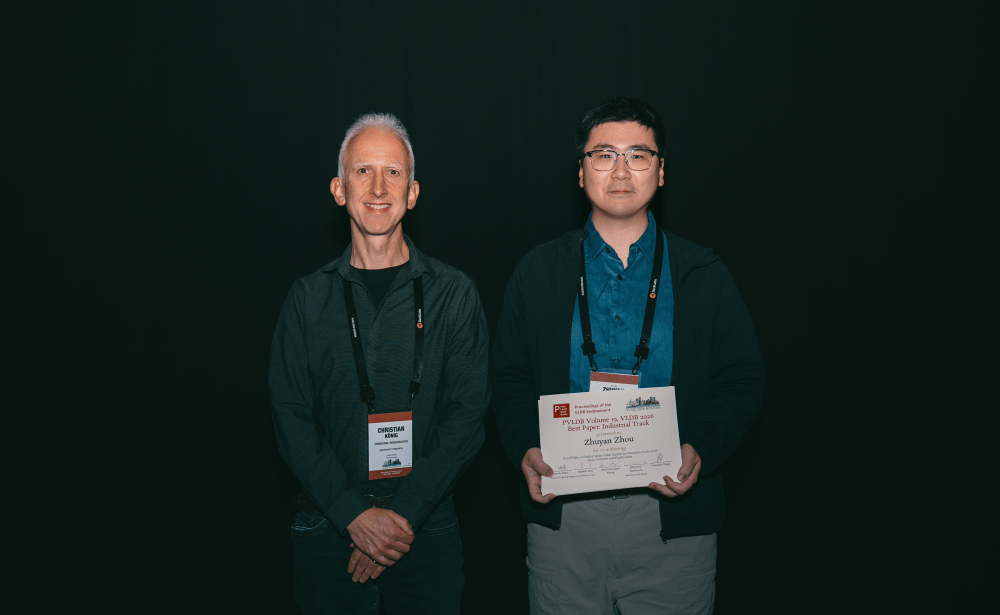
Representative image for 还在为大模型洗数据熬夜?蚂蚁拿下VLDB工业最佳论文,一套宽表搞定35PB语料,效率狂飙5.6倍

还在为大模型洗数据熬夜?蚂蚁拿下VLDB工业最佳论文,一套宽表搞定35PB语料,效率狂飙5.6倍

Rank 78 · Content 95 · Popularity 37

TL;DR - Ant Group introduced OmniTable, a unified wide-table system for petabyte-scale LLM data curation that won VLDB 2026’s Best Industry Paper. In a production SFT workflow, it cut preparation time from about 14 days to 2.5 days while managing more than 35 PB and 305 billion records.

  • OmniTable exposes each data domain as a logical wide table while physically partitioning storage by scale, access pattern, and compute engine.
  • Its catalog treats batches and features as first-class, versioned assets, tracking column-level dependencies, execution state, physical location, and lineage.
  • Record-level fault isolation prevents rare malformed samples from failing entire jobs; operator fusion also reduced eight scans to one in a 2.5 PB experiment.
  • The system routes work across Spark, MaxCompute SQL, and GPU inference platforms and continuously reorganizes physical layouts without changing the logical schema.

Introducing @huggingface/kernels: 200+ WebGPU Kernels for Local AI

Rank 75 · Content 85 · Popularity N/A

TL;DR - Hugging Face is introducing @huggingface/kernels, a collection of more than 200 WebGPU kernels intended to support local AI workloads in web-compatible environments. Only the title was provided, so implementation details and performance claims cannot be assessed.

  • The package exposes 200+ GPU kernels through the WebGPU ecosystem.
  • Its stated focus is running AI computation locally rather than relying entirely on remote infrastructure.
  • The available metadata does not specify supported models, kernel operations, browser compatibility, benchmarks, or hardware requirements.

Cybersecurity AI 1

Path to Astra: critical capabilities and frontier safeguards

Rank 78 · Content 90 · Popularity N/A

TL;DR - OpenAI says Astra is its first model to reach the Critical cybersecurity capability threshold under its Preparedness Framework. The milestone matters because it triggers stronger release safeguards for a model with advanced cyber capabilities.

  • Astra crossed OpenAI’s defined Critical threshold for cybersecurity capability.
  • OpenAI is applying stronger safeguards to its release.
  • The provided excerpt does not specify Astra’s technical capabilities, evaluation results, or safeguards.
Top highlights — Opinions
  • Human stewardship in the age of organoids calls for continuous, science-responsive ethical oversight rather than relying on one-time reviews.
  • The commentary’s central concern is preserving respect for the human origins of organoid models as the field evolves.

Organoid Ethics 1

Human stewardship in the age of organoids

Rank 66 · Content 75 · Popularity 45

TL;DR - This Nature Methods commentary argues that organoid research needs continuous, integrated human stewardship rather than one-time ethics reviews. Such oversight must evolve with the science to respect the human origins of organoid models.

  • Organoids are becoming increasingly important models in biomedical research.
  • Episodic ethics review may not adequately address issues arising throughout the research lifecycle.
  • Stewardship should be sustained and adapt alongside scientific advances.
  • Responsible governance should explicitly recognize that organoids originate from human biological materials.