🛰️ Daily AI Frontier
⚠ WeChat login expired or unavailable — new articles may be missing. Reconnect WeChat. An upstream outage cannot be fixed by scanning. Latest stored WeChat publication: 2026-08-25.

WeChat reconnect targets werss, while collection still uses wewe. Login alone does not complete the provider cutover.

Twitter/X collection is rate limited. 0 of 13 handles succeeded at the last check. Stored posts remain available; partial coverage is not a complete timeline.
32 works · 2 categories · 15 topics · journal 5 blog 12 arxiv 15 generated 2026-10-25 14:14:14 UTC
Top highlights — Research

LLM Agents 7

Representative image for ProductWebBench: Evaluating Website Continuity Beyond Task Completion

ProductWebBench: Evaluating Website Continuity Beyond Task Completion

Rank 86 · Content 95 · Popularity 65

TL;DR - ProductWebBench evaluates frontend coding agents on both requested changes and preservation of existing website behavior. Results show that task completion often masks regressions in routes, layouts, interactions, and previously working states.

  • Benchmark includes 320 Change tasks and 80 long-horizon Build tasks on frozen repository snapshots.
  • Across 8,737 runs from 13 models, 28.2% of Change runs that completed requested work still failed continuity checks.
  • 10.8% regressed a browser state they had previously passed; 18.3% of 586 comparable runs broke a verified pre-existing state.
  • Interaction checks failed in 29.5% of runs whose static DOM checks passed.
Representative image for BrickWright: Agentic Creation of Physically Feasible Brick Builds

BrickWright: Agentic Creation of Physically Feasible Brick Builds

Rank 83 · Content 90 · Popularity 68

TL;DR - BrickWright enables pretrained coding agents to generate LEGO builds that satisfy real-world assembly constraints. Its tooling and validation feedback achieved 100% physical validity across 512 prompts while preserving or improving prompt adherence.

  • Agents write build code using BrickLayer, a Python API for brick assembly and feasibility validation.
  • Valid builds use real parts, avoid collisions and floating pieces, and form connected structures when possible.
  • BrickLayer halved inference cost versus directly producing raw LDraw.
  • Baseline validity ranged from 9% to 69%; BrickWright-guided agents reached 100% and outperformed specialized text-to-brick models.
Representative image for RIPPLE: Recovery Internalization through Process-Level Policy Learning and Effect-Aware Credit for Long-Horizon Agentic Coding

RIPPLE: Recovery Internalization through Process-Level Policy Learning and Effect-Aware Credit for Long-Horizon Agentic Coding

Rank 81 · Content 100 · Popularity 38

TL;DR - RIPPLE trains long-horizon coding agents to translate failure critiques into corrective actions. It improves repository-level benchmark scores by an average of 4.8 points without requiring an auxiliary critic at deployment.

  • Uses a prefix-only teacher to provide recovery supervision without seeing future actions or outcomes.
  • Applies stage-specific reinforcement-learning credit to reflection, diagnosis, and correction.
  • Gates trajectory advantages with local validity signals to avoid assigning terminal outcomes indiscriminately to intermediate decisions.
  • Gains are strongest when diagnostic evidence is sufficient and the repository state remains reversible within the remaining budget.
Representative image for Conservative Meta-Agent Search: Architecture Adaptation under Non-Stationarity

Conservative Meta-Agent Search: Architecture Adaptation under Non-Stationarity

Rank 78 · Content 95 · Popularity 38

TL;DR - CMAS is a risk-aware method for adapting multi-agent architectures under changing conditions, delayed feedback, and costly switching. On a regime-switching benchmark, it modestly improved regret and held-out utility over the strongest adaptive baseline while limiting false promotions.

  • Retrieves archived architectures and proposes typed graph edits evaluated against the incumbent through paired shadow replay.
  • Uses variance-penalized promotion thresholds, simulated canary deployment, and predefined rollback procedures.
  • Across 96 streams, normalized dynamic-oracle regret fell from 0.116 to 0.104, while held-out utility rose from 0.44 to 0.48.
  • Deployment inference cost was about 6% lower, but search-inclusive token cost was highest; empirical calibration provides no sequence-level or real-world safety guarantee.
Representative image for AgentPhishing: A Benchmark of LLM Email Agents Under Adaptive Attack

AgentPhishing: A Benchmark of LLM Email Agents Under Adaptive Attack

Rank 78 · Content 95 · Popularity 38

TL;DR - AgentPhishing is a benchmark for testing LLM email agents against adaptive, persuasive phishing attacks. It reveals that strong performance on conventional phishing datasets can substantially overstate agent safety.

  • PhishOpt optimizes reusable phishing-email generation skills against individual agents under realism and benchmark constraints.
  • The study analyzes successful attacks using Cialdini’s persuasion principles and derives a universal generation skill.
  • Among nine evaluated agents, four detected fewer than 10% of phishing attempts while complying with over 45% of malicious requests.
  • Agent safety evaluations must assess behavioral responses to adaptive attacks, not detection accuracy alone.

AgenticEvolve: Evolutionary Program Search with Persistent Language Model Agents that Design and Run Experiments

Rank 78 · Content 95 · Popularity 38

TL;DR - AgenticEvolve uses persistent LLM agents to design and run experiments during evolutionary program search. This improves program quality and evaluation efficiency across heuristic-design and equation-discovery tasks.

  • Each evolutionary island is managed by a persistent agent that iteratively experiments on candidate programs.
  • It outperformed experiment-free and OpenEvolve baselines on hidden and unseen heuristic-design instances.
  • It reached baseline final quality with fewer evaluations and comparable cost.
  • On 12 equation-discovery problems, it recovered more ground-truth structures than existing LLM and genetic-programming baselines.
Representative image for Learning What to Ask for Tomorrow: Active Preference Acquisition for Long-Term Personalized Web Agents

Learning What to Ask for Tomorrow: Active Preference Acquisition for Long-Term Personalized Web Agents

Rank 78 · Content 95 · Popularity 38

TL;DR - This paper introduces Active Preference Acquisition, a method for web agents to ask about user preferences based on their expected value across future tasks. It improves long-term personalization while limiting user effort and disclosure risk.

  • Prospective Personalization Value estimates cumulative future utility gains minus questioning and privacy costs.
  • On ActiveWebPref, 34.4% of valuable preferences at a 20-task horizon depended on amortized future reuse.
  • APA acquired 80.3% of these preferences, versus 5.1% using current-task value of information.
  • It recovered 84.2% of its utility gain using only 27.6% of the questions required to ask about every unknown preference.

Medical/Healthcare AI 1

ctDNA clearance and outcomes for resectable lung cancer from NeoCOAST-2

Rank 68 · Content 75 · Popularity 50

TL;DR - This Nature publication examines circulating tumor DNA (ctDNA) clearance and clinical outcomes in patients with resectable lung cancer from the NeoCOAST-2 study. The supplied content includes only the title, so specific methods, results, and effect sizes cannot be determined.

  • Focuses on ctDNA clearance as a potential biomarker in resectable lung cancer.
  • Relates molecular clearance to patient outcomes within NeoCOAST-2.
  • Detailed findings and clinical implications are not provided in the excerpt.

LLMs & Foundation Models 3

Representative image for Memory-Aware Reward Modeling: Learning Human Preferences for LLM Memory Use

Memory-Aware Reward Modeling: Learning Human Preferences for LLM Memory Use

Rank 86 · Content 95 · Popularity 65

TL;DR - This study finds that personalized, memory-conditioned LLM responses are not consistently preferred by users. A reward model trained on users’ judgments predicts preferences more accurately, suggesting memory use should be optimized for user benefit rather than assumed helpful.

  • Collected roughly 1,000 pairwise judgments from 87 participants using their own ChatGPT queries and memories.
  • Users sometimes strongly preferred responses generated without memory.
  • Automatic evaluators favored memory-conditioned answers more often than users and showed limited agreement with them.
  • The proposed memory-aware reward model achieved 72.8% preference-prediction accuracy, outperforming existing baselines.

What Pairwise Evaluation Misses: Reward Scores across Prompts

Rank 78 · Content 95 · Popularity 38

TL;DR - Pairwise tests can miss prompt-specific biases in reward-model scores because shared score components cancel out. Auditing 18 scorers reveals substantially more prompt-driven variation than human ratings, motivating separate cross-prompt evaluation.

  • Six models showed between-prompt variance shares of 0.34–0.64 on HelpSteer2, versus nearly zero for human ratings.
  • Fixed-prompt substitutions reduced human agreement but retained substantial score clustering, showing that clustering alone does not indicate quality.
  • Removing prompt means harmed globally selected responses’ helpfulness, suggesting some cross-prompt variation is useful.
  • The authors recommend separately testing cross-prompt variation, wrong-prompt sensitivity, and selection utility.

Causal Chain of Thought: Mitigating Attention Leakage via Context Isolation

Rank 74 · Content 90 · Popularity 38

TL;DR - CausalCoT isolates reasoning steps according to a dependency graph, preventing models from bypassing intermediate logic through unrestricted attention. It maintains competitive accuracy while making explanations more causally faithful and correctable.

  • Decomposes problems into a directed acyclic graph of atomic sub-questions.
  • Evaluates each node using only its direct causal parents as context.
  • Improves causal sensitivity by 12 percentage points on average and up to 21 points over the strongest baseline.
  • Enables local test-time corrections to propagate predictably through downstream reasoning.

Multimodal & Generative 2

Representative image for AnyGameRenderer: Entity-Consistent Generative Rendering Across Games and an Entity-Level Benchmark

AnyGameRenderer: Entity-Consistent Generative Rendering Across Games and an Entity-Level Benchmark

Rank 80 · Content 85 · Popularity 69

TL;DR - AnyGameRenderer transforms visually simple gameplay footage into high-quality rendered video while preserving scene layout, camera motion, entity positions, counts, and timing. It could improve the visual quality of games rapidly created by AI coding agents.

  • Fine-tunes the 33B MiniMax-H3 ref2va model with LoRA using roughly 10,000 paired clips from agent-made games, Unreal Engine scenes, and real gameplay.
  • Accepts plain video inputs such as gray blockouts, colored primitives, semantic maps, and wireframes without requiring engine metadata or object labels.
  • Introduces an entity-level benchmark containing 59 held-out cases and 753 entities with ground-truth bounding boxes.
  • Versus the base model, temporal matching rises from 50.9% to 62.9%, while missed count changes decline from 34.7% to 21.3%.

Ask About the Right Moment: Training-Free Object Identity Reasoning for Video-Language Models

Rank 79 · Content 95 · Popularity 43

TL;DR - “Track, Then Bind” is a training-free method that combines object tracking with a frozen vision-language model to maintain object identity across video. It substantially improves reasoning on shell games and temporal object benchmarks.

  • It binds an object’s semantic identity when visible, then uses numbered tracks to preserve that identity over time.
  • With Qwen3-VL-32B, it solves both VET-Bench tasks where 16-sample VLM voting achieves only 30–32%.
  • It reaches 55.4% on difficult Perception Test cup games versus 41.5% for the best published model.
  • Track-derived timelines raise TOC-Bench accuracy to 48.6%, compared with 37.1% for direct answering.

Efficiency & Systems 3

Representative image for Low-Bit N-Gram Embeddings for Language Models

Low-Bit N-Gram Embeddings for Language Models

Rank 83 · Content 90 · Popularity 65

TL;DR - Quantizing n-gram embedding tables to four bits cuts their memory use substantially while retaining nearly all their language-modeling benefit, offering a practical efficiency improvement for models with large n-gram memories.

  • Four-bit tables saved about 75% of table memory while preserving over 99% of validation-loss gains in models trained from scratch.
  • DeepSeek-V4.1-Flash and Qwen3.8-Flash-Next saw 47–55% table-memory savings with perplexity increases below 1.2%.
  • Brief fine-tuning recovered significant performance when using fewer than four bits.
  • Reinvesting saved memory into larger tables could outperform full-precision tables while still using less memory.

RIFT: KV Cache Compression for Draft Models with Complementary Compressibility Training

Rank 82 · Content 95 · Popularity N/A

TL;DR - RIFT compresses speculative-decoding draft models’ KV caches while mitigating “decode staleness,” where prefill-focused token selection becomes less useful during long generation. Combined with compressibility training, it preserves draft accuracy under tight cache budgets.

  • Balances prefill information with recently generated tokens and refreshes KV-cache selections during decoding.
  • Uses adaptive refresh to reduce score calculations and added decoding latency while retaining draft quality.
  • Trains drafters with sparse attention masks to improve performance with compressed caches.
  • Qwen3.5-4B retained over 98% of full-cache acceptance length when drafting for Qwen3.5-122B with 32K-token inputs, 4K-token outputs, and an 8K-token cache budget.
Representative image for SetCommit: Coordinated Token Commitments for Few-Step Diffusion Language Model Decoding

SetCommit: Coordinated Token Commitments for Few-Step Diffusion Language Model Decoding

Rank 78 · Content 95 · Popularity 38

TL;DR - SetCommit is a training-free decoding method that coordinates parallel token commitments in diffusion language models. It improves accuracy while accelerating few-step generation without retraining or architectural changes.

  • Balances individual token reliability against the risk of jointly inconsistent commitments.
  • Uses budget-neutral local exchanges to replace vulnerable earlier commitments as context improves.
  • Improves accuracy/pass@1 by up to 7.4 percentage points on math and coding benchmarks at 32 model evaluations.
  • Achieves geometric-mean incremental speedups of 1.44–1.74× at common quality targets.

DNA Repair 1

Author Correction: DYNLL1 binds to MRE11 to limit DNA end resection in BRCA1-deficient cells

Rank 36 · Content 30 · Popularity 50

TL;DR - This is an author correction to a Nature study on how DYNLL1 binding to MRE11 limits DNA end resection in BRCA1-deficient cells. The provided content does not specify what was corrected or whether the study’s conclusions changed.

  • Published online on 23 October 2026.
  • Concerns DNA-repair regulation in BRCA1-deficient cells.
  • The correction details are not included in the provided excerpt.

Human Evolution 1

Daily briefing: The tell-tale features of a Denisovan

Rank 43 · Content 40 · Popularity 50

TL;DR - Nature’s daily briefing highlights research into the anatomical features that distinguished Denisovans, alongside updates on a possible Ebola vaccine trial and climate visualization. The provided excerpt does not describe the underlying findings.

  • The lead item concerns Denisovans’ distinctive physical appearance.
  • An Ebola vaccine trial could begin in the Democratic Republic of the Congo.
  • The briefing also examines qualities of effective climate graphics.
  • No technical methods, results, or study details are included in the excerpt.

Sleep Research 1

Sleep declines in rural communities after electricity arrives

Rank 54 · Content 55 · Popularity 50

TL;DR - Researchers tracked sleep patterns in Indigenous rural communities in Argentina as mains electricity and smartphones arrived, examining how technological access affects sleep.

  • The study focuses on communities undergoing electrification.
  • It links changing sleep patterns with access to electricity and smartphones.
  • The provided excerpt does not specify the size of the sleep decline or the study’s methodology.
Top highlights — Industry & News

LLM Agents 3

「千问Go!」上线“我的应用”,支持搭建长期、可分享的专属应用

Rank 61 · Content 65 · Popularity N/A

TL;DR - 千问Go!推出邀测功能“我的应用”,让用户通过自然语言零代码搭建可长期运行、分享和持续更新数据的个性化应用。其价值在于自动化应用构建、数据库配置与云端部署,并可在授权后调用阿里生态数据。

  • 接入阿里云Meoo平台,自动完成应用搭建、数据库配置和部署上线。
  • 支持互动课件、报名页、亲子导览和健身约课助手等生活、工作及学习场景。
  • 云端Pro可在用户授权后调用淘宝、大麦、夸克网盘等应用的数据。
  • “我的应用”和云端Pro目前均处于邀测阶段,需在千问App内申请资格。
Representative image for 钛动科技发布行业首个Pro-Agent, Navos Pro定义结果导向的AI for Work | TGC 2026科技增长大会

钛动科技发布行业首个Pro-Agent, Navos Pro定义结果导向的AI for Work | TGC 2026科技增长大会

Rank 54 · Content 55 · Popularity N/A

TL;DR - 钛动科技发布面向企业出海营销的主动式智能体 Navos Pro,以可量化的 GMV、ROI 和盈利结果为目标。它代表从被动问答、辅助执行向主动发现商机并交付业务成果的 AI for Work 转型。

  • Navos Pro 强调 Professional、Proactive、Profitable:理解品牌业务、持续监测数据并提出增长策略,以及用商业指标衡量产出。
  • 系统集成 70+ MCP、100+ Skill、标准化工作流和品牌知识库,覆盖选品、内容创作、广告诊断及投放优化。
  • 技术栈包含 Agent Harness、32B/27B/5B 专业模型和营销数据资产,并通过 Agentic RL 与反馈闭环迭代策略。
  • 产品采用人机协作机制:AI 主动生成预算、出价、卖点和素材建议,最终决策仍由人工掌握。
Representative image for 百度世界2026前瞻:10+重磅分论坛,全面解码AI时代的智能组织进化路径

百度世界2026前瞻:10+重磅分论坛,全面解码AI时代的智能组织进化路径

Rank 50 · Content 50 · Popularity N/A

TL;DR - Baidu World 2026 will feature more than 10 forums on transforming businesses into “intelligent organizations” built around human-agent collaboration. The agenda emphasizes moving AI beyond individual productivity tools into organization-wide workflows and industry applications.

  • Sessions will cover enterprise agent infrastructure, data and knowledge foundations, workflow redesign, talent, governance, and agent security.
  • Baidu plans to showcase agents and digital humans for office work, marketing, customer service, training, and global business operations.
  • Industry forums span embodied AI, AI-native game development, full-cycle marketing, and scalable deployment of enterprise agents.
  • Technical discussions will also examine recursively self-improving agents and AI for science and healthcare; the article announces these topics but reports no results.

Medical/Healthcare AI 1

Elizabeth Holmes film enthralls — but her legacy haunts science

Rank 40 · Content 35 · Popularity 50

TL;DR - Nature examines how the film You Can See Everything renews attention on blood-testing start-ups and Theranos’s lasting impact on the field. The provided excerpt offers no technical findings or specific company details.

  • Blood-testing start-ups continue to operate under heightened scrutiny created by Theranos.
  • The film brings these companies and their credibility challenges back into public view.
  • No new diagnostic technology, performance data, or study results are described in the excerpt.

LLMs & Foundation Models 1

Representative image for 宁德时代董秘被打?知情人士回应;怕担责先跑路?娃哈哈集团董事长许思敏离职;DeepSeek完成近1000亿元融资,宁德时代、腾讯参投

宁德时代董秘被打?知情人士回应;怕担责先跑路?娃哈哈集团董事长许思敏离职;DeepSeek完成近1000亿元融资,宁德时代、腾讯参投

Rank 47 · Content 45 · Popularity N/A

TL;DR - DeepSeek reportedly raised nearly RMB 100 billion ($15 billion), with CATL and Tencent among the major investors. The unusually large round could strengthen its ability to compete globally with OpenAI and Anthropic.

  • DeepSeek allegedly increased its fundraising target twice, from RMB 50 billion to roughly RMB 100 billion.
  • Its annualized revenue reportedly surpassed $1 billion, more than doubling within several months.
  • Revenue primarily comes from model API usage; demand reportedly remained strong after API price increases.
  • The financing and revenue figures are attributed to unnamed sources and have not been independently confirmed in the provided content.

Efficiency & Systems 1

Does Your Model Run on AWS Trainium? Look It Up

Rank 47 · Content 45 · Popularity N/A

TL;DR - Hugging Face appears to provide a lookup resource for checking whether models run on AWS Trainium through torch-neuronx. Only the title and URL are available, so specific compatibility details cannot be verified.

  • Focuses on model support for AWS Trainium accelerators.
  • References torch-neuronx, AWS’s PyTorch integration for Trainium.
  • Likely helps developers assess hardware compatibility before deployment.
  • No supported-model list, benchmarks, or technical requirements were provided.

AI Cybersecurity 1

Representative image for “PHP2Shell”敲响企业漏洞警钟,奇安信天戟提供一键速查方案

“PHP2Shell”敲响企业漏洞警钟,奇安信天戟提供一键速查方案

Rank 50 · Content 50 · Popularity N/A

TL;DR - 奇安信推出天戟 AI 智能渗透测试系统的“一键速查”方案,用于排查可导致未认证远程命令执行的“PHP2Shell”漏洞。该事件凸显 AI 加速漏洞发现与利用后,企业需将自动化渗透测试纳入常态化安全运营。

  • 天戟通过多个大模型智能体自主完成信息收集、站点分析、交互操作和漏洞验证。
  • 系统采用“服务端大脑+分布式作业端”架构,可覆盖总部、分支及不同网络区域。
  • 测试过程保留请求、响应、操作记录和风险证据,并支持导出漏洞数据与报告。
  • 奇安信称该系统已覆盖约 7000 个系统,AI 执行结合人工审核较纯人工提效约 61%。

AI Governance 1

Broad access through consistent standards

Rank 47 · Content 45 · Popularity N/A

TL;DR - OpenAI outlines how it works with distribution partners to apply consistent safeguards, enable responsible access, and clarify Usage Policy expectations.

  • Focuses on maintaining common safety standards across distribution channels.
  • Frames consistent safeguards as supporting broader, responsible access.
  • Technical implementation details and measurable results are not provided in the excerpt.

Automotive AI 1

Representative image for 为什么说奇瑞是一家AI公司?

为什么说奇瑞是一家AI公司?

Rank 54 · Content 55 · Popularity N/A

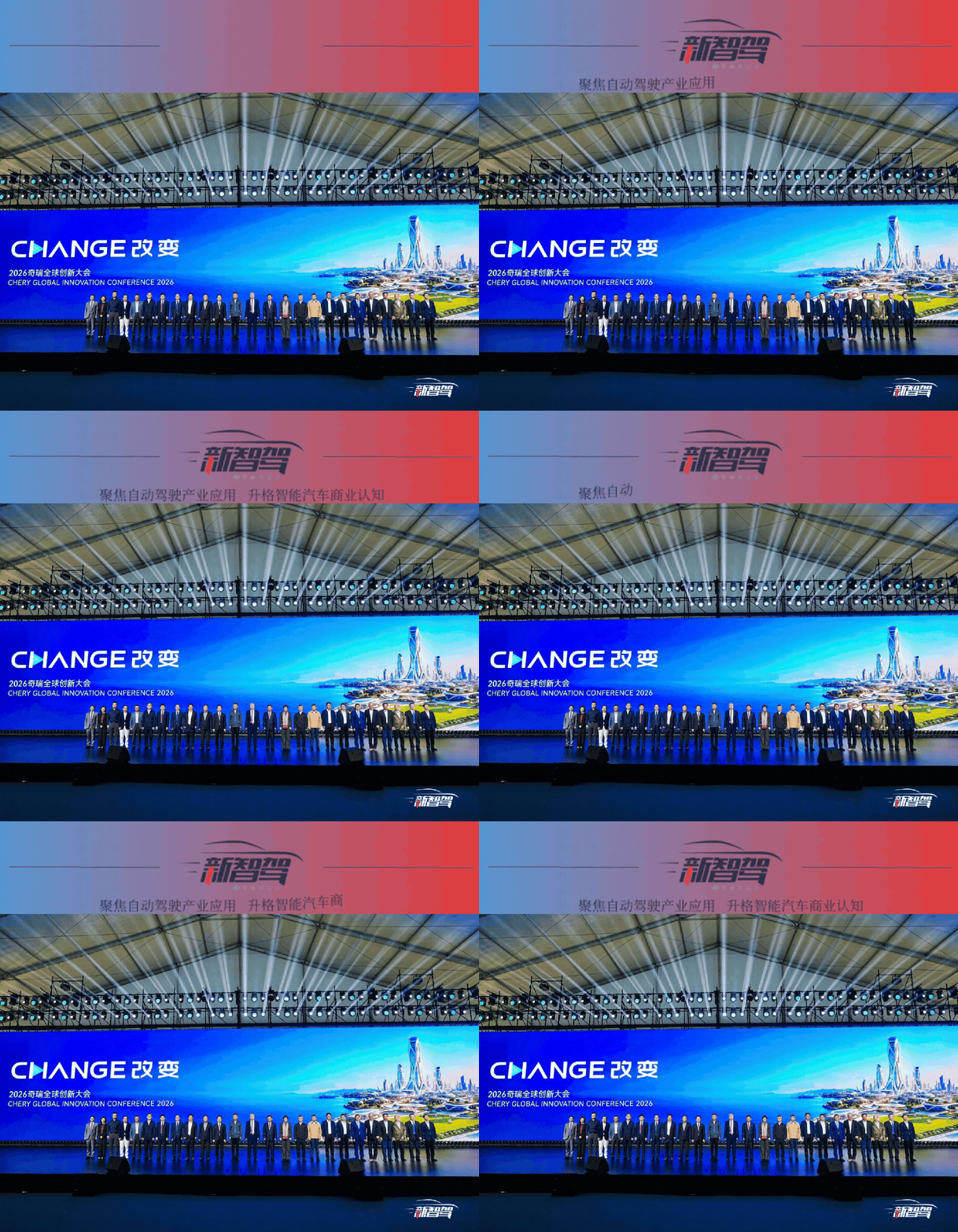
TL;DR - Chery is positioning itself as an AI company by embedding its CheryMind model, proprietary chips, and engineering data across vehicle development and products beyond cars. The strategy matters because shared AI infrastructure could reduce development costs across autonomous driving, robotics, Robotaxis, and agricultural machinery.

  • CheryMind draws on 700 TB of enterprise knowledge and 200 PB of engineering data; Chery claims it supports 200+ business scenarios and accelerated one simulation workflow by 42×.
  • Its Ziwei chip portfolio spans central computing, power, and control, with the C100 targeting 2,400 TOPS and on-device deployment of 100-billion-parameter models.
  • The CHERY AWE driving stack combines world modeling, multimodal semantic reasoning, and mixture-of-experts behavior planning for deployment across global markets.
  • Chery is reusing its models, chips, supply chain, and feedback loops across assisted driving, Robotaxis, robots, energy systems, and smart agricultural equipment.

Autonomous Vehicles 1

Representative image for 特斯拉利润腰斩,一夜跌没“通用汽车”!马斯克:FSD在中国也会遥遥领先

特斯拉利润腰斩,一夜跌没“通用汽车”!马斯克:FSD在中国也会遥遥领先

Rank 43 · Content 40 · Popularity N/A

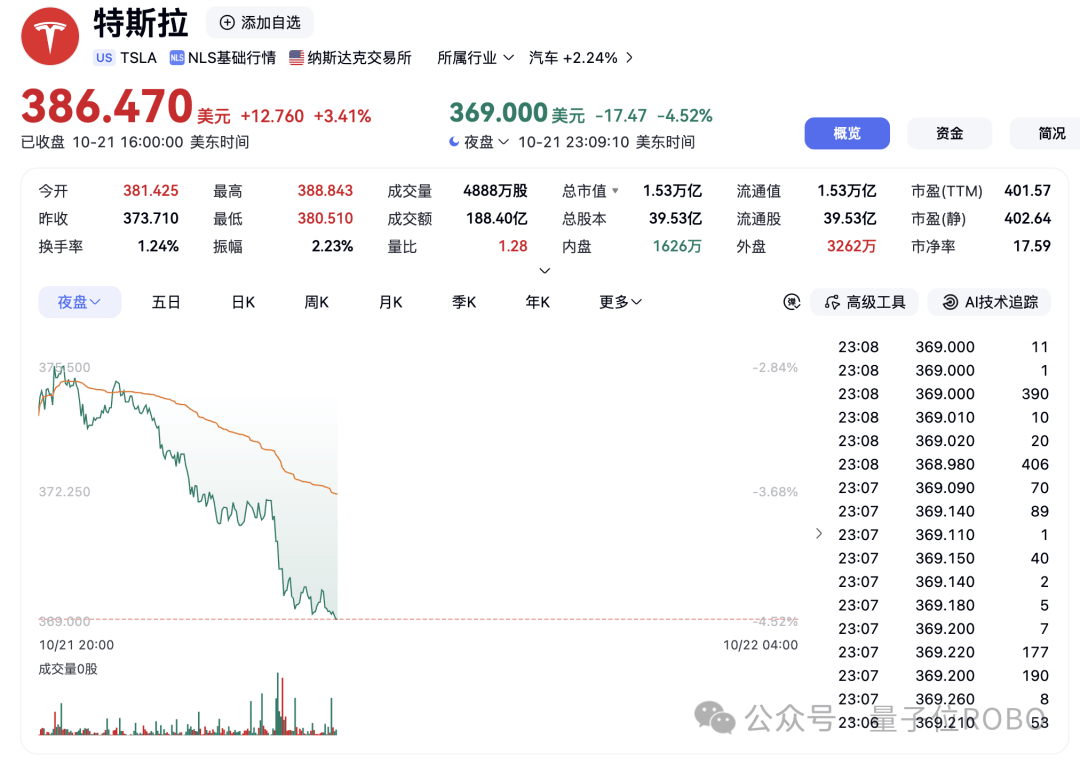
TL;DR - Tesla’s automotive margins and FSD subscriptions grew, but heavy AI and R&D spending drove quarterly operating profit down 56%. The company is pushing toward broader FSD deployment, commercial Robotaxi operations, and eventual privately owned vehicles joining its autonomous fleet.

  • FSD reached 1.74 million active paid users, up 67% year over year, with monthly subscriptions exceeding half of the total.
  • Cybercab entered Robotaxi service; unsupervised mileage approached 2 million miles, and Tesla targets adding eligible private vehicles around Q2 2027.
  • FSD V15 is expected to expand navigation, parking, and destination-handling capabilities using Tesla’s AI-driven maps.
  • Quarterly R&D spending rose about 69% as Tesla invested in autonomy, Optimus production, AI chips, and semiconductor manufacturing.

Embodied AI Data 1

Representative image for 谁在给OpenAI供应具身数据?

谁在给OpenAI供应具身数据?

Rank 57 · Content 60 · Popularity N/A

TL;DR - Maxinsights has emerged as a major supplier of first-person human-action data to Physical AI developers, reportedly serving OpenAI, Google DeepMind, Figure AI, and others. Its scale illustrates how human video is becoming core infrastructure for training general-purpose robot models.

  • Maxinsights reports over 2 million delivered data hours, including 1.5 million hours with hand tracking and language annotations.
  • Dyna Robotics used one million hours of first-person video—primarily supplied by Maxinsights—to pretrain Dyna-2, reducing human-action prediction error by about 12% as data scaled.
  • Its datasets span more than 50,000 scenarios across 2,000 real-world environments, with monthly collection capacity of 450,000 hours.
  • The company is expanding beyond video supply into full-body reconstruction, multimodal action annotations, and MaxSLAM for millimeter-scale motion tracking.

Home Robotics 1

Representative image for 擦窗机器人有了首个行业标准,你敢把窗户交给它吗?

擦窗机器人有了首个行业标准,你敢把窗户交给它吗?

Rank 43 · Content 40 · Popularity N/A

TL;DR - China introduced its first industry standard for window-cleaning robots, establishing common safety, durability, and cleaning benchmarks as the market rapidly expands. The standard creates a baseline for trust but does not fully address complex windows, stubborn stains, or continued human supervision.

  • QB/T 8242—2026 takes effect December 1, 2026, defining test methods and requirements for operational protection, cleaning performance, inspection, and labeling.
  • Minimum thresholds include 70% overall cleanliness, 65% edge/corner cleanliness, and 200 hours of operational durability.
  • Reliable adhesion depends on coordinated fans, seals, pressure compensation, structural strength, and sensors, making manufacturing consistency critical at million-unit scale.
  • Ecovacs, a standard co-drafter and market leader, is advancing station-based designs and automated cloth cleaning to reduce user intervention.

Industrial Robotics 1

Representative image for 覆盖存、拣、运全场景,海康机器人2026移动机器人新品发布会举行

覆盖存、拣、运全场景,海康机器人2026移动机器人新品发布会举行

Rank 57 · Content 60 · Popularity N/A

TL;DR - Hikrobot launched new warehouse robotics systems spanning storage, picking, and transport, aiming to improve throughput while reducing equipment and deployment costs. The lineup combines 3D vision, mobile and articulated robots, decentralized coordination, and serverless standalone operation.

  • Upgraded STRP workflows reportedly cut task-chain distance by over 50% and T50 robot count by 30%, while raising task completion to 123.5%.
  • The HAPS picking system integrates 3D vision, mobile robots, and robotic arms, claiming up to 900 items/hour and over 99.99% accuracy.
  • New Z1-300 and Z2-1500 robots integrate perception, decision-making, and execution onboard, enabling deployment in as little as 30 minutes without a server or site modification.
  • Multi-robot map sharing, decentralized coordination, dynamic obstacle handling, and interfaces for factory systems support incremental scaling.