🛰️ Daily AI Frontier
⚠ WeChat login expired or unavailable — new articles may be missing. Reconnect WeChat. An upstream outage cannot be fixed by scanning. Latest stored WeChat publication: 2026-08-25.

WeChat reconnect targets werss, while collection still uses wewe. Login alone does not complete the provider cutover.

Twitter/X collection is rate limited. 0 of 13 handles succeeded at the last check. Stored posts remain available; partial coverage is not a complete timeline.
25 works · 2 categories · 11 topics · blog 10 journal 1 arxiv 15 generated 2026-10-26 14:24:58 UTC
Top highlights — Research

LLM Agents 6

Tool-Calling LLM Agents Under Realistic MCP Faults: Scale Does Not Purchase Fault Tolerance

Rank 87 · Content 100 · Popularity 58

TL;DR - MCP-Injector tests tool-calling agents under realistic protocol faults and finds severe performance degradation. Larger models were not more fault-tolerant, while agent-stack error handling significantly affected resilience.

  • Fault scenarios were calibrated from 57,240 issue and pull-request threads across 1,774 MCP repositories.
  • Under a permanent-heavy fault profile, average task-completion scores fell 60%, from 8.08 to 3.23 out of 10.
  • The tested 120B model retained no more fault-free performance than the 20B model under faults ($p=0.96$).
  • Differences among agent stacks indicate framework-level fault handling may matter more than model scale.
Representative image for SCI-AGENT-EXAM: Benchmarking Agents on Scientific Research Tasks

SCI-AGENT-EXAM: Benchmarking Agents on Scientific Research Tasks

Rank 84 · Content 95 · Popularity 60

TL;DR - SCI-AGENT-EXAM benchmarks LLM agents on 120 realistic scientific workflow tasks spanning 11 fields. Results show that even the strongest tested agent remains inconsistent on high-success outcomes.

  • Tasks cover seven research activity types and require both executable and textual artifacts.
  • Evaluation combines deterministic checks for code and scripts with an expert-validated LLM judge for written outputs.
  • GPT-6 Astra led 10 frontier agents with an 80.9 overall score, but only 26.0% of its runs exceeded the 0.95 success threshold.
  • Trajectory analysis revealed substantial differences in capability, execution efficiency, and solution stability.
Representative image for When Agents Fail: Model or Harness--Who's to Blame?

When Agents Fail: Model or Harness--Who's to Blame?

Rank 82 · Content 100 · Popularity 40

TL;DR - This paper proposes metrics for separating model, execution-harness, and model–harness interaction effects in agent benchmarks. Results show that harness rankings vary substantially by model and task, making joint evaluation essential.

  • Evaluates 52,168 trajectories across 111 settings, including four general-purpose harnesses, multiple models, six benchmarks, and native reference systems.
  • Introduces Valid Completion Rate, model- and cross-model fit, interaction residuals, and token load alongside task performance.
  • Similar task scores can mask different completion reliability, token costs, and pairing-specific execution behavior.
  • OpenCode leads cross-model performance, while DeepSeek V4 Flash Preview achieves consistently high mean valid-completion rates on the shared benchmark panel.
Representative image for Async-RBench: Benchmarking Asynchronous Task Execution in LLM Agents

Async-RBench: Benchmarking Asynchronous Task Execution in LLM Agents

Rank 80 · Content 100 · Popularity 35

TL;DR - Async-RBench evaluates how LLM agents handle asynchronously arriving subagent results, measuring both execution outcomes and replanning behavior. Nine tested agents struggled, especially with duplicate reports and subagent failures.

  • Includes 200 executable tasks across eight asynchronous execution scenarios.
  • Uses Event Response Contracts and a Dynamic Replanning Score to assess required changes, preservation, prohibited actions, and re-verification.
  • Nine agents scored only 19.2–45.1 DRS.
  • Asynchronous delivery reduced average task success versus batched delivery: 26.0% vs. 29.7%.

POSEIDON: Scaling Training Environments for Scientific Agents from Code Repositories

Rank 77 · Content 95 · Popularity 35

TL;DR - Poseidon automatically converts scientific code repositories into scalable, verifiable training environments for scientific agents. It produced Pearl, a multidisciplinary collection of 97,659 environments that improved Qwen3.5 models across six scientific-agent benchmarks.

  • Poseidon extracts nearly 10× more environments per repository budget than a prior approach.
  • It generates four task types: Reproduction, Subflow, Completion, and Correction.
  • A recursive improvement loop repairs failed candidates rather than discarding them.
  • Pearl spans 7,110 public repositories across 10 scientific disciplines.
Representative image for When to Stop Penalizing Actions? Martingale GRPO for VLA Reinforcement Learning

When to Stop Penalizing Actions? Martingale GRPO for VLA Reinforcement Learning

Rank 77 · Content 95 · Popularity 35

TL;DR - MART-GRPO selectively stops penalizing actions after the last unrecovered error in failed vision-language-action rollouts. This preserves the expected reference gradient under ideal stopping conditions while potentially reducing covariance and improving robotic task success.

  • Standard GRPO assigns one trajectory-level advantage to every action, potentially penalizing useful recovery attempts.
  • Martingale analysis identifies stopping conditions where truncating failure feedback preserves the gradient estimator’s conditional expectation.
  • A LoRA-tuned vision-language model detects error and recovery events in rollout videos to select feedback boundaries.
  • On RoboTwin 2.0 with OpenVLA-OFT, MART-GRPO outperformed full-trajectory GRPO across multiple tasks.

Bioinformatics AI 2

What Transfers Across Protein Pockets? Experience Reuse in Molecular Optimization for Agentic Structure-Based Drug Design

Rank 77 · Content 95 · Popularity 35

TL;DR - This study examines whether experience from LLM-agent ligand optimization transfers across unseen protein pockets. Transferable signals mostly characterize molecular edits and their products, suggesting experience bases are better for ranking docking proposals than prescribing new compounds.

  • Site contacts, edit action, and optimization round sharply distinguish beneficial from harmful edits.
  • Much of this separation is explained by molecule-size changes, action type, and round rather than target-specific properties.
  • Specific pocket descriptions rarely recur, while coarse descriptions provide weak discrimination.
  • Explicit target identity is highly informative but cannot support transfer to unseen pockets.
Representative image for A curated multi-endpoint drug-protein bioactivity dataset with construct-aware protein targets

A curated multi-endpoint drug-protein bioactivity dataset with construct-aware protein targets

Rank 77 · Content 95 · Popularity 35

TL;DR - Curate-DTI is a construct-aware drug–protein bioactivity dataset covering four assay endpoints and preserving experimentally distinct protein sequences. This avoids accession-level merging that can produce conflicting labels and supports cleaner classification and regression benchmarks.

  • Contains 2.9 million measurements, 1.29 million standardized ligands, and 9,668 sequence-defined protein entities.
  • Processes IC50, Ki, Kd, and EC50 independently across 2.28 million endpoint-specific interactions.
  • Identifies 4,204 ligand–accession groups whose labels differ between protein constructs.
  • Provides connected Parquet tables, provenance, preprocessing code, validation summaries, and configurable representations and evaluation splits.

LLMs & Foundation Models 1

On-Policy Self-Training: Data-Free Self-Improvement in Large Language Models

Rank 84 · Content 90 · Popularity 70

TL;DR - This paper introduces on-policy self-training, allowing foundation models to improve using self-generated questions and privileged reasoning traces rather than curated prompts, answers, or external teachers. The approach shows consistent gains across language and visual question-answering tasks while preserving capabilities in untargeted domains.

  • Uses only coarse topic descriptions to synthesize curricula, queries, and reasoning demonstrations.
  • Reframes on-policy self-distillation as fully synthetic, data-free self-training.
  • Demonstrates self-improvement across both text and multimodal benchmarks.
  • Finds that targeted self-training does not substantially compromise capabilities in other domains.

Multimodal & Generative 1

Tempo-Zero: Recursive Self-Play in Executable Worlds for Video Reasoning

Rank 88 · Content 95 · Popularity 71

TL;DR - Tempo-Zero is a self-improvement framework for video reasoning that generates executable environments, renders videos, and uses execution-verified answers rather than noisy model consensus. It improves performance across 12 real-world video benchmarks without supervised fine-tuning or external video data.

  • One policy acts as both Questioner and Solver, answering with timestamped evidence.
  • Program execution supplies ground-truth answers and temporal intervals for training rewards.
  • Solver performance drives task difficulty, while policy-selected rule changes evolve event dynamics.
  • Training only on simple programs yields especially strong gains on temporal-grounding tasks.

Efficiency & Systems 2

Where Rounding Happens Matters: Rounding-Location Alignment Stabilizes LLM Reinforcement Learning

Rank 80 · Content 100 · Popularity 35

TL;DR - This paper shows that aligning BF16 rounding locations between LLM inference and training systems can prevent reinforcement-learning collapse without fully matching their execution stacks. The result offers a targeted systems-level fix for unintended off-policy updates caused by numerical discrepancies.

  • Aligns rounding in RoPE, SwiGLU, and residual RMSNorm by retaining selected intermediates in FP32 until BF16 output.
  • Aligning all three regions stabilized training across four Qwen-family models.
  • RoPE-path alignment alone was sufficient in the studied runs despite other numerical differences.
  • The approach leaves inference engines, matrix-multiplication and attention kernels, and learning objectives unchanged.
Representative image for NgramRL: Accelerating RL Post-Training for Structured Generation via Rollout-Aware N-gram Speculative Decoding

NgramRL: Accelerating RL Post-Training for Structured Generation via Rollout-Aware N-gram Speculative Decoding

Rank 77 · Content 95 · Popularity 35

TL;DR - NgramRL accelerates RL post-training rollouts by using recent per-prompt generations as an adaptive n-gram speculative-decoding source. It improves throughput without an auxiliary drafting model or changing the rollout distribution.

  • Commits 3.60–7.77 tokens per target-model forward with a warm cache.
  • Outperforms SuffixDecoding by up to 1.99× and prompt-lookup decoding by up to 7.0×.
  • An adaptive CPU prefetcher hides lookup latency by predicting verification outcomes.
  • On Spider with Qwen3-8B, prefetching covers 96.6% of outcomes and raises rollout throughput 1.38× over synchronous NgramRL.

AI Security 1

Trusting the Tool: Asymmetric Deference of LLM Vulnerability Auditors to Static-Analysis Evidence

Rank 90 · Content 100 · Popularity 65

TL;DR - LLM vulnerability auditors defer asymmetrically to static-analysis evidence: fabricated assurances conceal real vulnerabilities more effectively than fabricated alarms mislead models. Independently verifying tool claims can substantially improve audit reliability.

  • Across 16,572 audits, true static-analysis evidence improved accuracy by only 0.02.
  • False assurances reduced vulnerability detection by up to 19 percentage points, while false alarms caused no significant accuracy decline and were challenged more often.
  • A replication on seven new models confirmed the asymmetry across evidence directions.
  • Separately verifying claims improved accuracy under false assurances by 12 points for one model without harming performance on true evidence.

Earth Observation AI 1

Representative image for Earth embeddings are decomposable records of the land surface

Earth embeddings are decomposable records of the land surface

Rank 84 · Content 95 · Popularity 58

TL;DR - Researchers show that annual satellite-derived Earth embeddings can be decomposed into interpretable ecological features. This supports their use in monitoring disturbances, agriculture, carbon, and biodiversity.

  • Identified fire, forest clearing, and crop-type signals in two widely used embedding products.
  • Validated recovered concepts against independent event data spanning six continents.
  • Embeddings dated abrupt canopy loss to the first post-disturbance growing season and distinguished prescribed fires from wildfires.
  • The products showed different strengths: one detected small, rapidly recovering fires, while the other separated crop types more clearly.

Materials Discovery 1

Probing the limits of forward screening and inverse design of crystal materials

Rank 77 · Content 95 · Popularity 35

TL;DR - A unified database of 14.6 million crystal structures reveals that forward screening has more untapped potential—and inverse design less novelty—than existing benchmarks suggest.

  • Structure matching across 55 databases reconciled inconsistent crystal naming and tracked 131.8 million sourced property values.
  • Only 4.5% of crystal-property pairs had recorded values; CGTNet, an equivariant graph transformer, was developed to predict missing properties.
  • Screening identified tens of thousands of known ultra-incompressible candidates, including ReN2 with a measured bulk modulus of 428 GPa.
  • A stiffness-conditioned generator found more stiff candidates than screening at equal verification cost (100 vs. 55), but all contained osmium and 82 reused known compositions.

Single-Molecule Biophysics 1

Continuous mass photometry by single-molecule trapping

Rank 72 · Content 75 · Popularity 64

TL;DR - This Nature Methods paper introduces continuous mass photometry using single-molecule trapping. The technique enables high-resolution, prolonged observation of individual biomolecules and changes in their mass.

  • Combines single-molecule trapping with mass photometry.
  • Continuously tracks biomolecular mass rather than relying on isolated measurements.
  • Supports observation of dynamic mass changes at the single-molecule level.
  • Quantitative performance and experimental results are not provided in the supplied excerpt.
Top highlights — Industry & News

LLM Agents 2

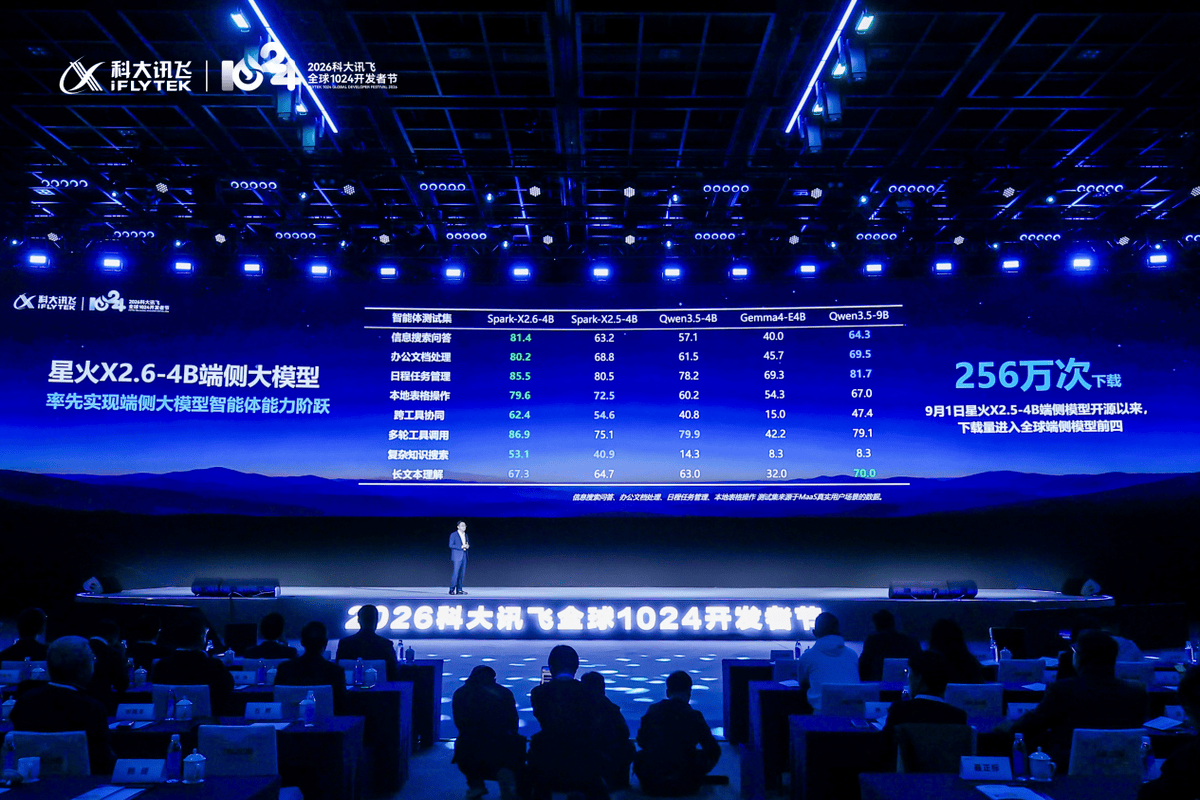
Representative image for 科大讯飞首发星辰TaaS平台,让Token真正成为千行百业的生产力

科大讯飞首发星辰TaaS平台,让Token真正成为千行百业的生产力

Rank 61 · Content 65 · Popularity N/A

TL;DR - iFlytek launched its Xingchen TaaS platform and Agent OS to turn model usage into deployable enterprise workflows. The release combines model routing, agent orchestration, knowledge tools, and business-system automation across multiple industries.

  • Spark X2.6 adds a one-million-token context window, an open-source 4B edge model, and edge-cloud routing reported at 96.1% accuracy.
  • Agent OS coordinates employees, agents, and enterprise systems; APA converts demonstrations or natural-language instructions into reusable workflow skills.
  • The TaaS stack supports Spark and open-source models, with model scheduling, knowledge engineering, tool orchestration, and runtime governance.
  • XFYUN CLI provides command-line access to more than 700 AI capabilities and over 200 agent-integration capabilities.
Representative image for iRTE2026:声网CEO赵斌提出五级对话能力框架,实时互动迈入对话 AGI 时代

iRTE2026:声网CEO赵斌提出五级对话能力框架,实时互动迈入对话 AGI 时代

Rank 50 · Content 50 · Popularity N/A

TL;DR - At iRTE2026, Agora CEO Zhao Bin proposed a five-level framework for conversational AI, progressing from basic responses to long-term, relationship-aware communication. The company argues that low-latency, full-duplex infrastructure will be essential as agents move from chatting to continuously executing real-world tasks.

  • The framework advances from reactive Q&A (L1) through proactive, personalized, and group-aware interaction to deep understanding of long-term context and relationships (L5).
  • Agora’s infrastructure connects models, agent runtimes, and users through real-time networks, cloud-edge-device inference, orchestration, and interruption-capable full-duplex interaction.
  • SDKs, Skills, CLI tools, and Recipes aim to simplify development of agents with end-to-end conversational and task-execution logic.
  • Speakers highlighted customer service, education, recruiting, wearables, and robotics as applications requiring multimodal perception, persistent context, low latency, and reliable action.

Multimodal & Generative 3

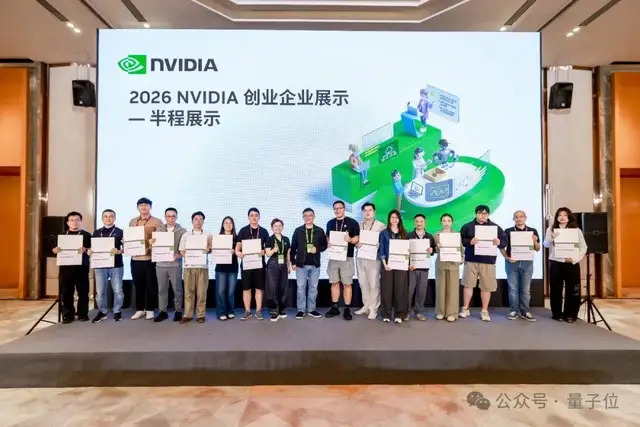
Representative image for 一张5090跑起34B实时世界模型,国产玩家拿下英伟达大奖!

一张5090跑起34B实时世界模型,国产玩家拿下英伟达大奖!

Rank 64 · Content 70 · Popularity N/A

TL;DR - Chinese startup Dawa Technology unveiled Scenes AI, a 34B-parameter real-time world model that runs locally at 720p/25 FPS on one consumer NVIDIA GPU and won an NVIDIA startup award. It maintains persistent, editable world state rather than regenerating entire video frames.

  • Scenes AI separates state control from rendering, updating variables such as objects, lighting, weather, and physics while preserving unchanged scene elements.
  • Sparse diffusion, latent caching, and roughly 4B active parameters per step reportedly cut GPU use by 40%–60% and increase inference speed 3–5×.
  • The system uses world memory and neural physics to preserve edits and spatial relationships across long interactions.
  • Training draws on 180TB of structured state data from over 300 productions, supplemented with Omniverse, PhysX, and Cosmos simulations.
Representative image for 国产5B生图模型海外突然爆火,4天超百万下载

国产5B生图模型海外突然爆火,4天超百万下载

Rank 61 · Content 65 · Popularity N/A

TL;DR - OpenMOSS’s open-source 5B-parameter MOSS-Image model surpassed 1.3 million downloads within four days, drawing attention for natural-looking images, strong text rendering, and controllable layouts. Rapid community adoption has already produced accelerated, quantized, and fine-tuned variants.

  • Uses a single-stream diffusion Transformer with a frozen Qwen3.5-9B text encoder and FLUX.2 VAE; AI-generated images were excluded from training data.
  • Supports 4,096-token prompts and structured JSON layouts with bounding boxes for precise text and object placement.
  • Reported results include 96.3% Mean-6 text coverage on LLTB and 0.88 object-localization mIoU on 7Bench.
  • Community integrations include 4- and 8-step generation, INT8/GGUF/MLX variants, LoRAs, ComfyUI, SGLang, and vLLM-Omni support.
Representative image for 即梦推出 “短剧工作室”,打造更全能的 AI 内容创作平台

即梦推出 “短剧工作室”,打造更全能的 AI 内容创作平台 🔗 2 sources

Rank 54 · Content 55 · Popularity N/A

TL;DR — 即梦推出“短剧工作室”,将剧本开发、资产管理、分镜、视频制作及后期整合到统一平台,旨在减少工具切换并提升长篇连载内容的一致性。

  • DreamScript 支持剧本生成与诊断,可上传最多 10 万汉字,并连续生成最多 100 集内容。
  • 平台可自动提取并关联角色、场景、道具、声音和服装,形成可复用、可版本管理的资产库。
  • 创作画布最多支持 1 万个节点,据称可流畅管理数千个图片和视频素材。
  • 平台整合“小云雀”短剧智能体能力,并支持团队多账号、资产及积分管理。

注: 量子位摘要讨论的是特赞(Tezign)的企业智能体架构,与即梦“短剧工作室”并非同一项工作,因此未合并其内容。

Efficiency & Systems 2

Representative image for DeepSeek 开源看家算子的同一周,AI 超过了它

DeepSeek 开源看家算子的同一周,AI 超过了它

Rank 75 · Content 85 · Popularity N/A

TL;DR - DeepSeek open-sourced its DeepInfer inference framework, while AI-generated ForgeKernel operators reportedly surpassed hand-tuned implementations on NVIDIA and Ascend benchmarks. This suggests automated kernel optimization can improve inference performance across hardware platforms.

  • DeepInfer opens DeepSeek’s inference stack, extending its releases beyond model weights to operator libraries such as FlashMLA and DeepGEMM.
  • Hand-tuned FlashMLA reportedly exceeds 90% of the hardware performance limit on some chips.
  • ForgeKernel ranked first on SOL-ExecBench FlashInfer-Bench and CANNBench’s Ascend A3 hardware leaderboard without line-by-line human tuning.
  • On CANNBench, it achieved a reported 1.835× benchmark speedup, 25% ahead of second place.

趋境科技完成 B 轮融资,半年实现超十倍速增长,加速高品质 AI Token 规模化交付

Rank 50 · Content 50 · Popularity N/A

TL;DR - Approaching.AI raised over RMB 1.3 billion in Series B funding to expand its production-grade AI inference capacity and ATaaS platform. The company says system-level optimization enables domestic accelerators to deliver scalable, cost-efficient AI token generation.

  • Funding will support token capacity, inference R&D, platform upgrades, and commercial delivery.
  • Its approach emphasizes deep optimization of selected mainstream models, heterogeneous inference, KV-cache conversion, and memory-for-compute techniques.
  • The company reports daily token output exceeding one trillion and revenue nearly 10 times last year’s total.
  • It is developing regional “token factories” using domestic chips, including prefill-decode heterogeneous deployments and cross-cluster operations.

Embodied AI 1

Representative image for 高德发布首个基于开放世界行为的全身基座模型λ0,推动机器人从“局部学习”迈向“全身动作对齐”

高德发布首个基于开放世界行为的全身基座模型λ0,推动机器人从“局部学习”迈向“全身动作对齐”

Rank 64 · Content 70 · Popularity 50

TL;DR - Alibaba’s Amap released λ0, a whole-body foundation model that learns humanoid locomotion, posture, and manipulation from human demonstrations. It aims to replace costly robot-centric data collection while improving coordinated, long-horizon behavior.

  • λ0 uses consumer-device recordings and a three-stage training pipeline to align human demonstrations with humanoid control.
  • Amap built HumanVerse-500, containing 500 hours of open-world, whole-body human behavior data.
  • Demonstration collection reportedly takes 29 seconds per task versus roughly 100 seconds with robot-based collection, a 3.4× efficiency gain.
  • Across simulation and real-robot evaluations, λ0 achieved state-of-the-art results and a 22.5% higher task success rate than the strongest reported baseline.

World Models 1

Representative image for 南京物理AI上大分!三位图灵奖得主发声,50个应用场景亮相

南京物理AI上大分!三位图灵奖得主发声,50个应用场景亮相

Rank 43 · Content 40 · Popularity N/A

TL;DR - A Nanjing conference highlighted physical AI and world models as foundations for systems that understand, predict, and act in real environments. It also announced datasets, standards work, 50 application scenarios, and a ¥5 billion investment fund.

  • Speakers connected world models to embodied intelligence, industrial manufacturing, autonomous driving, and medical AI.
  • Jiangsu released a high-quality dataset initiative, nine innovation成果, and 50 scenarios spanning industry, governance, science, public services, and consumption.
  • China launched preliminary work on a national world-model standard and established an embodied-intelligence standards group.
  • Momenta predicted that 2028 could be an inflection point for large-scale Level 4 autonomous-driving deployment.