🛰️ Daily AI Frontier
⚠ WeChat login expired or unavailable — new articles may be missing. Reconnect WeChat. An upstream outage cannot be fixed by scanning. Latest stored WeChat publication: 2026-08-25.

WeChat reconnect targets werss, while collection still uses wewe. Login alone does not complete the provider cutover.

Twitter/X collection is rate limited. 0 of 13 handles succeeded at the last check. Stored posts remain available; partial coverage is not a complete timeline.
29 works · 2 categories · 16 topics · blog 12 journal 2 arxiv 15 generated 2026-11-01 15:29:35 UTC
Top highlights — Research

LLM Agents 3

Locating and Closing Information Gaps in Multi-Agent Systems

Rank 78 · Content 95 · Popularity 37

TL;DR - SPLICE dynamically identifies information gaps in multi-agent workflows, inserts a targeted communication link, and decides whether to adopt the revised answer. It improves Web, reasoning, and planning performance with moderate added cost.

  • Adds one directed edge to deliver missing evidence, then re-executes affected agents.
  • Uses process-level features to prevent incorrect upstream conclusions from displacing correct answers.
  • Improves Web tool-use scores by 8.0% and four reasoning/planning benchmarks by 5.7% on average.
  • Costs 1.25–1.44× the static workflow and transfers zero-shot to four unseen backbones.

When to Assist and What to Suggest: Joint Gating and Memory-Grounded Hint Generation in One Compact Decoder

Rank 74 · Content 90 · Popularity 37

TL;DR - A compact 1B decoder jointly decides when to assist and generates memory-grounded conversational hints. It matches or exceeds comparable two-model pipelines while reducing wall-clock time by 1.31–1.76×.

  • Real gating lowers exact match from an oracle ceiling of 0.2971 to 0.2619, indicating substantial headroom.
  • Removing the memory profile causes a 24.7-point exact-match drop; retrieval and a larger generator provide no exact-match gain.
  • Gating saves compute, but benefits shrink from 4.39× with an 8B generator to 1.38× with a 1B generator.
  • Human evaluation confirms the memory benefit and rates the unified model alongside the matched 1B pipeline, but below the 8B system.
Representative image for 清华姚期智团队新作:代数世界模型,让AI像牛顿一样思考

清华姚期智团队新作:代数世界模型,让AI像牛顿一样思考

Rank 66 · Content 80 · Popularity 33

TL;DR - Tsinghua researchers introduced Algebraic World Models (AWM), which help AI agents derive formal, verifiable rules from interaction rather than merely recording observations. This could make agents better at proving task feasibility and explaining impossibility.

  • AWM iterates through exploration, hypothesis refinement, abstraction, and Lean 4 formalization.
  • On an impossible ARC-AGI-3 level, an Opus 5.5-based AWM reportedly proved infeasibility after two attempts and identified that one additional move was sufficient.
  • An Opus 5-based system completed all 183 evaluated levels with 99.9% score, using 43% of the human benchmark’s average actions.
  • Its proofs apply only to observed rules; incomplete exploration can yield a valid but incomplete model of the environment.

Medical/Healthcare AI 1

Representative image for Agentic LLM reasoning in pediatric diabetes outcome prediction from multimodal medical records

Agentic LLM reasoning in pediatric diabetes outcome prediction from multimodal medical records

Rank 81 · Content 100 · Popularity 37

TL;DR - CEDAR, an evidence-citing and self-auditing LLM agent, predicted pediatric diabetes outcomes from multimodal health records more accurately than trained machine-learning models. Its chart-grounded reasoning was highly faithful and largely reproducible by pediatric endocrinologists.

  • Evaluated on 2,489 youth with type 2 diabetes and 4,018 with type 1 diabetes.
  • Used structured records, note-derived social determinants, and continuous glucose monitoring data where available.
  • Achieved pooled AUROCs of 0.815 in T2D and 0.756 in T1D, versus 0.656–0.700 and 0.603–0.631 for comparison models.
  • Only 4 of 70,246 cited values mismatched charts; clinicians independently agreed with CEDAR in roughly 9 of 10 cases.

Bioinformatics AI 1

Reaction precedents extend retrosynthetic prediction beyond training coverage

Rank 84 · Content 95 · Popularity 59

TL;DR - Retrieval of reaction precedents substantially improves retrosynthetic prediction beyond the model’s training coverage, without fine-tuning or parameter updates.

  • The study evaluated 2.71 million reactions under transformation- and time-based coverage restrictions.
  • For transformations excluded from training, Top-1 accuracy rose from 13.0% to 58.0% on historical tests and from 4.9% to 23.1% on temporally held-out tests.
  • Expanded retrieval let a pre-2017 model match or outperform a non-retrieval model trained on pre-2025 data.
  • Precedents improved all 14 tested general-purpose models; the strongest surpassed eight representative specialized models.

LLMs & Foundation Models 5

Judged in Company: In-Context Batching Makes LLM Verdicts Depend on Other Items

Rank 78 · Content 95 · Popularity 37

TL;DR - Batching independent grading tasks in one LLM prompt makes verdicts depend substantially on neighboring items and position. This undermines reproducibility even when aggregate benchmark metrics remain similar.

  • Random batches of 25 changed 11–22% of harm-detection and grading decisions for 4–9B models, and 6–15% for 14–32B models.
  • Instability decomposes into order, slot, and batch-membership effects; order and slot explain most partition differences.
  • Voting across permutations does not solve the issue: nine-permutation majorities retained 52–60% of flips.
  • The authors recommend grading ambiguous items separately with cached prefixes and reporting agreement with single-item grading.
Representative image for Rethinking Pre-pretraining

Rethinking Pre-pretraining

Rank 78 · Content 95 · Popularity 37

TL;DR - Compute-matched experiments find that synthetic pre-pretraining does not outperform natural-language-only training. Reported gains appear sensitive to initialization, extra compute, and limited natural-language budgets.

  • Repeated training on a 100M-token natural-language corpus beat four synthetic curricula on validation loss.
  • A reproduced 5.4% perplexity gain from neural cellular automata data disappeared with improved initialization.
  • Extra-compute benefits persisted only at small natural-language budgets and vanished by 1B tokens.
  • Models forgot pre-pretraining knowledge; interleaving prevented forgetting but did not significantly improve natural-language performance.

Rethinking Neural Thickets Without Weight Perturbations

Rank 74 · Content 90 · Popularity 37

TL;DR - The paper argues that Neural Thickets’ gains come mainly from output diversity, validation-based selection, and voting—not nearby task experts in weight space. Its training-free logit Perturb-Select-Vote method matches or exceeds full-weight perturbations on most tested reasoning tasks and improves vision robustness under domain shift.

  • Perturbing one decoder block recovers much of the reported benefit.
  • Random output-logit biases often match or outperform full-weight perturbations.
  • First-order analysis indicates small weight perturbations primarily act through induced logit shifts.
  • Logit PSV keeps models frozen and generalizes across language and vision tasks.
Representative image for ShallowDefend: Harnessing Shallow Safety Alignment for Multi-Turn Defender

ShallowDefend: Harnessing Shallow Safety Alignment for Multi-Turn Defender

Rank 74 · Content 90 · Popularity 37

TL;DR - ShallowDefend improves multi-turn LLM safety by requiring an explicit Assess → Decide → Respond sequence, turning the model’s shallow early-token safety behavior into a causal defense mechanism.

  • Reinforcement learning trains a parseable safety commitment at the harmful payload turn before response generation.
  • Self-verified rewards can check decisions against known conversation labels without human annotations or an external judge.
  • Across two model families and 14 benchmarks, it achieved the strongest controlled multi-turn safety while preserving utility, with a modest helpfulness cost.
  • Token-level KL analysis and intervention probes indicate the brief decision span causally controls the response trajectory.
Representative image for PIVOT: Progressive Intervention via Online Teacher Correction

PIVOT: Progressive Intervention via Online Teacher Correction

Rank 74 · Content 90 · Popularity 37

TL;DR - PIVOT improves reinforcement learning from verifiable rewards by inserting teacher corrections into failed student reasoning trajectories and supervising those corrections at the token level. It substantially improves performance on difficult logic and mathematical reasoning benchmarks.

  • Combines trajectory-level intervention with token-level KL supervision.
  • Addresses sparse feedback when every rollout in an RLVR group fails.
  • Controlled experiments find either intervention or supervision alone can be insufficient.
  • Nearly doubles mean avg@8 on logic games from 19.5% to 35.6% versus the strongest baseline.

Multimodal & Generative 2

Composing and Steering Diffusion Models with Generalized Feynman-Kac Correctors

Rank 78 · Content 95 · Popularity 37

TL;DR - Generalized Feynman-Kac correctors enable principled sampling from arbitrary combinations of pretrained diffusion models, including reward-steered targets. The method corrects generation on the fly without retraining or fine-tuning.

  • Derives a closed-form potential from a Feynman-Kac PDE connecting an initial function to the target distribution.
  • Generalizes the log-probability ODE to track multiple model densities under a different velocity field.
  • Operates entirely in log space and supports reward-based steering within the same framework.
  • Closely matches ground-truth Gaussian targets and produces non-trivial model combinations and steering on MNIST.
Representative image for SonoWorld4D: From One Video to a 4D Audio-Visual Scene via Diffusion Synchronization

SonoWorld4D: From One Video to a 4D Audio-Visual Scene via Diffusion Synchronization

Rank 74 · Content 90 · Popularity 37

TL;DR - SonoWorld4D converts a single monocular video into an explorable, time-varying 4D scene with synchronized visuals and spatial audio. It extends dynamic scene generation by modeling sound sources consistently with object motion and scene geometry.

  • Generates a 360-degree static background and reconstructs trajectories for dynamic, sound-emitting objects.
  • Uses dual-space audio diffusion synchronization to create physically grounded, multi-source sound fields.
  • Supports real-time novel-view visual rendering and spatial audio playback.
  • Real-world evaluations and a user study indicate perceptually realistic audio aligned with geometry and visual content.

Efficiency & Systems 2

Only Accepted Tokens Count: An Energy Accounting of Speculative Decoding Under Latency Targets

Rank 79 · Content 95 · Popularity 42

TL;DR - This study measures speculative decoding’s energy efficiency under production-like LLM serving. Energy savings depend heavily on token acceptance rates and can disappear—or reverse—at large batch sizes.

  • Target-model verification dominates energy use on dense models.
  • Acceptance rates are lower for conversation than code and for low-resource Romansh than English.
  • Batching reduces speculative decoding’s benefit by already amortizing model-weight reads.
  • Low acceptance or compute-bound verification can increase energy per token, especially under tight latency targets.
Representative image for How to Loop Your Transformer: Loop Scaling, Specialization, and Parallel Inference

How to Loop Your Transformer: Loop Scaling, Specialization, and Parallel Inference

Rank 78 · Content 95 · Popularity 37

TL;DR - This study evaluates weight-reusing “looped” transformers under parameter, training-compute, and inference constraints. It shows that effective looping depends on architecture and resource limits, with lightweight specialization and improved parallel inference recovering stronger performance.

  • Full-transformer looping performs best under a fixed parameter budget, while looping middle layers is more effective when training FLOPs are constrained.
  • Additional loops eventually saturate, regress, or become unstable rather than providing uniform gains.
  • Small loop-specific low-rank adapters improve quality, especially at higher loop counts.
  • A revised Parallel Loop Transformer preserves token embeddings and normalizes inputs separately, recovering strong performance while enabling concurrent loop stages.

LLM Security 1

Representative image for Understanding and Mitigating Role Spoofing in LLMs

Understanding and Mitigating Role Spoofing in LLMs

Rank 78 · Content 95 · Popularity 37

TL;DR - This paper examines role spoofing, a prompt-injection attack that makes LLMs misattribute malicious tool output to a trusted user. It finds that models rely on both content and structural cues, and proposes linear probes to detect spoofing.

  • Attacks combining fake structure with user-like semantics or writing style are especially effective.
  • Adversarial training against content-based injection does not prevent structure-based attacks.
  • Linear probes trained to predict conversational roles detect role spoofing across multiple settings.

Spatial Intelligence 1

Representative image for Probing Spatial State Representations in Visual Foundation Models

Probing Spatial State Representations in Visual Foundation Models

Rank 83 · Content 90 · Popularity 68

TL;DR - This paper probes whether visual foundation models maintain persistent, actionable spatial state from streaming egocentric observations. Strong scene recognition alone does not imply reliable object persistence, predictive updating, or navigation utility.

  • Frozen-feature probes evaluate ten representations across spatial structure, object persistence, predictive updates, and actionability.
  • Capability varies by task, network layer, and observation-prefix length; visible-scene readout does not guarantee memory of unseen objects or future-feature retrieval.
  • Predicted future features retain spatial structure, but probes trained on real features do not transfer unchanged.
  • Goal-conditioned actions respond to goal changes, yet correct goals do not consistently improve progress.
Top highlights — Industry & News

LLM Agents 2

Representative image for 刚刚,DeepSeek重磅开源:Agent底座架构!

刚刚,DeepSeek重磅开源:Agent底座架构!

Rank 75 · Content 85 · Popularity N/A

TL;DR - DeepSeek open-sourced a prototype architecture for persistent “super-agents” that proactively coordinate concurrent tasks across platforms. It aims to move agents beyond isolated sessions toward continuous, fault-tolerant workflows.

  • A Router maintains global context and delegates work to parallel Worker sessions, with subscriptions routing follow-up events directly to the responsible Worker.
  • Two-stage event filtering, speculative execution, and asynchronous ReAct loops enable proactive work while limiting interruptions and token usage.
  • Separated compute, state, and execution environments plus an AI Watchdog support continuous operation and recovery.
  • In a simulated 20-request environment, median completion time was 12.4 minutes and the 95th percentile was 15.7 minutes; a traditional single-session setup reached 29.5 minutes at the 95th percentile under neutral prompting.
Representative image for Jev新成果,再次引爆开源

Jev新成果,再次引爆开源

Rank 54 · Content 55 · Popularity N/A

TL;DR - TypeSafe AI and Treg open-sourced an agentic people-search workflow combining Jev’s candidate judgment with Treg’s data and email-enrichment tools. It promises substantially lower costs than traditional platforms, though early users report inconsistent search accuracy.

  • Agents translate natural-language criteria into searches, rank candidates with Jev, and retrieve profiles and verified work emails through Treg.
  • On People Search Bench, adding Treg raised Claude Code’s B2B lead-generation accuracy from 43% to 78.2%.
  • In a 292-person comparison, Treg found 289 emails for $1.49 versus Clay’s 280 for $10.34, reportedly costing over 85% less.
  • Treg integrates with Claude Code and Codex and supports either user-supplied provider keys or usage-based billing.

LLMs & Foundation Models 2

Representative image for 商汤开源 SenseNova Loop-9B-Preview:探索以计算深度释放模型潜力

商汤开源 SenseNova Loop-9B-Preview:探索以计算深度释放模型潜力

Rank 68 · Content 75 · Popularity N/A

TL;DR - SenseTime open-sourced SenseNova Loop-9B-Preview, a 9B-parameter Looped Transformer that uses repeated computation to increase effective depth. It reportedly rivals larger 27B models on several complex-task benchmarks, suggesting a parameter-efficient path to stronger models.

  • Shares parameters in a looped middle module while retaining four standard decoder layers at each end.
  • Uses manifold-constrained hyper-connections (mHC) to improve feature interaction and signal stability.
  • Outperformed Qwen3.5-27B on WorkBuddy Bench, RaccoonPPT Bench, and AutomationBench under the reported evaluation setup.
  • mHC ablations showed gains of 4.42 points on GPQA Diamond and 13.34 points on TeamBench.

Welcome Le Chonk: Mistral Large 4 on Hugging Face

Rank 61 · Content 65 · Popularity N/A

TL;DR - Hugging Face announced the availability of Mistral Large 4 on its platform. No technical details or benchmark results were provided in the supplied content.

  • The announcement concerns Mistral’s Large 4 foundation model.
  • The title indicates integration or distribution through Hugging Face.
  • Capabilities, architecture, licensing, and performance cannot be determined from the provided material.

Multimodal & Generative 1

Representative image for Pika 基于 MiniMax H3 开源 H3 Flex,六步实现音视频联合生成

Pika 基于 MiniMax H3 开源 H3 Flex,六步实现音视频联合生成

Rank 75 · Content 85 · Popularity N/A

TL;DR - Pika open-sourced H3 Flex, a MiniMax H3 derivative that jointly generates video and synchronized stereo audio in six denoising steps. Its adapters and inference integrations make fast audiovisual generation easier to add to local creative workflows.

  • Two LoRA adapters support text/keyframe-conditioned generation and multimodal reference generation, with native 480P or 768P output lasting roughly 5–15 seconds.
  • PDMD distillation compresses the teacher model’s 50 denoising steps to six; reward-feedback learning and DPO improve aesthetics, clarity, and instruction following.
  • ComfyUI and Hugging Face Diffusers integrations are available, while Pika’s API provides upscaling to 1080P–4K and separation into five audio stems.
  • On eight NVIDIA B300 GPUs, hosted 5-second 768P generation reportedly fell from 3.409 to 2.129 seconds without changing weights or sampling.

AI Coding Tools 1

Representative image for Claude紧急叫停!暗改Harness禁止逆向游戏

Claude紧急叫停!暗改Harness禁止逆向游戏

Rank 57 · Content 60 · Popularity N/A

TL;DR - Anthropic reportedly updated Claude Code’s system prompt to discourage recreating existing games amid concerns that AI-assisted reverse engineering could accelerate cloning and piracy. The restriction may be easy to evade and has allegedly caused false-positive refusals for legitimate game development.

  • Claude remains permitted to build original games, genre-based projects, and games using user-owned designs and assets.
  • The policy targets specific game replicas even when names are changed or the project is presented as original.
  • Developers can potentially bypass the safeguard by splitting cloning work into context-free technical tasks or using other models.
  • The article argues that low-cost AI cloning particularly threatens independent studios lacking extensive legal resources.

AI Safety 1

Community safety report and new protections for teens

Rank 54 · Content 55 · Popularity N/A

TL;DR - OpenAI is expanding ChatGPT’s violence-prevention safeguards and introducing new protections for teens. The announcement also commits to earlier safety interventions and public reporting, though technical details are not provided.

  • Expands safeguards intended to prevent violence-related harm.
  • Introduces earlier intervention mechanisms in ChatGPT.
  • Adds protections specifically targeting teen safety.
  • Commits OpenAI to greater public safety reporting.

Embodied AI 1

Representative image for 榜一,拿来吧你!智元这波双模型杀穿多榜榜单

榜一,拿来吧你!智元这波双模型杀穿多榜榜单

Rank 54 · Content 55 · Popularity N/A

TL;DR - AgiBot unveiled two robotics models, upgraded hardware, and an embodied operating system aimed at turning robot capabilities into measurable productive work. Its proposed “Worken” metric links deployment scale, autonomous operating time, and output efficiency.

  • GO-3 Preview combines task reasoning, future-state prediction, and action generation, ranking first on RoboDojo, RoboTwin, and RoboColiseum.
  • WITA-OMNI jointly models speech, vision, text, expressions, and actions; it topped four benchmarks and reportedly responds in about 600 milliseconds on average.
  • The AHA3 architecture unifies locomotion, interaction, and manipulation on one SoC, while Lingqu OS 1.0 provides hardware abstraction, deterministic latency, and reusable skills.
  • AgiBot reports real deployments across manufacturing, retail, and tourism, including a 3C production line with a 99.99% task-success rate.

Embodied Robotics 1

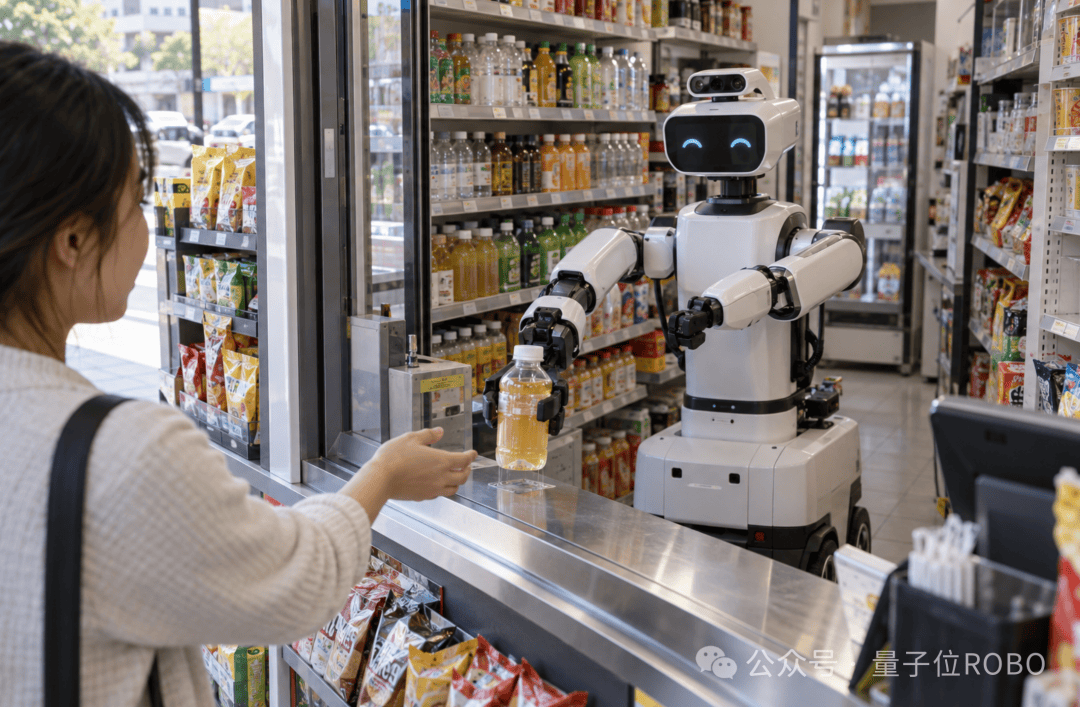
Representative image for 老牌便利店机器人售货折戟:实验室锤炼上万次,货架前还是摔瓶子

老牌便利店机器人售货折戟:实验室锤炼上万次,货架前还是摔瓶子

Rank 54 · Content 55 · Popularity N/A

TL;DR - Chinese retailer Hongqi Chain ended a 16-month robotic vending project after lab-tested robots proved unreliable and uneconomical in real stores. The failure highlights how safety, manipulation, generalization, and operating costs still constrain retail robotics.

  • Robots struggled with wet glass bottles, varied packaging, lighting changes, narrow aisles, obstacles, and inconsistent shelf layouts.
  • Deployed systems typically handle standardized products in controlled areas and still require staff for restocking, charging, calibration, and fault response.
  • Retail robots costing up to roughly ¥1 million often serve more as marketing attractions or proofs of concept than profitable labor replacements.
  • Industry sources estimate replacing store employees may take another two to five years, requiring safer operation, broader skills, better autonomy, and lower costs.

Longevity Science 1

Briefing Chat: Dog years: could longevity science extend your pets' lives?

Rank 41 · Content 40 · Popularity 43

TL;DR - Nature staff discuss the emerging field of pet-longevity research and whether it could extend companion animals’ lives. The brief also raises an academic ethics question about a researcher disregarding student reviews.

  • Focuses on the developing science of increasing pets’ lifespans.
  • No specific methods, studies, or results are provided in the excerpt.
  • Includes commentary on whether researchers should take student feedback seriously.

Research Integrity 1

Record-breaking retraction: scholarly publisher pulls 1,400 conference papers on one day

Rank 58 · Content 65 · Popularity 43

TL;DR - IEEE retracted 1,400 conference papers in a single day after a study linked them to paper mills. The record-scale action highlights persistent quality-control and research-integrity problems in scholarly publishing.

  • The announcement concerns conference papers published by IEEE.
  • Nature reports this as a record-breaking mass retraction.
  • The provided excerpt does not detail the study’s methods or evidence.

Scientific Data Infrastructure 1

Announcing Project ProtoStar: Making Publicly Funded Science AI-Ready

Rank 57 · Content 60 · Popularity N/A

TL;DR - Hugging Face announced Project ProtoStar, an initiative intended to make publicly funded scientific outputs more usable for AI. Only the title is provided, so its methods, scope, and results are unspecified.

  • Focuses on improving the AI readiness of publicly funded science.
  • Likely concerns scientific data accessibility or preparation, but no technical details are available.
  • No datasets, benchmarks, implementation details, or measured outcomes are provided.

World Models 1

Representative image for 三年前布局,今年爆火丨西湖大学成立新中心

三年前布局,今年爆火丨西湖大学成立新中心

Rank 54 · Content 55 · Popularity N/A

TL;DR - Westlake University launched a research center focused on world models and physical intelligence, building on AutoLab’s three years of work. The initiative aims to help AI predict physical outcomes and act reliably in real environments.

  • AutoLab’s “concept world model” represents reusable physical concepts in latent space rather than generating pixels.
  • The approach targets generalization to unfamiliar scenarios in autonomous driving and robotic manipulation.
  • Spinout Awomo is developing a physical foundation model and has raised over RMB 100 million.
  • The center will integrate perception, prediction, reasoning, and action while pursuing academic and industrial applications.