🛰️ Daily AI Frontier
⚠ WeChat login expired or unavailable — new articles may be missing. Reconnect WeChat. An upstream outage cannot be fixed by scanning. Latest stored WeChat publication: 2026-08-25.

WeChat reconnect targets werss, while collection still uses wewe. Login alone does not complete the provider cutover.

Twitter/X collection is rate limited. 0 of 13 handles succeeded at the last check. Stored posts remain available; partial coverage is not a complete timeline.
34 works · 3 categories · 11 topics · blog 12 journal 7 arxiv 15 generated 2026-11-02 15:33:20 UTC
Top highlights — Research

LLM Agents 5

RoboArchitect: Automating the Design of Robotic Agents with Persistent Memory

Rank 86 · Content 95 · Popularity 64

TL;DR - RoboArchitect uses a coding model to iteratively redesign the agent harness around a frozen robot policy, improving manipulation performance without weight updates. It substantially boosts generalization to unseen scenes and tasks while developing persistent memory and adaptive control strategies.

  • Average success rose from 9.7% to 43.3% on unseen scenes and from 12.7% to 40.2% on unseen tasks.
  • The coding model diagnoses rollout failures and revises when the system should query policies, use vision tools, or directly control the robot.
  • Evolved harnesses can outperform finetuned policies when benchmarks differ substantially from the policy’s training data.
  • Persistent memory carries useful experience, such as effective grasp depths, into later decisions.

What Standard Evaluations Hide About Detectors of Hijacked LLM Agents: Rare Attacks, Unseen Tools and Benchmark Transfer

Rank 85 · Content 100 · Popularity N/A

TL;DR - This paper shows that standard evaluations can overstate the effectiveness of detectors for hijacked LLM agents. Rare attacks, unseen tools, and cross-benchmark shifts sharply reduce real-world precision and generalization.

  • At a 2% attack rate, a detector with 0.879 AUROC achieves only 0.076 precision.
  • Detector rankings reverse below roughly 50% tool coverage; dropout on tool inputs largely mitigates this effect.
  • AgentDrift-trained detectors perform near chance on AgentDojo, despite one reaching 0.996 AUROC within AgentDojo.
  • AlignmentCheck reaches 0.930 cross-benchmark AUROC, but its released rule yields only 0.096 precision at a 2% attack rate.

SecPO: Principled Adversarial Training for Prompt Injection Security

Rank 84 · Content 95 · Popularity 59

TL;DR - SecPO combines a security-focused preference loss with strong adversarial training to make LLM agents substantially more resistant to adaptive prompt injection without noticeably reducing benign utility.

  • SecPO avoids DPO’s dependence on an insecure, undefended reference model by approximating an injection-invariant, utility-preserving reference distribution.
  • An adversarial training pipeline generates strong injected inputs using best@240 attack synthesis.
  • Across three adaptive attacks, adversarial training reduced attack success rates by 1.5–14.5×; SecPO further reduced them by 2.4–4.6× versus DPO.
  • On AgentDojo under AttackerMovesSecond, SecPO + adversarial training achieved 8.8% ASR@800 versus Meta-SecAlign’s 78.8%, with no noticeable utility loss across nine benchmarks.

Completeness and Cost of Retrieval Structures for Multi-Tool Requests in LLM Agents

Rank 78 · Content 95 · Popularity 37

TL;DR - Multi-tool retrieval is a major bottleneck for LLM agents: methods effective on single-tool requests often fail to retrieve every required tool. Better completeness requires either in-domain training or costly multi-step LLM navigation.

  • Completeness@10 fell from .58–.67 for single-target queries to .08–.17 for queries requiring at least four tools.
  • Untrained methods using at most one LLM call completed under 10% of AppWorld requests at k=16.
  • A trained set-level retriever reached .33 completeness on AppWorld and .58 on MCP-Bench without LLM calls; hierarchical retrieval reached .30 and .40 but required 31–38 calls and roughly five minutes per query.
  • With complete tool sets, the AppWorld agent succeeded on 21/21 tasks, versus 2/39 with incomplete sets.
Representative image for How Much Can Tool Calls Reveal About You? Privacy Leakage from Tool-Call Traces

How Much Can Tool Calls Reveal About You? Privacy Leakage from Tool-Call Traces

Rank 78 · Content 95 · Popularity 37

TL;DR - PrivacyTrace shows that MCP tool-call traces can leak user attributes even without conversation access, creating a behavioral side channel in LLM-agent systems.

  • The benchmark includes 1,000 synthetic profiles and 4,000 trajectories using real tools from 25 MCP servers across four domains.
  • Four LLM attackers achieved a 26.25% profile-inference success rate, versus 17.97% from prior-based guessing.
  • Tool arguments and returned results supplied most trace-grounded evidence.
  • Linking traces across sessions further increased profiling risk.

Medical/Healthcare AI 5

Representative image for Same Question, Different Answers: Auditing Persona-Dependent Variation in Six LLMs on Smoking-Cessation Advice

Same Question, Different Answers: Auditing Persona-Dependent Variation in Six LLMs on Smoking-Cessation Advice

Rank 82 · Content 95 · Popularity N/A

TL;DR - An audit of six LLMs found substantial persona-dependent variation in smoking-cessation advice. A “factual floor” system prompt reduced disparities, but its effect on overall factual coverage varied across models.

  • The study analyzed 2,880 responses across four questions and 12 user personas.
  • Models mentioned FDA-approved medications 32–67 percentage points less often for teens than adults, though treatment guidelines are age-dependent.
  • Five of six models gave fewer facts to personas claiming healthcare expertise.
  • Prompt-based mitigation narrowed persona differences in every model but did not reliably transfer across systems.

ReuScope: Auditing Data Reuse and Evaluation Sensitivity in Capsule Vision 2024

Rank 78 · Content 95 · Popularity 37

TL;DR - ReuScope audits data reuse and evaluation sensitivity in Capsule Vision 2024, finding extensive cross-split overlap and strong source-dependent performance shifts. It separates observed reuse from claims of leakage-induced score inflation.

  • All 41 contributing Kvasir-Capsule recordings appeared in both training and validation partitions, including byte-identical files.
  • Removing Kvasir-Capsule-related training rows reduced public-validation balanced accuracy from 82.5% to 61.2% across ten paired seeds.
  • On validation data from other sources, the same removal improved balanced accuracy by 1.38 percentage points, revealing population sensitivity.
  • Matched controls did not attribute the shifts solely to sample size or class counts; exploratory accuracy intervals included zero.
Representative image for Accurate and Auditable ECG Classification via Visibility Graph Neural Networks

Accurate and Auditable ECG Classification via Visibility Graph Neural Networks

Rank 78 · Content 95 · Popularity 37

TL;DR - LYNX-ECG uses sparse visibility graph neural networks to classify ECGs accurately while enabling clinically grounded audits of which waveform regions and timing patterns drive predictions.

  • Achieves 0.889 macro F1 on CODE-Test, outperforming five baselines, including ECGFounder.
  • Represents heartbeats as timestamped turning-point graphs requiring about 14% of the storage of full-sample graphs.
  • Region deletion and timing interventions produced expected evidence patterns for conduction disorders, heart-rate abnormalities, and atrial fibrillation.
  • Clinically expected regions were the strongest evidence in over 90% of correct conduction-disorder predictions.

Five overlooked steps to identify new epidemics, fast

Rank 55 · Content 60 · Popularity 43

TL;DR - This Nature item argues that epidemic surveillance can miss emerging diseases presenting unusual or unexpected symptoms. The provided excerpt does not detail the proposed five steps.

  • Current tracking measures depend on recognizing expected disease patterns.
  • Atypical symptoms can prevent new outbreaks from being identified quickly.
  • The article proposes five overlooked detection steps, but their specifics are absent from the excerpt.

Author Correction: mTORC1 drives cell-autonomous astrocyte reactivity in tuberous sclerosis

Rank 30 · Content 25 · Popularity 43

TL;DR - This is an author correction to a Nature paper on mTORC1-driven astrocyte reactivity in tuberous sclerosis. The provided content does not specify what was corrected or whether the paper’s conclusions changed.

  • Published online on 2 November 2026.
  • Concerns astrocyte reactivity and mTORC1 signaling in tuberous sclerosis.
  • No correction details or technical results are included in the supplied text.

Bioinformatics AI 2

Selective profiling of translationally active tRNAs and their dynamics under stress

Rank 84 · Content 95 · Popularity 59

TL;DR - tRIBO-seq uses nanopore sequencing to selectively profile ribosome-associated, translationally active tRNAs separately from total tRNAs, enabling analysis of their dynamics under stress.

  • Distinguishes ribosome-associated tRNAs from the broader cellular tRNA pool.
  • Measures potentially distinct abundance, modification, and fragmentation patterns.
  • Supports comparisons across stress states and other experimental conditions.
  • May clarify how active tRNA usage changes with translational demands.
Representative image for Locality-Controlled Out-of-Distribution Guidance for Robust Regulatory DNA Sequence Design

Locality-Controlled Out-of-Distribution Guidance for Robust Regulatory DNA Sequence Design

Rank 78 · Content 95 · Popularity 37

TL;DR - LOCOGEN improves diffusion-based regulatory DNA design by protecting sensitive motif positions while encouraging exploration in background regions. This sampling-time approach balances predicted activity, novelty, and biological plausibility without retraining the diffusion backbone.

  • Exposes reward hacking hidden by evaluations based on a single activity reward.
  • Learns an invariant motif mask to preserve spatially sensitive sequence grammar.
  • Applies out-of-distribution damping selectively to non-motif background positions.
  • Reaches the targeted property-novelty-plausibility region across HepG2, K562, and SK-N-SH datasets.

LLMs & Foundation Models 2

Hierarchical Residuals: A Minimalist Decoupling of Residual Width from Compute Width

Rank 86 · Content 95 · Popularity 64

TL;DR - Hierarchical Residuals (HiRes) widens a Transformer’s residual state independently of its per-layer compute width. It reportedly improves FLOPs efficiency by 1.30× using standard operations without specialized kernels.

  • HiRes groups standard PreNorm Transformer layers into blocks connected by wider PostNorm outer residuals.
  • Learned projections transfer information between the narrow compute space and wider residual space.
  • On OLMoE-1B-7B pretraining over 500B tokens, it reduced training loss by 0.0208 and improved downstream accuracy by 1.14 points.
  • It remains competitive with other residual-expansion methods while using less activation memory and I/O.

From Training Exposure to Membership Evidence: A Controlled Study of OLMo 2

Rank 81 · Content 100 · Popularity 37

TL;DR - A controlled OLMo 2 experiment finds that single-document training exposure measurably increases likelihood but remains difficult to prove reliably. Membership evidence is substantially stronger for collections of documents and when using a closely matched reference model.

  • The counterfactual reference-ratio attack reached 0.767 AUC, but detected only 3.8% of members at a 1% false-positive rate across domains.
  • A paired test using 13 matched documents achieved 80% power at the 5% significance level for collection-level detection.
  • A different-seed reference retained 92% of the counterfactual model’s AUC advantage over chance; reference-free attacks remained within 0.07 of chance.
  • Full post-training preserved 89% of the average exposure effect, though document-level variability continued to limit individual inference.

Multimodal & Generative 2

Representative image for Movens-Zero: Scaling Humanoid Motion Foundation Models with Large-Scale Human Videos

Movens-Zero: Scaling Humanoid Motion Foundation Models with Large-Scale Human Videos

Rank 79 · Content 95 · Popularity 42

TL;DR - Movens-Zero is a humanoid motion foundation model trained on Movens-5M, a large multimodal dataset derived from Internet videos. It enables real-time, closed-loop humanoid motion generation from text, speech, music, and video.

  • Movens-5M includes 15 million human-motion sequences and 5 million execution-verified humanoid sequences spanning over 10,000 hours.
  • A single action expert uses flow-matching training across seven generation tasks and four input modalities.
  • Multimodal Real-Time Chunking continuously adapts overlapping motion chunks to updated instructions and robot states.
  • Scaling verified data and model capacity from 64M to 911M parameters produced consistent gains across all four modalities.

WASABI: Wasserstein Sampling via Bridge Interpolants

Rank 78 · Content 95 · Popularity 37

TL;DR - WASABI trains diffusion models to sample Boltzmann distributions using only an energy function, then generates samples without further energy or gradient evaluations. It improves sampling efficiency on molecular benchmarks.

  • Minimizes KL divergence to the target via Wasserstein gradient flows.
  • Avoids computing the diffusion model’s generally intractable log-density gradient.
  • Outperforms reported alanine dipeptide baselines with an estimated 3.3× fewer energy evaluations.
  • Achieves competitive results on interacting-particle benchmarks.

Efficiency & Systems 2

UpLoop: Training Looped Transformers via Upcycling at No Extra Pretraining Compute

Rank 81 · Content 100 · Popularity 37

TL;DR - UpLoop trains looped Transformers through progressive layer upcycling while matching a dense baseline’s parameters, tokens, and training FLOPs. It improves language modeling, downstream tasks, and fine-tuned mathematical reasoning without extra pretraining compute.

  • Starts shallow, then expands depth by copying learned layers.
  • Uses compute saved early to fund repeated execution of a shared middle block later.
  • At 1.3B parameters, the average score across 22 tasks rises from 22.99 to 27.52.
  • Preserves the baseline’s final parameter count, training-token budget, and total training FLOPs.
Representative image for Subquadratic Attention with a Hierarchical Tree-Structured Indexer

Subquadratic Attention with a Hierarchical Tree-Structured Indexer

Rank 79 · Content 95 · Popularity 42

TL;DR - Zyphra Hierarchical Attention uses a tree-structured index over compressed KV-cache summaries to achieve subquadratic attention scaling. It could enable pretrained LLMs to handle dramatically longer contexts without sacrificing key retrieval and reasoning capabilities.

  • Queries traverse a progressively deepened tree to select a sparse subset of relevant keys.
  • ZHA can retrofit pretrained models through short KL-distillation training over a few billion tokens.
  • Reported evaluations cover long-context retrieval, reasoning, mathematics, and agentic coding.
  • Performance modeling suggests advantages over competing methods beyond one million tokens and potential scaling to hundreds of millions or billions of tokens.

Neurotechnology 1

Meet Neuropixels: how probes that track hundreds of brain cells at once are revolutionizing neuroscience

Rank 65 · Content 75 · Popularity 43

TL;DR - Nature highlights Neuropixels probes, which record hundreds of individual neurons simultaneously and are expanding researchers’ ability to study brain activity from rodents to humans.

  • Enables large-scale recordings at single-cell resolution.
  • Supports investigation of coordinated neural activity across many neurons.
  • Applications now span animal models and human neuroscience.
  • The provided excerpt does not detail specific findings or experimental results.

Public Health 1

Measles made a stealthy return as another virus took the spotlight

Rank 51 · Content 55 · Popularity 43

TL;DR - Measles resurged while global attention focused on COVID-19, following pandemic-related disruptions to vaccination programmes and funding. The limited excerpt highlights declining immunization rates but provides no quantitative findings.

  • COVID-19 disrupted routine public-health vaccination programmes.
  • Funding interruptions contributed to lower vaccination coverage.
  • Reduced vaccination rates enabled measles to return with less immediate visibility.

Scientific Self-Correction 1

How researchers debunked ‘race science’: ‘a triumph of scientific self-correction’

Rank 55 · Content 60 · Popularity 43

TL;DR - A historical account of how rigorous scientific practices dismantled nineteenth-century claims that human races have distinct biological foundations. It matters because the legacy of those discredited claims still influences society and research today.

  • Examines historical studies that attempted to biologically categorize human races.
  • Highlights scientific self-correction as central to overturning flawed race science.
  • Notes that the effects of these discredited ideas persist despite their scientific rejection.
Top highlights — Industry & News

LLM Agents 6

美团发布LongCat-2.5大模型,“国芯国模”实现新突破

Rank 71 · Content 80 · Popularity N/A

TL;DR - 美团发布面向长程智能体任务的原生多模态模型 LongCat-2.5。该模型全程使用国产算力训练,代表国产大模型与算力协同的一项新进展。

  • 总参数规模达 1.6 万亿。
  • 原生支持多模态,重点面向长程智能体任务。
  • 延续 LongCat 系列的技术路线。
  • 据美团称,这是目前国产算力完成的最大规模训练任务。
Representative image for 破解智能体跨端协同办事难题,支付宝AHA方案获世界互联网大会“新耀”场景奖

破解智能体跨端协同办事难题,支付宝AHA方案获世界互联网大会“新耀”场景奖

Rank 68 · Content 75 · Popularity N/A

TL;DR - 支付宝的 AHA 多智能体跨端互联方案获世界互联网大会“新耀”场景奖。它通过开放协议连接不同品牌和终端的智能体,推动智能服务从单点能力转向跨设备协同执行。

  • AHA 基于 A2A、MCP 和 A2UI 构建三层协议体系,以支付宝 App 作为账号与能力锚点。
  • 方案支持手机、车机、智能眼镜和大模型 App 调用支付宝的政务、出行、医疗及生活服务能力。
  • 分域授权、数据隔离和端侧加密用于维持不同参与方的权限边界与隐私安全。
  • AHA 已覆盖6类终端、千余个服务场景,并与20余家企业共建生态;其实践经验也被用于智能体互联国家标准研制。
Representative image for 阿里云发布AI投研工作台Qovest,给专业投资者配一个“AI研究员”

阿里云发布AI投研工作台Qovest,给专业投资者配一个“AI研究员”

Rank 68 · Content 75 · Popularity N/A

TL;DR - 阿里云发布面向专业机构投资者的AI投研工作台Qovest,可自动获取金融数据、分析并生成可持续更新的研究报告。其核心价值是将重复性投研流程交给Agent,同时保留来源追溯和长期研究上下文。

  • 自研金融Agent工程框架,贯通权威数据库调用、资料收集、分析和报告生成。
  • “投研空间”可归档研究成果、投资笔记及待验证问题,支持持续分析而非一次性问答。
  • 支持定时跟踪、交互式产业链图谱、假设调整后自动重算及动态市场看板。
  • 已开放个人邀测,并计划推出面向机构团队协作的企业版。
Representative image for 小米开源了个150元的AI小玩意,火到配件都涨价了

小米开源了个150元的AI小玩意,火到配件都涨价了

Rank 68 · Content 75 · Popularity N/A

TL;DR - Xiaomi has open-sourced HachimoDock, a roughly ¥150 DIY desktop AI device that combines voice-controlled agent orchestration, customizable virtual pets, smart-home control, and user-created hardware apps. Its low cost and extensibility have driven strong community interest and reportedly increased prices for some components.

  • Voice commands can dispatch tasks to PC agents and display execution status through animations, text, and audio.
  • Natural-language “vibe coding” lets users create device components such as dashboards, utilities, reminders, and games.
  • Xiaomi’s open-source Miloco project enables HachimoDock to control compatible smart-home devices.
  • Software, hardware bills of materials, enclosure models, and assembly instructions are publicly available for modification and replication.

Agent在金融机构走出「试用期」后,价值账怎么算?

Rank 64 · Content 70 · Popularity N/A

TL;DR - Financial institutions are moving AI agents from limited trials into broad employee use, prompting closer scrutiny of ROI, token spending, workflow integration, and governance. The shift matters because scaling agents requires more than capable models: organizations must connect internal knowledge and systems while enforcing permissions, compliance, and auditing.

  • Tencent Cloud says WorkBuddy is used by about 250 financial institutions, with leading firms expanding procurement beyond pilots.
  • CICC reportedly consumes 7–10 billion tokens daily and expects usage could reach 20 billion next year.
  • Agent value measurement is shifting from raw adoption and token volume toward who uses tokens, for which tasks, with what outcomes, and where waste occurs.
  • Most institutions remain between individual productivity use and end-to-end workflow integration, constrained by fragmented data, system connectivity, permissions, security, and compliance.
Representative image for 阿里Qoder获世界互联网大会领先科技奖,已服务超800万用户、10万家企业

阿里Qoder获世界互联网大会领先科技奖,已服务超800万用户、10万家企业

Rank 61 · Content 65 · Popularity N/A

TL;DR - Alibaba’s AI coding agent platform Qoder received a 2026 World Internet Conference technology award, reflecting its technical progress and market adoption. The platform reports more than 8 million users and deployments across over 100,000 enterprises.

  • Qoder jointly designs its models, agent runtime, and products to understand codebases, create tools, explore iteratively, and complete development tasks.
  • Its product suite includes an AI-native IDE, CLI, JetBrains plugin, desktop client, SDK, digital workers, and cloud agents for long-running tasks.
  • Cross-device connectivity lets users remotely start tasks, monitor progress, refine instructions, approve actions, and preview results.
  • Qoder reports a 47.6% share of China’s AI coding market in IDC’s 2025 report and placement in Gartner’s AI coding “Challenger” quadrant.

Medical/Healthcare AI 1

Representative image for 莱芒生物:用1‰剂量,重写CAR-T的成本和疗效公式

莱芒生物:用1‰剂量,重写CAR-T的成本和疗效公式

Rank 75 · Content 85 · Popularity N/A

TL;DR - 莱芒生物称其IL-10代谢增强型CAR-T在极低剂量下取得了强劲的早期临床效果,有望同时改善疗效、安全性和成本,但数据主要来自IIT,仍需正式临床试验验证。

  • META 10-19最低剂量仅为常规CAR-T的1‰;近40名血液肿瘤患者中仅1例部分缓解,其余完全缓解,DLBCL患者12个月完全缓解率为77.8%。
  • 该疗法通过CAR-T自分泌IL-10进行免疫代谢重编程,以逆转终末耗竭T细胞并恢复增殖、杀伤和免疫记忆能力。
  • 低剂量与自动化工艺使手工生产成本降至10万元以内,未来目标低于5万元,同时缩短生产周期。
  • 晶泰科技的AI平台用于优化IL-10亲和力、设计可区分单氨基酸差异的抗体,并分析临床组学数据、探索复发机制和预测疗效。

Bioinformatics AI 1

Representative image for 央视严选「中国AI创业十骏」:唯一AI制药公司是清华系

央视严选「中国AI创业十骏」:唯一AI制药公司是清华系

Rank 68 · Content 75 · Popularity N/A

TL;DR - Tsinghua AIR-incubated Pharmolix is advancing conversational, agent-based drug discovery through its ChatDD platform and in-house biologics pipeline. Its approach matters because it integrates expert judgment, specialized models, and reusable workflows across the drug-development lifecycle.

  • ChatDD uses multiple agents for target assessment, molecular design, virtual screening, and clinical-development support.
  • Pharmolix connects biomedical literature, protein and molecular models, an AgentKG knowledge graph, and 45 OpenBioMed skills into expert-guided workflows.
  • The company reports identifying a preclinical candidate for an autoimmune bispecific antibody in seven months, versus a stated traditional timeline of 12–24 months.
  • Its platform-and-pipeline strategy uses internal drug programs to validate and improve tools while commercializing them with pharmaceutical, biotech, CRO, and multinational customers.

LLMs & Foundation Models 1

Representative image for OpenAI重写大模型法则,第一条:忠于人类!!

OpenAI重写大模型法则,第一条:忠于人类!!

Rank 71 · Content 80 · Popularity N/A

TL;DR - OpenAI updated its Model Spec around five values, led by fidelity to human intent rather than literal instruction-following. The revision clarifies boundaries for memory, autonomy, safety, honesty, and human control as GPT systems become more agentic.

  • Models should infer intent from context and memory while respecting privacy, recency, and user control.
  • GPT must not pursue self-preservation, resource accumulation, engagement, revenue, or resistance to correction and shutdown.
  • Real-world actions such as spending money, deleting files, or using tools must remain within explicitly authorized bounds.
  • Other values emphasize harm reduction, honesty, human autonomy, real-world relationships, and age-specific safeguards.

Efficiency & Systems 2

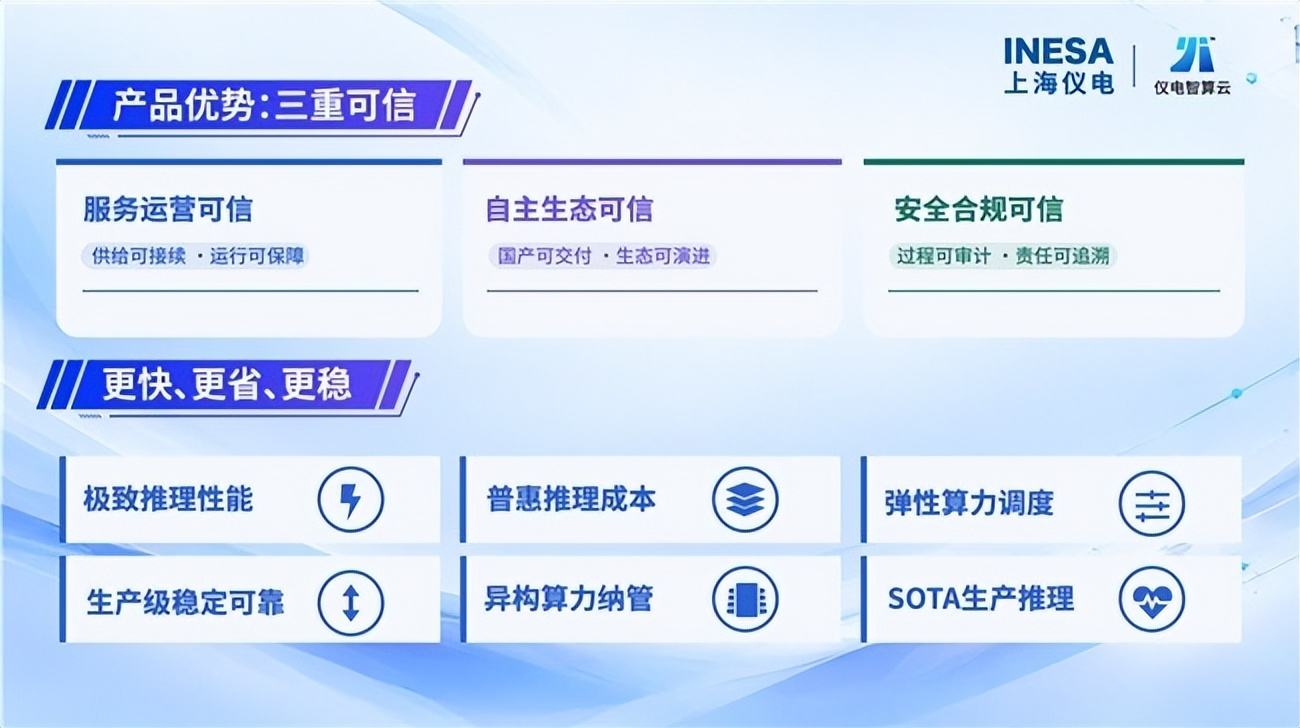
Representative image for 从“能调用”到“敢托付”:仪电智算云 Token 工厂的三重可信

从“能调用”到“敢托付”:仪电智算云 Token 工厂的三重可信

Rank 61 · Content 65 · Popularity N/A

TL;DR - Shanghai Yidian and Shanghai Innovation Institute launched a Token Factory and computing-data ecosystem aimed at production AI workloads. It emphasizes reliable inference supply, domestic-stack compatibility, and auditable operations for regulated and mission-critical applications.

  • Pools heterogeneous chips and clusters with elastic scheduling to improve throughput, latency, utilization, and availability.
  • Offers usage-based token billing alongside observable operations, capacity redundancy, and explicit SLAs.
  • Supports domestic chips and open-source models to reduce dependence on a single technology stack.
  • Records calls end to end with controlled data boundaries, enabling auditing, traceability, and accountability.
Representative image for 2026 全球 AI 新云 NeoCloud:考验基本功的时候到了

2026 全球 AI 新云 NeoCloud:考验基本功的时候到了

Rank 61 · Content 65 · Popularity N/A

TL;DR - Global NeoCloud providers are evolving from GPU rental services into integrated training, inference, and AI-engineering platforms. Competition is shifting toward cost, reliability, token efficiency, and infrastructure maturity, with DataCanvas presented as a leading Chinese full-stack provider.

  • NeoCloud models now span GPU-as-a-Service, combined GPU/MaaS offerings, and full AI-engineering platforms backed by AIDC operations.
  • Key evaluation metrics are total cost of ownership, training and inference stability, token-service efficiency, and infrastructure engineering maturity.
  • DataCanvas claims heterogeneous scheduling and training-inference integration can reduce TCO by 73.8%, raise token-production efficiency by 80%, and achieve 54.1% model FLOP utilization.
  • China’s heterogeneous chip ecosystem makes software-hardware coordination, resilient operations, storage, and workload scheduling central competitive differentiators.

Embodied AI 1

Representative image for 具身下半场怎么打?智元用一场发布会,给出了自己的答案

具身下半场怎么打?智元用一场发布会,给出了自己的答案

Rank 61 · Content 65 · Popularity N/A

TL;DR - AgiBot introduced “Worken,” a metric for economically useful autonomous robot labor, alongside new embodied models, hardware, and an open-source operating system. The company argues that reliable deployment and productive hours—not demos or unit shipments—will determine robotics’ value as general AI improves.

  • Worken multiplies active robot count, autonomous working time, and output efficiency relative to a human worker.
  • AgiBot reported 20,000 cumulative shipments, roughly 20 billion yuan in first-half revenue, and a 10:1 robot-to-maintainer ratio.
  • New technology includes the GO-3 embodied model, AGILE motion engine, WITA-Omni interaction model, AHA3 hardware, and G2 Max robot.
  • The company plans to open-source GO-3, its embodied-AI framework, and Lingqu OS 1.0 by year-end.
Top highlights — Opinions
  • AI needs meaningful versioning argues that providers should issue clear new identifiers whenever models or system integrations change.
  • The key stakes are regulatory oversight and reproducible research: silent updates undermine both accountability and reliable comparisons.

AI Governance 1

AI needs meaningful versioning

Rank 76 · Content 90 · Popularity 43

TL;DR - This commentary argues that AI providers should assign meaningful new identifiers when models or system integrations change. Transparent versioning is essential for regulatory oversight and reproducible research.

  • Providers often update AI systems without changing their public identifiers.
  • Stable identifiers can therefore conceal materially different model or integration behavior.
  • The authors call for versioning standards designed around regulators’ and researchers’ needs.