🛰️ Daily AI Frontier
⚠ WeChat login expired or unavailable — new articles may be missing. Reconnect WeChat. An upstream outage cannot be fixed by scanning. Latest stored WeChat publication: 2026-08-25.

WeChat reconnect targets werss, while collection still uses wewe. Login alone does not complete the provider cutover.

Twitter/X collection is rate limited. 0 of 13 handles succeeded at the last check. Stored posts remain available; partial coverage is not a complete timeline.
37 works · 2 categories · 12 topics · blog 12 journal 10 arxiv 15 generated 2026-11-12 15:41:05 UTC
Top highlights — Research

Medical/Healthcare AI 6

Evolutionary dynamics in the years preceding acute myeloid leukaemia

Rank 84 · Content 90 · Popularity 70

TL;DR - This Nature study reconstructs how blood-cell clones evolve in the years before acute myeloid leukaemia diagnosis. It suggests that these pre-diagnostic clonal dynamics follow a set of simple evolutionary rules.

  • Examines somatic evolutionary histories of haematopoietic cells.
  • Focuses on the years preceding acute myeloid leukaemia diagnosis.
  • Identifies simple rules governing clonal changes in blood.
  • The provided abstract snippet does not specify methods, cohorts, or individual rules.
Domain-alteration chimeras rewire oncogenic complexes in prostate cancer

Rank 82 · Content 90 · Popularity 63

TL;DR - A Nature study introduces domain-alteration chimeras that force non-native androgen receptor–p300/CBP interactions, collapsing oncogenic transcription in metastatic prostate cancer. The approach establishes induced proximity as a potential broader therapeutic strategy.

  • Rewires AR–p300/CBP complexes rather than simply inhibiting individual proteins.
  • Produces “super-inhibitory,” lineage-selective suppression of AR transcriptional programs.
  • Demonstrates a novel therapeutic modality for metastatic prostate cancer.
  • Suggests domain-alteration chimeras may generalize to other disease-driving protein complexes.
Representative image for Toward Foundation Detection Models via Example-Based Grounding in EM-DETR

Toward Foundation Detection Models via Example-Based Grounding in EM-DETR

Rank 78 · Content 90 · Popularity N/A

TL;DR - EM-DETR combines heterogeneous medical imaging datasets to build a multi-domain lesion detection foundation model. It improves detection across chest X-rays and mammography while addressing inconsistent label spaces and catastrophic forgetting.

  • Uses student-teacher training to integrate datasets with heterogeneous anatomical and abnormality labels.
  • Extends example-based EM-DETR for fine-grained detection across multiple imaging modalities.
  • Improves image-level AUC by 1 percentage point on four chest X-ray findings versus prior SOTA.
  • Raises mAP50 by 2–3 percentage points over single-dataset EM-DETR in chest X-rays and mammography.

Epigenetic heterogeneity in breast tumours informs diagnosis and prognosis

Rank 76 · Content 90 · Popularity 43

TL;DR - Single-cell epigenetic analysis of breast tumours identifies a conserved signature across patients that may improve relapse-risk assessment, with potential diagnostic and prognostic value.

  • Examines epigenetic heterogeneity within breast tumours at single-cell resolution.
  • Finds a conserved epigenetic signature shared across patients.
  • The signature may help identify patients at increased risk of disease relapse.
  • The provided summary does not specify the analytical methods, cohort size, or predictive performance.

UNC13A splice correction rescues synaptic dysfunction induced by TDP-43 loss

Rank 76 · Content 90 · Popularity 43

TL;DR - This Nature study identifies a predegenerative state in which TDP-43 loss disrupts neuronal synaptic communication before structural degeneration. Splice-switching antisense oligonucleotides correct UNC13A cryptic splicing and rescue the resulting synaptic dysfunction.

  • TDP-43 loss leaves neurons structurally intact initially but substantially impairs synaptic communication.
  • UNC13A cryptic splicing is implicated in this early functional decline.
  • Splice-switching antisense oligonucleotides correct the aberrant splicing.
  • The findings suggest a therapeutic opportunity before overt neurodegeneration occurs.

Mitochondrial protein import defects enhance tumour immunogenicity

Rank 71 · Content 85 · Popularity 39

TL;DR - A Nature study reports that inhibiting mitochondrial protein import can increase tumour immunogenicity by promoting mitochondrial DNA release, suggesting a potential avenue for enhancing anti-tumour immune responses.

  • Links mitochondrial protein import defects to increased tumour immunogenicity.
  • Identifies mitochondrial DNA release as the proposed mechanism.
  • The provided excerpt does not specify experimental models, effect sizes, or therapeutic outcomes.

Bioinformatics AI 3

PANGEA: an integrated cell atlas across diverse biological contexts enables systematic profiling of multicellular responses in human diseases

Rank 83 · Content 100 · Popularity 45

TL;DR - PANGEA is an integrated single-cell transcriptomic atlas spanning 160 human diseases and 48 organs. It provides a broad resource for systematically profiling multicellular responses across diseases and biological contexts.

  • Integrates single-cell transcriptomic data across diverse human diseases.
  • Covers 160 diseases across 48 organs.
  • Supports cross-disease and cross-organ analysis of multicellular responses.
  • Further methods and findings cannot be determined from the provided abstract snippet.

DeepMind's ultra-powerful AI for genome mapping wows scientists

Rank 79 · Content 95 · Popularity 43

TL;DR - DeepMind’s AlphaGenome 2 maps DNA variants to the cell types in which they are likely to act. This could help scientists interpret the functional effects of genetic variation, although the provided excerpt gives no methodological or performance details.

  • Focuses on predicting cell-type-specific activity of DNA variants.
  • Targets a central challenge in genomics: connecting genetic variants to biological function.
  • Nature reports strong scientific interest, but the excerpt does not provide benchmarks or validation results.
Representative image for Chem World: A Large-Scale Benchmark and Physics-Aware Framework for Trustworthy Molecular Property Prediction

Chem World: A Large-Scale Benchmark and Physics-Aware Framework for Trustworthy Molecular Property Prediction

Rank 78 · Content 95 · Popularity 37

TL;DR - Chem World unifies 17 datasets covering over 800,000 chemical instances and 10 molecular-property tracks. Its physics-aware PACM framework improves prediction across varied chemical systems, supporting more generalizable drug formulation and biomedical modeling.

  • Covers single-molecule and multi-component systems, including drug solubility.
  • Standardizes evaluation of molecular representations and compositional modeling.
  • PACM combines molecular representations, composition-aware modeling, and physical constraints.
  • Experiments find molecular language models transferable, with PACM consistently improving predictions.

LLMs & Foundation Models 2

AI Isn't Getting Dumber, We're Getting Pickier: Rising Standards in Human Evaluation of Large Language Models

Rank 78 · Content 95 · Popularity 37

TL;DR - Analysis of 1.26 million Chatbot Arena votes finds that users increasingly judge unchanged LLMs as collectively bad, even as their relative rankings remain stable. This evaluation drift could distort leaderboards and human-feedback training signals.

  • For fixed model pairs, “both are bad” votes rose 1.71 percentage points per month from May 2023 to August 2024.
  • Fourteen frequently observed pairs all showed increases, from 15.5% in 2023 to 23.3% in 2024.
  • The trend persisted within voters and model pairs, across languages and cohorts, and after controlling for prompts and interface changes.
  • Results suggest human standards rise with overall model progress, making unchanged systems appear to decline.
Representative image for A Margin Perspective on LoRA: Robustness to Catastrophic Forgetting and Adapter Merging (MaLoRA)

A Margin Perspective on LoRA: Robustness to Catastrophic Forgetting and Adapter Merging (MaLoRA)

Rank 74 · Content 90 · Popularity 37

TL;DR - MaLoRA explains LoRA’s resistance to catastrophic forgetting and its mergeability through a margin-based theory, then derives a training-free adapter-merging rule. Experiments show it matches or outperforms several merging baselines across vision and language classification.

  • In an intermediate regularization regime, the optimal LoRA adapter aligns with the fine-tuning data’s max-margin solution.
  • Closed-form margins quantify how regularization trades off pretrained-task retention against new-task adaptation.
  • The analysis proves merged adapters retain positive margins on each task and derives optimal mixing coefficients.
  • MaLoRA uses those coefficients to maximize margin across the combined tasks without additional training.

Multimodal & Generative 5

Few-Step Streaming Video Generation via Condition Shifting

Rank 80 · Content 85 · Popularity 69

TL;DR - APEX enables efficient few-step streaming video generation by using condition shifting to estimate the generated distribution within a shared generator, eliminating DMD’s separate fake-score network. It improves instruction following and aesthetics while reducing training memory and iteration time.

  • Uses the original text condition for generation and a shifted condition for fake estimation with shared parameters.
  • Outperforms S2-Avatar on progressive instruction fulfillment and visual aesthetics; human raters show a +30.0% net preference for instruction following.
  • Motion quality favors S2-Avatar, while audiovisual synchronization is mostly tied and usability is unchanged.
  • Under matched training settings, APEX uses 4.4% less peak GPU memory and shortens mean iteration time by 9.2% versus DMD.
Representative image for OnlyAct: Extracting Action Representations from Foundation Models for World Models

OnlyAct: Extracting Action Representations from Foundation Models for World Models

Rank 79 · Content 95 · Popularity 42

TL;DR - OnlyAct extracts scene-invariant action representations from pretrained V-JEPA 2 video embeddings using label-free contrastive adaptation. This avoids reconstruction bottlenecks and improves action transfer in world models across unseen scenes and domains.

  • Contrasts identical motions across different scenes against different motions within the same scene.
  • Evaluates action expressiveness, scene invariance, and action-conditioned video generation.
  • Covers robot manipulation, navigation, games, and driving, mostly unseen during adaptation.
  • Outperforms annotation-free latent-action methods in expressiveness while matching their scene invariance.
Representative image for From Video Frames to Robot Meta-Frames: A Unified Latent Interface for World Action Models

From Video Frames to Robot Meta-Frames: A Unified Latent Interface for World Action Models

Rank 79 · Content 95 · Popularity 42

TL;DR - MetaWAM packs robot actions, proprioception, and values into one frequency-domain “meta-frame” aligned with a pretrained video diffusion model’s latent prior. This reduces inference latency while supporting policy, world-model, and value prediction without architectural changes.

  • Uses disjoint frequency bands and inverse DCT to encode multiple robot signals in one decodable latent frame.
  • Frozen-denoiser reconstruction error indicates this encoding better matches the video model’s prior than conventional spatial encodings.
  • Achieves 68.9% success on RoboCasa while reducing inference latency by 39%.
  • Reaches 85.0% success across three real-world Franka tasks.

EVAThink: Evidence Sufficiency-Guided Training for Adaptive Thinking in Video Understanding

Rank 78 · Content 85 · Popularity 62

TL;DR - EVAThink trains video VLMs to adapt their response mode to the sufficiency of sampled-frame evidence, answering directly when evidence is strong and reasoning when it is sparse. This improves video understanding under fixed 32- and 64-frame budgets.

  • Mines paired evidence-dense and evidence-sparse views with identical questions, answers, and frame budgets.
  • Uses two-stage reinforcement learning to learn evidence-based mode selection and improve response efficiency.
  • Applies first-token advantage regularization to mitigate response-mode collapse.
  • Trained on 6.7K curated samples, it consistently improves over the base model and outperforms strong baselines on average.

Where Do Vision-Language Models Get Left and Right? Position-Code Counterfactuals in Qwen2.5-VL, Qwen3-VL and InternVL3

Rank 78 · Content 95 · Popularity 37

TL;DR - Counterfactual experiments show that several vision-language models derive left-right orientation primarily from vision-transformer position codes rather than language-model token positions. This pinpoints spatial reasoning failures in visual encoding and relation binding.

  • Mirroring ViT width positions reproduced flipped-image answers on 84.3–93.2% of CV-Bench left-right questions across tested models.
  • Shifting the ViT position grid also flipped most answers, while mirroring LLM token IDs or order changed few.
  • In Qwen2.5-VL-7B, the effect concentrated in global-attention ViT blocks, especially the final block.
  • Remaining errors suggest problems with relation binding, object localization, or correctly using the reference object.

Efficiency & Systems 5

Representative image for Precision on Demand: Escalating Weight Bits at Uncertain Decoding Steps in a Small Local Model

Precision on Demand: Escalating Weight Bits at Uncertain Decoding Steps in a Small Local Model

Rank 82 · Content 90 · Popularity 63

TL;DR - This paper dynamically reruns uncertain decoding steps at 8-bit precision while using 4-bit weights otherwise. On Qwen3-0.6B/GSM8K, it approaches all-8-bit accuracy with fewer weight bytes read, though the small live evaluation is inconclusive.

  • Low-precision entropy predicted argmax flips with 0.93 AUC; a margin gate caught 94% of flips at a 15% escalation budget.
  • An entropy gate escalated 16% of steps, scored 62.7% versus 64.0% at 8-bit and 55.3% at 4-bit, and used 87% of the all-8-bit weight bytes.
  • Paired tests did not statistically distinguish gated decoding from either fixed-precision baseline.
  • Verified speculation achieved zero KL at similar modeled cost; several controls and broader-model tests were not run.

Blurring the Block Boundaries: Overlapping Block Denoising for Efficient Diffusion Language Models

Rank 82 · Content 95 · Popularity N/A

TL;DR - B3 accelerates diffusion language models by refining overlapping blocks in parallel within one forward pass. It preserves generation quality while improving inference speed by 11.5–14.5%.

  • Dynamically opens the next block when the model is ready, avoiding rigid block boundaries.
  • Requires no training or hyperparameter tuning.
  • Integrates with any self-editing block diffusion model.
  • Evaluations span state-of-the-art DLMs and 10 diverse datasets.
Representative image for Forward-Value Discretization: Faster Stochastic Diffusion Sampling Without High-Order Approximation

Forward-Value Discretization: Faster Stochastic Diffusion Sampling Without High-Order Approximation

Rank 81 · Content 100 · Popularity 37

TL;DR - This paper introduces training-free forward-value discretization to improve diffusion sampling efficiency without higher-order approximation. Its stochastic variant, F-DDPM, achieves better sample quality than evaluated stochastic baselines at matched neural function evaluation budgets.

  • Proves matching upper and worst-case lower bounds showing higher-order stochastic samplers remain first-order convergent, even with exact scores.
  • F-DDPM evaluates the model at a cleaner lookahead point using the previous prediction and previously injected noise.
  • Both deterministic and stochastic variants require one model evaluation per iteration and retain first-order convergence guarantees.
  • Experiments on CIFAR-10, ImageNet, FFHQ, and LSUN report consistently lower FID than evaluated stochastic baselines at matched budgets.

REAL Loss: Optimizing Real Expected Acceptance Length for Speculative Decoding

Rank 79 · Content 95 · Popularity 42

TL;DR - REAL is a training loss that directly and unbiasedly optimizes expected acceptance length in speculative decoding. It improves LLM inference acceptance rates without changing the drafter architecture or decoding procedure.

  • Uses path weighting to eliminate the covariance gap found in surrogate block-level objectives.
  • Applies Rao-Blackwellization to reduce estimation variance.
  • Outperforms WTV, VSD, DBLast, and static LK across nine task subsets and five seeds.
  • Evaluated with a Qwen3.6-35B-A3B target model and Domino drafter.

Low-power 2D CFETs using single-crystal high- κ dielectrics

Rank 72 · Content 85 · Popularity 43

TL;DR - A transferable single-crystal titanium dioxide dielectric improves interfaces with 2D semiconductors, enabling ultra-low-power complementary transistors and inverters.

  • Uses high-κ, single-crystal anatase titanium dioxide as the dielectric.
  • Achieves near-ideal switching and low hysteresis.
  • Supports complementary field-effect transistors and inverter circuits.
  • Advances energy-efficient 2D semiconductor electronics.

Mechanistic Interpretability 1

Representative image for Are Causal Neuron Circuits Unique and Transferable?

Are Causal Neuron Circuits Unique and Transferable?

Rank 85 · Content 95 · Popularity 63

TL;DR - Causal neuron groups in language models are often non-unique and only partly necessary: small, disjoint subsets can independently alter answers. Their effects transfer to rephrasings but weaken substantially across different reasoning chains.

  • Exhaustively testing all 4,096 subsets of 12 MLP neurons showed that a few neurons often reproduced the full group’s effect.
  • On capital questions, selected neurons affected answer margins but had nearly constant activations, providing no evidence of question-specific content.
  • Across Qwen, Llama, and Gemma models, patching selected neurons from first-hop questions frequently shifted two-hop answers toward the bridge entity; random neurons did not.
  • Effects generalized to rephrasings of the same chain far better than to other tested chains.

Robot Learning 1

Representative image for Elastic-WAM: Adaptive Spatiotemporal Imagination for Efficient Robot Control

Elastic-WAM: Adaptive Spatiotemporal Imagination for Efficient Robot Control

Rank 82 · Content 95 · Popularity N/A

TL;DR - Elastic-WAM adaptively concentrates world-model refinement on the times and spatial regions most relevant to robot actions. This improves control performance while reducing inference latency from iterative video denoising.

  • Replaces fixed refinement budgets with state- and task-dependent computation.
  • Uses a unified spatiotemporal demand field to control stopping, denoising step size, and region updates.
  • Learns refinement allocation through a three-stage, action-grounded supervised procedure.
  • Achieves state-of-the-art control with lower latency across simulated and real-world long-horizon manipulation benchmarks.

Scientific Imaging 1

Independent interferometric observable confirms black hole shadow in M87*

Rank 85 · Content 95 · Popularity 62

TL;DR - A diffusion-based reconstruction method independently recovers M87*’s ring-like black hole shadow and mass from radio interferometry data. The closure-invariant approach reduces dependence on conventional calibration and imaging assumptions.

  • Uses closure-invariant formalism for very long baseline interferometry datasets.
  • Applies diffusion-based image reconstruction to supermassive black hole observations.
  • Independently confirms the ring-like shadow around M87*.
  • Recovers its mass without the usual calibration and imaging assumptions.
Top highlights — Industry & News

LLM Agents 3

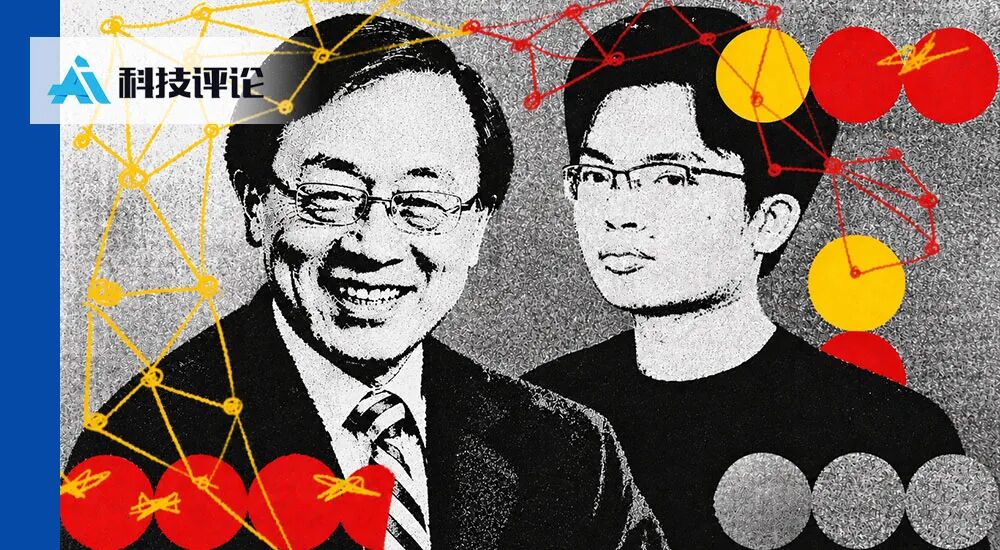
Representative image for 姚期智杨植麟首次联手给 AI 出的博士级题目,Kimi 多画出了「关键一条边」

姚期智杨植麟首次联手给 AI 出的博士级题目,Kimi 多画出了「关键一条边」

Rank 74 · Content 90 · Popularity 38

TL;DR - TCSExam evaluates AI agents on 100 verifiable theoretical-computer-science research tasks. Kimi K3 constructed a record 630-edge graph, while GPT-6 Astra proved a new special case of a matrix conjecture, showing AI can produce limited but machine-checkable research advances.

  • Tasks span theorem proving, solver engineering, mathematical construction, and open conjectures.
  • Lean 4, independent checkers, and checkpoints distinguish complete proofs from partial progress.
  • Kimi K3 improved a 124-vertex graph construction from 629 to 630 edges without triangles or quadrilaterals.
  • Astra extended the Alon–Jaeger–Tarsi result over the five-element field from dimension 8 to 9; the general conjecture remains open.
Representative image for 纯代码造《后室》,116秒切20种画风!文心新模型玩嗨了

纯代码造《后室》,116秒切20种画风!文心新模型玩嗨了

Rank 64 · Content 70 · Popularity N/A

TL;DR - Baidu introduced ERNIE 5.5 Flash Preview, a coding-focused MoE model designed to autonomously build and debug complex projects using tools. It is available via web and API, with an Apache 2.0 weights release planned.

  • The 280B-parameter model activates 14B parameters per inference, supports a 1M-token context, and reportedly exceeds 200 tokens per second.
  • Baidu trained it on 14 million executable coding tasks and Agent trajectories covering tool use, testing, error diagnosis, and iterative repair.
  • Demonstrations included code-generated animation, browser games, Blender scenes, and an 11-hour Unreal Engine project; the article notes that complex official demos involved careful task design and repeated debugging.
  • Planned open-source support includes SGLang and vLLM deployment; benchmark competitiveness claims are reported by Baidu and the article, not independently verified.
Representative image for 灵光生态再扩容!新增微信 ClawBot、QQ机器人、瑞幸咖啡等六大连接器

灵光生态再扩容!新增微信 ClawBot、QQ机器人、瑞幸咖啡等六大连接器

Rank 57 · Content 60 · Popularity N/A

TL;DR - Ant Group’s Lingguang AI assistant added six connectors spanning messaging, knowledge management, task tracking, news, and commerce. The expansion brings its external integrations to 47, strengthening its ability to manage workflows across apps.

  • WeChat ClawBot supports task submission, replies, message-history queries, and delivery-status checks in private chats.
  • The QQ bot handles private and group messages, notifications, and user-confirmed scheduled posts.
  • Youdao Note enables natural-language search, content management, and webpage clipping.
  • TickTick integration lets users create, update, and complete tasks through natural-language commands.

Bioinformatics AI 3

Representative image for AlphaGenome 2: Deciphering how cells read DNA to better understand disease

AlphaGenome 2: Deciphering how cells read DNA to better understand disease

Rank 85 · Content 100 · Popularity N/A

TL;DR - Google DeepMind announced AlphaGenome 2, a system aimed at predicting how DNA sequences and genetic variants affect specific human cell types and disease. The provided description does not include technical details or results.

  • Focuses on interpreting how cells read DNA.
  • Models cell-type-specific effects of DNA sequences and variations.
  • Targets improved understanding of disease-related genetic mechanisms.
  • Performance, architecture, and evaluation details are not provided.

Anthropic bought a one-person, AI-powered biotech: is this drug discovery’s future?

Rank 76 · Content 90 · Popularity 43

TL;DR - Anthropic acquired a one-person, AI-powered biotechnology company developing a potential treatment approach for a rare disease. The sparse description suggests a notable test of whether AI can enable extremely lean drug-discovery organizations.

  • The biotech reportedly operated with only one employee, with AI performing or supporting substantial work.
  • Its research focused on a new approach that might treat a rare disease.
  • Anthropic’s acquisition highlights growing industry interest in AI-native biotechnology.
  • No technical methodology, validation data, or clinical results are provided.
Representative image for 百曜科技入选全球 The Information 50!

百曜科技入选全球 The Information 50!

Rank 64 · Content 70 · Popularity N/A

TL;DR - Vitaura was named to The Information’s 2026 list of 50 promising startups for its AI virtual-cell technology and commercialization progress. Its AURA CellOS world model aims to simulate human-cell behavior to accelerate drug discovery and therapy development.

  • AURA CellOS uses a joint-embedding predictive architecture to model human cells.
  • Vitaura placed second overall in the Arc Institute Virtual Cell Challenge.
  • The company has established a research collaboration with 10x Genomics.
  • The recognition reflects perceived technical strength and commercial potential, not a peer-reviewed research result.

LLMs & Foundation Models 1

Representative image for 低调追赶的文心,一口气打出了快、省、开源三张牌

低调追赶的文心,一口气打出了快、省、开源三张牌

Rank 68 · Content 75 · Popularity N/A

TL;DR - Baidu launched ERNIE 5.5 Flash Preview, emphasizing fast, low-cost agentic performance and plans to release its weights under Apache 2.0. The model targets practical coding, 3D, knowledge-work, and content-production workflows rather than flagship benchmark dominance.

  • The 280B-parameter MoE model activates 14B parameters per token and uses hybrid sparse attention, FP4 expert weights, and ECHO speculative decoding.
  • Baidu reports API throughput above 200 tokens/s, support for 1M-token contexts, and discounted off-peak pricing of ¥0.5/M input tokens and ¥2/M output tokens.
  • Demonstrations include long-running game development, video production, Blender pipelines, and multi-agent collaboration with iterative testing and self-correction.
  • Weights are scheduled for release by November 25 under Apache 2.0, with SGLang and vLLM deployment support.

Multimodal & Generative 2

Representative image for 多模态“源神”!MiniMax开源SOTA生图模型,原生4K,一张两毛

多模态“源神”!MiniMax开源SOTA生图模型,原生4K,一张两毛

Rank 64 · Content 70 · Popularity N/A

TL;DR - MiniMax launched the open-source H3-Image model for high-resolution image generation, emphasizing photorealism, complex instruction following, and native 16MP output. Its combination of open weights, low-cost API access, and production-oriented capabilities could broaden commercial adoption.

  • Generates native 4096×4096 images, reportedly in about 10–20 seconds through the web interface.
  • Supports up to 16 reference images for character consistency, storyboards, and design workflows.
  • Demonstrations include CAD-style orthographic views, exploded diagrams, accurate mathematical typesetting, and 3D game concept scenes.
  • MiniMax says API pricing is 50–70% of mainstream competitors, with an introductory discount for 16MP requests.

The Definitive Fine-Tuning Guide for 3D Generation Models

Rank 61 · Content 65 · Popularity N/A

TL;DR - A Hugging Face guide focused on fine-tuning 3D generation models, apparently using LoRA. Because no article content was provided, specific methods, results, and recommendations cannot be verified.

  • Covers adaptation of pretrained models for 3D content generation.
  • The URL indicates an emphasis on parameter-efficient LoRA fine-tuning.
  • No benchmarks, datasets, model names, or implementation details are available in the supplied item.

AI Cybersecurity 1

Representative image for Anthropic玻璃翼计划被质疑!近4万个候补漏洞,只修了217条

Anthropic玻璃翼计划被质疑!近4万个候补漏洞,只修了217条

Rank 64 · Content 70 · Popularity N/A

TL;DR - Anthropic’s Project Glasswing used Claude to identify 37,966 candidate vulnerabilities, but remediation has lagged far behind discovery. The gap highlights human validation and open-source maintenance capacity as key bottlenecks for AI-driven security.

  • VulnCheck recorded only 217 publicly marked fixes, while Anthropic reported 629 upstream patches under a different accounting method.
  • Anthropic says experts reviewed 6,376 candidates, validated 6,009, and reported 5,087 to maintainers.
  • High report volumes burden maintainers and include false positives or low-severity findings, although Claude has also uncovered serious flaws such as a curl use-after-free bug.
  • Anthropic introduced OSS Scanner to send findings directly to participating maintainers, bypassing its centralized manual-review queue.

AI Security 1

Representative image for 马斯克Grok泄露自家机密!SpaceX特斯拉工资绩效全曝光

马斯克Grok泄露自家机密!SpaceX特斯拉工资绩效全曝光

Rank 57 · Content 60 · Popularity N/A

TL;DR - Claroc found hundreds of publicly accessible Grok Build apps exposing corporate, employee, and medical data. The incident highlights how discoverable URLs, permissive sharing defaults, and flawed generated authorization logic can turn AI-built internal tools into serious data leaks.

  • Claroc found 94.7% of 37,571 active apps accessible without login and estimated 650–800 contained private data.
  • Exposed information included SpaceX sales records, Tesla employee performance and bonuses, ICU patient data, and plaintext passwords.
  • Passive DNS databases made supposedly hard-to-guess grok.me URLs discoverable at scale.
  • Grok-generated code also granted team membership before authorization checks, allowing an uninvited account to view and modify CRM data.

Embodied AI 2

Representative image for CoRL 2026 青年最高荣誉唯一华人得主清华赵行:「世界不会等模型」

CoRL 2026 青年最高荣誉唯一华人得主清华赵行:「世界不会等模型」

Rank 71 · Content 80 · Popularity N/A

TL;DR - CoRL 2026 honoree Zhao Xing argues that real-world robots must organize intelligence by response timescale, combining slow frontier models with fast control layers. The approach exposes why strong benchmark results can collapse once inference latency is counted.

  • In timed RoboCasa tests, direct and agentic policies fell to 15% and 20% success because slow model calls consumed the task window.
  • Zhao proposes System 2/1/0 layers operating from seconds or minutes down to tens and hundreds of hertz for reasoning, interaction, and contact control.
  • Fast-WAM, G0.5, and ActionCodec2 target latency through optional prediction or reasoning and streaming action tokens.
  • Robot benchmarks should report both deadline-bounded success rates and inference time, while systems need upward feedback for failures, force, confidence, and progress.
Representative image for 清华曹婷:具身今年才追自进化,我们已在这条路上走很远了 | 世界模型 50 人

清华曹婷:具身今年才追自进化,我们已在这条路上走很远了 | 世界模型 50 人

Rank 64 · Content 70 · Popularity N/A

TL;DR - Tsinghua AIR professor Cao Ting outlines her team’s approach to self-improving embodied AI, combining offline training with online adaptation and experience feedback. The work targets the data scarcity and poor real-world generalization that hinder robot deployment.

  • Zeva uses in-context causal learning to isolate actions and their effects from irrelevant visual changes, improving learning in cluttered environments.
  • Zeva-Ego converts roughly 10,000 hours of unlabeled egocentric video into action-related supervision through a causal extractor.
  • The proposed Physical Self-improvement loop feeds robots’ successes and failures back into training, coupling online learning, long-term memory, and model updates.
  • The stack pairs Zetta for task planning and recovery with smaller world/VLA models for lower-latency physical execution, targeting factories and whole-home robotics.