🛰️ Daily AI Frontier
⚠ WeChat login expired or unavailable — new articles may be missing. Reconnect WeChat. An upstream outage cannot be fixed by scanning. Latest stored WeChat publication: 2026-08-25.

WeChat reconnect targets werss, while collection still uses wewe. Login alone does not complete the provider cutover.

Twitter/X collection is rate limited. 0 of 13 handles succeeded at the last check. Stored posts remain available; partial coverage is not a complete timeline.
37 works · 2 categories · 15 topics · blog 12 journal 10 arxiv 15 generated 2026-11-13 15:31:01 UTC
Top highlights — Research

LLM Agents 7

Auditing AI peer reviewers: a benchmark on real scientific papers

Rank 88 · Content 100 · Popularity 61

TL;DR - A benchmark tests AI peer reviewers using 357 deliberately injected errors across real astrophysics and ML papers. Results show model choice dominates performance, while specialized tools substantially improve verification when models lack relevant capabilities or knowledge.

  • Errors cover general, mathematical, numerical, and citation issues at three severity levels.
  • Twelve systems were evaluated; frontier models differed by roughly 50 percentage points in total detection under the same prompt.
  • Multi-agent Skepthical uses retrieval, computer algebra, and code execution, achieving the strongest citation-error detection on astrophysics papers.
  • Most systems had false-positive rates below 10%, with mathematics flags causing the most false alarms.
Representative image for Singularity-Bench: Can Agents Build Agents?

Singularity-Bench: Can Agents Build Agents?

Rank 88 · Content 100 · Popularity 59

TL;DR - Singularity-Bench evaluates whether autonomous agents can build core AI systems across six development stages. Its top configuration exceeded human baselines overall, while new red-teaming exposed and mitigated benchmark reward-hacking vulnerabilities.

  • Tasks span pre-training, mid/post-training, inference, agent harnesses, and cluster orchestration.
  • Opus 5.5 with Claude Code matched or beat human baselines on all tasks, scoring 1.25; other agents averaged 0.58.
  • Red-teaming covered 9 of 10 OWASP agentic-application categories and found vulnerabilities in Harbor.
  • The proposed Breakwater extension blocked every tested attack.
Representative image for Actor, Judge, or Teacher? Understanding Decision Models in Long-Horizon Agents

Actor, Judge, or Teacher? Understanding Decision Models in Long-Horizon Agents

Rank 84 · Content 90 · Popularity 69

TL;DR - Decision models that perform poorly as long-horizon actors can still be effective judges and reinforcement-learning teachers because post-episode evaluation reveals action consequences.

  • All six tested models were distracted from prerequisite subgoals by easier objectives when acting on ALFWorld.
  • Full-trajectory judging correctly credited steps toward prerequisite subgoals; action-level helpfulness judgments best separated useful actions.
  • JEV-guided GRPO improved Qwen2.5-1.5B success from 72.8% to 82.9% on ALFWorld.
  • On WebShop, the same approach raised success from 56.8% to 71.4%.

CoReMem: Cost-Internalizing Memory for Successive Coding Tasks with Prospective Valuation

Rank 82 · Content 95 · Popularity N/A

TL;DR - CoReMem helps coding agents retain compact, cost-effective repository memories across successive tasks. On ChainSWE, it improved resolution rates while reducing steps and token usage.

  • Values trajectory segments by testing their usefulness on the next task.
  • Organizes memory around repository locations and executable checks.
  • Credits memory-derived actions using provenance-gated rewards.
  • Improved a 27B actor’s resolve rate from 21.0% to 25.7%, with 17% fewer steps and 11% fewer cache-aware tokens.

CapLite: Prompt-Injection Defense for Small Language Model Agents without Model-Written Security Artifacts

Rank 81 · Content 100 · Popularity 37

TL;DR - CapLite protects small-model agents from prompt injection without requiring the model to generate security policies or programs. It blocked every attack across 13,935 AgentDojo episodes while using substantially fewer tokens than competing enforcement defenses.

  • Tests across 15 open-weight models found model-written artifacts frequently admitted attacks or failed to execute.
  • CapLite derives policies from tool schemas and commits write calls before reading potentially malicious tool outputs.
  • Writes are allowed only when all recipient, amount, object, or destination arguments are explicitly stated by the user.
  • Under attack, CapLite achieved 29.0% utility versus CaMeL’s 27.2%, using 17.1k tokens per episode—18% of CaMeL’s usage.
Representative image for AnalogLayoutWorld: An Open Benchmark for Agentic Analog Layout Design

AnalogLayoutWorld: An Open Benchmark for Agentic Analog Layout Design

Rank 81 · Content 100 · Popularity 37

TL;DR - AnalogLayoutWorld is an open-source benchmark testing agents on physically constrained, end-to-end analog circuit layout. Although 91.1% of attempts generated GDS layouts, only 23.0% met acceptance criteria, highlighting major reliability gaps.

  • Includes 40 expert-reviewed tasks based on fixed transistor-level netlists.
  • Integrates layout tools, independent physical and electrical verification, and expert-designed quality metrics.
  • Evaluates 13 model–harness configurations; the internally developed Novara agent achieved the highest aggregate score.
  • Results suggest efficient reasoning and effective use of verification feedback improve performance as task complexity grows.
Representative image for Goal Encoding in LLMs

Goal Encoding in LLMs

Rank 78 · Content 95 · Popularity 37

TL;DR - The paper identifies sparse attention heads that encode an LLM’s next coding sub-goal and causally influence its actions. These representations transfer across programming languages, suggesting goals can guide flexible execution rather than fixed token sequences.

  • The identified heads decode future actions into natural-language descriptions.
  • Transplanting a goal encoding into another environment triggers the same operation through different tokens.
  • Goal representations persist throughout execution.
  • The proposed NRGS account says models repeatedly infer remaining goals from the task specification and visible progress.

Medical/Healthcare AI 5

Massive atlas of brain region linked to a host of diseases is the most detailed yet

Rank 76 · Content 90 · Popularity 45

TL;DR - A global team profiled nearly 26 million basal-ganglia cells to create a detailed cross-species reference atlas. The database could support research into Parkinson’s disease, addiction, and other brain disorders.

  • Focuses on the basal ganglia, a brain region implicated in multiple diseases.
  • Integrates cell profiles from multiple species into a shared reference.
  • Offers a large-scale resource for comparing disease-relevant cell types and biology.

Suppression of epithelial proliferation and tumorigenesis by IgA

Rank 75 · Content 80 · Popularity 62

TL;DR - Mouse experiments show that gut-lumen immunoglobulin A (IgA) regulates colon epithelial-cell turnover and reduces susceptibility to colorectal cancer.

  • IgA suppresses excessive epithelial proliferation in the colon.
  • The findings connect mucosal immunity with regulation of intestinal tissue renewal.
  • Reduced tumor susceptibility suggests a protective role for IgA against colorectal cancer in mice.

Validation of clinical and preclinical obesity across global cohorts

Rank 75 · Content 80 · Popularity 62

TL;DR - A large-scale global cohort analysis validates a proposed obesity diagnostic framework that combines BMI with waist circumference and organ-function measures. It finds this approach more clinically useful than BMI-only classification.

  • Assesses the Lancet Commission’s clinical and preclinical obesity framework.
  • Uses data spanning multiple global cohorts.
  • Supplements BMI with anthropometric and organ-function criteria.
  • Supports more nuanced obesity classification than BMI alone.

Proposed approach for diagnosing obesity outperforms old method

Rank 69 · Content 80 · Popularity 43

TL;DR - An international study of 844,108 adults found that a 2025 obesity-diagnosis framework outperformed conventional BMI-based criteria in identifying obesity and stratifying mortality risk.

  • Incorporates waist circumference and related measures rather than relying solely on BMI.
  • Distinguishes clinical from preclinical obesity based on obesity-induced organ dysfunction.
  • Evaluated across multiple international cohorts.
  • Offers potentially more clinically meaningful diagnosis and risk assessment.

Record-breaking Ebola outbreak: phone data reconstruct first weeks of spread

Rank 66 · Content 75 · Popularity 45

TL;DR - Phone data helped reconstruct the first weeks of a record-breaking Ebola outbreak, indicating that the Bundibugyo strain circulated undetected for weeks before May 2026. The delay highlights weaknesses in disease surveillance and testing.

  • Researchers traced early spread using phone-derived data.
  • Surveillance failures and testing gaps contributed to delayed detection.
  • Funding cuts were also cited as a factor in the missed circulation.

LLMs & Foundation Models 4

Negative-Only Policy Optimization for One-Sided Verifiable Rewards

Rank 88 · Content 100 · Popularity 59

TL;DR - Negative-Only Policy Optimization trains policies using reliable negative signals while treating unverifiable positives as unlabeled. This avoids rewarding shortcuts that pass incomplete checks and improves pass@k across code, logic, and math tasks.

  • Formalizes one-sided verifiability, where failures can be reliably falsified but apparent successes may be false positives.
  • Suppresses verified negatives relative to a reference policy instead of reinforcing non-falsified outputs.
  • Scales updates based on each group’s proportion of non-falsified responses.
  • Reported gains persist with inference-time scaling and cross-benchmark transfer.

Towards a Theory of Learnability via Debate

Rank 82 · Content 95 · Popularity N/A

TL;DR - This paper formalizes debate-based supervision as an online learning problem and shows that adversarial debate is not always the best learning strategy. It characterizes a cooperative alternative and finds that even a few human judging errors can cause substantial learning error.

  • Debate can enable weak evaluators to judge functions beyond their direct computational capabilities.
  • Optimal learning with judge access may differ from running an adversarial debate.
  • The learnability of cooperative debate is characterized using a combinatorial dimension.
  • Debate learning can be highly sensitive to occasional judge mistakes.
Representative image for Symmetry in Time: A Representation Theory of Linear Recurrent Memory

Symmetry in Time: A Representation Theory of Linear Recurrent Memory

Rank 81 · Content 100 · Popularity 37

TL;DR - This paper uses representation theory to explain why diagonal state space models lose sequence-order information and introduces HyperSSM, which adds quaternion channels to track noncommutative structure efficiently.

  • Diagonal real- and complex-valued SSMs can represent only commutative groups, limiting order-sensitive state tracking.
  • HyperSSM retains linear-time inference and parallel training while adding quaternion-valued transition blocks.
  • It exactly solves recent group-tracking benchmarks with at most five state numbers, including (S_5) with 32 generators.
  • The model generalizes to sequences 25× longer than training examples and yields interpretable representations of gyroscopes, qubit gates, and protein geometry.

Learning When Diffusion Language Models Should Regenerate

Rank 79 · Content 95 · Popularity 42

TL;DR - DiVR learns when diffusion language models should regenerate text blocks and which alternative to retain. It improves reasoning accuracy while using less compute than search-based correction methods.

  • Hidden states reveal errors that token confidence often misses.
  • Regenerating isolated errors tends to reproduce them when context remains fixed.
  • On five benchmarks, DiVR raises LLaDA-8B-Base accuracy from 35.3% to 43.4%.
  • It costs 1.9–3.5× greedy decoding, versus 3.8–7.4× for search baselines, and generalizes to Dream.

Multimodal & Generative 2

Representative image for PhysLoop: Harnessing LLMs' Physics Awareness for Self-Improving Video Generation Models

PhysLoop: Harnessing LLMs' Physics Awareness for Self-Improving Video Generation Models

Rank 84 · Content 90 · Popularity 70

TL;DR - PhysLoop uses LLM physics knowledge to help video generation models identify and repair physically inconsistent outputs. It supports self-improvement through controlled training-data creation and inference-time video repair with limited human intervention.

  • Constrains LLMs during video generation, selection, and correction to produce physically grounded supervision.
  • Supports controllable data construction and localized repair of generated videos.
  • Releases 100K diverse videos, generation tools, and two evaluation datasets: PhysLoop-Gen and PhysLoop-Repair.
  • Evaluates physical behavior using its datasets and the external Physics-IQ Verified benchmark.
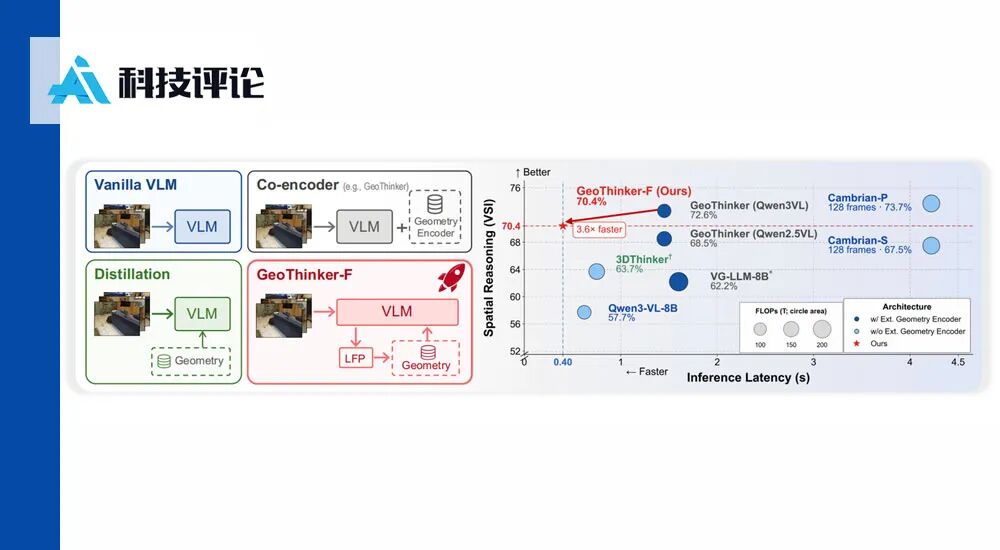
Representative image for 中大梁小丹团队,GeoThinker 两项研究成果,破除空间推理「几何信息用不好、计算开销大」难题

中大梁小丹团队,GeoThinker 两项研究成果,破除空间推理「几何信息用不好、计算开销大」难题

Rank 82 · Content 85 · Popularity 74

TL;DR - Sun Yat-sen University’s GeoThinker research improves spatial reasoning in vision-language models by selectively using geometry and then internalizing its prediction. GeoThinker-F removes the external VGGT encoder at inference, cutting latency from 1.45 to 0.40 seconds while largely preserving performance.

  • GeoThinker uses gated fusion to select task-relevant 3D features, reaching 72.6 on VSI-Bench.
  • GeoThinker-F learns geometric and next-frame semantic representations from VGGT supervision during training, then operates without VGGT at inference.
  • Under matched Qwen3-VL-8B training conditions, six-benchmark averages were nearly identical: 62.21 for GeoThinker-F versus 62.23 for GeoThinker.
  • Simulated downstream results included 97.1% LIBERO task success and an 83.3 NAVSIM PDMS score; real-world validation remains necessary.

Efficiency & Systems 2

LazyWeights: Decode-on-Demand Edge LLMs

Rank 82 · Content 100 · Popularity 42

TL;DR - LazyWeights compresses quantized LLM weights with lossless Huffman coding and decodes them on demand near GPU cache, reducing edge-device memory traffic without changing GPU kernels. It improves model size, latency, and energy efficiency on constrained NVIDIA Jetson devices.

  • Produces models 5.7–31.4% smaller than the best tested llama.cpp formats at 1% and 3.5% perplexity budgets.
  • A 0.21 mm² ASIC decoder reduces Jetson Orin latency by up to 36% and energy per token by up to 38%.
  • On a 4 GB Jetson Nano, it cuts per-token time by 58–64% and energy by 53–57% versus CPU llama.cpp.
  • Streams Mistral-7B at 3.89 bits per weight, running it 6.6× faster on the Nano.
Representative image for RESYNC: Residual Latent-State Synchronization for Deadline-Bound Streaming Inference

RESYNC: Residual Latent-State Synchronization for Deadline-Bound Streaming Inference

Rank 81 · Content 100 · Popularity 37

TL;DR - RESYNC enables deadline-bound streaming inference by asynchronously running a large model and cheaply updating its stale latent state for each new observation. It retains much of the large model’s predictive advantage while meeting millisecond-scale deadlines.

  • Uses a label-free updater trained on frozen teacher representations while preserving the original prediction head.
  • Outperformed compact or distilled alternatives across all 12 dataset–architecture pairs at anchor ages of 4–12 observations.
  • In 1 ms live replay, served at least 99.4% of arrivals on time with 0.35–0.62 ms median single-CPU-thread latency.
  • Achieved 7.9–17.7× lower latency than synchronous large-model inference, though retained gains generally declined with stale-state age on synthetic streams.

AI Interpretability 1

This AI ‘mechanic’ can peer inside the black box of other neural networks

Rank 83 · Content 100 · Popularity 42

TL;DR - Nature reports an AI system designed to inspect and debug other neural networks. The approach could improve AI safety and utility, although the provided excerpt gives no methodological details or results.

  • Focuses on probing the internal behavior of otherwise opaque neural networks.
  • Aims to enable targeted diagnosis and debugging of AI systems.
  • The supplied content does not specify the technique, benchmarks, or measured effectiveness.

AI Security 1

Look Here, Then Decide: Small Decision Models in a Harness Find Memory-Safety Vulnerabilities at Scale on Commodity GPUs

Rank 85 · Content 100 · Popularity N/A

TL;DR - A harness combining deterministic analysis with a 4B-parameter decision model found 187 memory-safety vulnerabilities across more than 4,000 C/C++ projects using commodity GPUs. The model was most effective at prioritizing candidates, not independently identifying vulnerabilities.

  • Intern-Decision-4B achieved 0.73 AUC for vulnerable versus benign functions, but only 0.56 for vulnerable functions versus their patches.
  • On 75 public CVEs, vulnerable functions reached the repository’s top 25 candidates 21% of the time—1.4× random ordering.
  • Three GB10 systems processed 900–1,100 repositories per hour; an RTX 4090 handled 9.8 decisions per second.
  • The 187 confirmed findings included 12 critical and 148 high-severity issues by worst-case CVSS v3.1.

Cellular Biophysics 1

Glycosylation and importins liquefy the FG barrier in live nuclear pores

Rank 72 · Content 75 · Popularity 65

TL;DR - This Nature study explains how glycosylation and importins maintain the nuclear pore’s FG-protein barrier as a fluid, spatially organized structure. The mechanism helps reconcile competing models of selective transport through nuclear pores.

  • Focuses on the FG barrier in living nuclear pores.
  • Attributes barrier fluidity to coordinated molecular interactions involving glycosylation and importins.
  • Links the barrier’s organization to selective transport between the nucleus and cytoplasm.
  • Provides a unifying explanation for competing structural models of nuclear pores.

DNA Replication 1

Human replisomes direct a dedicated leading-strand primase for fork restart

Rank 70 · Content 75 · Popularity 59

TL;DR - Structural and biochemical evidence shows that human CMG helicase directly recruits PRIMPOL to restart stalled leading-strand DNA replication. This mechanism helps limit post-replicative DNA gaps and preserve genome integrity.

  • CMG positions PRIMPOL as a dedicated leading-strand primase.
  • PRIMPOL-mediated repriming enables replication-fork restart.
  • The pathway reduces DNA gaps left after replication.

Plant Immunity 1

A plant RNA-binding protein senses 2′,3′-cNMP produced by insect effectors

Rank 69 · Content 80 · Popularity 43

TL;DR - Rice NIB1 senses cyclic nucleotides produced by insect salivary RNase and triggers a defence response. The work reveals a conserved messenger-based immune pathway in plants.

  • NIB1 is an RNA-binding protein that detects 2′,3′-cyclic nucleotide products.
  • Detection induces nuclear condensates that recruit the immune regulator EDS1.
  • EDS1 recruitment activates plant defence against insect effectors.
  • The mechanism links insect-derived enzymatic activity to plant immune signalling.
Top highlights — Industry & News

LLM Agents 2

Representative image for openJiuwen发布RSI原生AgentOS,让Agent自由变身,持续迭代!

openJiuwen发布RSI原生AgentOS,让Agent自由变身,持续迭代!

Rank 71 · Content 80 · Popularity N/A

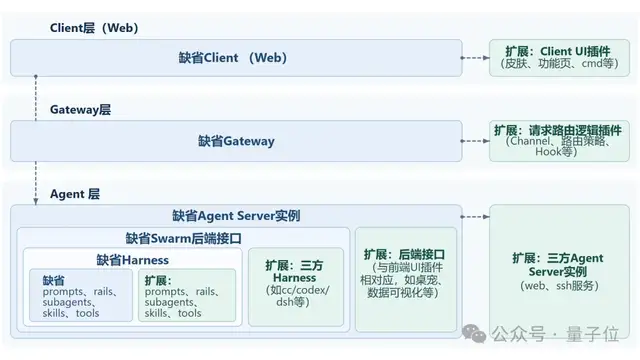
TL;DR - openJiuwen released an RSI-native AgentOS that lets agents extend WorkSwarm by generating, installing, testing, and iterating on hot-pluggable system plugins. It aims to support recursive self-improvement without modifying the host application’s original code.

  • Extension points span the client, gateway, AgentServer, multi-agent swarm, and individual agent execution layers.
  • Versioned extension packages use manifests, event handlers, and exposed operations for capabilities such as UI updates, tool registration, routing, and session access.
  • WorkSwarm can turn agent-generated features—such as desktop companions, token monitors, and collaboration dashboards—into installable plugins.
  • Plugins support dependency checks, enable/disable controls, hot reloading, and configuration rollback when an extension causes failures.

How Amplitude ships product improvements in 1–2 days with OpenAI

Rank 68 · Content 75 · Popularity N/A

TL;DR - Amplitude’s OpenAI-powered product agent, Wave, supports a rapid product-development loop from identifying opportunities to shipping changes and measuring impact.

  • Proactively identifies potential product improvements.
  • Helps teams implement changes using coding agents.
  • Measures the impact of shipped updates.
  • The claimed 1–2 day turnaround appears in the title; no supporting metrics are provided.

Medical/Healthcare AI 2

Representative image for 中国AI突破复杂肺癌诊疗!中美医疗圈集体坐不住了

中国AI突破复杂肺癌诊疗!中美医疗圈集体坐不住了

Rank 75 · Content 85 · Popularity N/A

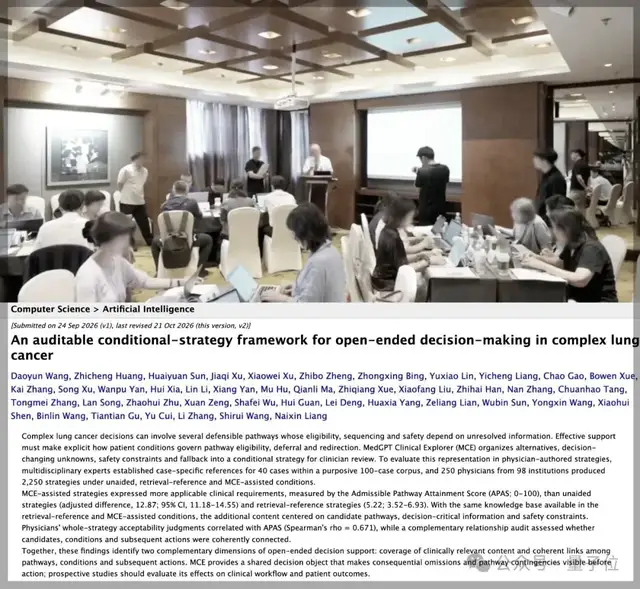
TL;DR - Chinese healthcare company Future Doctor reports that its MedGPT clinical agent outperformed physicians and general-purpose models on complex lung-cancer treatment planning. The results suggest specialized AI could improve clinicians’ decision support, though broader clinical validation remains necessary.

  • MedGPT scored higher than unaided physicians in 660 of 750 comparisons across 40 complex cases evaluated by 250 doctors.
  • MedGPT assistance raised physicians’ average score from 53.40 to 66.27, a 24.1% relative improvement.
  • The system generates multiple conditional treatment paths using multidisciplinary agents, a lung-cancer evidence base, retrieval, and simulated risk evaluation.
  • Evaluation used 240 case-specific rules developed by 20 experts, including 40 safety boundaries, followed by blinded scoring from three AI judges.

Novel CRISPR therapy is poised to gain first FDA approval to alter genes inside the body

Rank 73 · Content 85 · Popularity 45

TL;DR - A novel CRISPR therapy is nearing the first FDA approval for editing genes directly inside the body, according to Nature. This could avoid the complex, costly cell-removal process required by earlier CRISPR treatments.

  • The therapy performs gene editing in vivo rather than on cells removed from a patient.
  • FDA approval would mark a regulatory first for this treatment approach.
  • The provided excerpt does not specify the targeted disease, trial results, or editing mechanism.

Bioinformatics AI 1

Representative image for 高难盲测超越GPT-6-Astra与Opus-5!无界前沿开源Fx-Bio-1031,把RSI带进生命科学

高难盲测超越GPT-6-Astra与Opus-5!无界前沿开源Fx-Bio-1031,把RSI带进生命科学

Rank 71 · Content 80 · Popularity N/A

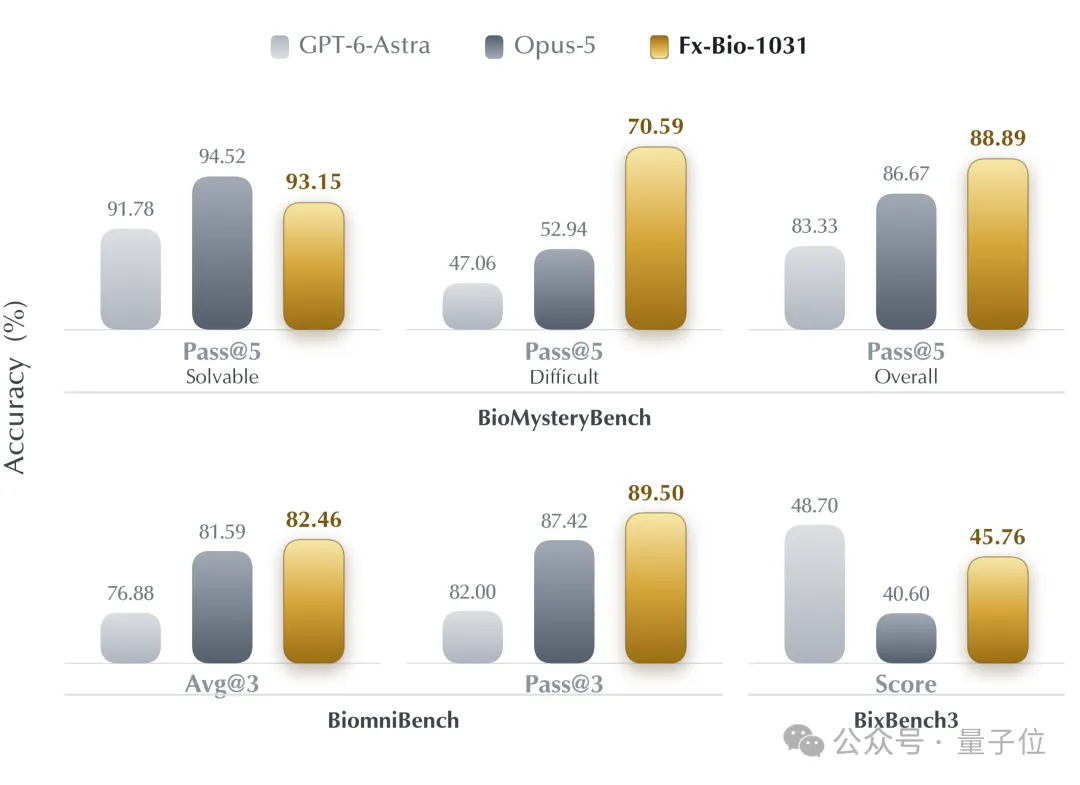
TL;DR - Endless Frontier released the open-weight Fx-Bio-1031 model for autonomous bioinformatics workflows, emphasizing local deployment and data privacy. It reportedly outperformed larger proprietary models on difficult agentic biology benchmarks.

  • Achieved 70.59% Pass@5 on BioMysteryBench’s Difficult subset and 89.50% Pass@3 on BiomniBench.
  • Uses a 125B-parameter MoE architecture with 6B parameters activated per token and supports a 512K context window.
  • Can write and debug code, invoke databases and bioinformatics tools, analyze multi-omics data, and perform statistical validation.
  • Full weights and supporting configurations are available under the Qwen Community License 1.0.

LLMs & Foundation Models 1

LLMON: An LLM-Native Markup Language, now in Granite 4.1 3B and 8B

Rank 64 · Content 70 · Popularity N/A

TL;DR - Hugging Face and IBM announce LLMON, an LLM-native markup language, in Granite 4.1 3B and 8B models. Only the title was provided, so implementation details and measured benefits are unavailable.

  • LLMON is positioned as a markup format designed specifically for LLM use.
  • Support is associated with both 3B- and 8B-parameter Granite 4.1 variants.
  • No benchmarks, syntax details, or deployment guidance were included.

Multimodal & Generative 1

Representative image for 40 亿参数模型拿下 6 个评测第一,西湖大学团队押注「概念世界模型」

40 亿参数模型拿下 6 个评测第一,西湖大学团队押注「概念世界模型」

Rank 78 · Content 90 · Popularity N/A

TL;DR - Westlake University launched a world-model research center alongside Awomo-0.5, a 4B-parameter “concept world model” for transferable physical reasoning. Its strong robotics benchmark results offer early evidence for the approach, though broader cross-domain generalization remains unproven.

  • Awomo-0.5 represents composable physical concepts in latent space rather than primarily generating future video frames.
  • The model reportedly achieved 80.6% success on RoboTwin-c2r and 73.4% on the zero-shot MolmoSpaces benchmark.
  • The team targets reusable physical knowledge across robotics, industrial systems, biology, and materials research.
  • The center combines university research with Awomo’s engineering support, including pipelines for over 500,000 hours of data and nearly 1,000 GPUs.

Efficiency & Systems 1

llama.cpp v1.0.0 : A stronger foundation for the local AI ecosystem

Rank 75 · Content 85 · Popularity N/A

TL;DR - llama.cpp v1.0.0 is presented as a milestone release intended to provide a stronger foundation for the local AI ecosystem. With no article content provided, specific technical changes cannot be verified.

  • The announcement concerns llama.cpp, a widely used local AI inference project.
  • The v1.0.0 designation signals a major release and emphasis on ecosystem stability.
  • No concrete features, performance results, or compatibility details are available in the supplied item.

AI Hardware 1

Representative image for 独家丨港大孵化的半导体材料公司,融资数千万

独家丨港大孵化的半导体材料公司,融资数千万

Rank 61 · Content 65 · Popularity N/A

TL;DR - HKU-incubated DiamNEX raised tens of millions of yuan to commercialize wafer-scale diamond films. The material could improve heat dissipation for increasingly power-hungry AI chips and advanced packaging.

  • Its three-step edge-exposure exfoliation method produces flexible polycrystalline diamond films as thin as 200 nm.
  • Reported properties include sub-0.5 nm surface roughness and thermal conductivity above 1,300 W/m·K.
  • A Shenzhen pilot line reportedly produces films of 4 inches and larger, with a demonstrated maximum of 12 inches.
  • The funding will support production expansion, hiring, and a Hong Kong R&D center.

AI Industry Leadership 1

Representative image for 黄仁勋辞职,英伟达33年首换帅,市值蒸发超3万亿

黄仁勋辞职,英伟达33年首换帅,市值蒸发超3万亿

Rank 64 · Content 70 · Popularity N/A

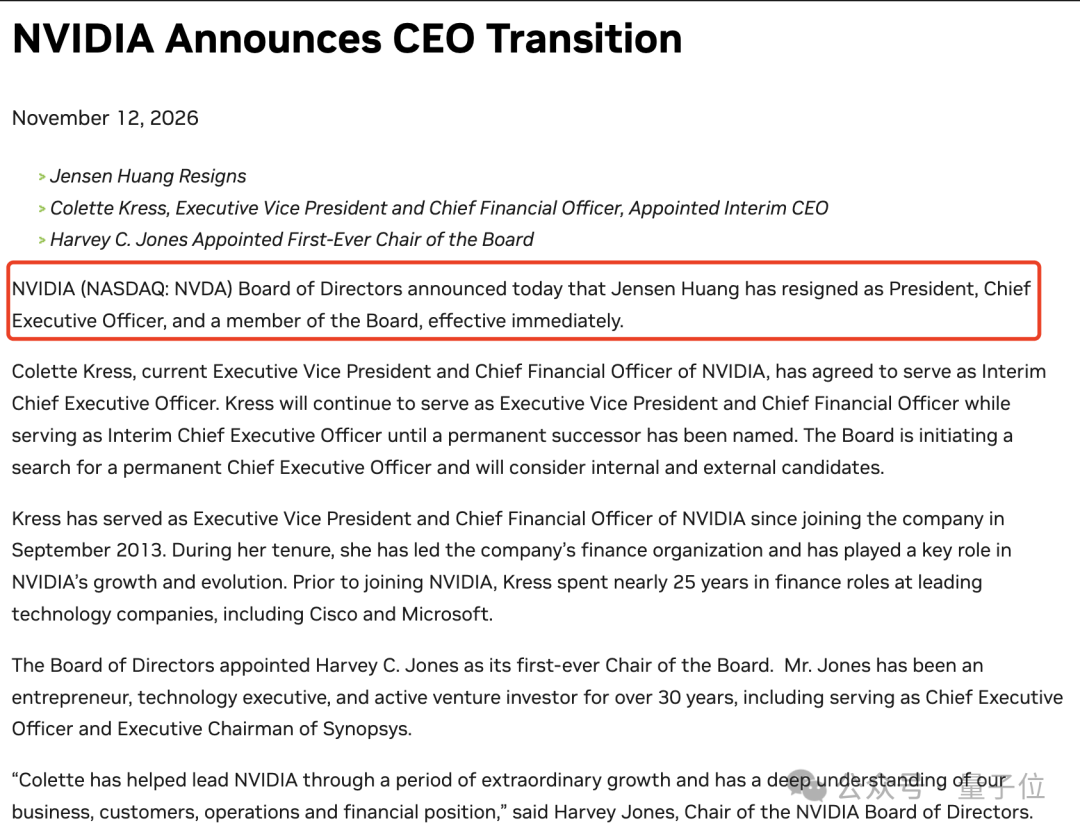
TL;DR - Nvidia announced that co-founder Jensen Huang resigned as CEO and director after 33 years, with CFO Colette Kress becoming interim CEO. The abrupt transition triggered a sharp stock sell-off but is not expected to disrupt Nvidia’s operations or technology roadmap.

  • Nvidia’s board has begun searching for a permanent CEO, considering internal and external candidates.
  • Kress has served as Nvidia’s CFO since 2013 and will retain that role during the transition.
  • Harvey C. Jones was appointed Nvidia’s first board chair.
  • Nvidia said customer commitments, product plans, and its November 17 earnings release remain on schedule.

Autonomous Driving AI 1

Representative image for 英伟达博客发声:她不一样,她懂显卡 ( bushi ),她懂端到端!

英伟达博客发声:她不一样,她懂显卡 ( bushi ),她懂端到端!

Rank 75 · Content 85 · Popularity N/A

TL;DR - NVIDIA’s Alpamayo 2 Edge is an onboard end-to-end driving model that combines adaptive causal reasoning with diffusion-based trajectory generation. It matters because it targets explainable driving decisions within strict automotive compute and latency limits.

  • A 2.45B-parameter VLM generates causal explanations, while a 0.2B diffusion action expert produces continuous acceleration and curvature controls.
  • Adaptive Reasoning uses a <NOMINAL> mode to suppress lengthy reasoning in routine situations while retaining full causal chains for complex traffic interactions.
  • Closed-loop reinforcement learning improved driving performance by 48.9% over a stronger pre-RL checkpoint in NVIDIA’s simulation tests.
  • On DRIVE AGX Thor-X, reported pixel-to-trajectory latency is 160–190 ms, excluding the broader vehicle response pipeline.

Multi-Robot Collaboration 1

Representative image for 中国机器人学会隔墙“递眼色”!成功率从0飙到100%,组队干活不烧心

中国机器人学会隔墙“递眼色”!成功率从0飙到100%,组队干活不烧心

Rank 75 · Content 85 · Popularity N/A

TL;DR - Astribot introduced CoMind, a decentralized framework that lets robots exchange compressed, task-relevant context for coordinated manipulation. Tests reported better performance despite 80% less communication, including raising an occluded pen-pickup task’s success rate from 0% to 100%.

  • Each robot independently selects and shares useful visual and operational context rather than transmitting full video or relying on a central controller.
  • Shared context is combined with local observations, instructions, and robot state by a vision-language-action model to generate continuous actions.
  • Action-level backpropagation trains each robot’s context encoder to send information that directly improves its teammate’s decisions.
  • In blind object placement, CoMind achieved 88.9% accuracy versus 38.9% without sharing and 72.2% with another context-transfer method.