Claude骂声中启动「隐形水印」:新模型全量嵌入,标记所有文字
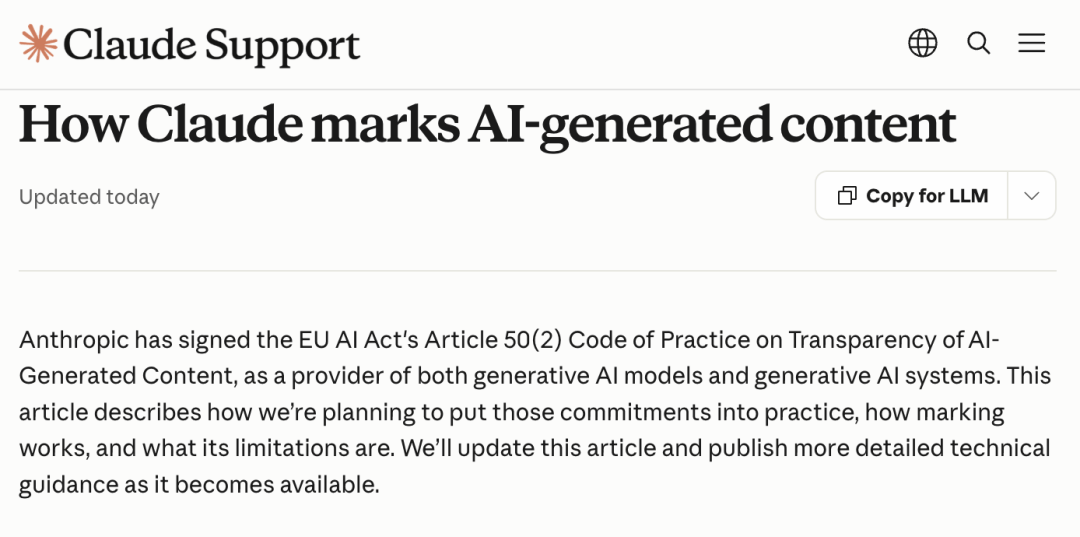
TL;DR - Anthropic will embed invisible, text-level watermarks in output from new Claude models and attach C2PA-signed provenance metadata to generated image/SVG files, rolling out globally rather than only in the EU. It matters because it makes AI-authorship marking a default, hard-to-strip property of generated text across an entire major model provider's product line.
- Trigger is Anthropic's signing of the EU AI Act Code of Practice on transparency of AI-generated content (~190 signatories including Google, Meta, Microsoft, OpenAI); the watermark applies to models released on/after 2026-08-02, with retrofits to existing Claude models under study.
- The text mark is embedded in the token stream itself, not metadata — it survives copy/paste and some editing. Anthropic claims no impact on meaning, quality, or readability; the algorithm has not been published, and the article flags skepticism about sampling-distribution-based watermarking affecting output quality.
- Coverage spans API, Claude, Claude Code, Claude Cowork, Claude Tag, plus cloud access via AWS, Google Cloud, and Microsoft Foundry. Files (.svg/.png/.jpg) get digitally signed C2PA provenance metadata that can also reveal tampering.
- Anthropic states explicit limits: detection proves Claude processed the content, not that Claude authored it; absence of a mark doesn't prove human authorship (old models, heavy rewriting, short passages, metadata stripped by format conversion or screenshots). A detection tool for users and third parties is in development.
- Context/reaction cited: an earlier Reddit reverse-engineering claim that Claude Code inserted visually identical Unicode variants to flag China-region users, and talk of third-party "rephrase to strip the watermark" services.