这届 IROS 2026 上,具身学术与产业边界正在消融
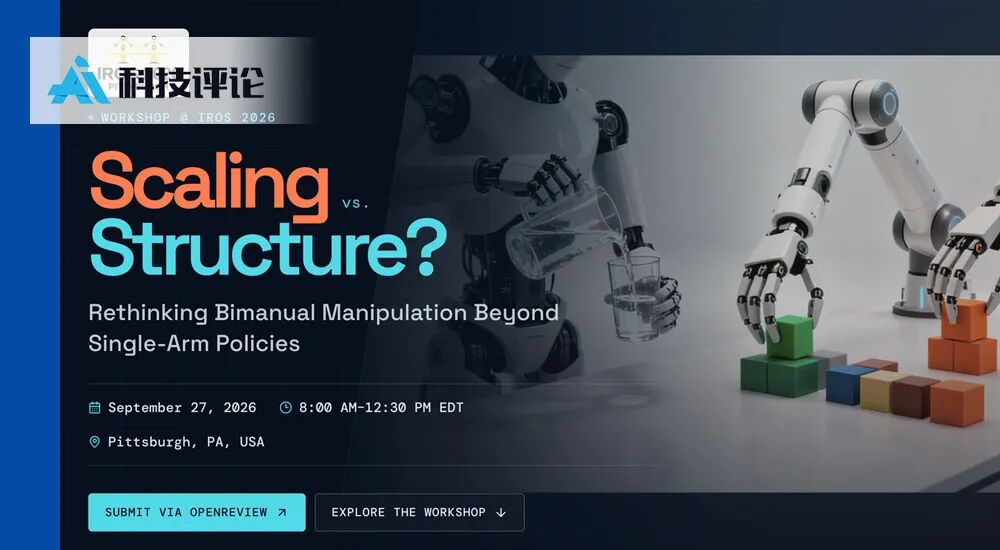
TL;DR - A preview of IROS 2026 argues that embodied robotics is shifting from conceptual demonstrations toward deployable engineering, with research converging on physically grounded models, hierarchical control, tactile sensing, and cheaper data collection. The shift could lower barriers to real-world robotic systems in factories, warehouses, and homes.
- Physical world models are increasingly evaluated on robust real-world interaction rather than semantic understanding alone, including uncertainty, contact dynamics, and sim-to-real transfer.
- “Brain–cerebellum” architectures separate slower LLM/VLM planning from high-frequency control; LITHE reportedly supports online controller updates with worst-case execution below 100 microseconds.
- Tactile and proprioceptive sensing are becoming central to dexterous manipulation, particularly when vision is occluded or unreliable.
- High-fidelity simulation and lightweight teleoperation systems such as ViHaTeleop aim to reduce the cost of collecting training data for embodied policies.