数据越多≠决策越好:从无人机滑翔到多机器人通信,重新审视数据与信息的关系 | IROS 2026
Ranking
Observed public metrics from 1 member.
Merged summary
TL;DR — IROS 2026 highlights a shift in embodied robotics from maximizing raw data volume toward acquiring and transmitting information that directly improves decisions. Selective sampling, efficient communication, hierarchical control, richer sensing, and targeted policy correction could make real-world robot deployment more robust and affordable.
- Robots should collect data when it can change a decision—such as refining a flight policy or shortest-path estimate—rather than sampling uniformly; targeted corrective demonstrations can likewise outperform indiscriminate dataset expansion under the same budget.
- Multi-robot systems can reduce bandwidth demands by sharing only decision-relevant state, using lossy encodings such as salted Bloom filters with Bayesian fusion, and progressively streaming multi-resolution information so partial transmissions remain actionable.
- Physical world models are increasingly judged by robust interaction—including uncertainty, contact dynamics, and sim-to-real transfer—rather than semantic understanding alone.
- “Brain–cerebellum” architectures separate slower LLM/VLM planning from high-frequency control; LITHE reportedly enables online controller updates with worst-case execution below 100 microseconds.
- Tactile and proprioceptive sensing improve manipulation when vision is unreliable, while high-fidelity simulation and lightweight teleoperation systems such as ViHaTeleop aim to lower training-data collection costs.
Note: One source focuses on Jen Jen Chung’s data-selection and communication principles, while the other presents the broader IROS 2026 trend toward deployable embodied-robotics engineering.
Sources (2)
数据越多≠决策越好:从无人机滑翔到多机器人通信,重新审视数据与信息的关系 | IROS 2026
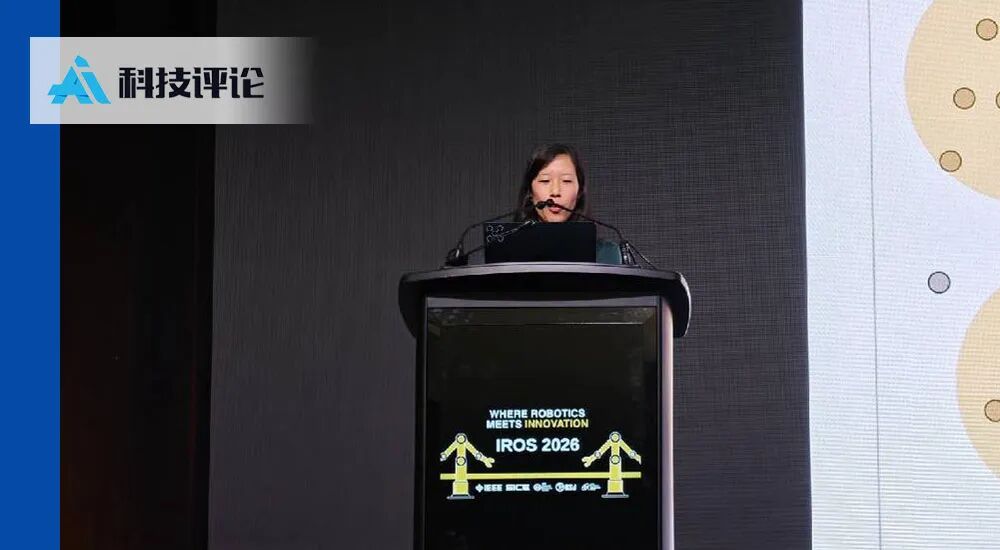
TL;DR - In an IROS 2026 keynote, Jen Jen Chung argued that robotic intelligence depends more on data quality and decision relevance than raw data volume. Her examples show that selective sampling, compressed communication, and targeted policy repair can improve autonomy under limited exploration, bandwidth, and demonstration budgets.
- Data should be collected when it can alter a decision, such as refining a flight policy or changing an estimated shortest path, rather than sampled uniformly.
- Multi-robot systems can reduce network load by communicating only decision-relevant state and using lossy representations such as salted Bloom filters with Bayesian fusion.
- Progressive, multi-resolution streaming lets robots act on partial information in weak or intermittent networks instead of discarding incomplete transmissions.
- For manipulation-policy failures caused by distribution shifts, targeted corrective demonstrations improved generalization more than indiscriminately expanding the dataset under the same demonstration budget.
这届 IROS 2026 上,具身学术与产业边界正在消融
TL;DR - A preview of IROS 2026 argues that embodied robotics is shifting from conceptual demonstrations toward deployable engineering, with research converging on physically grounded models, hierarchical control, tactile sensing, and cheaper data collection. The shift could lower barriers to real-world robotic systems in factories, warehouses, and homes.
- Physical world models are increasingly evaluated on robust real-world interaction rather than semantic understanding alone, including uncertainty, contact dynamics, and sim-to-real transfer.
- “Brain–cerebellum” architectures separate slower LLM/VLM planning from high-frequency control; LITHE reportedly supports online controller updates with worst-case execution below 100 microseconds.
- Tactile and proprioceptive sensing are becoming central to dexterous manipulation, particularly when vision is occluded or unreliable.
- High-fidelity simulation and lightweight teleoperation systems such as ViHaTeleop aim to reduce the cost of collecting training data for embodied policies.