CoRL 2026 青年最高荣誉唯一华人得主清华赵行:「世界不会等模型」
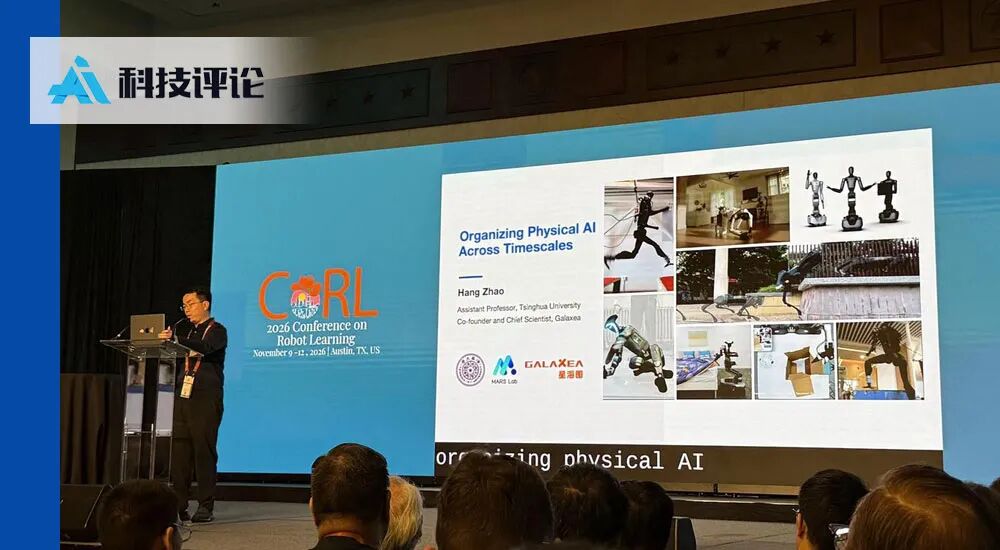
TL;DR - CoRL 2026 honoree Zhao Xing argues that real-world robots must organize intelligence by response timescale, combining slow frontier models with fast control layers. The approach exposes why strong benchmark results can collapse once inference latency is counted.
- In timed RoboCasa tests, direct and agentic policies fell to 15% and 20% success because slow model calls consumed the task window.
- Zhao proposes System 2/1/0 layers operating from seconds or minutes down to tens and hundreds of hertz for reasoning, interaction, and contact control.
- Fast-WAM, G0.5, and ActionCodec2 target latency through optional prediction or reasoning and streaming action tokens.
- Robot benchmarks should report both deadline-bounded success rates and inference time, while systems need upward feedback for failures, force, confidence, and progress.