哈佛教授 David Parkes:全球化生产一支铅笔后,世界的目光看向了 AI | IJCAI 2026
Ranking
No observed public metrics; popularity remains neutral/archived.
Merged summary
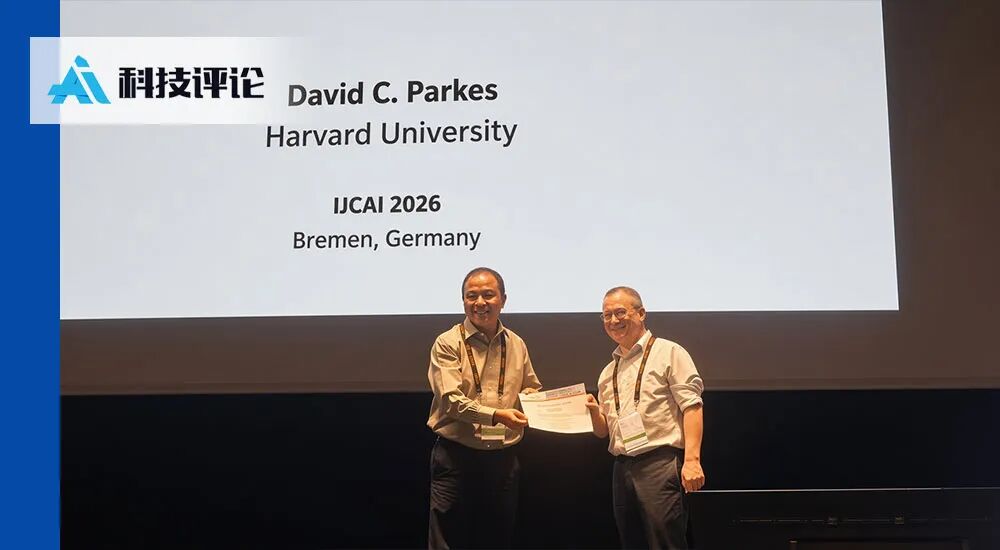
TL;DR - In his IJCAI 2026 John McCarthy Award lecture, Harvard professor David C. Parkes argues that AI’s next frontier is designing rules for societies of specialized agents, rather than relying on a single general-purpose agent. Mechanism design could make decentralized multi-agent systems efficient, fair, incentive-compatible, and robust to strategic behavior.
- Strategy-proof mechanisms encourage agents to report private information truthfully, enabling reliable coordination in auctions, resource allocation, and dynamic environments.
- Computational mechanism design combines economic objectives with practical constraints, including limited preference elicitation and continually changing participants and resources.
- Parkes describes using neural networks and differentiable economics to discover mechanisms while structurally enforcing properties such as strategy-proofness and menu compatibility.
- As AI agents increasingly act on behalf of people or organizations, contract design and moral-hazard controls become important when their actions cannot be directly observed.
Sources (1)
哈佛教授 David Parkes:全球化生产一支铅笔后,世界的目光看向了 AI | IJCAI 2026
TL;DR - In his IJCAI 2026 John McCarthy Award lecture, Harvard professor David C. Parkes argues that AI’s next frontier is designing rules for societies of specialized agents, rather than relying on a single general-purpose agent. Mechanism design could make decentralized multi-agent systems efficient, fair, incentive-compatible, and robust to strategic behavior.
- Strategy-proof mechanisms encourage agents to report private information truthfully, enabling reliable coordination in auctions, resource allocation, and dynamic environments.
- Computational mechanism design combines economic objectives with practical constraints, including limited preference elicitation and continually changing participants and resources.
- Parkes describes using neural networks and differentiable economics to discover mechanisms while structurally enforcing properties such as strategy-proofness and menu compatibility.
- As AI agents increasingly act on behalf of people or organizations, contract design and moral-hazard controls become important when their actions cannot be directly observed.