没有全科优秀,具身模型别想进入百万小时
Ranking
No observed public metrics; popularity remains neutral/archived.
Merged summary
TL;DR - ForceMinds’ open-source DM0.5 embodied foundation model topped the RoboDojo benchmark, with long-horizon memory driving a substantial lead over competing vision-language-action models. Its results suggest that balanced memory, reasoning, control, and inference efficiency—not data scaling alone—are prerequisites for broadly capable robots.
- DM0.5 scored 24.90 overall and averaged a 19.34% success rate on RoboDojo, ranking first while underscoring the benchmark’s difficulty.
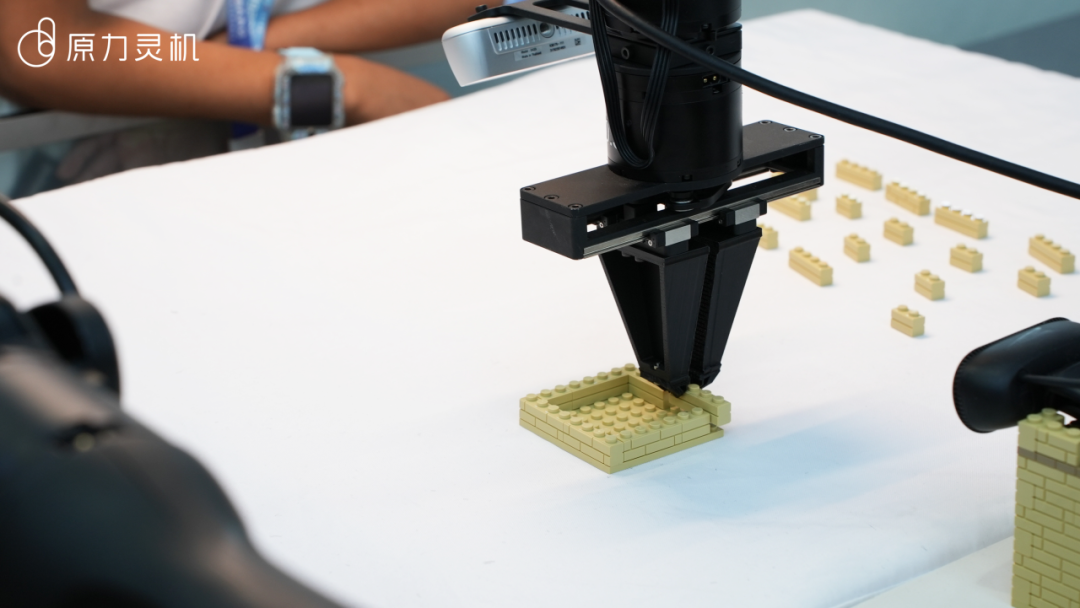
- Its strongest advantage was memory: it achieved a 47.44% success rate in that category and completed all tested Cover Blocks trials, using native support for up to 60 seconds of history.
- The architecture combines a 4B-parameter multimodal backbone with a 680M action expert and compresses historical context during pretraining; task-specific fine-tuning includes 20-second observation histories.
- TensorRT, FP8, and CUDA Graph optimizations reportedly reduced core latency from 534 ms to 57.49 ms with only a 0.05-percentage-point drop across 2,000 LIBERO episodes; weights, training tools, and benchmark workflows are being open-sourced.
Sources (1)
没有全科优秀,具身模型别想进入百万小时
TL;DR - ForceMinds’ open-source DM0.5 embodied foundation model topped the RoboDojo benchmark, with long-horizon memory driving a substantial lead over competing vision-language-action models. Its results suggest that balanced memory, reasoning, control, and inference efficiency—not data scaling alone—are prerequisites for broadly capable robots.
- DM0.5 scored 24.90 overall and averaged a 19.34% success rate on RoboDojo, ranking first while underscoring the benchmark’s difficulty.
- Its strongest advantage was memory: it achieved a 47.44% success rate in that category and completed all tested Cover Blocks trials, using native support for up to 60 seconds of history.
- The architecture combines a 4B-parameter multimodal backbone with a 680M action expert and compresses historical context during pretraining; task-specific fine-tuning includes 20-second observation histories.
- TensorRT, FP8, and CUDA Graph optimizations reportedly reduced core latency from 534 ms to 57.49 ms with only a 0.05-percentage-point drop across 2,000 LIBERO episodes; weights, training tools, and benchmark workflows are being open-sourced.