🛰️ Daily AI Frontier
34 works · 3 categories · 13 topics · blog 12 journal 7 arxiv 15 generated 2026-08-31 14:30:43 UTC
Top highlights — Research

LLM Agents 5

EvoUndo: Recoverability-Constrained Self-Evolution for LLM Agent Harnesses

Rank 88 · Content 100 · Popularity 61

TL;DR - EvoUndo is a framework for verifying whether runtime self-modifications made by LLM agents can be safely reversed across counterfactual states. Its results show that reliable recovery depends on precise state grounding and sufficiently expressive recovery mechanisms, not iterative prompting alone.

  • Among 600 unseen self-evolution tasks, 197 capability-improving mutations failed recoverability verification.
  • Conventional repair strategies recovered none of the 197 failures under the original recovery representation; deterministic oracle analysis recovered 48.
  • Exact state-address grounding recovered 38/48 cases when the original recovery language was sufficient.
  • Extending the recovery calculus raised oracle recovery to 191/197 and enabled recovery on 142/143 failures attributed to insufficient language expressivity.
Representative image for VICT: Verifier-Instrumented Credit Tracing for Long-Horizon LLM Agent Reinforcement Learning

VICT: Verifier-Instrumented Credit Tracing for Long-Horizon LLM Agent Reinforcement Learning

Rank 88 · Content 100 · Popularity 59

TL;DR - VICT improves credit assignment for long-horizon LLM agent reinforcement learning by tracing a terminal verifier’s structured checks back to the actions that supported them. This enables finer-grained training signals without learned critics, process labels, extra rollouts, or inference-time verifier access.

  • Exposes executable or evidence-backed verifier “atoms” and links them to actions through dependency-valid proof edges.
  • Redistributes group-relative advantage only along supported edges while preserving the original terminal reward and abstaining when evidence is ambiguous.
  • Modifies only the training-time advantage tensor, avoiding additional inference-time requirements.
  • On ALFWorld and WebShop, it substantially outperforms outcome-only training and performs competitively with recent fine-grained credit-assignment methods.
Representative image for LoopArena: Benchmarking Models as Runtime Controllers for Loop Engineering

LoopArena: Benchmarking Models as Runtime Controllers for Loop Engineering

Rank 84 · Content 90 · Popularity 70

TL;DR - LoopArena benchmarks language models acting as runtime Controllers that guide a fixed coding agent through long-running development tasks. Its best full-task strict success rate is only 24.69%, highlighting substantial room to improve agentic loop control.

  • Separates the Controller’s guidance quality from the Worker coding agent’s execution ability.
  • Evaluates control at three levels: execution-validated next-step selection, repeated control over task slices, and complete end-to-end tasks.
  • Controllers reduce estimated inference costs by an average of 64.4% in paired comparisons.
  • The lower-cost Type II evaluation closely matches the main controller ranking, with Spearman’s ρ of 0.9747.

ContextPilot: Teaching Agents for Proactive Context Management via Fine-grained RL

Rank 82 · Content 90 · Popularity 64

TL;DR - ContextPilot is a reinforcement-learning framework that teaches LLM agents to proactively manage their working context during long-horizon tasks. It improves performance on long-context QA and deep-search benchmarks while maintaining a more compact context.

  • Expands context-management tools beyond search, deletion, and summarization to include global planning, long-term memory, and soft context offloading.
  • Identifies consequential editing decisions using changes in context and output entropy, then focuses trajectory branching on those actions.
  • Uses branched trajectories to estimate action-level advantages, providing finer-grained credit assignment than applying one final reward to every context edit.
  • Consistently outperforms existing baselines across multiple base models and benchmarks, according to the reported experiments.
Representative image for AQuA:让量化研究 Agent 持续进化,也让回测结果经得起检验

AQuA:让量化研究 Agent 持续进化,也让回测结果经得起检验

Rank 72 · Content 90 · Popularity 30

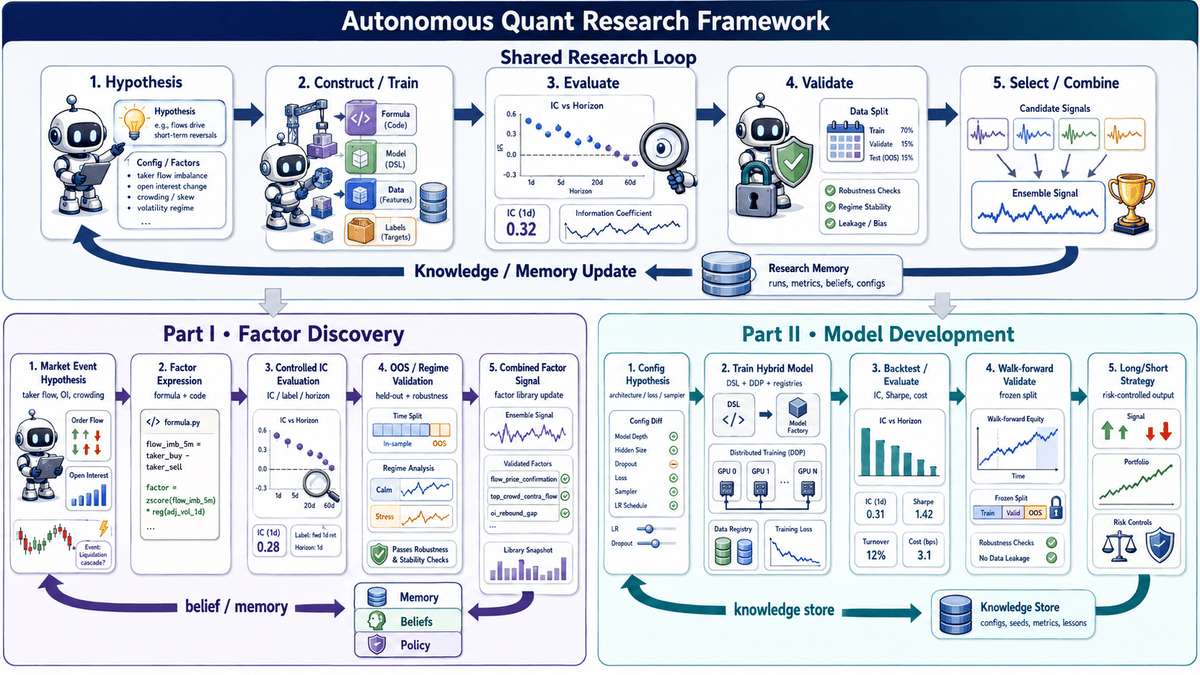
TL;DR - AQuA is a recursively self-improving quantitative-research agent framework that learns from validated experiments while isolating data pipelines and final evaluations from the search loop. Its design aims to prevent look-ahead leakage and test-set overfitting from becoming persistent “knowledge.”

  • Separate systems explore symbolic trading factors and trainable models, but both retain traceable evidence from successes and failures in research memory.
  • Agents may combine registered causal operators or submit model-configuration changes, but cannot rewrite data loaders, labels, splits, or evaluation logic.
  • On five-minute cryptocurrency data, the factor system reached about 0.190 validation Spearman IC after 20 research rounds.
  • For 30-minute US equity return prediction, the model system achieved 0.0843 per-stock IC and up to 2.50 out-of-sample Sharpe after 2 bps two-sided turnover costs and historical-only volatility control.

Medical/Healthcare AI 3

Do Medical Vision Models Reason About Anatomy? Probing the Spatial Inductive Biases of Learned Visual Representations

Rank 81 · Content 100 · Popularity 37

TL;DR - SPAR-Bench tests whether medical vision models can reason spatially about abdominal CT anatomy, finding that they mostly encode typical organ locations rather than compare structures within individual patients. This exposes a key limitation hidden by diagnostic accuracy and standard probing methods.

  • Eight probes separate coordinate localization, relational reasoning, and spatial queries across multi-organ abdominal CT scans.
  • Within-slice comparison tasks remained near chance across five architectures and three medical foundation models, despite scaling and finetuning.
  • Apparent in-domain success vanished under zero-shot transfer, suggesting memorization of canonical anatomy rather than image-based spatial computation.
  • Using full token features instead of pooled representations raised relational recovery from 0.7% to 67.8%, showing pooled probes can substantially underestimate encoded information.

AI models are being used to track zoonotic diseases. Will they prevent the next pandemic?

Rank 73 · Content 85 · Popularity 47

TL;DR - This Nature article discusses the use of AI models to monitor zoonotic diseases as they spread between animals and humans. The provided excerpt does not establish whether these systems can reliably prevent a future pandemic.

  • AI models are being applied to track the progression of zoonotic diseases.
  • The approach targets a global public-health problem at the human–animal interface.
  • The excerpt provides no technical details, evaluation results, or evidence of successful pandemic prevention.

Scale of snakebites estimated globally

Rank 56 · Content 60 · Popularity 47

TL;DR - This Nature item describes a global assessment of snakebite incidence and related deaths using available data and modelling. The estimates could help guide public-health efforts, although the provided excerpt reports no methods or numerical results.

  • Combines existing data with modelling to estimate the global snakebite burden.
  • Assesses both snakebite incidence and associated mortality.
  • Aims to provide evidence for targeting public-health interventions and resources.
  • The excerpt does not specify the model, datasets, uncertainty, regional findings, or estimated totals.

Bioinformatics AI 1

Confounders of lncRNA screens: sources, consequences and possible solutions

Rank 70 · Content 80 · Popularity 47

TL;DR - A Nature Methods analysis warns that high-throughput lncRNA perturbation screens can produce unexpectedly high false-positive rates due to technical and analytical confounders. Identifying and mitigating these artifacts is essential for reliable conclusions about lncRNA function.

  • Re-analysis of published lncRNA screens uncovered high false-positive rates in some studies.
  • Genetic perturbation screens appear more susceptible to methodological artifacts for lncRNAs than for protein-coding genes.
  • The article identifies common technical and analytical sources of spurious findings.
  • It outlines strategies to detect, monitor, and mitigate confounders in future screens.

LLMs & Foundation Models 2

Representative image for Blind Men and the Elephant: Probing the Epistemic Myopia of LLMs under Long-Tail Divergent Knowledge

Blind Men and the Elephant: Probing the Epistemic Myopia of LLMs under Long-Tail Divergent Knowledge

Rank 85 · Content 95 · Popularity 63

TL;DR - ElephantBench evaluates whether LLMs retain multiple conflicting accounts of long-tail facts rather than only a dominant answer. Across 32 models, even the strongest recovered both accounts for just 52.4% of questions, revealing persistent incompleteness in parametric memory.

  • The benchmark contains 1,094 closed-book QA questions built from naturally divergent accounts found through an auditable, graph-based pipeline.
  • Answers are traceable to source documents, checked against authoritative public sources, and reviewed by human annotators.
  • Larger models and inference-time reasoning improve recall but do not eliminate the tendency to omit one account.
  • More balanced corpus exposure correlates with more complete recall, while exposure imbalance favors the dominant account.

A Formal Limitation on Learning Human Language From Textual Corpora

Rank 78 · Content 95 · Popularity 37

TL;DR - This paper derives information-theoretic limits on recovering a speaker’s intended meaning from text alone, including from LLM hidden states. It shows that ambiguity requiring extralinguistic context cannot be eliminated by better representations, more training data, or additional supervision.

  • Models language as a joint distribution over meanings, contexts, and utterances, then bounds a decoder’s probability of recovering intended meaning.
  • Separates uncertainty into an irreducible component and a component resolvable only through extralinguistic context.
  • Applies to any text featurizer and to both discrete and continuous meaning spaces.
  • Experiments on artificial languages, Mandarin zero-pronoun resolution, and color reference provide empirical support for the theory.

Multimodal & Generative 5

Representative image for LayerRecall: A State-Conditioned Memory Router for Long-Horizon Consistency in Video Generation

LayerRecall: A State-Conditioned Memory Router for Long-Horizon Consistency in Video Generation

Rank 82 · Content 90 · Popularity 65

TL;DR - LayerRecall is a state-conditioned memory router that helps autoregressive video diffusion models recover relevant distant context by injecting retrieved historical K/V states into selected transformer layers. It improves long-horizon consistency with negligible inference overhead while preserving local motion and scene continuity.

  • Identifies distinct layer-level preferences for current, recent, and distant context in video diffusion transformers.
  • Routes relevant historical states only to memory-sensitive layers, leaving local attention unchanged elsewhere.
  • Uses Cross-Horizon Prediction Matching to train from a privileged long-context model without explicit memory-allocation labels.
  • Achieves the best reported overall results on MemoBench and MovieBench across 100 multi-shot prompts while matching its backbone on VBench-Long.
Representative image for How Far Can 5,500 Hours of Driving Take You? A Scaling Law Analysis of Video Diffusion Models

How Far Can 5,500 Hours of Driving Take You? A Scaling Law Analysis of Video Diffusion Models

Rank 81 · Content 100 · Popularity 37

TL;DR - A scaling-law study of video diffusion models trained from scratch on up to 5,500 hours of driving data finds that additional training exposure improves loss faster than increasing model size under limited compute. The derived laws guided a 9B-parameter model that achieves a new open-source state of the art for driving-video generation on nuScenes.

  • Validation loss follows consistent power laws with both model size and training exposure across models ranging from 1M to 9B parameters.
  • For a fixed model and limited compute, longer training is more effective than scaling parameter count.
  • Larger models reach lower asymptotic loss, so compute-optimal scaling still favors greater model capacity when sufficient compute and data are available.
  • The authors released code and pretrained models, while the underlying driving dataset is being released separately in stages.
Representative image for MAP: A Benchmark on Multimodal Accessibility Planning for Real World Places

MAP: A Benchmark on Multimodal Accessibility Planning for Real World Places

Rank 78 · Content 95 · Popularity 37

TL;DR - MAP is a benchmark for evaluating whether multimodal AI assistants can reliably help users plan real-world visits around accessibility requirements. It matters because accessibility details and place information change over time and require verifiable, location-specific evidence.

  • Evaluates both verification and recommendation of points of interest that meet requested accessibility features.
  • Tests whether systems can determine if accessibility claims are supported and identify qualifying places.
  • Measures retrieval of relevant visual evidence for the specified place and accessibility requirement.
  • Supports scheduled ground-truth refreshes, automated scoring, and human review of a subset of responses.

Semantic Head Specialization Guides Hybrid ViT Attention for Multimodal LLMs

Rank 78 · Content 95 · Popularity 37

TL;DR - This paper identifies semantic specialization among Vision Transformer attention heads and uses it to design Ariadne Attention. The hybrid mechanism matches full attention across 22 image and video tasks while using 6.5× less attention compute.

  • ViT heads differentiate into object and background specialists, especially under full attention.
  • The proposed SHS-Index quantifies this specialization and strongly tracks downstream benchmark performance.
  • Window interaction, token serialization, and local softmax allocation emerge as key structural drivers of specialization.
  • Ariadne Attention applies these principles to achieve full-attention-level results with substantially lower compute.
Representative image for NumBench: Diagnosing Counting Failures in Text-to-Image Models

NumBench: Diagnosing Counting Failures in Text-to-Image Models

Rank 78 · Content 95 · Popularity 37

TL;DR - NumBench is a 640,000-prompt benchmark designed to diagnose object-counting failures in text-to-image models. Tests across nine methods show performance falls sharply as requested counts rise, with every evaluated method struggling above 50 objects.

  • NumBench covers 1,600 object categories and counts from 1 to 100, systematically varying composition, spatial guidance, and appearance.
  • The proposed process model treats object instances as competing for finite resolvable image regions, predicting counting deficits from collisions and improvements from coordinated placement.
  • Count range had the largest measured effect on accuracy, followed by layout and composition; grid guidance performed best among guided layouts.
  • A confidence-weighted metric combining three calibrated detectors was supported by a 14,400-image human study through count 50, with additional results indicating transfer to natural-language prompts.

Efficiency & Systems 3

A Probabilistic Interpretation of KV Cache Eviction

Rank 81 · Content 100 · Popularity 37

TL;DR - This paper formalizes KV-cache eviction as a computationally hard probabilistic estimation problem and proposes sampling-based eviction with decode-time correction. The approach is more robust across tasks than existing heuristic methods while remaining competitive at the same cache-compression budget.

  • Recasts KV-cache eviction as expectation estimation, enabling principled sampling-based approximations.
  • Introduces decode-time correction to account for entries removed from the cache.
  • Interprets existing eviction methods as zero-variance biased estimators that can be adapted to support correction.
  • Empirically improves cross-task robustness while preserving competitive quality and compression.

Training Communication-Efficient Mixture-of-Experts Language Models with Layer Re-Configuration

Rank 78 · Content 95 · Popularity 37

TL;DR - CE-MoE restructures mixture-of-experts language models to use fewer routed expert layers while preserving depth with additional token-mixing and dense feed-forward layers. This reduces costly all-to-all communication without sacrificing model quality.

  • Evaluated across models ranging from 2B to 31.5B total parameters.
  • Matches full-MoE baselines on validation loss and downstream benchmarks under equal total and activated parameter budgets.
  • At 31.5B parameters, CE-MoE requires 33.3% fewer GPU-hours.
  • The largest model also improves average downstream score and inference throughput.
Representative image for Parser States Already Know: Structure-Conditioned KV Persistence for Structured Generation

Parser States Already Know: Structure-Conditioned KV Persistence for Structured Generation

Rank 78 · Content 95 · Popularity 37

TL;DR - PASK uses parser-state information to preserve schema-critical KV-cache entries during structured LLM generation. On Qwen3-4B, it improves function-calling accuracy under compression while reducing memory use and accelerating serving.

  • Converts parser-derived structural signals into layer-group-specific KV persistence policies.
  • Calibrates policies offline using task-error sensitivity and attention-output distortion, requiring only lightweight lookups online.
  • At a 0.33 target KV budget, surpasses the strongest compressed baseline by an average of 17.39 percentage points across eight BFCL subcategories.
  • Achieves up to 2.2× higher throughput, 3.3× lower time per output token, and 0.53× the peak GPU memory of full KV caching.

Computational Imaging 1

SPIFFI enables single-shot super-resolution and multidimensional imaging

Rank 70 · Content 80 · Popularity 47

TL;DR - SPIFFI is a polarimetric imaging method for single-shot, real-time super-resolution and multidimensional imaging of live-cell samples. It could help capture fine spatial and additional multidimensional information without relying on repeated acquisitions.

  • Uses a polarimetric approach to acquire imaging information.
  • Supports single-shot super-resolution imaging.
  • Enables real-time observation of live-cell samples.
  • Detailed performance metrics and experimental results are not provided in the supplied content.

Computational Microscopy 1

Polarized detection sharpens optical live-cell fluorescence imaging

Rank 73 · Content 85 · Popularity 47

TL;DR - A multichannel microscopy technique uses fluorescent-molecule polarization to reconstruct super-resolved live-cell images from a single camera frame. It enables observation of rapid cellular dynamics while also revealing molecular orientation.

  • Produces super-resolved images without combining hundreds of sequential frames.
  • Captures fast cellular events that conventional multi-frame methods may miss.
  • Uses polarization-sensitive fluorescence detection across multiple channels.
  • Extracts information about fluorescent molecules’ orientation inside cells.

Neuroimaging Methods 1

Go figure: transparency in neuroscience images preserves context and clarifies interpretation

Rank 63 · Content 60 · Popularity 70

TL;DR - This Perspective argues that neuroimaging figures should transparently display thresholding and statistical context instead of showing only results beyond fixed P-value cutoffs. Better reporting preserves information and reduces the risk of misleading interpretation.

  • Fixed P-value thresholds can hide potentially valuable patterns in imaging data.
  • Figures should make thresholding choices explicit and retain sufficient context for interpretation.
  • The recommendations may also improve transparency in scientific imaging beyond neuroscience.

Research Workflows 1

What’s your lab’s archetype? The answer could inform how you use AI

Rank 45 · Content 45 · Popularity 47

TL;DR - A Nature article highlights a white paper that classifies research groups into four priority-based archetypes, each implying a different approach to using AI. The framework could help labs align AI adoption with their goals and working style.

  • Proposes four priority models for categorizing research groups.
  • Connects each lab archetype to a distinct way of using AI.
  • May guide decisions about where and how AI fits into research workflows.
  • The provided excerpt does not describe the four models or report empirical results.
Top highlights — Industry & News

LLM Agents 3

Representative image for OpenAI买几万台Mac搞强化训练!英伟达的活被苹果抢了

OpenAI买几万台Mac搞强化训练!英伟达的活被苹果抢了

Rank 75 · Content 85 · Popularity N/A

TL;DR - OpenAI reportedly bought tens of thousands of Mac mini and Mac Studio systems for reinforcement learning workloads that train computer-use agents, while Anthropic is renting Macs through AWS for similar tasks. The purchases highlight Apple silicon’s emerging role in agent training and local AI infrastructure traditionally dominated by Nvidia GPUs.

  • Computer-use agents learn multi-step desktop tasks such as editing and testing code, organizing email, and summarizing documents.
  • Apple’s unified memory lets CPUs and GPUs access a shared pool, reducing data-transfer bottlenecks for memory-intensive AI workloads.
  • Mac mini and Mac Studio provide sustained cooling, and software such as EXO Labs can cluster multiple Macs to run very large models.
  • Demand has reportedly strained high-end Mac supplies, while Nvidia’s available DGX Spark offers enterprises a competing desktop AI system.
Representative image for 「GPT-6」灰测demo刷屏!周四发布在即

「GPT-6」灰测demo刷屏!周四发布在即

Rank 64 · Content 70 · Popularity N/A

TL;DR - Unverified community demos allegedly show OpenAI’s unreleased “Astra” model—widely presumed to be GPT-6—generating detailed, interactive 3D assets through long-running iterative workflows. The report claims a September 3 launch is expected, but OpenAI has neither confirmed the demos nor the release date.

  • Alleged outputs include explorable spacecraft, buildings, a functional virtual piano, and other structurally detailed 3D assets generated from single prompts.
  • Community observers attribute the results to strong reasoning, automated correction, and repeated tool-like iteration rather than reliable one-shot generation.
  • The article says deployment was delayed while OpenAI evaluated potentially critical cyber capabilities and conducted additional safety alignment.
  • Text rendering and web-design aesthetics reportedly remain weaker than 3D asset generation.
Representative image for 8 位 AI 创业者谈世界模型:生成一切之后,还差一点常识|WRC 2026

8 位 AI 创业者谈世界模型:生成一切之后,还差一点常识|WRC 2026

Rank 54 · Content 55 · Popularity N/A

TL;DR - Eight AI and robotics entrepreneurs at WRC 2026 argued that world models must progress from generating plausible futures to understanding physical dynamics, causality, and action consequences. This shift is critical for building embodied agents that generalize safely beyond narrow, imitation-trained tasks.

  • Proposed approaches include latent-space dynamics, JEPA, causal modeling, video generation, and interactive 3D simulation, with models combining world-state prediction, task planning, and robot control.
  • High-quality embodied data remains scarce: first-person video, synchronized geometry and force/tactile signals, diverse real-world interactions, and failure examples are especially valuable.
  • A likely deployment path is industrial skill learning first, then variable commercial environments, and eventually homes, where long-horizon reliability, privacy, and safety are harder.
  • Edge compute, power consumption, model capacity, data standards, redundancy, and fail-safe mechanisms remain major engineering constraints.

Medical/Healthcare AI 1

Representative image for 瑞金医院联合华为云发布瑞智病理大模型RuiPath 2.0

瑞金医院联合华为云发布瑞智病理大模型RuiPath 2.0

Rank 68 · Content 75 · Popularity N/A

TL;DR - 瑞金医院与华为云发布7B参数临床病理大模型RuiPath 2.0,重点提升诊断、可解释性、罕见病训练和轻量化部署能力。该模型已在全国90多家医院应用,旨在通过云边协同将高水平病理诊断能力推广至基层医疗机构。

  • RuiPath 2.0带来性能、诊断能力、诊断可解释性、罕见病种数据训练和轻量化部署五方面升级。
  • 医院可结合本院数据进行强化学习,据称所需训练数据不到传统方案的10%,以构建本地专属模型。
  • 模型依托华为云医疗AI平台部署,并强调云边协同,以适应县域和基层医院的实际条件。
  • RuiPath于2025年进入医院生产流程;新版本目前已覆盖重庆、普洱、瑞安和石家庄等地的90多家医院。

AI Chip Design 1

Representative image for Cadence滕晋庆:AI有望让芯片设计时间减半,但资深工程师仍是核心竞争力

Cadence滕晋庆:AI有望让芯片设计时间减半,但资深工程师仍是核心竞争力

Rank 71 · Content 80 · Popularity N/A

TL;DR - Cadence says agentic AI could nearly double chip-design productivity by accelerating EDA runs and enabling engineers to manage more work, but expert engineers will remain essential for difficult, performance-critical blocks. The shift could also move EDA products from tool-centric licensing toward agent-, usage-, or value-based pricing.

  • Cadence estimates simultaneous 30% reductions in tool runtime and engineering effort could cut comparable design work to roughly 49% of its previous duration.
  • Its Agentic AI Stack coordinates specialized agents across front-end, analog, digital implementation, signoff, packaging, and system design while retaining deterministic EDA tools for final verification.
  • Cadence sees 70%–90% automation as feasible for simpler design regions, but the hardest roughly 10%—including critical CPU, GPU, NPU, and congested blocks—still requires expert judgment.
  • Full autonomy remains constrained by multi-agent coordination, deterministic validation, advanced-node complexity, and the token costs needed to produce sufficient ROI.

Autonomous Vehicles 1

Representative image for 滴滴自动驾驶新一代车型开启载客测试服务

滴滴自动驾驶新一代车型开启载客测试服务

Rank 54 · Content 55 · Popularity N/A

TL;DR - Didi has begun driverless passenger testing of its next-generation R2 Robotaxi in designated areas of Beijing and Guangzhou. Co-developed with GAC Aion, the vehicle upgrades its Level 4 autonomous-driving stack, safety systems, and passenger experience.

  • The R2 uses Didi’s full-stack L4 hardware and software, with 33 sensors and a three-domain integrated computing platform.
  • Its platform meets Chinese and European five-star safety standards and includes multiple redundant safety systems.
  • The purpose-built cabin offers adjustable rear seating, a 17.3-inch display, and AI voice controls for trip verification and vehicle functions.
  • The model underwent road testing in Guangzhou, Beijing, and Shenzhen following delivery in January.

Embodied AI 4

Representative image for 没有全科优秀,具身模型别想进入百万小时

没有全科优秀,具身模型别想进入百万小时

Rank 75 · Content 85 · Popularity N/A

TL;DR - ForceMinds’ open-source DM0.5 embodied foundation model topped the RoboDojo benchmark, with long-horizon memory driving a substantial lead over competing vision-language-action models. Its results suggest that balanced memory, reasoning, control, and inference efficiency—not data scaling alone—are prerequisites for broadly capable robots.

  • DM0.5 scored 24.90 overall and averaged a 19.34% success rate on RoboDojo, ranking first while underscoring the benchmark’s difficulty.
  • Its strongest advantage was memory: it achieved a 47.44% success rate in that category and completed all tested Cover Blocks trials, using native support for up to 60 seconds of history.
  • The architecture combines a 4B-parameter multimodal backbone with a 680M action expert and compresses historical context during pretraining; task-specific fine-tuning includes 20-second observation histories.
  • TensorRT, FP8, and CUDA Graph optimizations reportedly reduced core latency from 534 ms to 57.49 ms with only a 0.05-percentage-point drop across 2,000 LIBERO episodes; weights, training tools, and benchmark workflows are being open-sourced.
Representative image for 全国第三,公司第二,“初创黑马”灵犀智涌用ROSS Harness把机器人送进工业具身智能第一梯队

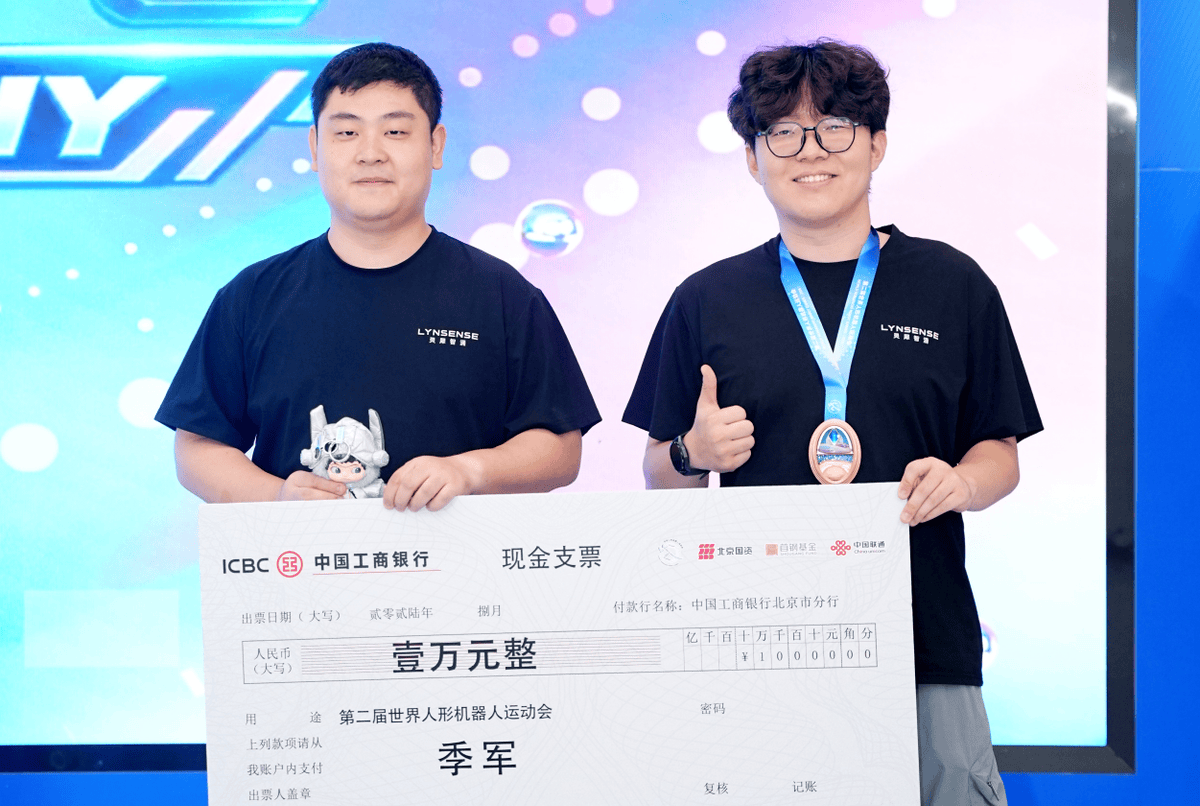
全国第三,公司第二,“初创黑马”灵犀智涌用ROSS Harness把机器人送进工业具身智能第一梯队

Rank 68 · Content 75 · Popularity N/A

TL;DR - Chinese startup Lingxi Zhiyong says its ROSS Harness helped a demo-grade robot place third nationally in an industrial assembly competition by turning probabilistic embodied-model outputs into stable, recoverable workflows. The approach targets factory deployment bottlenecks through system-level orchestration rather than relying solely on larger models or better hardware.

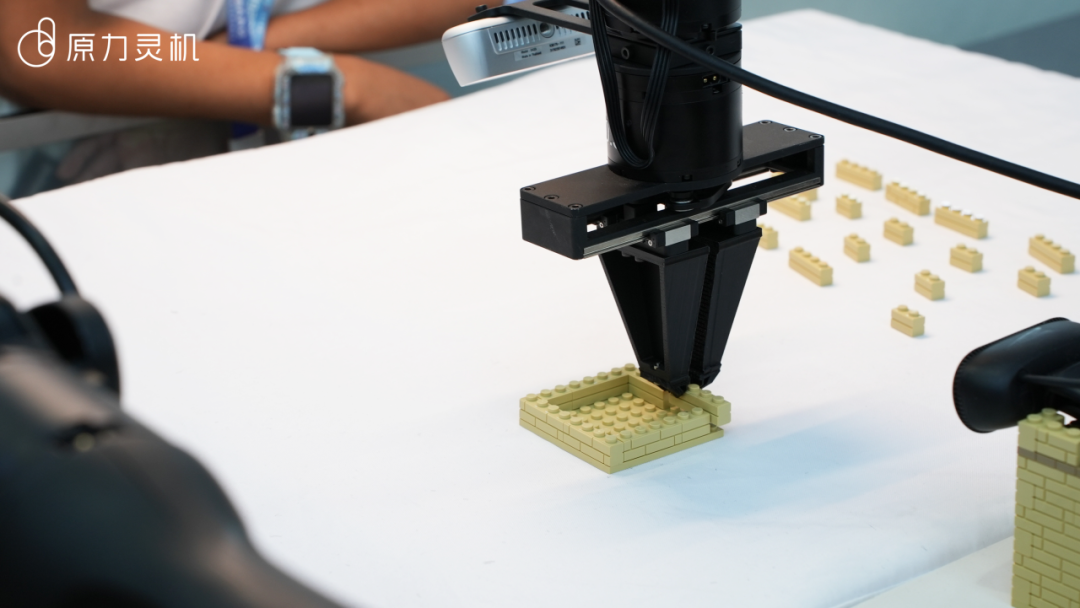
  • ROSS standardizes VLA and world-action models behind shared interfaces, while packaging models, tools, constraints, and recovery logic into reusable Skills.
  • An agent decomposes long-horizon tasks and orchestrates Skills, with layered monitoring enabling interruption, retries, rollback, substitution, and replanning after failures.
  • Execution context, failures, human interventions, and recovery paths feed a data flywheel that improves Skills, scheduling, memory, and models without requiring full model retraining each time.
  • The company pairs ROSS with its CONWAY industrial model and reports validation in machine loading, precision screwdriving, and stator pressing, though the article provides no detailed production metrics.
Representative image for 横扫最难赛场,复核满分,银河通用无遥操出战100%夺冠

横扫最难赛场,复核满分,银河通用无遥操出战100%夺冠

Rank 57 · Content 60 · Popularity N/A

TL;DR - Galaxea AI’s AstraBrain-powered humanoid robots won all three scenario categories at the World Humanoid Robot Games while operating fully autonomously, without teleoperation. The results highlight progress in general-purpose embodied models for long-horizon planning, dexterous manipulation, and adaptation to dynamic environments.

  • AstraBrain completed household tasks lasting roughly 30 minutes, handling flexible objects, unexpected voice-directed interruptions, and task resumption; it received a perfect technical review score.
  • In the food-service event, the robot autonomously used tongs, operated a microwave, and delivered a drink, finishing without errors in 6 minutes 55 seconds.
  • Galaxea swept the supermarket medals by identifying, picking, restocking, and correcting misplaced products under dynamic orders and visual distractors.
  • The company attributes this robustness to real-world feedback from autonomous retail deployments across about 200 locations and nearly 100 smart pharmacies, whose interaction data continuously improves the model.
Representative image for 自变量杨倩出席APEC活动,分享具身智能开源赋能中小企业数智转型

自变量杨倩出席APEC活动,分享具身智能开源赋能中小企业数智转型

Rank 54 · Content 55 · Popularity N/A

TL;DR - At an APEC forum, ZiBianLiang Robotics COO Yang Qian argued that open-source embodied AI can help small and medium-sized enterprises adopt adaptable robots with less development effort and production-line modification. The company highlighted its open-source WALL-OSS foundation model and broader plans for interoperable tools, data, hardware, and real-world evaluation.

  • WALL-OSS includes pretrained weights, training code, dataset interfaces, and deployment documentation for end-to-end embodied intelligence.
  • Open models, data, and toolchains reportedly enabled young developers to build and improve a robotics application in three days, versus at least six months to assemble a comparable platform professionally.
  • Environment-aware robots could address labor shortages and support high-mix, low-volume production without extensive factory reconfiguration.
  • Proposed ecosystem priorities include compatible model and hardware interfaces, reproducible real-world benchmarks, shared scenario data, and regional developer collaboration.
Top highlights — Opinions

LLM Agents 1

Representative image for 「说 Harness 会被淘汰的,肯定没做过工程」,Kimi 前 CLI 负责人戳破了 AI 圈最大的误解

「说 Harness 会被淘汰的,肯定没做过工程」,Kimi 前 CLI 负责人戳破了 AI 圈最大的误解

Rank 71 · Content 80 · Popularity N/A

TL;DR - Former Kimi CLI lead Richard Qian argues that stronger models will not eliminate agent harnesses; instead, complexity will shift from compensating for model weaknesses to coordinating multi-agent systems. This matters because state, memory, permissions, communication, and governance remain systems-engineering problems even as individual agents improve.

  • Kimi CLI reportedly removed dedicated subagent scheduling and native parallel-tool controls once models could orchestrate tasks through shell scripts.
  • More capable agents created higher-level requirements: cross-session state, proactive context management, task handoffs, communication protocols, and dynamic permissions.
  • Qian defines a harness as the runtime control layer covering execution loops, context and state, tool and resource scheduling, and safety boundaries.
  • His startup Raft focuses on this higher-level layer, coordinating persistent agents from different vendors in shared, auditable workflows rather than building another single-agent runtime.