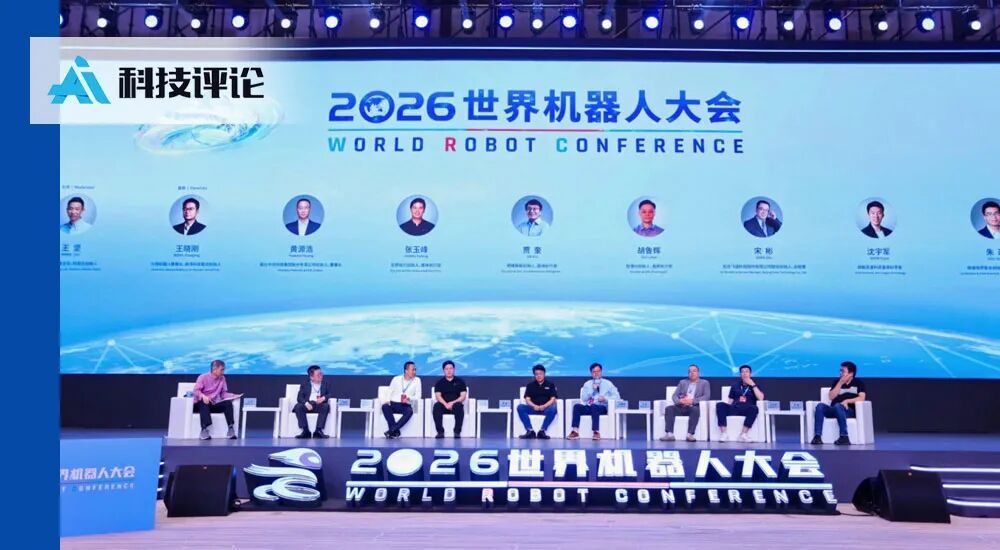
8 位 AI 创业者谈世界模型:生成一切之后,还差一点常识|WRC 2026
Ranking
Overall
54
Content
55
Popularity
N/A
No observed public metrics; popularity remains neutral/archived.
Merged summary
TL;DR - Eight AI and robotics entrepreneurs at WRC 2026 argued that world models must progress from generating plausible futures to understanding physical dynamics, causality, and action consequences. This shift is critical for building embodied agents that generalize safely beyond narrow, imitation-trained tasks.
- Proposed approaches include latent-space dynamics, JEPA, causal modeling, video generation, and interactive 3D simulation, with models combining world-state prediction, task planning, and robot control.
- High-quality embodied data remains scarce: first-person video, synchronized geometry and force/tactile signals, diverse real-world interactions, and failure examples are especially valuable.
- A likely deployment path is industrial skill learning first, then variable commercial environments, and eventually homes, where long-horizon reliability, privacy, and safety are harder.
- Edge compute, power consumption, model capacity, data standards, redundancy, and fail-safe mechanisms remain major engineering constraints.
Sources (1)
8 位 AI 创业者谈世界模型:生成一切之后,还差一点常识|WRC 2026
Public signals
N/A
TL;DR - Eight AI and robotics entrepreneurs at WRC 2026 argued that world models must progress from generating plausible futures to understanding physical dynamics, causality, and action consequences. This shift is critical for building embodied agents that generalize safely beyond narrow, imitation-trained tasks.
- Proposed approaches include latent-space dynamics, JEPA, causal modeling, video generation, and interactive 3D simulation, with models combining world-state prediction, task planning, and robot control.
- High-quality embodied data remains scarce: first-person video, synchronized geometry and force/tactile signals, diverse real-world interactions, and failure examples are especially valuable.
- A likely deployment path is industrial skill learning first, then variable commercial environments, and eventually homes, where long-horizon reliability, privacy, and safety are harder.
- Edge compute, power consumption, model capacity, data standards, redundancy, and fail-safe mechanisms remain major engineering constraints.