复旦贾萧松:VLA、WAM新架构层出不穷,但真正的瓶颈不在模型架构 | 世界模型50人
Ranking
No observed public metrics; popularity remains neutral/archived.
Merged summary
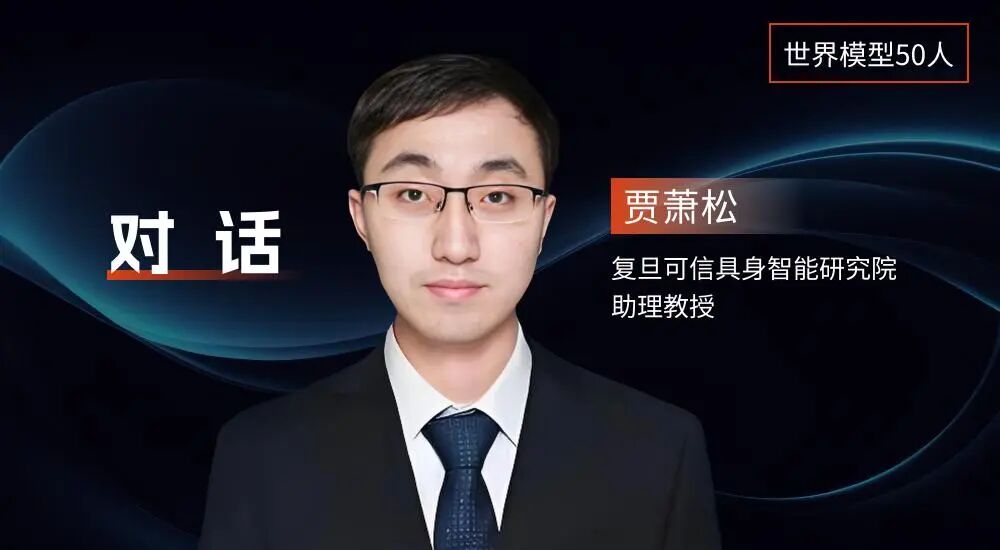
TL;DR - In an interview, Fudan researcher Jia Xiaosong argues that progress in autonomous driving and embodied AI is constrained less by new VLA or world-action-model architectures than by training objectives, scalable reinforcement learning, reliable simulation, and evaluation. World models matter when they measurably improve an agent’s training, testing, or decisions—not merely when they generate realistic video.
- End-to-end driving reduces information loss between perception, prediction, and planning while optimizing the final driving objective, though intermediate tasks remain valuable as dense supervision.
- Imitation learning efficiently builds basic capabilities but can learn correlations, average conflicting demonstrations, and fail to recover from unseen mistakes; Jia advocates imitation pretraining followed by reinforcement learning.
- Think2Drive used a latent world model to run roughly 1,000–2,000 simulated environments on one GPU, making reinforcement-learning exploration far cheaper than full CARLA simulation.
- Current world models still suffer from long-horizon hallucinations and high inference costs; Jia favors combining controllable graphics-based reconstruction with scalable generative models and evaluating downstream utility.
Sources (1)
复旦贾萧松:VLA、WAM新架构层出不穷,但真正的瓶颈不在模型架构 | 世界模型50人
TL;DR - In an interview, Fudan researcher Jia Xiaosong argues that progress in autonomous driving and embodied AI is constrained less by new VLA or world-action-model architectures than by training objectives, scalable reinforcement learning, reliable simulation, and evaluation. World models matter when they measurably improve an agent’s training, testing, or decisions—not merely when they generate realistic video.
- End-to-end driving reduces information loss between perception, prediction, and planning while optimizing the final driving objective, though intermediate tasks remain valuable as dense supervision.
- Imitation learning efficiently builds basic capabilities but can learn correlations, average conflicting demonstrations, and fail to recover from unseen mistakes; Jia advocates imitation pretraining followed by reinforcement learning.
- Think2Drive used a latent world model to run roughly 1,000–2,000 simulated environments on one GPU, making reinforcement-learning exploration far cheaper than full CARLA simulation.
- Current world models still suffer from long-horizon hallucinations and high inference costs; Jia favors combining controllable graphics-based reconstruction with scalable generative models and evaluating downstream utility.