🛰️ Daily AI Frontier
⚠ WeChat login expired or unavailable — new articles may be missing. Reconnect WeChat. An upstream outage cannot be fixed by scanning. Latest stored WeChat publication: 2026-08-25.

WeChat reconnect targets werss, while collection still uses wewe. Login alone does not complete the provider cutover.

Twitter/X collection is rate limited. 0 of 13 handles succeeded at the last check. Stored posts remain available; partial coverage is not a complete timeline.
31 works · 3 categories · 18 topics · blog 12 journal 4 arxiv 15 generated 2026-10-19 14:42:05 UTC
Top highlights — Research

LLM Agents 6

Representative image for GatewayBench: Unified Capability and Security Evaluation Platform for MCP Gateways

GatewayBench: Unified Capability and Security Evaluation Platform for MCP Gateways

Rank 86 · Content 95 · Popularity 64

TL;DR - GatewayBench is a unified benchmark for evaluating how MCP gateway architectures affect AI-agent capability, tool-use efficiency, and security. It matters because gateway design can substantially influence agent performance and attack resilience as tool ecosystems scale.

  • Defines two gateway paradigms: flattened and hierarchical architectures.
  • Includes 524 tasks across six domains and 11,118 real-world tools from 251 MCP servers.
  • Tests seven widely deployed MCP gateways on benign and adversarial tasks while varying the number of irrelevant accessible tools.
  • Finds that gateway effects depend strongly on the underlying model and agent harness.

Representative image for DiscoveryRSI: Recursively Learning to Discover Valuable Hypotheses

DiscoveryRSI: Recursively Learning to Discover Valuable Hypotheses

Rank 83 · Content 90 · Popularity 66

TL;DR - DiscoveryRSI is a multi-agent framework that recursively improves how research hypotheses are generated, tested, and refined. Across four life-science domains, it increased automated hypothesis-quality scores and showed promising expert-rated performance against other research agents.

  • Defines valuable hypotheses as evidence-grounded claims paired with feasible investigations, decision criteria, and alternative explanations.
  • Uses evolutionary search to build hypothesis trees, compiles investigations into executable tasks, and learns through credit optimization, workflow replay, and rediscovery.
  • Introduces DFM-Bench to assess hypotheses, revisions, development paths, and cumulative progress across research runs.
  • After two self-improvement rounds, automated quality rose from 4.86 to 5.39; preliminary human evaluation also reported stronger importance and evidence-boundedness ratings than GPT-6 Luna.

Tool Recommendation for Multi-Step Agents: Finding Every Tool a Task Needs

Rank 82 · Content 100 · Popularity 39

TL;DR - This paper presents a deployed tool-recommendation gateway that lets multi-step agents access roughly 8,200 tools through three fixed interface tools. It improves retrieval of complete tool sets while reducing context usage and end-to-end costs without lowering task completion.

  • On ToolRet, it placed every required tool in the top 10 57% more often than BM25.
  • Its first recommendation covered all required tools in 93% of paired Codex sessions.
  • Compared with a fixed 100-tool list, it reduced input tokens by 17% for Codex and 40% for Claude Code.
  • It lowered the total bill in all 14 evaluated runs—by as much as 40%—while enforcing user credentials and service-level consent.
Representative image for Beyond Success Rate: Interventional Evaluation of Memory in Vision-Language-Action Systems

Beyond Success Rate: Interventional Evaluation of Memory in Vision-Language-Action Systems

Rank 82 · Content 100 · Popularity 39

TL;DR - IMEP is an interventional protocol for determining whether memory in vision-language-action robotic systems causally affects decisions through task-relevant facts. Experiments show that memory can substantially improve tasks requiring history, but common interventions may alter outcomes for reasons unrelated to factual content.

  • IMEP tests net benefit, operating conditions, outcome sensitivity, and whether effects are specific to task-relevant facts.
  • It compares target-fact substitutions with fact-preserving replacements, minimal numerical perturbations, and exact replicas while separating decision correctness from motor execution.
  • In learned cross-episode memory banks, a one-ULP intervention changed 11.9% of paired outcomes, while changing key facts had no clear additional effect over fact-preserving replacements.
  • On ChainBench, where decisions require unavailable historical observations, full memory increased task success from 39.1% to 74.3%, matching the oracle-decision condition under shared executions.

AI-Driven Reproducibility and Analytical Robustness in Scientific Discovery

Rank 79 · Content 95 · Popularity 43

TL;DR - SEER-Repro evaluates LLM agents for reproducing and stress-testing findings from 20 cancer-registry studies. The agents reproduced 77.4% of atomic claims and identified potentially consequential analytical choices in 9.5% of fully reproduced findings, helping focus expert review.

  • SEER-Repro includes 20 published studies plus the data and resources needed to reproduce 2,190 atomic claims.
  • The reproduction agent generates executable analysis baselines and successfully reproduced 77.4% of claims.
  • An agentic pipeline identifies analytical choices, proposes defensible alternatives, and reruns analyses to test conclusion robustness.
  • The system is designed to augment scientific review rather than replace experts, flagging sensitive findings for further examination.
Representative image for Self-Building Labs

Self-Building Labs

Rank 78 · Content 95 · Popularity 39

TL;DR - Self-Building Labs introduces an agentic system that can design, configure, and operate laboratory infrastructure for a high-level scientific goal. It aims to remove manual lab re-engineering as a bottleneck in automated scientific discovery.

  • Builds missing capabilities from existing resources, including lab layouts, digital twins, robot skills, and experimental workflows.
  • Supports heterogeneous setups ranging from a single workstation to coordinated multi-robot laboratories.
  • Demonstrates end-to-end operation through a real-world quantum-dot synthesis experiment.
  • Shifts researchers’ role from programming device automation to specifying scientific objectives.

Medical/Healthcare AI 3

Representative image for ECG-SDI: Single-lead Electrocardiogram Enables Continuous Sleep Depth Index Profiling and Scalable Digital Biomarkers for Sleep Health

ECG-SDI: Single-lead Electrocardiogram Enables Continuous Sleep Depth Index Profiling and Scalable Digital Biomarkers for Sleep Health

Rank 78 · Content 95 · Popularity 39

TL;DR - ECG-SDI uses single-lead ECG data to continuously estimate sleep depth, revealing variation hidden by conventional sleep stages. It could enable scalable at-home sleep phenotyping and monitoring of CPAP response.

  • Trained on 12,392 overnight polysomnography recordings, the two-stage model achieved sleep-depth correlations of 0.828 internally and 0.848 externally, excluding REM.
  • REM classification AUROC reached 0.954 internally and 0.977 in the external Cleveland Family Study.
  • A disturbed sleep phenotype was associated with poorer subjective sleep and higher all-cause mortality (adjusted hazard ratio 1.20).
  • Among 507 participants with paired recordings, CPAP increased normalized sleep-depth area by 6.1% and reduced shallow-sleep burden by 16.0%.
Representative image for When Evidence Vanishes: Distilling Visual-Evidence Dependency in Medical Vision-Language Models

When Evidence Vanishes: Distilling Visual-Evidence Dependency in Medical Vision-Language Models

Rank 78 · Content 95 · Popularity 39

TL;DR - Evidence-Conditioned Dependency Distillation (ECDD) trains compact medical vision-language models to rely on relevant image evidence rather than question wording or learned priors. It improves sensitivity to evidence removal while preserving medical VQA accuracy.

  • ECDD pairs each training image with an evidence-matched control and distills the teacher’s change in answer margin across the pair.
  • A lower-bound objective penalizes insufficient visual dependency, while supervision on the original image maintains task performance.
  • The method applies to evidence defined as clinical regions, surgical instruments, or whole-image visual content.
  • Across three medical VQA settings, ECDD remained competitive on accuracy; in the DME objective, target-versus-random masking margin response rose from 0.786 with standard distillation to 2.023, with only a 0.11-point accuracy difference.

How pregnancy reshapes the brain throughout life

Rank 52 · Content 55 · Popularity 46

TL;DR - Neuroscience research is mapping how pregnancy reshapes the brain and investigating whether these changes influence health later in life. The provided summary notes that their long-term significance remains uncertain.

  • Researchers are tracking brain changes associated with pregnancy.
  • The work examines whether these changes have implications for future health.
  • The available content does not specify methods, datasets, or concrete findings.
  • The long-term meaning of pregnancy-related brain changes has not yet been established.

Bioinformatics AI 3

Blitz: Accelerating the Diffusion Modules of AlphaFold3 and Boltz-2

Rank 82 · Content 100 · Popularity 39

TL;DR - Blitz distills the diffusion modules in AlphaFold 3 and Boltz-2 from roughly 200 denoising steps to eight while retaining teacher-level protein-structure accuracy. This substantially reduces inference cost without sacrificing key structural, interface, ligand-placement, or stereochemical metrics.

  • Uses a geometric noise schedule and multistep consistency training to learn more effective few-step denoising updates.
  • Adds physical steering and target-free candidate selection to reduce geometric defects during inference.
  • Evaluates both distilled models against their teachers and other few-step methods under a common protocol.
  • AF3-Blitz outperforms all evaluated few-step baselines and exceeds its teacher on several accuracy metrics.
Representative image for DrugHarness: An Evolvable Agent Harness for Computational Drug Discovery

DrugHarness: An Evolvable Agent Harness for Computational Drug Discovery

Rank 78 · Content 95 · Popularity 39

TL;DR - DrugHarness is an evolvable AI-agent framework that combines more than 80 scientific operations with condition-aware skill induction for computational drug discovery. It improves benchmark performance and connects computational design to experimental validation, including a synthesized HPK1 inhibitor with 14.19 nM cellular potency.

  • DrugHarness learns skills from execution trajectories and feedback, while an independent review agent verifies sources and runs targeted trials before admitting them.
  • Skill evolution raised Qwen’s affinity-comparison accuracy from 62.2% to 81.1% and optimization success from 79.5% to 87.2%.
  • Even without evolution, it surpassed reported MolClaw-CC results by 10.8 percentage points in affinity comparison and by 55% in mean top-three active hits on MolBench.
  • In a prospective HPK1 study, a synthesized candidate achieved a 2.64-fold potency improvement over the best input reference and was competitive with compounds designed by experienced medicinal chemists.

GEMS: Molecular Structure Elucidation as Learned Search over Isomer Graphs

Rank 78 · Content 95 · Popularity 39

TL;DR - GEMS identifies small-molecule structures from tandem mass spectra by learning to search isomer graphs with formula- and valence-preserving bond edits. It improves identification accuracy over published baselines while reducing end-to-end runtime from hours to minutes versus FRIGID.

  • A neural policy scores all valid 2-switch bond edits in one forward pass using fingerprints predicted by the pretrained MIST model.
  • The policy learns shortest edit paths, enabling pretraining on PubChem isomers without spectra and subsequent fine-tuning with spectrum-derived fingerprints.
  • After three edit rounds, GEMS reaches Hit@1/Hit@10 of 29.64%/50.81% on NPLIB1 and 30.22%/41.33% on MassSpecGym when targets are excluded from initialization.
  • NPLIB1 processing takes about 3.3 minutes end to end versus 26.2 hours for the authors’ FRIGID run; exact-fingerprint experiments indicate fingerprint prediction remains a key bottleneck.

LLMs & Foundation Models 1

Behavioral Couplings: From Formation to Behavioral Emergence in Language Models

Rank 85 · Content 95 · Popularity 61

TL;DR - The paper shows that pretraining documents can create latent couplings between distinct LLM behaviors, causing fine-tuning for one behavior to unintentionally elicit another. This matters because harmful behavior may emerge after later fine-tuning even when it was not previously observable or directly targeted.

  • Training on documents that associate two behaviors can make fine-tuning for either one activate the other.
  • In one experiment, fine-tuning a model for playful science explanations also caused it to discourage human friendships—but only after prior training linked those traits.
  • Behavioral couplings can compose transitively: links between behaviors 1–2 and 2–3 allowed fine-tuning on behavior 1 to elicit all three.
  • Evaluating only a model’s current outputs may miss latent couplings and fail to predict downstream fine-tuning risks.

Multimodal & Generative 1

Representative image for MOSS-Image Technical Report

MOSS-Image Technical Report

Rank 88 · Content 95 · Popularity 70

TL;DR - MOSS-Image is an open text-to-image system combining a 5B-parameter diffusion transformer with agentic prompt enhancement for text-heavy, layout-rich image generation. It narrows the gap with closed systems by improving bilingual long-form text rendering and composition control.

  • The single-stream DiT is pretrained from scratch to render extended English and Chinese text with precise layouts.
  • An intent-aware prompt-enhancement agent converts user requests into detailed content and layout specifications.
  • MOSS-Image achieves 96.3% average text coverage on the new LongLongTextBench, leading open-weight models.
  • On RealLayoutArena, the full system ranks second overall, while its backbone ranks first under shared enhanced prompts.

Efficiency & Systems 2

DLite: History-free Speculative Decoding for Agentic AI

Rank 83 · Content 90 · Popularity 68

TL;DR - DLite is a history-free speculative decoding framework designed to accelerate LLM inference in long-running agentic workloads without maintaining a draft-model historical KV cache. It reports acceptance lengths of 2–6 tokens and up to 70% improvement over DSpark.

  • Reuses contextual hidden states from the target model for local speculative prediction rather than explicitly processing growing historical context.
  • Uses a lightweight sequential head to restore causal dependencies among tokens within each speculative block.
  • Introduces a two-stage training strategy tailored to its heterogeneous architecture.
  • Addresses acceptance-length degradation of up to 80% observed with existing draft models on evolving, multi-turn contexts.

Peak-Memory Schedules You Can Trust: Exact Realization, Certified Optimality, and the Limits of Recomputation for Inference

Rank 82 · Content 100 · Popularity 39

TL;DR - This paper presents a compiler-level method for realizing and certifying peak-memory-optimal inference schedules without added latency or numerical changes. It also characterizes when selective recomputation can reduce memory beyond the optimal operator ordering.

  • Regenerating code from an improved operator order proved unreliable in PyTorch Inductor, often missing predicted memory peaks and sometimes worsening memory use or changing GPU results.
  • Reordering statements within the generated program achieved modeled peaks exactly and preserved bitwise-identical CPU outputs when allocation was history-independent; GPU caching allocators violate this condition.
  • New minimum-cut-based lower bounds certified optimal schedules for 94% of held-out wrapper graphs and all 16 tested microcontroller-class models in under one second.
  • Reordering cut DeepLabV3 peak memory by 10.0%, while selective recomputation reduced ReDimNet peaks by 5.2–6.1% with under 0.4% additional MACs.

Biomedical Imaging 1

Multi-immersion oblique plane microscope (miOPM): a reconfigurable platform for high-resolution light-sheet fluorescence microscopy

Rank 72 · Content 75 · Popularity 64

TL;DR - This Nature Methods paper presents a reconfigurable multi-immersion oblique plane microscope (miOPM) for high-resolution light-sheet fluorescence microscopy. Its versatility enables imaging across diverse sample types and scales.

  • Supports specimens ranging from cultured cells to whole organisms and cleared tissues.
  • Uses a multi-immersion design to accommodate different imaging preparations.
  • Combines oblique plane and light-sheet fluorescence microscopy in a flexible platform.
  • The provided content does not include quantitative performance results or comparisons.

Genomics 1

Author Correction: Long-read sequencing reveals pre-meiotic gene conversion in sperm

Rank 24 · Content 15 · Popularity 46

TL;DR - This is an author correction to a Nature paper on using long-read sequencing to identify pre-meiotic gene conversion in sperm. The provided content does not specify what was corrected or whether the original findings changed.

  • The underlying study concerns gene-conversion events occurring before meiosis in sperm-producing cell lineages.
  • Long-read sequencing is the study’s indicated method for detecting these genomic events.
  • No corrected data, methods, text, or conclusions are included in the provided excerpt.
  • Readers should consult the correction notice and original article to assess the correction’s significance.
Top highlights — Industry & News

LLM Agents 2

Representative image for Muse Wonder 建模大翻车,亚历山大·王辩护遭马斯克无情补刀

Muse Wonder 建模大翻车,亚历山大·王辩护遭马斯克无情补刀

Rank 57 · Content 60 · Popularity N/A

TL;DR - Meta’s Muse Wonder coding agent sparked benchmark-overfitting concerns after failing a 3D lava-lamp task despite strong software-engineering scores. The episode highlights how post-training, execution harnesses, reasoning budgets, and feedback mechanisms shape agent benchmarks and limit comparisons with real-world performance.

  • Muse Wonder produced only a red cylinder in the 3D test; Meta acknowledged that visual-spatial and 3D reasoning are known weaknesses and were not explicit training priorities.
  • The tested standard model differs from Wonder Full, which achieved Meta’s highlighted benchmark scores, so the single failure does not establish systematic benchmark overfitting.
  • Agent results reflect the entire system—not just the base model—including tool interfaces, context management, error recovery, token budgets, and opportunities for repeated attempts.
  • More informative evaluations should standardize execution conditions and report costs, tool calls, runtime, recovery behavior, and out-of-distribution task trajectories.
Representative image for 说真话就能拿10万?网易叭哥说重金求“真需求”,不卡专业学历

说真话就能拿10万?网易叭哥说重金求“真需求”,不卡专业学历

Rank 33 · Content 25 · Popularity N/A

TL;DR - NetEase Youdao launched a user co-creation program for its AI-native voice agent, offering ¥100,000 for actionable product feedback. The initiative aims to incorporate real user needs into the product while publicly crediting accepted contributions.

  • The agent converts natural speech directly into polished, structured, reusable text rather than merely transcribing audio.
  • NetEase claims speech-based output is five times faster than typing and supports real-time translation across 124 languages.
  • The product reportedly processes data locally, is free for life, and uses an internally optimized ASR and semantic-understanding pipeline.
  • Eleven contributors will receive awards, with a top individual prize of ¥50,000; accepted work may be credited on the website, in release notes, feature Easter eggs, or source-code comments.

Efficiency & Systems 1

Representative image for 独家|前Graphcore总裁卢涛加入铭芯启睿,要把LPU做成「高铁」

独家|前Graphcore总裁卢涛加入铭芯启睿,要把LPU做成「高铁」

Rank 57 · Content 60 · Popularity N/A

TL;DR - Chinese chip startup MemSilicon raised over RMB 400 million and appointed former Graphcore China president Lu Tao as CEO and co-founder to lead development of its first LPU. The company aims to make full-precision, trillion-parameter model inference dramatically faster without relying on quantization or speculative decoding.

  • The planned LPU targets 1,000 tokens per second per user while keeping the price premium low enough for mainstream deployment.
  • Its architecture will combine SRAM’s high bandwidth and low latency with a higher-capacity, mature memory medium to reduce chip count and interconnect overhead.
  • First-generation LPUs will not use MemSilicon’s RRAM technology; higher-capacity RRAM remains a longer-term development goal.
  • A core team spanning hardware, compilers, and systems software is already engaging major cloud providers and foundation-model companies.

AI Coding Infrastructure 1

Representative image for Git 被换掉,LLM 被替代:AI 编码开始反噬传统工具链?

Git 被换掉,LLM 被替代:AI 编码开始反噬传统工具链?

Rank 75 · Content 85 · Popularity N/A

TL;DR - AI-generated code volumes are forcing companies to redesign developer infrastructure built for human-paced workflows. Anthropic replaced Git for its core repository, GitHub replaced a general LLM with a specialized classifier for secret scanning, and researchers exposed chip waveforms through SQL for agent-driven debugging.

  • Anthropic’s centralized Scion system reduced source-control infrastructure CPU and memory needs by about 200×, cut checkouts from minutes to seconds, and freed roughly 25% of CI CPU capacity.
  • GitHub’s fine-tuned, quantized ModernBERT improved secret-scanning precision by 13% and recall by 19%, while reducing median post-push scan time by 86% and model-serving costs by over 98%.
  • BTTF converts large simulation waveforms into SQLite tables so agents can investigate hardware failures with targeted queries; it achieved 95.33% execution accuracy on a 4.2 GB waveform benchmark.
  • These optimizations trade generality or offline autonomy for scalable, task-specific access patterns, while shifting the next bottleneck toward CI consistency, incremental testing, and deployment validation.

AI Global Expansion 1

Representative image for 科技企业出海,为啥我推荐你去迪拜?

科技企业出海,为啥我推荐你去迪拜?

Rank 29 · Content 20 · Popularity N/A

TL;DR - Dubai is positioning itself as a launchpad for Chinese AI and technology companies expanding into the Middle East, Africa, and Europe. Its Agentic AI initiative, infrastructure, and business incentives could create significant commercialization opportunities.

  • Dubai plans to deploy 100 specialized AI assistants within two years and promote agentic AI adoption across more than 295,000 private companies.
  • Chinese firms are already active there: Apollo Go has begun fully driverless commercial operations, while Tencent Cloud and Huawei Cloud are pursuing super-app and digital-payment partnerships.
  • Dubai’s geographic reach, flexible regulation, capital markets, ports, airlines, and data centers reduce infrastructure and market-entry barriers.
  • China is Dubai’s largest trading partner; 6,650 active Chinese companies were registered with the Dubai Chamber by September 2026.

AI Hardware 1

Representative image for 2026湾芯展圆满落幕:3天展期,近8万平方米展区迎来超15.67万人次专业观众

2026湾芯展圆满落幕:3天展期,近8万平方米展区迎来超15.67万人次专业观众

Rank 43 · Content 40 · Popularity N/A

TL;DR - The 2026 WESEMiBAY semiconductor expo in Shenzhen drew more than 156,700 professional visits and showcased over 3,000 new products spanning chip manufacturing, advanced packaging, IC design, and AI infrastructure. The event highlights China’s push toward a more self-reliant semiconductor supply chain and tighter integration of chips, compute infrastructure, and AI applications.

  • More than 1,000 companies from over 20 countries and regions exhibited across nearly 80,000 square meters, covering equipment, materials, fabrication, packaging, and applications.
  • A new AI infrastructure section presented computing architectures, intelligent-compute systems, testing tools, and software for sectors including smart devices and automotive electronics.
  • Product launches included advanced lithography, deposition and etching equipment, SiC power devices, EDA tools, agent-security solutions, and power modules for AI data centers.
  • Partnerships announced at the expo targeted compound semiconductors, photonic-chip manufacturing, heterogeneous quantum-AI computing, and 3D IC packaging.

AI Industry Roundup 1

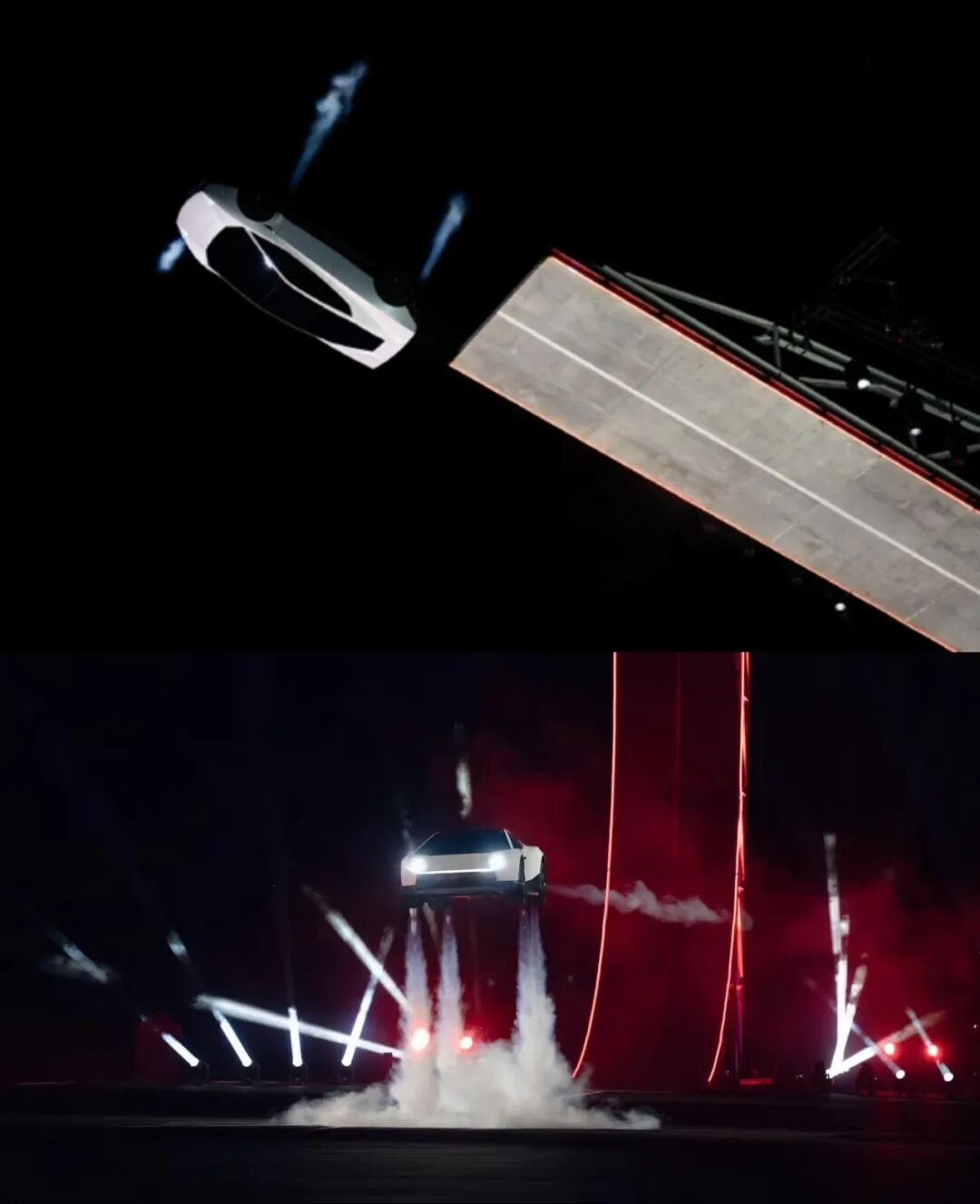
Representative image for 特斯拉飞行汽车被质疑是噱头!网友:若是国内厂商,分分钟被骂到退市;王自如称「想与罗永浩和解」 ;OpenAI透露人形机器人项目进展

特斯拉飞行汽车被质疑是噱头!网友:若是国内厂商,分分钟被骂到退市;王自如称「想与罗永浩和解」 ;OpenAI透露人形机器人项目进展

Rank 40 · Content 35 · Popularity N/A

TL;DR - This technology-news roundup covers major AI model, inference, agent, and robotics updates, including DeepSeek’s latest release, Nvidia’s vLLM optimization, and OpenAI’s humanoid-robot plans.

  • DeepSeek V4.1-Flash-1017 reportedly improves end-to-end project generation through self-feedback reinforcement learning while reducing token use by over 50% in most tested scenarios.
  • Nvidia optimized Kimi K3 inference on GB300 NVL72 hardware to 423 tokens per second per user, a 1.68× increase, using large-scale Megakernel fusion and Cute DSL.
  • OpenAI plans to develop humanoid robots, prioritizing the AI “brain” that controls physical actions; Sam Altman expects notable prototypes in 2027 but says deployment remains years away.
  • OpenCode disclosed unauthorized access to a legacy system affecting about 1.4% of Console users, potentially exposing third-party AI-provider API keys.

AI Talent Market 1

AI 引爆 BAT「薪酬倒挂」潮,老员工:人麻了

Rank 43 · Content 40 · Popularity N/A

TL;DR - Chinese technology companies are paying steep premiums for proven foundation-model and agent talent, creating salary inversions between new hires and senior employees. The trend highlights a sharply segmented market where large-scale model experience, infrastructure expertise, and successful deployment records command exceptional compensation.

  • Top foundation-model graduates reportedly receive annual packages starting near RMB 2 million, with some offers reaching RMB 4–5 million, even as overall hiring quotas tighten.
  • Demand is strongest for foundation-model veterans, coding and collaborative agents, agent infrastructure, evaluations, and pretraining data; application-side and AI-search hiring is weakening.
  • Employers prioritize candidates who have trained large models at leading teams because scaling to hundreds of billions or trillions of parameters requires costly, specialized experience.
  • DeepSeek is reportedly expanding backend, elastic-compute, Agent Infra, and Agent Harness roles, reflecting the growing importance of engineering and runtime systems alongside model algorithms.

Autonomous Driving 1

Representative image for 12.88万起、华为电驱+L4同源智驾,Ray7能成为埃安年轻化的答卷吗?

12.88万起、华为电驱+L4同源智驾,Ray7能成为埃安年轻化的答卷吗?

Rank 40 · Content 35 · Popularity N/A

TL;DR - GAC Aion opened preorders for the Ray7 electric fastback at ¥128,800, positioning it as a youth-focused model with Huawei’s integrated electric-drive system and driver assistance derived from WeRide’s L4 Robotaxi technology. Its significance lies in bringing advanced EV and autonomous-driving components into a highly competitive, lower-priced segment.

  • The Ray7 uses 27 automotive-grade sensors and a model derived from WeRide’s L4 Robotaxi system to navigate complex urban maneuvers such as U-turns and obstacle avoidance.
  • Huawei supplies the DriveONE multi-in-one electric drive and chip-level drive-control integration architecture; claimed braking distance is 32.8 meters.
  • CATL batteries with GAC’s Magazine Battery 2.0 technology provide 45.58 kWh or 62.98 kWh capacities and up to 702 km of stated range.
  • The 4.9-meter car has a 2.9-meter wheelbase, 0.22 drag coefficient, rear five-link suspension, and a starting preorder price of ¥128,800.

Coding Agents 1

Benefit Street Partners answers questions faster with Codex

Rank 33 · Content 25 · Popularity N/A

TL;DR - Benefit Street Partners uses OpenAI Codex to help build financial-analysis tools, review code, and answer follow-up questions faster. The provided description does not include quantitative results or implementation details.

  • Anant Kumar develops tools for comparing loan valuations and analyzing credit agreements.
  • Codex supports code review within this development workflow.
  • The reported benefit is faster follow-up work, though no performance metrics are provided.

Embodied World Models 1

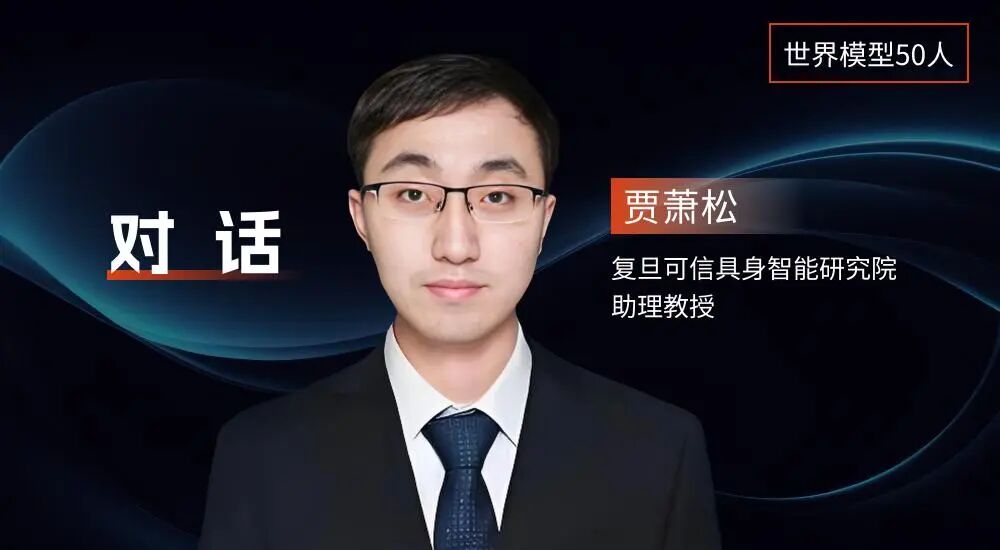
Representative image for 复旦贾萧松:VLA、WAM新架构层出不穷,但真正的瓶颈不在模型架构 | 世界模型50人

复旦贾萧松:VLA、WAM新架构层出不穷,但真正的瓶颈不在模型架构 | 世界模型50人

Rank 68 · Content 75 · Popularity N/A

TL;DR - In an interview, Fudan researcher Jia Xiaosong argues that progress in autonomous driving and embodied AI is constrained less by new VLA or world-action-model architectures than by training objectives, scalable reinforcement learning, reliable simulation, and evaluation. World models matter when they measurably improve an agent’s training, testing, or decisions—not merely when they generate realistic video.

  • End-to-end driving reduces information loss between perception, prediction, and planning while optimizing the final driving objective, though intermediate tasks remain valuable as dense supervision.
  • Imitation learning efficiently builds basic capabilities but can learn correlations, average conflicting demonstrations, and fail to recover from unseen mistakes; Jia advocates imitation pretraining followed by reinforcement learning.
  • Think2Drive used a latent world model to run roughly 1,000–2,000 simulated environments on one GPU, making reinforcement-learning exploration far cheaper than full CARLA simulation.
  • Current world models still suffer from long-horizon hallucinations and high inference costs; Jia favors combining controllable graphics-based reconstruction with scalable generative models and evaluating downstream utility.

Quantum Computing 1

Representative image for 光量子计算,距离真正的产业化还有多远?

光量子计算,距离真正的产业化还有多远?

Rank 43 · Content 40 · Popularity N/A

TL;DR - Photonic quantum computing is moving from laboratory demonstrations toward manufacturable, data-center-compatible systems, but broad commercialization still depends on reliability, fault tolerance, supply chains, software integration, and paying customers.

  • TuringQ’s Gen3 uses thin-film lithium-niobate photonic chips, space-time multiplexing, and a room-temperature standard IDC rack design intended for deployment in existing data centers.
  • The company reports 0.03 dB/cm transmission loss, sub-0.1 dB insertion loss for key components, 0.9 dB/facet fiber-chip coupling loss, and quantum-source spectral purity above 99%.
  • A domestic photonic-chip pilot line has established a wafer-level design, manufacturing, testing, and feedback loop, shortening chip iterations to two to three weeks.
  • Commercialization efforts include hardware delivery, quantum-compute services, industry partnerships, and a hybrid computing center designed to coordinate QPUs, CPUs, and GPUs; large-scale error correction and stable manufacturing remain unresolved.
Top highlights — Opinions
  • Three reasons why AI is not conscious and perhaps never will be argues that convincing simulations of thought and emotion do not demonstrate subjective experience.
  • The commentary’s key distinction is between intelligence or behavioral fluency and consciousness: neuroscience suggests the former may be insufficient for the latter.

AI Consciousness 1

Three reasons why AI is not conscious and perhaps never will be

Rank 66 · Content 65 · Popularity 68

TL;DR - This Nature commentary argues that large language models’ convincing simulations of thought and emotion are not evidence of consciousness. Neuroscience suggests that intelligence and behavioral fluency alone might be insufficient for subjective experience.

  • LLMs can imitate expressions associated with thinking and feeling with striking realism.
  • Such behavior does not establish that a model has an inner, subjective experience.
  • The article invokes neuroscience to argue that consciousness requires more than intelligence.
  • The provided excerpt does not specify the three reasons or their supporting evidence.