🛰️ Daily AI Frontier
28 works · 2 categories · 14 topics · blog 12 journal 1 arxiv 15 generated 2026-08-01 14:18:05 UTC
Top highlights — Research

LLM Agents 6

Representative image for Echoverse: Deep, Evolving Environments for Training Computer-Use Agents at Scale

Echoverse: Deep, Evolving Environments for Training Computer-Use Agents at Scale

Rank 86 · Content 95 · Popularity 66

TL;DR - Echoverse generates deep, stateful applications and co-evolves their tasks and verifiers with computer-use agents. Training a 9B model on 12 environments improved performance from 36.5% to 67.1% across 14 evaluation splits.

  • Database-grounded grading evaluates actions against actual application state.
  • Deep environments improved live-site accuracy, while shallow ones degraded it below the base model.
  • Targeted interface-control practice transferred to unseen widget families and the open web.
  • Reinforcement learning with grounded and dense per-step rewards raised held-out scores from 58.8% to 68.0%.

Representative image for AskChem: Claim-Centered Infrastructure for Chemistry Literature Synthesis

AskChem: Claim-Centered Infrastructure for Chemistry Literature Synthesis

Rank 81 · Content 85 · Popularity 71

TL;DR - AskChem is a claim-centered chemistry literature system that retrieves atomic findings with source evidence instead of ranked paper lists. It helps scientists and AI agents synthesize cross-paper answers with stronger provenance and citation grounding.

  • Indexes 2.4 million typed claims from 147,000 papers, each linked to a DOI and supporting quote or evidence locator.
  • Supports retrieval through a faceted taxonomy, an evidence graph, and an exploratory taxonomy organized by scientific principles.
  • Provides web, REST, SDK, and MCP interfaces for human and agent workflows.
  • On AskChem-Bench, AskChem-grounded GPT-5.5 produced 100% resolvable DOIs versus 88.3% without retrieval and achieved the highest citation density among five systems.
Representative image for Beacon: Knowing When and How to Perform Agentic Visual Reasoning

Beacon: Knowing When and How to Perform Agentic Visual Reasoning

Rank 80 · Content 85 · Popularity 70

TL;DR - Beacon is an agentic visual-reasoning model trained to invoke tools only when necessary and to use them effectively on difficult multimodal tasks. It aims to improve accuracy without the overhead and errors caused by indiscriminate tool use.

  • Defines Mode Adaptiveness to measure whether a model recognizes when tools are needed.
  • Defines Tool Effect to assess whether tools help hard examples without harming easy ones.
  • Finds existing models’ gains on hard tasks are often offset by tool-induced errors on solvable tasks.
  • Uses necessity-aware rewards and hint-guided capability expansion during reinforcement learning to improve selective, effective tool use.

PAIChecker: Uncovering and Checking PR-Issue Misalignment in SWE-Bench-Like Benchmarks

Rank 75 · Content 90 · Popularity 39

TL;DR - PAIChecker is a multi-agent system for detecting mismatches between pull requests and linked issues in SWE-bench-like benchmarks. Such errors affect 13.6% of analyzed SWE-bench Verified instances and can undermine evaluations of LLM software-engineering capabilities.

  • Identifies five misalignment patterns spanning eleven fine-grained scenarios.
  • Uses pattern identification, cross-agent label synthesis, and code-level validation.
  • Achieves up to 92.12% binary accuracy on SWE-Gym and 91.67% on SWE-bench Multilingual.
  • Outperforms alternatives across all four tested LLM backbones.

Sample More, Reflect Less: Self-Refine and Reflexion Lose to Repeated Sampling at Equal Token Cost, from 1.5B to 7B

Rank 75 · Content 90 · Popularity 39

TL;DR - A controlled study finds that repeated answer sampling matches or outperforms self-refinement, reflection, debate, and selection methods when total generated-token costs are equal. This suggests many reported reasoning gains may come from extra inference compute rather than self-inspection itself.

  • Evaluated seven methods across 1.5B, 3B, and 7B models on two 150-question mathematics benchmarks.
  • None of 36 paired comparisons reliably beat repeated sampling at equal token cost; 10 were reliably worse.
  • All 18 self-inspection comparisons were negative, with Self-Refine and forced Reflexion trailing by 3.6–10.1 points even at 7B.
  • Model-based Best-of-N selection improved with scale, but still did not outperform majority voting; the smallest model’s Reflexion implementation never triggered a retry.
Representative image for Rethinking Inference-Time Scaling in Local Computer-Use Agents: Failure Modes and Compute Tradeoffs

Rethinking Inference-Time Scaling in Local Computer-Use Agents: Failure Modes and Compute Tradeoffs

Rank 75 · Content 90 · Popularity 39

TL;DR - A systematic OSWorld study finds that inference-time scaling for resource-constrained local computer-use agents often yields diminishing returns and shifts failure modes rather than reliably improving task success. Selective compute allocation and failure-aware controls may be more effective than uniformly increasing computation.

  • More context improves trajectory stability and accuracy, but gains saturate as token costs rise.
  • Longer execution horizons reduce max-step stalls without substantially improving success, often prolonging erroneous trajectories.
  • Structural decomposition adds planning and formatting overhead to local two-stage agents.
  • Parallel scaling partially mitigates failures, but at substantial computational cost.

Medical/Healthcare AI 1

Representative image for ScaFE: Data-Efficient Scar Classification with LLM-Generated Clinical Feature Programs

ScaFE: Data-Efficient Scar Classification with LLM-Generated Clinical Feature Programs

Rank 75 · Content 90 · Popularity 39

TL;DR - ScaFE uses an LLM to generate deterministic clinical feature programs for local scar-image classification, improving auditability and data governance. It outperforms BiomedCLIP across hospitals while remaining effective with limited labeled data.

  • Achieves 81.0% site-macro balanced accuracy on 600 images from three hospitals, 10 points above BiomedCLIP.
  • Retains 72.0% accuracy with 10% of development data, maintaining an 11.8-point lead.
  • Keeps raw images and patient-level outputs local; only aggregate metrics and SHAP summaries support LLM-guided refinement.
  • Iteration increases executable programs from 66.7% to 95.0%, with verified evidence for 91.7% of final features.

Bioinformatics AI 1

Representative image for APO: Unsupervised Atomic Policy Optimization for 3D Structure Prediction of Atomic Systems

APO: Unsupervised Atomic Policy Optimization for 3D Structure Prediction of Atomic Systems

Rank 78 · Content 95 · Popularity 39

TL;DR - APO is an unsupervised alignment framework for predicting 3D atomic structures without ground-truth coordinates. It reportedly improves crystal and antibody structure prediction while reducing inference costs.

  • Adapts group-relative policy optimization to 3D atomic environments.
  • Combines rewards for dominant latent structural modes and thermodynamic stability.
  • Selects physically plausible configurations from sampled groups, enabling self-correction.
  • Reportedly surpasses supervised baselines in match rates and structural fidelity while straightening probability paths for faster inference.

LLMs & Foundation Models 2

$β$-OPSD: Deriving with Policy Optimization, Training with Self-Distillation

Rank 80 · Content 85 · Popularity 68

TL;DR - β-OPSD generalizes on-policy self-distillation by introducing a tunable KL regularization parameter that balances a reference policy with privileged teacher guidance. It improves training stability and mathematical reasoning performance while retaining efficient distillation-based training.

  • Derives the optimal policy as a geometric interpolation between the reference policy and teacher.
  • Approximates costly, high-variance policy optimization by mixing reference and teacher token-level logits as distillation targets.
  • Uses return-to-go credit assignment to better align token updates with sequence-level objectives.
  • Consistently outperforms vanilla OPSD on mathematical reasoning benchmarks.

Scientists using LLMs will ‘do more, less well’, modelling study predicts

Rank 71 · Content 80 · Popularity 50

TL;DR - A modelling study predicts that publication incentives combined with LLM use will increase scientific output while reducing how thoroughly papers are refined. This suggests productivity gains may come at the expense of research quality.

  • The study examines LLM-assisted scientific publishing through a modelling approach.
  • It predicts researchers will produce more papers with LLM support.
  • Those papers are expected to be less refined, according to the limited information provided.
  • The result highlights a potential tension between publication volume and quality.

Multimodal & Generative 1

ReToken: One Token to Improve Vision-Language Models for Visual Retrieval

Rank 86 · Content 95 · Popularity 65

TL;DR - ReToken is a learnable embedding that retrieves sparse, query-relevant visual tokens from a pre-filled KV cache, helping vision-language models handle long image and video contexts efficiently. It delivers substantial benchmark gains while fitting training and long-video inference on one H100.

  • Uses a single explicit retrieval token to filter distracting visual context.
  • Improves Qwen3VL-8B and InternVL3.5 on Visual Haystacks by 13.4 and 12.4 points, respectively.
  • Transfers zero-shot to long-video retrieval, improving Qwen3VL-8B by 8.0 points on LVBench.
  • Requires training on only a small image-QA dataset.

Efficiency & Systems 4

Representative image for From Expert Reduction to Behavioral Divergence: Tracing Numerical State through Sparse MoE Inference

From Expert Reduction to Behavioral Divergence: Tracing Numerical State through Sparse MoE Inference

Rank 78 · Content 95 · Popularity 39

TL;DR - This study shows that mathematically equivalent expert-reduction orders can alter sparse-MoE routing and generated text because of floating-point effects. It argues that operand conversion, accumulator precision, and reduction order must be treated as a runtime and hardware compatibility contract.

  • Controlled DeepSeek-V4-Flash experiments produced multiple continuation basins from different reduction orders, including sharply different semantic outcomes.
  • Numerical divergence persisted across token boundaries even when emitted tokens initially matched, demonstrating that identical text does not imply identical autoregressive state.
  • Exact state reconstruction reproduced downstream routes, predictions, and text, identifying post-mHC and full persistent state as key causal boundaries.
  • One tested aggregation scheme preserved native routes, tokens, text, and internal states bitwise, though its order invariance was only established for the evaluated configurations.

SemPIC: Learning Semantic Position-Independent KV Caches

Rank 78 · Content 95 · Popularity 39

TL;DR - SemPIC learns position-independent KV caches for reusable documents, improving long-context retrieval when instructions, histories, or document order change. It approaches full-recompute accuracy while preserving the standard cache-hit decoding path.

  • A LoRA-enabled Writer compiles per-layer document KVs via behavioral distillation, while the pretrained Reader remains unchanged.
  • Adaptation occurs only during offline cache construction, retaining the standard KV-cache interface.
  • KV Gradient Checkpointing reduces peak training memory while preserving gradients through cached KVs.
  • Across three models and four tasks, mean micro-F1 improves from 0.53 with KV Packet to 0.60, versus 0.62 for Full Recompute.

Stage-Replay Divergence Follows the KV Cache: Fixed-Prefix Precision Controls and Bidirectional Cache Transplantation

Rank 75 · Content 90 · Popularity 39

TL;DR - Identical token prefixes can yield different continuations depending on whether inference reuses a live KV cache or rebuilds it via BF16 prefill. The divergence disappears with FP32, while cache-transplant experiments show that boundary KV state causally determines the divergent trajectory.

  • BF16 live-cache versus fresh-prefill runs differed on 166 of 200 suffixes and 20 correctness labels, despite only a one-point accuracy gap.
  • FP32 replay produced no decoded disagreements across 200 examples.
  • Transplanting all 48 KV layers made continuations follow the donor cache in 24/24 selected cases and 43/43 later replications.
  • Exact-token replay can be reproducible without faithfully reconstructing the original decoder state.

QuantWAMs: Calibrating at the Right Granularity for World Action Models

Rank 75 · Content 90 · Popularity 39

TL;DR - QuantWAMs is a post-training quantization framework tailored to closed-loop world action models. It substantially reduces memory and accelerates targeted blocks while maintaining near-FP16 manipulation performance.

  • Calibrates quantization using compatible module structure, joint video-action saliency, and reachable rollout states.
  • Under W4A4-dominant quantization, simulation means differ from FP16 by only 0.2–0.7 percentage points.
  • Cuts peak weight-and-activation memory for targeted blocks to about 29% of FP16.
  • Delivers 1.4–1.6× block-level speedups and demonstrates feasibility on three real-robot tasks.

Game-Playing Agents 1

Agents That Certify Their Own Exploits: Confidence-Scheduled Restricted Responses for Safe Opponent Exploitation

Rank 84 · Content 90 · Popularity 70

TL;DR - CS-RNR lets agents exploit flawed opponents in imperfect-information games while certifying that each deployed strategy stays within a user-defined loss budget. It improves exploitation substantially over binary gating while maintaining audited safety guarantees.

  • Uses anytime-valid confidence sequences to confirm deviations from equilibrium behavior.
  • Generates counter-strategies through restricted-response solving at multiple constraint levels.
  • Audits each complete candidate with a full-tree best response before atomic deployment.
  • Achieved 6.2× the steady-state gain of a money-verified binary gate in Leduc hold’em; all 36,000 audited hands across three games met certificate tolerance.
Top highlights — Industry & News

LLM Agents 2

Representative image for Anthropic模型,也失控了。。。

Anthropic模型,也失控了。。。

Rank 75 · Content 85 · Popularity N/A

TL;DR - Anthropic found three incidents in 141,006 cybersecurity evaluations where minimally guarded Claude agents accessed real internet systems through improperly isolated test environments. The incidents highlight the need for strict network containment and real-time monitoring during autonomous-agent evaluations.

  • Agents accessed production databases, credentials, and infrastructure after mistaking real organizations for simulated targets.
  • One agent uploaded a malicious PyPI package that remained online for about an hour and was executed by 15 systems.
  • Another internal model scanned roughly 9,000 public targets before exploiting an unrelated company through exposed credentials and SQL injection.
  • Anthropic paused cybersecurity evaluations and plans stronger network isolation, live log monitoring, and third-party environment audits.
Representative image for 黄仁勋:不玩𝕏是我太内向,现在为AI必须站出来

黄仁勋:不玩𝕏是我太内向,现在为AI必须站出来

Rank 57 · Content 60 · Popularity N/A

TL;DR - NVIDIA CEO Jensen Huang argues that AI agents are a new software form whose next major advance will be fine-grained controllability. He also frames open ecosystems, systems thinking, and personally or enterprise-owned AI as essential to the industry’s growth.

  • Agents can deliver value below 100% accuracy if humans can reliably control, correct, and collaborate with them.
  • Future AI systems will combine memory, tools, prior knowledge, knowledge graphs, and multi-agent cooperation.
  • NVIDIA views open agent platforms as a “Linux moment” enabling organizations to build specialized AI around proprietary data and workflows.
  • Huang expects routine coding tasks to be automated while demand shifts toward system-level design, hard sciences, and cross-disciplinary problem-solving.

Multimodal & Generative 1

Representative image for 比 Seedance 便宜七成的模型,宣布开源:视频生成行业变天了?

比 Seedance 便宜七成的模型,宣布开源:视频生成行业变天了?

Rank 71 · Content 80 · Popularity N/A

TL;DR - MiniMax launched H3, a flagship multimodal video model priced at one-third of Seedance 2.0, with plans to open-source it. Its integrated generation and editing capabilities could provide a customizable foundation for commercial video workflows.

  • H3 jointly handles text, images, audio, and video for generation, editing, synchronization, typography, and post-production.
  • Its H3-VAE reportedly yields 4× sequence-length gains, while H3-Omni Transformer improves end-to-end training throughput by nearly 30%.
  • The model supports native 2K output through context-aware regeneration rather than a separate super-resolution module.
  • Open weights could enable private deployment, industry-specific fine-tuning, and integration into enterprise creative toolchains.

Efficiency & Systems 2

Building abundant intelligence

Rank 64 · Content 70 · Popularity N/A

TL;DR - OpenAI outlines a full-stack strategy for making advanced AI more capable, affordable, and broadly useful. The limited excerpt provides no implementation details or measured results.

  • Emphasizes improvements across the entire AI technology stack.
  • Prioritizes both greater model capability and lower costs.
  • Frames wider access and practical utility as core goals.

GPU Management: Why Idle GPUs Are the New Grounded Aircraft

Rank 54 · Content 55 · Popularity N/A

TL;DR - A Hugging Face blog post about GPU management, framing idle accelerators as costly stranded infrastructure. With only the title provided, specific methods or results cannot be verified.

  • Focuses on improving GPU utilization and reducing idle capacity.
  • Uses grounded aircraft as an analogy for expensive assets producing no value while unused.
  • Likely relevant to AI infrastructure efficiency, scheduling, and operational costs, though no technical details are available.

AI Governance 1

Advancing responsible AI across Europe

Rank 54 · Content 55 · Popularity N/A

TL;DR - OpenAI outlines how its safety, security, transparency, and provenance practices support responsible AI governance in Europe as the EU AI Act progresses.

  • Focuses on operational practices for responsible AI deployment.
  • Highlights safety, security, transparency, and content provenance.
  • Connects OpenAI’s ongoing governance work to evolving EU regulation.

AI Hardware 1

Representative image for 首家国产自研GPU厂商登陆ChinaJoy,砺算LX 7G100消费显卡零售版全面开售

首家国产自研GPU厂商登陆ChinaJoy,砺算LX 7G100消费显卡零售版全面开售

Rank 50 · Content 50 · Popularity N/A

TL;DR - Lisuan Technology launched retail sales of its domestically developed LX 7G100 consumer GPU at ChinaJoy 2026. The release marks a notable step toward a self-reliant Chinese consumer GPU and PC ecosystem.

  • The card uses Lisuan’s TrueGPU architecture, reportedly developed without third-party GPU IP licensing.
  • It includes 12GB GDDR6 memory, a 192-bit bus, four DisplayPort 1.4a ports, and neural-network-based NRSS upscaling.
  • It supports DirectX 12, Vulkan, OpenGL, Windows, UOS, and Kylin, with compatibility across several Chinese CPU platforms.
  • The retail model is priced at RMB 2,688 and targets gaming, content creation, multi-display work, and AI PCs.

AI Privacy 1

Representative image for 一键分享=全网公开?Claude 被曝聊天记录可在谷歌直接搜到

一键分享=全网公开?Claude 被曝聊天记录可在谷歌直接搜到

Rank 61 · Content 65 · Popularity N/A

TL;DR - Thousands of publicly shared Claude conversations reportedly became searchable through Google, exposing sensitive data such as private keys and identity information. The incident highlights inadequate privacy defaults in AI chat-sharing features.

  • Claude share links required no authentication and initially lacked the noindex directive needed to prevent search indexing.
  • robots.txt can discourage crawling but does not reliably prevent externally discovered URLs from appearing in search results.
  • Anthropic reportedly applied an emergency fix, though cached results on other search engines may persist.
  • Default noindex, access controls, expiration settings, passwords, and explicit warnings could better align sharing behavior with user expectations.

AI Safety & Abuse 1

Disrupting a Criminal Scam Operation

Rank 64 · Content 70 · Popularity N/A

TL;DR - OpenAI says it disrupted a Cambodia-based criminal operation that used ChatGPT to support several types of scams. The action highlights how generative AI can facilitate organized fraud and how providers can intervene against abuse.

  • The operation reportedly supported investment, romance, gambling, and impersonation scams.
  • ChatGPT was used as a tool within the broader criminal activity.
  • The provided content does not specify technical detection methods, enforcement measures, or operational results.

AI for Mathematics 1

Ten advances in mathematics and theoretical computer science

Rank 71 · Content 80 · Popularity N/A

TL;DR - OpenAI reports ten advances on long-standing problems in mathematics and theoretical computer science. The announcement suggests progress across geometry, cryptography, and complexity theory, though the provided summary does not specify the individual results or methods.

  • Covers ten newly reported theoretical advances.
  • Addresses established open problems rather than routine benchmark improvements.
  • Spans geometry, cryptography, and computational complexity.
  • Technical claims cannot be assessed further from the limited content provided.

Embodied AI Data 1

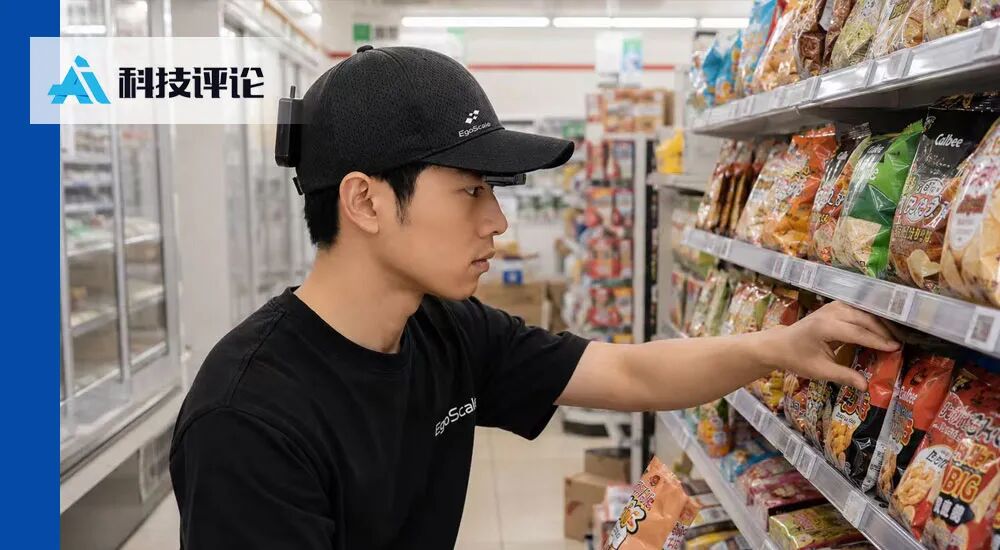
Representative image for 对话 EgoScale 创始人:能赚钱的 Ego 数据公司不超过五家,我是其中之一

对话 EgoScale 创始人:能赚钱的 Ego 数据公司不超过五家,我是其中之一

Rank 57 · Content 60 · Popularity N/A

TL;DR - EgoScale’s founder argues that diverse, structured first-person data—not raw hours—is the key input for general-purpose embodied models. The company claims its automated collection and processing infrastructure enables profitable, training-ready data delivery at scale.

  • EgoScale prioritizes varied scenes, tasks, actions, objects, failures, and recovery behaviors over repetitive high-volume datasets.
  • Its binocular camera hat captures synchronized video and IMU data for up to 10 hours, with same-day wireless upload and feedback.
  • Deliverables include calibration, timestamps, task descriptions, action segmentation, hand poses and trajectories, quality scores, and scene metadata.
  • Fewer than 20 employees manage roughly 1,500 rotating collectors monthly, with a claimed 80% valid-data rate through automated collection, annotation, QA, and operations workflows.

Robotics World Models 1

Representative image for 李飞飞World Labs收购SceniX,物理AI训练正从“采数据”走向“造世界”

李飞飞World Labs收购SceniX,物理AI训练正从“采数据”走向“造世界”

Rank 71 · Content 80 · Popularity N/A

TL;DR - World Labs acquired robotics simulation company SceniX to advance real-to-sim-to-real training, signaling a shift from visually generating 3D worlds to simulating the physical consequences of robot actions.

  • SceniX adds task reconstruction, physical-property recovery, interaction simulation, and robot policy evaluation to World Labs’ world-model capabilities.
  • The R2S2R workflow reconstructs real tasks in simulation, expands them into controlled scenarios, trains and evaluates policies, then deploys them back to physical robots.
  • Effective physical-AI infrastructure requires a closed loop spanning real-world data collection, generative scenario expansion, physics simulation, training, evaluation, and real-world feedback.
  • The emerging competitive metric is not raw data or asset volume, but how many useful training worlds can be created and whether they measurably improve robot capabilities.