🛰️ Daily AI Frontier
⚠ WeChat login expired or unavailable — new articles may be missing. Reconnect WeChat. An upstream outage cannot be fixed by scanning. Latest stored WeChat publication: 2026-08-25.

WeChat reconnect targets werss, while collection still uses wewe. Login alone does not complete the provider cutover.

Twitter/X collection is rate limited. 0 of 13 handles succeeded at the last check. Stored posts remain available; partial coverage is not a complete timeline.
65 works · 3 categories · 20 topics · blog 24 journal 12 arxiv 30 generated 2026-10-14 14:29:27 UTC
Top highlights — Research

LLM Agents 16

Judges Follow the Reference: The Derivation Gap in Verifying Tool-Call Arguments

Rank 90 · Content 100 · Popularity 65

TL;DR - Tool-call judges systematically undervalue correct arguments when their inputs lack explicit textual references supporting those values. DeRef mitigates this “derivation gap” by generating references from the full interaction history before judging.

  • The gap affects inferred values, schema defaults omitted by users, and values whose source text was truncated.
  • All seven evaluated judges exhibited the effect; correct defaults showed the largest gap even without truncation.
  • Controlled tests found judges preferred visible incorrect values over correct values derived from hidden evidence.
  • DeRef improved argument-level AUROC across all tested judges and three benchmarks, reaching 98.40–99.59 AUROC on the controlled test.


SEAR: Self-Evolving Agentic Robotics

Rank 89 · Content 100 · Popularity 64

TL;DR - SEAR is a framework and benchmark for testing whether language-model agents can genuinely improve robotic behavior by retaining code, skills, and memories—not merely by making more attempts. Across simulated and physical tasks, it finds that transferable routines, agentic reasoning, and tool use can matter more than task-specific solutions or multimodal perception alone.

  • Evaluates code-as-policy, live agent-as-policy, and auto-research approaches across seven frontier models, 330 simulated tasks, and five physical tasks.
  • Controlled comparisons separate learning from repeated retries, larger compute budgets, privileged simulator access, familiar tasks, and luck.
  • Longer agent sessions help most on difficult tasks; for easier tasks, repeatedly restarting short attempts can perform similarly.
  • Control code and shared routines transfer across tasks and simulators, while task-specific solutions transfer poorly and agent-designed practice does not fully generalize to novel human-designed real-world scenes.
Representative image for Self-Evolving Agent Harness

Self-Evolving Agent Harness

Rank 88 · Content 95 · Popularity 71

TL;DR - This paper formalizes how an agent can continually improve its software harness—including prompts, memory, workflows, tools, and plugins—without changing model weights. It focuses on safely retaining accepted revisions across runs through validation, regression budgets, and theoretical reliability guarantees.

  • Separates revision targets from the mechanisms used to propose, evaluate, and admit updates.
  • Models harness improvement with evolutionary optimization and analyzes reliability using continual PAC-learning.
  • Derives an expected generalization bound, a retention bound tied to historical regression budgets, and a high-probability admission rule requiring fresh, independent validation data.
  • Argues that deployment needs continual validation and separate safeguards for learning, runtime privileges, and consequential actions.
Representative image for Tev: Scaling Long-Horizon Agentic Environments with Dense Progress Rewards

Tev: Scaling Long-Horizon Agentic Environments with Dense Progress Rewards

Rank 87 · Content 95 · Popularity 70

TL;DR - Tev introduces a dataset and reward-shaping method for training agents on long-horizon tasks with verifiable, stepwise progress signals. The approach improves training efficiency and enables a 27B model to perform competitively on agent benchmarks beyond its training distribution.

  • Tev-Gym contains 1,170 verified task environments across seven domains, with dense, progressive rewards.
  • Its latent-world-first design specifies the correct workflow and expected state after each step, enabling controllable task complexity and measurable progress.
  • Progress-potential reward shaping converts progress metrics into dense per-step rewards, making sparse-reward tasks more tractable.
  • Tev-27B matches GPT-6 Astra and Claude Opus 5 at Pass@5 on ALE-CM and generalizes to Terminal-Bench subsets despite training only on ALE-related data.

ReTerm: Recovery Training for Self-Improving Terminal Agents

Rank 87 · Content 95 · Popularity 68

TL;DR - ReTerm trains terminal agents to recover from command and implementation failures encountered during long-running coding tasks. Its 9B model improves Terminal-Bench 2.0 Pass@1 by 14.6 percentage points over the Qwen3.5-9B base model.

  • ReTerm-10K provides recovery demonstrations for supervised fine-tuning cold starts.
  • ReTerm-GRPO forks from an agent’s failure states, generating multiple independent recovery attempts and learning from task completion outcomes.
  • ReTerm-9B achieves 34.8% Pass@1 on Terminal-Bench 2.0.
  • The method yields higher recovery rates across diverse error categories than standard GRPO training; code, data, and model weights are publicly released.

Can an Agent Learn to Predict Its Own Failure? Outcome-Grounded Confidence Calibration in LLM Agents

Rank 87 · Content 95 · Popularity 67

TL;DR - This paper trains LLM agents to report per-step confidence that predicts the eventual success of long-horizon tasks rather than immediate action correctness. Outcome-grounded calibration could enable more reliable decisions about when agents should proceed, abstain, or defer to humans.

  • Using GRPO and proper scoring rules, rollout-level success labels supervise confidence at every step of an episode.
  • Offline calibration of a Qwen2.5-7B agent raises outcome-prediction AUROC from near chance to 0.68–0.85 across ALFWorld, TextWorld, and WebShop.
  • In online ALFWorld training, expected calibration error falls from 0.42 to below 0.12, while selective execution improves without reducing task success.
  • Most gains come from identifying difficult tasks likely to fail from the first step; distinguishing successful and failed attempts on the same task remains harder.

The Last Remote Sensing Model Built by Humans? Casting Any Earth Observation Task as Recursive Self-Improvement

Rank 85 · Content 95 · Popularity 62

TL;DR - This paper reframes Earth-observation model development as a verifiable workflow in which a general-purpose coding agent recursively builds and improves models. Across four optical, SAR, and multispectral time-series benchmarks, agent-built models reportedly outperform prior state of the art while retaining most accuracy with roughly 1% of the training labels.

  • Each task is specified through a harness defining available resources and a verifier defining success.
  • Verification can use labeled benchmarks, independent sensors, physical models, or repeated observations of the same location.
  • Few-label learning and cross-domain adaptation become different harness-and-verifier configurations rather than separate modeling pipelines.
  • The proposed division of labor has humans design evaluation environments while agents autonomously develop the EO models.
Representative image for Lost in Implicit Routing: How LLM Agents Fail to Load Relevant Skills at Scale

Lost in Implicit Routing: How LLM Agents Fail to Load Relevant Skills at Scale

Rank 81 · Content 100 · Popularity 37

TL;DR - This paper finds that implicit skill routing in LLM agents degrades sharply as irrelevant skills are added, even when the relevant skills remain available. Explicit preselection substantially mitigates this scaling failure.

  • With 1,000 irrelevant skills, loaded-skill recall fell from 73.6% to 27.4%, while the zero-load rate rose from 9.3% to 51.6%.
  • Explicit selection from the same skill library retained 73.9% recall, indicating that skill availability was not the core problem.
  • Masking irrelevant skill descriptions largely restored loading, implicating semantic interference from metadata.
  • Asking agents to plan skill use still underperformed preselection; the paper also examines preselection’s coverage and latency trade-offs.

Autonomous Science Bench: Evaluating AI Agents for Autonomous Scientific Discovery

Rank 81 · Content 100 · Popularity 37

TL;DR - Autonomous Science Bench evaluates AI agents on real, budget-constrained scientific discovery campaigns spanning biology, chemistry, and materials science. Its separate discovery and learning gates expose agent weaknesses that aggregate success rates can hide.

  • Agents iteratively select design batches, receive measurements from a lab service, and train predictive models to rank unseen designs.
  • The initial release includes six campaigns grounded in published experiments rather than fixed datasets or simulations alone.
  • Across 144 trials with eight agent-model configurations, the best configuration succeeded in 67% of trials.
  • The hardest campaign was solved in only 3 of 24 attempts, highlighting substantial room for improvement in both experimental selection and generalization.

Copying Is Not Grounding: Training Faithful Long-Form RAG with Authored-Sentence Credit

Rank 81 · Content 100 · Popularity 37

TL;DR - This paper shows that sentence-level faithfulness rewards for long-form RAG can inadvertently encourage models to copy retrieved passages rather than produce genuinely grounded answers. Its Authored-Sentence Credit method instead rewards supported, informative, non-copied sentences and improves grounded output across models and datasets.

  • Standard faithfulness rewards are vulnerable to reward hacking because copied passage text is almost automatically judged as supported.
  • KL and copy penalties either preserve copying or lead to shorter, less informative answers and refusals.
  • Authored-Sentence Credit moves GRPO rewards and advantages to the sentence level, withholding reinforcement from copied, unsupported, or uninformative sentences.
  • Across four models and five corpora, ASC reduced authored-sentence errors by a median 38% and increased supported authored sentences by 46% under held-out evaluators.

Reliable Memory from Unstable Growth: Curating Self-Written Agent Playbooks with Randomized Experiments

Rank 81 · Content 100 · Popularity 37

TL;DR - Randomized Block Curation (RBC) uses controlled experiments to identify which self-written playbook lessons actually improve an LLM agent’s task success. This makes persistent agent memory more reliable than retaining entire playbooks or trusting agents to curate their own lessons.

  • Existing playbook methods are highly unstable, sometimes performing up to 69.6 points worse than using no playbook.
  • RBC groups related lessons into blocks and randomly includes or excludes each block during practice tasks to estimate its causal effect on success.
  • It grows multiple playbooks and deploys the best-performing curated, complete, or empty playbook based on fresh practice episodes.
  • Across two memory systems, three models, and three benchmarks, RBC achieved 66.9 average success versus 55.5 for whole playbooks, 54.1 without playbooks, and 53.8 with agent-selected lessons.
Representative image for Towards Safe Autonomy for Computer Use

Towards Safe Autonomy for Computer Use

Rank 81 · Content 100 · Popularity 37

TL;DR - SA-CUA is a dual-LLM framework designed to protect autonomous computer-use agents from indirect prompt injection. It creates a deterministic trust boundary between trusted interface regions and attacker-controlled content while reportedly maintaining zero attack success and higher utility than CaMeL-CUA.

  • Uses accessibility-tree-derived rules to identify trusted screen regions visible to a privileged LLM.
  • Separates trusted and untrusted content despite the ambiguity of screenshot-based interfaces and click actions.
  • Verifies information through trusted channels before allowing values to cross into the trusted domain.
  • Requires human input primarily for initial task specification, avoiding repeated confirmations and confirmation fatigue.
Representative image for The Last Mile of Coding Agents for Long-Document Tasks: An Empirical Study on Clinical Trial Protocol Digitization

The Last Mile of Coding Agents for Long-Document Tasks: An Empirical Study on Clinical Trial Protocol Digitization

Rank 81 · Content 100 · Popularity 37

TL;DR - TrialPD-Bench evaluates coding agents on converting long clinical-trial protocol PDFs into structured data, finding that even top systems often locate the right evidence but fail to transcribe and structure it accurately. A domain-specific harness with task skills and verification substantially narrows this “last mile” gap.

  • TrialPD-Bench contains 150 expert-annotated, publicly available protocol PDFs spanning four task categories.
  • The study evaluates nine proprietary and open-weight models across five coding-agent harnesses, measuring output quality, evidence recall, behavior, and cost.
  • Agent traces show that evidence retrieval is usually successful; errors primarily arise during transcription and structuring.
  • TrialScribe improves a locally served open-weight model by 6.2–59.4 points across eight metrics, matching or exceeding tested proprietary models such as GPT-5.6-Sol.

Kairos: Transactional Security Enforcement at the System Boundary for LLM Agents

Rank 81 · Content 100 · Popularity 37

TL;DR - Kairos is a reference monitor that mitigates indirect prompt injection by intercepting an LLM agent’s file and network effects at its isolation boundary. It preserves benign utility while sharply reducing successful attacks.

  • Treats tool calls, shell commands, and agent-written scripts uniformly as file and network operations, enabling confinement of opaque, unmodified agents.
  • Deterministically handles effects covered by declarative source-trust policies while deferring ambiguous effects during speculative execution.
  • Uses a bounded-authority oracle, such as a human or language model, to approve or reject deferred effects based on the accumulated execution trace.
  • On AgentDojo, Kairos reduced attack success from 47.0% to 2.7% while maintaining undefended-agent benign utility.

Knowing the User Is Not Knowing What We Established: Grounding Awareness in Personal Agents

Rank 78 · Content 95 · Popularity 37

TL;DR - This paper introduces Grounding Awareness, the ability of personal agents to distinguish accepted arrangements from unacknowledged proposals and apply them only within their intended scope. It shows that strong or persistent memory can amplify unsafe actions, while a lightweight, training-free Grounding Layer substantially improves behavior.

  • A controlled benchmark tests whether agents track proposals as accepted, unacknowledged, revised, or scoped.
  • Strong memory performance does not reliably translate into correct grounding awareness.
  • More complete user information and persistent memory can cause unacknowledged proposals to be executed as instructions.
  • The proposed Grounding Layer explicitly tracks grounding status and checks consequential actions without changing models or memory systems.
Representative image for Configuring RAG Systems: What Breaks, Where Originates, and How to Fix

Configuring RAG Systems: What Breaks, Where Originates, and How to Fix

Rank 78 · Content 95 · Popularity 37

TL;DR - This empirical study analyzes 654 configuration issues across 10 real-world RAG systems, categorizing their symptoms, root causes, affected pipeline stages, and fixes. It matters because failures may surface far from their originating stage, complicating diagnosis.

  • Provides a systematic taxonomy of RAG configuration failures and repair patterns.
  • Finds that symptoms commonly appear in early or late pipeline stages, while their root causes may originate elsewhere.
  • Connects configuration problems to RAG-specific stages, including external vector and graph database components.
  • Distills nine actionable recommendations for testing, localizing, and fixing configuration issues.

Medical/Healthcare AI 5

How Safe Is ChatGPT Health Advice? Evidence from Real User Conversations in Four Global South Countries

Rank 81 · Content 100 · Popularity 37

TL;DR - A study of 15,555 real health-related ChatGPT conversations from users in four Global South countries found roughly one in five responses carried high safety risk. Accounting for users’ accumulated context exposed substantially more unsafe advice, suggesting synthetic or context-free evaluations underestimate real-world harms.

  • The dataset covers 202,590 donated conversations from 1,252 users in India, Nigeria, Brazil, and Pakistan, collected from December 2022 to February 2026.
  • High-risk responses clustered around symptom and condition queries, including unsafe medication guidance, harmful self-diagnosis, missing warnings, over-reliance encouragement, and inadequate professional referrals.
  • User-context-aware assessment increased the high-risk share by 13–17 percentage points.
  • About one-quarter of conversations judged safe in isolation became unsafe when evaluated for the specific user.
Representative image for PlanPath: Exploration-Guided Orchestration for Patient-Level Pathology Reasoning

PlanPath: Exploration-Guided Orchestration for Patient-Level Pathology Reasoning

Rank 78 · Content 95 · Popularity 37

TL;DR - PlanPath is an agentic framework for patient-level pathology VQA that plans evidence collection across multiple whole-slide images and combines quantitative tissue- and cell-level findings. It improves accuracy over the strongest baseline on new renal and gastric cancer datasets.

  • Converts clinical questions into exploration plans that identify relevant evidence and route analysis to likely slides.
  • Uses coarse-to-fine analysis, progressing from tissue architecture to individual cells and aggregating counts, proportions, and extents.
  • Introduces two pathologist-verified patient-level VQA datasets averaging 15 slides per patient.
  • Outperforms the strongest baseline by 9.4% and 12.1% overall accuracy on the renal and gastric cancer datasets, respectively.

Can GLP-1s heal the brain? Obesity drugs get a makeover for addiction and depression

Rank 61 · Content 70 · Popularity 42

TL;DR - Nature reports that GLP-1-inspired compounds are being investigated beyond obesity, including for addiction, depression, schizophrenia, and Parkinson’s disease. The item signals widening clinical interest but provides no trial results or evidence of efficacy.

  • The compounds build on drugs originally developed for diabetes and weight loss.
  • Researchers are testing potential applications across psychiatric, neurological, and substance-use disorders.
  • The provided excerpt does not describe mechanisms, study designs, trial phases, or outcomes.

Author Correction: Parkinson’s disease as a somato-cognitive action network disorder

Rank 23 · Content 15 · Popularity 42

TL;DR - This is an author correction to a Nature paper framing Parkinson’s disease as a disorder of the somato-cognitive action network. The provided content does not specify what was corrected or whether the paper’s findings changed.

  • Published online by Nature on 13 October 2026.
  • The correction concerns research on Parkinson’s disease and brain-network dysfunction.
  • No corrected data, methods, results, or text are included in the provided excerpt.
  • The significance of the correction cannot be assessed from this metadata alone.

Author Correction: Timing and trajectory of BCR::ABL1 -driven chronic myeloid leukaemia

Rank 23 · Content 15 · Popularity 42

TL;DR - This is an author correction to a Nature study on the timing and progression of BCR::ABL1-driven chronic myeloid leukaemia. The provided content does not specify what was corrected or whether the study’s conclusions changed.

  • Published online on 12 October 2026 in Nature.
  • The underlying research concerns the origin and disease trajectory of BCR::ABL1-driven chronic myeloid leukaemia.
  • No correction details, methods, or revised findings are included in the provided excerpt.

Bioinformatics AI 3

MassNet: billion-scale AI-ready mass spectral corpus empowering scalable deep learning in proteomics

Rank 89 · Content 100 · Popularity 63

TL;DR - MassNet is an AI-ready proteomics corpus containing 1.5 billion tandem mass spectra across 35 species. It supports large-scale model development and underpins XuanjiNovo, a nonautoregressive transformer that improves de novo peptide sequencing.

  • Introduces a billion-scale MS/MS dataset spanning diverse species.
  • Provides MSDT, a standardized tensor-based storage format for data reuse and scalable learning.
  • Demonstrates the corpus through XuanjiNovo, a nonautoregressive transformer for peptide sequencing.
  • Reports that XuanjiNovo substantially outperforms prior methods.
Representative image for ProTok: Unified Protein Tokenization via Modular Multi-Codebook Quantization

ProTok: Unified Protein Tokenization via Modular Multi-Codebook Quantization

Rank 81 · Content 100 · Popularity 37

TL;DR - ProTok is a unified protein tokenizer that encodes sequence, structure, and functional annotations into a shared modular vocabulary. Its tokens improve structural benchmarks, zero-shot functional retrieval, and joint backbone-sequence generation while retaining strong reconstruction quality.

  • Uses product quantization, modality-specific codebook groups, and modality dropout to support any subset of input modalities with one checkpoint.
  • Achieves an average rank of 1.4 across 28 StructTokenBench test splits, ranking first on 21 and top-two on 27.
  • Reaches 0.939 lDDT reconstruction on CATH 4.2 and leads baseline structure tokenizers in zero-shot functional retrieval.
  • A compact language model trained on ProTok tokens produces designable backbones in 52% of samples, versus 21% for a parameter-matched GeoBPE baseline.

LoL-align: sensitive and fast probabilistic protein structure alignment

Rank 78 · Content 85 · Popularity 60

TL;DR - LoL-align is a probabilistic, distance-based algorithm for protein structure alignment. Its iterative local log-odds optimization improves sensitivity to remote homologs and alignment quality compared with available methods.

  • Uses probabilistic distance information to align protein structures.
  • Iteratively optimizes a local log-odds alignment score.
  • Targets both higher sensitivity and faster structure comparison.
  • Could improve detection and analysis of evolutionarily distant protein relationships.

LLMs & Foundation Models 4

Enabling Token-wise Importance Sampling in Off-Policy RLVR with Proximal KL Regularization

Rank 85 · Content 95 · Popularity 62

TL;DR - Proximal KL is an off-policy RLVR method that enables token-wise importance correction without full-response weights or a fitted critic. It improves robustness to stale or reused rollout data and outperforms GRPO across seven matched off-policy comparisons on Qwen3 models.

  • The theory shows that full future-KL credit recovers the exact proximal optimizer as the unique stationary policy under coverage and local expressiveness conditions.
  • The method separates the proximal reference from the sampling policy and replaces PPO clipping with bounded future-KL credit.
  • Across Qwen3-1.7B and Qwen3-4B experiments, it improved micro-averaged accuracy over eight math benchmarks by up to 2.58% versus GRPO.
  • Token-wise correction beat sequence-level and unweighted alternatives; truncating future-KL credit reduced correction variance and improved AIME24 mean@16 and pass@16.

Depth Memory

Rank 85 · Content 95 · Popularity 60

TL;DR - Depth Memory reframes representation mixing across transformer layers as information storage and retrieval, unifying PreLN, mHC, and AttnRes. Its Linear Depth Memory architecture improves language-model perplexity at 400M and 1.5B parameters while supporting hardware-aware, memory-efficient execution.

  • LDM uses recursive least squares to retrieve information across network depth.
  • It propagates residual, linear associative memory, and inverse covariance streams between layers.
  • A hardware-aware implementation reduces peak activation memory and memory traffic.
  • LDM reports lower perplexity than PreLN, mHC, and AttnRes baselines, with competitive zero-shot accuracy.

Two Clocks: Why Larger Rollout Batches Learn Slower but Fail on Schedule in Reinforcement Learning with Verifiable Rewards

Rank 81 · Content 100 · Popularity 37

TL;DR - This paper explains why scaling RLVR rollout batches with a square-root learning-rate rule can reduce sample efficiency even while preserving a roughly fixed time-to-failure in samples. It proposes a two-stage batch schedule that improves progress before training collapse.

  • A “two-clock” framework separates samples required for learning progress from samples consumed before collapse.
  • Larger batches mean fewer, longer optimizer updates, increasing curvature losses beyond a learning-rate-dependent critical batch.
  • GRPO experiments on Qwen2.5 models across a 16× batch range support both the progress slowdown and approximately batch-invariant failure clock.
  • Ratio clipping delays failure but does not eliminate the progress gap; the derived schedule starts below the critical batch and switches to a larger batch before failure.
Representative image for Does self-distillation improve reasoning?

Does self-distillation improve reasoning?

Rank 78 · Content 95 · Popularity 37

TL;DR - This paper re-evaluates self-distillation for reasoning and finds that reported improvements often fail on unseen problems. Gains appear driven mainly by overfitting or transferring existing reasoning behavior rather than effectively exploiting privileged information.

  • SDPO and OPSD are tested across code, science, tool-use, and mathematical reasoning tasks.
  • Experiments span Qwen3 models from 1.7B to 14B parameters and OLMo-3-7B.
  • Self-distillation gradients align weakly with reward-optimizing policy gradients, casting doubt on their effectiveness for policy improvement.
  • Reliably using correct answers or environmental feedback to improve reasoning remains an open challenge.

Multimodal & Generative 2

Representative image for PixelMoE: Scaling Pixel-Space Diffusion with LLM-Style Mixture-of-Experts

PixelMoE: Scaling Pixel-Space Diffusion with LLM-Style Mixture-of-Experts

Rank 86 · Content 95 · Popularity 65

TL;DR - PixelMoE applies standard LLM-style mixture-of-experts routing to pixel-space diffusion, increasing model capacity without proportionally increasing active computation. It outperforms dense counterparts at comparable active parameter counts and achieves competitive ImageNet-1K generation quality.

  • Combines token-choice routing, fine-grained routed experts, a shared expert, and bias-based load balancing without diffusion-specific routing or auxiliary objectives.
  • Introduces Pixel-Space Hierarchical Flow Matching, progressively increasing spatial resolution from global structure formation to detail refinement.
  • Achieves FID 1.47 at 256×256 and 1.53 at 512×512 on class-conditional ImageNet-1K.
  • Results do not rely on representation alignment or perceptual losses; code and models are planned for release.

Meta-Video: Efficient Standardized Evaluation for Video Understanding

Rank 78 · Content 95 · Popularity 37

TL;DR - Meta-Video is a standardized, compact benchmark for evaluating video-language models. It addresses evaluation variance of up to 19.5 percentage points caused solely by configuration choices while enabling faster, more reproducible comparisons.

  • Meta-Video contains 1,000 balanced questions across 791 videos, covering diverse tasks and video durations.
  • The benchmark largely preserves full-suite model rankings while providing a 5× inference speedup in frame-count sweep experiments.
  • The authors systematically analyze frame sampling, preprocessing, input formatting, and other evaluation choices to derive best practices and reporting standards.
  • Reproducible reference scores are released for five models across seven benchmarks.

Efficiency & Systems 2

Representative image for Just Respect the Semantics: Image-Token Compression via Pre-LLM Semantic Variable-Resolution Tokenization and In-LLM Relevance Pruning

Just Respect the Semantics: Image-Token Compression via Pre-LLM Semantic Variable-Resolution Tokenization and In-LLM Relevance Pruning

Rank 78 · Content 95 · Popularity 37

TL;DR - Varest compresses image tokens in vision-language models using semantic variable-resolution merging before the LLM and relevance pruning within it. It retains 86.10–92.33% of full-token performance while using only 5.56% of the original layer-averaged image-token count.

  • Object and text localizers preserve fine detail around boundaries and literal text while coarsening semantically coherent regions.
  • Learned [REL] registers prune less relevant visual tokens after early decoder processing.
  • Budget-diverse training allows one checkpoint to support multiple compression levels for each backbone.
  • Across three backbones and 13 benchmarks, Varest surpasses 15 baselines in mean performance retention at every evaluated token budget.

Rethinking Quality in Large Language Model Routing: Security-Conditioned Model-and-Budget Selection

Rank 78 · Content 95 · Popularity 37

TL;DR - SCRouter jointly selects an LLM and output-token budget based on query-specific utility, security, and cost. It improves routing performance on mixed workloads where a single quality metric cannot capture both helpfulness and safe behavior.

  • Predicts utility and security separately for each model-budget combination, incorporating the probability that generation finishes within budget.
  • Uses a lightweight probe to dynamically weight utility versus security for each query.
  • SCRouterBench contains 38,869 queries across nine security dimensions, evaluated over 144 combinations of 12 models and 12 token budgets, plus 2,753 out-of-domain queries.
  • Outperforms baselines by 13–29 points in-domain and 19–23 points out-of-domain.

Embodied AI 1

Representative image for 宾大茅佳源:从单次演示到 83% 真机泛化,破解具身智能数据困局|IROS 2026

宾大茅佳源:从单次演示到 83% 真机泛化,破解具身智能数据困局|IROS 2026

Rank 75 · Content 85 · Popularity 50

TL;DR - An IROS 2026 presentation describes neuro-symbolic and video-action approaches that improve robotic generalization with far less demonstration data. A Temporal Ratio (TR) diagnostic and adaptive guidance raised real-world out-of-distribution success to 83% by making the action head better use predicted future states.

  • RAPID converts one human demonstration into object-centric constraint programs, using a coding agent and Real2Sim evaluator to iteratively reject physically infeasible behavior.
  • The framework decomposes manipulation into reusable primitives and constraint optimization, enabling complex non-grasping tasks without hundreds of teleoperation trajectories.
  • Joint video-action models often exhibit a mechanism gap: video predictions generalize, but the action head may ignore their future features and fail on compositional OOD tasks.
  • Peak TR—the action head’s attention to future versus current frames—correlated with OOD performance; TR-adaptive language and planning guidance improved real-robot success from 71.8% to 83%, versus roughly 12% for Cosmos-Policy.

Microbial Plastic Degradation 1

When microbes degrade plastic, where does it go?

Rank 44 · Content 45 · Popularity 42

TL;DR - This Nature item concerns the fate of plastic after microbial degradation. Because only the title and publication metadata are provided, its specific findings and methods cannot be determined.

  • Published online in Nature on 13 October 2026.
  • Focuses on what plastic-derived material becomes or where it goes after microbes break it down.
  • The provided content does not identify the microbes, plastic types, degradation pathways, or experimental results.

Robot Learning 1

Representative image for LoopWAM: Closed-Loop Generalist Policy Improvement from Deployment Rollouts

LoopWAM: Closed-Loop Generalist Policy Improvement from Deployment Rollouts

Rank 81 · Content 100 · Popularity 37

TL;DR - LoopWAM is a closed-loop world-action model that improves generalist robot policies using mixed-quality deployment rollouts, including failures. It substantially raises success rates across multiple robotics benchmarks and a shirt-folding task.

  • Quality steering and quality-weighted supervision preserve video learning from all rollouts while limiting imitation of poor actions.
  • Parallel denoising lets video and action tokens interact, enabling predicted physical consequences to guide action generation.
  • Three deployment-training rounds improved RoboChallenge Table30-V2 success from 23.67% to 43.33%.
  • LoopWAM achieved 94.5% average success on RoboTwin 2.0, 49.5% overall on RoboCasa365, and improved shirt-folding success from 13.20% to 55.56%.

Robot Self-Improvement 1

Representative image for Who Improves the Robot? Toward Physical Recursive Self-Improvement

Who Improves the Robot? Toward Physical Recursive Self-Improvement

Rank 85 · Content 95 · Popularity 61

TL;DR - This paper formalizes Physical Recursive Self-Improvement, where robots use physical experience to make lasting improvements to both their capabilities and how they improve. Its survey finds that existing work does not yet achieve independently verified recursive gains.

  • Introduces an L0–L5 framework separating capability-level from meta-level updates and within-task from across-task gains.
  • Reserves L5 for independently verified evidence that successive improvement cycles become more effective.
  • Identifies noisy sensing, continuous dynamics, costly trials, and irreversible consequences as central physical-world obstacles.
  • Prioritizes reliable feedback, causal attribution, safety preservation, and standardized benchmarks for future research.

Robot World Models 1

Representative image for WorldOracle: Benchmarking Action-Conditioned World Models against Real-World Executions

WorldOracle: Benchmarking Action-Conditioned World Models against Real-World Executions

Rank 85 · Content 95 · Popularity 62

TL;DR - WorldOracle is a benchmark for testing whether action-conditioned world models accurately predict real-world robotic manipulation outcomes. It matters because it evaluates simulated rollouts against paired physical executions rather than relying solely on synthetic references.

  • Measures physical-state correctness, spatial alignment, interaction-area fidelity, and multi-view action coherence.
  • Uses identical initial observations and low-level action sequences for predicted and real-world rollouts.
  • Includes long, multi-segment episodes spanning successful and failed executions across different dynamics and embodiments.
  • Evaluation of seven representative models reveals differing strengths and failure modes; datasets, code, and a leaderboard are planned for release.
Top highlights — Industry & News

LLM Agents 10

Representative image for 阶跃终端首款「Agent手机」STEPX Neo正式发布,创客先行

阶跃终端首款「Agent手机」STEPX Neo正式发布,创客先行

Rank 68 · Content 75 · Popularity N/A

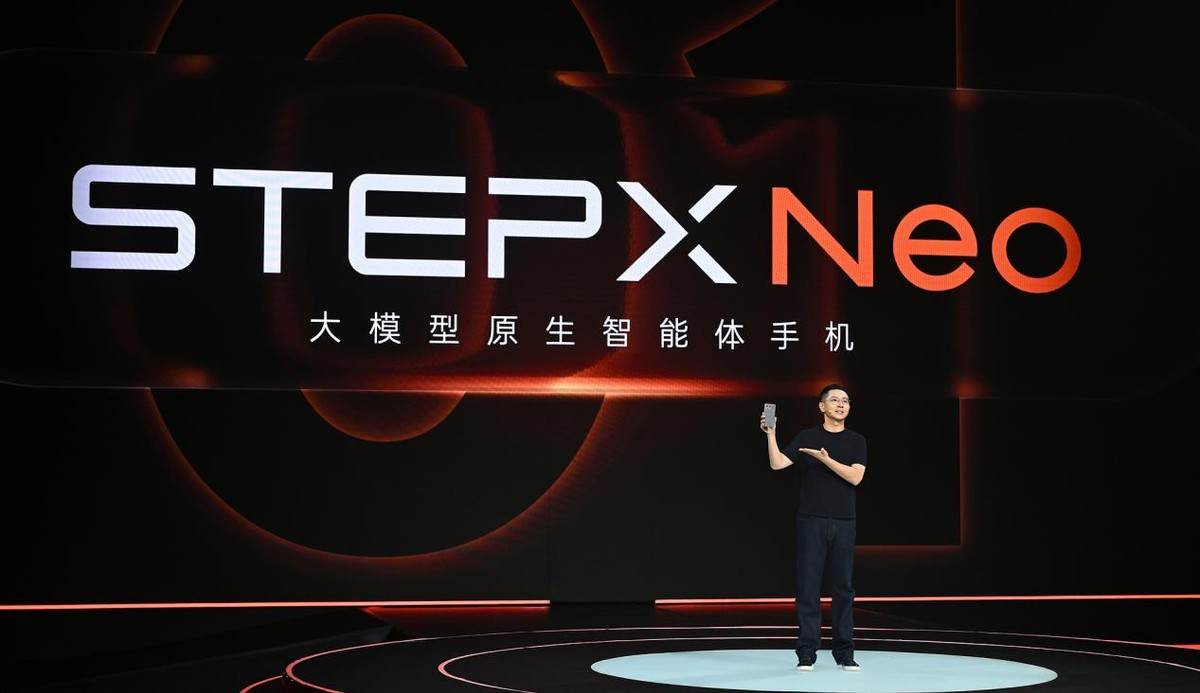
TL;DR - STEPX launched the 3,999-yuan Neo, an agent-native smartphone combining its Amoo personal agent, Step AOS, and dedicated hardware. It matters because the agent can invoke system capabilities, third-party services, and developer-built tools directly rather than relying on fragile GUI automation.

  • Step AOS supports iterative task execution, autonomous tool calling, Skills, MCP tools, and a system-level interface for monitoring long-running background tasks.
  • H2A2A and MCP protocols connect Amoo with third-party services, while Step Studio lets developers build and deploy apps, agents, and Skills to the phone.
  • System-level safeguards include redaction of cloud-bound data, auditable tool-call histories, confirmation for high-risk actions, revocable permissions, and recovery of agent-modified data.
  • The early edition includes a 12-month token plan with a reported monthly allowance of 10 billion tokens.
Representative image for 告别资料散落,让知识持续积累:openJiuwen首发个人知识空间,重塑个人办公智能体新体验!

告别资料散落,让知识持续积累:openJiuwen首发个人知识空间,重塑个人办公智能体新体验!

Rank 68 · Content 75 · Popularity N/A

TL;DR - openJiuwen launched a personal knowledge space for its WorkSwarm office agent that continuously converts distributed user data into structured, reusable knowledge. The company reports that this reduces repeated retrieval work, improving task completion while cutting latency and token usage.

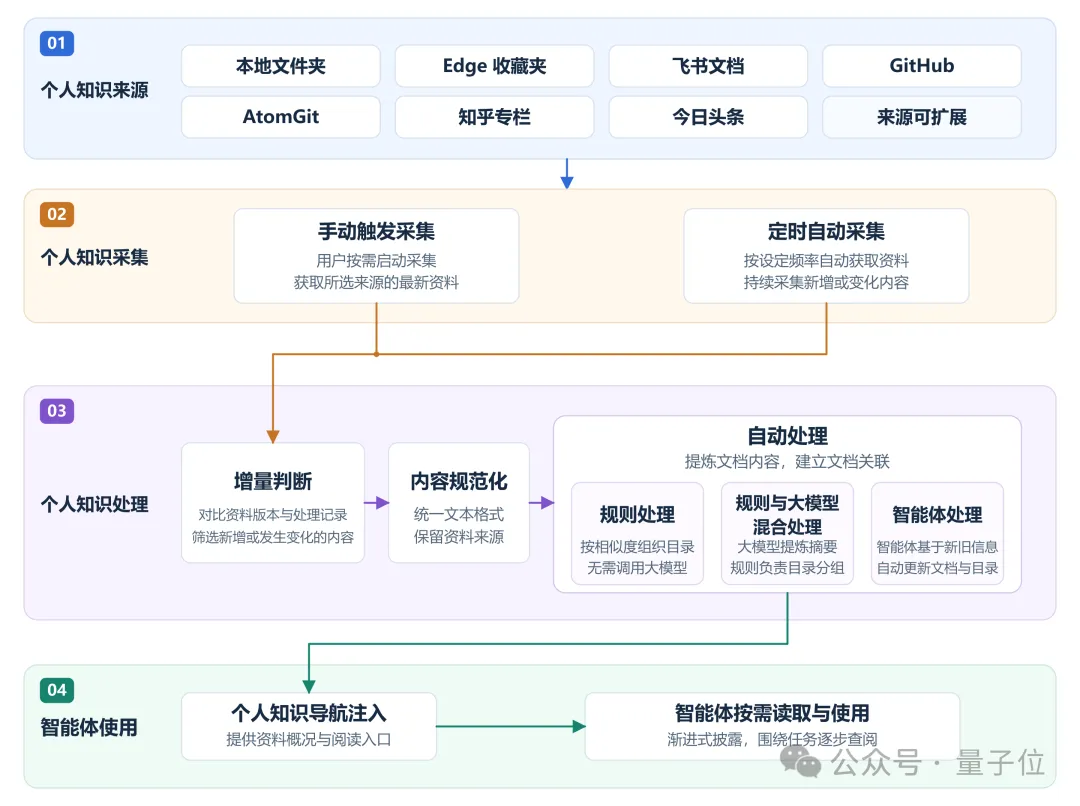
  • Supports incremental manual or scheduled ingestion from local folders, Edge bookmarks, Feishu documents, GitHub, AtomGit, Zhihu, and Toutiao.
  • Organizes content into linked Markdown pages with source citations using rules, a rules-plus-LLM pipeline, or fully agentic processing.
  • Uses progressive disclosure so agents first inspect a knowledge overview, then retrieve only the pages relevant to the current task.
  • On openJiuwen’s 25-question internal benchmark, the feature reportedly improved task pass rate by 32%, reduced task time by 76.2%, and cut task-stage token consumption by 84.1%.
Representative image for 响应速度比Claude Code快3倍,实现真正无限上下文!APUS AI开源Reflex Agent

响应速度比Claude Code快3倍,实现真正无限上下文!APUS AI开源Reflex Agent

Rank 64 · Content 70 · Popularity N/A

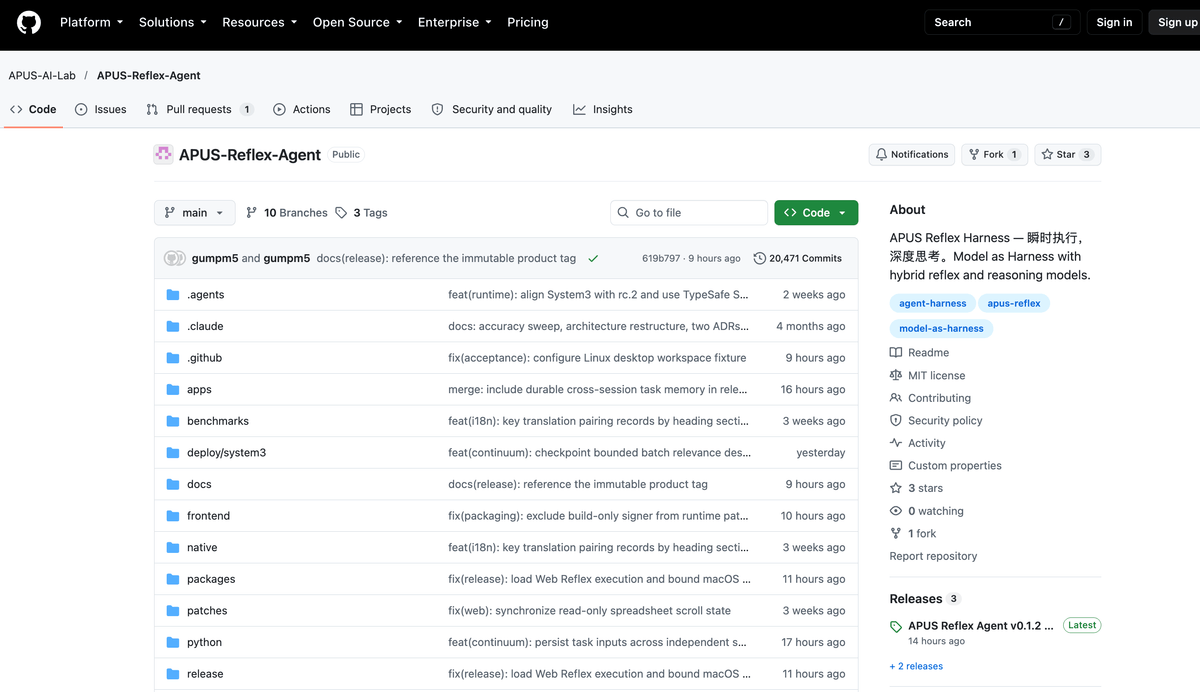
TL;DR - APUS AI open-sourced Reflex Agent, a personal-agent system that uses a decision model and persistent memory engine to support long-running tasks. It claims up to 3× faster responses than Claude Code and Codex in APUS AI’s own tests, though no independent validation is provided.

  • The Reflex decision model handles model routing, skill selection, result review, and execution supervision rather than relying mainly on hard-coded harness logic and prompts.
  • Its “Loop Working” mechanism repeatedly cycles through decision, execution, feedback, and re-decision to pursue user goals.
  • The Continuum memory engine retrieves original historical task information, reducing reliance on compressed summaries; “infinite context” refers to persistent agent memory, not a larger per-call context window.
  • Released under the MIT license, Reflex Agent is available as desktop, web, and SDK offerings.
Representative image for 腾讯WorkBuddy企业版上线「可观测中心」破解规模化用Agent四大痛点

腾讯WorkBuddy企业版上线「可观测中心」破解规模化用Agent四大痛点

Rank 64 · Content 70 · Popularity N/A

TL;DR - Tencent launched a public beta of WorkBuddy Enterprise’s “Observability Center,” giving organizations centralized visibility into agent usage, cost, performance, quality, and execution traces. It aims to make large-scale enterprise agent deployments easier to audit, troubleshoot, and optimize.

  • Real-time dashboards track conversation volume, active users, credit consumption, response latency, and anomalies.
  • Session tracing breaks down usage and costs by dimensions such as department and model, supporting reconciliation and cost analysis.
  • Detailed execution traces identify specific nodes causing slow, erroneous, or expensive behavior.
  • Administrators can use these findings to refine prompts, models, and tools while supporting security audits and continuous agent improvement.

Run fast, private agents on-device with LFM2.5-24B-A2B

Rank 64 · Content 70 · Popularity N/A

TL;DR - Hugging Face highlights LFM2.5-24B-A2B as a model for running fast, private AI agents directly on devices. Only the title was provided, so specific capabilities, benchmarks, and hardware requirements cannot be verified.

  • The announcement emphasizes local, on-device agent execution.
  • On-device processing may improve privacy by reducing reliance on remote services.
  • The title positions performance and privacy as the model’s main benefits.
  • No technical results or implementation details were included in the provided content.
Representative image for STEPX首款大模型原生智能体手机STEPX Neo正式发布

STEPX首款大模型原生智能体手机STEPX Neo正式发布

Rank 64 · Content 70 · Popularity N/A

TL;DR - STEPX launched the ¥3,999 Neo smartphone, built around its Amoo personal agent and agent-native Step AOS 1.0. The device combines on-device and cloud models with system-level controls, persistent memory, and cross-application task execution, positioning AI agents as the phone’s core interface rather than an add-on.

  • Step AOS integrates long-term dual-domain memory, task scheduling, atomic system capabilities, and user-manageable permissions and rollback controls.
  • Amoo uses on-device models for fast or offline actions and cloud models to plan, decompose, and coordinate more complex multi-app tasks.
  • Step Studio lets developers generate apps, agents, games, and skills with natural language while accessing device hardware and external services through MCP and A2A.
  • STEPX reports integrations with nearly 100 companies and products, including Alipay, Tencent, Ctrip, Didi, CapCut, Amap, and Meituan.
Representative image for 调度效率提升80%!商汤大装置助力上海量子城市首批智能体落地

调度效率提升80%!商汤大装置助力上海量子城市首批智能体落地

Rank 64 · Content 70 · Popularity N/A

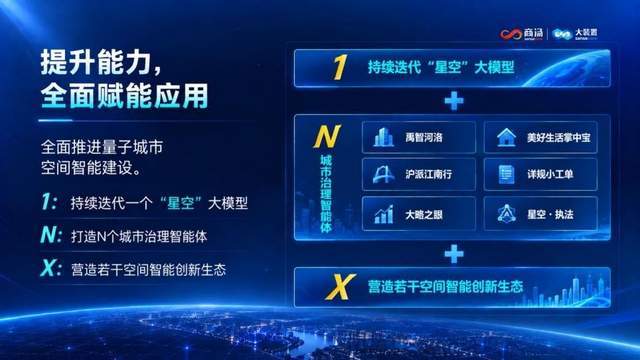
TL;DR - SenseTime and Shanghai’s planning authority deployed the first agents powered by the upgraded Yunyu Xingkong spatial model for flood control, spatial analysis, and urban planning. The rollout matters because it embeds model reasoning, tools, and multimodal geospatial data directly into municipal workflows.

  • The model combines industry knowledge with maps, imagery, 3D models, sensor feeds, and other spatiotemporal data through an object-relationship-action framework.
  • A shared agent platform provides model routing, task decomposition, memory, tool use, workflow orchestration, multi-agent collaboration, and reusable spatial-analysis skills.
  • The “Yuzhi Heluo” flood-control agent reportedly improved spatial computing, dynamic simulation, and dispatch efficiency by 65%, 70%, and 80%, respectively.
  • Other deployed agents enable natural-language analysis of 18 years of urban data and assist with planning reviews and urban-renewal workflows.

The EU’s next chapter in AI is agentic

Rank 64 · Content 70 · Popularity N/A

TL;DR - OpenAI highlights growing adoption of agentic AI among EU enterprises and small businesses. The brief suggests that deeper integration of autonomous AI workflows could unlock additional business value, though no specific metrics or technical results are provided.

  • Focuses on agentic AI adoption across the European Union.
  • Covers both large enterprises and small businesses.
  • Argues that moving beyond shallow adoption toward deeper use may increase value.
  • The provided content does not detail specific agents, use cases, or adoption figures.
Representative image for 腾讯AI办公再进一步,企业微信与WorkBuddy深度联合

腾讯AI办公再进一步,企业微信与WorkBuddy深度联合

Rank 61 · Content 65 · Popularity N/A

TL;DR - Tencent has deeply integrated its WorkBuddy AI agent with WeCom, giving enterprises conversational task execution grounded in authorized workplace data. The integration brings centralized deployment, permissions, usage management, and multi-agent capabilities into an established platform serving millions of organizations.

  • WorkBuddy appears as a chatbot in WeCom’s contact list and shares its account system, eliminating platform changes or data migration.
  • With enterprise authorization, the agent can use context from messages, documents, meetings, cloud storage, customer interactions, and other workplace services.
  • Administrators can allocate accounts, manage usage and compute purchases, and restrict access to sensitive information based on employee roles.
  • The platform supports multiple models and agents, plus shared data and management across Tencent’s broader office suite.

1688全面接入AI电商工作台Accio

Rank 54 · Content 55 · Popularity N/A

TL;DR - Alibaba’s 1688 marketplace has integrated the Accio AI commerce workspace, making AI-assisted procurement, sales operations, and supplier tools available to its buyers and manufacturers. The rollout could expand agent-like commerce workflows across China’s major e-commerce platforms.

  • Accio is available to more than 100 million annual active buyers and over 1 million manufacturers on 1688.
  • Its procurement assistant supports global sourcing, price comparison, and supplier negotiations.
  • Its commerce manager connects workflows across Taobao, Tmall, Douyin, Pinduoduo, and JD.com.
  • Manufacturers receive scenario-specific AI capabilities for ready-stock, customized, and cross-border business.

LLMs & Foundation Models 2

Developing Gemini 4 Argon responsibly and safely

Rank 64 · Content 70 · Popularity N/A

TL;DR - Google DeepMind appears to outline its responsible-development and safety approach for Gemini 4 Argon. Because only the title and source are provided, no specific safeguards, evaluations, or results can be confirmed.

  • The item concerns the development of a Gemini foundation model.
  • Its stated emphasis is responsible development and safety.
  • No technical methods, benchmark results, deployment policies, or risk mitigations are available in the provided content.

Gemini 4 Argon: Built to solve your hardest problems

Rank 61 · Content 65 · Popularity N/A

TL;DR - Google DeepMind appears to be announcing Gemini 4 Argon, positioned as a model for solving difficult problems. Because no article content or technical evidence was provided, its capabilities and significance cannot be assessed.

  • The title frames Gemini 4 Argon as a new Gemini model focused on challenging tasks.
  • No architecture, benchmarks, availability details, or performance results are included.
  • Any specific capability or improvement beyond that positioning remains unverified from the provided material.

Multimodal & Generative 5

Representative image for iPhone断网跑35B多模态!国产开源新模型,只占3G内存

iPhone断网跑35B多模态!国产开源新模型,只占3G内存

Rank 78 · Content 90 · Popularity N/A

TL;DR - ModelBest and OpenBMB released MiniCPM-V 4.7, an open-source multimodal model family designed for efficient on-device inference. Its 35B-A3B MoE variant reportedly runs offline on phones using about 3 GB of memory while delivering up to 13 tokens/s on an iPhone 17 Pro Max.

  • The 35B-A3B model activates roughly 3B parameters per token; a smaller 1.3B version targets OCR, mathematics, and video understanding.
  • Lookahead Expert Scheduling predicts and preloads likely experts from flash storage, overlapping I/O with computation while preserving the model’s original routing decisions.
  • Layer-wise mixed-precision quantization, contiguous weight layouts, speculative decoding, and up to 16× visual-token compression further reduce memory and inference costs.
  • MiniCPM-V 4.7 supports iOS, Android, and HarmonyOS, plus inference frameworks including SGLang, vLLM, llama.cpp, and Ollama.
Representative image for 国内最年轻AI教授创业:要让世界模型走向全身全模态

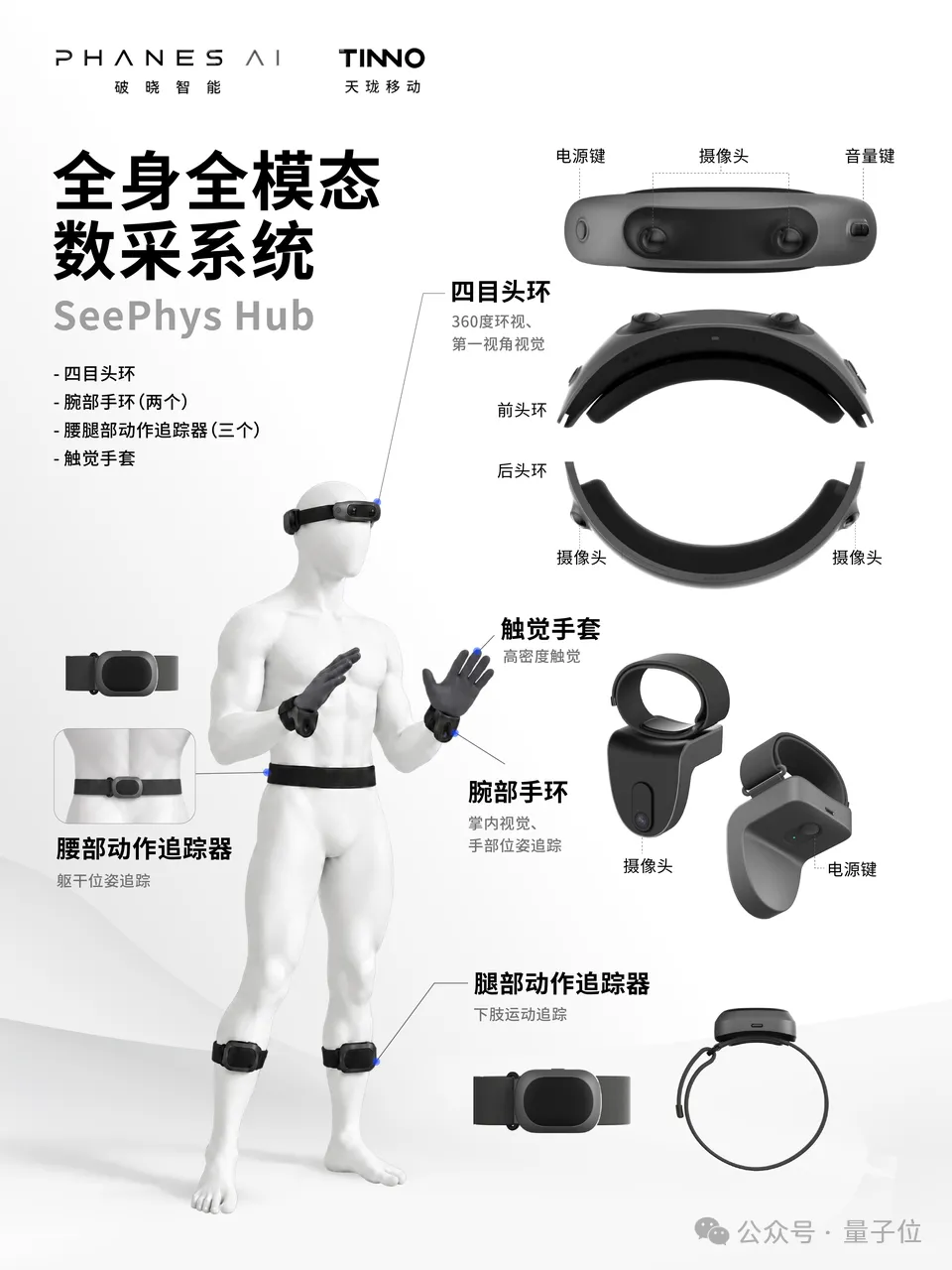
国内最年轻AI教授创业:要让世界模型走向全身全模态 🔗 2 sources

Rank 68 · Content 75 · Popularity N/A

TL;DR — PHANES AI 与天珑移动推出 SeePhys Hub,通过可穿戴设备同步采集第一视角视频、全身动作及可选触觉压力数据,为具身智能训练提供兼具规模化与物理交互信息的数据基础,目标是推动全身、全模态世界模型落地。

  • 硬件包括四摄像头 360° 头环、两台腕部设备、三个腰腿追踪器,以及可选的触觉手套。
  • 系统融合视觉、IMU、UWB 测距和压力信号,用于重建全身姿态与物理交互,宣称同步精度可达 0.5 毫秒以内。
  • 软件流程覆盖数据清洗、动作切分、语义标注、姿态与手部追踪、场景重建,以及将人类动作重定向到机器人。
  • PHANES AI 计划于 2027 年推出全模态世界模型,优先面向工业、餐饮和零售场景,而非自行开发机器人硬件。

注:量子位聚焦 SeePhys Hub 与世界模型;雷峰网摘要实际讨论豆包工作的跨产品数据导入及协作功能,与该工作主题不一致,因而未合并为技术事实。

Higgsfield takes AI video from 1 minute to over 10

Rank 68 · Content 75 · Popularity N/A

TL;DR - Higgsfield is extending its AI video capabilities from roughly one-minute clips to videos exceeding 10 minutes using GPT-6 Astra. The update also combines GPT-Image-2.5 for visual precision with GPT-Live as a path toward voice-enabled filmmaking.

  • Supports AI-generated videos longer than 10 minutes, up from about one minute.
  • Uses GPT-6 Astra to enable longer-form video creation.
  • Integrates GPT-Image-2.5 for more precise visuals.
  • Positions GPT-Live as a foundation for adding voice to AI filmmaking.

AI 短剧日产 1500 部:一场全员狂飙下的 「无人生还」

Rank 57 · Content 60 · Popularity N/A

TL;DR - China’s AI-generated short-drama industry now releases more than 1,500 titles daily, but falling platform payouts, low hit rates, and rising distribution costs leave most production teams unprofitable. The boom shows that cheaper video generation is shifting—not eliminating—the bottlenecks in content production.

  • AI has reduced typical production costs from hundreds of thousands or millions of yuan to under ¥50,000 per drama, encouraging a volume-driven strategy despite a reported hit rate of roughly 0.4%.
  • Success depends heavily on paid promotion during the first three days; platform recommendation systems and changing revenue-sharing rules largely determine whether productions recoup costs.
  • New workflows require “generation operators” to translate scripts into detailed prompts and repeatedly generate shots, while experienced directors remain important for visual consistency, pacing, and cost control.
  • Overseas expansion offers stronger payment habits but brings high acquisition costs, cultural adaptation challenges, and content-safety constraints, leaving producers with similarly narrow margins.
Representative image for 《变形计》综艺赛博复活,AI版MrBeast爆火,LibTV下场「造星」了

《变形计》综艺赛博复活,AI版MrBeast爆火,LibTV下场「造星」了

Rank 57 · Content 60 · Popularity N/A

TL;DR - Generative video tools are enabling individual creators and small teams to produce short AI-generated variety shows with previously impractical casts, settings, and effects. LibTV and Douyin are now partnering to support this emerging format with creation tools, compute, distribution, and promotion.

  • LibTV reportedly supports image and video generation, multi-shot storytelling, team collaboration, and reusable production assets.
  • One creator says a roughly five-minute episode now costs ¥2,000–¥5,000 and takes about one week to produce, reducing reliance on actors, physical sets, and large crews.
  • Lower production costs enable rapid experimentation: creators can test concepts through short episodes and adjust them using completion rates, likes, and audience comments.
  • Popular accounts have attracted substantial engagement, while LibTV and Douyin aim to turn isolated viral successes into sustainable series and creator-owned IP.

Efficiency & Systems 1

Representative image for MemSilicon完成国际首款高密度、大容量1T4R 1Gb RRAM芯片流片

MemSilicon完成国际首款高密度、大容量1T4R 1Gb RRAM芯片流片

Rank 64 · Content 70 · Popularity N/A

TL;DR - MemSilicon has taped out “MountTai 2026,” a 28nm, 1Gb RRAM chip using a high-density 1T4R architecture. The design targets fast, low-power, CMOS-compatible on-chip nonvolatile storage for AI and edge-computing workloads, with validation now underway.

  • The chip delivers 30Mb/mm² density and sub-20ns access latency while integrating on-chip hardware error correction.
  • Its 1T4R structure shares one selection transistor across four resistive memory cells, reducing per-cell area overhead versus conventional 1T1R designs.
  • Back-end integration compatible with standard CMOS processes is intended to improve manufacturability and cost without sacrificing capacity.
  • Circuit innovations address array leakage, read/write interference, accidental writes, and read reliability at gigabit scale.

AI Publishing 1

Inundated AI conferences impose submissions caps

Rank 53 · Content 50 · Popularity 60

TL;DR - Major AI conferences are introducing submission caps to manage an overwhelming rise in manuscripts. The brief item notes that researchers are questioning whether these limits will effectively reduce the burden.

  • The policy responds to rapidly growing submission volumes at AI conferences.
  • Submission caps aim to make reviewing and conference administration more manageable.
  • The provided excerpt gives no details on which conferences are affected or how their caps operate.
  • Whether caps will meaningfully stem submissions remains disputed.

AI Research Ecosystem 1

China’s AI research is booming. Where is it headed?

Rank 61 · Content 70 · Popularity 42

TL;DR - Nature examines China’s rapidly expanding AI research ecosystem through interviews with analysts and researchers, focusing on its working environment and future direction. The provided excerpt does not include specific findings or technical results.

  • China’s AI research activity is described as booming.
  • The article explores researchers’ experiences of working in AI in China.
  • Analysts and researchers discuss where the country’s AI sector could be headed.
  • No particular models, methods, benchmarks, or quantitative trends are detailed in the excerpt.

E-commerce AI 1

Representative image for 千问办公发布电商版,开启邀测

千问办公发布电商版,开启邀测

Rank 50 · Content 50 · Popularity N/A

TL;DR - Qwen Office launched an invite-only e-commerce edition that combines analytics, content generation, and ROI optimization in one AI productivity tool. It could streamline merchant operations across multiple commerce platforms.

  • Provides cross-platform business dashboards and trend and product-selling-point analysis.
  • Supports batch generation of promotional materials and intelligent cross-platform ROI optimization.
  • Integrates with major Chinese commerce tools, including Business Advisor, Youzan, and Qianniu.
  • Users can access the preview by switching to “E-commerce Operations” mode in Qwen Office.

Embodied AI 1

Representative image for 蚂蚁灵波连续签约隆盛唯睿、德马科技等企业,具身大脑加速进产线

蚂蚁灵波连续签约隆盛唯睿、德马科技等企业,具身大脑加速进产线

Rank 54 · Content 55 · Popularity N/A

TL;DR - Ant Group’s Lingbo has partnered with several manufacturing and logistics companies to deploy its embodied-AI models in production tasks such as machine tending and parcel sorting. The deals broaden commercialization of its “one brain, many robots” approach across varied hardware and industrial environments.

  • Lingbo will provide core embodied models for projects with Longsheng Weirui, Dematic Technology, and Delxiang, targeting factories, automotive workshops, and logistics facilities.
  • LingBot-VLA 2.0 was pretrained for 20 robot configurations from 17 brands, aiming to reduce data collection, retraining, and hardware-adaptation costs.
  • Demonstrations paired the same model with different robot platforms for precision machine tending and flexible sorting, alongside an existing pharmacy-picking deployment.
  • Lingbo’s model ecosystem supports LeRobot, timm, vLLM, and SGLang; its open-source repositories reportedly have 32,900 GitHub stars.

On-Device AI 1

Representative image for Google DeepMind and Singapore Government collaborate to build fine-tuned AI model for scam detection

Google DeepMind and Singapore Government collaborate to build fine-tuned AI model for scam detection

Rank 71 · Content 80 · Popularity N/A

TL;DR - Google DeepMind and Singapore’s GovTech are collaborating on lightweight, fine-tuned Gemma models that detect conversational scams directly on users’ devices. The approach aims to protect private chats without sending their data to the cloud.

  • The system targets scam interception within private chat conversations.
  • Detection runs on-device using lightweight Gemma models.
  • Zero cloud data egress is intended to preserve user privacy.
  • The announcement does not provide performance results or implementation details.

Robotics AI 1

Gemini 4 Argon for Robotics

Rank 61 · Content 65 · Popularity N/A

TL;DR - Google DeepMind’s title indicates a Gemini 4 Argon offering for robotics, suggesting a company technology or product update. No article content was provided, so its capabilities, availability, and significance cannot be verified.

  • The announcement is associated with Google DeepMind’s Gemini model family.
  • Its stated application area is robotics.
  • No technical architecture, benchmarks, supported robots, or release details are available in the provided material.

Science Policy 1

China’s extraordinary rise in science and how it will change the world

Rank 61 · Content 70 · Popularity 42

TL;DR - Nature reports that China is on track to become the global leader in science, potentially reshaping technological innovation and the balance of global power. The provided excerpt does not include supporting metrics or specific research results.

  • China’s scientific capabilities are described as rising rapidly toward global leadership.
  • This trajectory could influence the pace and direction of technological advancement.
  • The shift may alter international innovation ecosystems and geopolitical power.
  • No field-specific findings, methods, or quantitative evidence are provided in the excerpt.

Scientific Workforce 1

Daily briefing: What makes a happy scientist at work?

Rank 33 · Content 30 · Popularity 42

TL;DR - Nature’s daily briefing highlights its 2026 survey of researchers’ job satisfaction, alongside an AI-generated-idea detector and the economics Nobel Prize winners. The provided excerpt does not include findings or technical details.

  • Researchers reported on what influences happiness in scientific workplaces.
  • The briefing also mentions a method for detecting AI-generated ideas.
  • No survey results, detector methodology, or performance metrics are provided.
Top highlights — Opinions

Research Communication 1

The companion website

Rank 37 · Content 35 · Popularity 42

TL;DR - This Nature Methods commentary discusses how biologists can use companion websites to make supplementary research materials more accessible and impactful. The provided excerpt does not include specific recommendations or evidence.

  • Focuses on improving how supplementary materials accompany biological research.
  • Frames companion websites as a way to increase the usefulness and reach of research outputs.
  • Specific implementation guidance and technical findings cannot be inferred from the brief description.

Research Methodology 1

Integrating sex as a biological variable into one’s science

Rank 49 · Content 55 · Popularity 37

TL;DR - This Nature Methods commentary argues that incorporating sex as a biological variable is essential to rigorous experimental design and data analysis, rather than an avoidable burden. The limited excerpt provides no specific methods or results.

  • Sex-related variation can materially affect biological observations and conclusions.
  • Accounting for sex should be integrated into experimental planning and analysis.
  • The piece challenges the perception that doing so is merely a time-consuming complication.