🛰️ Daily AI Frontier
41 works · 2 categories · 17 topics · blog 12 wechat 12 journal 2 arxiv 15 generated 2026-08-22 14:22:37 UTC
Top highlights — Research

LLM Agents 5

Representative image for MaliciousSkillBench: A Comprehensive Benchmark for Malicious Agent Skill Detection

MaliciousSkillBench: A Comprehensive Benchmark for Malicious Agent Skill Detection

Rank 83 · Content 100 · Popularity 45

TL;DR - MaliciousSkillBench is a benchmark for detecting malicious reusable skill packages in LLM agents. Its evaluations reveal that detectors performing well on random splits generalize poorly to unseen sources and often over-flag benign skills.

  • The benchmark consolidates 13 public sources, normalizing 8,414 raw malicious records into 7,539 unique identities across 4,588 structural families.
  • Its primary dataset contains 9,740 skills: 7,505 malicious and 2,235 benign, with 11 harmonized attack categories covering 4,983 malicious identities.
  • Learned text detectors reach 0.882–0.932 Macro-F1 on random splits but only 0.653–0.665 under source-disjoint evaluation.
  • The strongest TF-IDF SVM retains 95.6% malicious recall on held-out sources but incurs a 62.4% benign false-positive rate; off-the-shelf scanners reduce false positives only by sharply sacrificing recall.
Representative image for SAPO: Single-Rollout Autoregressive Policy Optimization for Agentic Reinforcement Learning

SAPO: Single-Rollout Autoregressive Policy Optimization for Agentic Reinforcement Learning

Rank 80 · Content 95 · Popularity 45

TL;DR - SAPO is an agentic reinforcement-learning method that generates policy and value predictions from one shared autoregressive LLM backbone and requires only a single rollout. It improves task performance while reducing critic memory overhead and iteration time.

  • Separately optimizes PPO objectives and auxiliary on-policy SARSA objectives within the shared backbone.
  • Uses trajectory-level generalized advantage estimation with lambda-returns and batch normalization for turn-level credit assignment.
  • On ALFWorld and WebShop with Qwen2.5-1.5B/7B, SAPO outperformed PPO and GRPO by an average of 15.1 and 12.1 percentage points, respectively.
  • Eliminating a separate critic model reduced per-iteration runtime by 33.2% versus PPO.
Representative image for Inadvertent Context Leakage in Language Models

Inadvertent Context Leakage in Language Models

Rank 79 · Content 95 · Popularity 42

TL;DR - This paper shows that language models can inadvertently encode sensitive in-context information into benign outputs, enabling black-box attackers to reconstruct secrets even when direct extraction is refused. The findings expose a serious privacy risk for agents handling personal data.

  • Across eight proprietary models, attacks recovered 2-digit secrets with near-perfect accuracy and 4-digit secrets with 82% exact match from ordinary, non-adversarial responses.
  • More capable models leaked more information, suggesting the effect may arise from stronger instruction-following rather than a narrowly patchable flaw.
  • A trained classifier inferred health and financial predicates about user memories from routine natural-language outputs.
  • An RL-trained adversary extracted complete Social Security Numbers from a production-style agent through seemingly innocuous text.
Representative image for Question-Guided Evidence Acquisition for Multimodal Visual Question Answering

Question-Guided Evidence Acquisition for Multimodal Visual Question Answering

Rank 79 · Content 95 · Popularity 42

TL;DR - Q-Guide is a lightweight agent that improves document visual question answering by iteratively identifying missing evidence and invoking targeted tools for text reading, zooming, or region grounding. It substantially outperforms direct prompting and recent multi-agent systems, showing that focused inference-time perception matters more than complex orchestration.

  • Q-Guide replaces single-pass page encoding with question-guided evidence acquisition over multiple deliberate rounds.
  • It achieves 65.0% on DocVQA2026 versus 40.0% for baselines, and 32.4% on Manga109 versus 24.4%.
  • Improvements hold across Claude Opus 4.6, Sonnet 4.6, and Opus 4.5 backbones.
  • Most gains emerge within two to three rounds; planners, routers, and collaborating agents provide no additional benefit.
Representative image for SafeBranch: Branch-Pair Safety Alignment for Embodied Agents

SafeBranch: Branch-Pair Safety Alignment for Embodied Agents

Rank 79 · Content 95 · Popularity 42

TL;DR - SafeBranch trains embodied vision-language agents to avoid unsafe actions using tightly controlled branch pairs that differ only at a safety-critical step. It improves safety without requiring a critic during deployment or sacrificing task success.

  • Builds training pairs by rolling unsafe trajectories back to the violation-causing step and generating a safe alternative action.
  • Isolates the safety signal more precisely than imitating safe trajectories or contrasting unrelated safe and unsafe rollouts.
  • Evaluations cover IS-Bench, SafetyALFRED, and out-of-distribution settings with unseen tasks and objects.
  • Achieves roughly 10× more safe successes than the untrained baseline on the unseen-object variant.

Medical/Healthcare AI 4

HealMed: Multilingual Evaluation of Large Language Models in Medicine

Rank 79 · Content 95 · Popularity 42

TL;DR - HealMed is an expert-reviewed benchmark evaluating medical LLMs across nine languages and three task formats. It reveals substantial multilingual performance gaps, especially in low-resource languages, and shows that medical specialization does not guarantee cross-language robustness.

  • Includes 1,000 examples per language from nine datasets, spanning multiple-choice QA, natural language inference, and open-ended QA.
  • Developed over two years by 23 physicians and medical experts across nine countries and regions, with each translation reviewed by two bilingual experts.
  • Strong proprietary models were generally more stable across languages than many open-source and medically specialized models.
  • Expert translation revisions sometimes raised and sometimes lowered scores, demonstrating that translation quality materially affects multilingual evaluation.
Representative image for MOSAIC: Modality-agnostic Spectral Alignment for Federated Image-level Weakly Supervised Tumor Segmentation under Client-specific Missing Modalities

MOSAIC: Modality-agnostic Spectral Alignment for Federated Image-level Weakly Supervised Tumor Segmentation under Client-specific Missing Modalities

Rank 79 · Content 95 · Popularity 42

TL;DR - MOSAIC is a federated framework for weakly supervised tumor segmentation when hospitals have different missing imaging modalities. It approaches fully supervised performance using only image-level labels while preserving decentralized data.

  • A modality-agnostic alignment module maps each client’s available imaging channels into a shared latent space without knowing modality identities.
  • Spectral prototype alignment uses compact, non-invertible frequency-domain statistics to reduce cross-client distribution shift.
  • A federated refinement network converts noisy class activation map pseudo-labels into more accurate segmentation masks.
  • Across three brain tumor benchmarks, MOSAIC outperformed image-, box-, and point-supervised baselines, reaching 0.84 Dice on FeTS2022; new institutions joined without federation-wide retraining and performed within 0.01–0.04 Dice.
Representative image for MUST-PET: MUltimodal Self-supervised learning across Tracers for whole-body PET/CT-based lesion segmentation

MUST-PET: MUltimodal Self-supervised learning across Tracers for whole-body PET/CT-based lesion segmentation

Rank 79 · Content 95 · Popularity 42

TL;DR - MUST-PET is a multimodal, multi-tracer self-supervised framework for whole-body PET/CT lesion segmentation. It aims to reduce annotation requirements while improving generalization across cancer types, radiotracers, institutions, and unseen datasets.

  • Pretraining uses context-aware masked reconstruction, reconstructing a partially masked PET or CT modality with complementary information from both.
  • The study covers multi-institutional, pan-cancer scans acquired with FDG and PSMA-targeted radiotracers.
  • Fine-tuning improves lesion segmentation compared with training from scratch and remains effective with limited labeled data.
  • Performance on independent external datasets indicates improved robustness to domain shifts.
Representative image for 文献速递|本瑞利珠单抗停药9个月:失败组BEC高于成功组,超五成患者需重启治疗

文献速递|本瑞利珠单抗停药9个月:失败组BEC高于成功组,超五成患者需重启治疗

Rank 54 · Content 55 · Popularity N/A

TL;DR - A small retrospective study found that 52.6% of severe eosinophilic asthma patients who stopped benralizumab restarted biologic therapy after a median of nine months. Rising blood eosinophil counts (BEC), particularly by month nine, may help identify patients at risk of unsuccessful discontinuation.

  • The single-center Japanese study followed 19 benralizumab “super-responders” for at least 12 months after stopping treatment.
  • Ten patients restarted biologic therapy because of worsening asthma control or eosinophil-related comorbidities; treatment-free maintenance rates were 52.6% at 12 months and 46.8% at 24 months.
  • At month nine, median BEC was significantly higher in the failure group than in the successful-discontinuation group: 451.5 versus 111 cells/μL (p=0.034).
  • The retrospective design, small cohort, and absence of a continued-treatment control group limit conclusions; larger prospective studies are needed.

Bioinformatics AI 1

Representative image for FAR-DPO: Feasibility-Aware and Robust Direct Preference Optimization for Cyclic Peptide Design

FAR-DPO: Feasibility-Aware and Robust Direct Preference Optimization for Cyclic Peptide Design

Rank 79 · Content 95 · Popularity 42

TL;DR - FAR-DPO is an architecture-agnostic preference-optimization framework for generating cyclic peptides that satisfy coupled structural and biophysical constraints. It improves feasible-design yield and robustness across difficult drug targets without increasing the generation budget.

  • Builds within-target preference pairs using feasibility-gated, multi-objective dominance.
  • Uses difficulty-aware group-robust optimization to adaptively emphasize target groups with higher preference losses.
  • On CPSea LNR, raises overall success from 46.89% to 57.79% for PepGLAD and from 47.96% to 49.57% for PepFlow.
  • Improvements extend to the hardest target quartile and yield better best-per-target binding scores.

LLMs & Foundation Models 1

Representative image for Discrete Diffusion Inference-Time Control with Nested Sequential Monte Carlo

Discrete Diffusion Inference-Time Control with Nested Sequential Monte Carlo

Rank 79 · Content 95 · Popularity 42

TL;DR - This paper introduces nested sequential Monte Carlo methods for steering discrete diffusion language models toward sequence-level rewards at inference time, without retraining. The methods address biases and sampling weaknesses in prior approaches and improve toxicity and fluency control in the reported experiments.

  • Formulates nested SMC (NSMC) and fully adapted nested SMC (FA-NSMC) for Feynman–Kac steering.
  • Identifies and corrects errors in earlier formulations that produce biased final estimates.
  • Targets limitations of best-of-(n) sampling and bootstrap SMC, including overoptimism and weight degeneracy.
  • NSMC and FA-NSMC consistently outperform both baselines on toxicity and fluency steering tasks.

Efficiency & Systems 3

CacheRoute: Planned Prefix-Affinity Routing for Large-Scale LLM Serving

Rank 88 · Content 95 · Popularity 71

TL;DR - CacheRoute periodically plans prefix-affinity routing so repeated LLM requests reach servers holding reusable KV caches without severely skewing load. On Llama-3.3-70B across 60 H100 GPUs, it delivered 2.3× the throughput of the strongest baseline under a 3.5-second p99 latency SLO.

  • CacheRoute assigns high-rate keys to stable warm server sets and places them according to expected load; exceptionally hot keys may use multiple destinations.
  • It sustained 176±11 QPS and increased served KV-cache hit rate from 64.1±1.3% with cache-blind balancing to 93.2±0.5%.
  • Experiments isolate gains from both request affinity and load-aware placement across multiple model sizes and traffic patterns.
  • Two 32B workloads showed that insufficient KV reuse can let residual load skew reduce or eliminate gains, motivating shadow-replay validation before deployment.

FlashPrefill V2: Block-Sparse Prefill Attention for Long-Context LLM Serving

Rank 84 · Content 90 · Popularity 70

TL;DR - FlashPrefill V2 advances block-sparse prefill attention toward production-ready long-context LLM serving, combining improved approximation accuracy with optimized kernels and modern serving features. On NVIDIA H20 GPUs at 128K context, it reports speedups of up to 47.26× in FP8 and 27.19× in BF16 over FlashAttention-2.

  • A mean correction term limits approximation error, keeping degradation manageable even under extreme sparsity.
  • The sparse attention operator uses PackGQA memory access, warp specialization, and ping-pong pipelining aligned with FlashAttention-3/4 designs.
  • It supports FP8 inference, paged KV caches, and continuous batching, enabling integration into frameworks such as SGLang.
  • In FP8, it achieves a reported 30.49× speedup over an FA3/4-aligned dense baseline at 128K context.
Representative image for Write Once, Run Everywhere: The Axon DSL for Shape-Safe and Framework-Agnostic LLM Architectures

Write Once, Run Everywhere: The Axon DSL for Shape-Safe and Framework-Agnostic LLM Architectures

Rank 80 · Content 95 · Popularity 45

TL;DR - Axon is a strongly typed, shape-safe DSL for defining LLM architectures once and compiling them into standalone implementations for PyTorch, Triton, JAX, MLX, and vLLM. It aims to reduce framework lock-in while improving model portability, auditability, and performance.

  • Uses concise Haskell-like specifications to support specialized architectures across training and inference frameworks.
  • Compiles models into native framework implementations rather than relying on a single compatibility layer.
  • Across 467 inference benchmarks on models from 135M to 32B parameters, median speedups ranged from 7% on PyTorch to 107% on MLX versus Transformers reference implementations.
  • Native vLLM deployments using PagedAttention and KV caching achieved a 58% median speedup over Transformers implementations.

LLM Security 1

EchoCoT: Extracting Hidden Chain-of-Thought from Large Reasoning Models

Rank 79 · Content 95 · Popularity 42

TL;DR - EchoCoT is a multi-step API attack that exploits reasoning replay around tool calls to extract hidden chain-of-thought traces from black-box large reasoning models. Its strong near-verbatim extraction results suggest hidden reasoning is a practical security and intellectual-property risk.

  • EchoCoT iteratively uses API-returned fidelity signals to recover hidden reasoning and automatically optimizes a universal injection trajectory.
  • Across three open-source models, it achieved up to 66.4% near-verbatim extraction success under strict length and token-match criteria.
  • The attack generalized to unseen datasets with up to 80% extraction success.
  • Tests on five proprietary models produced traces aligned with reported reasoning lengths and summaries, including a 33,463-token extraction from Gemini-2.5.

Mechanobiology 1

The physics of sculpting a living creature

Rank 61 · Content 65 · Popularity 50

TL;DR - Advanced methods now allow cell biologists to observe and manipulate mechanical forces in living systems in real time. These capabilities could clarify how tension and compression shape tissue differentiation and organismal development.

  • Mechanical forces are established regulators of tissue differentiation.
  • New techniques can measure these forces dynamically in living systems.
  • Researchers can increasingly perturb forces while observing biological responses.
  • The provided summary does not specify particular methods or experimental results.

Robotics AI 1

EXIMO: VLM Guided Exploration of VLA Policies

Rank 87 · Content 95 · Popularity 70

TL;DR - EXIMO is a three-stage method for efficiently fine-tuning large vision-language-action robot policies on new manipulation tasks. It combines VLM-guided task decomposition, imitation learning on newly orchestrated data, and residual off-policy reinforcement learning to improve sample efficiency and final performance.

  • A vision-language model plans by decomposing long-horizon tasks into shorter subproblems for the VLA policy.
  • The planner-policy combination collects an orchestrated dataset, reducing reliance on costly human teleoperation.
  • The VLA first learns from this dataset through imitation, then receives further refinement via residual off-policy RL.
  • Ablation experiments attribute gains to the explore, imitate, and optimize stages and report significant improvements over existing approaches.
Top highlights — Industry & News

LLM Agents 2

Representative image for 亚信×火山引擎:6000+席位,用TRAE 跑通企业级AI研发落地

亚信×火山引擎:6000+席位,用TRAE 跑通企业级AI研发落地

Rank 61 · Content 65 · Popularity N/A

TL;DR - AsiaInfo and Volcano Engine deployed the TRAE AI coding platform across more than 6,000 enterprise seats, integrating private organizational knowledge and specialized agents throughout the software development lifecycle. AsiaInfo reports a 32% AI code contribution rate, 15% overall SDLC efficiency gain, and substantially fewer escaped defects in core teams.

  • The solution combines enterprise knowledge engineering, a multi-agent matrix for requirements, coding, testing, review, and operations, and a continuous development-data feedback loop.
  • TRAE integrates through IDE plugins, CLI, and SOLO, supports custom models and enterprise systems, and covers code generation, debugging, refactoring, and test generation.
  • Enterprise controls include code non-retention, access and data boundaries, adoption and quality metrics, account administration, token budgets, and department-level resource reporting.
  • AsiaInfo’s “Tianshu Yuanheng” Token ERP adds metering, chargeback, ROI analysis, budgeting, cost allocation, and audit trails for organization-wide AI usage.
Representative image for 明略科技吴明辉WRC主论坛演讲:机器人的下半场,需要两个“大脑”

明略科技吴明辉WRC主论坛演讲:机器人的下半场,需要两个“大脑”

Rank 57 · Content 60 · Popularity N/A

TL;DR - Minglue Technology CEO Wu Minghui argues that production robots need both an individual “brain” for reasoning and control and an organizational “brain” connecting robots, agents, humans, and legacy IT. Minglue plans to use its open-source Octo platform and partnership with Hikrobot to bring this architecture into service industries.

  • Production deployments may favor hybrid architectures that combine VLM/VLA models with structured atomic skill libraries rather than relying entirely on end-to-end control.
  • Digital and embodied agents can share memory concepts—including working, episodic, semantic, and procedural memory—and eventually a common organizational ontology.
  • Effective adoption requires workflow redesign, multi-agent coordination, evaluation loops, and forward-deployed engineers who integrate robots with site-specific SOPs.
  • Octo is intended to provide an open interoperability layer for coordinating digital agents, robots, vehicles, and existing enterprise systems.

Medical/Healthcare AI 4

Representative image for 希望之光组织HIE/脑瘫跨领域研讨,基础科研与临床转化多方对话

希望之光组织HIE/脑瘫跨领域研讨,基础科研与临床转化多方对话

Rank 57 · Content 60 · Popularity N/A

TL;DR - BRIGHT Foundation convened researchers, engineers, AI specialists, and clinicians to explore translating neuroscience advances into long-term rehabilitation for HIE and cerebral palsy. The effort centers on AI-assisted research synthesis, non-invasive neuromodulation, personalized monitoring, and clinically supervised closed-loop rehabilitation.

  • The proposed NeuroLoop framework would connect neural stimulation, sensors, movement analysis, wearables or soft robotics, and task-oriented rehabilitation; it remains an open conceptual framework, not a commercial product.
  • BRIGHT Horizon Filter uses AI plus expert review to screen hundreds of peer-reviewed studies weekly across ten biomedical and engineering domains for potentially translatable findings.
  • Participants highlighted taVNS, EEG, eye tracking, IMUs, markerless motion capture, and musculoskeletal modeling as promising components, while emphasizing safety constraints and rigorous clinical assessment.
  • BRIGHT advocates longitudinal N-of-1 models and federated data networks that keep sensitive patient data within institutions while supporting collaborative AI modeling.
Representative image for The Lancet Webinar丨全球健康中的人工智能

The Lancet Webinar丨全球健康中的人工智能

Rank 50 · Content 50 · Popularity N/A

TL;DR - The Lancet is hosting a webinar on AI’s role in global health, emphasizing governance, research evidence, and real-world implementation. The discussion is particularly relevant to deploying medical AI responsibly across different healthcare systems and resource settings.

  • Editors and experts will examine ethics, data sovereignty, regulation, and AI adoption in low- and middle-income countries.
  • Sessions will cover combining AI with real-world data for noncommunicable-disease research in China.
  • The webinar will discuss evidence requirements beyond model accuracy and practical barriers to clinical implementation.
  • China’s national strategy for healthcare AI and AI’s implications for medical publishing are also on the agenda.
Representative image for 补体靶向疗法如何改写神经免疫疾病治疗前景?2026补体日学术交流会倒计时3天,即将开幕!

补体靶向疗法如何改写神经免疫疾病治疗前景?2026补体日学术交流会倒计时3天,即将开幕!

Rank 45 · Content 40 · Popularity 58

TL;DR - An AstraZeneca-supported preview of the 2026 Complement Day conference reviews complement-mediated damage in neuroimmune diseases and the therapeutic rationale for C5 inhibition. It highlights generalized myasthenia gravis (gMG) and neuromyelitis optica spectrum disorder (NMOSD), while promoting clinical consensus and broader access to complement-targeted therapies in China.

  • Complement activation is reported in over 95% of evaluable AChR-positive gMG patients and can damage the neuromuscular junction through membrane attack complex formation.
  • Because even low residual levels of predominantly IgG1/IgG3 AChR antibodies may activate complement, reducing antibodies upstream may not fully prevent tissue injury.
  • C5-targeted biologics directly inhibit terminal complement activity, blocking membrane attack complex formation and C5a-mediated inflammation.
  • The conference will discuss mechanisms, biomarkers, treatment timing, long-term safety, and individualized responses in gMG and NMOSD; applications in dysferlinopathy and autoimmune encephalitis remain exploratory.
Representative image for 与感冒、咽炎高度相似——别让它成为“被忽略的杀手”

与感冒、咽炎高度相似——别让它成为“被忽略的杀手”

Rank 36 · Content 30 · Popularity N/A

TL;DR - A clinician-focused article uses the DrSeek AI clinical decision-support tool to outline how to recognize, differentiate, and treat diphtheria, whose early symptoms can resemble common respiratory infections. Timely identification matters because delayed antitoxin treatment can make this potentially fatal disease easier to overlook.

  • A gray-white pharyngeal pseudomembrane is characteristic of diphtheria, while early symptoms may be limited to sore throat and low-grade fever.
  • Key differential diagnoses include acute tonsillitis, infectious mononucleosis, and other upper respiratory infections.
  • The guidance focuses on structured diagnostic reasoning, appropriate antitoxin timing and dosage, and antibiotic selection.
  • The publisher advises clinicians to independently verify the information before using it for medical decisions.

Bioinformatics AI 2

Representative image for 肺腺癌单细胞数据集GSE189357复现系列之十:联合bulk数据进行细胞亚群预后验证

肺腺癌单细胞数据集GSE189357复现系列之十:联合bulk数据进行细胞亚群预后验证

Rank 54 · Content 55 · Popularity N/A

TL;DR - This tutorial integrates lung adenocarcinoma single-cell dataset GSE189357 with TCGA-LUAD bulk RNA-seq and survival data to assess the prognostic relevance of tumor epithelial subpopulations. It provides a reproducible GSVA and Kaplan–Meier workflow for translating cell-level signatures into clinically testable biomarkers.

  • Single-cell epithelial-subcluster marker genes are converted into gene sets and scored across TCGA-LUAD tumors using GSVA.
  • Clinical validation uses Kaplan–Meier analyses with both median-based and optimized cutoffs after excluding samples with missing survival data or follow-up under 30 days.
  • The workflow separately evaluates UBE2C, associated with a proliferative tumor subpopulation, as a candidate overall-survival marker.
  • The article presents methodology and code but does not provide enough reported statistics here to establish prognostic significance.
Representative image for 北京大学肿瘤医院步召德课题组招聘博士及博士后【长期有效】

北京大学肿瘤医院步召德课题组招聘博士及博士后【长期有效】

Rank 40 · Content 35 · Popularity N/A

TL;DR - Peking University Cancer Hospital’s Zhao-De Bu group is recruiting PhD students and postdoctoral researchers for gastrointestinal cancer research. The work combines single-cell and spatial omics, multi-omics integration, bioinformatics, and AI to study tumor immunity and identify therapeutic targets.

  • Research areas include gastrointestinal tumor cell atlases and spatial analysis of immune-microenvironment heterogeneity.
  • The group integrates multi-omics data to discover new targets with translational potential.
  • Preferred computational skills include R, Python, Linux, sequencing-data analysis, machine learning, and AI.
  • Applicants should have backgrounds in oncology, immunology, bioinformatics, computational biology, or related disciplines.

Multimodal & Generative 2

Representative image for SenseNova U1.5 Lite正式版发布:支持超长指令,解锁原生4K真实视觉创作流

SenseNova U1.5 Lite正式版发布:支持超长指令,解锁原生4K真实视觉创作流

Rank 68 · Content 75 · Popularity N/A

TL;DR - SenseTime has open-sourced SenseNova U1.5 Lite, an 8B unified multimodal model designed for production-oriented image generation and editing. It targets complex prompt adherence, native 4K output, precise text and layout rendering, and controllable edits while remaining deployable on a single GPU.

  • Supports 3–4K-character prompts with constraints spanning subjects, spatial relationships, text, layout, and style.
  • Adds native 4K generation, multi-reference composition, bounding-box and visual-marker controls, and preservation of non-edited regions.
  • Uses the NEO-unify architecture and MOPD distillation to consolidate specialized training experts into one 8B model without an inference-time router.
  • Strengthens task-oriented reinforcement-learning post-training around instruction compliance, visual quality, and editing preservation.
Representative image for 可灵AI,二季度营收同比增长200%

可灵AI,二季度营收同比增长200%

Rank 61 · Content 65 · Popularity N/A

TL;DR - Kuaishou reported that Kling AI generated more than RMB 850 million in Q2 2026 revenue, up over 200% year over year, indicating growing commercialization of AI video generation. The growth helped lift the company’s other-services revenue despite higher AI investment weighing on profits.

  • Kling AI 3.0 introduced native 4K video generation for professional film and advertising workflows, reducing the need for complex post-production.
  • Kling 3.0 Turbo targets faster, lower-cost creation while maintaining dynamic quality and synchronized audio and video.
  • New MCP and CLI integrations allow AI agents to invoke Kling AI for batch content generation.
  • Kuaishou also released the Keye-VL-2.0-30B-A3B multimodal model and AgentX, an agent for autonomously iterating recommendation models and strategies.

Efficiency & Systems 1

Representative image for 看完阿里财报才发现,AI烧越猛,越「养肥」卖铲人

看完阿里财报才发现,AI烧越猛,越「养肥」卖铲人

Rank 54 · Content 55 · Popularity N/A

TL;DR - Alibaba’s latest earnings suggest AI infrastructure is currently monetizing faster than models and applications: Alibaba Cloud revenue rose 45% year over year, while adjusted EBITA grew 133%. Strong compute demand, MaaS growth, infrastructure optimization, and Alibaba’s own chips could further improve cloud margins.

  • Alibaba Cloud reported quarterly revenue of RMB 48.74 billion and an 11.6% adjusted EBITA margin; management expects revenue growth to accelerate over the next several quarters.
  • Training and inference demand is increasing GPU consumption, while AI adoption also drives purchases of adjacent storage, database, and general-purpose cloud services.
  • Alibaba says coordinated optimization across chips, networking, storage, and scheduling raises model-output throughput by 2.5%–5.6% without additional hardware.
  • Alibaba’s T-Head chips are increasingly replacing externally purchased accelerators; cloud instances using the new Zhenwu M890 chip reportedly serve more than 650 customers.

AI Cloud Economics 1

云大厂“亏钱卖”友商AI,重回21年恶性竞争老路

Rank 54 · Content 55 · Popularity N/A

TL;DR - Chinese cloud providers are reportedly reselling third-party models such as GLM, Kimi, and DeepSeek at discounts as steep as 70%, sometimes below cost, to meet aggressive AI revenue targets. The price war risks repeating the low-margin resale problems of China’s 2021 cloud market, although leading model startups now possess stronger technical leverage over platforms.

  • Cloud vendors increasingly count third-party model sales toward internal targets because their own models are not always customers’ preferred options, particularly for AI coding.
  • Because providers sell identical model APIs, differentiation has largely collapsed to price, pushing discounts from 40% to 70% and some transactions into loss-making territory.
  • The resale strategy can inflate revenue while depressing margins and discouraging sales teams from promoting internally developed products.
  • Unlike earlier SaaS vendors, model companies have harder-to-copy advantages in talent, training infrastructure, data engineering, post-training, and rapid model iteration, making cloud platforms more likely to remain channels than replace them.

AI Coding Agents 1

蔚来汽车 x 火山引擎:TRAE深入座舱研发,从个人效率走向组织智能

Rank 61 · Content 65 · Popularity N/A

TL;DR - NIO deployed ByteDance’s TRAE across smart-cockpit development to support coding, review, debugging, and knowledge management. The rollout matters because it turns AI coding from an individual productivity tool into shared organizational infrastructure, with over 70% developer daily activity and a 90% AI-code acceptance rate.

  • NIO reports that AI-generated code accounts for 19.8% of committed code; one month-long task was completed in two weeks using TRAE for architecture documentation, implementation, testing, and reusable Skills.
  • Its three-layer review system combines low-frequency full-repository audits, pre-commit incremental checks, and merge-request reviews with standardized issue reporting.
  • TRAE links code, documentation, bug histories, and prior solutions to generate onboarding wikis, continuously update project knowledge, and help diagnose complex defects.
  • NIO envisions a stack of organizational knowledge, reusable Skills, workflows, and agents that can collaboratively execute software-delivery tasks.

AI Conferences 1

Representative image for NeurIPS、AAAI开奖在即,下半年还能转投哪些顶会?

NeurIPS、AAAI开奖在即,下半年还能转投哪些顶会?

Rank 43 · Content 40 · Popularity N/A

TL;DR - PaperWeekly maps possible resubmission routes among major 2026–2027 AI conferences whose decisions and deadlines fall close together. It highlights where authors must prepare early, especially for ICLR 2027.

  • NeurIPS 2026 and AAAI 2027 announce key results on September 24, only one day before ICLR 2027’s full-paper deadline.
  • An ICLR transfer requires a genuine abstract by September 18; after September 24, WWW 2027 offers a more generous 17-day abstract window.
  • Later viable routes include ACL, ICML, and KDD 2027’s second round, while post-decision transfers to CVPR are generally too late or very tight.
  • Authors must withdraw before resubmitting and verify each conference’s dual-submission rules and still-tentative deadlines.

Embodied AI 5

Representative image for Eon用LIF“上传”果蝇脑,中国团队直接上精细神经元和跨身体平台

Eon用LIF“上传”果蝇脑,中国团队直接上精细神经元和跨身体平台

Rank 64 · Content 70 · Popularity N/A

TL;DR - Chinese startup Zhiyue Spatial Intelligence introduced DeepSoma, a proposed full-brain simulation platform linking detailed biophysical neural models, continuously updated 4D world reconstructions, and multiple physical or virtual bodies. It aims to provide shared infrastructure for brain-inspired Physical AI, though its scalability and biological fidelity remain unproven.

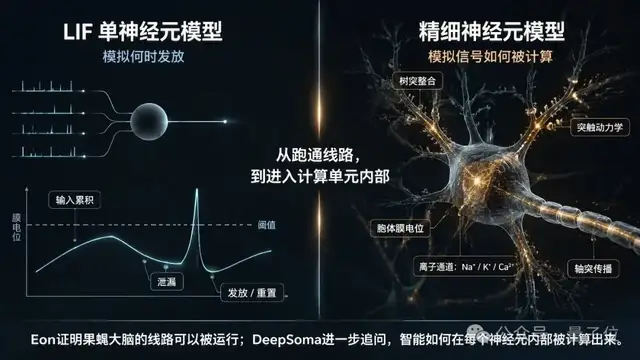
  • Unlike Eon Systems’ fruit-fly demo using simplified leaky integrate-and-fire neurons, DeepSoma models dendrites, cell bodies, membrane potentials, ion channels, and synapses.
  • Its architecture closes the loop between a computable environment, connectome-based brain dynamics, and an embodied agent whose actions alter subsequent sensory input.
  • The platform is intended to map one brain model onto digital animals, biological experiments, robotic arms, or humanoid robots.
  • Open questions include whole-brain scaling, agreement with measured neural activity, dependence on hand-designed brain-body mappings, and reproducible transfer across bodies.
Representative image for 全球首个人形机器人自主乒乓球完整对局亮相2026世界机器人大会,超维动力KAI全栈具身智能硬核登场

全球首个人形机器人自主乒乓球完整对局亮相2026世界机器人大会,超维动力KAI全栈具身智能硬核登场

Rank 61 · Content 65 · Popularity N/A

TL;DR - At the 2026 World Robot Conference, KAI showcased a full-stack embodied-AI platform led by SMASH 2.0, which enables humanoid robots to autonomously play complete table-tennis matches. The demonstration highlights integrated real-time perception, planning, whole-body control, robot hardware, data collection, and deployment infrastructure.

  • SMASH 2.0 performs millisecond-scale ball detection, trajectory prediction, action planning, and coordinated whole-body control, including autonomous serves, returns, and multiple shot types.
  • Its core algorithms can run across different robot bodies, supporting a claimed “one brain, many forms” deployment model.
  • The KAI world model, pretrained on millions of videos, supports virtual-world generation and reconstruction alongside closed-loop reinforcement learning for transfer to physical robots.
  • The broader stack includes the 117-degree-of-freedom KAIBot, a 37-degree-of-freedom dexterous hand, first-person motion-data collection hardware, and infrastructure spanning training, simulation, deployment, and fleet management.
Representative image for 从模型到生产力:星海图与产业朋友圈共探具身智能的下一站

从模型到生产力:星海图与产业朋友圈共探具身智能的下一站

Rank 57 · Content 60 · Popularity N/A

TL;DR - Xinghaitu announced upgrades spanning embodied foundation models, distributed robot learning infrastructure, and three production-oriented robot platforms. The releases target the transition from laboratory prototypes to continuously improving, commercially deployed robotic systems.

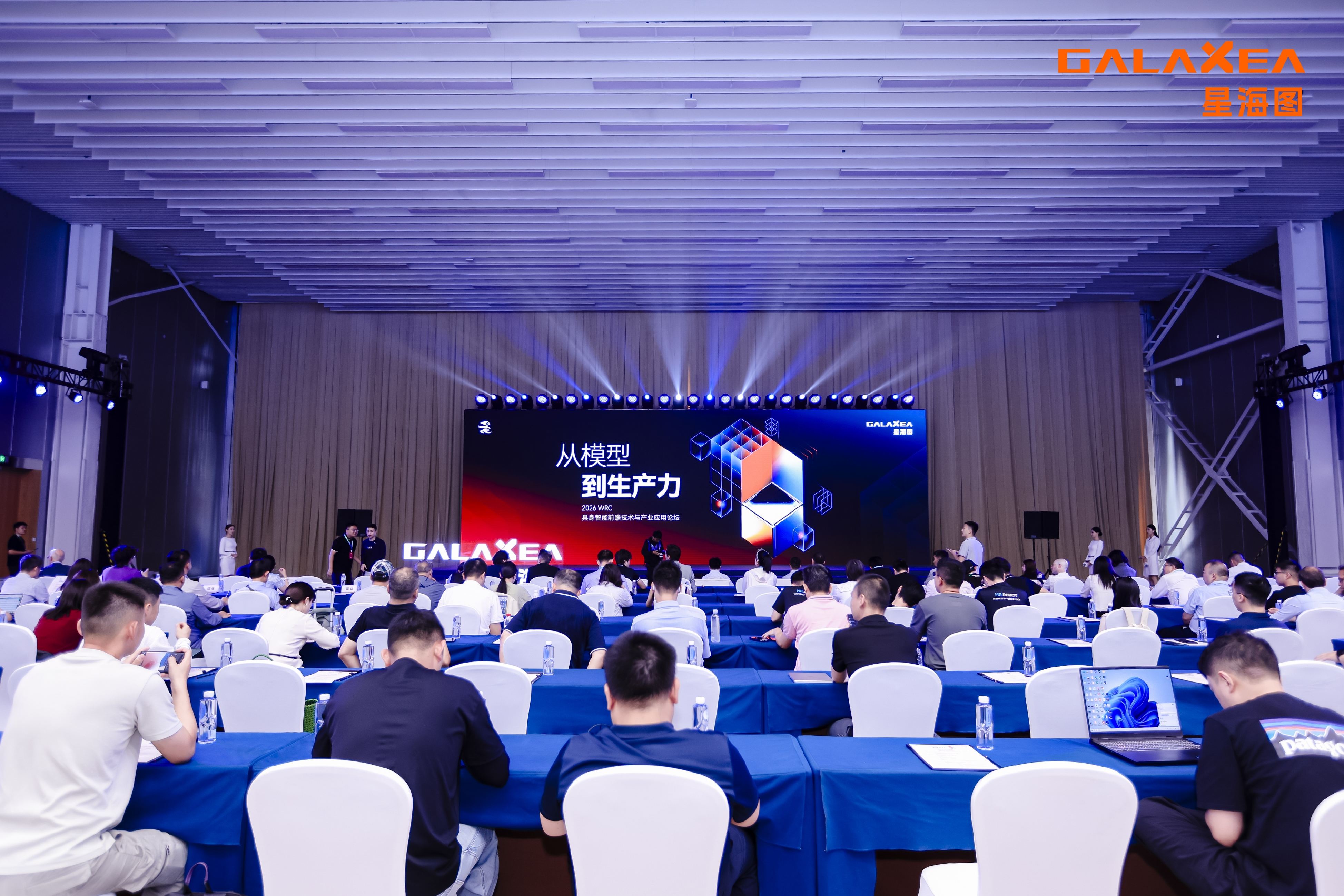
  • The forthcoming G0.5 MAX builds on G0.5’s unified autoregressive pipeline for visual perception, language, reasoning, and action generation; Xinghaitu also launched a reproduction program providing weights, inference APIs, benchmarks, and fine-tuning tools.
  • Fast-WAM avoids generating future video during inference, reportedly reducing single-step latency from roughly 800 ms to 190 ms; a pretrained model based on the architecture is planned.
  • The new G-Fleet system supports fleet-wide policy deployment, parallel physical rollouts, human correction, distributed reinforcement learning, evaluation, and model releases in a continuous real-world learning loop.
  • Xinghaitu presented the Nexo wheeled dual-arm robot, Kengo biped, and Lemo desktop platform, and reported orders totaling thousands of model-driven robots, with a target of more than 10,000 deliveries next year.
Representative image for 星炽动力亮相2026 WRC:以PULSE连接多元场景与真实世界

星炽动力亮相2026 WRC:以PULSE连接多元场景与真实世界

Rank 54 · Content 55 · Popularity N/A

TL;DR - At WRC 2026, Xingchi Dynamics demonstrated PULSE, an embodied world-action model designed to transfer robot capabilities across delivery, education, and commercial-service scenarios. Its approach combines cloud-edge-device execution with first-person demonstrations and real-robot data to create a continuous training and validation loop.

  • PULSE links perception, intent understanding, reasoning and simulation, action execution, and feedback-driven improvement in a closed loop.
  • A unified model can adapt to different robot embodiments, allowing learned capabilities to be reused across products and environments.
  • Device-side systems handle real-time perception, control, and safety; edge systems perform multimodal fusion and low-latency decisions; the cloud supports longer-context reasoning and global optimization.
  • First-person data provides scalable human demonstrations, while real-robot data captures embodiment constraints, failures, interventions, and recovery needed for calibration and validation.
Representative image for 2026 WRC甩出工业商用家庭消费实景应用答卷,优必选的底牌是“具身智能”

2026 WRC甩出工业商用家庭消费实景应用答卷,优必选的底牌是“具身智能”

Rank 47 · Content 45 · Popularity N/A

TL;DR - At WRC 2026, UBTECH showcased humanoid robots performing sustained tasks across industrial, commercial, and home settings, backed by its self-developed Thinker embodied-intelligence stack. The demonstrations reflect the industry’s shift from prototype spectacles toward deployable systems, real-world data loops, and commercial scalability.

  • Thinker combines a foundation model, the Thinker-WM world model, and tiered 1B–100B Thinker-VLA vision-language-action models for perception, prediction, planning, and execution.
  • UBTECH reports fully on-device VLA deployment, with industrial inference efficiency improving 176%, storage use falling 60%, and GPU memory requirements dropping from 64GB to 32GB.
  • Cruzr Y1 and S2 robots demonstrated autonomous, day-long material handling, palletizing, and parcel-sorting workflows; Walker C1 and U1 targeted service and companion applications.
  • The company is building an ecosystem around embodied-AI chips, dexterous hands, servo systems, synthetic data, and industry partnerships to address data, hardware, and supply-chain constraints.

Embodied Robotics 2

Representative image for 当机器人大脑飞上天!替人奔赴危险作业现场,对话硅羽科技

当机器人大脑飞上天!替人奔赴危险作业现场,对话硅羽科技

Rank 54 · Content 55 · Popularity N/A

TL;DR - Chinese startup Silicon Feather Technology is developing a general-purpose autonomous “brain” for drones that can navigate and perform tasks without GPS, prior maps, or continuous human control. The company targets hazardous, high-cost environments such as tunnels, forests, industrial facilities, and steep infrastructure sites.

  • Its stack combines multimodal perception, lidar-based SLAM, end-to-end motion control, world navigation models, dexterous operation, and swarm coordination.
  • A Real-to-Sim pipeline reconstructs digital-twin environments from limited real flight data, then varies scenes and tasks to generate training data and support reinforcement learning.
  • The first planned mass-produced system, expected by year-end, focuses on autonomous inspection in difficult spaces; later versions aim to reason in unknown environments and physically manipulate objects.
  • The company says it has raised several hundred million yuan across four funding rounds and expects commercial aerial embodied systems to scale within two years.
Representative image for 宇树主导的四足机器人市场,它悄悄拿到了6%

宇树主导的四足机器人市场,它悄悄拿到了6%

Rank 47 · Content 45 · Popularity N/A

TL;DR - Vbot is expanding from consumer quadrupeds into humanoid robots with ATOM, a 160 cm platform designed for homes, retail, offices, and public services. Its reported 6% share of global quadruped shipments and substantial real-world usage data provide a foundation for productizing and iterating ATOM.

  • SAG estimates Vbot shipped about 1,600 quadrupeds in the first half of 2026, while market leader Unitree shipped 13,600 for a 52% share.
  • Vbot’s “Big Head” consumer robot reportedly received 6,540 preorders worth nearly RMB 100 million and accumulated 1.26 million LLM interactions, 23,700 km of travel, and 131,500 usage hours.
  • ATOM has 31 body degrees of freedom, a 180 cm arm span, quiet feet, and dimensions optimized for human-built environments rather than factories.
  • Vbot also introduced a cross-platform “Embodied Genome” model suite covering interaction, world modeling, and adaptation across quadruped and humanoid bodies.

Generative Recommenders 1

Representative image for 直播预告 | MBZUAI康健教授:面向生成式推荐的语义ID学习与解码

直播预告 | MBZUAI康健教授:面向生成式推荐的语义ID学习与解码

Rank 54 · Content 55 · Popularity N/A

TL;DR - PaperWeekly is promoting an MBZUAI lecture on improving generative recommendation through time-aware semantic IDs and more efficient decoding. The talk presents ChronoID and preliminary work on a lightweight decoding head, while making no quantitative performance claims.

  • Generative recommenders represent each item as a sequence of semantic-ID integers and predict the next item via sequence generation.
  • ChronoID studies how to encode, integrate, and quantize temporal signals during semantic-ID learning.
  • A lightweight head for discrete diffusion language models learns which candidate tokens to decode and commit at each step without modifying the base model.
  • The lecture also covers open research questions in generative recommendation.

Research Integrity 1

Sleuth identifies dozens of studies that used the wrong antibody

Rank 57 · Content 60 · Popularity 50

TL;DR - A Nature news item reports that an investigator identified dozens of studies that used the wrong antibody. The case highlights how misuse of a routine experimental tool can undermine the reliability of published findings.

  • The affected studies reportedly relied on an incorrectly applied antibody.
  • Antibodies are widely used to detect specific biological targets, so using the wrong one can invalidate experimental interpretations.
  • The provided excerpt does not identify the studies, antibody, detection method, or resulting corrections.

Structural Biology 1

从核糖体到AI:北京大学高宁教授解读三维生命科学前沿丨Cell Press Symposia早鸟注册

Rank 29 · Content 20 · Popularity N/A

TL;DR - A Cell Press Symposia promotional item featuring Peking University professor Gao Ning on advances spanning ribosome research and AI-enabled three-dimensional life science. Only the title is available, so no specific scientific results or methods can be verified.

  • Highlights the intersection of structural biology, ribosome research, and AI.
  • Frames three-dimensional life science as the event’s core frontier topic.
  • Promotes early-bird registration for a Cell Press symposium rather than presenting a formal research publication.