🛰️ Daily AI Frontier
50 works · 3 categories · 17 topics · blog 12 wechat 15 journal 9 arxiv 15 generated 2026-08-21 14:39:55 UTC
Top highlights — Research

LLM Agents 10

Credit Without Ground Truth: Auditing Step-Level Credit Assignment in LLM Agents Against Executed Replay

Rank 90 · Content 100 · Popularity 68

TL;DR - An executed-replay audit in ALFWorld finds that common step-level credit signals for training LLM agents identify causally important actions no better than chance. This challenges correctness-based credit evaluations and shows that training comparisons must control for effective sample size.

  • Causal contribution was sparse: only 30.5% of measurable decision points affected outcomes.
  • LLM judges, outcome-conditioned log-probability ratios, and policy confidence failed to recover causally pivotal steps above chance.
  • Implicit credit primarily tracked policy fluency, while outcome conditioning added essentially no causal information.
  • Across seven training arms, none reliably beat the untrained policy; apparent differences were explained by training dose rather than credit quality.

Representative image for One Success Isn't Reliability: Thinkingbox, a Sandbox and Benchmark for Agents in Stateful Business Workflows

One Success Isn't Reliability: Thinkingbox, a Sandbox and Benchmark for Agents in Stateful Business Workflows

Rank 90 · Content 100 · Popularity 66

TL;DR - Thinkingbox is an MCP-compatible sandbox and 507-workflow benchmark for testing agents on policy-constrained, stateful business tasks. Results reveal a major reliability gap: the best model reaches 65.36% pass@1 but succeeds across 20 attempts only 25.25% of the time.

  • Covers multi-turn workflows in retail, hospitality, insurance, banking, consulting IT, and HR support.
  • Evaluates terminal backend state with task-specific executable checks that detect missing, incorrect, or unintended side effects.
  • Provides isolated tool sessions, complete execution traces, and final-response checks for designated tasks.
  • Clean termination and valid state-changing tool calls often still produce failed outcomes, making tool-level signals poor proxies for end-to-end success.
Representative image for EnvHarness: Awakening Static Worlds for Agent Learning

EnvHarness: Awakening Static Worlds for Agent Learning

Rank 88 · Content 95 · Popularity 71

TL;DR - EnvHarness is a programmable wrapper that dynamically reshapes static agent-learning environments without altering their underlying logic or verifiers. Its automated EnvRigger system diagnoses policy weaknesses from execution trajectories and generates targeted components, improving both evaluation performance and reinforcement-learning signals.

  • Uses plug-in components and standard interfaces to adapt environments across multiple domains while preserving original verifiers.
  • Treats the target policy as a black box, synthesizing modifications from observed trajectories and validating them with fresh rollouts.
  • Across five benchmarks in four domains, achieved up to a 9.0-point improvement on held-out instances while using 9.8% fewer execution steps.
  • Supports continuous co-evolution of an agent policy and its training environment through targeted reinforcement-learning feedback.

MemTrapBench: Benchmarking Cognitive Traps in LLM Memory Use

Rank 87 · Content 95 · Popularity 69

TL;DR - MemTrapBench evaluates how relevant, correctly retrieved memories can impair LLM reasoning through fixation and belief distortion. Across tested model families and memory frameworks, every memory strategy performed worse than using no memory, while the proposed AdaptiveMem mitigation reduced these failures.

  • Tests Reasoning Fixation and Belief Distortion rather than only memory storage and retrieval accuracy.
  • Covers two model families and five representative memory frameworks.
  • Even the strongest evaluated memory methods suffered performance drops exceeding 10% versus the no-memory setting.
  • AdaptiveMem uses inference-time instructions to avoid memory traps while preserving or improving standard memory-benchmark performance.

Repo0: Design-Driven Zero-to-All Code Generation

Rank 87 · Content 95 · Popularity 68

TL;DR - Repo0 is a framework for generating complete software repositories from natural-language requirements by continuously evolving an explicit modular architecture before code generation. On six RepoCraft repositories, it outperformed repository-planning baselines in functionality coverage and test pass rate.

  • Represents requirements, components, and their alignment as a Dual-Directed-Acyclic-Graph.
  • Iteratively adjusts component boundaries using modularity metrics until the architecture structurally converges.
  • Uses the converged architecture to guide test-driven code generation.
  • With GPT-5 mini and DeepSeek V3.2, Repo0 improved Functionality Coverage by up to 20.08 percentage points and Pass Rate by up to 29.74 points over RPG.
Representative image for SWE-bench Science: Can Coding Agents Resolve Engineering Tasks in Science?

SWE-bench Science: Can Coding Agents Resolve Engineering Tasks in Science?

Rank 86 · Content 90 · Popularity 77

TL;DR - SWE-bench Science is a 119-task benchmark evaluating coding agents on repository-level engineering work across 20 scientific domains. Its strongest tested agent scores below 50% pass@1, exposing persistent difficulties with scientific reasoning, exploration, complete integration, and generalization.

  • The benchmark draws tasks from 98 GitHub repositories and covers issue-driven, expert-exploratory, and engineering-integration scenarios.
  • Claude Code with Opus-5 (max), the best-performing evaluated agent, achieves less than 50% pass@1.
  • Common failures include missing scientific abstractions, superficial or misguided repairs, incomplete system-level coverage, and poor generalization beyond observed cases.
  • Ablations show that well-grounded scientific guidance can improve average performance and token efficiency, while misaligned guidance can anchor agents without improving exact repair success.

PolicyGuide: From Guarding One Action to Guiding the Whole Workflow for Policy-Compliant LLM Agents

Rank 86 · Content 95 · Popularity 65

TL;DR - PolicyGuide compiles organizational policies into workflow graphs and proactively guides customer-service LLM agents through compliant multi-step procedures. It improves both action-level safety and procedural compliance across several service domains and model families.

  • At user-turn boundaries, a verifier uses persisted workflow state to reconcile open requests and recommend step-specific remediation.
  • On τ²-bench airline, retail, and telecom tasks, PolicyGuide increased mean Pass⁴ from 0.42 to 0.62 with GPT-5.4.
  • Telecom saw the largest improvement, from 0.19 to 0.61, reflecting its highly structured workflows.
  • The workflows transferred to Claude Sonnet 4.6 and Gemini 2.5 Pro and achieved the lowest observed adversarial attack-success rate.
Representative image for Optimal Skill Selection for LLM Agents with Provable Bicriteria Guarantees

Optimal Skill Selection for LLM Agents with Provable Bicriteria Guarantees

Rank 82 · Content 100 · Popularity 39

TL;DR - This paper formulates context-budgeted skill selection for LLM agents as submodular optimization and introduces Best Prefix Selection (BPS), a polynomial-time algorithm with a provably optimal bicriteria approximation. BPS substantially improves task success while using fewer tokens than the strongest released router tested.

  • Models skill selection as maximizing monotone submodular benefit minus context penalty under a hard token budget.
  • Proves BPS achieves a bicriteria ((1-1/e, 1)) approximation, with a benefit coefficient that is optimal in polynomial time.
  • On a contamination-controlled BigCodeBench variant, BPS reaches 0.73 task success versus 0.20–0.52 for skill routers, text retrievers, and executor-based selection.
  • BPS uses 28% fewer tokens than the strongest released router.

ReguSim: Evaluating LLM Agent Rule Grounding in Financial Compliance

Rank 82 · Content 100 · Popularity 39

TL;DR - ReguSim and ReguBench evaluate whether financial-market LLM agents ground their actions and monitoring judgments in executable compliance rules and reliable evidence. The results show that stated rationales are insufficient for auditing compliance and that structured baselines can outperform prompt-only LLM monitors.

  • ReguSim separates stated reasoning, attempted actions, execution enforcement, and monitoring evidence.
  • Visible rules reduced but did not eliminate rejected trades; incentive and persona framing also changed agent behavior.
  • Trader rationales could mislead independent monitors unless execution-enforcement evidence was provided.
  • Simple structured monitoring baselines matched or exceeded prompt-only LLMs.
Representative image for Bringing analytic rigor to agentic AI for science: The Brain Researcher platform for neuroimaging data analysis

Bringing analytic rigor to agentic AI for science: The Brain Researcher platform for neuroimaging data analysis

Rank 82 · Content 100 · Popularity 39

TL;DR - Brain Researcher is an agentic platform that embeds methodological constraints, evidence tracking, and scientific review into neuroimaging analysis workflows. It aims to make agent-generated findings more defensible by testing alternative analyses and limiting claims to what the evidence supports.

  • Improved first-choice tool-selection accuracy across seven models from 23.3% to 93.6%.
  • Increased verifiable grounding from 4.6% to 22.0%.
  • Uses multiverse analyses to reveal how findings vary with analytic choices.
  • Links decisions to evidence and provenance, while classifying claims as accepted, qualified, revised, blocked, rejected, or deferred.

Medical/Healthcare AI 8

Representative image for Cancer Cell:陈云/滕皋军合作发现,肿瘤内细菌增强肝癌免疫治疗效果

Cancer Cell:陈云/滕皋军合作发现,肿瘤内细菌增强肝癌免疫治疗效果

Rank 82 · Content 95 · Popularity N/A

TL;DR - A Cancer Cell study identifies a stem-like lymphoid niche (SLN) that predicts stronger PD-1/PD-L1 immunotherapy responses in hepatocellular carcinoma. Intratumoral Bacillus cereus promotes these niches through secreted PI-PLC, suggesting a microbiome-mediated strategy for improving treatment.

  • Spatial multi-omics showed that SLNs contain CD70+ ILC2 cells and TCF1+ precursor-exhausted T cells, distinguishing them from conventional tertiary lymphoid structures.
  • B. cereus-derived PI-PLC triggers endothelial IL-33 release, reshaping ILC2 metabolism and epigenetically activating lymphoid-organizing genes.
  • Greater SLN abundance was associated with better immune-checkpoint-blockade response.
  • Combining PI-PLC with PD-L1 blockade produced synergistic antitumor immunity in the study’s liver-cancer models.
Representative image for Nature Cancer:董玲/胡小明/沈锡中合作揭示,低蛋白饮食通过肠道细菌增强胰腺癌的抗肿瘤免疫

Nature Cancer:董玲/胡小明/沈锡中合作揭示,低蛋白饮食通过肠道细菌增强胰腺癌的抗肿瘤免疫

Rank 82 · Content 95 · Popularity N/A

TL;DR - A Nature Cancer study reports that a low-protein diet suppresses pancreatic ductal adenocarcinoma in male mice by altering gut bacteria and strengthening antitumor immunity. The findings suggest a microbiome-mediated dietary strategy that could improve anti-PD-1 immunotherapy, though clinical efficacy remains unproven.

  • The diet enriched Blautia coccoides, whose UDP-galactose metabolite activated the macrophage P2Y14R–STAT1 pathway and promoted an immunostimulatory phenotype.
  • Depleting gut microbes eliminated the diet’s protective effects, while fecal microbiota transplantation transferred them to recipient mice.
  • Combining the diet, B. coccoides, or UDP-galactose with anti-PD-1 therapy extended mouse survival more than anti-PD-1 alone.
  • In advanced PDAC patients, lower fecal B. coccoides abundance and serum UDP-galactose levels were associated with worse prognosis.
Representative image for Science|周斌/吕爱兰合作揭示心肌缺血后新生冠状侧支动脉形成机制

Science|周斌/吕爱兰合作揭示心肌缺血后新生冠状侧支动脉形成机制 🔗 2 sources

Rank 73 · Content 80 · Popularity 57

TL;DR — A Science study showed that most coronary collateral arteries formed after myocardial ischemia originate through capillary-to-artery conversion rather than rearrangement of existing arteries. It also identified a VEGFA–YY1–SETD1A epigenetic pathway that may enable regenerative treatment of ischemic heart disease.

  • Dual-recombinase lineage tracing and a tamoxifen-independent synNotch recording system overcame limitations of earlier Cx40-CreER lineage studies and established the capillary origin of most new collateral arteries.
  • Ablating these newly formed vessels increased myocardial damage and fibrosis, demonstrating their protective function after ischemia.
  • Transient VEGFA delivery using modified mRNA promoted functional artery formation, reduced cardiac scarring, and improved heart function; sustained VEGF receptor activation instead impaired vessel maturation.
  • Mechanistically, VEGFA induced YY1, which recruited SETD1A to increase H3K4me3 and HES1 transcription, driving endothelial cells toward an arterial identity.

Note: One supplied source summary concerns an unrelated study of chromosome condensation as a hydrogel phase transition, so it was not merged into this heart-ischemia summary.

Representative image for Cell | 不止是抗体!母乳靠肠菌代谢物,搭建宝宝肺部免疫防线

Cell | 不止是抗体!母乳靠肠菌代谢物,搭建宝宝肺部免疫防线

Rank 65 · Content 75 · Popularity 43

TL;DR - A Cell study in mice identifies a maternal milk osteopontin–gut microbiome–D-3-phenyllactic acid pathway that programs infant lung immunity and improves tolerance to respiratory infections. The findings suggest possible nutritional interventions for infants who cannot be exclusively breastfed, but human efficacy remains unproven.

  • Milk-derived osteopontin enriches Lactobacillaceae that convert phenylalanine into D-3-phenyllactic acid (D-PLA).
  • D-PLA stimulates liver endothelial cells to express stem cell factor, expanding hematopoietic progenitors that subsequently migrate to the lungs.
  • In airway epithelial cells, D-PLA activates PPARγ, inducing CCL25 and Flt3 ligand to recruit progenitors and promote dendritic-cell development.
  • Early oral osteopontin supplementation reduced viral and bacterial lung-disease severity in mice and produced lasting immune benefits; equivalent intraperitoneal delivery did not.

How do people live beyond 110? Abundance of cancer-killing cells might be key

Rank 63 · Content 70 · Popularity 48

TL;DR - Research on people aged 110 and older examines how their immune systems continue adapting, with an abundance of cancer-killing cells proposed as one possible contributor to extreme longevity.

  • The study focuses on supercentenarians, a rare population aged 110 or older.
  • Findings indicate that their immune systems remain adaptive at exceptionally advanced ages.
  • Elevated levels of cancer-killing immune cells might help explain their longevity.
  • The limited item summary does not specify the immune-cell types, study size, or evidence for causality.
Representative image for Nature Cancer:王雄军团队等发现肿瘤内Treg细胞诱导NK细胞衰老,加速癌症进展

Nature Cancer:王雄军团队等发现肿瘤内Treg细胞诱导NK细胞衰老,加速癌症进展

Rank 61 · Content 65 · Popularity N/A

TL;DR - A Nature Cancer study identifies a lactate–α-ketoglutarate metabolic circuit in tumor-infiltrating regulatory T cells (Ti-Tregs) that induces natural killer (NK) cell senescence and accelerates tumor progression. Targeting this pathway could strengthen antitumor immunity and improve adoptive NK-cell therapy.

  • Ti-Tregs upregulate glutamate dehydrogenase 1 (GDH1), increasing α-ketoglutarate production in the lactate-rich tumor microenvironment.
  • GDH1 lactylation promotes α-ketoglutarate generation, which drives ALKBH5-mediated Wnt2 expression.
  • Increased WNT2 signaling induces NK-cell senescence, weakening immune surveillance and promoting tumor growth.
  • Inhibiting GDH1 or deleting the lactate transporter SLC16A1 in Ti-Tregs reduced NK-cell senescence and improved adoptive NK-cell therapy in the reported models.

Briefing Chat: New narcolepsy drug could unlock host of novel brain therapies

Rank 56 · Content 60 · Popularity 48

TL;DR - Nature staff discuss an FDA-approved narcolepsy drug that might enable therapies for other brain disorders, alongside research on the longest-lived human brain organoids reported to date. The supplied summary does not provide drug mechanisms, efficacy data, or organoid longevity details.

  • The narcolepsy drug’s regulatory approval could accelerate investigation of uses beyond its original indication.
  • Long-lived human brain organoids may support longer-term studies of brain development and disease.
  • The content provided is a briefing overview, so no specific experimental results or clinical outcomes can be inferred.

Daily briefing: People older than 100 have more cancer-killing cells

Rank 49 · Content 50 · Popularity 48

TL;DR - Nature’s daily research briefing highlights evidence that killer T cells might contribute to exceptional longevity in people older than 100. It also covers advances in long-lived brain organoids and proposals for mass newborn genome screening.

  • Centenarians were reported to have more cancer-killing immune cells, suggesting a possible link between immune surveillance and longevity.
  • The briefing mentions the longest-lived brain organoids produced so far.
  • It also examines how large-scale genome-screening programs for newborns might operate.
  • The provided excerpt does not include study methods, quantitative findings, or details about any AI techniques.

Bioinformatics AI 1

Reply to: Artefacts in single-cell mtDNA analyses misinform phylogenies

Rank 53 · Content 55 · Popularity 48

TL;DR - This Nature item is a formal reply concerning whether artefacts in single-cell mitochondrial DNA analyses lead to incorrect phylogenies. Because only the title and publication metadata are provided, the reply’s arguments and conclusions cannot be determined.

  • Published online in Nature on 19 August 2026.
  • Focuses on methodological reliability in single-cell mtDNA-based phylogenetic analysis.
  • The title indicates a response within a scientific debate about analysis artefacts.
  • No experimental results, methods, or supporting evidence are included in the provided content.

LLMs & Foundation Models 2

Phantom Gains: Auditing Self-Improvement Against a Measured Null

Rank 90 · Content 100 · Popularity 68

TL;DR - This paper shows that common transition-level evaluations can falsely report LLM self-improvement because they compare noisy measurements without a measured null. Using frozen controls, it finds no reliable gains from three Qwen3-8B self-training variants, while external distillation produces statistically supported improvements.

  • Auditing three rounds of rank-32 LoRA self-training identifies seven measurement failures that can invert conclusions when frozen controls are omitted.
  • Single greedy decoding can manufacture apparent capability changes through artifacts such as inference batching; simple threshold corrections still yield non-zero null effects.
  • A per-problem exact test using a pooled baseline and false-discovery-rate control detects no changes on held-out frozen-control replicates.
  • External distillation improves problems rarely solved by the base model, whereas self-training does not and also corrupts baseline-solved problems above the measured noise floor.

FormalTCS: Benchmarking End-to-End Frontier Formal Theoretical Computer Science Research of Large Language Models

Rank 82 · Content 100 · Popularity 39

TL;DR - FormalTCS is an expert-validated benchmark of 175 frontier theoretical computer science problems with Lean formalizations, designed to test LLMs across the full research pipeline. Results show that autoformalization and selecting worthwhile research claims remain major barriers to autonomous TCS research.

  • Instances come from papers accepted to STOC, FOCS, SODA, and COLT in 2025–2026 and preserve paper-specific definitions, assumptions, and proof dependencies.
  • Autoformalization was the sharpest bottleneck: the best model scored 11.5 when translating natural-language claims into formal statements.
  • Models performed better when given human-written formal statements, reaching 28.6 Pass@8 on theorem proving.
  • An automated claim-generation and proving framework produced 64 claims, but only 6 passed both expert evaluation and proof verification.

Multimodal & Generative 1

Representative image for Manifold Drift in Flow Preference Optimization: A Root Cause of Reward Hacking

Manifold Drift in Flow Preference Optimization: A Root Cause of Reward Hacking

Rank 86 · Content 95 · Popularity 67

TL;DR - This paper identifies “manifold drift” as a root cause of reward hacking when preference optimization pushes flow-matching models beyond the pretrained data support. It proposes ThermoDPO and a weighted variant to constrain this drift while improving generation quality.

  • The theory shows that preference updates leave the pretrained manifold when terminal displacement has a nonzero component normal to it.
  • ThermoDPO uses temperature-controlled anchoring on preferred samples, connecting rejection-sampling fine-tuning with FlowDPO.
  • ThermoDPO-weighted addresses weakened optimization signals at low temperatures.
  • It achieves a 0.899 StrictScore on the main toy benchmark and, on SD3.5-M at CFG 4.5, improves OCR by 47.5% and the four-metric average by 16.0%.

Efficiency & Systems 1

Representative image for Let's Scale Step by Step: Compute-Efficient Hyperparameter Transfer for Large-Scale Mixture-of-Experts

Let's Scale Step by Step: Compute-Efficient Hyperparameter Transfer for Large-Scale Mixture-of-Experts

Rank 84 · Content 90 · Popularity 70

TL;DR - This paper proposes a two-step method for transferring optimal learning rates from small proxy models to large Mixture-of-Experts models and trillion-token training runs. It could substantially reduce the cost of hyperparameter sweeps for large-scale pretraining.

  • Adapts Maximal Update Parameterization (μP) to MoE architectures using Multi-head Latent Attention and the Muon optimizer.
  • Demonstrates consistent learning-rate transfer across models of different widths.
  • Fits a token-budget scaling law that predicts optimal learning rates up to 10 trillion tokens with (R^2=0.95).
  • Validates the method by stably pretraining a 155B-parameter MoE model with 17B active parameters.

Cellular Transport 1

Representative image for Science|线粒体双向运输分子开关:TRAK蛋白协同调控驱动蛋白与动力蛋白新机制

Science|线粒体双向运输分子开关:TRAK蛋白协同调控驱动蛋白与动力蛋白新机制

Rank 64 · Content 75 · Popularity 39

TL;DR - A Science study identifies a regulatory helix in TRAK proteins as the molecular switch coordinating kinesin- and dynein-driven mitochondrial transport. The mechanism links oxidative stress to mitochondrial redistribution and may illuminate organelle-transport defects in neurological and metabolic disease.

  • When the dynein regulatory helix (DRH) is closed, it blocks dynein activation and favors kinesin-driven transport toward the cell periphery; opening it activates dynein, displaces kinesin, and reverses transport.
  • TRAK1 primarily promotes outward transport, whereas TRAK2 supports bidirectional movement and predominantly drives inward, perinuclear transport at steady state.
  • Oxidative stress activates JNK2, which phosphorylates TRAK2 at S84, stabilizing the open DRH state and triggering dynein-mediated mitochondrial accumulation near the nucleus.
  • Synthetic-cargo assays, AlphaFold2-guided mutations, and experiments with native mitochondria supported the mechanism; related autoinhibitory switches were also observed in lysosomal adaptors JIP3 and JIP4.

Chemical Synthesis 1

Dialkyl ether synthesis through heteroatom homolytic substitution

Rank 56 · Content 60 · Popularity 48

TL;DR - This Nature paper presents a method for synthesizing dialkyl ethers through heteroatom homolytic substitution. Because only the title and publication metadata are provided, its specific mechanism, substrate scope, and performance cannot be assessed.

  • Published online in Nature on 20 August 2026.
  • The work concerns dialkyl ether bond formation using a homolytic substitution strategy at a heteroatom.
  • The title suggests a radical-based alternative to conventional ether-synthesis routes, but no experimental details or results are provided.

LLM Evaluation 1

Stopping and Routing LLM Judge Panels

Rank 82 · Content 100 · Popularity 39

TL;DR - This paper frames LLM judge-panel design as a cost-aware allocation problem that determines which evaluators to call, for which examples, and when to stop adding judges. It aims to produce reusable, auditable evaluation plans from a small labeled audit set.

  • Classifies judges by target-relative roles: redundant copies, globally useful complements, and slice-specific specialists.
  • Drops copies, adds complements globally, and conditionally routes specialists to declared, deployable slices.
  • Stops panel expansion when validation gains fall below a threshold, balancing evaluation risk against judge-call costs.
  • Evaluates the approach across reasoning, code, safety, preference, reward-model, summarization, and math audits against several panel and cascade baselines.

Neuroscience 1

Psychedelics tune the brain to the environment

Rank 63 · Content 70 · Popularity 48

TL;DR - Psilocybin appears not merely to disrupt neural activity, but to reorganize brain dynamics in ways that align with a person’s environment and experiences. This suggests psychedelic effects are strongly shaped by context.

  • The reported work examines how psilocybin changes brain activity.
  • Neural dynamics become more attuned to external context and personal experience.
  • The finding offers a mechanistic perspective on why environmental setting may influence psychedelic experiences.

Social Neuroscience 1

Asymmetric prefrontal representations for leader–follower dynamics

Rank 70 · Content 70 · Popularity 69

TL;DR - A Nature study finds that cooperating mice spontaneously adopt leader and follower roles, with the medial prefrontal cortex representing these dynamics. The findings link prefrontal activity to social roles and partner-relative value during cooperation.

  • Cooperative behavior produced distinct leader–follower roles without explicit assignment.
  • The medial prefrontal cortex encoded changes in these social roles.
  • Neural representations included an egocentric social value map based on the partner’s position.
  • The results offer a neural framework for understanding coordinated social behavior.
Top highlights — Industry & News

LLM Agents 2

Representative image for ASU 魏华:大模型智能体正在重蹈强化学习的覆辙,如何跨越「仿真到现实」的鸿沟? | IJCAI 2026

ASU 魏华:大模型智能体正在重蹈强化学习的覆辙,如何跨越「仿真到现实」的鸿沟? | IJCAI 2026

Rank 75 · Content 85 · Popularity 50

TL;DR - ASU researcher Hua Wei argues that foundation-model agents face the same sim-to-real gaps long studied in reinforcement learning, including shifts in observations, actions, dynamics, and rewards. Adapting domain randomization and uncertainty quantification could make agents more robust across languages and real-world environments while limiting human supervision.

  • Treating languages and deployment settings as distinct environments provides a unified MDP perspective on agent reliability and cross-environment generalization.
  • Randomizing prompts, text, action spaces, and reward spaces reportedly enabled a 3B model to outperform a 32B model on cross-environment tasks.
  • Reliable deployment requires agents to quantify uncertainty, identify fragile or erroneous reasoning steps, and escalate ambiguous decisions to humans.
  • Shared terminology and evaluation standards could transfer mature sim-to-real methods from robotics and reinforcement learning to foundation-model agents.
Representative image for 科学家只管提问题,AI负责跑实验:深势科技把科研全流程搬进桌面

科学家只管提问题,AI负责跑实验:深势科技把科研全流程搬进桌面

Rank 68 · Content 75 · Popularity N/A

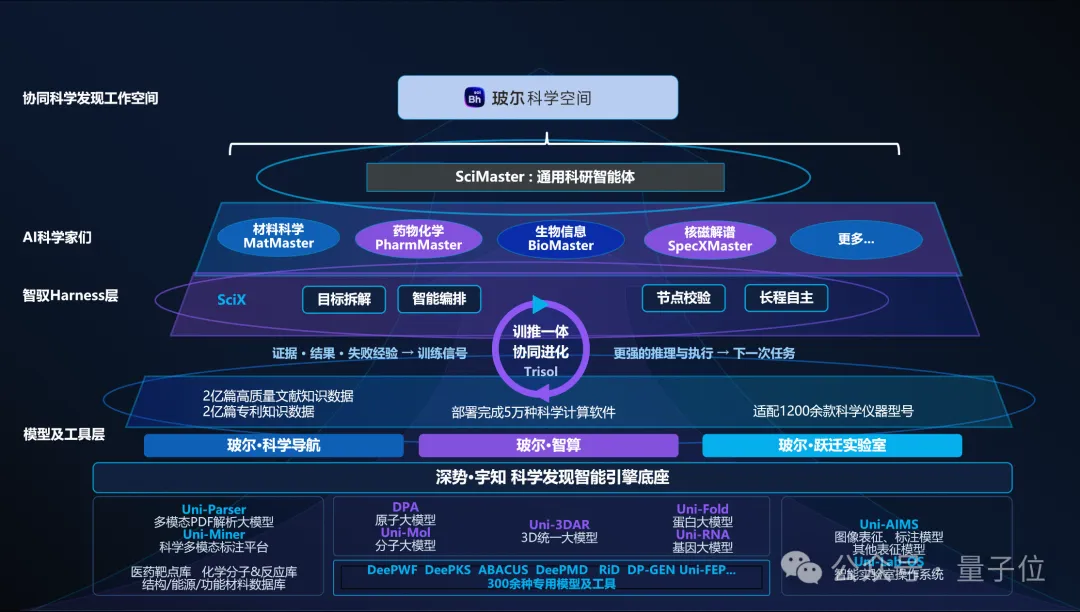
TL;DR - Deep Potential Technology launched the public beta of Bohr Science Space, a desktop environment where AI agents can manage research workflows from literature review and hypothesis design through computation, analysis, writing, and review. It aims to reduce scientists’ operational workload while keeping them responsible for questions, decisions, and validation.

  • SciMaster searches more than 200 million papers and patents, interprets multimodal scientific content, identifies knowledge gaps, and proposes testable hypotheses and experimental plans.
  • Domain agents BioMaster, PharmMaster, and MatMaster support bioinformatics, drug discovery, and materials research by coordinating data, models, software, and compute resources.
  • The SciX agent framework decomposes long-running research tasks, invokes over 50,000 deployed scientific tools, checks intermediate results, and diagnoses execution failures in recoverable sandboxes.
  • The platform also supports reproducible workflows, scientific visualization, LaTeX drafting, citation and evidence review, and future integration with laboratory instruments through Uni-Lab-OS.

Medical/Healthcare AI 3

Representative image for 世界首例!双大腿完全离体,中国医生接回去了

世界首例!双大腿完全离体,中国医生接回去了

Rank 68 · Content 75 · Popularity N/A

TL;DR - A multidisciplinary team at Suzhou Ruihua Orthopedic Hospital reportedly completed the world’s first documented replantation of two fully detached thighs, enabling the patient to walk indoors with a walker after roughly 20 months. The case demonstrates that limb salvage may remain possible even after an exceptionally severe bilateral high-level amputation.

  • More than 20 clinicians used three operating tables and four teams to debride and reconstruct the torso and both detached limbs in parallel, completing the initial surgery in nearly eight hours.
  • Reconstruction included bilateral femoral shortening, fracture fixation, microsurgical arterial, venous, and nerve repair, soft-tissue reconstruction, and preventive compartment decompression.
  • Major postoperative challenges included systemic toxin effects, impaired liver and kidney function, inflammation, skin necrosis, infection risk, and delayed fracture healing.
  • After additional flap, skin-graft, and bone-graft procedures plus early rehabilitation, the wounds healed by day 93 and active knee flexion later reached about 90 degrees.
Representative image for Nature头条:晚上睡不着,白天醒不了?首款嗜睡症药物获批,打开大脑新疗法大门

Nature头条:晚上睡不着,白天醒不了?首款嗜睡症药物获批,打开大脑新疗法大门

Rank 68 · Content 75 · Popularity N/A

TL;DR - The FDA approved Takeda’s Oveporexton (Orzeyful), the first oral therapy designed to address the biological cause of type 1 narcolepsy by replacing deficient orexin signaling. The approval introduces a potentially broader drug strategy for neurological and psychiatric disorders involving orexin pathways.

  • Oveporexton crosses the blood-brain barrier and selectively activates orexin-2 receptors, compensating for orexin-producing neuron loss in type 1 narcolepsy.
  • Two phase 3 trials involving 273 patients reported improved daytime wakefulness, nighttime sleep, cataplexy, sleep paralysis, and hallucinations versus placebo.
  • Unlike existing symptom-focused treatments, the drug targets the disrupted sleep-wake circuitry underlying the disease.
  • Researchers are investigating orexin agonists for other conditions linked to appetite, anxiety, and addiction, while noting that narcolepsy mechanisms beyond orexin deficiency remain unresolved.
Representative image for 靶向药物耐受持久细胞:突破HER2阳性胃癌治疗瓶颈的新前沿

靶向药物耐受持久细胞:突破HER2阳性胃癌治疗瓶颈的新前沿

Rank 54 · Content 55 · Popularity N/A

TL;DR - This clinical review presents drug-tolerant persister (DTP) cells as a key non-genetic driver of relapse and acquired resistance in HER2-positive gastric cancer. Targeting their metabolic, signaling, and epigenetic vulnerabilities could extend responses to anti-HER2 therapies, although clinical evidence remains limited.

  • DTP cells survive treatment in a reversible, slow-growing state and may seed minimal residual disease, recurrence, and stable acquired resistance.
  • HER2 heterogeneity, bypass signaling through EGFR/HER3 and PI3K/AKT/mTOR or MAPK pathways, metabolic adaptation, and an immunosuppressive microenvironment support DTP survival.
  • Proposed strategies include inducing ferroptosis through GPX4-related vulnerabilities, co-targeting survival pathways such as PI3K, WEE1, or FAK-YAP, and disrupting epigenetic plasticity.
  • Translation is constrained by the lack of DTP-specific biomarkers and uncertainty over whether intervention should prevent DTP formation or eliminate residual cells after response.

Bioinformatics AI 2

Representative image for BioArt百家论坛第10期 | De Novo Protein Design: From Physics-Based Modeling to Deep Learning 主讲嘉宾:曹龙兴 西湖大学研究员

BioArt百家论坛第10期 | De Novo Protein Design: From Physics-Based Modeling to Deep Learning 主讲嘉宾:曹龙兴 西湖大学研究员

Rank 57 · Content 60 · Popularity N/A

TL;DR - BioArt announced an August 25, 2026 forum on de novo protein design, featuring Westlake University researcher Longxing Cao and invited experts. The event will examine the field’s shift from physics-based modeling toward deep learning and its potential in synthetic biology and precision medicine.

  • Cao’s team develops protein-design methods grounded in protein folding and biomolecular interactions, including programmable custom proteases.
  • The forum spans computational protein–protein interaction design, AI foundation models for biomolecular structure and design, and protein engineering.
  • Highlighted applications include immunomodulation, cancer immunotherapy, protein therapeutics, biomaterials, and engineered cytokines.
  • The announcement provides speaker backgrounds and viewing details but reports no new experimental results.
Representative image for BioArt专·精系列培训 | AI蛋白设计百科全书--跟着三十篇CNS文章系统学习AI蛋白设计——2026年8月18日开课

BioArt专·精系列培训 | AI蛋白设计百科全书--跟着三十篇CNS文章系统学习AI蛋白设计——2026年8月18日开课

Rank 54 · Content 55 · Popularity N/A

TL;DR - BioArt is promoting a 31-lesson training course on AI protein design, scheduled to begin August 18, 2026. The curriculum aims to move learners from interpreting protein models to applying and reproducing AI workflows for protein generation, engineering, and evaluation.

  • Eight modules cover protein and Transformer fundamentals, protein language models, inverse folding, de novo generation, structure prediction, binder design, stability optimization, and benchmarking.
  • Featured methods include ESM-2, SaProt, RFdiffusion, Chroma, LigandMPNN, Boltz-1, AlphaFold2-Multimer, ProteinGym, and ProteinBench.
  • Practical tasks include sequence and structure analysis, mutation-effect prediction, sequence–structure co-design, binder generation, confidence assessment, and candidate mutation screening.
  • The course offers CPU and GPU implementations, with most lessons designed to run on CPUs to lower the computational barrier to entry.

Efficiency & Systems 3

Representative image for 谦合益邦打造全球首款4层3D DRAM存算一体芯片

谦合益邦打造全球首款4层3D DRAM存算一体芯片

Rank 71 · Content 80 · Popularity N/A

TL;DR - Chinese chip startup Qianhe Yibang says it has successfully fabricated and powered on the first four-layer 3D DRAM compute-in-memory chip, advancing the design from technical validation toward engineering deployment. Its vertically integrated architecture targets the memory-wall bottleneck in highly parallel, data-intensive workloads such as cloud gaming.

  • The “4+1” design stacks four DRAM layers above a logic layer, tightly integrating compute and storage in three dimensions.
  • The company claims order-of-magnitude improvements in memory bandwidth and throughput, alongside order-of-magnitude reductions in memory-access power, latency, and per-operation cost versus conventional approaches.
  • Four-layer stacking raises significant manufacturing challenges, including yield, thermal management, layer alignment, and vertical-interconnect consistency.
  • Founded in 2024 and incubated by NetEase, Qianhe Yibang recently raised more than RMB 2 billion in Series B funding to support commercialization.
Representative image for 国产“预制算力”来了:工厂预制率超90% 24小时内投运 交付效率提升70%

国产“预制算力”来了:工厂预制率超90% 24小时内投运 交付效率提升70%

Rank 64 · Content 70 · Popularity N/A

TL;DR - Chinese AI chipmaker Taichu Yuanqi launched modular, containerized compute infrastructure that is over 90% factory-prefabricated and can begin operating within 24 hours. The system targets faster, more flexible AI capacity deployment in locations where conventional data centers are impractical.

  • Three configurations span 64-card air-cooled systems, 128-card liquid-cooled nodes, and 256-card clusters rated at up to 307 PFLOPS of sparse FP16 compute.
  • The company claims 70% faster delivery than traditional deployments, over 60% compute utilization, and modular expansion with renewable-energy support.
  • A proprietary management platform coordinates geographically distributed nodes and includes mainstream model training and fine-tuning tools.
  • The solution has been tested in weather forecasting, biomedicine, and quantum-computing simulation.
Representative image for 百度,二季度靠AI挣了125亿

百度,二季度靠AI挣了125亿

Rank 61 · Content 65 · Popularity N/A

TL;DR - Baidu reported RMB 12.5 billion in AI-driven revenue for Q2 2026, representing half of its core business revenue, as surging demand for AI compute helped offset a steep decline in advertising. GPU cloud revenue grew 283% year over year, making infrastructure the strongest part of its AI transition.

  • AI cloud infrastructure revenue reached RMB 7.3 billion, up 50% year over year, while GPU cloud revenue recorded its fourth consecutive quarter of triple-digit growth.
  • External customers’ token usage revenue from Baidu’s Qianfan model services and agent platform increased more than ninefold.
  • AI applications generated RMB 2.5 billion, up 3%, while AI-native marketing services contributed RMB 2.6 billion and remained roughly flat.
  • Total revenue fell 4.2% to RMB 31.3 billion and net income dropped 68.3%, as a 19% decline in advertising revenue and AI investment costs outweighed AI growth.

Embodied AI 5

Representative image for 星动纪元陈建宇:VLA 非终局,具身大脑已进入世界模型时代 | WRC 2026

星动纪元陈建宇:VLA 非终局,具身大脑已进入世界模型时代 | WRC 2026

Rank 71 · Content 80 · Popularity N/A

TL;DR - Robot maker Robot Era argues that video-based world-action models—not imitation-centric vision-language-action (VLA) models—could become the core architecture for general-purpose robots. Such models jointly predict actions and future world states, aiming to improve physical reasoning and zero-shot task generalization.

  • Its world-action model combines video prediction with action prediction, incorporating robot demonstrations and first-person human interaction data.
  • The company reports early zero-shot performance on unseen instructions and environments, plus fine manipulation and transfer across robot embodiments, though the article provides no benchmarks.
  • Robot Era couples its models with in-house humanoid hardware, dexterous hands, and real-world feedback to create a data-and-deployment improvement loop.
  • Commercial deployments reportedly span logistics and industrial projects in more than ten cities, alongside open hardware, APIs, and development tools.
Representative image for WRC展会拿旧Demo炒冷饭?扒一扒千寻藏在水下的全栈底牌

WRC展会拿旧Demo炒冷饭?扒一扒千寻藏在水下的全栈底牌

Rank 68 · Content 75 · Popularity N/A

TL;DR - Qianxun Intelligence says its Moz1 robot substantially improved reliability on long-horizon household tasks within 30 days by jointly refining data pipelines, post-training, agent planning, navigation, hardware, and deployment infrastructure. The work matters because it shifts embodied-AI evaluation from one-off demos toward repeatable performance, rapid failure-driven iteration, and real-world deployment.

  • Reported success rates rose from about 80% to over 99% for placing a can in a refrigerator and from about 90% to over 99% for loading a bowl into a dishwasher; navigation-target selection time fell nearly 50%.
  • Its stack combines the Spirit v1.6 VLA/world model, a stateful agent for task decomposition and recovery, navigation to manipulation-ready poses, and continuous collection and retraining from failures.
  • The company emphasizes varied “dirty data” for robustness, claiming its seventh-generation collection equipment reduced collection costs to one-tenth of conventional teleoperation while raising usable data from 30% to 95%.
  • Moz1 has entered CATL battery-pack production for nonstandard connector insertion, where Qianxun reports over 99% task success and daily throughput up to three times that of a skilled worker.
Representative image for WRC最忙机器人:猛干15分钟家务,收纳、补货、叠衣服…

WRC最忙机器人:猛干15分钟家务,收纳、补货、叠衣服…

Rank 68 · Content 75 · Popularity N/A

TL;DR - Morphi Intelligence debuted its MoRA agent-native control architecture and MORPHI KINO home-service robot, which autonomously completed a 15-minute sequence of household chores at WRC 2026. The demonstration highlights a strategy for long-horizon robotics that embeds goals, memory, and progress tracking directly into the low-level policy model.

  • MoRA’s System 1 accepts multimodal, structured goals and maintains short-, medium-, and long-term execution memory rather than merely following isolated action commands.
  • The architecture reserves System 2 for global planning and exception handling, while System 1 continuously executes, monitors progress, and corrects routine deviations.
  • KINO demonstrated table cleanup, refrigerator inventory checking and restocking, and laundry drying and folding without ongoing human direction.
  • Morphi says it prioritizes high-quality real-world service data, reporting 30,000 collected hours and targeting 150,000–200,000 hours by the end of 2026.
Representative image for 98年中科大博士段逸凡创立灵犀智涌 以“模型+Harness”架构打破工业具身“唯模型困局”

98年中科大博士段逸凡创立灵犀智涌 以“模型+Harness”架构打破工业具身“唯模型困局”

Rank 68 · Content 75 · Popularity N/A

TL;DR - Shanghai startup Lingxi Zhiyong introduced ROSS, an industrial embodied-AI harness designed to turn probabilistic robot-model outputs into stable, recoverable production workflows. Its “model + harness” architecture matters because it targets reliability, throughput, and maintainability rather than one-off demonstrations.

  • ROSS provides unified interfaces for VLA and world-action models, allowing models to be replaced while preserving task planning, skills, safety policies, and conventional controls.
  • Reusable skills encode execution logic, operating conditions, safety constraints, success criteria, and failure handling, converting factory expertise into transferable digital assets.
  • Agentic planning handles task decomposition, skill orchestration, and recovery, while layered monitoring assigns real-time safety and higher-level decisions to appropriate control timescales.
  • Execution traces—including failures, interventions, and recovery paths—feed improvements to models, skills, scheduling, and memory without requiring every update to await large-scale retraining.
Representative image for 星海图高继扬:具身智能的终极商业模式,是售卖「物理世界 Token」 | WRC 2026

星海图高继扬:具身智能的终极商业模式,是售卖「物理世界 Token」 | WRC 2026

Rank 64 · Content 70 · Popularity N/A

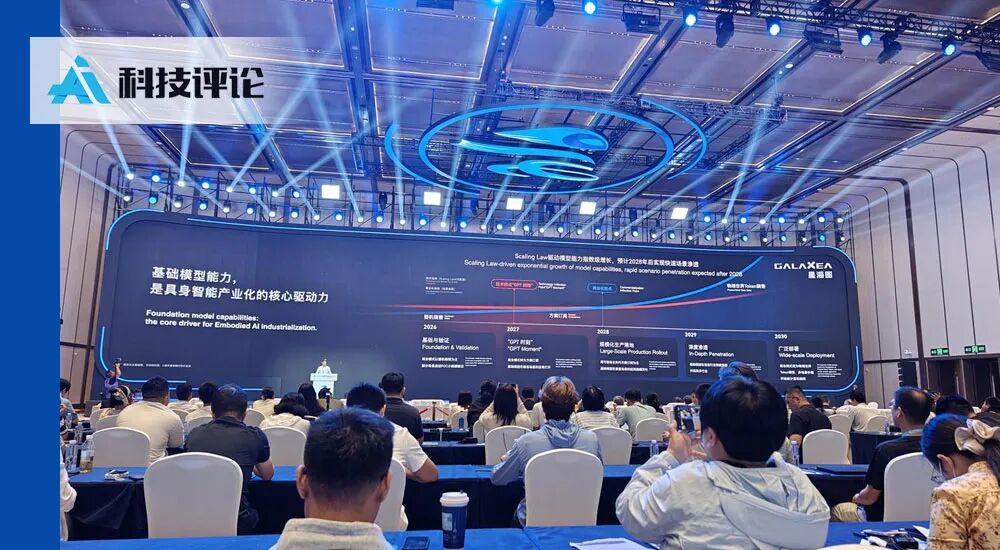
TL;DR - Galaxea AI co-founder Gao Jiyang argues that embodied AI will shift from selling robots to charging for “physical-world tokens”—successful actions and completed tasks—making foundation-model intelligence the industry’s primary source of value.

  • Galaxea’s unified autoregressive architecture targets zero-shot generalization, general-purpose grasping, and long-horizon tasks with one model.
  • Its post-training combines imitation learning with distributed reinforcement learning on physical robots; the company reports precision improving from centimeter to millimeter or submillimeter levels and task success reaching 99.9%.
  • Gao frames generalization as training cost: adapting a robot to a new long-horizon task currently takes about 10 hours, with a stated goal of reducing this to one hour.
  • The company is deploying autonomous systems in retail, manufacturing, logistics, and commercial services, including warehouse picking, handling, and flexible packaging across thousands of SKUs.

Game AI 1

Representative image for From Atari to EVE Online: Building on 15 Years of AI Research in Games

From Atari to EVE Online: Building on 15 Years of AI Research in Games

Rank 61 · Content 65 · Popularity N/A

TL;DR - Google DeepMind is partnering with game studios to prototype new AI-driven gameplay, building on 15 years of research spanning Atari to EVE Online. The limited description does not specify the systems, techniques, or results involved.

  • Applies DeepMind’s long-running game AI research to game-development prototypes.
  • Involves direct collaboration with game studios.
  • Signals a shift from research environments toward practical gameplay experiences.
  • No technical benchmarks, deployment details, or concrete outcomes are provided.

Research Ethics 1

Researcher, heal thyself: meet the scientists studying their own diseases

Rank 42 · Content 40 · Popularity 48

TL;DR - Nature profiles scientists who began studying diseases after receiving their own diagnoses, highlighting both the personal rewards and the ethical and psychological complexities of self-directed research.

  • Lived experience can give researchers strong motivation and firsthand insight into a condition.
  • Studying one’s own disease can blur boundaries between researcher, patient and advocate.
  • The work may create ethical concerns and psychological strain that require careful management.
  • The provided excerpt does not describe specific studies, methods or clinical findings.

Robotics Foundation Models 1

Representative image for 机器人的GPT-3时刻真·来了!卡卡西上身,看3秒就学会新动作

机器人的GPT-3时刻真·来了!卡卡西上身,看3秒就学会新动作

Rank 75 · Content 85 · Popularity N/A

TL;DR - Generalist AI introduced GEN-1.5, a robotics foundation model that can learn novel physical tasks from a 3–12-second demonstration without immediate fine-tuning. The emergence of in-context physical learning could make robots far faster to adapt, though current one-shot reliability remains limited.

  • GEN-1.5 treats recent demonstrations as “physical prompts,” enabling new task execution with zero gradient updates.
  • It can compose separate demonstrations, infer unshown transition actions, recover from errors, and transfer simulated demonstrations to real-world robots.
  • Across 10 tasks, one physical prompt yielded a 59% average success rate; adding five minutes of task data and 10 gradient updates raised it to 83%.
  • Generalist says the capability emerged from large-scale pretraining on continuous real-world interaction data rather than a specialized meta-learning architecture or objective.
Top highlights — Opinions

Bioinformatics AI 1

Representative image for 话115 |AI已经重塑生信技能树

话115 |AI已经重塑生信技能树

Rank 54 · Content 55 · Popularity N/A

TL;DR - A bioinformatics practitioner argues that AI agents are reshaping the field’s skill requirements by making coding and routine analysis easier. The competitive advantage is shifting toward asking good questions, validating outputs, and taking responsibility for scientific conclusions.

  • AI can troubleshoot dependencies, update legacy code, inspect data structures, and streamline single-cell analysis workflows.
  • Lower programming barriers may accelerate analysis, but they do not automatically improve research quality because these tools are broadly available.
  • Researchers still need domain expertise to verify cell annotations, integration quality, and other AI-generated results.
  • Bioinformatics training is beginning to incorporate AI as a necessary tool rather than treating it as an optional specialty.

LLMs & Foundation Models 1

Representative image for 智谱唐杰:万亿参数是行业早期的探索

智谱唐杰:万亿参数是行业早期的探索

Rank 71 · Content 80 · Popularity N/A

TL;DR - Zhipu AI co-founder Tang Jie argues that scaling laws should optimize parameters, data, inference cost, compute depth, and post-training together—not prioritize trillion-parameter models. GLM-5.3 illustrates this approach by retaining GLM-5.2’s base model and parameter counts while improving performance through expanded long-horizon environments and reinforcement learning.

  • Tang calls the industry’s early pursuit of trillion-parameter models a detour, citing Chinchilla’s evidence for balancing model size with training data.
  • Lifecycle inference costs favor smaller models trained on more tokens, while MoE architectures require distinguishing total parameters from activated parameters and effective compute depth.
  • Total parameters mainly expand knowledge capacity; activated compute and depth are more important for sustained multi-step reasoning.
  • Zhipu spent one month scaling GLM-5.3’s long-horizon task environments and reinforcement learning, while leaving architecture and parameter counts unchanged.

AI-Driven Science 1

Representative image for Jeff Dean离职后首次公开访谈火力有点猛。。。

Jeff Dean离职后首次公开访谈火力有点猛。。。

Rank 71 · Content 80 · Popularity N/A

TL;DR - In his first public interview after leaving Google, Jeff Dean reflected on Gemini and TensorFlow’s shortcomings and outlined Discovery Loop’s goal of automating scientific and engineering experimentation with AI. He argues that faster, agent-driven experimental loops could dramatically accelerate discovery while introducing serious cybersecurity risks.

  • Dean said Gemini’s native multimodality was a strong early choice, but its coding capabilities received serious attention too late; improving coding also strengthened broader reasoning.
  • He identified TensorFlow’s lack of initial eager execution and its confusing contrib ecosystem as two major design mistakes.
  • Discovery Loop plans to use models, agents, and multi-agent systems to decompose research problems, run thousands of experiments, evaluate results, and iteratively choose better experiments.
  • Dean believes AI may already match or exceed top human cyberattackers, making the technology valuable for both vulnerability discovery and malicious exploitation.

Pro-Worker AI 1

Why we must stop talking about artificial general intelligence — and instead build ‘pro-worker’ AI

Rank 60 · Content 65 · Popularity 48

TL;DR - This Nature commentary argues that AI development should move away from speculative artificial general intelligence and focus on tools that augment workers’ expertise and broaden economic opportunity. The supplied excerpt states this position but provides no technical results or implementation details.

  • Prioritizes human augmentation over automating or replacing workers.
  • Frames “pro-worker” outcomes as a more useful development goal than an AGI race.
  • Emphasizes expanding access to expertise and opportunity through AI tools.
  • No specific models, methods, benchmarks, or empirical findings are described in the provided content.