🛰️ Daily AI Frontier
27 works · 2 categories · 9 topics · blog 12 arxiv 15 generated 2026-08-30 14:29:21 UTC
Top highlights — Research

LLM Agents 6

Representative image for Evaluating Confidence-Gated Retrieval with Matched Trajectory Replay

Evaluating Confidence-Gated Retrieval with Matched Trajectory Replay

Rank 84 · Content 90 · Popularity 71

TL;DR - Matched trajectory replay evaluates how confidence calibration changes retrieval and answer decisions while holding agent trajectories and costs fixed. Calibration can reduce commitment risk, but it does not predict whether further retrieval will help, requiring a separate value-of-information estimate.

  • Isotonic calibration increased accuracy among committed answers by up to 41 percentage points across six model-dataset pairs, often at the cost of lower coverage and more retrieval.
  • Overall accuracy rose by up to 15 points on HotpotQA but fell by up to 17 points on MuSiQue, reflecting a more selective operating point rather than better answers or confidence rankings.
  • Pre-retrieval calibration generalized through retrieval depths one and two, but underperformed raw confidence at depth three for all three tested model families.
  • Agent evaluations should jointly report held-out calibration, risk-coverage tradeoffs, and retrieval cost.

Representative image for ASIL: Replacing Screenshot-and-Click with Structured State and Semantic Actions

ASIL: Replacing Screenshot-and-Click with Structured State and Semantic Actions

Rank 80 · Content 95 · Popularity 45

TL;DR - ASIL replaces screenshot-based GUI control with structured JSON state and executable semantic actions, enabling software agents to complete tasks with far fewer actions and substantially higher success rates. The interface also provides an effective training environment for improving smaller agent models through supervised fine-tuning and reinforcement learning.

  • ASIL was implemented across 15 applications and evaluated on 300 single-application and 80 multi-application tasks.
  • Closed models achieved over 80% success while using fewer than five actions per task.
  • Screenshot-and-click baselines reached only 6.6% and 26.6% strict success under a 50-step budget, or 15.0% and 53.3% on an easier task band.
  • Fine-tuning raised Qwen3.5-2B from 58.0% to 72.1% and Qwen3.5-9B from 66.6% to 80.4%; on-policy RL further improved them to 74.4% and 82.2%.
Representative image for When Tool Outputs Become Commands: Separating Action Induction from Runtime Authorization in Tool-Augmented LLM Agents

When Tool Outputs Become Commands: Separating Action Induction from Runtime Authorization in Tool-Augmented LLM Agents

Rank 79 · Content 95 · Popularity 42

TL;DR - SARA is a runtime security framework that separates action suggestions derived from untrusted tool outputs from authorization to execute those actions. It sharply reduces agent attack success rates while preserving competitive task utility.

  • An isolated Action Probe detects action-inducing content in observations and tracks its provenance across multiple steps.
  • Tool calls are authorized only when supported by the user’s objective and evidence from previously authorized, successful executions.
  • “No-History-Promotion” prevents repeated malicious instructions from gaining authority merely by recurring in an agent’s history.
  • On AgentDojo and AgentDyn, SARA held attack success rates to at most 0.63% across four primary settings and reduced them across additional agent backbones.
Representative image for GraphMemix: Query-Aware Evidence Forests for Long-Term Multimodal Agent Memory

GraphMemix: Query-Aware Evidence Forests for Long-Term Multimodal Agent Memory

Rank 77 · Content 90 · Popularity 45

TL;DR - GraphMemix is a graph-based long-term memory framework that builds query-aware evidence forests for multimodal agents. It aims to improve retrieval accuracy while reducing the lifecycle costs and context redundancy of offline summaries and embedding-only retrieval.

  • Expands seed memories through schema and semantic relationships to recover relevant original context, including low-similarity complementary evidence.
  • Separates evidence utility from relation-verification costs to suppress redundant or conflicting information.
  • Jointly optimizes evidence selection and relational structure under a fixed evidence budget.
  • Across four multimodal memory benchmarks, it improves results with multiple foundation models and establishes a new accuracy–lifecycle-cost Pareto frontier.

FaulT-Bench: Towards Benchmarking Network Troubleshooting LLM Agents under Unreliable User Tickets

Rank 76 · Content 90 · Popularity 42

TL;DR - FaulT-Bench evaluates network-troubleshooting LLM agents on 200 scenarios containing genuine faults and unreliable user tickets. It reveals that agents perform well when tickets are accurate but often invent root causes when a reported fault does not exist.

  • Covers eight network topologies and tests false reports, incorrect device attribution, and incorrect root-cause claims alongside genuine faults.
  • An automated Kathará/NIKA harness scores SADE, ReAct, and Claude Code on diagnosis outcome, proposed fix, and reasoning quality.
  • All three agents are near-saturated on accurate tickets but degrade sharply on healthy networks, often misclassifying benign conditions as faults.
  • Ticket style strongly affects results: vague reports cause greater degradation than confidently incorrect ones, while agents exhibit different failure patterns and costs.
Representative image for TraceBench: Controlled Evaluation of LLM Agents for Time-Series Root-Cause Attribution

TraceBench: Controlled Evaluation of LLM Agents for Time-Series Root-Cause Attribution

Rank 74 · Content 90 · Popularity 37

TL;DR - TraceBench is a simulation-based benchmark for evaluating how well LLM agents attribute time-series anomalies to altered parameters in physical dynamical systems. It enables controlled analysis of agent behavior and highlights the importance of domain context and output format.

  • Generates interpretable root-cause attribution tasks from three simulated mechanical systems.
  • Evaluates four LLM agents across controlled experimental conditions.
  • Agents benefit substantially from domain context and favor numerical console output over visualizations when exploring data.
  • Requiring agents to produce per-sample prediction scripts generally reduces performance compared with submitting predictions directly.

Medical/Healthcare AI 2

DocTalkBN: A Novel Dataset of Expert Telemedicine Conversations in Bengali

Rank 78 · Content 90 · Popularity N/A

TL;DR - DocTalkBN is a large-scale multimodal dataset of authentic Bengali telemedicine conversations designed to support reliable medical conversational AI in a low-resource language. It provides clinically grounded data and benchmarks for triage, advice safety, and medical entity recognition.

  • Contains 557.63 hours of paired audio and text from 1,515 multi-turn patient calls and 10,274 host–doctor exchanges.
  • Covers 26 medical specialties and totals 1.7 million tokens from nationally broadcast consultations with board-certified physicians.
  • Preserves spontaneous spoken interactions rather than relying on medical forums, written content, or synthetic conversations.
  • Includes benchmark tasks for medical triage classification, advice safety evaluation, and medical named entity recognition, evaluated with multiple LLM and encoder-based baselines.

Parameter-Efficient pretrained-CT-to-MRI Transfer for Rectal Cancer Segmentation: Performance-Calibration Trade-offs

Rank 74 · Content 90 · Popularity 37

TL;DR - SWIFT transfers a CT-pretrained Swin V2 encoder to rectal-cancer MRI segmentation using parameter-efficient fine-tuning. Its variants substantially reduce model and trainable parameter counts while exposing trade-offs among tumor detection, boundary accuracy, and uncertainty calibration.

  • Decoder compression cut parameters by 70.1% (72.8M to 21.8M) and improved tumor detection from 89.9% to 93.9%, with a slight surface DSC decrease from 0.62 to 0.61.
  • LoRA used only 14.6% of SWIFTe’s trainable parameters while retaining similar segmentation performance.
  • A four-member LoRA-decoder ensemble produced the best post-temperature-scaling calibration, though its 0.217 expected calibration error showed substantial residual miscalibration.
  • Tumor-aware augmentation improved detection but reduced boundary agreement, highlighting a clinically relevant detection–segmentation trade-off.

LLMs & Foundation Models 4

Cross-Lingual Alignment Without Joint Training: Do Monolingual Language Models Converge on Universal Representations?

Rank 91 · Content 100 · Popularity 71

TL;DR - Independently trained monolingual language models develop cross-lingually alignable internal representations without shared training data or explicit alignment objectives. This suggests language structure itself may enable modular multilingual systems assembled from monolingual models.

  • Alignment strengthens with greater data and model scale, as well as closer linguistic similarity.
  • A single Procrustes rotation learned from parallel sentences can map hidden states between models.
  • Rotated English residual states patched into a German model transferred factual content, often changing its cloze prediction to the English donor model’s answer.
  • The findings point toward model stitching, merging, and modular multilingual architectures.
Representative image for Prediction of Prediction (PoP): Inter-Layer Activation Fusion for Single-Pass Hallucination Detection in Large Language Models

Prediction of Prediction (PoP): Inter-Layer Activation Fusion for Single-Pass Hallucination Detection in Large Language Models

Rank 76 · Content 90 · Popularity 42

TL;DR - Prediction of Prediction (PoP) detects LLM hallucinations by fusing intermediate hidden states across transformer layers during a single forward pass. It aims to identify confidently stated factual errors without the latency and memory costs of generating multiple verification samples.

  • PoP measures uncertainty in hidden-state transitions across model depth rather than relying only on output probabilities.
  • On TruthfulQA, it achieved 75.5% AUROC for classifying factual correctness.
  • The method requires no additional generation passes and adds less than 1.2% runtime latency.
  • Results are limited to the reported autoregressive transformer backbones and evaluation scope.
Representative image for JudgeStealer: Extracting LLM Judging Capabilities across Evaluation Protocols

JudgeStealer: Extracting LLM Judging Capabilities across Evaluation Protocols

Rank 76 · Content 90 · Popularity 42

TL;DR - JudgeStealer is a query-efficient model-extraction framework that replicates black-box LLM judges across pointwise, pairwise, and listwise evaluation protocols. It highlights the vulnerability of proprietary judging capabilities even under restricted query budgets and representative defenses.

  • Converts queried pointwise scores into pairwise and listwise supervision without additional victim-model queries by exploiting cross-protocol agreement.
  • Selects informative queries using semantic diversity, predictive uncertainty, and potential judge biases.
  • Uses score smoothing and multi-protocol review to preserve score ordering and reduce catastrophic forgetting during surrogate adaptation.
  • Reaches up to 73.3% pointwise, 87.0% pairwise, and 71.6% listwise accuracy, outperforming existing extraction baselines across tested model scales and settings.
Representative image for Not All Eval-Awareness Is Equal: Capabilities Framing Predicts Compliance

Not All Eval-Awareness Is Equal: Capabilities Framing Predicts Compliance

Rank 74 · Content 90 · Popularity 37

TL;DR - This paper finds that eval-awareness is not a behaviorally uniform signal: whether a model frames testing as a capabilities check or a safety-boundary check strongly predicts compliance. This matters because aggregate suppression metrics may obscure whether safety-relevant awareness actually changed.

  • On Qwen3-32B and FORTRESS, capabilities-framed awareness predicted 24–46 percentage points more compliance than safety-framed awareness across all steering conditions.
  • Chain-of-thought eval-awareness was classified as capabilities-flavored, safety-flavored, both, or neither.
  • CoT-prefill experiments shifted compliance in the predicted direction for 10 of 11 prefills, suggesting a causal relationship.
  • Identical aggregate eval-awareness suppression rates can correspond to qualitatively different safety outcomes.

Multimodal & Generative 2

EditaLive! Unified Character Video Editing for Live Streaming

Rank 80 · Content 85 · Popularity 69

TL;DR - EditaLive is a framework for instruction-driven, real-time character video editing in live streams. It adapts an image-animation model for causal streaming and preserves facial expressions while reducing inference to a low-latency two-step process.

  • Repurposes Wan-Animate by leveraging its separation of character appearance and motion.
  • Uses the CharEdit-50K dataset to train reference-frame editing and video reconstruction.
  • Converts offline bidirectional generation into causal streaming generation.
  • Combines aligned self-rollout distillation, fixed RoPE, align forcing, and sparse attention to reduce latency and appearance drift.
Representative image for TempJail: Temporal Jailbreak Attacks against Image-to-Video Generation Models

TempJail: Temporal Jailbreak Attacks against Image-to-Video Generation Models

Rank 76 · Content 90 · Popularity 42

TL;DR - TempJail is a temporal jailbreak framework that makes unsafe semantics emerge across an image-to-video sequence rather than within any single frame. It exposes safety gaps in commercial video generators and shows that frame-level filtering may miss harmful meaning composed over time.

  • Decomposes a malicious caption into an initial-frame visual condition and a temporal text instruction.
  • Uses controlled diffusion-latent perturbations with pretrained-encoder gradient guidance to inject camouflaged visual semantics.
  • Rewrites prompts into innocuous “subject-action-scene” templates that preserve temporal guidance while bypassing text safety filters.
  • Across Kling, Seedance, Veo, and PixVerse, it improves attack success over prior methods by 23.3% under GPT-5.2 evaluation and 22.0% under human evaluation.

Efficiency & Systems 1

Representative image for A Table Is Worth 64 Tokens: Pixel-level Compression for Multi-Table Document Question Answering

A Table Is Worth 64 Tokens: Pixel-level Compression for Multi-Table Document Question Answering

Rank 76 · Content 90 · Popularity 42

TL;DR - This paper introduces a training-free, two-stage approach that uses heavily compressed table images for relevance filtering, then native-resolution tables for question answering. On long multi-table documents, it reduces total token use by 41% while improving accuracy by 7 points over native-resolution single-step QA.

  • Native-resolution table images match text-based representations in performance and efficiency across the evaluated VLMs.
  • Moderate downscaling hurts readability and triggers longer, less effective reasoning traces, offsetting expected token savings.
  • Highly compressed tables retain enough information for models to identify which tables are relevant.
  • The two-stage method uses 15% fewer tokens than the most efficient single-step compressed setup without sacrificing accuracy.
Top highlights — Industry & News

LLM Agents 4

Representative image for 刚刚,港股AGI第一股杀疯了!Agent业务半年进账近5亿,Token收入Q2暴涨500%

刚刚,港股AGI第一股杀疯了!Agent业务半年进账近5亿,Token收入Q2暴涨500%

Rank 64 · Content 70 · Popularity N/A

TL;DR - Chinese AI company Unisound reported that enterprise agent deployments drove most of its first-half 2026 revenue, while rapidly growing token-based API sales emerged as a second revenue stream. The results suggest that agents embedded in measurable, repeatable business workflows can support meaningful commercial demand.

  • Agent-related revenue reached RMB 478 million, up 35.7% year over year and representing 85.1% of total revenue.
  • Token revenue approached RMB 30 million, up roughly 760% year over year; Q2 contributed over RMB 25 million, grew more than 500% sequentially, and carried a gross margin above 60%.
  • Unisound combines its U2 sparse-MoE model, industry-specific knowledge, and UniAgentOS platform; U2 has 260 billion total parameters but activates about 10 billion per inference.
  • UniAgentOS has accumulated 1,773 agent instances, with individual modules reused up to 119 times; in one hospital case, an agent reduced medical-record review to under 10 seconds and raised coverage to 100%.
Representative image for Coding不再是程序员专属!阿里Qoder这波有点绝

Coding不再是程序员专属!阿里Qoder这波有点绝

Rank 61 · Content 65 · Popularity N/A

TL;DR - Alibaba’s Qoder launched a desktop agent that extends its coding capabilities beyond the IDE, letting users build or modify software through conversation. It matters because it makes agentic coding workflows accessible to non-programmers while retaining repository understanding, autonomous execution, and real-environment validation.

  • Qoder turns conversational requirements into plans, code, interfaces, and working applications, demonstrated with a multi-store operations system built without user-written code.
  • It can understand existing repositories and make coordinated multi-file changes, as shown by adding an interactive travel mode to a 3D solar-system project.
  • Its workflow closes the loop from understanding and planning through coding, execution, testing, browser/computer use, and iterative correction.
  • The platform supports more than 40 connectors, 70 plugins, and 20,000 skills for integrating repositories, cloud services, project-management systems, and internal tools.
Representative image for OpenClaw:红过,爱过,散了

OpenClaw:红过,爱过,散了

Rank 57 · Content 60 · Popularity N/A

TL;DR - OpenClaw’s standalone popularity has faded as major vendors package similar personal-agent capabilities into easier-to-use products and model-native harnesses. Its trajectory highlights the agent ecosystem’s shift toward reliable orchestration, stronger permission controls, and lower operating costs.

  • OpenClaw offered an always-on local agent that connected models such as Claude, GPT, Gemini, and DeepSeek to email, browsers, terminals, calendars, and messaging apps.
  • The project remains active, with over 380,000 GitHub stars by August, while more than 30 Chinese derivative products have expanded its one-click deployment and remote-control model.
  • Claude Code, Codex, and newer harnesses now integrate context, memory, tools, sandboxes, permissions, and workflows, reducing the appeal of assembling these components manually.
  • Persistent challenges include heavy token consumption and security risks caused by granting autonomous agents broad access to personal systems.
Representative image for 我的自媒体搭子太能卷,一顿饭功夫17份成品

我的自媒体搭子太能卷,一顿饭功夫17份成品

Rank 57 · Content 60 · Popularity N/A

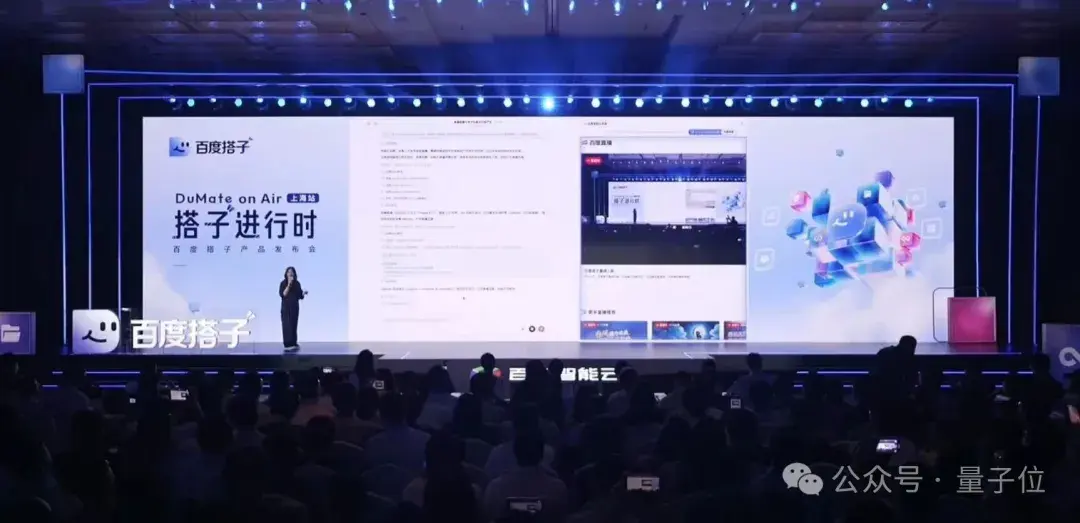
TL;DR - Baidu launched upgraded “Dazi” AI workplace agents for individuals and enterprises, emphasizing polished, ready-to-use deliverables from long-running workflows rather than basic content generation. Its professional suites combine domain knowledge, tools, workflows, and organizational data to automate tasks such as multi-platform content production and financial analysis.

  • In a media workflow test, the agent analyzed historical performance data and event materials, then produced 17 deliverables spanning strategy, fact-checking, articles, social posts, video scripts, and visual assets.
  • The enterprise edition offers 15 professional suites and 96 skills across finance, legal, product development, operations, and HR, with company knowledge bases for grounding outputs in private processes and data.
  • A proprietary Harness engine manages task decomposition and tool execution; Baidu claims it reduces token consumption by 75% without degrading task results.
  • Deep Search, Deep Research, long-term memory, multimodal generation, and multi-model routing support research and production, while a VPC edition adds access controls, isolation, auditing, and human approval for high-risk actions.

Efficiency & Systems 2

Representative image for 32GB大显存加持,英特尔锐炫Pro B70搞定AI漫剧创作

32GB大显存加持,英特尔锐炫Pro B70搞定AI漫剧创作

Rank 57 · Content 60 · Popularity N/A

TL;DR - Intel showcased a local AI-video production workflow built around its Arc Pro B70 GPU, MiniMax H3, and Digital Folding’s DFCine software. The 32GB card targets lower-cost, privacy-preserving production from script and asset management through generation, upscaling, editing, and delivery.

  • Arc Pro B70 combines 32GB VRAM, a claimed 367 TOPS, dual hardware codec units, and AI acceleration for local image and video workflows.
  • Intel says the card supports MiniMax H3 from launch, Qwen3.8-27B Q4_KM inference at up to 52 tokens/s with MTP enabled, and a 256K context window.
  • The demonstrated workflow generated 720p video locally and upscaled it to 1080p–2K, while DFCine consolidated more than 20 production steps into three core nodes.
  • Single- to four-GPU configurations support scalable concurrent inference, with Intel claiming multi-card systems can handle models exceeding 100B parameters.
Representative image for 从Data到Agent:华为云AI-Ready数据基础设施全链路能力亮相数博会

从Data到Agent:华为云AI-Ready数据基础设施全链路能力亮相数博会

Rank 57 · Content 60 · Popularity N/A

TL;DR - Huawei Cloud unveiled an AI-ready data infrastructure stack that connects hybrid-cloud data management, multimodal data delivery, enterprise data agents, and trusted data exchange. It aims to turn fragmented enterprise data into governed inputs for model training, agent inference, and automated decision-making.

  • Huawei Cloud Stack provides lifecycle capabilities spanning reliable data management, efficient provisioning, intelligent use, and trusted circulation across clouds, data centers, and production environments.
  • AI DataLake targets faster, higher-quality multimodal data supply for model training and agent inference, while DataArts integrates IT, operational, engineering, and enterprise-knowledge data with more than 40 processing operators.
  • Privacy computing, APIs, sandboxes, and blockchain support auditable, controlled cross-organization data exchange, with deployments cited in municipal, manufacturing, transportation, and utility projects.
  • The architecture creates a feedback loop in which business interactions generate new enterprise data that can further improve models and agents.

AI Startup Ecosystem 1

Supporting Thailand’s next generation of AI startups

Rank 50 · Content 50 · Popularity N/A

TL;DR - OpenAI and Thailand’s Ministry of Higher Education, Science, Research and Innovation (MHESI) are launching an eight-week accelerator for 10 AI startups in health, wellness, and education. The initiative aims to help participants turn prototypes into trusted products.

  • The accelerator combines support from OpenAI and a Thai government ministry.
  • Ten startups will participate across health, wellness, and education.
  • The program focuses on advancing AI prototypes toward product deployment.
  • Trustworthiness is an explicit goal, though specific technical methods are not provided.

Autonomous Driving 1

上半年营收增30%,毛利增55%,佑驾创新盈利能力持续改善

Rank 40 · Content 35 · Popularity N/A

TL;DR - Autonomous-driving company MINIEYE reported 30.1% revenue growth and 55.6% gross-profit growth for the first half of 2026, driven by assisted-driving, smart-cockpit, and L4 vehicle deployments. Its 423.4% surge in autonomous-vehicle service revenue suggests L4 logistics and shuttle products are beginning to commercialize at scale.

  • Revenue reached RMB 450 million, while gross margin improved from 15% to 17.9% as product mix and operating scale improved.
  • L2 offerings expanded across passenger and commercial vehicles, and smart-cockpit revenue grew 105.9%.
  • L4 revenue reached RMB 53 million; the map-free T5 Pro logistics vehicle entered batch deployment, alongside autonomous-bus orders worth over RMB 130 million.
  • R&D spending rose 33% to advance autonomous driving, embodied intelligence, and a shared data flywheel connecting L2 production vehicles with L4 fleets.

Document AI 1

Representative image for 20ms把PDF变成Markdown!开源OCR神器快了近300倍

20ms把PDF变成Markdown!开源OCR神器快了近300倍

Rank 57 · Content 60 · Popularity N/A

TL;DR - Firecrawl’s CTO announced OCR It, an open-source browser extension that converts image-based PDFs and other documents into AI-friendly text or Markdown locally. It reportedly processes a simple PDF in 20 ms—nearly 300× faster than Docling at comparable quality—but remains unreliable on complex layouts.

  • Runs offline using bundled Tesseract, requires no API key, and requests site permissions only when needed.
  • Supports Chrome and Firefox, with manual capture and an automatic screenshot–OCR–page-turn workflow capped at 300 pages.
  • Users can review or reprocess individual pages, then copy the combined text or download it as a .txt file.
  • Works best on clear, simply formatted documents; headings, footnotes, tables, formulas, and mixed layouts can reduce accuracy.

Embodied AI 3

Representative image for 首家“碰一下”机器人租赁体验店落地上海徐家汇!支付宝“碰一下”解锁机器人互动与租赁新体验

首家“碰一下”机器人租赁体验店落地上海徐家汇!支付宝“碰一下”解锁机器人互动与租赁新体验

Rank 43 · Content 40 · Popularity N/A

TL;DR - Shanghai has opened China’s first Alipay “Tap!”-enabled robot rental experience store, letting customers activate, control, and rent Unitree robots with a phone tap. The launch demonstrates a new consumer-facing commercialization channel for embodied AI.

  • The store was created by Jushen Technology’s Jishizu brand, a core Unitree ecosystem partner, using Alipay’s “Tap!” capability.
  • A tap can launch an AI agent that controls robot actions, including robot-dog interactions and group dance performances.
  • The service integrates robot discovery, interaction, payment, and rental into one offline workflow.
  • Alipay says its upgraded platform reaches 400 million users and connects more than 30 million offline AI touchpoints.
Representative image for 去年归国的徐梦迪,成了清华姚班班主任

去年归国的徐梦迪,成了清华姚班班主任

Rank 40 · Content 35 · Popularity N/A

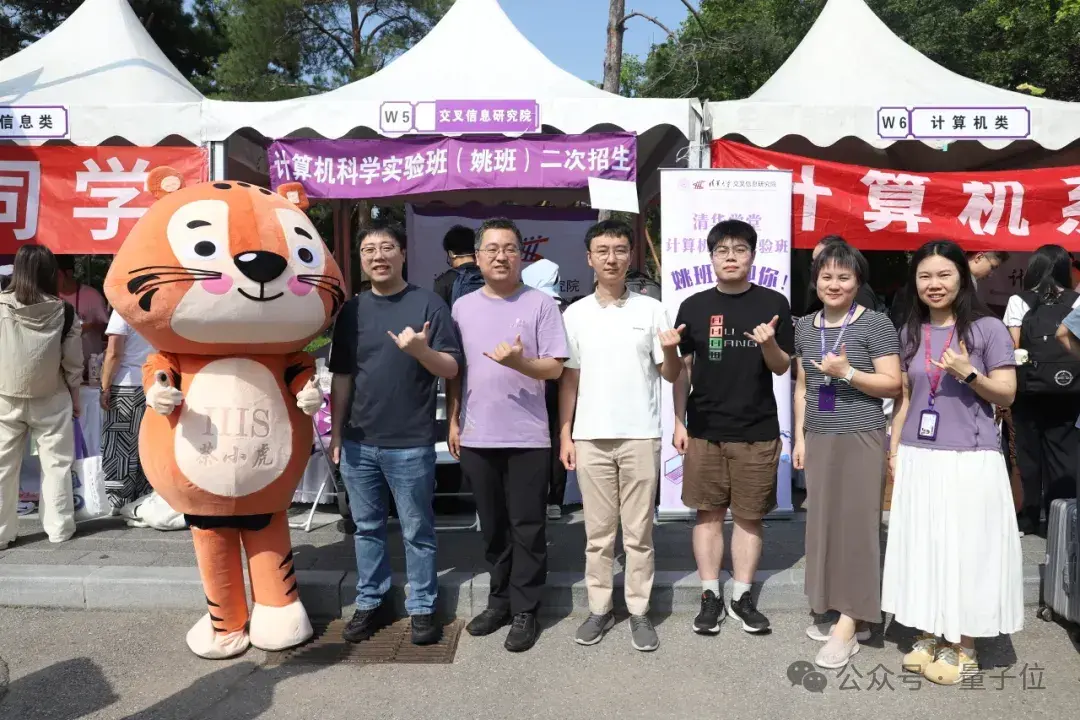
TL;DR - Robotics researcher Mengdi Xu, who returned from Stanford to Tsinghua University in 2025, has become a faculty adviser for the elite Yao Class. Her work argues that general-purpose robots need rapid adaptation, reusable skills, and reliable instruction-following—not scaling alone.

  • Xu’s CMU award-winning dissertation explored few-shot task adaptation, transferable robot skills, and using LLM knowledge for physical problem-solving.
  • Prompting Decision Transformer adapts policies to unseen tasks from short demonstration trajectories without additional parameter fine-tuning.
  • RoboTool analyzes physical constraints, selects tools, plans actions, and generates executable code, enabling robots to devise unconventional solutions.
  • Her Tsinghua research targets robots that are scalable, adaptable, and reliable, spanning robot learning, human-robot interaction, and AI safety.
Representative image for 《时代》周刊全球AI 100放榜,精准捕获稚晖君最“想低调”的幕后老板

《时代》周刊全球AI 100放榜,精准捕获稚晖君最“想低调”的幕后老板

Rank 36 · Content 30 · Popularity N/A

TL;DR - TIME named AgiBot founder, chairman, and CEO Deng Taihua to its 2026 TIME100 AI “Innovators” list, recognizing his role in scaling humanoid robots from research demonstrations toward commercial deployment.

  • AgiBot reportedly shipped 5,100 robots in 2025 and is competing with Unitree for leadership in China’s humanoid robotics market.
  • The company launched its GO-2 vision-language-action model in April 2026, claiming it narrows the gap between high-level semantic reasoning and low-level motion control.
  • AgiBot targets reliable, repeatable robot applications in manufacturing, logistics, retail, and hospitality rather than staged demonstrations.
  • Deng previously led major wireless and computing businesses at Huawei, including ecosystem development around Kunpeng processors and Ascend AI chips.