🛰️ Daily AI Frontier
⚠ WeChat login expired or unavailable — new articles may be missing. Reconnect WeChat. An upstream outage cannot be fixed by scanning. Latest stored WeChat publication: 2026-08-25.

WeChat reconnect targets werss, while collection still uses wewe. Login alone does not complete the provider cutover.

Twitter/X collection is rate limited. 0 of 13 handles succeeded at the last check. Stored posts remain available; partial coverage is not a complete timeline.
37 works · 2 categories · 12 topics · blog 12 journal 10 arxiv 15 generated 2026-10-08 14:26:32 UTC
Top highlights — Research

LLM Agents 9

Representative image for RoboJEPA: Scaling Robotic Latent World Models

RoboJEPA: Scaling Robotic Latent World Models

Rank 88 · Content 100 · Popularity 59

TL;DR - RoboJEPA is an 8B-parameter latent world model trained across 12 robotic embodiments that exhibits predictable scaling in rollout accuracy and robotic planning performance. Its scaling laws and zero-shot deployment results could help estimate real-world agent capabilities before costly hardware evaluation.

  • Latent “imagination” error follows a second-order power law in training compute, enabling extrapolation beyond the scales used to fit the law.
  • Planning performance improves predictably with compute and strongly correlates with imagination error, making the latter a useful proxy for real-robot testing.
  • RoboJEPA can plan zero-shot from a single goal image to complete long-horizon tasks on physical robots.
  • The authors release model checkpoints, training code, and robot deployment code.
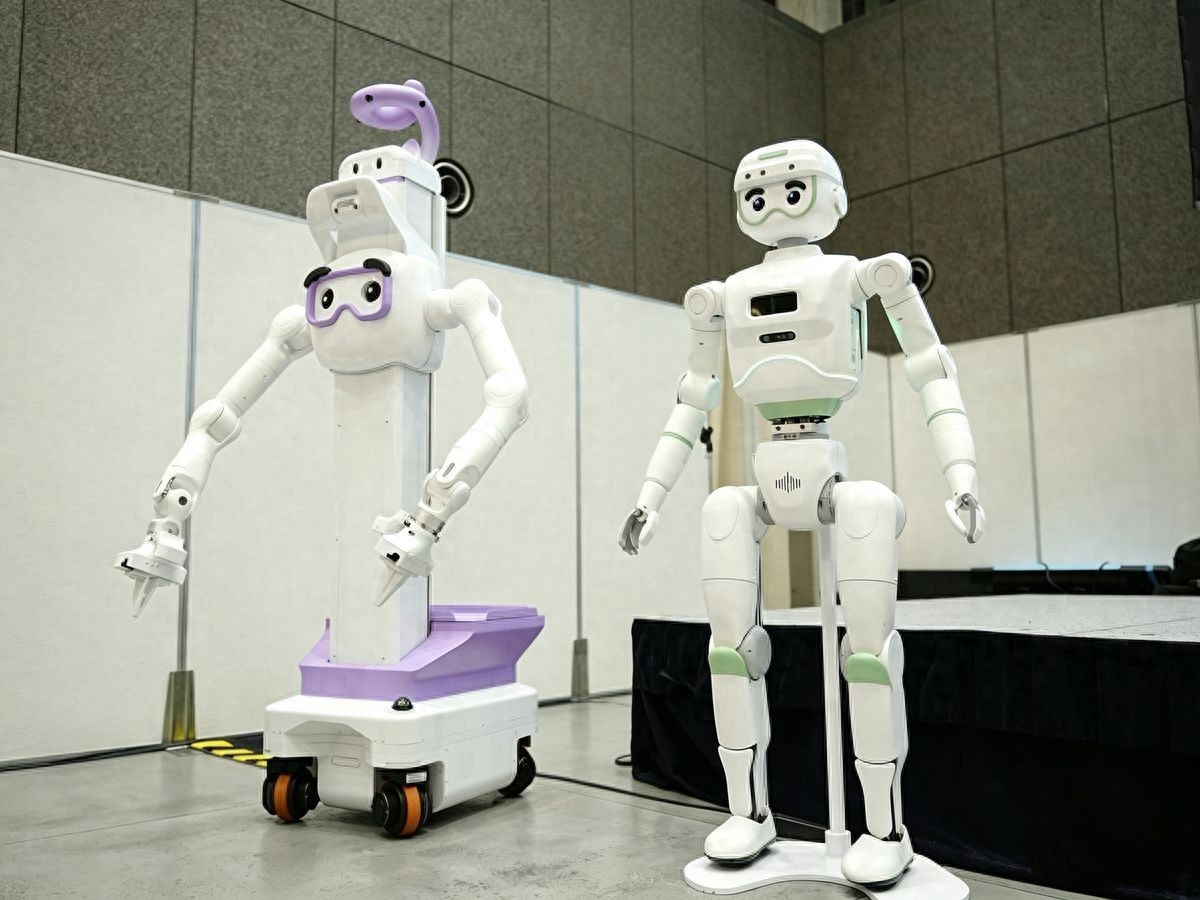
Representative image for RobotWorld: Benchmarking Multimodal Agents for Robot Use Across Diverse Tasks and Embodiments

RobotWorld: Benchmarking Multimodal Agents for Robot Use Across Diverse Tasks and Embodiments

Rank 86 · Content 95 · Popularity 65

TL;DR - RobotWorld is a simulation benchmark evaluating multimodal agents on 84 physical-control tasks across diverse robot embodiments. It shows that agents can build sophisticated perception and control workflows, but still struggle to compose them into reliable, adaptive behavior.

  • Tasks span manipulation, mobile manipulation, locomotion, driving, and aerial control, with interaction budgets and executable success checks.
  • Agents demonstrated capabilities including image segmentation, camera calibration, spatial estimation, and dynamics-based computation.
  • Common failures included losing task-relevant object states, repeating ineffective actions, recovering too late, and prematurely declaring success.
  • Model strengths varied: Astra performed better on spatial and constrained-contact goals, while Opus 5.5 did better on continuous-balance and timed-interaction tasks.
Representative image for CoTrace: Data Recipes for Training Terminal Agents with Harness-Model Co-Evolution

CoTrace: Data Recipes for Training Terminal Agents with Harness-Model Co-Evolution

Rank 85 · Content 95 · Popularity 61

TL;DR - CoTrace is a harness-aware training recipe for terminal agents that coordinates runtime-harness evolution with model training. Matching verified training trajectories to the deployed harness improves task performance and transfer while requiring less compute than pooling data from incompatible harnesses.

  • CoTrace controls trajectory routing, provenance matching, and curriculum refresh within an alternating harness-search and policy-training framework.
  • Recurring execution failures guide harness synthesis; SFT uses verified, harness-matched rollouts, while RL uses fresh online interactions.
  • On the Tmax promotion split, Qwen3.5-9B improves from 78 to 88 solved tasks with SFT and reaches 90 with online RL.
  • Terminal-Bench 2.1 and SWE-bench Lite evaluations indicate that training/evaluation harness consistency prevents procedural failures under mismatched scaffolds.
Representative image for RoboQuest: Generalist Physical Agents that Search, Inspect and Test

RoboQuest: Generalist Physical Agents that Search, Inspect and Test

Rank 84 · Content 95 · Popularity 57

TL;DR - RoboQuest is a benchmark for embodied agents that must search, inspect, and physically test their environments before completing mobile manipulation tasks. Frontier multimodal agents achieve at most 23% success, revealing that active information gathering—not basic execution—is the primary bottleneck.

  • Ten tasks assess goal-directed exploration under uncertainty through object search, manipulation-based inspection, and interactive testing.
  • Five frontier multimodal agents are evaluated through a shared visuomotor interface; the best succeeds in only 23% of episodes.
  • A π₀.₅ policy fine-tuned on released full-episode demonstrations almost never succeeds.
  • Agents frequently stop exploring before gathering necessary evidence and rarely prevent or repair disturbances caused by exploration.

RSIGym: A Flexible Environment for Recursive Self-Improvement

Rank 83 · Content 95 · Popularity 56

TL;DR - RSIGym is an open-source environment for studying recursive self-improvement by letting agents carry accepted changes across cycles and jointly optimize data, training, and execution harnesses. It provides reusable research services, controlled budgets, and a cross-benchmark RSI-Index for evaluating progress.

  • RSIGym exposes training, inference, rollout, evaluation, and sandbox execution as reusable services with shared permission and budget controls.
  • It supports Data, Harness, and Joint improvement tracks; Joint runs can optimize data, training settings, and execution infrastructure together.
  • RSI-Index measures the mean fraction of the remaining performance gap closed across five benchmarks spanning software engineering, terminal use, mathematics, scientific reasoning, and skills.
  • Among six frontier models under a $500 service budget per benchmark run, Opus 5 scored the highest RSI-Index at 0.4809, with selected systems improving SWE-bench Verified from 17.67% to 50.33% and AIME from 31.67% to 97.78%.

Agentic RSR: Real-to-Sim-to-Real through Scene Reconstruction and Execution-Grounded Robot Policies

Rank 83 · Content 95 · Popularity 54

TL;DR - Agentic RSR unifies agent-driven scene reconstruction, simulation policy development, and real-robot execution around the same manipulation task. Its real-world task success reached 80% of simulation success, suggesting substantial transfer from reconstructed environments to hardware.

  • An agent reconstructs a metric-scale MuJoCo scene from workspace video, refining it with visual feedback and task-relevant interaction checks.
  • A coding agent develops policies progressively, moving from privileged object poses to visual observations and randomized simulation.
  • Policies can interleave multiple observations and actions, using execution feedback to retry or revise their approach.
  • Across 18 scenes and two robots, reconstruction averaged 0.1057 m depth MAE, 11.04 Lab ΔE₇₆, and 0.6990 grayscale SSIM.

Before They Can Solve: Predicting Post-Training Coding-Agent Performance from Base Models

Rank 82 · Content 95 · Popularity 51

TL;DR - This paper proposes evaluating base models using successful post-trained coding-agent trajectories to predict which checkpoints merit costly agentic post-training. Three trajectory-based metrics closely match post-training SWE-bench Verified rankings across ten public model pairs.

  • The method identifies the first code-changing step whose cumulative patch makes a failing repository pass its tests.
  • Decisive-Action BPB measures the base model’s probability mass on that verified action.
  • Patch MCQ tests whether the model selects the successful patch over verifier-rejected alternatives.
  • Prefix-conditioned pass@$K$ checks whether the model can generate any test-passing continuation from the trajectory context, avoiding cold-start tool-calling failures.

SciExam for ENSO: Can AI Agents Build Climate Models?

Rank 76 · Content 95 · Popularity 32

TL;DR - SciExam for ENSO evaluates whether AI agents can develop scientifically valid climate models without a known-answer rubric. Six of twelve tested agent systems outperformed a published ENSO model, primarily in reconstruction and forecasting.

  • Agents had six hours to process real observations, create frozen diagnostics, and iteratively develop low-order stochastic ENSO models.
  • Hidden graders assessed statistical fidelity, recovery of unobserved variables, and forecasts for held-out years.
  • Stronger models aligned with competing scientific explanations for ENSO’s warm-cold asymmetry, despite the benchmark never mentioning that debate.
  • Controlled runs suggest the top system’s performance was not due to memorizing the dated observational record and was sensitive to the information provided.

RECAST: Learning to Compute the Right Context through Adaptive Evidence Routing

Rank 76 · Content 95 · Popularity 32

TL;DR - RECAST is a learned agentic framework that constructs evidence by routing across retrieval, computation, and synthesized tools rather than relying only on similarity-based retrieval. It substantially outperforms strong baselines across heterogeneous and held-out benchmarks.

  • A lightweight RouterLM sequentially selects primitive operations or requests custom operations compiled into executable code by a frozen CompilerLM.
  • Once sufficient evidence is assembled, a frozen AnswerLM generates the final response.
  • The RouterLM is trained with supervised fine-tuning followed by group relative policy optimization (GRPO).
  • RECAST achieves a 75.6% mean success rate across six benchmark families, beating the strongest large-model baseline by 15.9%, and improves over the strongest baseline by 15.0% on three held-out benchmarks.

Medical/Healthcare AI 3

Human lung organoid modelling of tissue-resident antiviral T cell responses

Rank 80 · Content 85 · Popularity 68

TL;DR - Human lung organoids retaining resident immune cells model how SARS-CoV-2 infection triggers protective tissue-resident memory T-cell responses. The system offers a platform for studying local recall immunity and human antiviral defense within lung tissue.

  • The organoids contain endogenous tissue-resident immune cells.
  • SARS-CoV-2 infection elicits protective resident memory T-cell responses.
  • The model demonstrates localized immune recall within human lung tissue.
  • It could support mechanistic studies of tissue-resident antiviral immunity.

A preinvasive regulatory T cell axis for lung cancer interception

Rank 75 · Content 90 · Popularity 42

TL;DR - Researchers identified an effector regulatory T-cell circuit that can be tracked through blood samples during lung cancer development. Blocking this immune network before invasive disease emerged reduced tumour incidence and size, suggesting a potential strategy for early cancer interception.

  • The identified immune circuit is associated with preinvasive lung cancer progression.
  • Blood-based monitoring could provide a minimally invasive way to track this process.
  • Preinvasive blockade of the circuit reduced both tumour occurrence and tumour size.
  • The findings support targeting regulatory T-cell networks before lung cancer becomes invasive.

A gut microbial odd-chain fatty acid alleviates atherosclerosis in mice

Rank 74 · Content 80 · Popularity 60

TL;DR - A Nature study reports that Bacteroides uniformis alleviates atherosclerosis in mice through the microbial odd-chain fatty acid pentadecanoic acid. The metabolite directly inhibits HMG-CoA reductase, promoting hepatic cholesterol clearance.

  • The reported evidence comes from a mouse model, so relevance to humans remains unestablished.
  • B. uniformis administration mitigated atherosclerosis via pentadecanoic acid.
  • Pentadecanoic acid directly inhibited HMG-CoA reductase, a central enzyme in cholesterol synthesis.
  • The proposed mechanism links a gut microbial metabolite to increased liver-mediated cholesterol clearance.

Bioinformatics AI 3

Tangermeme: a toolkit for understanding cis- regulatory logic using deep learning models

Rank 88 · Content 95 · Popularity 71

TL;DR - Tangermeme is a software toolkit for identifying and analyzing cis-regulatory patterns with deep learning models. It aims to provide a flexible, efficient, all-purpose framework for studying gene-regulatory logic.

  • Published in Nature Methods on October 8, 2026.
  • Focuses on deep learning-based cis-regulatory pattern identification and analysis.
  • The provided summary describes the package as comprehensive and flexible but does not report specific methods, benchmarks, or biological findings.

Dynamics of human cardiogenesis and its disruption in trisomy 21

Rank 86 · Content 95 · Popularity 66

TL;DR - This Nature study combines single-cell and spatial multiomics to map cellular niches during human heart development and examine how trisomy 21 disrupts cardiogenesis. It offers insight into normal cardiac organization and developmental mechanisms potentially underlying congenital heart defects.

  • Defines cellular niches in the developing human heart using integrated single-cell and spatial measurements.
  • Characterizes pacemaker-cell organization, cardiomyocyte maturation, and heart-wall compaction.
  • Identifies developmental perturbations associated with trisomy 21.
  • Provides a high-resolution framework for studying human cardiac development and disease.

Genome accessibility reveals disease risk that gene expression misses

Rank 79 · Content 95 · Popularity 42

TL;DR - A large-scale study jointly analyzed gene expression and genome accessibility in 10 million immune cells from 1,108 people. It links disease-associated genetic variants to regulatory accessibility changes that expression measurements alone can miss.

  • Most disease-associated variants occur outside genes and can affect how strongly genes are expressed.
  • The study measured genome accessibility and gene expression simultaneously at single-cell scale.
  • Joint analysis connected disease-linked accessibility changes with their downstream effects on gene expression.
  • The findings highlight chromatin accessibility as a complementary signal for interpreting genetic disease risk.

LLMs & Foundation Models 4

Retrofitting language models to operate over bytes

Rank 91 · Content 100 · Popularity 69

TL;DR - Byteification is a general method for retrofitting large language models to process raw bytes rather than subword tokens. The approach reportedly nears the capabilities of subword-based systems and may be especially useful for scientific data.

  • Converts existing language models to byte-level operation rather than requiring a conventional subword interface.
  • Aims to retain capabilities comparable to subword-based models.
  • Byte-level processing may better accommodate scientific data, though the provided summary does not specify benchmarks or quantitative results.

Decoupling Exploration from Optimization in RLVR

Rank 80 · Content 100 · Popularity 32

TL;DR - Exploration-Distillation (ExpDis) separates novelty-driven exploration from policy optimization in RL with verifiable rewards, preventing aggressive exploration from degrading the final model. It improves mathematical reasoning and produces a wider variety of correct solutions.

  • Explorer policies receive novelty bonuses, while a separate student learns only from filtered, correct, high-quality trajectories.
  • Alternating exploration and distillation enables stronger exploration without destabilizing the student policy.
  • ExpDis outperforms DAPO across seven mathematical reasoning benchmarks and two model families at equal wall-clock budgets.
  • Improved pass@$k$ scaling indicates greater diversity among correct generated solutions.
Representative image for Which Rollout Taught It That? BehaviorTrace and the Limits of Training-Data Attribution in Online RL

Which Rollout Taught It That? BehaviorTrace and the Limits of Training-Data Attribution in Online RL

Rank 80 · Content 100 · Popularity 32

TL;DR - BehaviorTrace is an evaluation harness for testing whether gradient-based attribution can identify which online RL rollouts taught an LLM a planted behavior. Experiments show that apparent attribution signals are often driven by confounders and are unstable across seeds and generation draws.

  • On Qwen2.5-1.5B fine-tuned with GRPO, ranking training steps by gradient magnitude alone achieved 4.2–4.5 times chance and matched or beat the best targeted estimator on two of three seeds.
  • At saturated checkpoints, model fluency predicted the behavior label at least as well as all evaluated gradient-based methods.
  • After controlling for fluency, per-rollout attribution results varied substantially across seeds and generation samples, making single-run conclusions unreliable.
  • Trigger-token gradients consistently aligned with targets measured where the planted behavior occurred; the paper converts its findings into an RL-attribution evaluation checklist.

Retrofitted LLM can count the letter ‘i’s in ‘artificial intelligence’

Rank 72 · Content 85 · Popularity 42

TL;DR - A technique called byteification retrofits existing LLMs to process text at the individual-byte or letter level, addressing tasks such as counting the letter “i” in “artificial intelligence.”

  • Most LLMs cannot reliably reason about individual letters because they typically process tokenized text rather than raw characters.
  • Byteification is designed to add this finer-grained capability to existing models.
  • The brief description does not provide implementation details, evaluation results, or limitations.

Multimodal & Generative 1

Representative image for QuadTok: Quadtree Visual Tokenizer for Autoregressive Image Generation

QuadTok: Quadtree Visual Tokenizer for Autoregressive Image Generation

Rank 82 · Content 90 · Popularity 63

TL;DR - QuadTok is a quadtree-based visual tokenizer that adaptively uses finer tokens for complex image regions and coarser tokens for homogeneous areas. It reduces token counts while preserving reconstruction quality and supports efficient autoregressive image generation with spatial control.

  • Uses a hierarchical quadtree to preserve 2D spatial structure while retaining sequence-level flexibility.
  • Saves about 10% of tokens on ImageNet and 9% in zero-shot COCO transfer versus a fixed 256-token grid, with comparable reconstruction fidelity.
  • A 947M-parameter GPT-style generator achieves 2.08 gFID on ImageNet at 256×256 resolution.
  • The quadtree representation enables zero-shot spatially controlled image generation.

Efficiency & Systems 2

Training Parallel Speculative Draft Models by Directly Minimizing Expected Decoding Rounds

Rank 82 · Content 95 · Popularity 51

TL;DR - This paper formulates parallel speculative decoding as a Markov reward process and introduces Expected Decoding Rounds (EDR), an objective that directly minimizes the expected number of decoding rounds. EDR improves drafting efficiency by accounting for dependencies between token acceptance and the starting points of subsequent rounds.

  • EDR exactly represents expected decoding rounds by weighting local rejection costs according to state occupancy, avoiding block-local surrogate objectives and auxiliary hyperparameters.
  • The authors derive an exact temporal-difference gradient for unbiased stochastic optimization using target-model rollouts.
  • The framework also provides an exact offline evaluator for comparing drafters on shared rollouts without executing speculative decoding.
  • Fine-tuning DSpark and DFly with EDR improves mean accepted length and outperforms existing objectives across nine math, coding, and chat benchmarks.

Fault-tolerant foundation models

Rank 80 · Content 100 · Popularity 32

TL;DR - This paper finds that LLMs trained on simulated faulty digital hardware become more error-resilient as they scale. The result suggests that fault-tolerant models could enable inference on less reliable, lower-energy hardware.

  • Modified neural scaling laws, derived from 40,000 GPU-hours of experiments, quantify increasing fault tolerance with model size.
  • The authors propose that models learn computations resembling effective error-correcting codes.
  • The inferred relative overhead for this error correction remains finite as models grow.
  • Formal fault tolerance is presented as a conjecture, not a proven result.

Embodied Robotics 1

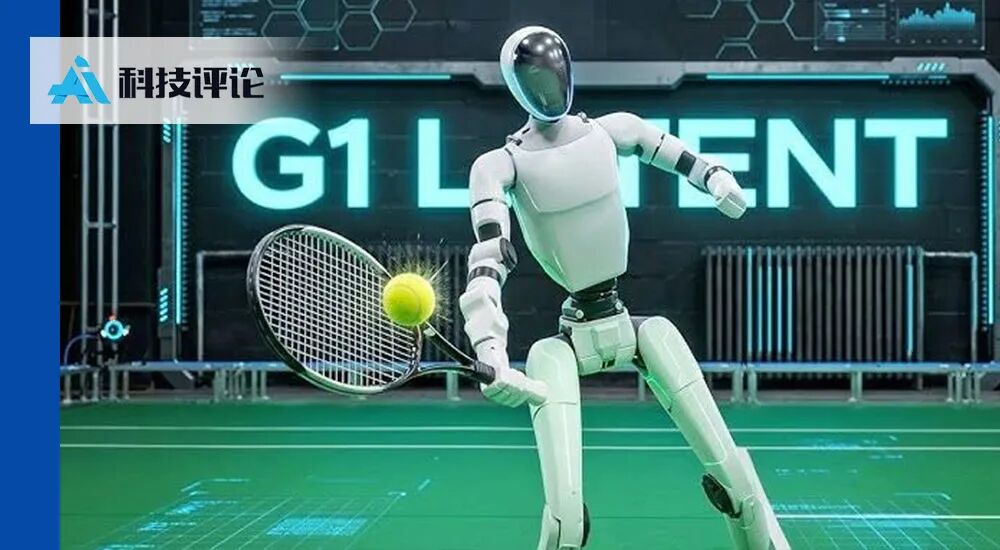
Representative image for 银河通用&清华 LATENT:用「不完美人类数据」让机器人学会网球对打 | IROS 2026

银河通用&清华 LATENT:用「不完美人类数据」让机器人学会网球对打 | IROS 2026

Rank 75 · Content 85 · Popularity N/A

TL;DR - LATENT trains a Unitree G1 humanoid to return tennis shots by combining five hours of imperfect amateur motion-capture fragments with a learned latent action space, reinforcement learning, and sim-to-real randomization. It shows that limited, noisy human demonstrations can provide useful motion priors for dynamic whole-body skills without being copied exactly.

  • The system compresses human motion patterns into a continuous “action dictionary,” while a Latent Action Barrier constrains unnatural deviations and improves motion smoothness and joint torque.
  • Simulation randomizes robot and ball dynamics, observation noise, dropped frames, and latency; removing ball randomization reduced real-world forehand success to 16.67%, while removing observation noise reduced backhand success to 0%.
  • LATENT achieved 96.52% forehand success in simulation; reported real-world return rates were 90.90% for forehands and 77.78% for backhands under the study’s controlled setup.
  • Real-world trials still relied on a large motion-capture system rather than onboard perception, and demonstrated reliable returns—not autonomous competitive tennis.

Human Microbiome 1

Gut microbes that trace ancient human journeys

Rank 65 · Content 75 · Popularity 42

TL;DR - Indigenous Hadza and Tsimane populations share gut microorganisms that may preserve traces of ancient human migrations. The finding could also clarify which microbes have been lost from industrialized societies.

  • Compares gut microorganisms in Indigenous African Hadza and South American Tsimane populations.
  • Shared microbes may offer evidence about historical human dispersal across continents.
  • The work highlights microbiome losses potentially associated with industrialized lifestyles.
  • The provided excerpt does not specify methods, sample sizes, or individual microbial species.

Robot Learning 1

Representative image for Long-WAM: Scaling the Context of World-Action Models

Long-WAM: Scaling the Context of World-Action Models

Rank 88 · Content 95 · Popularity 71

TL;DR - Long-WAM is a world-action model framework that uses autoregressive video pretraining and systems optimizations to exploit longer visual histories for real-time robot control. It improves long-horizon and dynamic manipulation while retaining future-video prediction on deployable hardware.

  • Extending context from 0 to 19.2 seconds increased RoboCasa GR-1 success from 63.3% to 78.7%; bidirectional pretraining showed no net benefit.
  • Autoregressive pretraining preserves causal history-to-future structure, with robot-domain video further improving GR-1 and LIBERO-Long performance.
  • Long-WAM led compared methods on LIBERO-Long, RoboTwin 2.0, and DOMINO, and achieved 95% success on dynamic cup stacking versus 0/20 trials for Pi0.5 and Fast-WAM.
  • Streaming encoding, asynchronous execution, and hardware-specific acceleration enabled real-time deployment, including 107.4 ms action chunks on an RTX 5090.
Top highlights — Industry & News

LLM Agents 1

Representative image for ChatGPT踢到铁板了!能破解千禧数学难题,但论文复现率低至13.98%?

ChatGPT踢到铁板了!能破解千禧数学难题,但论文复现率低至13.98%?

Rank 71 · Content 80 · Popularity N/A

TL;DR - UniPat AI introduced PaperBenchX, a benchmark for testing whether AI agents can reproduce published scientific results through executable, verifiable workflows. Across 93 multidisciplinary tasks, the strongest evaluated configuration, GPT-6 Astra, achieved only a 13.98% complete-reproduction rate, exposing a major gap between solving isolated problems and conducting reliable end-to-end science.

  • PaperBenchX spans 12 research fields and 10 domain-native environments, with 3,168 expert-validated scoring criteria.
  • Submitted workflows are rerun offline from scratch after generated outputs are deleted; scoring considers only regenerated, traceable evidence.
  • Agents performed substantially better at modeling (62.70%) and execution (61.84%) than validation (42.80%), showing that plausible outputs often lack scientific verification.
  • Twelve representative tasks are open-sourced, while 81 remain private to preserve the benchmark’s long-term evaluation value.

Medical/Healthcare AI 1

Representative image for 从「工具」到「智能体」:CARES 4.0在港发布,刘宏斌谈医疗AI如何走进临床

从「工具」到「智能体」:CARES 4.0在港发布,刘宏斌谈医疗AI如何走进临床

Rank 71 · Content 80 · Popularity N/A

TL;DR - CAIR launched CARES 4.0, a multimodal clinical agent designed to move beyond question-answering tools and autonomously support diagnosis, department operations, and medical research. Its deployment across more than 30 hospitals highlights both the growing clinical utility of agentic AI and the importance of safety, workflow integration, and measurable economic value.

  • CARES 4.0 uses an agent framework and medical foundation models spanning CT, MRI, ultrasound, endoscopy, and EEG, with tools for data cleaning, analysis, reporting, and lightweight model training.
  • The system supports end-to-end diagnostic assistance and intraoperative risk warnings, including proximity to critical anatomy and incomplete procedural steps.
  • To reduce hallucination risk, recommendations cite structured evidence from clinical guidelines and research, expose their reasoning path, and leave final decisions to physicians.
  • CAIR reports deployments of its laryngoscopy, bronchoscopy, and ultrasound systems across more than 30 hospitals; clinician feedback emphasizes lower workload and clearer presentation of AI outputs.

LLMs & Foundation Models 3

Representative image for GPT-6今起免费用!拒答变少,话变多了

GPT-6今起免费用!拒答变少,话变多了

Rank 71 · Content 80 · Popularity N/A

TL;DR - OpenAI is rolling out GPT-6 Luna to free and Go ChatGPT users and GPT-6 Sol to paid tiers, adding dynamic interactive interfaces and faster partial responses. The models improve factuality and resistance to instruction attacks, but safety evaluations show regressions in several sensitive-content and youth-protection categories.

  • “Intelligent UI” lets ChatGPT generate interactive diagrams, comparisons, calculators, and other task-specific controls inside conversations.
  • GPT-6 Instant reportedly begins answering web-search queries 44% faster on average than GPT-5.6 Instant and can present partial results while reasoning or using tools.
  • Sol and Luna achieved 99.99% and 99.79% resistance on an instruction-hierarchy test; both remain at OpenAI’s “High” capability threshold for cybersecurity and biochemistry.
  • Responses became substantially longer, while evaluations declined for self-harm and some graphic, sexual, and youth-safety categories—including Luna’s emotional-dependency score falling from 0.927 to 0.734.

GPT-6 and Intelligent UI for everyone

Rank 71 · Content 80 · Popularity N/A

TL;DR - OpenAI says GPT‑6 is rolling out globally in ChatGPT alongside Intelligent UI. The update emphasizes faster responses and interactive, visual experiences that users can explore directly.

  • GPT‑6 is being deployed through the ChatGPT product.
  • The rollout is described as global and intended for broad availability.
  • Intelligent UI adds visuals and interactive experiences to model responses.
  • No architecture, benchmarks, pricing, or detailed capability results are provided.
Representative image for 云栖大会观察:阿里怎么打下一阶段模型战?

云栖大会观察:阿里怎么打下一阶段模型战?

Rank 64 · Content 70 · Popularity N/A

TL;DR - Alibaba outlined an aggressive Qwen roadmap targeting 5–10 trillion parameters while using sparse architectures and AI-assisted R&D to control costs and accelerate development. It also announced broad multimodal upgrades spanning video, image, speech, music, and world models.

  • Qwen4.5 and Qwen5 are planned to scale toward 5T–10T parameters; Qwen3.8-Flash reportedly activates only 6B parameters per inference, cuts training cost to one-ninth, and raises long-context prefill throughput by 8.6× versus its predecessor.
  • Qwen3.8-Max autonomously optimized a chip network module, reducing physical area by 42% and estimated power by 59.5%, and adapted SGLang to a new Alibaba GPU in 56 hours, improving single-instance conversational throughput by 96%.
  • Alibaba said Qwen3.8-Max ran autonomously for over a month and completed 33 effective model-development experiments, illustrating its push toward recursive self-improvement across training, inference, and hardware.
  • Upcoming multimodal work includes an “Agent Video” model that plans narratives and shots, plus upgraded Qwen image and audio models, music generation, and the HappyOyster 2.0 Preview world model.

Efficiency & Systems 1

Representative image for 华为已为KV Cache单独做存储,专用SSD规格却还没定下来

华为已为KV Cache单独做存储,专用SSD规格却还没定下来

Rank 75 · Content 85 · Popularity N/A

TL;DR - Huawei’s OceanStor M900 and Nvidia’s CMX signal a shift toward dedicated, tiered storage for reusable inference KV caches, trading cheaper SSD capacity for reduced recomputation and DRAM use. The opportunity is significant, but SSD specifications and cost-performance requirements remain unsettled.

  • KV-cache offloading can improve economics: raising cache hit rates from 90% to 95% halves the share requiring recomputation, though capturing long-tail hits may demand disproportionate storage.
  • SSDs cost far less per unit of capacity than DRAM, but replacement is not 1:1; some architectures may need 5–10 times more SSD capacity while balancing latency, endurance, and procurement costs.
  • No standardized KV-cache SSD category exists yet because workloads vary widely in retention time and write endurance, with discussed requirements shifting between roughly 3 and 9 DWPD.
  • External storage mainly reduces DRAM pressure and affects time-to-first-token; active generation still relies on HBM, while data-transfer costs remain a major systems bottleneck.

AI for Mathematics 1

OpenAI posts 700 maths preprints online: mathematicians are up in arms

Rank 72 · Content 85 · Popularity 42

TL;DR - OpenAI posted 700 mathematics preprints produced using unreleased models to tackle prominent problems. The mass release has drawn objections from mathematicians, although the limited information provided does not specify their concerns or the papers’ results.

  • The collection comprises roughly 700 preprints spanning high-profile mathematical problems.
  • OpenAI used models that had not yet been publicly released.
  • The response from mathematicians indicates controversy over the initiative.
  • The supplied excerpt does not establish the preprints’ correctness, novelty, or review status.

Embodied AI 3

Representative image for 研究了1933篇 IROS 论文,我们看到了机器人学的六项新变化

研究了1933篇 IROS 论文,我们看到了机器人学的六项新变化

Rank 71 · Content 80 · Popularity N/A

TL;DR - An analysis of 1,933 IROS 2026 papers identifies a shift from monolithic, end-to-end robot learning toward systems that combine foundation models with geometry, memory, planning, perception, and real-time control. The trend suggests large models are being integrated into—not replacing—traditional robotics.

  • Robot learning increasingly overlaps with manipulation, perception, planning, and control, reflecting tighter integration across formerly distinct robotics disciplines.
  • Vision-language-action models are moving beyond proof-of-concept toward deployment challenges such as inference speed, 3D understanding, viewpoint robustness, long-term memory, and safety.
  • Explicit intermediate layers—including spatial representations, symbolic constraints, planners, and memory—are re-emerging to bridge high-level semantics and low-level physical actions.
  • Dexterous manipulation is becoming a major focus, combining tactile sensing, multimodal policies, specialized hardware, expert datasets, and closed-loop control.
Representative image for 独家 | 清华 AIR 首届博士李健雄创立本溯智能:五源资本领投,押注动作原生具身模型

独家 | 清华 AIR 首届博士李健雄创立本溯智能:五源资本领投,押注动作原生具身模型

Rank 68 · Content 75 · Popularity N/A

TL;DR - Tsinghua AIR alumnus Li Jianxiong founded BASAL Intelligence with funding led by 5Y Capital to develop action-native, in-context foundation models for robots. The approach aims to let robots adapt to new environments, tasks, and embodiments within minutes, avoiding costly data collection and retraining for every deployment.

  • BASAL prioritizes physical actions, feedback, failures, and demonstrations over the language-centric representations common in vision-language-action models.
  • Its models use long interaction contexts to adjust decisions continuously from previous actions and outcomes after deployment.
  • Core technologies include X-VLA for cross-embodiment action representations and ODEWorld for efficient latent-space modeling of long-horizon physical dynamics.
  • X-VLA reportedly won the IROS 2025 AgiBot challenge using under 1,000 hours of pretraining data, but rapid in-context adaptation still needs broader validation in real-world settings.
Representative image for 正行创新亮相APRCE 2026,发布全球首个零售物理智能24/7服务解决方案

正行创新亮相APRCE 2026,发布全球首个零售物理智能24/7服务解决方案

Rank 54 · Content 55 · Popularity N/A

TL;DR - Zhengxing Innovation unveiled a 24/7 retail robotics solution combining humanoid and wheeled-arm robots with centralized orchestration and human takeover. The system targets stocking, inventory checks, inspections, and transport in existing convenience stores without requiring layout modifications.

  • The H1 bipedal humanoid supports customer interaction, while the narrow C1 robot handles shelf replenishment and goods transport; the M1 platform coordinates tasks, monitoring, and human intervention.
  • Its SLM-0.5 world-action model reportedly achieved a 98.6% average success rate on LIBERO and 24× faster inference than unspecified mainstream alternatives.
  • A reinforcement-learning post-training loop reportedly reached 95% success in a designated stocking test, using execution results and human corrections for continued improvement.
  • Testing with a global retail chain is planned ahead of commercial availability in 2027 through direct purchases or Robotics-as-a-Service subscriptions.

Embodied Robotics 1

Representative image for 至简动力冯宗宝:在间隙仅 0.5 毫米的真实场景下,实现机器人造机器人 | IROS 2026

至简动力冯宗宝:在间隙仅 0.5 毫米的真实场景下,实现机器人造机器人 | IROS 2026

Rank 75 · Content 85 · Popularity N/A

TL;DR - Simplexity Robotics presented a system at IROS 2026 that autonomously tends two CNC machines, handling precision insertion with just 0.5 mm clearance. The demonstration shows embodied AI moving toward demanding factory applications using only 600 real-robot training trajectories.

  • SimpleWAM jointly learns video, 3D-state, and action dynamics during training, then directly generates action chunks from multimodal inputs at inference.
  • DRAM adds fixed-size recurrent associative memory to the frozen policy, preserving long-horizon context without retraining its backbone.
  • Force/torque conditioning and real-time impedance control address partially observed contact and enable recovery from blocked insertions.
  • A separately trained evaluator ranks candidate actions while the policy remains frozen; the combined approach reportedly achieved 100% success on the precision CNC insertion task.

Robotics 1

Representative image for IROS 2026大奖揭晓:长期记忆拿下最佳论文,人形机器人打网球、端托盘双双获奖

IROS 2026大奖揭晓:长期记忆拿下最佳论文,人形机器人打网球、端托盘双双获奖

Rank 75 · Content 85 · Popularity N/A

TL;DR - IROS 2026’s awards highlighted robotics systems designed for sustained, reliable operation in the physical world. The top paper, LT-Mem, gives robots volatility-aware long-term memory for understanding how environments change over time.

  • LT-Mem separates current state, historical changes, and learned temporal patterns into Live, Delta, and Meta Memory.
  • The best student paper combines physics-informed residual learning with conventional dynamics for tightly spaced quadrotor formation flight.
  • Awarded humanoid systems learned tennis from imperfect motion data and stabilized objects on a carried tray using residual reinforcement learning.
  • Other recognized work covered vision-language navigation, 4D perception, visuotactile manipulation, agricultural reconstruction, underwater localization, and industrial bin picking.