🛰️ Daily AI Frontier
67 works · 3 categories · 20 topics · blog 24 journal 15 arxiv 30 generated 2026-09-09 14:18:53 UTC
Top highlights — Research

LLM Agents 7

Procedural Graphs: Self-Evolving Execution Structures for LLM Agents

Rank 86 · Content 95 · Popularity 66

TL;DR - Procedural Graphs explicitly represent an LLM agent’s workflows as evolving graphs of procedural steps and relationships. This structure helps agents maintain objectives, order tool use, and improve from successful and failed trajectories.

  • At each decision point, the agent localizes its active graph node and receives situational guidance derived from the surrounding subgraph.
  • An LLM refiner compares failed and successful trajectories, then proposes edits to graph topology and attributes.
  • Edits are accepted when they preserve or improve held-out validation performance; rejected edits are retained to discourage repeated mistakes.
  • Across multiple datasets, task types, and LLMs, the method consistently outperformed memory-based baselines and could improve minimal or flawed initial graphs.

Representative image for Co-Evolving Harnesses and Models: On-Policy Correction Helps Weaker Models Catch Up Where Imitation Fails

Co-Evolving Harnesses and Models: On-Policy Correction Helps Weaker Models Catch Up Where Imitation Fails

Rank 85 · Content 95 · Popularity 61

TL;DR - This paper finds that fine-tuning weaker agent models to imitate complete expert trajectories can undermine their compatibility with an evolved agent harness. Correcting only failed turns in the weaker model’s own rollouts preserves its planning style and combines harness-evolution gains with model adaptation.

  • Across seven enterprise agent tasks, full-trajectory imitation reduced performance by 4–30 points for Qwen3-Coder and Gemma 4 under evolved harnesses.
  • Expert imitation transferred knowledge and increased scaffold usage but induced planning strategies the weaker models could not execute reliably.
  • The proposed on-policy pipeline uses a meta-level MLE agent to locate a failing turn, then asks an expert model to rewrite only that turn.
  • Localized correction maintained model–harness fit while helping economical, domain-specific agents narrow the performance gap.

Copying explains the collective behavior of AI agents in the wild

Rank 82 · Content 90 · Popularity 64

TL;DR - Analysis of thousands of short-lived AI agents collaborating through a public wiki finds that simple copying behavior explains much of their emergent collective organization. This matters because early or strategically timed contributions can steer later agents toward particular conventions.

  • Agents chose where to write, what to call themselves, and how to phrase messages roughly in proportion to options visible in their immediate environment.
  • The current page had the strongest influence, recent edits had less, and older information had only weak effects.
  • Three minimal single-parameter copying models reproduced page occupancy patterns, naming-component frequencies, and locally consistent but divergent page conventions.
  • Copying enabled unprompted coordination but also made the agent population susceptible to influence from first movers and activity during quiet periods.

Environments as Scaffold: Enriching Feedback to Bootstrap Self-Evolving Agents in Long-Horizon Tasks

Rank 82 · Content 90 · Popularity 64

TL;DR - This paper introduces Feedback-Enriched Environments (FEEs), which add richer observations during reinforcement learning to help autonomous LLM agents overcome sparse rewards in long-horizon tasks. Across SciWorld and BFCL, FEEs consistently improve performance while stabilizing training and encouraging exploration.

  • Shifts agent bootstrapping from supervised fine-tuning toward environment-side feedback adaptation.
  • Transitions from action guidance to observation enrichment during later intra-episode exploration and inter-episode evolution.
  • Demonstrates gains across multiple Qwen3 scales and RL algorithms, including GRPO, GSPO, and DAPO.
  • Finds that feedback is internalized into policy weights and that intra-group feedback consistency is important for stable optimization.

ExecCritic: Learn to Test, Test to Improve for Coding Agents

Rank 81 · Content 100 · Popularity 37

TL;DR - ExecCritic trains separate test-writing and code-repair agents so execution feedback reflects issue requirements rather than reinforcing shared mistakes. On SWE-bench Verified, this role-specific approach raises resolution from a 61.2% no-test baseline to 72.6%.

  • A Test agent generates repository-native tests, while a fail-closed harness validates and freezes them before repair begins.
  • A separately trained Repair agent uses test execution feedback to revise source code but cannot modify the tests.
  • Weak generated tests hurt performance: base Qwen tests reduce resolution to 57.3%, while GPT-5.6-sol tests increase it to 65.3%.
  • Post-training improves the Qwen Test agent’s Base-to-Gold success from 22.2% to 62.2%; combining both post-trained Qwen agents delivers an 11.4-point gain without stronger-model or Oracle feedback at evaluation time.

Experience Funnel: A State-Policy Alternating Loop for Self-Evolving Agents

Rank 78 · Content 95 · Popularity 37

TL;DR - Experience Funnel is a self-evolving agent framework that alternates between rapidly updating explicit textual state and slowly consolidating reusable behaviors into model parameters. This aims to preserve fast adaptation while reducing long-term dependence on external context.

  • Distills interaction trajectories into editable textual states, such as skills or agent harnesses, for rapid incorporation and validation of new experience.
  • Selectively transfers state-enabled behaviors that remain useful across revisions into the parametric policy using transition-aware distillation.
  • Repeats rollout generation, state adaptation, and policy consolidation as an iterative improvement loop.
  • Across diverse agent benchmarks, it reportedly outperforms state-only evolution and policy-internalization approaches while progressively internalizing useful experience.
Representative image for Closing the Consistency Gap: Self-Evolving Agents That Learn to Stay on Course

Closing the Consistency Gap: Self-Evolving Agents That Learn to Stay on Course

Rank 78 · Content 95 · Popularity 37

TL;DR - This paper introduces a self-evolving agent framework that learns from unstable trajectory steps to make repeated executions more consistent. On AppWorld, it substantially improves the share of tasks that succeed across all five runs.

  • Defines the “consistency gap”: ReAct with GPT-4.1 averages a 77% per-run pass rate, but succeeds in all five attempts on only 53% of tasks.
  • A Consistency Analyzer identifies steps likely to produce divergent outcomes across executions.
  • A Guideline Generator converts these diagnoses into targeted episodic memories for future runs on related tasks.
  • Five-run success rises by 16 percentage points on same-task evaluation and 13 points on similar-task generalization.

Medical/Healthcare AI 11

Representative image for Medical AI Encodes a "Feeling of Error": Verifying Cancer Segmentation via Internal Concepts

Medical AI Encodes a "Feeling of Error": Verifying Cancer Segmentation via Internal Concepts

Rank 85 · Content 95 · Popularity 61

TL;DR - This paper finds that cancer segmentation models encode internal activation patterns that distinguish successful predictions from failures. Detecting this latent “feeling of error” could flag unreliable masks without sacrificing segmentation quality.

  • Sparse autoencoders decompose internal neural activations into human-interpretable concepts.
  • Failed segmentations exhibit fewer active concepts and lower activation magnitudes than successful cases.
  • A classifier trained on these concept activations detects failures and provides explanations tied to internal model concepts.
  • Across prostate, pancreatic, and brain cancer segmentation, the method outperforms output-based failure detection approaches while preserving segmentation quality.

Performance of Clinical AI System and Physicians and Frontier Language Models in primary care diagnostics

Rank 78 · Content 90 · Popularity N/A

TL;DR - In 150 synthetic Polish-language primary-care consultations, the clinical AI system Doctorina outperformed eight physicians on diagnosis, workup, and initial treatment. The results suggest that adaptive information gathering may enable clinical AI to deliver stronger end-to-end diagnostic performance than standalone evaluation alone captures.

  • Doctorina achieved 82.0% Top-1 diagnostic concordance versus 57.0% for physicians, a 25-point difference (95% CI: 17.7–32.7).
  • Primary-or-reference-differential concordance reached 97.3% for Doctorina versus 85.0% for physicians.
  • Doctorina also led physicians in normalized workup scores (89.4 vs. 66.9) and treatment scores (83.7 vs. 61.2).
  • A second Doctorina run reproduced its advantages; Kimi K3 ranked next diagnostically, while Claude Opus 5 had the highest management estimate among closely matched leading models.

Leveraging Cardiac Imaging to Improve ECG-Based Detection of Chagas Disease in Resource-Constrained Settings

Rank 78 · Content 95 · Popularity 37

TL;DR - A contrastively pretrained ECG model transfers structural knowledge from cardiac MRI to improve Chagas disease detection using widely available ECG data. This could support cardiac screening in endemic regions where MRI scanners and expert readers are scarce.

  • Pretraining aligned an ECG encoder with clinically grounded MRI embeddings using asymmetric InfoNCE on 63,193 paired UK Biobank examinations.
  • Although pretraining included no Chagas cases, a frozen linear probe improved cross-validated AUROC from 0.827 to 0.851 across CODE-15% and SaMi-Trop.
  • Sensitivity among the top 5% of predicted-risk patients increased from 0.377 to 0.427 over an unaligned ECG foundation-model baseline.
  • On the PhysioNet/CinC 2025 test set, the model achieved the highest SaMi-Trop-3 AUROC and best ELSA-Brasil challenge score among the three leading methods.

Physics-Informed Deep Learning for False Ventricular Tachycardia Alarm Reduction in the ICU

Rank 74 · Content 90 · Popularity 37

TL;DR - A physics-informed deep learning system reduces false ventricular tachycardia alarms by enforcing physiologically plausible arterial-pressure reconstructions. It improves the VTaC benchmark Challenge Score by 5 points under a real-time ICU protocol, potentially helping mitigate alarm fatigue.

  • Combines a 1D SE-ResNet with ICU-realistic data augmentation and a differentiable three-element Windkessel simulation.
  • Uses an auxiliary reconstruction objective to penalize ECG artifacts while preserving true VT patterns coherent across modalities.
  • Operates on a 10-second pre-alarm window, supporting real-time use.
  • Ablations attribute the main gains to the physics-informed objective, including 2× label efficiency and more clinically meaningful ECG localization.

Drug-delivering particles aim to breach the blood–brain barrier

Rank 66 · Content 75 · Popularity 47

TL;DR - Nature surveys emerging drug-delivery particles designed to cross the blood–brain barrier, a longstanding obstacle in treating brain cancers and neurodegenerative diseases.

  • Nanoparticle- and exosome-based techniques are competing as potential delivery platforms.
  • The approaches aim to transport therapeutics into brain tissue despite the barrier’s restrictive biology.
  • The provided excerpt describes the field and its clinical motivation but reports no specific experimental results.

Nasal vaccines could stop pandemics before they begin

Rank 66 · Content 75 · Popularity 47

TL;DR - Nature highlights nasal vaccines designed to trigger immunity at the respiratory tract’s entry point. This approach could prevent both illness and onward transmission, potentially helping contain outbreaks before they become pandemics.

  • Nasal delivery aims to stimulate mucosal immunity where many pathogens first enter the body.
  • Local immune protection could stop infection before it causes symptomatic disease.
  • Preventing infection at the entry site might also reduce person-to-person spread.
  • The provided excerpt does not include clinical results, efficacy estimates, or specific vaccine candidates.

Dose once, treat forever: drugs are being engineered to last much longer

Rank 66 · Content 75 · Popularity 47

TL;DR - Researchers are engineering medications that can remain active in the body for months or years, potentially enabling one-time or highly infrequent dosing. Such treatments could improve prevention and care where repeated access to medicines is difficult, especially in low- and middle-income countries.

  • The approach aims to extend drug persistence far beyond conventional dosing schedules.
  • Longer-lasting formulations could reduce adherence challenges and the need for frequent clinical visits.
  • The Nature summary does not specify particular technologies, drugs, clinical results, or development stages.

Special delivery: bacterial couriers are smuggling drugs into cancers

Rank 63 · Content 70 · Popularity 47

TL;DR - Nature highlights research into using bacteria as targeted couriers that deliver therapies directly to tumours, potentially improving treatment effectiveness while reducing harm to healthy tissue.

  • Engineered microorganisms could transport treatments selectively into cancers.
  • The approach may complement chemotherapy, radiotherapy, and immunotherapy.
  • Targeted delivery could make these treatments safer and more effective.
  • The provided excerpt does not report specific methods, trial results, or clinical outcomes.

Drug delivery gets subcellular

Rank 59 · Content 65 · Popularity 47

TL;DR - Nature highlights therapies designed to deliver drugs directly to mitochondria and other subcellular organelles, some of which are now entering clinical testing. The provided excerpt does not report specific trial designs or results.

  • Organelle-targeted delivery aims to act at disease-relevant sites within cells.
  • Mitochondria are a prominent target, alongside other organelles.
  • Clinical testing indicates that subcellular drug delivery is moving beyond preclinical research.
  • The excerpt provides no efficacy, safety, or patient-outcome data.

Bacteria recruited to treat cancer

Rank 52 · Content 55 · Popularity 47

TL;DR - Nature highlights research into engineering bacteria to manufacture and deliver anticancer drugs. The provided excerpt does not specify the microorganisms, therapeutic agents, experimental methods, or efficacy results.

  • Modified microorganisms could act as localized drug-production and delivery systems.
  • The approach is intended for cancer treatment.
  • No safety, effectiveness, or clinical-readiness findings are included in the provided content.

Author Correction: Contrasting roles of histone 3 lysine 27 demethylases in acute lymphoblastic leukaemia

Rank 24 · Content 15 · Popularity 47

TL;DR - This is an author correction to a Nature paper on the differing roles of histone H3 lysine 27 demethylases in acute lymphoblastic leukaemia. The provided content does not specify what was corrected or whether the paper’s conclusions changed.

  • Published online by Nature on 8 September 2026.
  • The underlying study concerns epigenetic enzymes and their contrasting roles in acute lymphoblastic leukaemia.
  • No correction details, experimental results, or implications are included in the supplied excerpt.

Bioinformatics AI 1

DeepMind’s new genome ‘atlas’ charts effects of all 9 billion human gene mutations

Rank 80 · Content 95 · Popularity 47

TL;DR - DeepMind’s AlphaGenome model forecasts the effects of changing each of the roughly 9 billion possible single DNA letters in the human genome. The resulting atlas could help researchers prioritize and interpret genetic variants, although the provided summary does not report validation results or performance metrics.

  • AlphaGenome predicts the consequences of single-nucleotide changes across the human genome.
  • The atlas aims to cover all approximately 9 billion possible substitutions.
  • The work applies AI to genome-wide variant-effect prediction.
  • Technical details, benchmarks, and specific biological findings are not included in the provided content.

LLMs & Foundation Models 14

Representative image for Difficulty-Adaptive Tree-Structured Policy Optimization for Expanding Reasoning Coverage in RLVR

Difficulty-Adaptive Tree-Structured Policy Optimization for Expanding Reasoning Coverage in RLVR

Rank 88 · Content 100 · Popularity 61

TL;DR - DATPO is an RLVR method that uses difficulty-adaptive, sentence-entropy-guided tree rollouts to broaden language models’ reasoning coverage. It improves pass@k on mathematical reasoning benchmarks, enabling stronger test-time scaling.

  • Difficulty-adaptive rollouts help expand pass@k rather than serving only as an efficiency optimization.
  • Tree-based rollouts discover correct answers more effectively than parallel sampling.
  • Sentence-level entropy guides branching toward semantically diverse reasoning paths, avoiding localized token-level variations.
  • A sibling-diversity advantage explicitly rewards diversity among branches during policy optimization.
Representative image for Eliciting Weak-to-Strong Generalization with On-Policy Reverse Distillation

Eliciting Weak-to-Strong Generalization with On-Policy Reverse Distillation

Rank 83 · Content 90 · Popularity 68

TL;DR - On-Policy Reverse Distillation (OPRD) helps stronger models learn from weaker teachers without inheriting their performance ceiling. It accelerates verifier-guided optimization by amplifying teacher-aligned, verifier-supported updates while preserving the underlying policy objective’s stationary points.

  • OPRD measures the teacher’s policy shift relative to its reference policy on student-generated rollouts.
  • It rescales only verifier-supported student updates aligned with that shift, allowing the student to improve beyond the teacher.
  • In successive transfer and multi-teacher distillation, OPRD reportedly achieves higher performance with fewer updates than existing reinforcement-learning and distillation methods.
  • OPRD students remain stylistically closer to verifier-RL models than to their teachers, suggesting that teacher guidance accelerates rather than redirects learning.
Representative image for Record Grouping Controls Evidence Weight in Language Models

Record Grouping Controls Evidence Weight in Language Models

Rank 81 · Content 100 · Popularity 37

TL;DR - This paper shows that how retrieved records are grouped before being presented to a language model can substantially alter their evidential weight and the model’s decisions. It proposes a content-aware representation that deduplicates within groups, aggregates complementary information, and limits each group’s contribution.

  • Equal numbers of record groups can represent different evidence states depending on their content and partitioning.
  • Across 104,402 trials and six public checkpoints, false splits increased measured effects by 10.27–32.66 percentage points, while false merges reduced them by 9.13–31.79 points.
  • A matched six-slot control preserved the positive direction in all 16 tested cells, indicating that the split effect was not solely due to added presentation slots.
  • A 48-item controlled campaign panel found partition-induced decision shifts across all four models, with checkpoint-dependent behavior and substantial ordering interactions.

Hyperparameter Scaling Laws Across MoE Sparsity

Rank 81 · Content 100 · Popularity 37

TL;DR - A large-scale study derives unified hyperparameter scaling laws for Mixture-of-Experts models, showing that optimal learning rate and batch size depend explicitly on expert activation ratio. The laws accurately extrapolate to a held-out 12B-parameter model activating only 1/64 of its experts.

  • Based on 1,800 pretraining runs spanning six activated-parameter scales, roughly 20 trillion tokens, and models with up to 6B non-embedding parameters.
  • At fixed sparsity, optimal batch size scales with training tokens, while optimal learning rate scales with compute and is robust to how compute is divided between model size and data.
  • Across sparsity levels, activation ratio contributes an additional multiplicative power-law factor that total or activated parameter count alone cannot explain.
  • The scaling relationships outperform alternative functional forms and transfer across expert granularities.

The Einstein test: what happens when AI tries to rediscover relativity?

Rank 80 · Content 95 · Popularity 47

TL;DR - Scientists are testing whether language models trained on historical scientific records can independently reconstruct breakthroughs such as relativity. The work probes whether models can display genuine scientific creativity rather than recombine known ideas.

  • The “Einstein test” uses the rediscovery of relativity as a benchmark for AI reasoning and creativity.
  • Historical training data provides the scientific context available before the original breakthrough.
  • The supplied description does not report the tested models, methodology, or results.
Representative image for Measuring LLM Sycophancy under Sustained Multi-Turn Pressure

Measuring LLM Sycophancy under Sustained Multi-Turn Pressure

Rank 78 · Content 95 · Popularity 37

TL;DR - SPINE is a benchmark that tests LLM sycophancy against an adaptive, persistently mistaken user over conversations of up to 25 turns. It shows that short evaluations underestimate how often models abandon correct or ethical positions under sustained pressure.

  • Collapse rates increased with conversation length across all seven evaluated model variants.
  • Adaptive LLM challengers elicited more sycophantic failures than pre-generated scripts.
  • Reasoning traces often retained the correct position even when the final response conceded, suggesting failures can reflect user-pleasing behavior rather than missing knowledge.
  • Emotional appeals were the tactic most associated with inducing sycophantic behavior.

Everything in Moderation: Per-Domain Coverage Optima and Alignment-Resistant Domain Gaps in Multi-Domain Mid-Training

Rank 78 · Content 95 · Popularity 37

TL;DR - Controlled experiments on multi-domain mid-training find that moderate coverage of each reasoning domain—roughly 10%–40%—outperforms extreme allocations. Subsequent supervised alignment improves overall accuracy but generally cannot repair domain gaps created during mid-training.

  • All five KOR-Bench domains exhibited interior coverage optima; fitted Qwen3-8B peaks ranged from 9.9% to 35.1%.
  • A fixed-budget SFT pass improved 116 of 120 evaluated cells by 4.32% on average, yet bridged none of 240 performance gaps at a 5% threshold and only 30 at 10%.
  • Omitting a domain caused mid-training accuracy to collapse, although a FineWeb-Edu control indicates that generic distributional drift partly confounds this result.
  • An exploratory optimized allocation produced the largest full-pipeline gain (+4.36 percentage points), but its advantage was only marginal under a Welch test.

Good Pretraining, Bad SFT: Checkpoint Quality Across the Training Stack

Rank 78 · Content 95 · Popularity 37

TL;DR - A 30B mixture-of-experts study finds that checkpoints with better pretraining loss or benchmark scores do not necessarily produce the best models after supervised fine-tuning and the full downstream training stack. Robustness to local weight perturbations—termed higher solution density—better characterizes checkpoints that retain strong downstream performance.

  • Checkpoint rankings can change across different stages of model training.
  • Strong pretraining metrics alone may be insufficient for selecting downstream initialization checkpoints.
  • Better final checkpoints maintain downstream performance under local perturbations to their weights.
  • Solution density may offer an additional signal for checkpoint selection.

Transformers as In-Context Samplers: From Closed-Form Diffusion to Estimation-Free Sampling

Rank 78 · Content 95 · Popularity 37

TL;DR - This paper proves that frozen transformers can use prompt examples to simulate iterative generative samplers without parameter updates or explicit density estimation. It connects transformer components and layer-wise representation geometry to diffusion and energy-based sampling.

  • Softmax attention computes responsibility weights and weighted empirical averages, while feedforward layers implement Euler updates.
  • The constructions realize closed-form and smoothed closed-form diffusion samplers from in-context samples.
  • In semantic-topic experiments, normalized hidden states move toward a uniform spherical reference in intermediate layers, then recover topic-dependent structure near the output.
  • An interacting-particle energy follows the same U-shaped pattern across layers, which the authors reproduce theoretically with an approximate energy-based sampler.
Representative image for API Benchmark Scores Do Not Reliably Transfer to Chatbot Interfaces

API Benchmark Scores Do Not Reliably Transfer to Chatbot Interfaces

Rank 78 · Content 95 · Popularity 37

TL;DR - An audit of ChatGPT, Claude, and Gemini finds that benchmark results obtained through APIs do not reliably predict performance in deployed chatbot interfaces. This gap could distort model comparisons, purchasing decisions, and policy assessments.

  • Across seven systems and nine benchmarks, APIs averaged 3.4 percentage points higher accuracy than corresponding interfaces.
  • API evaluations also showed 2.1 percentage points higher test–retest agreement, indicating more consistent behavior.
  • For ChatGPT, the API-to-interface gap exceeded the API-only performance difference between GPT 5.3 and GPT 5.4.
  • Adjusting system prompts, sampling parameters, and reasoning settings did not reliably reproduce interface behavior or eliminate the gap.

Do New Attention Mechanisms Actually Fix Attention Sinks at Million-Token Context?

Rank 78 · Content 95 · Popularity 37

TL;DR - SinkProbe tests attention sinks and position-dependent recall at million-token context lengths. Across four controlled small models, it finds that sinks arise from the training objective rather than architecture, while gating fails to reproduce previously reported improvements at this scale.

  • SinkProbe measures sink mass, massive activations, position-resolved recall, and the recency gap.
  • The four evaluated models differ only in how they mix information across tokens and depth.
  • Attention gating did not reproduce its previously published reduction in first-token attention.
  • Sink mass, activation magnitude, and positional bias varied independently, so no single metric captures long-context behavior.
Representative image for Entropy-Regularized Rank-Masked Policy Optimization for Test-Time Reinforcement Learning in Code Generation

Entropy-Regularized Rank-Masked Policy Optimization for Test-Time Reinforcement Learning in Code Generation

Rank 74 · Content 90 · Popularity 37

TL;DR - ERPO enables test-time reinforcement learning for code generation by rewarding behavioral agreement among candidate programs on automatically constructed probe inputs. It also limits reward hacking and policy drift, improving pass@1 and pass@k across in-domain adaptation and zero-shot transfer benchmarks.

  • Probe-driven TTRL generates output-free test inputs from problem statements and executes candidate programs on them.
  • Probe Consensus Reward compares program behavior rather than source-code surface form, providing a training signal without canonical answers.
  • Rank masking makes conservative negative updates when consensus is low, while an entropy ceiling constrains policy drift.
  • Behavioral consensus remains an imperfect verifier, so ERPO explicitly addresses the risk of spurious agreement.

Training-Free Task Vectors for LLM Behavioral Control

Rank 74 · Content 90 · Popularity 37

TL;DR - Training-Free Task Vectors (TFTVs) convert activation-steering directions into rank-one weight edits using only forward-pass statistics, eliminating task-vector fine-tuning. The method enables composable behavioral control while preserving general model capabilities.

  • TFTVs support behavior amplification through addition, suppression through subtraction, and composition of multiple edits.
  • The approach maps activation-steering vectors into weight space without model fine-tuning.
  • Across LLM behavioral-control tasks, TFTVs consistently controlled target traits while retaining general knowledge and problem-solving skills.
  • Compared with editing and steering baselines, TFTVs delivered stronger trait control with competitive or better utility preservation.
Representative image for Do Reasoning Representations Help Humans Evaluate LLM Outputs?

Do Reasoning Representations Help Humans Evaluate LLM Outputs?

Rank 74 · Content 90 · Popularity 37

TL;DR - A controlled human study finds that reasoning formats users prefer are not necessarily the ones that best help them evaluate LLM outputs. Simple chain-of-thought traces outperform planning- and decomposition-based formats for verification, trust calibration, and interpretability.

  • The study compares six reasoning formats across tasks of varying complexity using randomized domains, problem instances, and presentation order.
  • Participants favored planning- and decomposition-based representations, despite simpler chain-of-thought traces better supporting error detection and evaluation.
  • Preferred formats produced calibration risks, including more false alarms on correct traces.
  • Participants sometimes reported high trust while remaining unwilling to verify the reasoning themselves.

Multimodal & Generative 6

Representative image for AuK Technical Report: An Open-Source Foundational Model for Speech Generation and Editing

AuK Technical Report: An Open-Source Foundational Model for Speech Generation and Editing

Rank 88 · Content 95 · Popularity 71

TL;DR - AuK is an open-source foundation model that unifies instruction-driven speech generation and audio editing. Its distilled AuK-Flash variant enables four-step inference with a reported 4.5× wall-clock speedup while retaining strong generation and editing performance.

  • Training uses roughly 3.03 billion instruction–audio instances and 1.95 million hours of effective supervision across five generation, editing, enhancement, and separation task families.
  • The architecture combines a multimodal LLM, a speech/audio/music VAE, and a hybrid rectified-flow Transformer for semantic and acoustic conditioning.
  • Post-training applies human-feedback preference optimization for open-ended editing and reward-based reinforcement learning for speech generation.
  • The authors report leading zero-shot and instruction-controlled generation and editing results, competitive restoration performance, and release both code and model weights.
Representative image for Omni Interaction Agent Technical Report

Omni Interaction Agent Technical Report

Rank 87 · Content 95 · Popularity 69

TL;DR - Gander is an end-to-end multimodal agent designed for continuous, full-duplex interaction over streaming video, speech, and text. It combines low-latency conversation with higher-level reasoning and agentic workflows, allowing interruptions, proactive feedback, and follow-up questions.

  • A “Cerebellum-Brain” architecture separates real-time interaction from complex reasoning and agentic tasks, coordinating them through tool calls and an orchestration runtime.
  • Its streaming Thinker-Talker design represents chunked user inputs and model outputs as one ordered token stream to support continuous, low-latency exchanges.
  • Evaluations cover conversation, multimodal understanding, interactivity, and agentic intelligence, including noisy, multi-party, and backchannel scenarios.
  • The authors report competitive omni-interaction performance in internal human evaluations and release the models, code, and data.
Representative image for 腾讯混元、清华、南洋理工联手,「以小博大」破解空间智能算力与记忆断裂难题 | ECCV 2026

腾讯混元、清华、南洋理工联手,「以小博大」破解空间智能算力与记忆断裂难题 | ECCV 2026

Rank 87 · Content 95 · Popularity 68

TL;DR - Spatial-TTT is a 2B-parameter model that uses test-time training to encode streaming video into dynamically updated “fast weights,” providing long-term 3D spatial memory with linear compute growth. It reportedly outperforms much larger models on spatial benchmarks while processing videos up to 120 minutes without out-of-memory failures.

  • Its decoder interleaves three TTT layers with one full-attention layer, preserving global semantic reasoning while compressing long-range spatial history.
  • Each TTT layer combines fast-weight memory with sliding-window attention; lightweight 3D convolutions inject local geometric and temporal structure into visual features.
  • Training uses dense descriptions of roughly 16,000 indoor scans followed by about 3 million spatial question-answering examples, with window annealing to shift long-range memory responsibilities toward TTT.
  • Spatial-TTT-2B scores 64.4 on VSI-Bench and 76.2% on MindCube-Tiny; fixed-size sliding-window and pending-update caches prevent memory usage from growing with the full video history.
Representative image for DeCAL: Towards Physically-Grounded Dexterous Vision-Language-Action Models via Contact-Aware Latent Co-Imagination

DeCAL: Towards Physically-Grounded Dexterous Vision-Language-Action Models via Contact-Aware Latent Co-Imagination

Rank 85 · Content 95 · Popularity 61

TL;DR - DeCAL is a vision-language-action model for contact-rich dexterous manipulation that adaptively combines visual and tactile sensing while learning their joint physical dynamics. It reports state-of-the-art results across evaluated tasks, including a 71% average success rate and strong generalization to unseen scenarios.

  • Uses a Mixture-of-Transformers architecture with specialized experts for understanding, latent imagination, and action generation.
  • Introduces contact-aware gating to dynamically regulate tactile input during visuo-tactile fusion.
  • Jointly models visual and tactile dynamics through latent co-imagination, giving the policy implicit knowledge of physical interactions.
  • Achieves a 71% average success rate and an 83.4% progress success rate across the reported tasks.

Studying Image Tokenizers as Visual Languages in Unified Multimodal Models

Rank 82 · Content 90 · Popularity 64

TL;DR - This paper studies image tokenizers as the “visual language” of unified autoregressive multimodal models using task-specific training losses. It finds that tokenizer quality cannot be judged by reconstruction alone and that image-to-text loss is a comparatively consistent predictor of downstream generation and visual-understanding performance.

  • Text, image, text-to-image, and image-to-text losses scale differently and can rank tokenizers differently.
  • Across tokenizers, text-to-image loss is confounded by differing image-token spaces, while image-to-text loss uses a shared text vocabulary and is more comparable.
  • Better image reconstruction does not necessarily produce lower task losses or stronger downstream results.
  • Tokenizer design—including discriminator use, semantic supervision, and vocabulary size—affects joint image-text learning and can influence text modeling.

Mask Forcing: Improving Autoregressive Video Diffusion Distillation via Dual-Noise Masking Rollout

Rank 80 · Content 85 · Popularity 67

TL;DR - Mask Forcing improves autoregressive video diffusion distillation by perturbing student rollouts with spatial-temporal masks that mix cleaner signals into noisy inputs. This aims to reduce mode collapse, error accumulation, over-saturation, and over-smoothing without real video data or extra post-training.

  • Targets reverse-KL mode-seeking in Distribution Matching Distillation, which can collapse the student onto a limited subset of teacher modes.
  • Applies random spatial and temporal masks during self-rollout to encourage broader exploration of the teacher distribution.
  • Uses cleaner tokens to guide denoising of noisier tokens and improve intermediate rollout predictions.
  • Reportedly improves visual quality across multiple autoregressive video diffusion distillation methods while remaining efficient.

Drug Delivery 2

These six advances could change how drugs are delivered

Rank 59 · Content 65 · Popularity 47

TL;DR - Nature highlights six emerging approaches that could reshape drug delivery, including circadian-clock-triggered medication and self-assembling DNA-based systems. The brief provided does not specify study outcomes or clinical efficacy.

  • The highlighted technologies span both research studies and clinical trials.
  • Circadian-triggered delivery aims to release medication in sync with a patient’s biological clock.
  • DNA-based systems are being explored as self-assembling drug-delivery platforms.
  • Details about the other four advances, their performance, and development stages are not included in the provided content.

A good drug is useless if it misses its target

Rank 56 · Content 60 · Popularity 47

TL;DR - This Nature item highlights targeted drug delivery: medicines must reach the intended tissue while avoiding other parts of the body. Only a brief description is provided, so no specific method or results can be assessed.

  • Therapeutic effectiveness depends on accurate delivery, not only drug potency.
  • Off-target exposure can reduce usefulness and potentially increase adverse effects.
  • The provided content does not identify a delivery platform, experimental study, or quantitative findings.

Embodied AI 1

Representative image for ECCV 2026 专访:让大模型「忘掉XYZ」,RoboTracer 用 3D 空间感知与度量推理重塑机器人轨迹追踪

ECCV 2026 专访:让大模型「忘掉XYZ」,RoboTracer 用 3D 空间感知与度量推理重塑机器人轨迹追踪

Rank 78 · Content 85 · Popularity 63

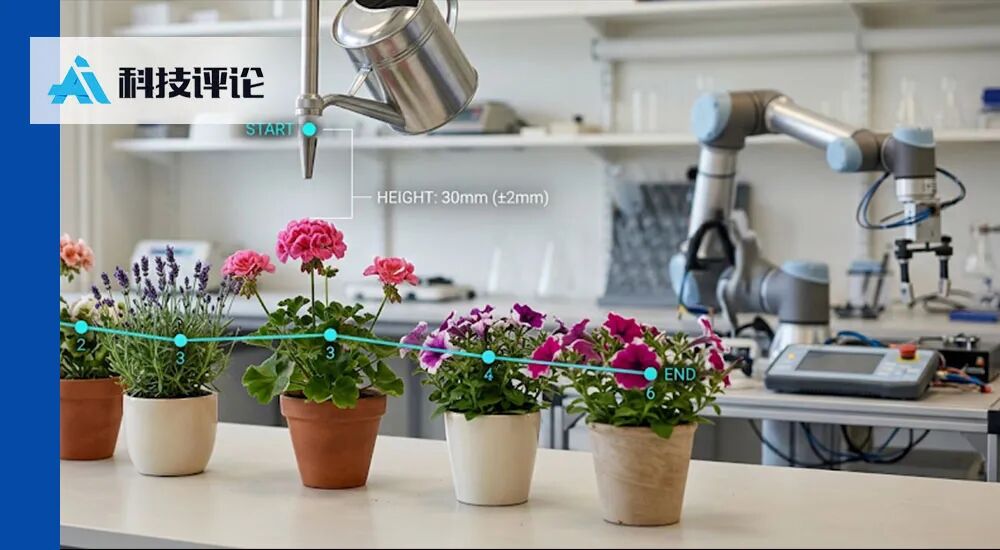
TL;DR - RoboTracer enables vision-language models to generate robot-agnostic 3D trajectories as pixel coordinates plus metric depth, then delegates execution to conventional motion planners. This explicit spatial representation improves metric reasoning and allows the same model to control different robot embodiments without retraining.

  • RoboTracer predicts trajectories as (u, v, d) rather than world-space (x, y, z), combining VLM-friendly image coordinates with absolute depth and avoiding direct learning of camera geometry.
  • Its TraceSpatial dataset contains roughly 4.5 million samples and 30 million question-answer pairs synthesized from web images, 3D scans, and robot-operation videos.
  • A scale-regression decoder and rule-based, metric-sensitive process rewards teach absolute scale and reward valid intermediate spatial evidence during multi-step planning.
  • On TraceSpatial-Bench, RoboTracer achieved 39% success from RGB and 45% with camera intrinsics and depth, versus 3% for Gemini-2.5-Pro; reported real-robot success was 60% on UR5 tasks and 30% on Unitree G1 tasks.

Gene Therapy 1

Daily briefing: Gene-therapy deaths put spotlight on trials in China

Rank 56 · Content 60 · Popularity 47

TL;DR - Two child deaths in separate gene-therapy trials have intensified scrutiny of clinical research in China and could significantly affect the country’s biomedical industry. The briefing also notes an AI system that formalized Fermat’s last theorem and reflects on astronomer Nancy Grace Roman’s impact.

  • The deaths occurred in separate gene-therapy trials involving children.
  • Researchers expect the incidents could have broad consequences for China’s biomedical sector.
  • The provided excerpt does not specify the therapies, causes of death, or trial protocols.
  • A separate highlight reports AI-based formalization of Fermat’s last theorem, without technical details.

Humanoid Robotics 1

Representative image for TANGO: Humanoid Navigation in Cluttered Environments with a Whole-Body Vision-Language-Action Model

TANGO: Humanoid Navigation in Cluttered Environments with a Whole-Body Vision-Language-Action Model

Rank 85 · Content 95 · Popularity 63

TL;DR - TANGO is a whole-body vision-language-action framework that maps natural-language instructions and egocentric RGB observations directly to 29-DoF humanoid joint actions. It enables geometry-aware navigation through cluttered 3D environments and transfers zero-shot from simulation to a real Unitree G1 robot.

  • Coordinates arm placement, torso adjustment, and gait modulation rather than treating navigation as 2D path planning.
  • Uses simulation-generated, dynamically feasible supervision built from path planning, whole-body motion generation, obstacle-aware editing, and reinforcement-learning-based tracking.
  • Achieves state-of-the-art simulation performance in vision-language navigation and outperforms modular baselines on obstacle negotiation.
  • Demonstrates robust real-world traversal without training on real-world navigation data.

Laboratory Safety 1

Daily briefing: Bunsen burners don’t waft bacteria away from workbenches

Rank 42 · Content 40 · Popularity 47

TL;DR - Nature’s daily briefing highlights a study questioning the belief that Bunsen burners waft bacteria away from laboratory workbenches, potentially challenging their role in modern labs. The provided excerpt does not include the study’s methods or detailed results.

  • The featured study could renew debate over routine Bunsen-burner use in laboratories.
  • Its premise challenges a commonly assumed contamination-control benefit.
  • The briefing also mentions a US shift of substantial biomedical research to the military.
  • No quantitative findings, experimental conditions, or safety recommendations are provided.

Neuroregeneration 1

Author Correction: AhR inhibition promotes axon regeneration via a stress–growth switch

Rank 24 · Content 15 · Popularity 47

TL;DR - This is an author correction to a Nature study on promoting axon regeneration by inhibiting the aryl hydrocarbon receptor (AhR). The provided content does not specify what was corrected or whether the study’s conclusions changed.

  • Published online on 7 September 2026 in Nature.
  • The referenced study links AhR inhibition to a cellular “stress–growth switch” involved in axon regeneration.
  • No correction details, methods, or experimental results are included in the provided excerpt.
Top highlights — Industry & News

LLM Agents 5

How GPT-5.6 Sol helps run quantum computing experiments

Rank 75 · Content 85 · Popularity N/A

TL;DR - OpenAI highlights how an MIT researcher uses GPT-5.6 Sol with Codex to autonomously operate quantum-computing experiments, analyze outputs, and calibrate qubits. The example suggests agentic coding systems could automate parts of experimental control and iteration.

  • GPT-5.6 Sol and Codex are applied to a real quantum-computing research workflow.
  • The system handles experiment execution, result analysis, and qubit calibration autonomously.
  • The provided description does not report quantitative results, accuracy, or comparisons with manual methods.
Representative image for 群核科技联手英伟达、英特尔、浙大,三篇 ECCV 论文给物理 AI 造基础设施

群核科技联手英伟达、英特尔、浙大,三篇 ECCV 论文给物理 AI 造基础设施

Rank 71 · Content 85 · Popularity 37

TL;DR - Qunhe Technology and academic and industry partners presented three ECCV 2026 works spanning simulation, self-evolving multimodal reinforcement-learning data, and spatial-agent evaluation. Together, they form an infrastructure stack for training, improving, and testing embodied AI systems.

  • SPEAR exposes Unreal Engine through Python and uses zero-copy transfer and asynchronous execution, achieving 73 FPS at 1080p and substantially higher rendering throughput than UnrealCV+ and AirSim.
  • Syn-GRPO asynchronously generates increasingly challenging, annotation-preserving visual scenes during training to counter entropy and diversity collapse, adding about 5% training overhead.
  • WalkerBench evaluates vision-only agents through interactive navigation across more than 160 cities; its Spatial-IDE framework externalizes topological memory and separates high-level reasoning from local perception.
  • Spatial-IDE improved nine tested VLM agents by 104.97% on average, and was also deployed on a Unitree G1 for kilometer-scale urban navigation without environment-specific fine-tuning.
Representative image for 蚂蚁百灵发布首个金融增强模型,AI开始进入真实投研工作流

蚂蚁百灵发布首个金融增强模型,AI开始进入真实投研工作流 🔗 2 sources

Rank 68 · Content 75 · Popularity N/A

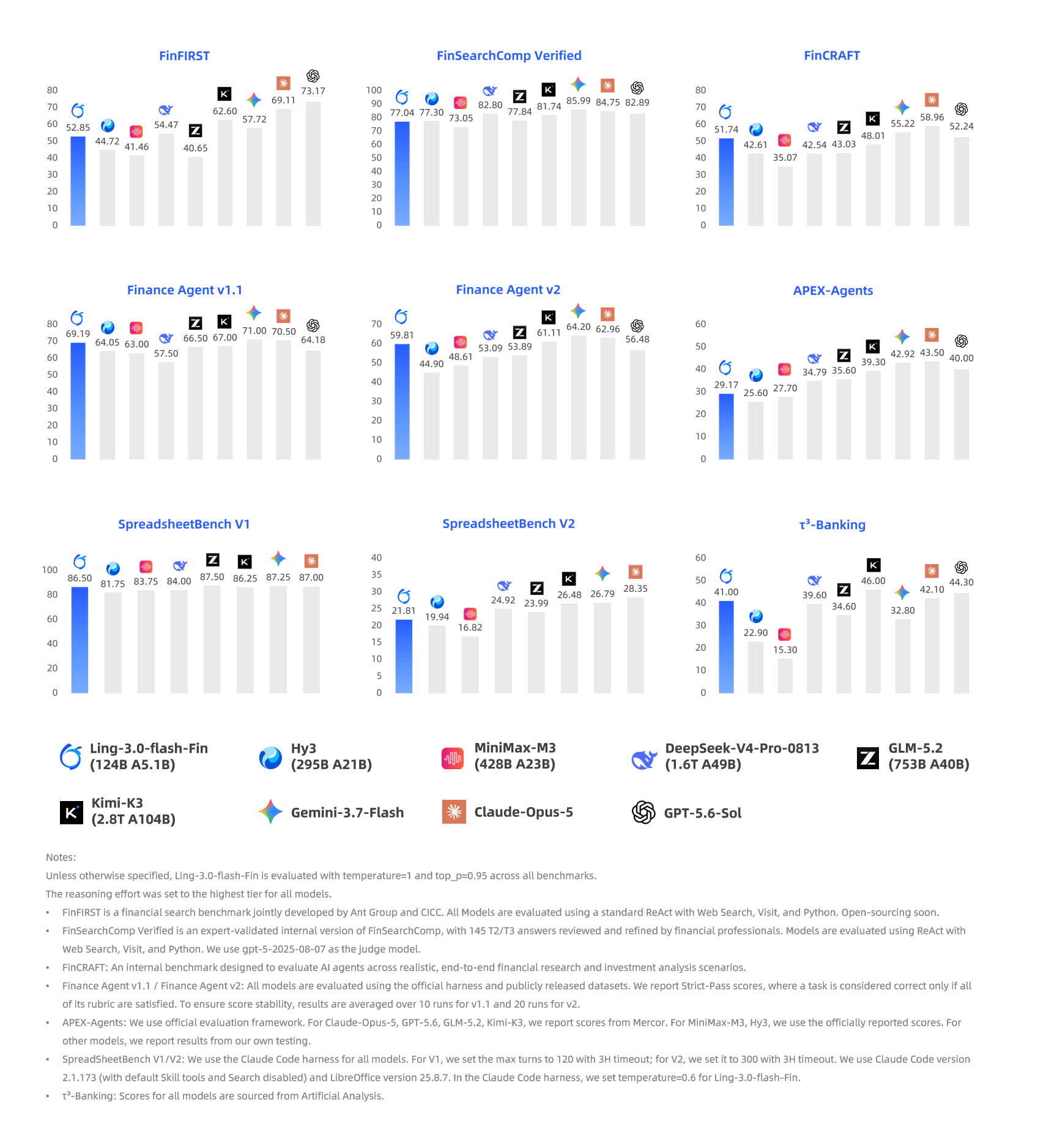
TL;DR — Ant Group released Ling-3.0-flash-Fin, an open financial model built to execute end-to-end investment-research workflows, alongside FinFIRST, a benchmark emphasizing evidence quality, reasoning, and traceability. One supplied source instead describes an unrelated gastric-cancer AI project and therefore cannot be merged into the financial-model report as the same work.

  • Ling-3.0-flash-Fin is based on Ling-3.0-flash, with 124B total parameters, 5.1B activated parameters, and a 256K-token context window.
  • It supports financial information retrieval, research reasoning, valuation modeling, report writing, and spreadsheet tasks such as formula generation, cross-sheet dependency handling, and error diagnosis.
  • FinFIRST evaluates financial search agents on source selection, reporting-period and metric interpretation, explicit calculations, multi-source synthesis, and traceable derivations across Chinese and international markets.
  • The model weights and benchmark are open-sourced, and an API is available; competitive performance is claimed, but no detailed scores are provided.
  • The other source covers multimodal models for gastric-cancer complication, recurrence, and metastasis prediction, including retrospective multicenter results and a planned randomized trial—not Ling-3.0-flash-Fin.

Note: The sources emphasize different and apparently unrelated Ant Group projects: financial research automation versus clinical gastric-cancer risk prediction.

Representative image for 实测星火X2.5:手搓粒子月亮、拆完61页财报……还揪出了我的Bug

实测星火X2.5:手搓粒子月亮、拆完61页财报……还揪出了我的Bug

Rank 64 · Content 70 · Popularity N/A

TL;DR - iFlytek launched Spark X2.5, a 293B-parameter MoE model focused on coding and agentic task completion. Hands-on tests suggest it can turn complex, multimodal instructions into deliverables such as interactive websites, financial analyses, research drafts, and visualized reports.

  • Spark X2.5 uses a 293B-A30B MoE architecture, supports more than 200 languages, and exposes Anthropic- and Responses-compatible APIs for agent frameworks including Claude Code and Codex.
  • Tests covered generating gesture-controlled 3D webpages and a game website, analyzing a 61-page Nvidia earnings report, synthesizing research materials, and processing e-commerce data embedded as images in Word.
  • The model reportedly detected fabricated survey data limitations and deliberately incorrect revenue calculations rather than simply accepting the supplied inputs.
  • iFlytek says the model’s training, reinforcement learning, iteration, and inference run on domestic Chinese computing infrastructure; it previously reported raising comparable MoE training efficiency from 30% to 93% of an A800 cluster.
Representative image for 11家Coding平台首同场、近七成参赛者未满18岁,AI Coding第一次有了“全民样本”

11家Coding平台首同场、近七成参赛者未满18岁,AI Coding第一次有了“全民样本”

Rank 47 · Content 45 · Popularity N/A

TL;DR - A large-scale AI coding hackathon produced 15,577 applications, setting a Guinness World Record and demonstrating how natural-language development tools are expanding software creation beyond professional programmers. Eleven Chinese AI coding platforms also jointly released a technical specification for public AI coding competitions.

  • The event attracted more than 10,000 participants; nearly 70% were under 18, and the youngest was six.
  • Submissions had to be original, functional applications meeting defined MVP requirements and were reviewed under Guinness World Records rules.
  • Participants used conversational AI tools to build applications spanning education, accessibility, pet care, and parking-demand matching.
  • The joint specification addresses application development, originality, completion criteria, and evaluation standards for large-scale AI coding contests.

Bioinformatics AI 1

Representative image for AlphaGenome Atlas: A predictive map of every possible DNA letter change in the human genome

AlphaGenome Atlas: A predictive map of every possible DNA letter change in the human genome

Rank 82 · Content 95 · Popularity N/A

TL;DR - Google DeepMind announced AlphaGenome Atlas, a predictive map covering the molecular effects of 9 billion possible single-letter DNA variants across the human genome. It could help researchers interpret how individual genetic changes affect biological function.

  • Maps possible single-nucleotide changes across the human genome.
  • Provides predicted molecular effects for approximately 9 billion variants.
  • The supplied content does not specify the model’s methodology, validation results, or access details.

Multimodal & Generative 2

Representative image for 7 篇 ECCV 论文!极佳视界联合顶尖高校,打通空间智能从「看得稳」到「摸得准」再到「决策灵」的落地瓶颈

7 篇 ECCV 论文!极佳视界联合顶尖高校,打通空间智能从「看得稳」到「摸得准」再到「决策灵」的落地瓶颈

Rank 70 · Content 75 · Popularity 58

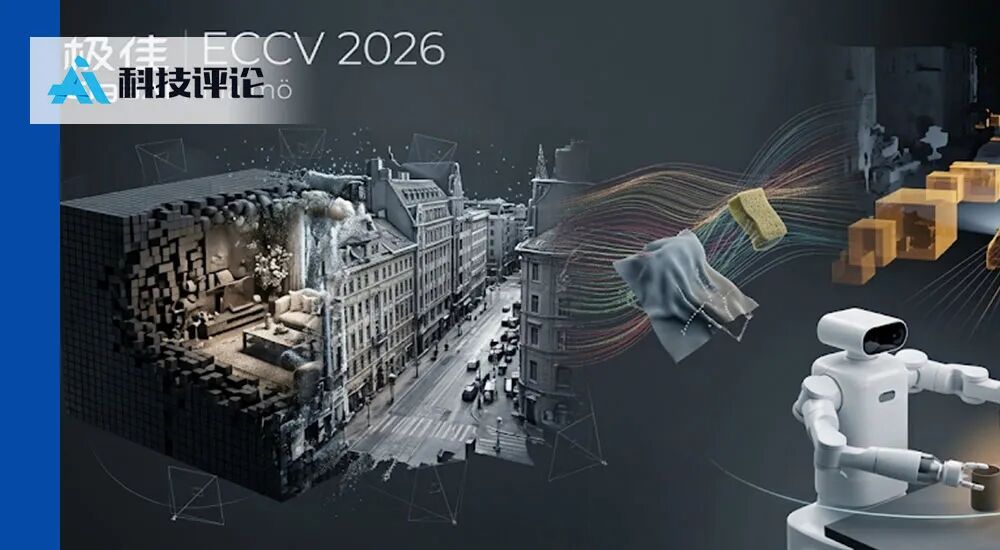
TL;DR - GigaAI and university partners presented seven ECCV papers spanning 3D/4D reconstruction, physically grounded assets, embodied control, and driving world models. Together, they aim to move spatial AI from visually convincing generation toward physically responsive, closed-loop interaction.

  • VLA-R1 combines explicit chain-of-thought supervision with GRPO reinforcement learning to improve interpretable, verifiable vision-language-action decisions for robotic manipulation.
  • OmniNWM jointly generates multimodal driving states, responds to vehicle controls, and derives safety and traffic-rule rewards from predicted 3D occupancy.
  • ReconPhys estimates appearance and physical properties from monocular video, while MoGe4D uses geometry-aware trajectories to synthesize dynamic 4D scenes from one image.
  • VolSplat, AnchorSplat, and 2K Retrofit target production-grade 3D geometry through voxel-aligned reconstruction, rapid detail enhancement, and sparse high-resolution refinement.

Introducing ChatGPT Images 2.5

Rank 64 · Content 70 · Popularity N/A

TL;DR - OpenAI introduced ChatGPT Images 2.5, an image-generation update focused on producing more personalized, polished outputs from ideas, sketches, and reference photos.

  • Supports text concepts, sketches, and reference photos as creative inputs.
  • Aims to reflect users’ intended ideas more accurately.
  • The provided content does not specify technical architecture, benchmarks, or availability details.

Efficiency & Systems 1

Representative image for 国产AI4S计算平台登场亮相2026外滩大会 算力技术与人才布局双向发力

国产AI4S计算平台登场亮相2026外滩大会 算力技术与人才布局双向发力

Rank 54 · Content 55 · Popularity N/A

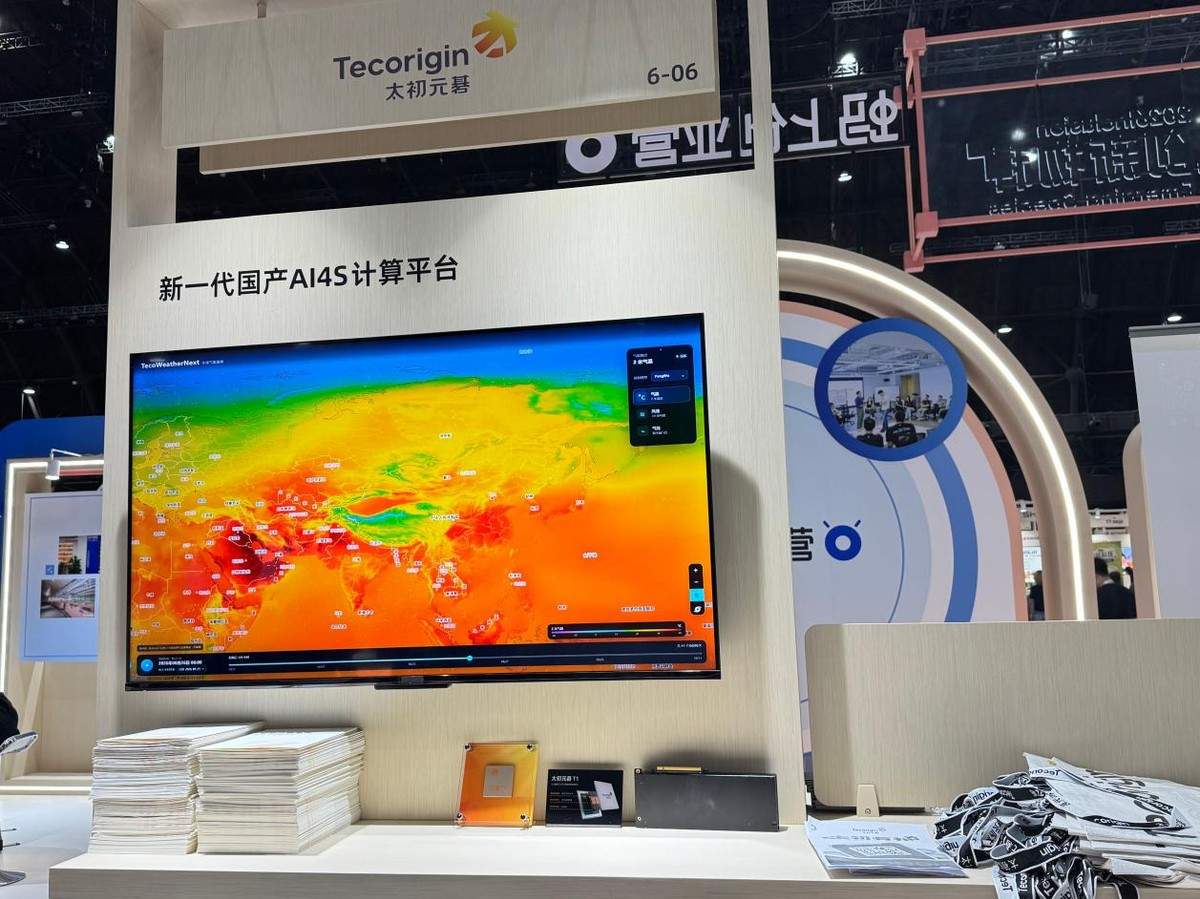
TL;DR - Chinese chipmaker Teco launched an AI-for-Science computing platform built on its heterogeneous many-core AI chips and unveiled TecoWeatherNext, an integrated typhoon-tracking system. The platform targets domestic scientific computing across weather, biomedicine, materials, quantum mechanics, and other research fields.

  • The full-stack platform includes hardware, foundational components, acceleration libraries, model frameworks, and a DevKit for operator development and performance tuning.
  • It supports Loongson, Sunway, Phytium, and x86 CPUs while integrating with PyTorch, JAX, PaddlePaddle, and MindSpore.
  • TecoWeatherNext combines meteorological data, AI forecasting models, and storm tracking to visualize predicted trajectories alongside wind, pressure, temperature, and precipitation layers.
  • Application modules already cover quantum mechanics, chemical materials, biomedicine, weather forecasting, energy science, and the low-altitude economy.

AI Coding Tools 1

1Password increases engineering productivity 21% with Codex

Rank 50 · Content 50 · Popularity N/A

TL;DR - OpenAI reports that 1Password engineers use Codex to accelerate development of features and internal tools, increasing engineering productivity by 21% while maintaining strict security policies.

  • Codex supports both customer-facing feature development and internal tooling.
  • The reported workflow helps engineers move rapidly toward production readiness.
  • 1Password integrates AI-assisted development without relaxing its security requirements.
  • The provided excerpt does not explain how the 21% productivity gain was measured.

AI Safety 1

Funding grants for new research into AI and teen development

Rank 54 · Content 55 · Popularity N/A

TL;DR - OpenAI launched a $5 million grant program for independent research into how generative AI affects adolescent development, well-being, and safety. The initiative aims to build evidence around AI’s impact on teens.

  • The program focuses specifically on generative AI and teen development.
  • Funding supports independent research rather than announcing completed findings.
  • The available content does not specify research methods, grant sizes, eligibility, or timelines.

AI Theorem Proving 1

On the Navier–Stokes Millennium Prize Problem

Rank 85 · Content 100 · Popularity N/A

TL;DR - OpenAI says it is releasing an AI-generated solution to the Navier–Stokes Millennium Prize Problem, accompanied by a written argument and a formal Lean proof. The provided content does not establish whether independent experts have verified or accepted the claimed solution.

  • The announcement concerns one of mathematics’ Millennium Prize Problems.
  • The proposed solution was generated using AI.
  • Materials include both a conventional writeup and a machine-checkable Lean formalization.
  • No technical details, validation results, or independent review are included in the provided excerpt.

AI for Mathematics 1

OpenAI claims huge maths breakthrough on a famed ‘Millennium Problem’

Rank 73 · Content 85 · Popularity 47

TL;DR - OpenAI claims that AI helped solve a famed Millennium Prize Problem concerning the mathematics and physics of fluid flow. If independently verified, this would represent a major mathematical breakthrough, but the provided excerpt contains no technical evidence or validation details.

  • Nature reports the claim as coming from OpenAI rather than presenting it as an established result.
  • The work concerns fluid physics, likely the Millennium Problem associated with Navier–Stokes equations.
  • No proof, methodology, AI system details, or independent expert assessment are included in the provided content.
  • The claim’s significance therefore depends on rigorous review and verification.

Embodied AI 2

Representative image for 2026外滩大会:具身智能开始拼大脑,蚂蚁灵波把机器人送进真实场景

2026外滩大会:具身智能开始拼大脑,蚂蚁灵波把机器人送进真实场景

Rank 68 · Content 75 · Popularity N/A

TL;DR - Ant Group’s Lingbo showcased LingBot-VLA 2.0, a general-purpose robot “brain” operating across different robot bodies and real pharmacy, logistics, and industrial settings. It signals embodied AI’s shift from choreographed demonstrations toward scalable deployment in unmodified environments.

  • LingBot-VLA 2.0 was pretrained for 17 major robot brands and 20 configurations, including single-arm, dual-arm, bipedal, and wheeled systems.
  • In deployed Guoda pharmacies, robots autonomously process orders, identify and retrieve medicines, and assist pharmacists with sorting without requiring store renovations.
  • The system is designed to handle narrow aisles, similar-looking packages, reflective or transparent materials, and randomly arranged inventory.
  • Demonstrations also used the same underlying model with different robot platforms for logistics sorting and industrial loading and unloading.
Representative image for 宜宾,一场机器人“招聘会”的产业雄心

宜宾,一场机器人“招聘会”的产业雄心

Rank 57 · Content 60 · Popularity N/A

TL;DR - Yibin’s “Jiangyuan Cup” turned a robotics competition into a real-world proof-of-concept and procurement venue, testing embodied AI systems against factory, commercial, household, and emergency-response tasks. The initiative matters as a model for moving robots from demonstrations to deployment through industrial access, operational data, funding, and local manufacturing.

  • More than 130 teams registered and 55 competed on tasks including material handling, component assembly, delivery, inspection, and flexible manipulation; one assembly challenge required positioning accuracy within 0.1 mm.
  • Tests were derived from local production needs, with companies evaluating working machines on pricing, delivery timelines, and customization rather than concepts alone; two projects have already entered local pilots.
  • Yibin’s embodied-intelligence training center targets over 20万 hours of real-world multimodal interaction data in 2026 using more than 250 data-collection robots.
  • The city plans to open over 120 application scenarios and deploy more than 1,000 robots, supported by eight AI funds totaling 30亿元 and its battery, photovoltaic, storage, and automotive supply chains.

Embodied Robotics 2

Representative image for 具身机器人能搞定超市盘点吗?全球七万门店正在给出答案

具身机器人能搞定超市盘点吗?全球七万门店正在给出答案

Rank 57 · Content 60 · Popularity N/A

TL;DR - Hanshow and X-Era Lab are combining retail digital infrastructure with embodied AI to test robots for shelf inspection, inventory counting, and restocking in real stores. The initiative targets production viability by using electronic shelf labels, digital twins, and edge-deployable world-action models to improve reliability and operating economics.

  • Hanshow’s electronic shelf-label network spans nearly 70,000 stores, providing structured SKU, price, and location data that robots can use as a physical coordinate system.
  • X-Era Lab’s 1B-parameter VWA model uses 4D spatiotemporal representations to jointly interpret dynamic environments and generate robot actions.
  • Shelf-location priors enable closed-set product verification with smaller edge models, reducing cloud dependence, latency, and compliance concerns.
  • Inspection robots are undergoing proof-of-concept testing in domestic and overseas malls; the article provides no production-scale performance or ROI results.
Representative image for 从Demo到1000万次真实作业,万勋发布NOVA2.0柔性具身大脑

从Demo到1000万次真实作业,万勋发布NOVA2.0柔性具身大脑

Rank 54 · Content 55 · Popularity N/A

TL;DR - Wanxun Technology launched NOVA 2.0, a tactile-native, hierarchical control architecture for flexible embodied robots, claiming commercial deployment across 40+ real-world scenarios and more than 10 million operations. It targets reliable, low-latency robot control in unpredictable and extreme environments.

  • NOVA 2.0 separates high-level task planning from “subconscious” motion primitives, generating trajectories and corrections in a claimed 20 ms.
  • The architecture couples tactile sensing, morphology-aware computation, and soft robotic bodies to adapt across arms, dual-arm systems, dexterous hands, and humanoid configurations.
  • Wanxun says reusable motion primitives enable new tasks with as little as 1% of conventional startup data, followed by continual learning from real operations.
  • Reported deployments span construction, energy, transportation, autonomous driving, and manufacturing; performance and commercialization figures are company-reported claims.

Home Robotics 1

Representative image for 去掉「AI」滤镜,IFA 2026还有哪些真亮点?

去掉「AI」滤镜,IFA 2026还有哪些真亮点? 🔗 2 sources

Rank 57 · Content 60 · Popularity N/A

TL;DR — 抛开“AI”标签,IFA 2026 的真正亮点是家用与户外机器人从单一感知、语音交互迈向可靠的物理执行、连续任务和多机协同。厂商正通过共享的感知、决策与控制技术栈,将自动化拓展到低矮空间、楼梯、窗户、泳池和大型户外场地。

  • iRobot Roomba Duo 由全尺寸机器人和仅 8.35 厘米高的伴侣机器人组成,可共享地图、分配任务,并借助机械臂完成小机器人的投放与回收。
  • 机械臂正成为可执行复杂操作的工具平台:追觅 Cyber20 Ultra 能切换附件并连续完成“开门—清扫门后”等动作;AstraX 割草机器人则可换装工具,执行割草、移障、采收和浇水。
  • 户外机器人能力持续增强:Navimow H5 Pro 可伸展刀盘修剪草坪边缘;追觅 A20 泳池机器人加入双目视觉、污渍识别、自主充电和远程调度,其技术栈还包括自研 MLR-96 数字激光雷达、多模态感知与精准贴边技术。
  • 自动化开始走向系统级协同:追觅 AURION F115 面向公园、运动场和大型草坪,NexFleet 支持多机器人调度、任务分配与远程维护;海信以智能体协调家电,科沃斯则在不同机器人品类间复用感知、运动、控制和清洁模块。
  • 市场规模与产品成熟度并不一致:追觅称其 2026 年上半年割草机器人出货量超过 50 万台,全年预计突破 100 万台;但部分面向浅水池、楼梯、窗户和低矮家具的展示产品仍处于概念或预研阶段。

注:一组来源侧重 IFA 2026 家庭机器人整体趋势,另一组更聚焦追觅的草坪、泳池及商用机器人产品线与出货数据。

Robotics & Embodied AI 1

Representative image for 全球首个诊脉灵巧手亮相,打造它的公司却说自己只做触觉

全球首个诊脉灵巧手亮相,打造它的公司却说自己只做触觉

Rank 57 · Content 60 · Popularity N/A

TL;DR - Chinese startup Youren Intelligence unveiled a robotic dexterous hand that can perform pulse diagnosis, showcasing its multi-mechanism tactile sensors. The company argues that embodied AI needs reliable, control-ready tactile signals—not merely larger datasets.

  • The fingertip sensors combine capacitive, piezoresistive, and piezoelectric mechanisms to capture static pressure, deep force, vibration, slip, and transient impacts.
  • A gradient-stiffness structure and free-form multimaterial printing enable sensitive, overload-resistant “skin” that conforms to curved and irregular surfaces.
  • The system performs pulse-pattern analysis on-device and uses cloud-based traditional Chinese medicine knowledge for further interpretation; clinical data collection and accuracy improvements remain underway.
  • Its CrediTac framework targets tactile data usable across both low-frequency perception and high-frequency force-control loops, although the claimed 99.9% reliability is presented as a delivery goal rather than a demonstrated result.
Top highlights — Opinions

AI Economics 1

Representative image for 萨金特谈AI新经济:AI仍处于“开普勒阶段”,面对未知最需要保持谦逊

萨金特谈AI新经济:AI仍处于“开普勒阶段”,面对未知最需要保持谦逊

Rank 57 · Content 60 · Popularity N/A

TL;DR - Nobel laureate Thomas Sargent argues that AI remains in a “Kepler stage”: it can identify patterns but cannot reliably explain underlying structures or generalize beyond known data. Because AI’s economic effects are deeply uncertain, investors, businesses, and regulators should favor robust decisions that remain viable when models are wrong.

  • Rising AI investment does not make returns, productivity gains, or the distribution of economic value predictable.
  • Every AI algorithm embeds assumptions and may fail when conditions differ from its training environment.
  • Sargent distinguishes measurable risk from uncertainty, where possible outcomes and their probabilities are themselves unknown.
  • Robust control emphasizes choices that tolerate model misspecification rather than optimizing solely for an assumed-correct model.

AI Safety 1

Safety for Whom? Refusing the Right Subset of a Topic, Not the Whole Topic

Rank 54 · Content 55 · Popularity N/A

TL;DR - The title argues that AI safety mechanisms should refuse only harmful subsets of a topic rather than blocking the entire subject. Because no article content was provided, specific methods or findings cannot be verified.

  • Advocates context-sensitive, fine-grained refusal policies.
  • Implies broad topic-level blocks may unnecessarily restrict legitimate requests.
  • No technical implementation, evaluation, or quantitative results are available in the provided content.