🛰️ Daily AI Frontier
37 works · 2 categories · 13 topics · blog 12 journal 10 arxiv 15 generated 2026-09-10 14:32:00 UTC
Top highlights — Research

LLM Agents 6

Representative image for TRACE: Training Reasoning Agents for Causal Exploration with Synthesized Rewards

TRACE: Training Reasoning Agents for Causal Exploration with Synthesized Rewards

Rank 81 · Content 100 · Popularity 37

TL;DR - TRACE trains tool-using reasoning agents to diagnose simulated digital-advertising anomalies using objective rewards derived from hidden interventions. Combining supervised fine-tuning with reinforcement learning improved accuracy beyond prompted frontier models while reducing tool use.

  • The simulator injects one of 12 root causes, producing noisy and confounded observations while retaining an oracle label for verifiable rewards.
  • Agents use Python and SQL to identify both the root cause and, when relevant, the affected segment.
  • On 235 held-out episodes, Qwen3.5-35B-A3B improved from 0.159 FullAttr@1 to 0.637 after supervised fine-tuning and 0.757 after reinforcement learning.
  • The RL-trained model outperformed the strongest prompted baseline, Claude Opus 5 at 0.686, suggesting scalable verification can matter more than model size alone.

Representative image for Kernel-Managed Shared Memory for System-Wide Personalization

Kernel-Managed Shared Memory for System-Wide Personalization

Rank 81 · Content 100 · Popularity 37

TL;DR - This paper introduces kernel-managed shared memory for multi-agent personalization, centralizing retrieval, privacy enforcement, and prompt injection. Across 1,800 trials, it substantially improved personalization over unmanaged memory and standard RAG while reducing latency and token usage versus full-context concatenation.

  • Specialized agents write structured, tagged memories, while the agent-system kernel controls how those memories are retrieved and injected.
  • On GPT-4o, Llama-3.1:8B, and Qwen-2.5:7B, personalization improved by 2.4–4.0 points on a five-point scale over Mem0, with all comparisons significant at p < 10^-18.
  • Performance matched unfiltered context concatenation on two models and showed a small model-specific deficit on the third.
  • Shorter prompts reduced end-to-end latency by 15–61%, along with per-call token usage and inference cost.
Representative image for JarvisGUI: Towards Cross-Device GUI Agents with Dynamic Task Composition

JarvisGUI: Towards Cross-Device GUI Agents with Dynamic Task Composition

Rank 78 · Content 95 · Popularity 37

TL;DR - JarvisGUI is a dynamic benchmark for evaluating GUI agents on workflows spanning Android, Windows, and Ubuntu. It exposes major gaps in agents’ ability to transfer state, reason across platforms, and manage long-horizon dependencies.

  • Models tasks as typed input-output transformations, enabling automatic composition of multi-step cross-device workflows.
  • Evaluates coordinated agent interactions in virtual environments across three operating systems.
  • Addresses limitations of existing benchmarks that focus on static, single-device tasks.
  • Finds that state-of-the-art open-source GUI agents struggle with cross-device coordination requirements.

LiteRAG: Cost-Efficient Graph-Based Retrieval-Augmented Generation

Rank 78 · Content 95 · Popularity 37

TL;DR - LiteRAG is a graph-based RAG method that replaces retrieval-time LLM control with query-conditioned graph exploration and compact reasoning-chain construction. It maintains or improves retrieval quality while substantially reducing latency, cost, and context size.

  • Achieves the highest reported overall quality on DistComp (0.798), a multi-hop retrieval benchmark for distributed-systems papers.
  • Reduces per-query latency by over 100× and cost by over 99% versus GraphRAG Global and DRIFT.
  • Matches LinearRAG’s overall quality on UltraDomain while using roughly 14× fewer tokens.
  • Ablations identify query-adaptive thresholding and community-aware hub penalization as the main contributors to token efficiency.
Representative image for Belief-State Engine: Augmenting LLMs for Principled Planning Under Partial Observability

Belief-State Engine: Augmenting LLMs for Principled Planning Under Partial Observability

Rank 78 · Content 95 · Popularity 37

TL;DR - The Belief-State Engine augments LLM agents with an external Bayesian posterior over hidden environment states, enabling principled planning under partial observability. This addresses premature commitments, policy drift, and miscalibrated uncertainty without exposing the LLM to raw interaction history.

  • Models decision-making as a belief MDP and proves that the BSE-LLM combination forms a sound Markov policy under four belief-consistency axioms.
  • Supplies only the current posterior to the LLM, separating probabilistic state inference from action selection.
  • Outperforms six baselines—including Chain-of-Thought, ReAct, QMDP, and POMCP—on Tiger POMDP and red-team attack-graph tasks in return, calibration, and consistency.
  • Ten ablations test the architectural choices and indicate that improvements are not tied to a single LLM.

A collaborative agent with two lightweight synergistic models for autonomous crystal materials research

Rank 77 · Content 90 · Popularity 47

TL;DR - Shi et al. present a collaborative agent that combines two lightweight large language models for autonomous crystal materials research. The architecture aims to make capable scientific reasoning and tool use affordable enough for local deployment.

  • Uses a dual-model architecture in which lightweight LLMs collaborate on research tasks.
  • Integrates scientific reasoning with execution of external research tools.
  • Achieves competitive performance without relying on larger, more costly models.
  • Supports accessible, locally deployable automation for crystal materials research.

Medical/Healthcare AI 2

Representative image for MedDeID enables locally governed clinical-text de-identification from real or synthetic training data

MedDeID enables locally governed clinical-text de-identification from real or synthetic training data

Rank 79 · Content 95 · Popularity 42

TL;DR - MedDeID is an on-premises framework for training and deploying clinical-text de-identification models using real or synthetic notes. Its synthetic-only models achieved strong identifier recall, offering institutions a path to reuse sensitive clinical data without transferring it externally.

  • A compact transformer trained on Dutch hospital data detected 98.9% of identifying text while redacting 0.24% of text outside annotated identifiers.
  • The Dutch synthetic-only model detected 96.1% of identifiers and outperformed the hospital-trained model on primary-care notes in recall (90.3% versus 87.0%).
  • Synthetic training improved robustness to changes in identifier formatting.
  • An English synthetic-only implementation reached 99.7% and 98.9% character-level detection on two synthetic benchmarks, but clinical English performance was not established.

AI model predicts which breast-cancer drugs work best

Rank 73 · Content 85 · Popularity 47

TL;DR - An AI model trained on millions of protein measurements predicts how effectively breast-cancer drugs will work in tissue samples from people with triple-negative breast cancer. The approach could help identify more promising treatments for individual patients.

  • The model uses large-scale protein-measurement data to gauge drug effectiveness.
  • It was applied to patient-derived triple-negative breast-cancer tissue samples.
  • The provided summary does not specify the model architecture, prediction accuracy, or clinical-validation results.

Bioinformatics AI 6

An operational perturbation proteomics-based virtual cell model

Rank 90 · Content 100 · Popularity 67

TL;DR - This Nature study introduces ProteinTalks, a virtual cell model built from temporal protein-abundance measurements in systematically perturbed breast cancer cell lines. It is designed as an operational tool for multiple drug-discovery tasks.

  • Uses perturbation proteomics to model cellular responses over time.
  • Draws on systematically perturbed breast cancer cell lines.
  • Focuses on protein-abundance dynamics rather than static measurements.
  • The provided summary does not specify the model architecture, benchmarks, or quantitative results.
Representative image for Are You Learning Biological Signal or Shortcuts? Auditing and Mitigating Bias in Protein-Protein Interaction Datasets

Are You Learning Biological Signal or Shortcuts? Auditing and Mitigating Bias in Protein-Protein Interaction Datasets

Rank 85 · Content 95 · Popularity 61

TL;DR - This study systematically audits shortcut learning in protein-protein interaction datasets and finds that common splitting and negative-sampling practices can expose non-biological signals. It introduces an open Nextflow pipeline that uses optimization-based methods to reduce these biases.

  • Random train-test splits create strong shortcuts from interaction-network topology.
  • Even without train-test protein overlap, models can exploit self-interactions, taxonomy, and functional relatedness, with bias prevalence varying by data source.
  • Sampling negatives from high-confidence non-interactors can unintentionally amplify functional-relatedness shortcuts.
  • The pipeline combines similarity-aware, data-preserving splits with bias-minimizing negative sampling, both formulated as integer linear programs.

Predicting genome-wide functional constraints with GPN-Star

Rank 84 · Content 100 · Popularity 47

TL;DR - GPN-Star is a genomic language model designed to predict genome-wide functional constraints and genetic variant effects across species. Its phylogeny-aware architecture processes whole-genome alignment data with an emphasis on scalability and flexibility.

  • Uses evolutionary relationships encoded in whole-genome alignments.
  • Supports cross-species genetic variant effect prediction.
  • Targets scalable analysis of functional constraints across entire genomes.
  • The provided abstract does not include quantitative performance results.

Breaking timescales with generative sampling of conformational transitions

Rank 84 · Content 100 · Popularity 47

TL;DR - A generative, committor-guided path-sampling framework reconstructs rare biomolecular conformational transitions without predefined collective variables or brute-force simulation. It enables analysis of otherwise inaccessible transition pathways, thermodynamics, and kinetics at an acceptable computational cost.

  • Uses generative sampling to overcome the long timescales associated with rare conformational events.
  • Guides path sampling with the committor rather than relying on predefined collective variables.
  • Recovers both transition mechanisms and their underlying thermodynamic and kinetic properties.
  • Reduces the need for computationally prohibitive brute-force sampling.

Why Sample What You Can Enumerate? Exact Policy Optimization for Genomic Tool Selection

Rank 78 · Content 95 · Popularity 37

TL;DR - FGPO exactly enumerates and scores all tool subsets when training frozen genomic reasoners, avoiding GRPO’s increasingly weak reward signal. It outperformed GRPO across 15 benchmark settings while reducing reward-evaluation costs and unnecessary tool use.

  • GRPO’s sampled, group-normalized advantages can vanish as the policy repeatedly selects preferred subsets; genomic questions with no reward signal rose from 0.2% to 20.8% after training.
  • FGPO optimizes the exact expectation over the complete action space and precomputes rewards for every question–subset pair.
  • Across five frozen reasoners and three genomic benchmarks, FGPO beat GRPO in all 15 settings by 6.75 points on average and up to 14.20 points.
  • Compared with on-demand GRPO, FGPO avoided a schedule requiring 2.4× more reward evaluations and reduced GenomeQA tool calls from 2.36 to 1.40 per question.

‘Superdark’ protein looks like a G-protein-coupled receptor — but shows unconventional behaviour

Rank 73 · Content 85 · Popularity 47

TL;DR - Mining millions of AI-predicted protein structures uncovered an evolutionarily conserved “superdark” protein that structurally resembles a G-protein-coupled receptor (GPCR) but behaves unconventionally. The finding highlights how structure prediction can reveal previously obscure proteins whose functions diverge from familiar families.

  • The protein was identified through large-scale analysis of AI-predicted structures.
  • Its structure resembles a member of the GPCR family, but its function differs from conventional GPCR behavior.
  • Evolutionary conservation suggests the protein has a biologically important role.
  • The provided summary does not specify its precise mechanism or physiological function.

LLMs & Foundation Models 3

Through the Looking Glass: Directly Reading and Writing Transformers

Rank 82 · Content 95 · Popularity N/A

TL;DR - This paper introduces a training-free method for reading and directly editing transformer components using only model parameters and activations. It finds that predictions depend critically on small component subsets and demonstrates targeted, low-cost installation and control of internal associations.

  • Although thousands of components contribute to logits, only 2–16 components can independently suffice for a prediction across tested 124M–7B parameter models.
  • Tracing a prediction backward implicates just 1–3% of the model, a fraction that does not increase with model size.
  • Parameter-derived descriptions identify what components write and read, with read-side identification reaching 58.9% above chance for the eight strongest inputs.
  • New associations and context-dependent edits can be installed in spare units or attention-head/unit circuits at substantially lower held-out-loss cost than rank-one updates.
Representative image for ConvMem: Convolutional Memory for Long-Context Reasoning

ConvMem: Convolutional Memory for Long-Context Reasoning

Rank 78 · Content 95 · Popularity 37

TL;DR - ConvMem is a training-free framework for long-context LLM reasoning that hierarchically summarizes text segments using a parallel, convolution-inspired process. It reduces sequential reasoning depth from linear to logarithmic while outperforming training-free baselines on two multi-hop QA benchmarks.

  • Treats a query-prompted LLM as a convolutional kernel that summarizes context segments in a hierarchical tree.
  • Uses configurable strides and skip connections to preserve and propagate evidence while limiting error accumulation.
  • Applies multiple kernels to split complex queries into distinct semantic reasoning channels.
  • Enables parallel processing across context segments and reasoning threads without costly reinforcement learning.

Active Adaptation, Not Static Defense: Temporal Dynamics of Preventative Steering in Adversarial Fine-Tuning

Rank 78 · Content 95 · Popularity 37

TL;DR - This paper finds that preventative steering protects LLMs from malicious fine-tuning through active, early-stage adaptation rather than a persistent static weight offset. It proposes Progressive Intensity Scheduling (PIS), which improves safety robustness while reducing harmful trait expression across evaluated Qwen2.5 and Gemma-3 models.

  • Defensive adaptation occurs early in fine-tuning, followed by a steady state in which the corrective signal decays.
  • Attention output projections are identified as the dominant residual-stream write route for defensive parameter updates.
  • Preserving or reinjecting the learned weight offset does not maintain protection, suggesting that static parameter changes are insufficient.
  • PIS raises steering intensity after fixed-strength alignment starts degrading, outperforming static-strength steering in the reported evaluations.

Multimodal & Generative 3

Representative image for Programmable World Model

Programmable World Model

Rank 88 · Content 95 · Popularity 70

TL;DR - Programmable World Model separates explicit world-state evolution from video generation, enabling persistent entities and programmable rules in long-running interactive environments. This architecture supports playable games with coherent mechanics while using a pretrained video model as the visual renderer.

  • An agent converts natural-language instructions into executable entity states and transition rules.
  • A lightweight engine maintains persistent global state, including off-screen entities and non-visual attributes.
  • State-augmented 3D oriented bounding boxes and camera trajectories are compiled into conditioning signals for video generation.
  • On CombatStateBench, the method achieves 94% Count Accuracy and 98% State Accuracy, outperforming existing interactive video world models.
Representative image for VLX-VR: An Agentic-Aware Video Reasoning Model

VLX-VR: An Agentic-Aware Video Reasoning Model

Rank 78 · Content 95 · Popularity 37

TL;DR - VLX-VR is an agentic video-reasoning model that adaptively gathers multimodal evidence and manages memory through a Think–Memory–Observation loop. It reaches 78.79% accuracy on MINERVA while maintaining broadly stable performance across video durations.

  • Uses reinforcement learning on videos and agent trajectories to learn evidence acquisition, memory operations, and when to terminate reasoning.
  • Achieves 76.70%, 78.73%, and 80.92% accuracy across MINERVA’s three duration groups, with a cross-duration variance of 2.97 pp².
  • On correctly answered samples, 96.20% of reasoning traces align with MINERVA’s reference evidence and reasoning; 75.80% of all samples satisfy both correctness and trace-grounding criteria.
  • Counting, state changes, causal reasoning, and spatial perception remain challenging.
Representative image for 浙大 × 字节 × 港中深最新研究:告别高斯堆砌,终结 3D 冗余|ECCV 2026

浙大 × 字节 × 港中深最新研究:告别高斯堆砌,终结 3D 冗余|ECCV 2026

Rank 75 · Content 85 · Popularity 50

TL;DR - PointSplat, an ECCV 2026 paper from Zhejiang University, ByteDance, and CUHK-Shenzhen, proposes a compact, feed-forward 3D Gaussian Splatting framework for reconstructing humans from sparse multi-view images. It reduces redundant representations by organizing Gaussians around the person rather than independently around each camera view.

  • Replaces view-centric prediction, which repeatedly encodes the same subject across views, with a shared human-centric 3D representation.
  • Estimates a coarse human proxy and uses ray casting to remove irrelevant or invisible points before Gaussian prediction.
  • A Point-Image Transformer fuses multi-view geometry and appearance into Gaussian position, scale, rotation, opacity, and visual attributes.
  • Targets compact, generalizable 3D human reconstruction for bandwidth- and compute-sensitive applications such as immersive live streaming.

Efficiency & Systems 2

Representative image for $Φ$-Bench: Can Large Language Models Engineer the Infrastructure That Powers Them?

$Φ$-Bench: Can Large Language Models Engineer the Infrastructure That Powers Them?

Rank 85 · Content 95 · Popularity 62

TL;DR - Φ-Bench evaluates whether LLMs can engineer and optimize the infrastructure that powers language models, moving beyond isolated coding tasks to realistic, long-horizon systems work. It highlights remaining barriers to autonomous AI infrastructure optimization.

  • Tasks are derived from frontier optimization problems and grounded in real-world code repositories.
  • Coverage ranges from kernel-level function completion to extended implementation and end-to-end system optimization.
  • The benchmark spans multiple layers of the LLM infrastructure stack and varying levels of complexity.
  • Experiments with frontier LLMs characterize current capabilities and limitations, though the abstract provides no specific performance results.
Representative image for Stable Answers, Unfinished Reasoning: Why Self-Consensus Is Not a Safe Early-Exit Signal

Stable Answers, Unfinished Reasoning: Why Self-Consensus Is Not a Safe Early-Exit Signal

Rank 81 · Content 100 · Popularity 37

TL;DR - Self-consensus—ending inference when repeated probes agree on an answer—is not a reliable early-exit signal for reasoning models. It can reduce token use, but often stops unfinished reasoning before the model corrects a provisional answer.

  • A preregistered evaluation of 3,520 consensus rules across two models and three benchmarks found that none met all predefined safety and token-saving criteria.
  • The failure reproduced on a held-out split and two unseen models, while the boundary-confidence method DEER passed all three acceptance gates.
  • At 32% token savings, roughly one in nine early exits selected an answer the trajectory later abandoned, usually cutting off a subsequent correction.
  • Larger agreement windows reduced but did not eliminate premature stops: the rate plateaued near 7% while token savings fell to 8%.

Cancer Genomics 1

Integrated signatures define mutational processes in prostate cancer

Rank 74 · Content 75 · Popularity 71

TL;DR - A Nature study identifies eight integrated mutational signatures that collectively characterize the mutational processes in 85% of primary prostate cancer genomes. This provides a consolidated framework for understanding the genomic mechanisms shaping most primary prostate cancers.

  • The study focuses on mutational processes in primary prostate cancer genomes.
  • Eight integrated mutational footprints were identified.
  • Together, these signatures explain the mutational processes observed in 85% of analyzed genomes.
  • The provided summary does not specify the signatures’ biological mechanisms or clinical implications.

Cell Biology 1

TM184C is a GPCR-like regulator of intercellular exchange and autophagy

Rank 73 · Content 75 · Popularity 67

TL;DR - A Nature study identifies TM184C as an ancient GPCR-like “superdark” protein involved in regulating autophagy, intercellular connectivity, and material exchange. It highlights the biological discovery potential of investigating understudied proteins.

  • TM184C is characterized as a G-protein-coupled receptor-like regulator.
  • The protein is implicated in autophagy and exchange between cells.
  • Its study underscores the value of exploring the poorly characterized human proteome and related proteins beyond it.

Embodied Robotics 1

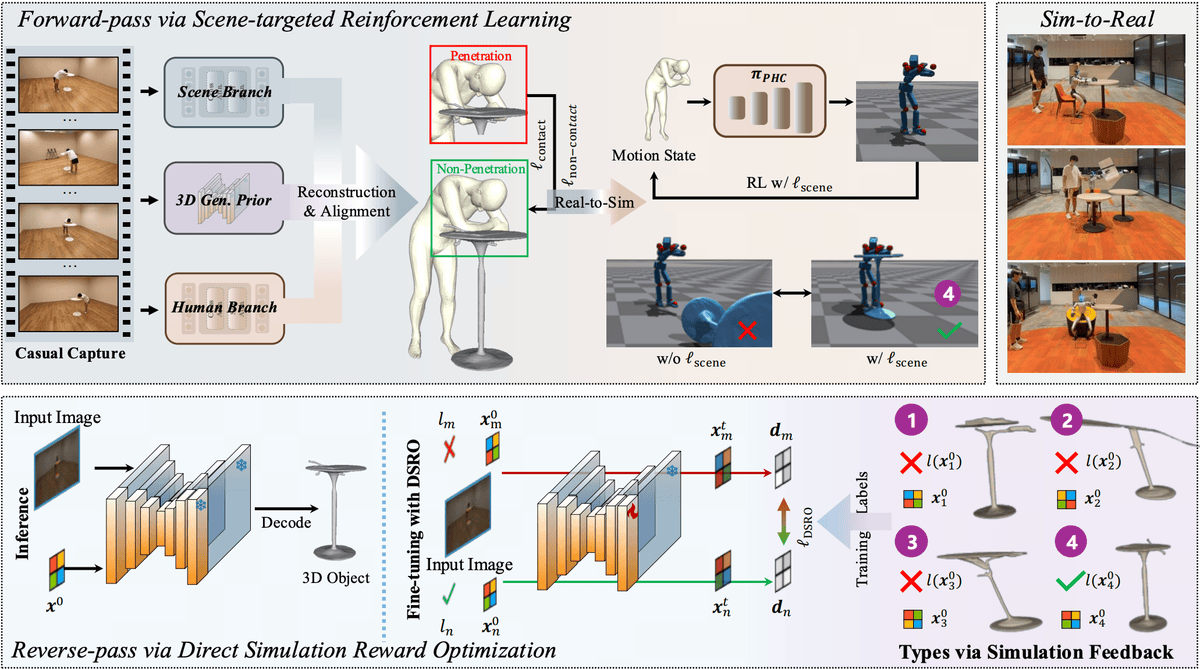
Representative image for 全球首个可仿真的人–场景交互重建框架 HSImul3R:让人类视频真正成为机器人技能来源

全球首个可仿真的人–场景交互重建框架 HSImul3R:让人类视频真正成为机器人技能来源

Rank 79 · Content 85 · Popularity 65

TL;DR - HSImul3R is an ECCV 2026-accepted framework that reconstructs simulation-ready human–scene interactions from sparse or monocular video, using physics feedback to optimize both motion and scene geometry. It could turn human videos into physically valid skills transferable to humanoid robots.

  • Its physics-in-the-loop design combines scene-targeted reinforcement learning for interaction-aware human motion with direct simulation reward optimization for 3D scenes.
  • On HSIBench, interaction stability reached 53.68%, 30.56%, and 13.92% across Easy, Medium, and Hard tasks, versus 10.52%, 4.50%, and 2.66% for HSfM.
  • The framework reduced human–scene 3D interpenetration from 69.51% to 22.90%.
  • Optimized motions were retargeted to a Unitree G1 and deployed through a simulation-to-real whole-body control pipeline.

Genome Editing 1

Highly efficient base editing at PCSK9 and normal human embryo development

Rank 76 · Content 80 · Popularity 67

TL;DR - This Nature publication reports highly efficient base editing of PCSK9 alongside normal human embryo development. Because only the title and publication metadata are provided, specific methods, efficacy measurements, and safety findings cannot be assessed.

  • The work targets PCSK9, a gene strongly associated with regulation of blood cholesterol.
  • It examines base editing in the context of human embryo development.
  • The title indicates high editing efficiency and normal development, but provides no quantitative results or information about off-target effects.
  • The findings may be relevant to heritable genome-editing research, where efficacy and developmental safety are central concerns.

Population Genetics 1

Within-family effect of ancestry on complex traits in a Mexican population

Rank 73 · Content 85 · Popularity 47

TL;DR - A Nature study uses within-family comparisons in a genetically diverse Mexico City population to examine how ancestry relates to complex traits. It identifies significant ancestry-associated differences in outcomes including height and type 2 diabetes.

  • The within-family design helps separate ancestry effects from differences between unrelated families.
  • The analysis focuses on a Mexican population with substantial genetic diversity.
  • Significant ancestry differences were found for complex traits such as height and type 2 diabetes.
  • The findings may improve understanding of ancestry-related variation in health and other polygenic traits.
Top highlights — Industry & News

LLM Agents 2

Representative image for OpenAI 攻克千禧难题?深度拆解 1 万个 Agent 如何造出流体奇点

OpenAI 攻克千禧难题?深度拆解 1 万个 Agent 如何造出流体奇点

Rank 82 · Content 95 · Popularity N/A

TL;DR - OpenAI reportedly used roughly 10,000 parallel agents, 88 hours of search, and formal verification to construct a finite-time singularity for a forced 3D Navier–Stokes setting. The work illustrates an AI-assisted mathematics pipeline combining human-devised structures, large-scale constraint search, iterative correction, and machine-checked proofs, though its novelty and attribution are disputed.

  • Human mathematicians supplied the core physical and geometric ideas, while agents searched a high-dimensional space of interacting profiles, scales, stress constraints, and corrections.
  • The construction uses anisotropic self-similar scaling to make local velocity diverge while keeping total kinetic energy finite and managing viscous dissipation.
  • High-frequency oscillations generate Reynolds stresses that absorb residual errors; local shear and low-frequency corrections keep stress-cone and integral constraints compatible.
  • Lean checks the proof chain, while a separate Comparator reportedly verifies that formalization has not weakened or altered the original problem statement.
Representative image for Astra 非机器人验证 48 关全通,再见 reCAPTCHA!

Astra 非机器人验证 48 关全通,再见 reCAPTCHA!

Rank 71 · Content 80 · Popularity N/A

TL;DR - OpenAI’s GPT-6 Astra reportedly completed all 48 levels of a CAPTCHA-style GUI challenge, demonstrating stronger visual grounding, state tracking, and closed-loop computer control. The result weakens visual puzzles as bot defenses but does not bypass modern server-side verification, browser-risk analysis, or cryptographic agent authentication.

  • Astra combines screen perception, coordinate grounding, action execution, and post-action validation; reported benchmarks include 92.7% on ScreenSpot-Pro and 72.6% on OSWorld 2.0.
  • The 48/48 demonstration is not a rigorous pixel-only benchmark because its complete harness and possible access to page structure were not disclosed.
  • Modern systems such as reCAPTCHA v3 and Turnstile also evaluate browser, network, behavioral, token-expiry, and server-side signals that a GUI agent cannot defeat merely by solving visible challenges.
  • As legitimate agents increasingly access websites, security may shift from human-versus-bot classification toward cryptographic machine identity, delegated permissions, and fine-grained authorization.

LLMs & Foundation Models 1

GPT-6 Astra: The next generation in intelligence for work

Rank 71 · Content 80 · Popularity N/A

TL;DR - OpenAI announced GPT-6 Astra, described as its most capable model for business. The limited provided content highlights advances in reasoning, computer use, writing, and design judgment but supplies no benchmarks or implementation details.

  • Positioned primarily for workplace and business applications.
  • Claims stronger advanced-reasoning and computer-use capabilities.
  • Emphasizes improved judgment for writing and design tasks.
  • No quantitative results, pricing, availability, or technical architecture are provided.

Multimodal & Generative 4

Representative image for 这个新开源的世界模型只有1.3B,单卡就能实时跑!

这个新开源的世界模型只有1.3B,单卡就能实时跑!

Rank 74 · Content 75 · Popularity 70

TL;DR - Ant Lingbo released a 1.3B-parameter version of its open-source LingBot-World 2.0, designed for real-time, locally generated interactive worlds on a single consumer GPU. The smaller model could make experimentation with persistent world generation substantially more accessible.

  • LingBot-World generates continuously evolving scenes conditioned on user actions, rather than producing a fixed video in one batch.
  • Its training pipeline combines causal pretraining with MoBA, a mixture of bidirectional and autoregressive attention masks intended to improve long-context visual stability.
  • Consistency distillation reduces the teacher model’s multi-step denoising process, while distribution-matching distillation on student self-rollouts targets accumulated errors during long autoregressive generation.
  • Alongside the 1.3B model, the team released causal-pretrained and bidirectional teacher models to support community post-training, distillation, compression, and domain adaptation.
Representative image for 3D 重建下半场开幕,ECCV 首场14篇Spotlight 把高斯泼溅推到了哪儿

3D 重建下半场开幕,ECCV 首场14篇Spotlight 把高斯泼溅推到了哪儿

Rank 71 · Content 85 · Popularity 37

TL;DR - 雷峰网梳理了 ECCV 2026 首场 3D 重建专题的 14 篇 Spotlight 论文,显示 Gaussian Splatting 已从新颖方法演变为 3D 视觉基础设施。研究重点正从单纯追求精度转向大规模一致性、生成式几何、表示效率和真实场景适应能力。

  • 前馈重建开始处理长视频和大规模建图,通过全局光线约束、循环精修等机制减少漂移并对标 SLAM。
  • 视频扩散模型与 3D 基座模型结合,以显式几何约束提升新视角生成的结构一致性和相机可控性。
  • 子像素高斯、可变形三角形和谐波纹理等新基元,旨在以更低成本表达高分辨率细节和复杂几何。
  • 水下无标注学习、动态遮挡修复、主动视角选择及按需高清重建,反映评测重心正在转向真实应用条件。
Representative image for 全球首个3D原生城市世界模型ABot-Earth 0.7发布,构建AI理解真实世界的入口

全球首个3D原生城市世界模型ABot-Earth 0.7发布,构建AI理解真实世界的入口

Rank 68 · Content 75 · Popularity N/A

TL;DR - Alibaba’s Amap released ABot-Earth 0.7, a 3D-native city world model that generates interactive digital environments from satellite imagery or text. It aims to provide a spatial foundation for simulation, prediction, and real-world AI applications.

  • The model generates continuous 3D Gaussian Splatting scenes spanning scales from planet and city views to street-level landmarks.
  • Amap claims it can produce kilometer-scale scenes in about 10 minutes on a consumer GPU, roughly 1,000 times faster than traditional reconstruction methods.
  • Generated environments support free exploration and real-time interaction rather than restricting users to captured viewpoints or predefined routes.
  • The resulting digital Earth covers more than 196 countries and regions; its capabilities are already used in Amap’s Flying Street View 2.0.
Representative image for 智象未来 vivago R1 全球上线,国内版本「够搭」全新升级发布:从 15 秒到5 分钟,AI 视频创作进入单反级交付时代

智象未来 vivago R1 全球上线,国内版本「够搭」全新升级发布:从 15 秒到5 分钟,AI 视频创作进入单反级交付时代

Rank 64 · Content 70 · Popularity N/A

TL;DR - HiDream.ai globally launched vivago R1 and upgraded its Chinese version, Gouda, positioning the product as a conversational AI video agent that can generate five-minute videos and extend them through multiple rounds. It aims to move AI video from isolated clips toward complete, reusable production workflows.

  • A main agent coordinates sub-agents for scripts, storyboards, characters, scenes, and audio, targeting consistency across long, multi-shot narratives.
  • R1 accepts text, images, video, documents, reference assets, and prior outputs within a shared multimodal project context.
  • HiDream.ai claims an 85% usable-content success rate through its HD-AgentOS orchestration and governance system.
  • Its Chat-First interface and SkillHub translate natural-language requests into executable production steps, while an asset library supports reuse across projects.

Efficiency & Systems 1

Representative image for 深度解读 DeepSeek V4.1 Flash 全新架构,如何成为显存杀手

深度解读 DeepSeek V4.1 Flash 全新架构,如何成为显存杀手

Rank 71 · Content 80 · Popularity N/A

TL;DR - DeepSeek V4.1-Flash introduces CED and CSA2 architectures to cut long-context inference compute and memory costs while retaining strong reasoning and agent performance. The reported reductions could make million-token agent workloads substantially more practical to deploy.

  • CED splits the 40-layer network into causal encoder and decoder halves, using compressed encoder states to generate global KV caches and reportedly halving prefill compute.
  • CSA2 reuses KV caches and Top-K indexes across layers; combined with FP4 global-cache quantization and FP8 short-window caches, it reduces global KV size to one-quarter of V4-Flash.
  • Disposable short-term caches and compressed long-term memory reportedly shrink persistent KV storage to one-eighth of the previous generation, while runtime VRAM use falls by about 75%.
  • Despite activating only 8B parameters during prefill and 16B during decoding, the 552B-parameter model reportedly matches or exceeds the prior 1.6T-parameter V4-Pro on several internal and agent evaluations.

Embodied AI 1

Representative image for 打造10万卡国产算力集群推出JoyAI世界模型,京东发布物理AI建设最新成果

打造10万卡国产算力集群推出JoyAI世界模型,京东发布物理AI建设最新成果

Rank 68 · Content 75 · Popularity N/A

TL;DR - JD.com announced a major physical-AI expansion spanning domestic compute infrastructure, embodied-data collection, world models, robotics, and consumer services. Its strategy integrates AI with retail and supply-chain operations to accelerate deployment in real-world environments.

  • JD Cloud plans to scale from a domestic 10,000-accelerator cluster to 100,000 accelerators, supporting large-model training and low-latency physical-AI applications.
  • The company released the interactive JoyAI-Echo WM world model, reporting a leading score of 81.6 on WBench Navigation.
  • JD.com is building an embodied-data pipeline targeting over 10 million hours of real-world human video; its first open dataset, EgoLive, is already available.
  • Its deployment plans include 80-plus RoboBase sites and, over five years, procurement of 3 million robots, 1 million autonomous vehicles, and 100,000 drones for logistics.

Embodied World Models 1

Representative image for AI 开始学习「想象未来」:ECCV 2026背后,中国学者如何卡位世界模型

AI 开始学习「想象未来」:ECCV 2026背后,中国学者如何卡位世界模型

Rank 68 · Content 75 · Popularity N/A

TL;DR - ECCV 2026 reflects a convergence of world models, 3D representations, and embodied AI, shifting the field from visually plausible future generation toward physically grounded prediction that guides action. Chinese researchers are contributing through new model definitions, evaluation benchmarks, and integrations with robotic control.

  • ECCV 2026 features 13 workshops focused on world models or embodied AI, highlighting growing attention to construction, evaluation, reliability, and action-loop integration.
  • World Action Models distinguish passive video prediction from systems that forecast action consequences and use them for decision-making.
  • 4DWorldBench evaluates spatial structure, temporal continuity, physical consistency, and downstream usefulness rather than visual quality alone.
  • VLA-JEPA and eWAM integrate latent world prediction with vision-language-action models, while Gaussian Splatting offers a differentiable 3D representation for dynamic environments.