🛰️ Daily AI Frontier
16 works · 3 categories · 12 topics · blog 12 journal 4 generated 2026-09-15 14:35:07 UTC
Top highlights — Research

LLM Agents 1

Representative image for 强化学习大本营新作:如何破解「学新忘旧」困局

强化学习大本营新作:如何破解「学新忘旧」困局

Rank 78 · Content 95 · Popularity 38

TL;DR - University of Alberta researchers propose FAME, a dual-system framework that formulates continual reinforcement learning as minimizing catastrophic forgetting while preserving fast adaptation. It matters for agents and robots that must learn new tasks after deployment without losing previously acquired skills.

  • FAME defines task distance through differences in optimal value functions or policies and measures forgetting using prior-task state visitation distributions.
  • A Fast Learner uses hypothesis testing to choose among meta-learned initialization, fine-tuning the previous policy, or training from scratch for each new task.
  • A Meta Learner consolidates new knowledge by minimizing a formal forgetting objective, expressed through incremental maximum likelihood, KL divergence, or Wasserstein distance depending on the setting.
  • Across MinAtar, Atari, and Meta-World experiments with DQN, PPO, and SAC, FAME reportedly outperformed several continual-learning baselines on average performance, forward transfer, and forgetting.
Medical/Healthcare AI 1

‘Multifunctional’ brain implant translates speech and gestures in real time

Rank 81 · Content 95 · Popularity 49

TL;DR - A brain implant uses AI to decode intended speech and gestures from neural activity simultaneously and in real time. This multifunctionality could enable more natural communication and device control for people with neurological impairments.

  • The neural device targets both intended words and gestures.
  • It decodes the two forms of intent simultaneously rather than through separate systems.
  • Real-time operation is central to its potential use as an assistive brain–computer interface.
  • The provided summary does not specify accuracy, participant numbers, or implant design.

Proteomics 1

Encoded and non-genetic protein variants expand human functional proteome

Rank 71 · Content 80 · Popularity 49

TL;DR - This Nature paper examines how genetically encoded and non-genetic protein variants broaden the human functional proteome. Only the title and publication metadata are provided, so specific methods and findings cannot be assessed.

  • Published online in Nature on 14 September 2026.
  • Focuses on protein-level diversity beyond canonical gene-encoded forms.
  • Suggests that both encoded variants and non-genetic modifications contribute to functional proteome expansion.
  • The provided content does not specify the variants studied, experimental approach, or quantitative results.
Top highlights — Industry & News

LLM Agents 1

Representative image for 工作流可以自我进化了,英伟达开源 SoL-Pi,每小时省13.5刀!

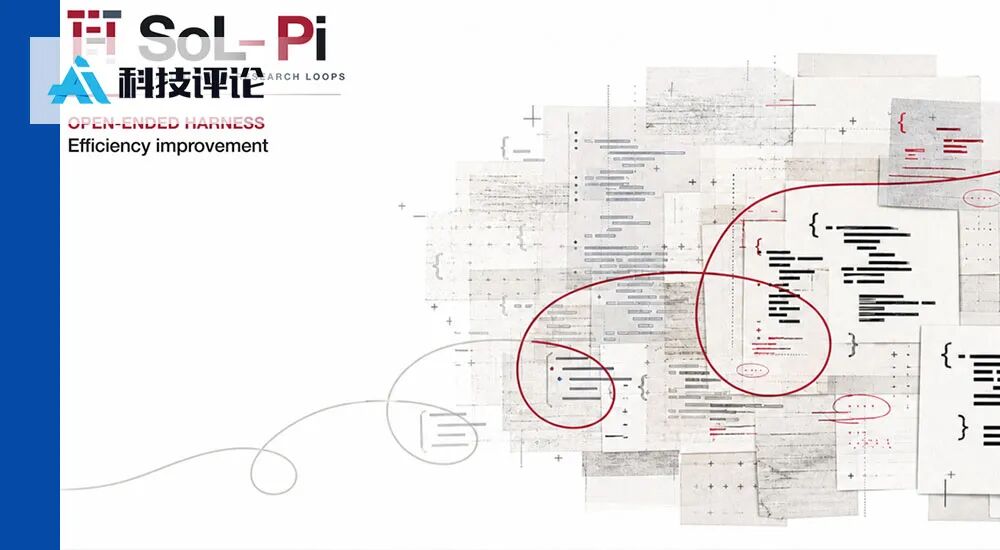
工作流可以自我进化了,英伟达开源 SoL-Pi,每小时省13.5刀!

Rank 78 · Content 90 · Popularity N/A

TL;DR - NVIDIA open-sourced SoL-Pi, an agent harness that automatically optimizes coding-agent workflows to reduce redundant reasoning, context, and tool-output overhead. Across 535 test environments, it reportedly cut token use by up to 64% and API costs by up to 54% while maintaining baseline task performance.

  • SoL-Pi emerged from an automated research loop that evaluated 152 AI-generated workflow optimizations and retained four effective mechanisms.
  • Its core techniques are action fusion, online context compression, indexed “observation packages” for tool outputs, and evidence-linked log summarization using cheaper models.
  • The evaluation included 495 historical bugs from open-source repositories and 40 open-ended sandbox tasks with programmatic verification.
  • Compared with the Pi agent base, SoL-Pi used 45%–49% fewer tokens and reduced development costs by roughly one-third.

Bioinformatics AI 1

Representative image for 一张GPU跑10万原子!分子之心用AI把化学反应“拍”成了电影

一张GPU跑10万原子!分子之心用AI把化学反应“拍”成了电影

Rank 80 · Content 100 · Popularity 35

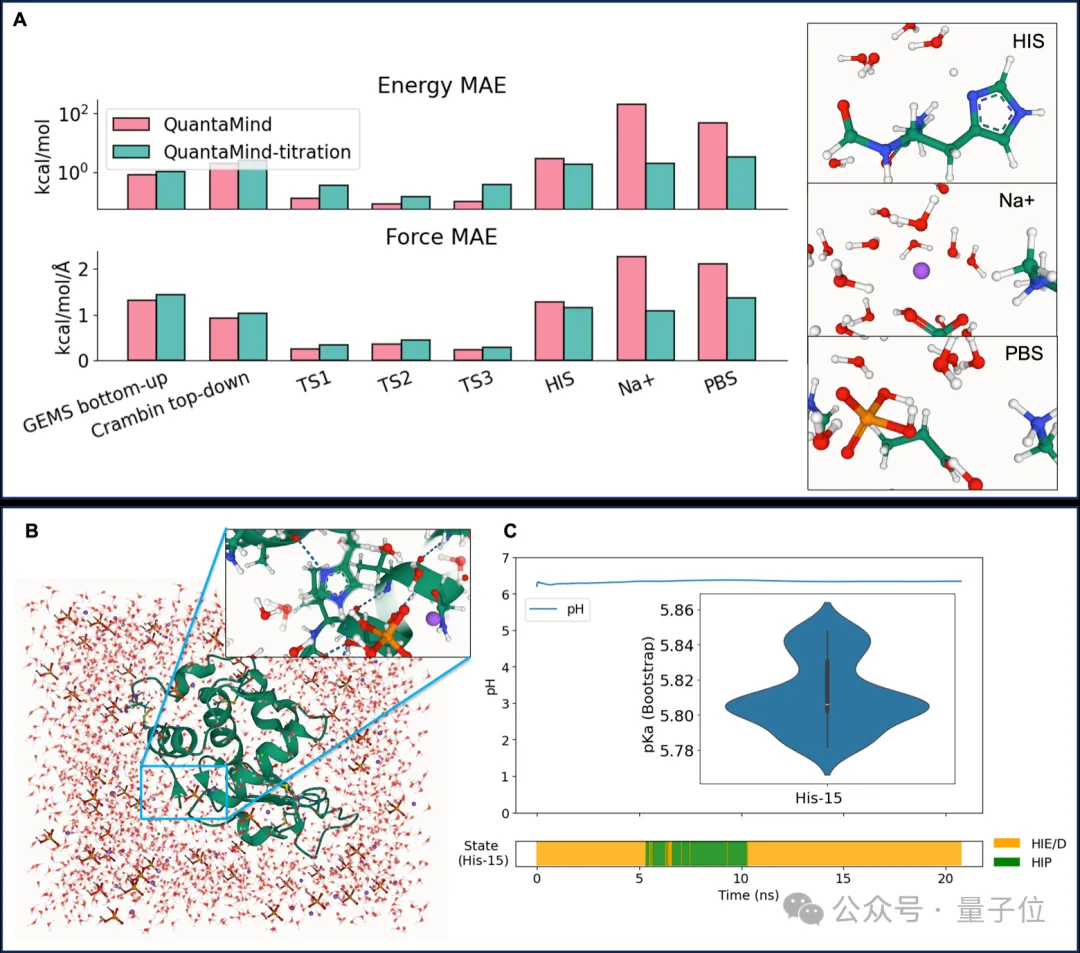
TL;DR - MolecularMind says its QuantaMind reactive machine-learning force field can simulate chemical reactions in systems approaching 100,000 atoms on one GPU, combining near-quantum accuracy with longer timescales and lower computational cost. The advance could make reaction-mechanism analysis and computer-guided protein, enzyme, and drug design more practical.

  • QuantaMind was trained on key states from 5,286 reactions and uses mixed-fidelity data plus iterative high-accuracy calculations to improve weak spots.
  • A Science Advances study simulated a 17,792-atom PETase system for 6 ns without prescribing the reaction pathway, capturing proton transfer, bond breaking and formation, and a complete catalytic cycle.
  • Reported validation included agreement with experimental reaction energetics and correlations above 0.99 against quantum-mechanical calculations on sampled structures.
  • The company reports scaling to roughly 100,000 atoms for hundreds of nanoseconds on a single GPU, with about 0.25 seconds per simulation step.

LLMs & Foundation Models 3

Representative image for 7名博士生仅用3个月从零训练7B大模型:代码+数据+训练日志全公开

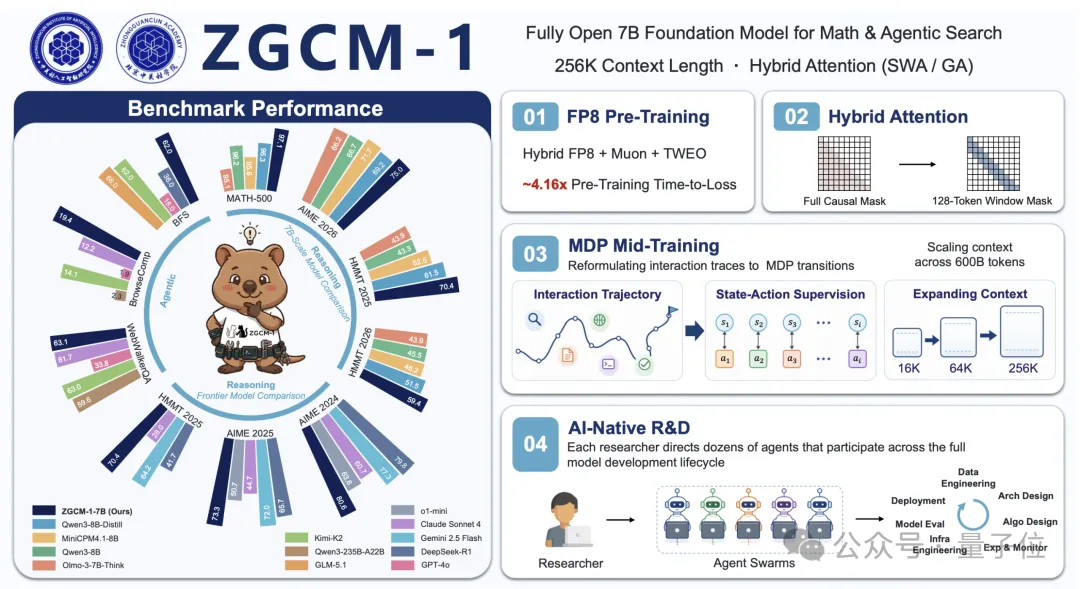
7名博士生仅用3个月从零训练7B大模型:代码+数据+训练日志全公开

Rank 82 · Content 95 · Popularity N/A

TL;DR - Seven doctoral students trained the open-source ZGCM-1 7B model from scratch in three months, using hundreds of AI agents to support data processing, experimentation, monitoring, and evaluation. The release includes weights, code, data recipes, checkpoints, and logs, offering an unusually reproducible view of end-to-end foundation-model development.

  • ZGCM-1 reportedly performs competitively with similarly sized models such as Qwen3-8B, including strong results on reasoning, search, and tool-use evaluations.
  • A hybrid local/global attention design achieved about 3.94× higher throughput and roughly one-sixth the KV-cache usage versus full attention at 256K context.
  • Muon, FP8, delayed scaling, and TWEO delivered approximately 4.2× better efficiency to reach the same 16K pretraining loss than a BF16/AdamW baseline.
  • Agents reached high autonomy in monitoring and deployment, but architecture and algorithm design remained human-led; the team rated these tasks only at L2 autonomy.
Representative image for 英伟达开源 IMO 金牌配方:不仅是「人海战术」,1.5TB 显存做实 AI「 推恩令」?

英伟达开源 IMO 金牌配方:不仅是「人海战术」,1.5TB 显存做实 AI「 推恩令」?

Rank 75 · Content 85 · Popularity 53

TL;DR - NVIDIA open-sourced much of the Nemotron 3 Ultra system that scored 30/42—above the 2026 IMO gold-medal threshold—using natural-language proofs and no external tools. The release exposes a powerful multi-model search-and-refinement recipe, while highlighting verifier weaknesses and a roughly 1.5 TB memory barrier to reproduction.

  • The system combines general, SFT, and RL checkpoints to diversify proof strategies, repair partial solutions, and reduce redundant sampling.
  • It starts with 384 proofs per problem, then iteratively verifies, ranks, and refines promising candidates in a persistent proof pool.
  • Unanimous multi-checkpoint verification reduces some false acceptances, but shared model ancestry creates correlated blind spots that can approve the same flawed argument.
  • NVIDIA released expert checkpoints, training data, inference code, recipes, submitted proofs, and a 200-problem benchmark, though some training artifacts remain closed and full-scale reproduction requires substantial compute.
Representative image for Meta新研究:字节模型蒸馏后,天花板破了

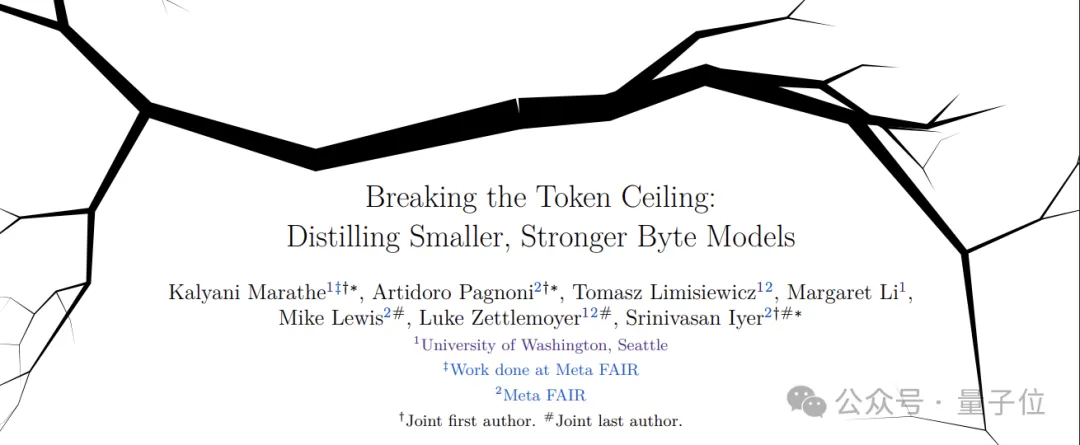
Meta新研究:字节模型蒸馏后,天花板破了

Rank 74 · Content 95 · Popularity 26

TL;DR - Meta FAIR and University of Washington researchers propose distilling token-level teacher distributions into byte-level student models. Their scaling-law projections suggest an End-Of-Token byte model could eventually exceed conventional token distillation by 4 percentage points in average downstream accuracy while reducing data and storage needs.

  • End-Of-Token adds an explicit marker after each token, preserving token-boundary probability mass when converting teacher predictions into byte-level targets.
  • With Llama 3-8B as teacher, projected asymptotic accuracy was 52.4% for End-Of-Token, versus 50.5% for Marginalize-It and 48.4% for token distillation.
  • Byte-level students have roughly 256 basic output choices rather than Llama 3’s 128,256-token vocabulary, enabling storage of complete teacher distributions instead of top-k truncation.
  • The projected gains require more compute: End-Of-Token adds about 30.94% training cost over ordinary byte modeling for the same text, and equal-inference-cost comparisons remain unfinished.

Multimodal & Generative 2

Representative image for 全球AI视频榜单第一梯队再添中国力量:智象发布首款物理规律导向视频模型

全球AI视频榜单第一梯队再添中国力量:智象发布首款物理规律导向视频模型

Rank 68 · Content 75 · Popularity N/A

TL;DR - HiDream.ai launched HD-V1, a natively multimodal video model that generates 5–20-second, 1080p videos from text, images, or video. It emphasizes physical realism, autonomous narrative planning, and synchronized audio-video generation, ranking fourth on Artificial Analysis’s image-to-video-with-audio leaderboard and eighth on Arena.ai’s image-to-video benchmark.

  • A multimodal intent module converts natural-language prompts into structured plans covering shots, characters, actions, camera work, dialogue, and sound.
  • The model jointly handles text, video, and audio, targeting consistent motion, synchronized sound effects and speech, and coherent multi-shot narratives.
  • Its pipeline combines upfront planning, joint generation, and post-training with diffusion reinforcement learning and a multimodal reward model.
  • HD-V1 can select a 5–20-second duration based on the action and narrative rather than mechanically filling a fixed user-specified runtime.
Representative image for 阶跃发布 StepAudio 3 ,多款语音模型登顶 Artificial Analysis 全球榜单

阶跃发布 StepAudio 3 ,多款语音模型登顶 Artificial Analysis 全球榜单

Rank 68 · Content 75 · Popularity N/A

TL;DR - 阶跃星辰发布 StepAudio 3 系列五款语音模型,覆盖实时对话、语音识别、语音合成、综合音频生成和音乐创作。多款模型在 Artificial Analysis 榜单中并列或位居全球第一,体现语音 AI 正从单项能力走向理解、推理、工具调用与内容创作一体化。

  • StepAudio 3 Realtime 支持原生全双工对话、打断处理、并行语音推理及异步 Tool Call,以 98.9% 登顶 Conversational Dynamics 榜单,并在 Speech Reasoning 榜单排名第一。
  • StepAudio 3 ASR 支持中英文、方言、混合语言、长音频及专业场景,以 1.7% WER 并列 Artificial Analysis 非流式语音识别准确性榜首。
  • StepAudio 3 TTS 可流式生成包含笑声、迟疑和改口等副语言表现的真人级语音;StepAudio 3 Gen 能一次生成融合人声、音效、环境声和配乐的完整音频。
  • StepAudio 3 Music 支持歌曲生成、清唱配乐、翻唱及基于 ABC 记谱法的多轮创作;五款模型均已上线阶跃星辰开放平台。

Efficiency & Systems 1

Representative image for 无问芯穹联合清华、上交正式开源具身端侧推理引擎APXInf,Pi 0.5性能SOTA

无问芯穹联合清华、上交正式开源具身端侧推理引擎APXInf,Pi 0.5性能SOTA

Rank 68 · Content 75 · Popularity N/A

TL;DR - Infinigence AI, Tsinghua University, and Shanghai Jiao Tong University open-sourced APXInf, an edge inference engine for deploying embodied AI models on robots. It reportedly cuts π0.5 FP8 end-to-end latency on Jetson Thor from 278 ms to under 26 ms, enabling 38.46 Hz real-time inference.

  • APXInf targets low-batch, low-latency, resource-constrained robotics workloads through pipeline, graph, kernel, and quantization optimizations.
  • The engine uses a minimal Rust runtime for memory safety and predictable operation, with Python interfaces for easier model integration.
  • Its initial release supports π0.5 and WALL-OSS on Jetson Orin, Jetson Thor, and RTX 4090 hardware.
  • The roadmap includes VLA, VLM, and world models; Qwen and GR00T support; NVFP4 optimization; and additional domestic and AMD hardware backends.

Embodied AI 1

Representative image for 横扫四榜,DM0.5 凭什么面面俱到?

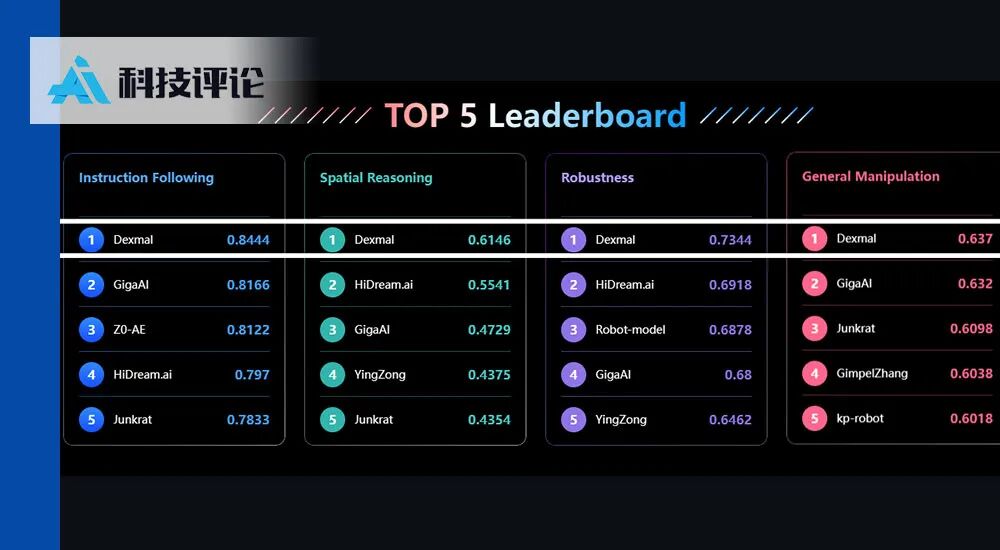
横扫四榜,DM0.5 凭什么面面俱到?

Rank 64 · Content 70 · Popularity N/A

TL;DR - ForceMinds’ open-source DM0.5 embodied foundation model ranked first across all four RoboColiseum categories, suggesting unusually balanced instruction-following, spatial-reasoning, robustness, and manipulation capabilities. The results matter because they span complementary benchmarks and are supported by reported real-robot deployments.

  • RoboColiseum reports DM0.5 scores of 0.8444 for instruction following, 0.6146 for spatial understanding, 0.7344 for disturbance adaptation, and 0.6370 for general manipulation.
  • Its design combines embodied chain-of-thought pretraining, 100,000 hours of egocentric video, 3D geometric representations, and a native 60-second memory.
  • TensorRT, FP8, FlexAttention, Triton kernels, and CUDA Graph optimizations reportedly reduced core inference latency from 534 ms to 57.49 ms, with LIBERO success nearly unchanged at 98.40%.
  • Model weights, training infrastructure, and several downstream workflows are being open-sourced, while warehouse and manufacturing trials provide early evidence beyond simulation benchmarks.

Embodied Robotics 1

Representative image for Xspark AI 丁文伯:触觉替代不了视觉,但机器人需要一套自己的“脊髓” |物理AI 50人

Xspark AI 丁文伯:触觉替代不了视觉,但机器人需要一套自己的“脊髓” |物理AI 50人

Rank 71 · Content 80 · Popularity N/A

TL;DR - Xspark AI chief scientist Ding Wenbo argues that tactile sensing should complement—not replace—vision with a lightweight, low-latency “spinal cord” layer for robotic control. This architecture could improve rapid correction and safety during real-world physical interaction.

  • Xspark AI proposes a three-tier stack: a VLM “slow brain” for planning, a vision-tactile-language-action “fast brain” for dexterous tasks, and a tactile-action “spinal cord” for immediate local reactions.
  • Tactile feedback is most valuable after contact, detecting events such as slipping, excessive grip force, collisions, and loss of balance that vision may miss or process too slowly.
  • Simply adding touch as another large-model modality risks redundancy or drowning out sparse but critical tactile signals; tactile intelligence may need smaller, edge-deployed models optimized for latency.
  • Major barriers include inconsistent sensor hardware, scarce tactile data, and the lack of shared representations that transfer across sensors, modalities, and robot bodies.

LLM Safety 1

Representative image for 蚂蚁发布大模型内生式安全护栏SingProbe,让AI边生成边识别风险

蚂蚁发布大模型内生式安全护栏SingProbe,让AI边生成边识别风险

Rank 75 · Content 85 · Popularity N/A

TL;DR - Ant Group released SingProbe, an open-source guardrail that detects safety and factual-reliability risks during LLM generation by reusing internal inference signals. It aims to enable earlier intervention with less than 0.5% reported decoding overhead.

  • SingProbe continuously emits risk scores so applications can warn, stop, or retry generation before unsafe content is fully displayed.
  • Tests on Ling-3.0-flash reportedly beat selected public baselines for response safety classification and streaming detection, while roughly matching a reference baseline for hallucination detection.
  • The accompanying SingStreamBench evaluates whether streaming guardrails detect the precise transition from safe to risky content without triggering too early.
  • SingProbe-Med’s targeted decoding intervention corrected 25.03% of previously incorrect AntAngelMed-100B answers; SingProbe supports 29 open-source models plus SGLang and vLLM.
Top highlights — Opinions

Agricultural Biotechnology 1

CRISPR crops are coming to Europe — why bolder would be better

Rank 49 · Content 50 · Popularity 48

TL;DR - This Nature editorial argues that Europe should adopt thoughtfully designed—and potentially bolder—guidelines for farming CRISPR-edited crops. The details provided are limited, but the central concern is whether regulation will enable farmers and consumers to realize gene editing’s benefits.

  • Focuses on agricultural policy for gene-edited plants in Europe.
  • Calls for careful implementation of cultivation guidelines.
  • Suggests that overly cautious rules could constrain potential benefits.
  • No specific crops, regulatory provisions, or experimental results are provided.

Climate AI 1

Make AI traceable before it shapes global climate assessments

Rank 53 · Content 55 · Popularity 49

TL;DR - This Nature commentary calls for traceability of AI use before it influences global climate assessments. Only the title and publication metadata are provided, so specific recommendations or evidence cannot be determined.

  • Focuses on accountability and provenance when AI contributes to climate assessments.
  • Implies that AI-generated inputs, methods, and outputs should be auditable.
  • Highlights the importance of establishing safeguards before AI materially shapes global climate conclusions.