🛰️ Daily AI Frontier
36 works · 2 categories · 13 topics · blog 12 journal 10 arxiv 15 generated 2026-09-19 14:27:05 UTC
Top highlights — Research

LLM Agents 4

Don't Mask the Environment: Observation Supervision Changes How Agents Explore Under RL

Rank 89 · Content 100 · Popularity 64

TL;DR - ActObs improves agent initialization for reinforcement learning by supervising both action and environment-observation tokens during fine-tuning. This preserves consequence prediction and encourages broader exploration without additional data, parameters, tokens, or forward passes.

  • ActObs and action-only training perform similarly after SFT but diverge after GRPO reinforcement learning.
  • On Terminal-Bench 2.0, ActObs improves pass@k across all tested sampling budgets for Qwen3-4B; with Qwen3-8B, it gains 3.4 percentage points at pass@16 while sacrificing some pass@1 reliability.
  • The method generalizes to unseen cross-domain code editing, improving aider-polyglot pass@1 by 4.2 percentage points with Qwen3-4B.
  • ActObs retains more policy entropy and requires less policy movement during RL, while action-only SFT degrades the base model’s ability to predict environmental consequences.
Representative image for RetireOPD: Self-Retiring On-Policy Distillation for Agentic Reinforcement Learning

RetireOPD: Self-Retiring On-Policy Distillation for Agentic Reinforcement Learning

Rank 86 · Content 95 · Popularity 65

TL;DR - RetireOPD trains agentic language models with a skill-conditioned teacher that automatically “retires” once the student approaches its performance and their discrepancy plateaus. This adaptive combination of on-policy distillation and reinforcement learning substantially outperforms RL alone on ALFWorld and WebShop.

  • The teacher is optimized separately using environment rewards before jointly supervising a skill-free student alongside RL.
  • Adaptive Retirement replaces a fixed distillation schedule with criteria based on teacher-student discrepancy and relative task success.
  • Across Qwen2.5 models from 1.5B to 7B, gains over RL range from 14.1%–18.8% on ALFWorld and 11.8%–19.0% on WebShop.
  • The student ultimately surpasses its skill-conditioned teacher in every reported setting.
Representative image for The Missing Complement: State-Conditioned Minimal Sufficient Evidence for Coding Agents

The Missing Complement: State-Conditioned Minimal Sufficient Evidence for Coding Agents

Rank 78 · Content 95 · Popularity 39

TL;DR - This paper reframes retrieval for coding agents as finding a compact, state-conditioned set of evidence that supplies every fact missing from the agent’s current context. Its MSS-Complement method improves evidence completeness and downstream repair localization while using substantially smaller prompts.

  • SERBench evaluates retrieval on 500 held-out agent states from 45 repositories, requiring retrieved sets to cover every annotated fact needed for the next decision.
  • MSS-Complement constructs jointly sufficient evidence sets through three semantic calls and returns 4–8 intact source units within 6,144 tokens.
  • It achieves 73.0% complete-set recovery with five items and 80.6% with eight, versus 61.4% and 72.4% for Qwen3 embeddings with reranking.
  • On AMA-Bench, it reduces answer-prompt size by 76.2% while improving accuracy by 2.08 points over the benchmark’s memory agent.

Coding Agents with an Obstacle-Aware Harness for Safe Robot Manipulation

Rank 75 · Content 90 · Popularity 39

TL;DR - SafeHarness improves the safety of coding agents for robot manipulation by separating obstacle-aware route planning from contact execution. It achieves 71.9% task success and 87.5% collision avoidance, outperforming the previous state of the art by 6.5 and 27.0 percentage points, respectively.

  • Baseline coding agents collided with obstacles in most cases despite recognizing them and receiving explicit instructions not to touch them.
  • The failure stemmed from planning: agents lacked clearing-route reasoning, replanning when routes became infeasible, and safety-aware contact selection.
  • SafeHarness represents objects as bounding boxes, generates and verifies waypoint routes, replans when needed, and chooses collision-free contact positions.
  • Compared with the same agent without the harnesses, task success increased by 2.3× and collision avoidance by 1.5×.

Medical/Healthcare AI 6

Should This Case Be Adapted? Prediction Fragmentation Controls Test-Time Adaptation

Rank 78 · Content 95 · Popularity 39

TL;DR - This paper uses prediction fragmentation—the disagreement geometry between original and adapted segmentation masks—to decide whether each medical-imaging case should undergo test-time adaptation. The approach substantially reduces harmful adaptations without requiring labels or additional backward passes at decision time.

  • Fixed-step adaptation worsened 58.7% of cases on cross-vendor cardiac MRI despite producing no statistically significant mean Dice change.
  • Prediction fragmentation correlates with harmful accepted area across three benchmarks (Spearman ρ 0.50–0.60) at one-quarter the latency of a gradient-norm signal.
  • On the selected cardiac benchmark, the router cut harmful accepted area from 0.129 to 0.013 at matched Dice and reduced harmed cases from 58.7% to 20.0%.
  • The routing template transferred across segmentation architectures and domains, though on prostate data it reduced harmful edits at the cost of accuracy.
Representative image for Multi-center Medical Data Mining with FL-Net - A One-stop Shop for Federated Learning

Multi-center Medical Data Mining with FL-Net - A One-stop Shop for Federated Learning

Rank 78 · Content 95 · Popularity 39

TL;DR - FL-Net is an end-to-end federated learning framework for privacy-preserving, multicenter clinical research. It aims to move beyond simulations by supporting reusable harmonized data, secure workflows, auditing, and deployment across real hospital networks.

  • A review of 14 existing federated learning frameworks found that none met all five requirements derived from the literature.
  • FL-Net integrates modular data harmonization, cross-study data discovery, disclosure control, versioned tools, and containerized workflow execution.
  • Evaluations covered MIMIC and US-130 patient discovery plus reproducible, audited workflows with up to 50 concurrent clients.
  • Its planned deployment spans over 800,000 patients across 10 hospitals in nine countries through two EU projects.

How to make a brain: new experiments challenge existing picture

Rank 64 · Content 70 · Popularity 49

TL;DR - New experiments challenge the prevailing understanding of how the brain develops and identify an efficient method for growing hindbrain cells from stem cells. The limited excerpt does not provide the experimental methods or specific findings.

  • The research focuses on mechanisms involved in brain formation.
  • It questions aspects of the existing model of brain development.
  • It reports a more efficient approach to producing difficult-to-grow hindbrain cells from stem cells.
  • The advance could improve laboratory models for studying hindbrain development and disease, although specific applications are not described.

Transplanted human brain-tissue takes root in mice without a cortex

Rank 64 · Content 70 · Popularity 49

TL;DR - Transplanted human brain tissue reportedly integrated extensively in mice lacking a cortex, suggesting a potential in vivo platform for testing therapies. The provided excerpt does not include experimental methods or detailed results.

  • The work focuses on engrafting human neural tissue into mice without a cortex.
  • Nature highlights extensive cellular integration as the principal finding.
  • Such grafts could enable therapies to be evaluated in a living biological system.
  • The excerpt also mentions an unrelated AI tool that turns papers into “virtual corresponding authors,” but provides no technical details.

Inflection points and transitions in Alzheimer’s disease

Rank 60 · Content 65 · Popularity 49

TL;DR - This Nature publication concerns inflection points and transitions in Alzheimer’s disease, likely examining how the disease changes across stages. Only the title and publication metadata are provided, so its methods, findings, and implications cannot be determined.

  • Published online in Nature on 16 September 2026.
  • The work focuses on transitions or turning points in Alzheimer’s disease progression.
  • No abstract, data, methods, or results are included in the supplied content.

Cognitive resilience helps to predict Alzheimer’s dementia

Rank 57 · Content 60 · Popularity 49

TL;DR - A Nature research highlight reports that cognitive resilience could help predict Alzheimer’s dementia and may explain why people with similar brain pathology experience different symptom severity.

  • Cognitive resilience is identified as a potential predictor of Alzheimer’s dementia.
  • The finding could help account for variation in symptoms among people with comparable brain pathology.
  • The provided excerpt does not specify the study’s methods, cohort, predictive performance, or clinical applicability.

Bioinformatics AI 2

Representative image for CellRFT: Reinforcement Fine-Tuning for Single-Cell Perturbation Modeling

CellRFT: Reinforcement Fine-Tuning for Single-Cell Perturbation Modeling

Rank 78 · Content 95 · Popularity 39

TL;DR - CellRFT is a reinforcement fine-tuning framework for single-cell perturbation models that directly optimizes non-differentiable biological evaluation criteria. It aims to align training with biologically meaningful outcomes rather than relying solely on surrogate losses.

  • Uses policy-gradient optimization with evaluations of generated cell populations as training feedback.
  • Combines multiple biological rewards through hierarchical reward aggregation.
  • Experiments across different pretrained models report improved perturbation prediction.
  • Results show that biological criteria can conflict or reinforce one another, highlighting implications for reward and evaluation design.

Mutational constraints on RSV F and its neutralization by antibodies

Rank 71 · Content 80 · Popularity 49

TL;DR - This Nature study maps how mutations in the respiratory syncytial virus (RSV) F protein alter antibody neutralization. It provides a biophysical model showing how antibody Fab potency and epitope specificity jointly determine sensitivity to viral mutations.

  • Defines the effects of RSV F mutations on antibody neutralization.
  • Links mutational effects to both Fab potency and the antibody’s targeted epitope.
  • Offers a mechanistic framework for understanding RSV antibody escape.

LLMs & Foundation Models 5

dQwen3.5: Hybrid-Attention Diffusion Language Models

Rank 84 · Content 95 · Popularity 59

TL;DR - dQwen3.5 adapts Qwen3.5’s hybrid attention–RNN architecture into diffusion language models ranging from 0.8B to 9B parameters. The results suggest hybrid autoregressive backbones can enable efficient diffusion-model adaptation despite their structurally causal RNN layers.

  • The family spans 0.8B, 2B, 4B, and 9B parameter scales.
  • Hybrid models reach a given training loss using roughly half the tokens required by a full-attention control.
  • Across scales, dQwen3.5 exhibits any-order decoding behavior similar to full-attention diffusion language models.
  • The adapted models perform strongly with parallel decoding.
Representative image for When EOS Tokens Disagree: Understanding Length Inflation in On-Policy Distillation

When EOS Tokens Disagree: Understanding Length Inflation in On-Policy Distillation

Rank 84 · Content 90 · Popularity 69

TL;DR - This paper identifies mismatched EOS-token preferences between students and teachers as a key cause of excessive response length in on-policy distillation. Treating functionally equivalent EOS tokens as one semantic stopping action substantially reduces length inflation across Qwen3, Llama, and Gemma models.

  • Matching decoding stopping sets alone does not resolve the underlying termination mismatch.
  • Teacher supervision can suppress the student’s preferred EOS token without successfully transferring the teacher’s alternative.
  • Termination preferences can shift substantially across different stages of K2-Horizon training.
  • Late-stage length inflation persists after EOS alignment, indicating that termination mismatch is important but not the only cause.

Score Centering Stabilizes Off-policy Reinforcement Learning

Rank 83 · Content 100 · Popularity 43

TL;DR - This paper identifies persistent score drift between training and inference engines as a primary cause of instability in off-policy LLM reinforcement learning. Its additive score-centering correction improves stability under engine mismatches without sacrificing rollout efficiency.

  • Score centering cancels bias that otherwise accumulates across training steps.
  • Across models from 0.6B to 30B parameters, it matches or outperforms importance sampling under quantization.
  • Its advantage grows as the training-inference mismatch becomes more severe.
  • The correction composes with importance sampling and improves on pure importance-sampling baselines in staleness experiments.

What Does Privileged Information Add to On-Policy Self-Distillation?

Rank 82 · Content 90 · Popularity 63

TL;DR - This study isolates how much privileged answers or worked solutions contribute to on-policy self-distillation for mathematical reasoning. Most gains came from distillation itself rather than privileged references, with benefits varying by model and rollout format.

  • AMPLE-Math contains 5,319 problems with six reasoning views sharing the same answer, enabling matched comparisons against reference-free distillation.
  • For Qwen3-1.7B, reference-free distillation explained much of the improvement under thinking-enabled evaluation; polished solutions provided only modest additional benefit.
  • Complete reasoning traces improved SmolLM3-3B by two percentage points at step 50, showing that reference value depends on the student model.
  • Replacing short direct responses with long thinking-enabled rollouts reversed gains into losses, suggesting OPSD primarily improves access to existing reasoning capabilities across inference modes.

Can Data Attribution Filter Out Subliminal Learning? Not Reliably

Rank 78 · Content 95 · Popularity 39

TL;DR - This paper tests whether gradient-based data attribution can identify and filter training data that transmits hidden behavioral traits through subliminal learning. EK-FAC partially mitigates the effect, but no evaluated method works reliably across models and settings.

  • EK-FAC is the strongest attribution method for token-level filtering, while GradCos and contrastive GradCos provide little benefit.
  • All attribution methods generally underperform the counterfactual-teacher-based divergence-token baseline at token-level filtering.
  • Filtering entire samples is less effective overall, although EK-FAC often provides a stronger signal than divergence tokens in that setting.
  • Performance varies substantially across model–preference combinations, with no consistent explanation for the differences.

Multimodal & Generative 3

Representative image for Video DeltaNet: A Video-Native Hybrid Attention for Livestream Video Generation

Video DeltaNet: A Video-Native Hybrid Attention for Livestream Video Generation

Rank 86 · Content 95 · Popularity 64

TL;DR - Video DeltaNet introduces a hybrid attention architecture for diffusion-based livestream video generation, combining local Softmax attention with bidirectional linear memory. On MiniMax H3, it accelerates 768p video denoising by 14.5× while retaining fine-grained and long-range interactions.

  • Video Delta Attention updates its linear memory once per frame by jointly incorporating all spatial tokens.
  • Separate projections and learnable gates balance the local Softmax and long-range linear-attention branches.
  • A staged teacher-alignment recipe integrates the new pathway into pretrained models; text- and audio-related interactions retain Softmax attention.
  • With eight-step distillation and optimized SGLang serving, VDN-H3 denoises a 14.3-second video in 6.70 seconds on eight NVIDIA B200 GPUs.

Limits of Confidence in Diffusion

Rank 82 · Content 100 · Popularity 39

TL;DR - This paper identifies a fundamental limitation in discrete diffusion samplers that generate multiple token positions independently per step: they reproduce the training distribution only when those positions are conditionally independent. This matters because standard per-sample metrics can look perfect while concealing substantial distributional error.

  • No product of per-position distributions can represent a jointly dependent group of tokens.
  • Per-position marginals cannot reveal group dependence, since different joint distributions may share identical marginals.
  • On the synthetic ScanAndAdd task, every multi-position group selected by confidence ranking is dependent.
  • The generated distribution’s total variation is (29\times) the sampling-noise floor despite per-sample metrics scoring (1.0).
Representative image for Astronex-World 1.0: Real-Time Interactive World Model Foundation

Astronex-World 1.0: Real-Time Interactive World Model Foundation

Rank 78 · Content 95 · Popularity 39

TL;DR - Astronex-World 1.0 is an open 5B-parameter video world model that supports controllable, persistent generation from text or images. It matters because it achieves real-time 832×480 video at 24 fps on one NVIDIA L20 GPU while outperforming several larger models on WBench.

  • Supports frame-aligned camera trajectories, continuous actions, embodiment IDs, and text events inserted during rollouts.
  • Provides bidirectional full-context generation and block-causal generation with cross-block KV caching for persistent streaming.
  • Uses PRoPE for camera parameters and a 64-dimensional action stream that modulates every Transformer layer.
  • Its five-stage training pipeline runs on two 48 GB L20 GPUs; the final model scores 73.5 on WBench Navi and 70.0 on WBench Full.

AI for Physics 1

AI cracked the Navier–Stokes challenge. What does that mean for physics?

Rank 81 · Content 95 · Popularity 49

TL;DR - Nature examines how AI is helping physicists and mathematicians move beyond classical Navier–Stokes equations in the study of turbulence. The provided excerpt does not specify what challenge AI “cracked” or the techniques and results involved.

  • The work concerns fluid dynamics, particularly the difficult problem of understanding turbulence.
  • AI is being used alongside approaches that extend beyond the classic governing equations.
  • The article focuses on what these AI-assisted advances could mean for physics and mathematics.
  • No specific model, benchmark, or quantitative result is included in the excerpt.

Embodied AI 1

Cybernetics, interoception, and the art of embodiment

Rank 78 · Content 90 · Popularity 49

TL;DR - This work proposes a framework for autonomous embodied agents that combines cybernetics, reinforcement learning, neuroscience and biological interoception. It matters because monitoring internal states alongside the external environment could enable artificial agents to adapt their behavior more autonomously.

  • Models biological interoception: organisms’ continuous sensing of internal physiological conditions.
  • Integrates internal-state signals with environmental feedback to guide agent actions.
  • Connects cybernetic control principles with reinforcement learning and neuroscience.
  • Targets more adaptive and autonomous artificial embodied agents.

Genome Stability 1

Cohesin reshapes replication fork contacts to aid fork slowing and reversal

Rank 67 · Content 75 · Popularity 49

TL;DR - This Nature study finds that cohesin-mediated loop extrusion reorganizes replication-fork contacts under stress, slowing and reversing forks to help preserve genome stability.

  • Cohesin limits coupling between sister replication forks.
  • It tethers nearby forks when replication stress occurs.
  • These contact changes promote fork reversal and reduce fork progression.
  • The resulting response helps safeguard genome stability.

Neurodevelopmental Biology 1

A retinoic acid autoregulatory loop governing prefrontal–motor arealization

Rank 64 · Content 70 · Popularity 49

TL;DR - This Nature study identifies MEIS2 as a central hub in a retinoic-acid-associated gene regulatory network governing prefrontal–motor cortical arealization. The finding may help connect early brain-region development with intellectual disability and autism spectrum disorder.

  • MEIS2 encodes a transcription factor associated with neurodevelopmental disorders.
  • The study describes a retinoic acid autoregulatory loop involved in cortical area specification.
  • The provided abstract snippet does not detail the experimental methods or specific mechanistic results.

Plant Genetics 1

Sex without crossovers mimics clonal reproduction in Rhynchospora tenuis

Rank 64 · Content 70 · Popularity 49

TL;DR - A Nature study reports that the plant Rhynchospora tenuis undergoes obligate, genome-wide meiosis without crossovers in both sexes. This makes sexual reproduction genetically resemble clonal reproduction by limiting recombination.

  • Achiasmy occurs during both male and female meiosis.
  • The absence of crossovers applies across the entire genome.
  • The finding challenges the usual association between sexual reproduction and meiotic genetic reshuffling.
  • The provided abstract snippet does not describe the underlying mechanism or broader evolutionary consequences.
Top highlights — Industry & News

LLM Agents 2

Representative image for 华为全联接大会2026:360与昇腾AI联合打造解决方案,为AI Agent全面提速

华为全联接大会2026:360与昇腾AI联合打造解决方案,为AI Agent全面提速

Rank 61 · Content 65 · Popularity N/A

TL;DR - 360 and Huawei Ascend jointly optimized 360’s Agent Factory infrastructure for complex, long-running AI agent workloads. The integration targets faster and more reliable multi-agent coordination, long-context reasoning, and frequent tool calls on domestic AI hardware.

  • 360’s “swarm” technology supports nested multi-agent teams, shared collaborative memory, autonomous planning, and coordinated execution; the company reports reducing a two-hour multi-role task to 20 minutes.
  • Ascend optimized long-sequence processing, throughput, runtime, and operators to reduce time to first token and handle KV-cache-intensive agent workloads.
  • With DeepSeek, Qwen, and GLM models, internal testing reportedly sustained more than 1,000 uninterrupted task steps with a success rate above 95%.
  • The Agent Factory visualizes reasoning, plans, and execution status to support transparent human-agent collaboration.
Representative image for 马斯克批量收购破产公司ing…世界首富脑子是不一样

马斯克批量收购破产公司ing…世界首富脑子是不一样

Rank 57 · Content 60 · Popularity N/A

TL;DR - SpaceX has reportedly discussed buying customer and operational data from distressed or failed startups to improve Grok, though no deal has been reached. The strategy reflects growing demand for real-world enterprise workflow data needed to turn language models from chatbots into agents capable of performing business tasks.

  • Grok currently relies mainly on X content for conversational style and human experts or annotators for domain knowledge.
  • Customer transactions, support tickets, service delivery records, internal workflows, and similar operational data could teach models how businesses actually function.
  • SpaceX is also reportedly considering training Grok on its own internal information, including code, documents, processes, and employee-generated work data.
  • The article cites Google’s attempted purchase of de-identified Spirit Airlines data as a parallel case, highlighting significant privacy and governance risks around acquiring bankrupt companies’ datasets.

LLMs & Foundation Models 6

Representative image for AI离“理解万物”还有多远?先拿癌细胞和行星轨道试试水

AI离“理解万物”还有多远?先拿癌细胞和行星轨道试试水 🔗 2 sources

Rank 85 · Content 95 · Popularity 61

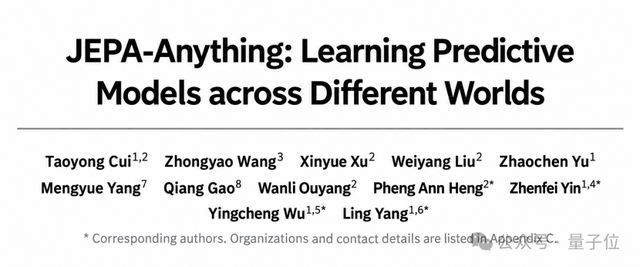
TL;DR — JEPA-Anything 是一种跨领域潜在世界模型:通过领域专用编码器与共享预测核心,在七类系统中学习可迁移、可解释的动态规律。它不仅提升了多数基准任务的预测精度,还从潜在表示中发现了经肝癌模型验证的干预方案,并近乎精确地复现开普勒第三定律。

  • 核心方法“正交预测因子分解”将目标状态拆分到互补且受约束的子空间中,减少不同尺度信号之间的相互干扰。
  • 在数据、架构和算力一致的条件下,该方法在 10 项预测任务中的 9 项取得提升;其中两项 PDEBench 任务的 MSE 约降低 40%,WeatherBench 2 的误差降低 10.5%。
  • 在四种分子系统上,它取得了已报告的最低单步及 100 步滚动预测误差,但长时间跨度下优势有所收窄,在控制任务中的表现也并不一致。
  • 研究者利用学到的潜在因子提出“IL-18 联合 CD73 阻断”的候选癌症干预方案,并在肝癌模型中完成验证。
  • 模型学习到的轨道模式给出 −1.4991 的拟合斜率,几乎精确复现开普勒第三定律所预测的 −1.5 标度关系。

注:第一组来源聚焦 JEPA-Anything;第二组关于华为昇腾芯片、超节点与 CANN 的内容属于另一项工作,与本标题所述研究无直接关联,因此未合并。

Representative image for 陶哲轩代表SAIR Foundation宣布正式启动“开放数学模型计划”

陶哲轩代表SAIR Foundation宣布正式启动“开放数学模型计划”

Rank 75 · Content 85 · Popularity N/A

TL;DR - Terence Tao announced the SAIR Foundation’s Open Math Model Initiative to build open-weight models and open-source tools for mathematical and scientific research. The effort matters because it emphasizes community governance, reproducible evaluation, transparent training, and affordable access rather than dependence on major AI companies.

  • The first phase targets everyday research tasks such as understanding difficult arguments, checking literature, exploring examples, writing code, and formalizing proofs.
  • Models will ship with openly licensed weights and code, documented training methods, traceable and license-compatible data, reproducible benchmarks, and disclosed limitations.
  • User data will be used for training or improvement only with explicit consent and pre-agreed terms.
  • SAIR is seeking partners that can contribute funding, compute, technical expertise, or community-building support.
Representative image for Nature:AI重生到1900,这一世抢先爱因斯坦提出光量子

Nature:AI重生到1900,这一世抢先爱因斯坦提出光量子

Rank 70 · Content 80 · Popularity 47

TL;DR - A Nature-highlighted experiment trained a 3.3B-parameter GPT-1900 model on ostensibly pre-1900 material to test whether AI could independently rediscover breakthroughs such as light quanta. Its limited success—and possible contamination from modern models—shows why reproducing historical ideas is not yet evidence of genuine scientific creativity.

  • GPT-1900 was pretrained from scratch on roughly 22 billion tokens, supplemented with about 290 million tokens from historical physics sources.
  • The model produced a light description resembling Einstein’s photon hypothesis, but failed most physics tasks and depended heavily on human-selected evidence and prompts.
  • Modern Claude models helped generate instruction data and reinforcement-learning evaluations, weakening claims that the experiment was isolated from post-1900 knowledge.
  • Researchers argue that scientific AI must do more than generate plausible theories: it must identify valuable questions, make abductive conceptual leaps, select testworthy explanations, and revise them using evidence.

BAT的「AI云销售」,困在MaaS内卷战中

Rank 61 · Content 65 · Popularity N/A

TL;DR - Chinese cloud vendors’ push to rapidly grow model-as-a-service revenue has trapped AI sales teams in aggressive quotas, commoditized model resale, and escalating token-price competition. The report matters because it shows that model quality, low switching costs, and internal delivery capacity—not traditional enterprise-sales relationships—now determine MaaS competitiveness.

  • Demand concentrates around whichever models lead specific use cases, such as GLM for coding and Seedance for multimodal generation, making weaker proprietary models difficult to sell.
  • Major cloud providers increasingly credit third-party model resale toward sales targets, reducing differentiation as vendors offer the same popular models.
  • Near-zero switching costs for token APIs fuel discounting, cloud-credit subsidies, and weak customer retention; cheaper Codex subscriptions add further pricing pressure.
  • MaaS deals require coordinated architecture, adaptation, deployment, and discount approval, but conflicting internal KPIs often obstruct sales and delivery.
Representative image for 27B模型分分钟交付网页,Qwen 3.8还是太能了

27B模型分分钟交付网页,Qwen 3.8还是太能了

Rank 57 · Content 60 · Popularity N/A

TL;DR - QbitAI tested Qwen 3.8 27B as a rapid web-app generator, finding it could produce polished, functional offline interfaces from prompts within minutes. The model lowers prototyping barriers but does not automatically deliver production systems connected to real data, authentication, payments, or backend services.

  • Paired with Cerebras, one developer reported generation speeds near 1,950 tokens per second, producing simulated Google and YouTube interfaces in roughly 6–7 seconds.
  • In QbitAI’s unaccelerated test, the model created a 52 KB browser-based data-analysis tool in under five minutes that cleaned spreadsheet data, calculated requested metrics, generated charts, and exported corrected Excel and text summaries.
  • It also reproduced a convincing 12306 ticket-booking interface with interactive controls, but the apparent purchase flow was only a simulation.
  • Generated apps worked well as prototypes or standalone tools, yet lacked live integrations such as external APIs, user accounts, real-time inventory, payment processing, and playable media.
Representative image for 影视飓风Tim称「iPhoneDuo烫到握不住,可以煎鸡蛋」;罗福莉直播小米大模型训练,每小时烧掉超20万元;曝玛莎拉蒂与华为合作两款新车

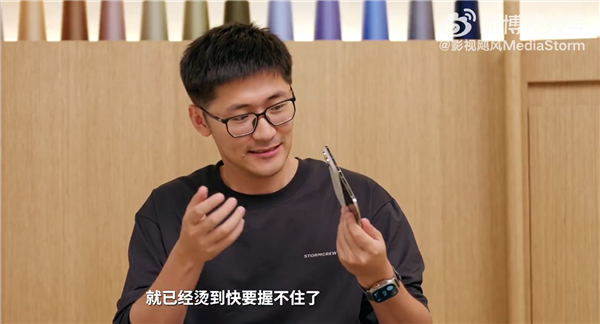
影视飓风Tim称「iPhoneDuo烫到握不住,可以煎鸡蛋」;罗福莉直播小米大模型训练,每小时烧掉超20万元;曝玛莎拉蒂与华为合作两款新车

Rank 54 · Content 55 · Popularity N/A

TL;DR - This technology-news roundup highlights major AI model, infrastructure, and application developments in China, including Xiaomi’s costly MiMo training run, Huawei’s accelerated AI-chip roadmap, and Kimi’s expansion into financial services.

  • Xiaomi’s MiMo-V2.6-Pro and Flash models are undergoing reinforcement learning, with combined training costs reported at about $31,000 per hour; the team plans to open-source details.
  • Huawei moved the Ascend 960DT launch forward to Q1 2027 and plans annual chip generations through Ascend 980 in 2029.
  • Moonshot AI launched a Kimi financial solution with specialized data sources, tools, and compliance controls, already being adopted by major Chinese financial institutions.
  • Other developments include a 15,000-GPU autonomous-driving cluster, ByteDance’s in-car Doubao assistant, and a reported $500 million funding round for AI-agent startup Manus.

AI Safety 1

Introducing the Australian Youth Safety Blueprint

Rank 54 · Content 55 · Popularity N/A

TL;DR - OpenAI introduced the Australian Youth Safety Blueprint, a six-pillar roadmap for making AI experiences safer and more empowering for young people. The limited description does not provide details about the pillars or their implementation.

  • Focuses on protecting young Australians who use AI systems.
  • Frames youth AI safety around six pillars.
  • Aims to balance risk mitigation with positive, empowering AI experiences.
  • No technical mechanisms, evaluation results, or deployment timeline are specified in the provided content.

Wearable Robotics 1

Representative image for 独家解读丨行业首创之后,极壳Halo的账能算平吗?

独家解读丨行业首创之后,极壳Halo的账能算平吗?

Rank 54 · Content 55 · Popularity N/A

TL;DR - Hypershell unveiled Halo, a four-motor hip-and-knee consumer exoskeleton that advances power density and AI-based motion control, but its “industry-first” claim is disputed by rival Vastnaut. The product highlights stronger engineering while leaving unresolved questions around control complexity, manufacturing yield, returns, cost, and mismatch between marketed outdoor use and actual mobility-impaired users.

  • Halo uses four lightweight HyperDrive Pro motors across the hips and knees, delivering up to 1,490 W while aiming to support a continuous lower-limb movement chain.
  • Its end-to-end HyperIntuition 2.0 algorithm replaces fixed activity-mode recognition and is designed to anticipate movements such as standing, sitting, descending, and jump cushioning.
  • Vastnaut crowdfunded a similar four-joint product months earlier, making the “first” designation dependent on whether it means announcement, delivery, or mass production.
  • Reported low historical yield and high return rates raise concerns that added motors, battery capacity, weight, and assembly complexity could worsen Halo’s economics despite its technical gains.

Workplace AI 1

How workers are unlocking new ways of working

Rank 54 · Content 55 · Popularity N/A

TL;DR - OpenAI Economic Research examines how workers use AI beyond their traditional job roles and how new AI-assisted activities become recurring parts of their work. The provided excerpt does not include specific findings or metrics.

  • Focuses on changes in work practices rather than a model or product release.
  • Examines AI use that extends beyond established role boundaries.
  • Studies which new AI-enabled activities become routine over time.