🛰️ Daily AI Frontier
37 works · 2 categories · 13 topics · blog 12 journal 10 arxiv 15 generated 2026-09-24 14:34:40 UTC
Top highlights — Research

LLM Agents 7

Agent-Editing World Model: Rethinking World Modeling for LLM Agents

Rank 86 · Content 95 · Popularity 66

TL;DR - Agent-Editing World Model (AEWM) improves long-horizon LLM agents by revising contaminated reasoning and action histories instead of predicting complex tool responses. Its EditAct framework consistently boosts agent performance across search, terminal, and software-engineering tasks.

  • AEWM classifies decisions as Critical, Exploratory, or Noisy, then edits noisy reasoning-action continuations before subsequent decisions.
  • Its Action Judge achieves 70.5% macro-F1, 10.6 points above the strongest frontier baseline.
  • Across six benchmarks and three agent backbones, EditAct improves average scores by 3.2–6.7 points over the strongest baseline.
  • Training on verified EditAct trajectories improves results by 2.2–2.6 points over Self-RFT without requiring online AEWM guidance.


WhatWorkedBench: Benchmarking Experimental Understanding in AI Agents

Rank 86 · Content 100 · Popularity 54

TL;DR - WhatWorkedBench evaluates whether AI research agents can predict how code-component changes affect experimental outcomes after limited experimentation. Results show that Gaussian processes and code-equivalence information substantially improve effect recovery.

  • The benchmark spans 36 tasks, 30 data sources, eight workflow types, and 1,248 configurations.
  • Agents inspect code, choose measurements, and predict scores across all component configurations using response surfaces.
  • Gaussian-process fitting improved effect recovery from 0.632 to 0.698 in the original Flash cohort and from 0.621 to 0.720 in an additional cohort.
  • Encoding behaviorally equivalent configurations raised Gaussian-process recovery from 0.248 to 0.462 on workflows with six binary options.

SkillGym: Internalizing Human Skills into LLMs for Real-World Problem Solving

Rank 85 · Content 100 · Popularity N/A

TL;DR - SkillGym converts human-authored agent workflows into verifiable training environments, enabling LLMs to internalize reusable problem-solving skills rather than rely on inference-time instructions. Fine-tuning on verified trajectories substantially improved a 35B model across agent and terminal benchmarks.

  • The released dataset includes 2,756 environments across 12 categories and 8,364 successful multi-model trajectories, averaging 49 tool calls each.
  • Tasks use code-based outcome checkers and contrastive executions to verify both correctness and dependence on the target skill.
  • Supervised fine-tuning improved Qwen3.5-35B-A3B by 199 Elo on GDPval-AA v2 and 19.10 percentage points on Terminal-Bench 2.1.
  • The resulting SkillGym-Agent reached 51.47% on skill-assisted SkillsBench and retained gains without external skills, suggesting internalized procedural competence.
Representative image for TEMPS: Temporal Sentence Embeddings for Temporal Information Retrieval

TEMPS: Temporal Sentence Embeddings for Temporal Information Retrieval

Rank 82 · Content 95 · Popularity N/A

TL;DR - TEMPS adds temporal awareness to frozen semantic retrievers, helping IR and RAG systems find documents that match both the topic and the relevant time. It improves retrieval across three temporal benchmarks without requiring hand-labeled temporal data.

  • Introduces Temporal Textual Similarity, which measures time alignment independently of topical similarity.
  • Resolves anchored temporal expressions into intervals, represents them as moment-matched Gaussians, and trains an anchor-date-conditioned temporal encoder.
  • Fuses temporal and semantic scores at inference while keeping the underlying semantic retriever frozen.
  • Improves MRR with every tested semantic backbone and raises TS-Retriever R@1 from 19.92 to 25.39 over the prior temporal state of the art.

Learning from Failures: Heterogeneous Graph Memory for Small Language Model Tool-Using Agents

Rank 82 · Content 95 · Popularity N/A

TL;DR - FRESH is a retrieval framework that structures past successes and failures as a heterogeneous graph to help frozen small language models execute tools more reliably. It aims to prevent recurring structural errors in long-horizon, stateful environments without costly fine-tuning.

  • Models dependencies among tasks, actions, errors, repairs, and execution conditions rather than storing experiences as flat memory.
  • Retrieves strategies with their causal context and safety conditions, helping agents avoid repeated failures and unsafe state changes.
  • Targets errors such as missing observations, premature writes, repeated failed calls, and action-precondition violations.
  • Experiments on τ-Bench and AppWorld reportedly improve task success and tool-use reliability across multiple open-source models versus no-memory and representative memory baselines.
Representative image for FDE-Bench: Evaluating LLM Agents for Deployment Environment Configuration

FDE-Bench: Evaluating LLM Agents for Deployment Environment Configuration

Rank 82 · Content 95 · Popularity N/A

TL;DR - FDE-Bench evaluates LLM agents on 136 reproducible Docker, Compose, and Kubernetes deployment tasks using programmatic checks rather than LLM judges. Leading models solve 52.9–75.0% of tasks, with service readiness emerging as the largest failure stage.

  • The benchmark covers greenfield deployment and diagnosis-and-repair, grading build success, readiness, behavior, and specification conformance in pristine environments.
  • Seven models from four providers use the same four-tool scaffold; repair tasks average 30.7 percentage points higher resolution than disjoint greenfield tasks.
  • Shortcut-resistant release gates reject do-nothing, specification-copying, and generic-stub solutions; three additional adversarial strategies solve none of the 135 applicable tasks.
  • In a 25-task case study, an engineer directing Claude-Sonnet-5 achieves 92% resolution versus 72% for the autonomous baseline.

ProCredit: From Outcome Rewards to Progress Credit in Agentic Reinforcement Learning

Rank 82 · Content 95 · Popularity N/A

TL;DR - ProCredit improves reinforcement learning for long-horizon agents by rerunning acceptance checks after each tool-use turn and rewarding verified progress where it occurs. This provides denser, more precise credit than final outcome rewards alone.

  • Measures each turn’s reward as the change in task progress, distinguishing productive actions from queries and near-successes from weaker failures.
  • Assigns credit both across attempts for the same task and across turns within each trajectory.
  • On AppWorld, it outperformed outcome- and progress-based baselines across three Qwen3.5 model scales and two test sets.
  • At 4B parameters, it exceeded the strongest outcome-reward baseline by 4.1 percentage points; ablations attribute the gain to turn-level credit assignment rather than trajectory-level progress scoring.

Medical/Healthcare AI 3

Single-cell atlas of transcriptomic vulnerability across brain disorders

Rank 91 · Content 95 · Popularity 83

TL;DR - This Nature study presents a population-scale, single-cell transcriptomic atlas of the human dorsolateral prefrontal cortex across neurodegenerative and neuropsychiatric disorders. It maps cell-level molecular vulnerability and may help identify therapeutic targets.

  • Profiles gene-expression patterns at single-cell resolution in a brain region implicated in multiple disorders.
  • Provides a cross-disorder view of the transcriptomic landscape at population scale.
  • Highlights potential molecular targets for therapeutic intervention, although specific findings are not provided in the excerpt.
Representative image for PCQC: Privileged Counterfactual Question Credit for Multi-Turn Medical Dialogue

PCQC: Privileged Counterfactual Question Credit for Multi-Turn Medical Dialogue

Rank 82 · Content 95 · Popularity N/A

TL;DR - PCQC is a training method that assigns question-level credit in medical dialogues by evaluating both asked and counterfactual questions using privileged patient information. It improves diagnostic accuracy while requiring fewer inquiry turns than competing reinforcement-learning methods.

  • Constructs answers to unasked alternative questions from privileged patient facts, avoiding full counterfactual dialogue rollouts.
  • Uses a frozen diagnostic scorer to compare how strongly each question-answer pair supports the correct diagnosis.
  • Combines relative question credit with outcome-based reinforcement learning to supervise executed and unexecuted questions.
  • Achieves 63.10% mean accuracy across four benchmarks—4.38 points above GRPO and 4.21 above ATPO—with 33.1% fewer inquiry turns than GRPO.
Representative image for A generalizable structural brain MRI foundation model built through dual-priority federated pretraining

A generalizable structural brain MRI foundation model built through dual-priority federated pretraining

Rank 79 · Content 100 · Popularity 29

TL;DR - BrainFedFM is a structural brain MRI foundation model pretrained federatively on 164,707 scans across 42 sites, avoiding the need to pool sensitive raw images. Its dual-priority training approach achieved leading average performance across diverse neuroimaging tasks and improved robustness for underrepresented populations.

  • Spatial-priority masking emphasizes informative anatomical regions during local site training.
  • Site-priority server aggregation weights complementary contributions beyond cohort size alone.
  • Evaluation covered 20 datasets and 17 classification, regression, and segmentation tasks.
  • BrainFedFM ranked first on average among seven models, including four centralized foundation models, with especially consistent gains in classification and regression.

Bioinformatics AI 7

The gene-regulatory evolution of the human skeleton

Rank 89 · Content 100 · Popularity 65

TL;DR - This Nature study uses massively parallel reporter assays and human–ape hybrid skeletal cells to examine how human cis-regulatory elements evolved. It links regulatory DNA differences to changes in the cellular composition of human skeletal tissue.

  • Studies gene-regulatory evolution rather than changes in protein-coding genes.
  • Tests cis-regulatory element activity at scale with massively parallel reporter assays.
  • Uses human–ape hybrid skeletal cells to compare regulatory effects across species.
  • Provides evidence that CRE divergence helped shape distinctively human skeletal tissue composition.

Lifespan single-cell transcriptomic atlas of the human prefrontal cortex

Rank 84 · Content 90 · Popularity 68

TL;DR - This Nature study presents a lifespan single-cell transcriptomic atlas of the human dorsolateral prefrontal cortex. It reveals non-linear, cell-type-specific gene-expression changes across development, midlife, and late adulthood.

  • Transcriptional programs undergo dynamic remodelling during brain development.
  • Gene-expression patterns are comparatively stable in midlife.
  • Late adulthood selectively reactivates some molecular programs.
  • The atlas provides a cell-resolved framework for studying human cortical ageing.

ResolVI: addressing noise and bias in spatial transcriptomics

Rank 82 · Content 95 · Popularity 50

TL;DR - ResolVI is a computational method that produces probabilistic, error- and batch-corrected representations of spatial transcriptomics data. It aims to improve downstream analyses by addressing noise and bias in segmentation and quantification.

  • Targets measurement errors and batch effects specific to spatial transcriptomics.
  • Generates corrected probabilistic representations rather than relying solely on raw measurements.
  • Improves performance across multiple analysis tasks, according to the publication summary.
  • The provided content does not specify the model architecture, datasets, or quantitative gains.

Single-nucleus transcriptome-wide association study of human brain disorders

Rank 79 · Content 85 · Popularity 65

TL;DR - This study uses single-nucleus transcriptomics across diverse populations to map genetic risk for human brain disorders to specific cell types. It matters because cell-type-level analysis reveals gene–trait associations and conserved mechanisms that bulk-tissue studies may miss.

  • Integrates transcriptome-wide association analysis with single-nucleus data.
  • Examines how disorder-associated genetic variation affects particular brain cell types.
  • Includes diverse populations, supporting broader investigation of shared and population-specific effects.
  • Identifies previously hidden associations and conserved cell-type-specific mechanisms.

The lipidomic architecture of the mouse brain

Rank 79 · Content 85 · Popularity 65

TL;DR - A spatial lipidomic atlas maps the mouse brain into more than 500 biochemical territories that align with cell types and neural connectivity. It reveals fine-grained regional organization and lipid remodeling during pregnancy.

  • The atlas identifies over 500 distinct biochemical territories across the mouse brain.
  • Lipidomic patterns mirror known cell-type distributions and connectivity.
  • The study captures oligodendrocyte heterogeneity and zonation within the ventricular system.
  • Pregnancy remodels aspects of the brain’s spatial lipidomic architecture.

Vast cellular gene-expression atlas could transform how scientists understand brain ageing and disease

Rank 72 · Content 85 · Popularity 42

TL;DR - A large single-nucleus RNA-sequencing atlas maps gene-expression changes in the human prefrontal cortex across ageing, health, and disease. It could help researchers identify cell-specific molecular patterns associated with brain ageing and disorders.

  • Profiles gene expression at single-nucleus resolution, distinguishing changes among brain cell types.
  • Spans the human lifespan and includes both healthy and disease contexts.
  • Focuses on the prefrontal cortex, a region central to cognition and affected by ageing and neurological disease.
  • The provided summary does not specify the atlas’s scale, disease cohorts, or individual molecular findings.

Landmark map of human brain’s gene activity holds clues to Alzheimer’s disease and more

Rank 72 · Content 85 · Popularity 42

TL;DR - Researchers created a large atlas of gene activity in the human prefrontal cortex using samples from nearly 1,500 donors spanning infancy to more than 100 years old. The resource could help reveal how gene expression changes across the lifespan and provide clues to Alzheimer’s disease and other brain conditions.

  • Maps gene expression in the prefrontal cortex, a region central to higher cognitive functions.
  • Covers an unusually broad age range, from infants to centenarians.
  • Draws on samples from almost 1,500 donors.
  • The provided excerpt does not specify the atlas’s methods or disease-related findings.

LLMs & Foundation Models 3

How Sensitive Are LLM Leaderboard Claims to Hidden Model Selection?

Rank 78 · Content 100 · Popularity 27

TL;DR - This paper introduces sensitivity curves for assessing whether LLM leaderboard advantages remain statistically credible when providers may have privately selected among multiple model variants. An audit of 394 adjacent-rank claims found that 391 lacked statistical support even before correcting for hidden selection.

  • The method estimates the maximum hidden variant count consistent with a statistically supported advantage, given a lower bound on within-family correlation.
  • Correlation estimates depend strongly on the ranking score and resampling model: reported values ranged from 0.46 to 0.92 for composite scores.
  • For claims that pass an uncorrected test, certification may still hinge on assumptions about correlation among hidden variants.
  • The curves expose these assumptions without requiring researchers to estimate the provider’s unobserved search size.

Computation Over Geometry: Meaning Identity Is Computed, Not Shipped in the Embeddings

Rank 75 · Content 95 · Popularity 27

TL;DR - This paper argues that semantic identity is computed by jointly processing sentence pairs rather than encoded in their independently produced embedding geometry. The result challenges cosine-based retrieval and RAG systems that assume semantically equivalent sentences naturally occupy nearby vector-space locations.

  • Frozen bi-encoders and independently encoded causal-LM states achieved only 0.55–0.70 AUC on overlap-matched PAWS-X, while joint forward-pass probes reached 0.90–0.96.
  • The joint signal emerged at intermediate layers, saturated near 0.94 by 3B parameters, and collapsed when sentence partners were shuffled.
  • Linear readers and late fusion could not recover identity from independent embeddings; nonlinear pair readers partially succeeded only with the full 49,000-pair training set.
  • Fine-tuned bi-encoders reached 0.87–0.93 on PAWS but suffered on transfer and STS-B, suggesting a tradeoff between identity detection and general embedding quality.

Log-Depth Recurrent Language Modeling

Rank 75 · Content 95 · Popularity 27

TL;DR - This paper introduces an autoregressive language-model architecture based on balanced-tree recursive operators, achieving logarithmic computational depth and linear runtime. Early experiments show robust length extrapolation and performance approaching ALiBi-based Transformers.

  • Computes representations for all prefixes in logarithmic depth, enabling more parallelism than conventional recurrent models.
  • Requires linear runtime in the number of input tokens, avoiding Transformers’ quadratic scaling.
  • Extends balanced-tree sequence-encoding operators to autoregressive prediction.
  • Offers a potential alternative to Transformers, though the experiments provide only an initial characterization.

Efficiency & Systems 1

Exact Quantile Balancing and Load-Error Injection for Mixture-of-Experts

Rank 85 · Content 100 · Popularity N/A

TL;DR - This paper introduces Exact Quantile Balancing (EQB) and Load-Error Injection (LEI) to improve global and microbatch-level expert balance in distributed Mixture-of-Experts training. Experiments on 7.5B-parameter models indicate better balance and downstream performance with negligible added communication.

  • EQB computes exact global-batch BF16 routing quantiles, avoiding shard-dependent or approximate estimates.
  • LEI injects local expert-load errors directly into router-score gradients to improve microbatch balance.
  • Across training runs of up to 500B tokens, EQB outperforms naive Quantile Balancing in global balance and downstream quality.
  • LEI achieves better local balance than the GShard auxiliary loss at comparable model quality.

AI Tutoring 1

Representative image for StudentBench: AI and human tutoring yield equivalent GRE learning gains

StudentBench: AI and human tutoring yield equivalent GRE learning gains

Rank 82 · Content 95 · Popularity 50

TL;DR - StudentBench finds that LLM tutors can deliver GRE learning gains statistically equivalent to expert human tutoring, with the strongest AI tutor achieving this at 918 times lower cost. The benchmark and public platform provide large-scale evaluations of lesson planning, practice generation, conversational pedagogy, cost, and engagement.

  • The study evaluated 2,383 participants receiving AI tutoring, human tutoring, or no tutoring across Quantitative and Verbal GRE questions.
  • AI tutoring was statistically equivalent to expert human tutoring overall; the best AI tutor also outperformed the human tutor on average in five of seven GRE domains.
  • Expert tutors conducted 2,028 pairwise rubric evaluations of LLM-generated lesson plans and practice problems.
  • In Quantitative GRE sessions, faster responses correlated with more student messages, which correlated with more correct practice and larger learning gains.

Epidemiological Modeling 1

The anthropogenic fingerprint on emerging infectious diseases

Rank 77 · Content 90 · Popularity 45

TL;DR - This Nature study maps the human-driven risk of emerging infectious disease outbreaks, finding the greatest risk where people, livestock, and fragmented natural ecosystems coexist. It also highlights that unequal healthcare access limits outbreak detection and available data.

  • Emerging infectious disease risks are widespread globally.
  • High-risk landscapes combine human populations, livestock, and fragmented ecosystems.
  • Healthcare-access inequalities create major gaps in outbreak surveillance and reporting.
  • The findings underscore the need to account for detection bias when assessing geographic risk.

Evolutionary Genomics 1

Reference genomes and fossils revise bat family phylogeny and biogeography

Rank 77 · Content 80 · Popularity 70

TL;DR - This Nature study presents an updated phylogeny covering all known bat families by combining new reference genome assemblies with extensive ancient-fossil evidence. The synthesis may revise understanding of bat family relationships and biogeographic history.

  • Integrates genomic and paleontological data in a unified evolutionary analysis.
  • Uses newly assembled reference genomes to improve phylogenetic coverage.
  • Incorporates numerous ancient fossils to inform evolutionary timing and geography.
  • Specific revised relationships and biogeographic conclusions are not provided in the supplied summary.

Robotics World Models 1

Representative image for InternW0: A Foundational Physical World Model for Efficient Real-World Interactions

InternW0: A Foundational Physical World Model for Efficient Real-World Interactions

Rank 78 · Content 90 · Popularity 51

TL;DR - InternW0 is a physical world model that jointly predicts future visual dynamics and generates continuous robot controls using experts operating at different timescales. Its asynchronous design aims to make embodied AI more efficient and responsive in changing, contact-rich real-world environments.

  • Uses a high-capacity video expert for longer-horizon prediction and a lightweight action expert for faster control updates.
  • Reuses layerwise K/V context and routes new observations into it, avoiding full future regeneration after every action.
  • Trains on roughly 7,200 hours of heterogeneous robot and egocentric data, including the 275-hour EgoLab dataset.
  • Supports varied robot embodiments and tactile, force-aware manipulation, with evaluations covering scientific synthesis and quantitative pipetting workflows.
Top highlights — Industry & News

LLM Agents 2

Parallel cut research time and cost in half with GPT‑6 Astra

Rank 71 · Content 80 · Popularity N/A

TL;DR - Parallel reports that using OpenAI’s GPT‑6 Astra enabled its agents to research and synthesize labor-market data in half the time and at half the cost compared with prior models.

  • The application centers on agentic research and synthesis of labor-market data.
  • Reported improvements cover both completion time and operational cost.
  • The provided content does not specify the prior models, evaluation methodology, or absolute performance figures.
Representative image for Meta靠自研Manus翻身!股价一夜暴涨11%,登顶苹果商店,增速反超ChatGPT

Meta靠自研Manus翻身!股价一夜暴涨11%,登顶苹果商店,增速反超ChatGPT

Rank 64 · Content 70 · Popularity N/A

TL;DR - Meta’s Muse personal AI agent reportedly reached the top of the U.S. App Store by automating consumer tasks such as negotiating bills, handling refunds, and arranging travel. Its rapid adoption highlights both the commercial potential of consumer agents and the platform barriers they face.

  • Muse autonomously navigates phone menus, communicates with customer-service representatives, compares offers, and escalates to users when identity verification or input is required.
  • Meta says it built Muse from scratch but acknowledges substantial inspiration from the open-source OpenClaw architecture, including similar workspace conventions and agent-loop concepts.
  • Amazon blocked Muse’s unauthorized shopping access, while Shopify opted to support agent-driven shopping and checkout, exposing competing platform strategies toward AI intermediaries.
  • The article reports that Muse topped the App Store within 13 days and links its momentum to investor optimism about Meta developing subscription-based revenue beyond advertising.

Medical/Healthcare AI 1

Introducing MentalHealthBench

Rank 78 · Content 90 · Popularity N/A

TL;DR - OpenAI introduced MentalHealthBench, an expert-informed benchmark for assessing whether AI systems respond helpfully and safely in realistic mental health conversations. It provides an evaluation framework for a sensitive, high-stakes application area.

  • Focuses on realistic mental health interactions rather than generic dialogue.
  • Evaluates both response helpfulness and safety.
  • Incorporates expert input into the benchmark’s design.
  • No benchmark results or methodological details are included in the provided content.

LLMs & Foundation Models 2

Representative image for BAT 集体重做「AI 预训练」,补「脏数据」的坑

BAT 集体重做「AI 预训练」,补「脏数据」的坑

Rank 71 · Content 80 · Popularity N/A

TL;DR - Chinese foundation-model developers, including major technology companies, are reportedly redoing pretraining pipelines after low-quality, duplicated, mislabeled, or evaluation-contaminated data impaired model performance. The shift underscores that data governance and feedback pipelines—not just model scale and compute—are becoming critical competitive infrastructure.

  • Early quantity-focused collection introduced web spam, synthetic duplicates, unclear labeling, and benchmark leakage, wasting compute and sometimes forcing complete retraining.
  • Teams are shifting toward information density, cleanliness, iterative validation, and closer coordination between data and pretraining groups rather than volume-based data KPIs.
  • High-quality expert examples and long-horizon agent trajectories remain expensive and capacity-constrained, prompting some firms to seek interaction data through API relays and model-routing platforms.
  • Most companies have not established a true data flywheel because organizational silos, scarce data-engineering talent, and limited domestic coding and office-agent usage impede the flow of user interactions back into training.

How UK AISI and EvalEval Are Making Benchmark Results Reproducible

Rank 68 · Content 75 · Popularity N/A

TL;DR - Hugging Face highlights work by the UK AI Security Institute and EvalEval to make AI benchmark results reproducible. With only the title provided, specific methods and findings cannot be verified.

  • The initiative concerns improving reproducibility in AI model evaluation.
  • It appears to involve the UK AI Security Institute and the EvalEval project.
  • Reproducible benchmarks can make model comparisons and reported evaluation results easier to audit.

Efficiency & Systems 2

Representative image for 为了智能体AI,高通「新造」了第六代骁龙8超级至尊版

为了智能体AI,高通「新造」了第六代骁龙8超级至尊版

Rank 71 · Content 80 · Popularity N/A

TL;DR - Qualcomm introduced two 2nm flagship mobile platforms led by the sixth-generation Snapdragon 8 Super Elite, redesigned for always-on, on-device AI agents. The architecture targets memory, power, and orchestration bottlenecks through coordinated CPU, GPU, NPU, sensor-hub, memory, and storage improvements.

  • The top platform combines a 5GHz Oryon CPU with shared FlexCache, an Adreno GPU with Matrix Cores and 18MB dedicated high-speed memory, and a Hexagon NPU with 50% more shared memory.
  • It supports up to 32K-token contexts and on-device 30B-parameter MoE models that activate roughly 3B parameters per generated token.
  • A StepEdge-Omni 30B-MoE deployment reportedly cut memory requirements by over 50%, exceeded 330 tokens/s prefill and 28 tokens/s decoding, and improved prefill throughput by over 30% using coordinated NPU–GPU execution.
  • Qualcomm positions heterogeneous compute and hybrid device-cloud operation—not peak benchmark performance alone—as essential for continuous agent workflows under mobile memory, battery, and thermal constraints.
Representative image for 成立九年,中科类脑把积累装进Token工厂

成立九年,中科类脑把积累装进Token工厂

Rank 64 · Content 70 · Popularity N/A

TL;DR - Zhongke Leinao launched an integrated “electricity-compute-token” platform for operating AI infrastructure as a “Token factory,” jointly optimizing heterogeneous accelerators, model inference, workloads, and power consumption. The approach matters because AI infrastructure economics increasingly depend on useful tokens produced per unit of energy rather than raw compute capacity.

  • Its BitaHub platform reportedly manages more than 3,000 compute nodes totaling over 5,000P and serves more than 80,000 enterprise and research users.
  • A “1+3” architecture combines a central decision engine with compute, Token, and power subsystems, using workload, electricity-price, renewable-output, and hardware-efficiency forecasts for scheduling.
  • The system can separate inference prefill and decode across suitable chips, migrate KV caches, and shift flexible batch jobs across locations or low-cost power periods while preserving latency-sensitive workloads.
  • A three-city scheduling test reported control responses within 200 seconds, 100% cross-region migration success, and 98% energy-consumption forecasting accuracy.

Embodied AI 2

Representative image for SeeAct AI穆尧:具身智能终局,一定是从“被训练”走向“自我进化”|物理AI50人

SeeAct AI穆尧:具身智能终局,一定是从“被训练”走向“自我进化”|物理AI50人

Rank 68 · Content 75 · Popularity N/A

TL;DR - SeeAct AI founder Mu Yao argues that embodied intelligence must progress from static training to reward-driven, recursive self-improvement. The key scaling lever is not merely more data or larger models, but generating and converting large volumes of interaction experience into better robotic capabilities.

  • “Experience scaling” lets robots learn from autonomous exploration, failures, environmental feedback, and corrective actions rather than relying solely on human demonstrations.
  • Recursive self-improvement forms a loop: stronger policies generate richer experiences, which are evaluated through rewards and used to improve low-level control, planning, memory, and skills.
  • The proposed data strategy combines limited real-world robot interaction with extensive virtual exploration using physics simulators and neural world models.
  • SeeAct AI is designing efficient embodied foundation models—including discrete-diffusion vision-language-action models—to make subsequent reinforcement learning and reward optimization more practical.
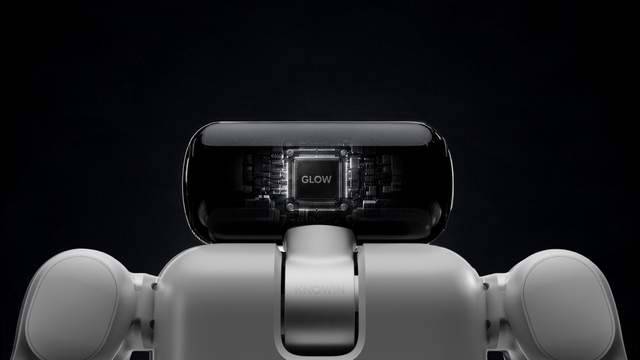
Representative image for GPT-6之后,具身智能走向何方?诺因发布GLOW技术报告,给出机器人“一教就会”的答案

GPT-6之后,具身智能走向何方?诺因发布GLOW技术报告,给出机器人“一教就会”的答案

Rank 68 · Content 75 · Popularity N/A

TL;DR - Knowin released a technical report for GLOW, a generative learning architecture designed to let robots reuse skills across objects and environments after a single human demonstration. The system unifies multimodal reasoning, action generation, world simulation, synthetic experience, and execution feedback.

  • GLOW combines KnowinGLOW, KnowinDream, KnowinWorld, and KnowinAgent to cover task understanding, synthetic physical experience, action-outcome prediction, and closed-loop replanning.
  • Its autoregressive multimodal model jointly handles vision, spatial reasoning, planning, and action generation rather than connecting separate perception and control modules.
  • Demonstrations included transferring multi-step tasks such as storage, watering, patterned wiping, and drink preparation without retraining model parameters.
  • The report claims 62.2% average success on RoboDojo, 86.7% on LIBERO-Pro, and a 65.62 top score for KnowinBrain-1.5 on Embodied Arena’s 2D embodied-QA benchmarks.

Embodied AI Systems 1

Representative image for 5分钟完成机器人纳管、10秒启动跨集群任务,清华大学联合无问芯穹开源具身智能云原生平台RLark

5分钟完成机器人纳管、10秒启动跨集群任务,清华大学联合无问芯穹开源具身智能云原生平台RLark

Rank 71 · Content 80 · Popularity 50

TL;DR - Tsinghua University and Infinigence AI have open-sourced RLark, a cloud-native platform for orchestrating robots, sensors, compute, and software across distributed clusters. It aims to make large-scale embodied-AI experiments easier to deploy, network, monitor, and reuse.

  • RLark abstracts robots and cameras as schedulable Kubernetes resources alongside GPUs, reducing device onboarding from about one hour to five minutes in testing.
  • Declarative Job/Task/Worker configurations deploy training, inference, and robot-interaction components across clusters; prepared tasks reportedly start within 10 seconds.
  • A Beijing–Guangdong test with RLinf completed a 36-minute data-collection, cloud-training, and real-robot validation loop spanning 323 training steps.
  • Task-isolated networking uses virtual addressing, gVisor, and SSH tunnels; tests reported up to 49% higher large-packet throughput than the compared VPN and nearly 2 Gbps under high-bandwidth conditions.

Privacy-Preserving AI 1

Representative image for Advancing Private AI Compute with secure, server-side memory

Advancing Private AI Compute with secure, server-side memory

Rank 68 · Content 75 · Popularity N/A

TL;DR - Google DeepMind is introducing secure, server-side memory for Private AI Compute, aimed at enabling personal AI to retain useful context while preserving privacy. The available content does not provide implementation details or evaluation results.

  • Adds private memory capabilities on the server side of Private AI Compute.
  • Targets more personalized AI experiences through retained user context.
  • Emphasizes secure handling of memory for personal AI workloads.
  • Technical architecture, security guarantees, and performance tradeoffs are not specified in the provided excerpt.

Robotics Foundation Models 1

Representative image for 教机器人干活,光“刷课时”可不够!灵初这次较真数据质量

教机器人干活,光“刷课时”可不够!灵初这次较真数据质量

Rank 68 · Content 75 · Popularity N/A

TL;DR - Lingchu Intelligence introduced Psi-R2.5, a robotics model that prioritizes diverse, executable human–robot paired data over simply accumulating training hours. Its data-conversion and in-context learning methods aim to reduce the demonstrations and post-training needed to adapt robots to new tasks.

  • Psi-W0 generates aligned human-hand demonstrations from successful robot trajectories, producing strong paired data used to train a converter from human videos to robot imagery and executable actions.
  • Converted trajectories are evaluated through real-robot replay and downstream post-training, rather than visual realism alone; some especially complex tasks remain unsolved.
  • Psi-R2.5 can use converted demonstration videos as in-context prompts without updating model parameters, while a hierarchical architecture separates long-horizon task decomposition from low-level control.
  • For phone-box assembly, Lingchu reports roughly 99% success after 1–2 working days of iterative post-training combining human participation and reinforcement learning.