🛰️ Daily AI Frontier
110 works · 3 categories · 31 topics · blog 24 wechat 30 journal 20 arxiv 30 generated 2026-08-13 14:23:33 UTC
Top highlights — Research

LLM Agents 15

Agent Skills Can Be Harmful: An Empirical Study of Skill-Induced Failures in LLM Agents

Rank 90 · Content 100 · Popularity 67

TL;DR - This paper analyzes how reusable skills can cause LLM-agent failures and higher execution costs. Across two benchmarks, it identifies 307 skill-induced regressions and introduces SkillTriage for evidence-based failure attribution.

  • The study finds 125 functional failures and 182 efficiency regressions.
  • Seemingly relevant skills can cause agents to implement requirements incorrectly or omit them.
  • Efficiency regressions are not attributable to prompt length alone.
  • Excessive verification and heavy implementation pipelines account for 67 and 30 excessive-procedure cases, respectively.
Representative image for AI4AI at Test-Time: Strong-to-Weak Capability Transfer via Harnesses

AI4AI at Test-Time: Strong-to-Weak Capability Transfer via Harnesses

Rank 88 · Content 95 · Popularity 73

TL;DR - Strong models can build inference-time harnesses that transfer capabilities to weaker models without parameter updates. Across four Theory-of-Mind benchmarks, these harnesses nearly doubled average target-model performance from 0.49 to 0.91.

  • Harnesses were iteratively refined using 5% of benchmark data, then evaluated on the full test set.
  • Gains primarily came from deterministic code, benchmark-specific routing, and strict output formatting—not deeper reasoning or broader sampling.
  • More builder-model reasoning consistently improved harness quality.
  • Weaker target models benefited most, while platform effects were comparatively modest.
Representative image for Spark-to-Paper: End-to-End Research Paper Generation as a Composable Skill

Spark-to-Paper: End-to-End Research Paper Generation as a Composable Skill

Rank 88 · Content 95 · Popularity 71

TL;DR - Spark-to-Paper is a 13-skill workflow that turns research ideas into complete papers inside an existing coding assistant. It emphasizes evidence-driven claims, deterministic checks, and editable figures without requiring a separate agent platform.

  • Separates model judgment from executable, verifiable operations and plans experiments before observing results.
  • Achieves 99.5% citation validity and 96.4% figure editability across eight controlled topics.
  • Its full review stack raises fabrication detection from 14% to 92%; adversarial review reaches 74% precision.
  • A manuscript averages 11.9M tokens, $8.10, and 3.2 hours.

Harness-IF: Evaluating Instruction Following Across Instruction Surfaces in Coding Agents

Rank 88 · Content 100 · Popularity 58

TL;DR - Harness-IF is a benchmark that evaluates whether coding agents genuinely follow operational rules across five instruction surfaces rather than coincidentally matching default behavior. Results show conventional aggregate scores systematically overstate compliance.

  • The benchmark includes 60 multi-turn coding tasks and 256 evaluated rules drawn from a 642-rule library.
  • Across 12 frontier models, overall accuracy was 72.1–85.9%, while Against-Prior Accuracy was lower at 66.1–78.6%.
  • Every model performed worse on rules opposing its defaults, with gaps of 3.6–7.4 percentage points.
  • A conflict pilot found instruction precedence did not follow prompt depth; system prompts, project files, and user instructions outranked tool and skill descriptions.

Retry, Switch, or Abstain? Learning Strategy-Aware Tool-Use Policies via Controlled Error Injection

Rank 88 · Content 100 · Popularity 58

TL;DR - BENCH2ROBUST injects controlled tool failures into agent benchmarks to train and evaluate policies that retry, switch tools, or abstain. Combining runtime Bayesian Tool Memory with reinforcement learning improves recovery while preserving failure-free performance.

  • Tool failures caused a near-universal robustness gap across seven models from four families.
  • Bayesian Tool Memory improved held-out Retail robustness by up to 16.8 percentage points without retraining.
  • Curriculum-controlled reinforcement learning learned complementary recovery behaviors that remained useful without runtime memory.
  • Combining both methods achieved 40.8–45.5% performance under failure injection.
Representative image for Mechanist: AI as a Scientific Instrument for Discovering the Mechanisms of Intelligence

Mechanist: AI as a Scientific Instrument for Discovering the Mechanisms of Intelligence

Rank 87 · Content 95 · Popularity 69

TL;DR - Mechanist is an agentic system that autonomously proposes, tests, and applies hypotheses about mechanisms underlying AI behavior. It aims to automate mechanistic interpretability as model development increasingly outpaces manual analysis.

  • Combines an interpretability knowledge graph of roughly 13,000 papers with a 43-million-paper multidisciplinary database.
  • Uses 32 curated methods for mechanism analysis, causal intervention, and validation.
  • Reportedly produces more valuable hypotheses and executes experiments more reliably than Claude Code and existing AI-scientist systems.
  • Demonstrates cross-modal safety-risk discovery, a mechanistic theory of model beliefs, and interventions for performance improvement and controlled DNA generation.
Representative image for ToolHazard: Scaling Adversarial Environments for Security Evaluation and Alignment of LLM-based Agents

ToolHazard: Scaling Adversarial Environments for Security Evaluation and Alignment of LLM-based Agents

Rank 86 · Content 95 · Popularity 66

TL;DR - ToolHazard is a framework for automatically synthesizing adversarial, stateful tool environments to evaluate indirect prompt-injection risks in LLM agents. It enables broader security testing and generates alignment data that improves robustness without reducing benign-task utility.

  • Uses environment, attacker, and user simulators to create executable environments and long-horizon tasks.
  • Automatically discovers viable injection points and generates environment-specific attack payloads.
  • ToolHazard-Bench reveals substantial vulnerabilities, with attack effectiveness depending on injection timing and placement.
  • Generated alignment data improves security on ToolHazard-Bench and AgentDojo while preserving normal task performance.

Diagnosis Before Recovery: Turning Agent Failures into Selective Self-Correction

Rank 85 · Content 95 · Popularity 63

TL;DR - DARC is a diagnosis-guided recovery framework that identifies task-specific agent failure modes before deployment, then selectively applies compatible correction strategies. It improves task performance while reducing environment steps or retrieval costs compared with base agents and broad recovery playbooks.

  • Profiles development-set failures to determine which recovery interventions are admissible.
  • Prunes mismatched strategies and freezes a verifier-selected success-cost policy for test-time use.
  • Produces task-specific recovery mechanisms for action validity, procedural failures, and strict formatting.
  • Demonstrated improvements across ALFWorld, AppWorld, and XBRL Finance.
Representative image for 王梦迪团队最新研究:PAST-Bench

王梦迪团队最新研究:PAST-Bench

Rank 83 · Content 90 · Popularity 66

TL;DR - PAST-Bench evaluates whether persistent personal agents genuinely improve from cross-session experience by comparing matched runs with and without retained state. Tests show real but uneven gains, while the enhanced Hermes+ framework improves how agents retrieve, apply, and update experience.

  • The benchmark covers 26 scenarios and 204 task episodes across memory, procedural reuse, information gathering, and state updates.
  • Across seven foundation models, persistence improved scores by 0.13–0.24, but benefits varied substantially by model, framework, and capability.
  • A Mechanism-Evidence Score checks whether gains follow the expected store–retrieve–apply pathway rather than merely producing correct final answers.
  • Hermes+ adds mechanisms at five agent-loop stages; their combination produced a +0.24 improvement on update tasks, exceeding any individual mechanism.
Representative image for 刚刚,Google DeepMind团队Nature发文:重新定义AI Agent治理

刚刚,Google DeepMind团队Nature发文:重新定义AI Agent治理

Rank 82 · Content 95 · Popularity N/A

TL;DR - A Google DeepMind Nature perspective proposes “Agentic Profiles,” a framework for governing AI agents by autonomy, efficacy, goal complexity, and generality. It matters because agents with similar model capabilities can pose very different risks depending on their tools, permissions, and deployment environments.

  • Replaces binary “agent/non-agent” labels with four multidimensional, graded attributes.
  • Demonstrates the framework using AlphaGo, ChatGPT-3.5, tool-enabled Claude 3.5 Sonnet, and Waymo.
  • Links each dimension to governance needs such as action logs, scalable oversight, kill switches, interpretability, and cross-sector coordination.
  • The framework remains conceptual; quantitative metrics, grading standards, and accountability mechanisms are unresolved.
Representative image for VAKRA: Evaluating Multi-Hop Reasoning Across APIs and Retrieval Under Tool-Use Policies

VAKRA: Evaluating Multi-Hop Reasoning Across APIs and Retrieval Under Tool-Use Policies

Rank 80 · Content 100 · Popularity 34

TL;DR - VAKRA is a benchmark for evaluating agents that reason across structured APIs, document retrieval, and natural-language tool-use policies. Results show frontier models struggle sharply with compositional, multi-hop, and policy-constrained tasks.

  • Includes 8,000+ executable APIs across 62 domains and verifies predictions by replaying tool calls against live APIs.
  • The best model scores 70.4% on single-hop endpoint tasks but only 50–51% on compositional APIs.
  • Performance declines by over 50% as reasoning depth increases; accuracy reaches just 2.4% on some unanswerable, policy-constrained queries.
  • Failures center on entity disambiguation and cross-source grounding rather than tool-invocation mechanics.
Representative image for One Frozen Simulator Is Not Enough: Simulator Collapse in Multi-Agent RL

One Frozen Simulator Is Not Enough: Simulator Collapse in Multi-Agent RL

Rank 80 · Content 100 · Popularity 34

TL;DR - This paper identifies “simulator collapse,” where agent policies overfit to a single mode-collapsed LLM user simulator. Diversifying simulator behavior improves generalization to unseen simulators and real users.

  • Verbalized Sampling broadens simulator responses at inference time, improving held-out success by up to 9%.
  • Co-Training jointly trains policies against multiple simulators, increasing gains to 14%.
  • Both methods preserve policy diversity across three multi-turn benchmarks.
  • The authors release SCOPE, an open-source framework for population co-training in multi-agent RL.

An Agentic Workflow for Legacy HPC Modernization: Converting the Two-Electron-Integral Core of GAMESS

Rank 80 · Content 100 · Popularity 34

TL;DR - A three-role agentic workflow modernized 56,448 lines of GAMESS from Fortran 77 to Fortran 2008 while preserving canonical outputs bit-for-bit. It demonstrates that exact domain-specific verification can enable safe, production-scale delegation of legacy HPC maintenance.

  • Converted 12 files and 225 electron-repulsion-integral subroutines.
  • Claude Code agents worked in isolated worktrees under a version-controlled specification they authored and revised.
  • Human oversight was limited to gates, with safe delegation bounded by the verification oracle’s coverage.
  • All files passed 51 calculations and Jenkins CI; 612 test runs produced zero chemistry-relevant differences.
Representative image for LoongReflect: Boosting Long-Horizon Reflection in Search Agents via Global Perspective Distillation

LoongReflect: Boosting Long-Horizon Reflection in Search Agents via Global Perspective Distillation

Rank 77 · Content 95 · Popularity 34

TL;DR - LoongReflect trains search agents to make better long-horizon reflection and backtracking decisions by combining global teacher supervision with outcome-based reinforcement learning. It improves multi-hop retrieval and mathematical reasoning over outcome-only RL and self-distillation baselines.

  • Models reflection as memory control over a reversible trajectory tree.
  • Reflection updates working memory with verified facts, missing evidence, and branch risks.
  • Backtracking removes unreliable branches while retaining concise corrective lessons.
  • Coordinates targeted teacher distillation with trajectory-level GRPO using a look-ahead, extragradient-style mechanism.

Total Recall at What Cost? Benchmarking the Serving Cost of Agentic Memory Systems

Rank 77 · Content 95 · Popularity 34

TL;DR - This study benchmarks the cost and accuracy of three agentic memory systems over conversations up to 400 turns. Memory can reduce transcript-serving costs, but savings vary greatly by implementation and model, with no system maximizing both cost efficiency and accuracy.

  • Conversation length and message size underestimate memory-system costs by 18–69% because internal memory behavior is a major cost driver.
  • Break-even points range from the first tens of turns to never within 400 turns, depending on the memory system and backbone.
  • Accuracy ranges from 21–54% across 665 LoCoMo questions.
  • Backbone selection affects serving cost as much as memory-system choice.

Medical/Healthcare AI 11

Representative image for Science:马坚/段治军等揭示阿尔茨海默病中的3D基因组重塑

Science:马坚/段治军等揭示阿尔茨海默病中的3D基因组重塑

Rank 80 · Content 100 · Popularity 34

TL;DR - A Science study maps single-cell 3D genome and gene-expression changes in Alzheimer’s disease, linking altered chromatin folding to cell-type-specific transcriptional dysfunction. Its Hicformer model shows that 3D genome features improve predictions beyond DNA sequence alone.

  • GAGE-seq jointly measured gene expression and chromatin interactions in postmortem brain cells from Alzheimer’s patients and matched controls.
  • Alzheimer’s cells showed fewer short-range and more long-range genomic contacts, alongside weakened separation between active and inactive compartments.
  • Altered regulatory interactions were associated with microglial aging programs, sex-dependent X-linked gene dysregulation, and disrupted tissue microenvironments.
  • Integrating single-cell multiomics, chromatin accessibility, and spatial transcriptomics produced a multiscale framework for prioritizing disease-related regulatory elements.
Representative image for GenFAR: A generalized representation of brain structure, derived from 49,246 multi-cohort MRIs via deep learning

GenFAR: A generalized representation of brain structure, derived from 49,246 multi-cohort MRIs via deep learning

Rank 77 · Content 95 · Popularity 34

TL;DR - GenFAR is a modular brain-MRI representation framework trained on 49,246 participants across 11 cohorts and 17 clinical and biological tasks. Its reusable features improve accuracy and sample efficiency when training specialized downstream models.

  • Sequential learning lets tasks progressively build on previously learned MRI representations.
  • Testing 5,000 task sequences identified six tasks as the optimal sequence length.
  • A new Donor Score highlighted Age, AD/MCI, MMSE, Hypertension, and Hyperlipidemia as strong contributors to downstream performance.
  • The learned representation generalized to tasks outside training and supported more data-efficient secondary predictors.

Glucose-responsive probiotics for glycaemic modulation in mice and monkeys

Rank 76 · Content 90 · Popularity 43

TL;DR - Engineered probiotics use a synthetic glucose-responsive circuit to detect elevated glucose and release therapeutic factors in the gut. The approach enabled oral, transient, sense-and-respond diabetes control in mouse and primate models.

  • Probiotics transiently colonize the gut rather than persisting indefinitely.
  • The synthetic circuit activates therapeutic secretion when glucose rises.
  • The system demonstrated glycaemic modulation in both mice and monkeys.
  • Results support a potentially safer, responsive oral strategy for diabetes treatment.
Representative image for Nature子刊:饶书权/魏妥/程涛/姚瑶合作开发新型LNP,实现体内持久编辑造血干细胞

Nature子刊:饶书权/魏妥/程涛/姚瑶合作开发新型LNP,实现体内持久编辑造血干细胞

Rank 75 · Content 85 · Popularity N/A

TL;DR - Researchers engineered CD34-targeted lipid nanoparticles to deliver CRISPR components into human hematopoietic stem/progenitor cells, enabling durable in vivo editing in humanized mice. The approach could support treatments for inherited blood disorders while preserving long-term hematopoietic function.

  • Anti-CD34-conjugated CD34/LNP_DP efficiently delivered mRNA to human CD34+ cells in vitro and in vivo.
  • Editing the BCL11A erythroid enhancer sustained fetal hemoglobin expression, relevant to β-thalassemia and sickle cell disease.
  • Targeting ELANE exon 2 partially restored impaired neutrophil development in a neutropenia mouse model.
  • Intrafemoral delivery achieved lasting edits without disrupting hematopoiesis.

Procognitive restoration of PV neuron plasticity in neurodevelopmental disorders

Rank 72 · Content 75 · Popularity 64

TL;DR - A Nature study reports that restoring Meis2 expression in hippocampal parvalbumin interneurons rescues neural plasticity and cognitive function in an adult mouse model of neurodevelopmental disorders.

  • Meis2 restoration improved experience-dependent plasticity.
  • Treated mice showed better memory and neural network function.
  • The intervention also suppressed seizures, suggesting adult neural dysfunction may remain reversible.

Biomarkers of nivolumab benefit in resectable non-small cell lung cancer

Rank 72 · Content 75 · Popularity 64

TL;DR - A Nature study analyzes CheckMate 77T trial participants to identify potential biomarkers predicting benefit from perioperative nivolumab in resectable non-small cell lung cancer. Such biomarkers could help select patients most likely to benefit from immunotherapy.

  • Uses data from evaluable participants in the CheckMate 77T trial.
  • Focuses on predictive biomarkers of perioperative nivolumab benefit.
  • The provided abstract snippet does not specify the biomarkers, methods, or effect sizes.

In vivo genome-wide CRISPR screens of human T cells in solid tumours

Rank 69 · Content 80 · Popularity 43

TL;DR - This Nature study presents an in vivo genome-wide CRISPR screening model that recovers human T cells from solid tumours. It could reveal targets for improving CAR T-cell antitumour activity.

  • Screens human T cells genome-wide within solid-tumour environments.
  • Enables recovery of tumour-infiltrating human T cells for analysis.
  • Seeks actionable genetic targets to enhance CAR T-cell therapies.
  • Specific targets and performance results are not provided in the excerpt.
Representative image for Cancer Cell:骨髓中存在潜伏的抗肿瘤T细胞

Cancer Cell:骨髓中存在潜伏的抗肿瘤T细胞

Rank 64 · Content 70 · Popularity N/A

TL;DR - A Cancer Cell study identifies latent, tumor-reactive T cells in the bone marrow of multiple myeloma and acute myeloid leukemia patients. These cells can be activated by immunotherapy, offering a framework for predicting and improving treatment responses.

  • Integrated TCR profiling, HLA immunopeptidomics, and functional single-cell screening revealed a conserved effector program distinct from exhausted T cells in solid tumors.
  • Partially shared, noncanonical immunopeptides drove convergent TCR responses across both malignancies.
  • The TFiT transcriptional classifier identified tumor-reactive bone-marrow T cells and stratified immunotherapy—but not chemotherapy—responses in independent cohorts.
  • The findings suggest endogenous antitumor immunity in bone marrow can be mobilized therapeutically.

Human brain stimulation engages different gene programs in different cell types

Rank 62 · Content 70 · Popularity 43

TL;DR - Human temporal-cortex stimulation activates distinct gene programs across different cell types alongside neuronal-network activity. Understanding these responses could guide stimulation-based therapies for slowing cognitive decline.

  • Electrical brain stimulation is being explored as a strategy against cognitive deterioration.
  • Stimulation-induced molecular responses vary by cell type.
  • The gene programs occur in tandem with temporal-cortex neuronal-network activity.
  • These findings could inform more targeted therapeutic stimulation approaches.

The probiotic bacteria engineered to treat diabetes

Rank 62 · Content 70 · Popularity 43

TL;DR - Genetically engineered probiotic bacteria lowered high blood sugar in animal trials, suggesting a potential microbial therapy for diabetes. The brief provided does not specify the bacterial strain, engineering method, or trial results.

  • The treatment uses modified probiotic bacteria.
  • Evidence is currently limited to animal studies.
  • The reported outcome was reduced high blood sugar.
  • Human safety and effectiveness are not established in the provided content.

Rattlesnakes’ own anti-venom could protect humans too

Rank 59 · Content 65 · Popularity 43

TL;DR - Researchers found that a protein mixture in rattlesnake blood protected mice from an otherwise lethal venom dose, suggesting a potential route to new human antivenom treatments.

  • The protective agents are proteins naturally present in snake blood.
  • The mixture prevented death in venom-injected mice.
  • Human efficacy and clinical safety are not established in the provided content.

Bioinformatics AI 6

Representative image for Cell:华人团队开发新型计算框架——「蒲公英」,发现哮喘核心致病基因,带来治疗新靶点

Cell:华人团队开发新型计算框架——「蒲公英」,发现哮喘核心致病基因,带来治疗新靶点 🔗 2 sources

Rank 85 · Content 100 · Popularity N/A

TL;DR — DANDELION is a computational framework that combines trans-regulatory effects with exome burden data to identify disease-driving genes. In asthma, it uncovered SLC27A3, SCD, and protein palmitoylation as potential therapeutic targets.

  • Prioritizes disease-proximal mediator genes influenced by distal disease-associated genes.
  • Identifies candidates missed by GWAS and methods such as PoPS.
  • CRISPR screens confirmed that most prioritized genes affect asthma-relevant epithelial and T-cell phenotypes.
  • Mouse studies linked SLC27A3 and SCD to airway inflammation and remodeling.

Note: The FMT summary concerns an unrelated depression trial and was excluded rather than merged.

Representative image for Nature | 从核磁共振谱的缺失信息中解析蛋白质毫秒尺度动力学

Nature | 从核磁共振谱的缺失信息中解析蛋白质毫秒尺度动力学 🔗 3 sources

Rank 81 · Content 90 · Popularity 61

TL;DR — Nature 研究提出 Dyna-1,利用核磁共振谱中缺失的骨架 ^15N 信号作为弱监督信息,从蛋白质序列和结构预测具有功能意义的微秒至毫秒尺度构象交换。

  • 团队构建了包含 133 种蛋白质的 RelaxDB,以及涵盖 9,381 种蛋白质缺失指派信息的 mBMRB。
  • Dyna-1 融合 ESM-3 的序列与结构表征,在严格同源性隔离验证中达到约 0.74 AUROC。
  • 独立弛豫和 CPMG 实验证实,模型能够识别真实的 µs–ms 构象交换,包括常规 CPMG 分析遗漏的动力学。
  • 前瞻性实验显示 Chitinase 19 存在广泛交换,而 yjbJ 交换很少,总体符合模型预测。

注:另外两则来源分别介绍 RIED 超分辨发光成像和母婴肠道微生物组研究,与标题所指工作并非同一研究,故未合并。

Representative image for ScreenShot: A Foundation Model for Few-Shot Combination Drug Screening

ScreenShot: A Foundation Model for Few-Shot Combination Drug Screening

Rank 80 · Content 100 · Popularity 34

TL;DR - ScreenShot is a hierarchical transformer that predicts combination-drug responses from a few observations on a new patient, without molecular profiling or fine-tuning. It could reduce screening costs while improving personalized treatment selection.

  • Pretrained on 40 datasets spanning 3,700 drugs and 6,000 biological samples.
  • Uses in-context learning over functional measurements to make few-shot predictions.
  • Outperformed baselines on four held-out datasets in accuracy and selective-treatment identification.
  • Its active-learning strategy matched uniform screening’s hit detection using one-third of the budget.
Representative image for How to Spend Your Oracle Budget: Practical Guidance for Protein Structure Prediction Models

How to Spend Your Oracle Budget: Practical Guidance for Protein Structure Prediction Models

Rank 77 · Content 95 · Popularity 34

TL;DR - This study benchmarks oracle-budget-aware guidance methods for protein structure prediction. It finds that method effectiveness depends on budget: O3 performs best at low budgets, while FK-steering and DPO improve as budgets grow.

  • Compares O3, FK-steering, DPO, and Best K-of-N sampling under constrained oracle access.
  • Extends Optimisation Over Outputs (O3) to protein structure prediction models.
  • Evaluates guidance on calmodulin (1CLL) and E. coli aspartate transcarbamoylase (9EEH).
  • Provides practical method-selection recommendations rather than identifying one universally dominant approach.
Representative image for Nat. Commun. | 物理基线与深度残差学习协同:ResFF兼顾分子力场精度与泛化能力

Nat. Commun. | 物理基线与深度残差学习协同:ResFF兼顾分子力场精度与泛化能力

Rank 75 · Content 90 · Popularity 40

TL;DR - A Nature Communications paper introduces ResFF, a molecular force field combining an interpretable molecular-mechanics baseline with an equivariant neural network that learns residual quantum-chemistry corrections. The approach improves accuracy and generalization while remaining stable in molecular dynamics simulations.

  • ResFF uses staged training of its physics-based and neural modules, followed by joint fine-tuning.
  • On molecule-level held-out tests, it achieved MAEs of 1.16 kcal/mol on Gen2-Opt and 0.90 kcal/mol on DES370K.
  • It performed strongly on torsional potentials, intermolecular interactions, and conformer optimization, including chemically dissimilar and highly flexible molecules.
  • Demonstrated limitations include local cutoffs and no explicit treatment of long-range electrostatics or polarization.
Representative image for Proc. Natl. Acad. Sci. | AI-driven PROTAC design: 人工智能赋能融合蛋白靶向降解,克服CLIP1-LTK驱动肺癌耐药难题

Proc. Natl. Acad. Sci. | AI-driven PROTAC design: 人工智能赋能融合蛋白靶向降解,克服CLIP1-LTK驱动肺癌耐药难题

Rank 75 · Content 90 · Popularity 40

TL;DR - A PNAS study used AlphaFold3-guided structural modeling and computational scoring to design DCL05, a PROTAC that degrades the lung-cancer driver CLIP1-LTK. It retained activity against kinase-inhibitor-resistant mutants, offering a potential route around acquired drug resistance.

  • DCL05 recruits CRBN to degrade CLIP1-LTK through the ubiquitin-proteasome pathway.
  • The design workflow modeled LTK-PROTAC-CRBN ternary complexes to optimize linker geometry.
  • DCL05 achieved a reported DC50 of about 40 pM and over 99% maximum degradation.
  • It suppressed resistant CLIP1-LTK tumor models in vitro and in vivo without obvious toxicity in the reported animal studies.

LLMs & Foundation Models 8

Representative image for Massive Activations in Hybrid Linear Attention Large Language Models: Pre-Attention Spikes and Inter-Spike Plateaus

Massive Activations in Hybrid Linear Attention Large Language Models: Pre-Attention Spikes and Inter-Spike Plateaus

Rank 87 · Content 95 · Popularity 70

TL;DR - This study identifies architecture-specific massive activation patterns in hybrid linear-attention LLMs. The findings link these patterns to full-attention placement and activation-cancellation timing, clarifying how hybrid architectures approach standard attention behavior.

  • Massive activations spike immediately before full-attention layers and may persist across intervening linear-attention layers.
  • Denser full attention increasingly connects these spikes into the stable activation pattern seen in full-attention LLMs.
  • The patterns recur across five architectures, six hybrid configurations, five data domains, and models from 1.2B to 397B parameters.
  • Full-attention output gating substantially reduces activation magnitude without removing its layerwise organization.
Representative image for Information Abundance Paradox: Long-Context Training Undermines Parametric Knowledge

Information Abundance Paradox: Long-Context Training Undermines Parametric Knowledge

Rank 86 · Content 95 · Popularity 65

TL;DR - Long-context training can weaken an LLM’s parametric knowledge by encouraging it to retrieve information from context rather than internalize it. Performance peaks at an intermediate context length, challenging the assumption that longer training contexts are always beneficial.

  • Longer pretraining contexts initially improve language modeling, understanding, and closed-book MCQA, but performance declines beyond an intermediate optimum.
  • Fine-tuning with abundant relevant context improves supported-context performance while reducing robustness when test-time context is absent or misleading.
  • Informative contexts shift gradient pressure from feed-forward networks toward attention modules.
  • Causal interventions indicate that this architectural shift increases contextual reliance during inference.

Who Thinks Best Depends on How Long You Let Them: Budget-Dependent Rankings in LLM Evaluation

Rank 84 · Content 95 · Popularity 58

TL;DR - LLM rankings can change or reverse as generation-token budgets vary, undermining evaluations performed at a single inference budget. Budget-conditioned evaluation and model routing may better reflect accuracy, efficiency, and model complementarity.

  • Across 56,476 inferences, 3–19% of items became less accurate with larger budgets.
  • Model rankings reversed across budgets on all three reasoning benchmarks.
  • Oracle model selection improved performance by up to 27.8 percentage points, especially under constrained budgets.
  • A budget-aware router captured 14.1% of the cross-domain oracle gap, but budget features transferred poorly between domains.

Small-Scale Experiments: Are We There Yet?

Rank 84 · Content 95 · Popularity 58

TL;DR - Small-model scaling laws become visible when hyperparameters are extensively tuned, suggesting inexpensive experiments can predict some large-scale model behavior. However, statistical limits still constrain extrapolation.

  • Hyperparameter tuning matters more than other tested scaling-law recipe components.
  • Hyperparameter sensitivity decreases with model scale as the loss surface becomes lower-dimensional.
  • Small-scale experiments correctly recover that transformer pre-normalization improves with increasing model size.
  • Reliable extrapolation requires a holistic methodology rather than scaling laws alone.
Representative image for 从 RLVR 到 RLSVR:开放式任务如何获得可核验奖励

从 RLVR 到 RLSVR:开放式任务如何获得可核验奖励

Rank 83 · Content 90 · Popularity 68

TL;DR - RLSVR turns open-ended LLM tasks into games with self-verifiable outcomes; its SpyRL method uses an information-asymmetry voting game to train models without external judges. Results suggest improvements in summarization, creative writing, and reasoning, though voting remains only a proxy for quality.

  • Five agents complete one task, with one receiving incomplete input; votes identifying that agent produce rule-verifiable rewards.
  • SpyRL alternates between improving task performance and detecting incomplete-information outputs, creating co-evolving pressure.
  • Qwen3-4B/8B experiments outperformed cited self-improvement baselines, with gains supported by GPT-4o evaluations and limited human blind review.
  • Key uncertainties include proxy gaming, five-agent compute costs, and generalization beyond the tested models and tasks.
Representative image for Towards Understanding On-Policy Distillation through the Lens of Test-Time Scaling

Towards Understanding On-Policy Distillation through the Lens of Test-Time Scaling

Rank 77 · Content 95 · Popularity 34

TL;DR - This study finds that on-policy distillation improves LLM reasoning mainly by making successful outputs more likely with small sampling budgets, rather than expanding the model’s ultimate reasoning capabilities.

  • OPD models sustain better avg@K across sampling budgets.
  • As K increases, pre-OPD models gradually overtake OPD models on pass@K.
  • Training shifts performance toward stronger small-K results at the expense of the large-K capability boundary.
  • At pass@1024, OPD makes more previously solvable problems unsolvable than it makes previously unsolvable problems solvable.

Chain-of-Thought Shows the Path to a Tree: Realizing Branching Complexity

Rank 77 · Content 95 · Popularity 34

TL;DR - This paper constructs shallow hard-attention Transformers that use chain-of-thought steps to execute tree and graph algorithms. It provides a concrete witness that iterative CoT can realize branching computations beyond bounded-depth Transformers’ usual expressive limits.

  • At most two-layer decoders implement depth-first search and Dijkstra’s algorithm, with Dijkstra also subsuming breadth-first search.
  • Reusing these decoders computes an (n)-vertex tree’s Strahler number in (2n-1) steps and its width in (n-1) steps.
  • The constructions support arbitrary n-ary trees without layer normalization or positional encodings.
  • Ordered-tree/Dyck-path equivalence enables independent constructions for both measures on path representations.
Representative image for 拟合接近满分,外推却会跑偏:Meta 给缩放律加了一个指数

拟合接近满分,外推却会跑偏:Meta 给缩放律加了一个指数

Rank 75 · Content 85 · Popularity N/A

TL;DR - Meta FAIR’s Skaling scaling law adds a coupling exponent between model size and training data, substantially improving extrapolation over Chinchilla on key pretraining grids. Its L-shaped sampling strategy also reduces the compute needed to fit scaling laws.

  • Skaling reduced extrapolation error by roughly 1.5–3× in major experiments; on the full SK-Grid, far-extrapolation MAPE fell from 5.17% to 0.70%.
  • L-shaped sampling estimates scaling behavior from low-cost model-size and data boundaries, cutting fitting-grid compute by about 4.8–9.8×—not final pretraining cost.
  • The coupling exponent captures model–data interactions that Chinchilla’s additive formulation omits while reverting to Chinchilla when the exponent equals one.
  • Results vary across datasets, so the coupling strength and compute-optimal token-to-parameter allocation are not yet universal.

Multimodal & Generative 3

Representative image for LiveAnimate: Stable Long-Form Streaming Human Animation in Real-Time

LiveAnimate: Stable Long-Form Streaming Human Animation in Real-Time

Rank 87 · Content 95 · Popularity 69

TL;DR - LiveAnimate is a 14B-parameter video diffusion system for stable, real-time, pose-driven human animation from a single reference image. It enables long-running interactive applications while keeping memory and latency constant.

  • Converts a bidirectional DiT into a block-causal generator, then distills sampling to three steps.
  • Uses Pose-Retrieval Sink Attention and a bounded KV cache to preserve appearance over long streams.
  • Achieves 19.63 FPS on two NVIDIA H100 GPUs using sequence parallelism and operator fusion.
  • Maintains nearly constant identity and perceptual quality across a three-minute benchmark.
Representative image for 免蒸馏,只改一个Loss!5行代码实现扩散模型4步生成

免蒸馏,只改一个Loss!5行代码实现扩散模型4步生成

Rank 86 · Content 95 · Popularity 64

TL;DR - Perceptual Flow Matching replaces MSE with a semantic perceptual loss to generate images and videos in 4–8 steps, approaching the quality of conventional 35–50-step flow-matching models without distillation or teacher models.

  • Perceptual supervision penalizes off-manifold predictions, reducing the posterior-mean blurring that accumulates during few-step inference.
  • The method was evaluated on text-to-image generation, image editing, and video generation.
  • Experiments link stronger off-manifold discrimination in feature spaces such as DINO and SigLIP to better few-step generation.
  • Huber, pixel-space, and randomly initialized ViT losses did not provide the same gains, indicating that semantically rich supervision spaces are essential.
Representative image for 清华天眸芯再登Nature系列期刊封面:类脑互补视觉范式重塑AI感知

清华天眸芯再登Nature系列期刊封面:类脑互补视觉范式重塑AI感知

Rank 71 · Content 80 · Popularity N/A

TL;DR - Tsinghua researchers extended the TianMou brain-inspired complementary-vision chip into a self-supervised perception stack for robust imaging in high-speed, low-light, and high-dynamic-range environments. The approach reduces redundant sensor data while improving inputs for physical AI systems.

  • TianMou captures complementary RGB, spatial-difference, and temporal-difference signals through cognition- and motion-oriented pathways.
  • IGFNet uses cross-path attention, memory, and temporal self-supervision to combine reliable cues and reconstruct missing structure without perfect-image labels.
  • Its learned representations transfer to monocular depth estimation, video instance segmentation, and visual odometry under severe visual degradation.
  • The team released TianMouCV, an open-source toolkit supporting datasets, reconstruction, and downstream applications.

Efficiency & Systems 4

Representative image for SCOPE-Router: Cost-Aware Open-Set VLM Routing for Execution-Oriented Tasks

SCOPE-Router: Cost-Aware Open-Set VLM Routing for Execution-Oriented Tasks

Rank 83 · Content 95 · Popularity 54

TL;DR - SCOPE-Router selects VLMs for execution-oriented queries while balancing quality and cost, including when unseen models or tasks appear. It outperforms competing routers in open-set and out-of-distribution evaluations.

  • VLM-ExecRouterBench covers Code, Agentic, and Search tasks across 11 models with widely varying prices.
  • The dual-tower router matches queries against calibrated model behavior profiles, allowing new models without retraining.
  • Its CRM+RCCR objective preserves multiple suitable-model signals while incorporating cost preferences.
  • SCOPE-Router leads all three benchmarks; CRM+RCCR also improves four other router architectures by 1.25–6.21 Rank Score points.
Representative image for Ready Cohorts: Bounding GPU Opportunity and Avoiding Host Round Trips in LLM-Agent Control

Ready Cohorts: Bounding GPU Opportunity and Avoiding Host Round Trips in LLM-Agent Control

Rank 82 · Content 90 · Popularity 63

TL;DR - This paper identifies when LLM-agent control transitions can benefit from GPU batching and device-resident routing. It shows that dynamic cohort packing captures substantially more GPU opportunity while avoiding host round trips consistently improves latency.

  • At 100,000 active sessions, dynamic packing achieved a 43.00% offline share versus 30.19% for fixed partitions, recovering 81.83% of lost opportunity.
  • Keeping GPU-computed routing decisions on-device was faster across all 36 configurations, with median speedups of 1.19×–2.39×.
  • All 14,557,440 tested batched invocations matched an independently implemented host oracle.
  • Device graphs that retained host decision-making were slower in all 60 tested configurations.

LazyTrain: Limited-resource Allocation toward Zero-waste Yield Optimization in Large Language Model Training

Rank 77 · Content 95 · Popularity 34

TL;DR - LazyTrain optimizes checkpointing, activation placement, recomputation, and data transfers for LLM training on memory-constrained hardware. It improves throughput and enables larger batches by reducing exposed communication and optimizer-state overhead.

  • Uses mixed-integer scheduling to coordinate CPU, GPU, and NVMe resources.
  • Combines 8-bit optimizer states with fast gradient clipping in a Hybrid 8-bit operator.
  • Improves sustained TFLOPS by approximately 1.24× over matched H800 baselines.
  • Trains Qwen3.6-27B at 1,361 tokens/s with batch size 72 and 68.84 GB peak GPU memory.

Ripple-Pivot Search: Active Parallel Decoding for Diffusion Large Language Models

Rank 77 · Content 95 · Popularity 34

TL;DR - Ripple-Pivot Search is a training-free parallel decoding method for diffusion LLMs that proactively commits selected mid-entropy tokens to reduce uncertainty elsewhere. It accelerates inference substantially while preserving generation quality.

  • Uses lookahead evaluation to select pivot positions and token assignments with the greatest downstream benefit.
  • Achieves 4–10× wall-clock speedups across three dLLMs and four reasoning/code benchmarks.
  • Improves accuracy over a prior lookahead baseline by up to 5.49%.
  • Combined with KV caching, reaches up to an 18× speedup over standard decoding.

AI Governance 1

Agentic profiles for effective AI governance

Rank 82 · Content 90 · Popularity 64

TL;DR - This Nature paper proposes agentic profiles for governing AI agents according to their capabilities and behavior. The framework aims to support governance tailored to different types of agents.

  • Profiles characterize agents across autonomy, efficacy, goal complexity, and generality.
  • The multidimensional approach avoids treating all AI agents as a single category.
  • The framework links agent characterization to more targeted governance.

AI for Chemistry 1

Representative image for Nat. Comput. Sci. | Buchwald–Hartwig反应的稳健分布外预测

Nat. Comput. Sci. | Buchwald–Hartwig反应的稳健分布外预测

Rank 79 · Content 90 · Popularity 55

TL;DR - A Nature Computational Science study shows that standardized, chemically diverse data plus active learning enables robust out-of-distribution prediction of Buchwald–Hartwig reactions. The approach improves reaction-condition selection for unseen substrates without requiring complex models.

  • Researchers combined 11,300 new automated experiments with public high-throughput data, creating a standardized dataset of about 27,500 reactions.
  • Their diversity metric, CRDS, correlated more strongly with strict OOD performance than dataset size did (Pearson 0.79 versus 0.60).
  • A random forest exceeded 90% ROC AUC on high-confidence OOD predictions, highlighting the importance of data quality and representation.
  • Testing 44 recommended conditions rescued 10 of 11 historically failed substrate pairs; high-confidence recommendations achieved a 33% success rate versus a 19% baseline.

Antiviral Immunity 1

Shared principles of human and bacterial antiviral immunity

Rank 74 · Content 75 · Popularity 70

TL;DR - This Nature Review identifies ancient, conserved principles shared by human antiviral immunity and bacterial anti-phage defenses. These parallels reveal common rules governing host–virus interactions across life.

  • Compares antiviral mechanisms in humans with bacterial defenses against phages.
  • Organizes shared mechanisms around pathogen sensing, signalling, and effector functions.
  • Argues that core antiviral strategies are evolutionarily ancient and conserved.
  • Provides a cross-domain framework for understanding immune defense.

Automated Theorem Proving 1

Representative image for OEIS Open: How many conjectures can language models turn into theorems?

OEIS Open: How many conjectures can language models turn into theorems?

Rank 88 · Content 100 · Popularity 58

TL;DR - OEIS Open benchmarks language models on 492 open mathematical conjectures formalized in Lean. Generic LMs autonomously proved up to 30% of the full benchmark, suggesting they can resolve some neglected conjectures at modest cost.

  • Minimal-tool LMs solved 147 of 492 conjectures with a $50 budget per attempt.
  • The best model solved 44% of the 100-problem OEIS Open Lite subset at $200 per attempt.
  • Access to 476,000 arXiv papers did not improve Lite performance.
  • More sophisticated agent loops also provided no improvement.

Biomedical Imaging 1

Luminescent-reaction-enabled super-resolution imaging

Rank 71 · Content 85 · Popularity 39

TL;DR - A chemistry-based super-resolution framework enables 3D, laser-free imaging of live cells with high sensitivity and ultralong observation times. It addresses spatiotemporal-resolution limitations of prior reaction-based imaging methods.

  • Uses luminescent reactions rather than laser excitation.
  • Supports three-dimensional super-resolution imaging in living cells.
  • Combines high sensitivity with extended imaging duration.
  • Improves the spatiotemporal capabilities of reaction-based imaging.

Brain Organoids 1

Temporal uncoupling of radial glia lineage progression in cortical organoids

Rank 66 · Content 75 · Popularity 43

TL;DR - Lineage tracing reveals that radial glia in cortical organoids exhibit unusually plastic proliferation and reduced clonal neuronal diversity. This suggests missing non-cell-autonomous niche signals disrupt faithful timing of cortical development.

  • Tracks radial glia progenitor lineages in stem-cell-derived cortical organoids.
  • Finds temporal uncoupling and high plasticity in progenitor proliferation.
  • Reports reduced neuronal diversity within individual clones.
  • Identifies external niche cues as essential for controlling cortical lineage progression.

Cancer Biology 1

Rb-driven transcription limits its tumour-suppressive effects in breast cancer

Rank 72 · Content 75 · Popularity 64

TL;DR - This Nature study reports that CDK4/6 inhibition redirects retinoblastoma protein (Rb) chromatin binding toward oestrogen-responsive genes in breast cancer, weakening sustained therapeutic cell-cycle arrest.

  • Rb-driven transcription can limit Rb’s tumour-suppressive effects.
  • CDK4/6 inhibition changes Rb chromatin occupancy rather than acting solely through cell-cycle suppression.
  • Activation of oestrogen-responsive genes counteracts maintenance of treatment-induced arrest.
  • The findings identify a potential mechanism of reduced CDK4/6 inhibitor efficacy.

Computational Neuroscience 2

Neural basis of compositional control

Rank 62 · Content 70 · Popularity 43

TL;DR - A human prey-pursuit study finds that compositional control dynamically blends goal-specific policies. Distinct brain regions appear to divide latent-state estimation, policy switching, and value-based contextualization.

  • The hippocampus estimates latent states during pursuit.
  • The anterior cingulate cortex coordinates switches between control policies.
  • The orbitofrontal cortex provides value-based context rather than continuously updating policies.
  • Human behavior reflects dynamic policy blending instead of reliance on a single control strategy.

How the human brain can pursue two goals at the same time

Rank 55 · Content 60 · Popularity 43

TL;DR - A control-theory analysis of human video-game behavior shows how the brain can blend strategies to pursue multiple goals simultaneously. The study implicates three cooperating brain regions in this process.

  • Researchers inferred participants’ goals from their gameplay behavior.
  • The approach modeled concurrent goal pursuit as a control problem.
  • Three brain regions were found to work together to implement goal blending.

Embodied AI 1

Representative image for CVPR、ECCV 2026 具身智能优秀论文!

CVPR、ECCV 2026 具身智能优秀论文!

Rank 64 · Content 70 · Popularity N/A

TL;DR - A curated collection of 150 recent embodied-AI papers from major conferences, spanning vision-language-action models, robotic agents, world models, and reinforcement learning. It highlights emerging approaches for robot perception, planning, and adaptation in dynamic environments.

  • Thinker uses robot-specific multimodal datasets, video-plus-final-frame inputs, and two-stage training to improve egocentric temporal and spatial reasoning.
  • Thinker reportedly achieves state-of-the-art results on RoboVQA and EgoPlan-Bench2.
  • TMoW dynamically routes among world models at test time using multi-granularity environment prototypes.
  • TMoW supports zero-shot online prototype updates and few-shot distillation to adapt embodied agents without global retraining.

Embodied AI Safety 1

Representative image for 给黑盒导航机器人「使绊子」:AdvNav 如何揭示具身智能系统潜在安全风险 | GAIR Paper 117

给黑盒导航机器人「使绊子」:AdvNav 如何揭示具身智能系统潜在安全风险 | GAIR Paper 117

Rank 75 · Content 85 · Popularity 50

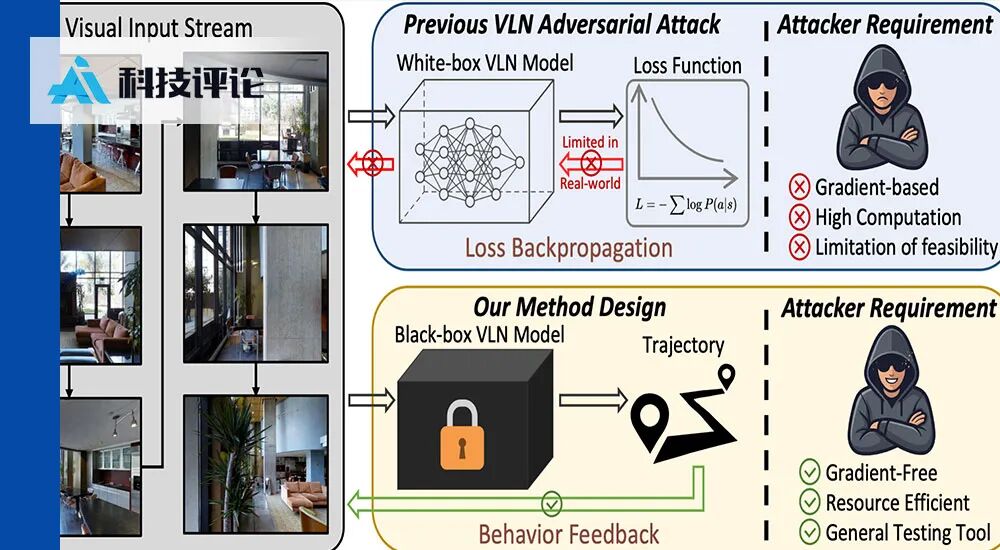
TL;DR - AdvNav is a black-box adversarial attack and stress-testing framework for vision-language navigation agents. It exposes substantial visual vulnerabilities without accessing model parameters or gradients, highlighting deployment risks for embodied AI systems.

  • Uses trajectory- and action-level behavioral feedback to optimize subtle visual perturbations under limited query budgets.
  • Combines adaptive perturbation strength with genetic optimization of noise structure.
  • On R2R, attack success reached 49.70% against HAMT and 65.96%/87.30% against MapGPT using Qwen3-VL/GPT-4V.
  • Perturbations resemble low-frequency haze or lens dust, remain perceptually subtle, and resist standard preprocessing.

Genome Editing 1

Structural mechanism governing the directionality of bridge recombination

Rank 72 · Content 75 · Popularity 64

TL;DR - Cryo-EM structures reveal how IS621 bridge recombinase controls DNA excision and why it naturally favors insertion. The findings could guide the engineering of programmable bridge-editing tools.

  • Resolves structural mechanisms governing bridge recombination directionality.
  • Shows how IS621 bridge recombinase mediates DNA excision.
  • Explains the system’s natural preference for DNA insertion.
  • Provides a structural basis for designing programmable genome-editing technologies.

Microbiome Health 1

Maternal influences on infant gut microbiome and health

Rank 67 · Content 65 · Popularity 70

TL;DR - A Nature study reports that the maternal gut microbiome predicts infant eczema, suggesting maternal microbial composition may help identify early-life health risks.

  • Published online in Nature on 12 August 2026.
  • Focuses on maternal influences on the infant gut microbiome and health.
  • The provided content does not specify mechanisms, effect sizes, or clinical utility.

Neuro-Symbolic Reasoning 1

Policy-as-logic for robust reasoning over rules

Rank 77 · Content 95 · Popularity 34

TL;DR - A hybrid system converts written policies into formal logic, uses language models to extract facts, and delegates rule-based decisions to an answer set solver. This separation improves interpretability, robustness, and efficiency for policy-grounded question answering.

  • Outperforms policy-as-prompt and policy-as-code approaches in most evaluated cases.
  • Reduces token usage by approximately 10×.
  • Produces auditable answers by separating predicate grounding from symbolic reasoning.
  • Remains robust under input perturbations when applying objective policy criteria.

Optical Computing 1

Degree-of-polarization modulation for high-dimensional optical computing

Rank 68 · Content 80 · Popularity 39

TL;DR - This Nature paper introduces micrometre-scale control of light’s polarization state and degree of polarization, enabling direct high-dimensional information encoding for optical computing.

  • Uses phase-only spatial light modulators to engineer light statistics.
  • Makes polarization state and degree spatially programmable.
  • Expands optical information encoding into a high-dimensional space.
  • Detailed performance results are not provided in the excerpt.

Robot Foundation Models 1

Representative image for G0.5: One Autoregressive Stream for Robot Reasoning and Action

G0.5: One Autoregressive Stream for Robot Reasoning and Action

Rank 79 · Content 95 · Popularity 40

TL;DR - G0.5 is an autoregressive vision-language-action model that generates reasoning and robot actions from one transformer decoder. Its unified design enables prompt-steerable behavior and strong results across seven robotic evaluation regimes.

  • Uses a learned tokenizer to represent actions from heterogeneous robots in a shared vocabulary.
  • Interleaves task decomposition, object grounding, action hints, and action tokens in one chain-of-thought stream.
  • Adds visual memory through the vision encoder to incorporate multi-second histories.
  • Outperforms cited baselines across real-world fine-tuning, long-horizon manipulation, zero-shot transfer, and simulation benchmarks.

Symbolic Regression 1

Representative image for Bengio团队新作:强化学习重做符号回归,后验采样提速10倍

Bengio团队新作:强化学习重做符号回归,后验采样提速10倍

Rank 78 · Content 90 · Popularity N/A

TL;DR - Bengio’s team introduces ERRLESS, a Bayesian symbolic regression method that uses maximum-entropy reinforcement learning to sample joint posteriors over formulas, constants, and noise. It improves uncertainty modeling while running roughly 10× faster than most learning-based symbolic regression methods.

  • Reframes symbolic regression from finding one optimal expression to approximating a full posterior distribution.
  • Uses constrained bottom-up expression generation and a GFlowNet trajectory-balance objective.
  • Achieves 0.924 AUC on the Feynman benchmark, remaining stable across three noise levels.
  • Avoids separate constant optimization, but requires retraining for each dataset and degrades on complex expressions.

Synthetic Chemistry 1

Phosphine-mediated azine C–H couplings with water and ammonia

Rank 54 · Content 60 · Popularity 39

TL;DR - This Nature paper reports phosphine-mediated C–H coupling of azines with water and ammonia. Based on the title alone, it suggests a synthetic route for incorporating oxygen- or nitrogen-derived functionality, but specific results are not provided.

  • Published online in Nature on 11 August 2026.
  • Focuses on direct azine C–H bond functionalization.
  • Uses water and ammonia as coupling partners under phosphine-mediated conditions.
  • The supplied content does not include reaction scope, mechanism, yields, or limitations.
Top highlights — Industry & News

LLM Agents 14

AI isn’t ready to research itself

Rank 73 · Content 85 · Popularity 43

TL;DR - An agentic AI system reproduced or extended concepts from two computer-science papers, but the original authors found its research contributions unconvincing. The report highlights the gap between autonomous research workflows and genuinely valuable scientific insight.

  • The system was tested on concepts from two existing computer-science papers.
  • Successful task completion did not translate into approval from the original researchers.
  • The brief report suggests agentic systems are not yet ready to conduct research independently.
  • Technical details and evaluation results are not provided in the supplied content.
Representative image for 马斯克Grok 4.6重回一梯队!更低价格反超Fable 5,这Cursor是真没白收购

马斯克Grok 4.6重回一梯队!更低价格反超Fable 5,这Cursor是真没白收购

Rank 71 · Content 80 · Popularity N/A

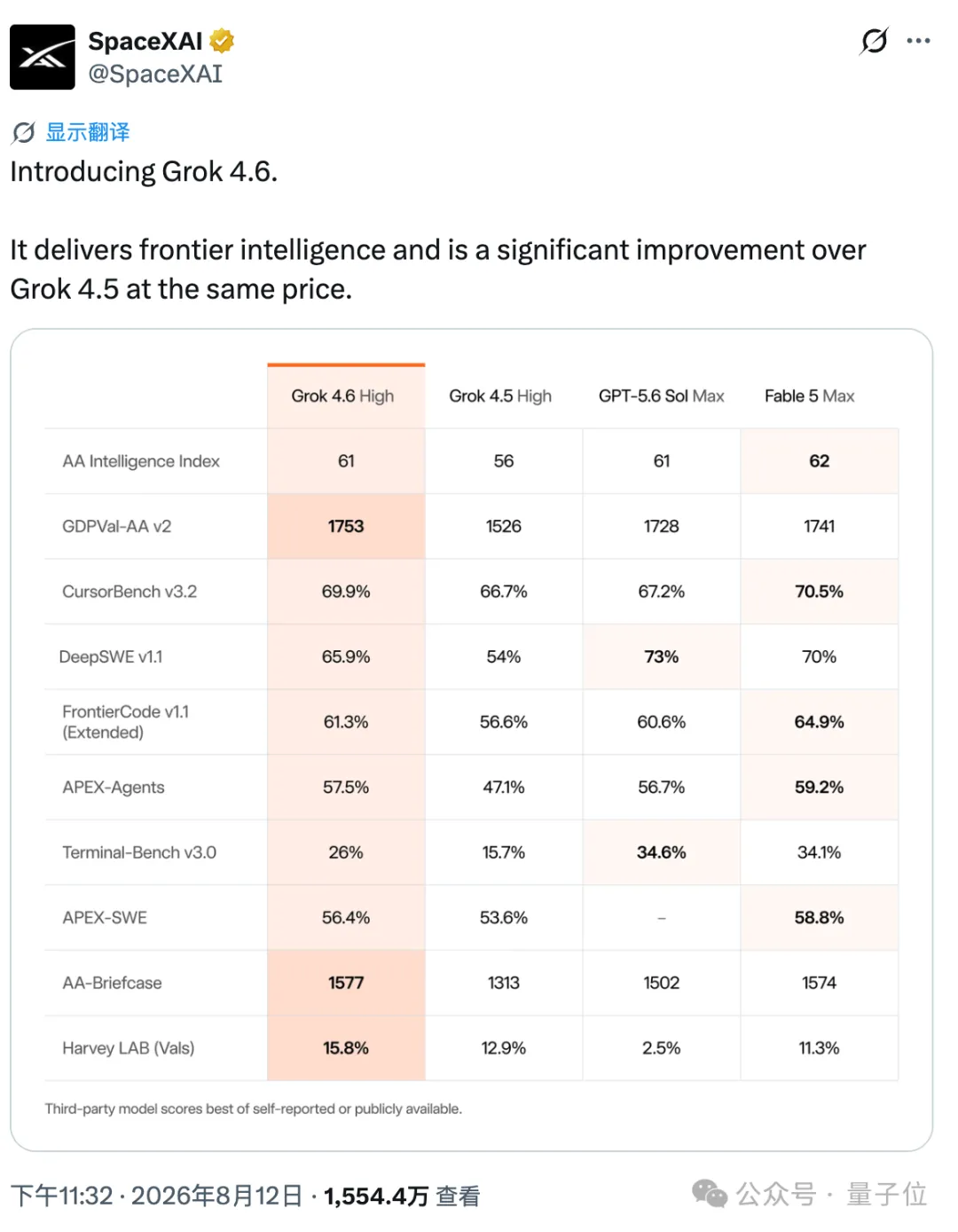
TL;DR - SpaceXAI launched Grok 4.6 and Grok Bot, pairing a lower-cost model optimized for long-running agent tasks with cloud agents that can operate workplace tools continuously.

  • Grok 4.6 leads the cited GDPVal-AA v2, AA-Briefcase, and Harvey LAB benchmarks, but trails GPT-5.6 Sol on Terminal-Bench v3.0.
  • API pricing is $2/M input tokens and $6/M output tokens; requests exceeding 200K context cost twice as much for the entire request.
  • The model is available through Grok Build, Cursor, Grok Bot, and API, with third-party access via OpenRouter, Vercel, and Cloudflare.
  • Grok Bot supports parallel, persistent cloud agents that can use websites without APIs, learn reusable routines, and pause for human approval on sensitive steps.
Representative image for 近30家高校机构联合发起,国内首个 Agent 记忆榜单 AML 出炉,谁的 Agent 最不健忘

近30家高校机构联合发起,国内首个 Agent 记忆榜单 AML 出炉,谁的 Agent 最不健忘

Rank 71 · Content 80 · Popularity N/A

TL;DR - The Agent Memory Leaderboard (AML), a benchmark for isolating and comparing long-term memory systems in AI agents, released its first results. It matters because reliable memory is increasingly essential for agents operating across extended conversations and coding tasks.

  • AML standardizes generation and scoring models to focus evaluation on memory retrieval and recall rather than underlying model quality.
  • It covers text and code memory across academic-method and commercial-product tracks, using public subsets plus private blind tests to discourage overfitting.
  • MemoraX led the commercial text track with 58.0 points; InvMem topped the open-source text track with 45.1.
  • Results suggest no dominant memory architecture yet, with dynamic indexing and hybrid retrieval among the approaches still evolving.
Representative image for 小扎高调开战闭源AI!推30B智能体模型,消费级显卡就能跑,杨立昆点赞

小扎高调开战闭源AI!推30B智能体模型,消费级显卡就能跑,杨立昆点赞

Rank 71 · Content 80 · Popularity N/A

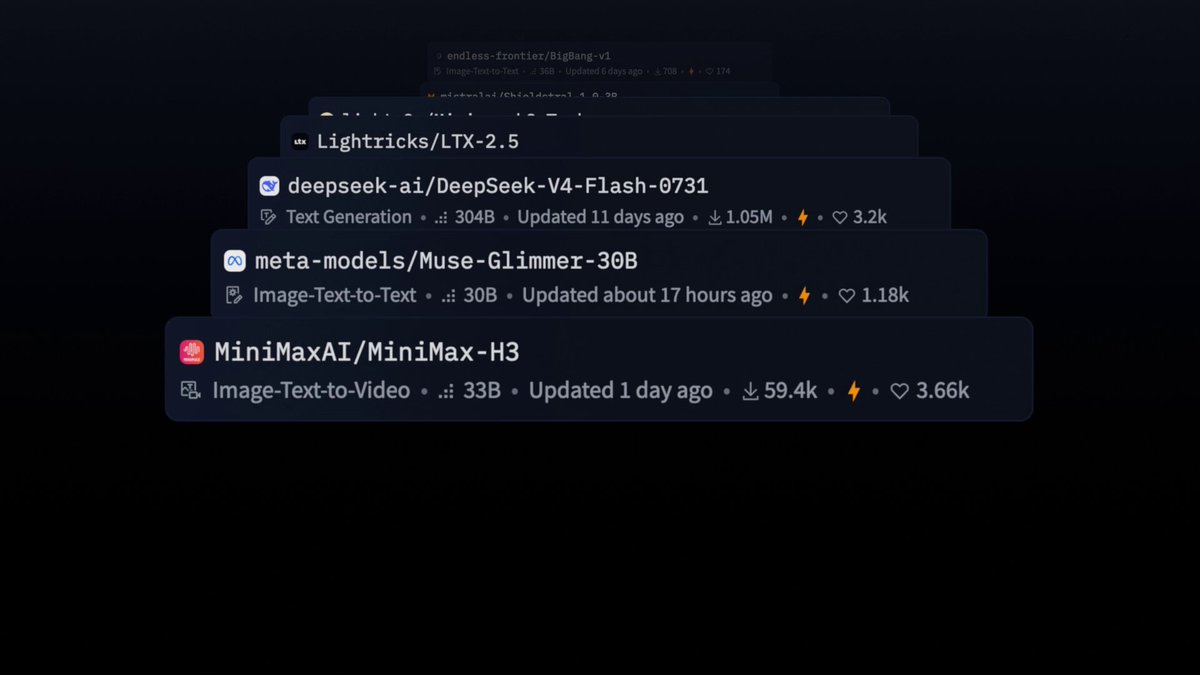
TL;DR - Meta released Muse Glimmer, an open-weight 30B local agent model designed for multimodal tool use and multi-step tasks on consumer hardware. It advances private, offline personal agents, though latency, token usage, and tooling remain limitations.

  • Apache 2.0 weights are available; 4-bit quantization shrinks the model from over 55GB to under 20GB for systems with 24–32GB memory.
  • Muse Glimmer supports text and images, structured tool calls, error recovery, long-running workflows, and over 100 languages.
  • Meta reports 12 leading results across 22 non-safety benchmarks, particularly in agent tasks, but competitors lead some desktop, coding, multimodal, and safety tests.
  • DFlash speculative decoding reportedly improves generation speed by up to 3.1×, while independent tests demonstrated offline Mac control and local coding.
Representative image for RT by @NVIDIAAI: NVIDIA Nemotron 3.5 Lightning is now available on Nebius Token Factory. It…

RT by @NVIDIAAI: NVIDIA Nemotron 3.5 Lightning is now available on Nebius Token Factory. It…

Rank 71 · Content 80 · Popularity N/A

TL;DR - NVIDIA’s Nemotron 3.5 Lightning is now available through Nebius Token Factory, targeting fast, always-on agent workloads. The open model uses a 30B hybrid MoE architecture with only 3B parameters active per inference.

  • Supports text input and output for high-volume specialized tasks.
  • Claims up to 4× the output speed of similarly sized models.
  • Can be adapted for domain-specific accuracy.
  • Target sectors include finance, cybersecurity, telecom, and retail.
Representative image for RT by @huggingface: 💚 @nvidia Nemotron 3.5 Lightning is here to power more efficient agents! 30B…

RT by @huggingface: 💚 @nvidia Nemotron 3.5 Lightning is here to power more efficient agents! 30B…

Rank 71 · Content 80 · Popularity N/A

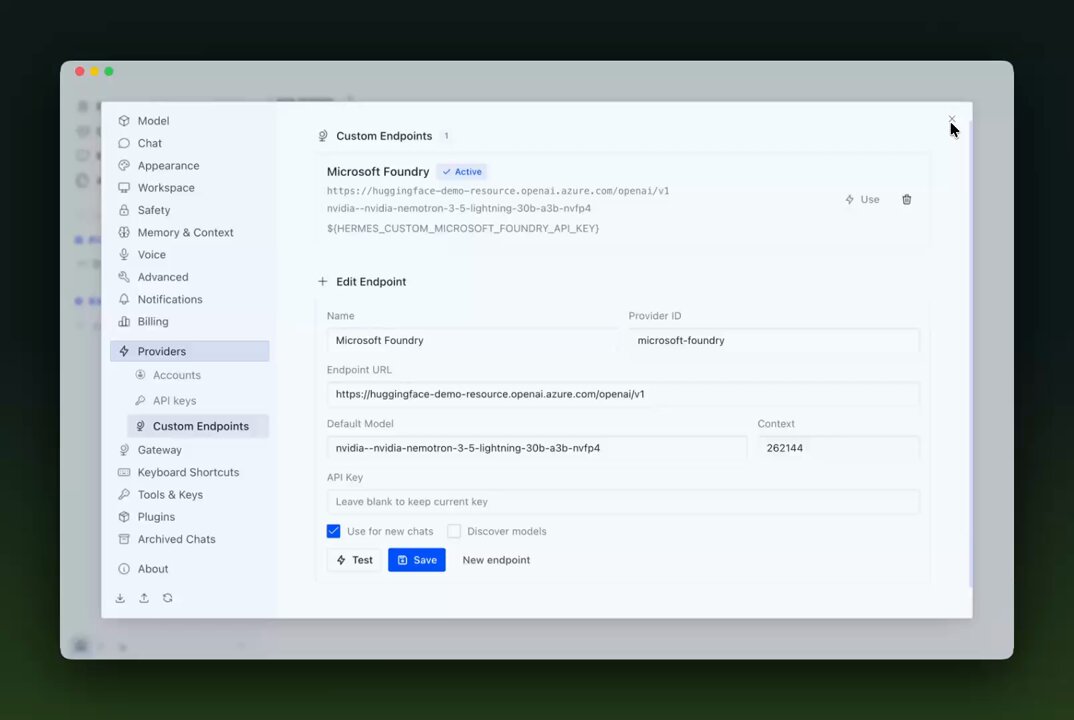
TL;DR - NVIDIA announced Nemotron 3.5 Lightning, a sparse 30B-parameter model designed for efficient, tool-using agents. It combines 3B active parameters with long-context and low-precision deployment options.

  • LatentMoE architecture with 30B total and 3B active parameters.
  • Supports NVFP4 and BF16 precision formats.
  • Offers up to a 1M-token context window, multilingual capabilities, and tool use.
  • Demonstrated with Nous Research’s Hermes Agent through Microsoft Foundry.
Representative image for 缓存命中率99.93%!DeepSeek最适合的Harness来了,GitHub狂揽8.6万Star

缓存命中率99.93%!DeepSeek最适合的Harness来了,GitHub狂揽8.6万Star

Rank 68 · Content 75 · Popularity N/A

TL;DR - Open-source coding-agent harness Pi reportedly pairs efficiently with DeepSeek by preserving stable, append-only context, achieving roughly 99.93% cache hits and the lowest successful-task cost in a benchmark of eight harnesses.

  • Pi defaults to four tools—file reading, writing, editing, and command execution—with optional capabilities added through extensions and skills.
  • Native DeepSeek support preserves reasoning content, maps reasoning levels, and fixes session-replay compatibility issues.
  • Composio’s benchmark reported an average cost of about $0.028 per successful task for Pi, versus $0.195 for Claude Code using the same DeepSeek model.
  • DeepSeek is reportedly building an official coding harness to connect its models with terminals, repositories, and developer toolchains.
Representative image for (untitled)

(untitled)

Rank 68 · Content 75 · Popularity N/A

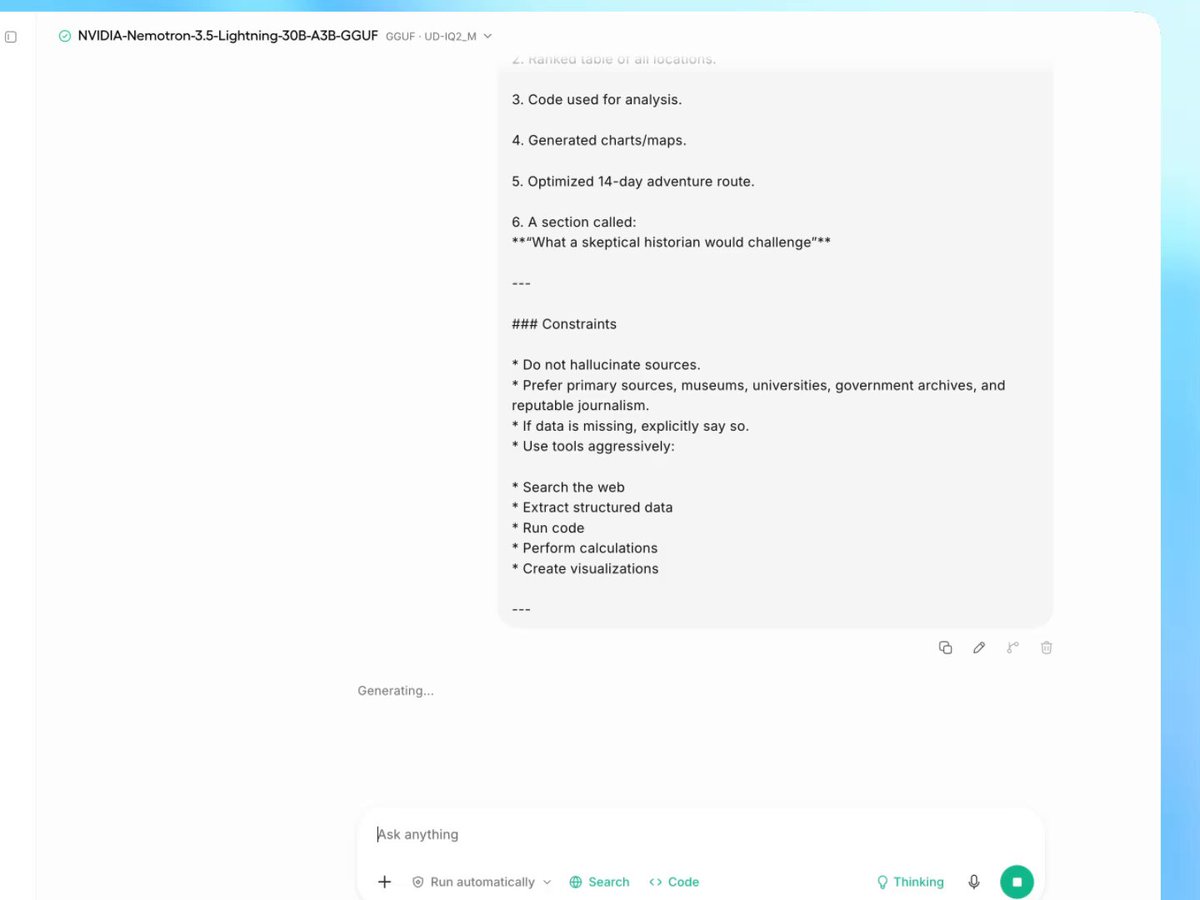
TL;DR - Unsloth demonstrated a 2-bit NVIDIA Nemotron 3.5 Lightning model running sustained agentic tool calls for 10 minutes on 22GB of VRAM. The demo highlights low-memory local deployment for tool-using workflows.

  • Cited more than 80 websites during the run.
  • Executed code and searched for 10 real-world locations.
  • Available through Unsloth Desktop, with a GGUF model and setup guide provided.
  • The post reports a demonstration, not a formal benchmark.
Representative image for DeepSeek Harness 入选项目疑似曝光,不选万星「花瓶」,死磕 Agent 基建

DeepSeek Harness 入选项目疑似曝光,不选万星「花瓶」,死磕 Agent 基建

Rank 64 · Content 70 · Popularity N/A

TL;DR - A reportedly leaked partial list of DeepSeek Harness projects suggests DeepSeek is prioritizing production-grade agent infrastructure over popular general-purpose tools. The focus is on making agents safer, more reliable, observable, and cost-efficient.

  • MCP plugins and coding agents reportedly dominate, alongside runtimes, orchestration frameworks, UIs, and multi-agent scheduling.
  • Highlighted projects address sandboxing and credential isolation, task persistence and memory, model routing, remote supervision, and budget controls.
  • The apparent strategy is to evolve DeepSeek from a model/API provider into an industrial agent platform.
  • The project list is unofficial and attributed to an online leak, so its selection and strategic implications remain unconfirmed.
Representative image for DeepSeek最适合的Harness开源!

DeepSeek最适合的Harness开源!

Rank 64 · Content 70 · Popularity N/A

TL;DR - Open-source coding-agent harness Pi has added native DeepSeek support and reportedly achieves exceptionally high prompt-cache reuse, substantially reducing agent task costs. It highlights how harness design can materially affect the efficiency of the same underlying model.

  • Pi defaults to four tools—file reading, writing, editing, and command execution—while exposing advanced capabilities through extensions and skills.
  • Its append-oriented, stable context structure reportedly delivered 99.93–99.97% cache-hit rates with DeepSeek.
  • A Composio comparison found Pi’s average cost per successful DeepSeek V4 Flash task was about $0.028, versus roughly $0.195 for Claude Code.
  • DeepSeek is reportedly assembling an internal team to build an official coding harness positioned against Claude Code.
Representative image for 灵犀专业版首批接入DeepSeek-V4-Pro正式版,交付能力再升级

灵犀专业版首批接入DeepSeek-V4-Pro正式版,交付能力再升级

Rank 61 · Content 65 · Popularity N/A

TL;DR - Kingsoft Office’s Lingxi Pro AI office agent now supports DeepSeek-V4-Pro, aiming to improve complex task execution and delivery of editable, traceable Office outputs.

  • DeepSeek-V4-Pro supports a 1-million-token context window and outputs up to 384,000 tokens per request.
  • Reported improvements over the Preview model include terminal operation, software engineering, and tool-calling capabilities.
  • Lingxi uses work context and tools—including documents, spreadsheets, browsers, code, and data processing—to produce native Office deliverables.
  • DeepSeek-V4 Flash and Pro are fully available in Lingxi Pro without additional configuration.
Representative image for 科大讯飞发布企业服务全系列产品 覆盖七大核心场景

科大讯飞发布企业服务全系列产品 覆盖七大核心场景

Rank 61 · Content 65 · Popularity N/A

TL;DR - iFlytek launched an enterprise AI-agent portfolio spanning seven core business areas, marking a shift from isolated AI tools toward agents embedded in end-to-end workflows. The products connect models with enterprise knowledge, data, systems, and processes to deliver measurable business outcomes.

  • The portfolio covers management, IT processes, supply-chain transactions, sales and marketing, manufacturing, analytics, and international operations.
  • AgenticRAG upgrades enterprise knowledge bases from question answering to task execution, while Agent OS appliances offer integrated, ready-to-deploy hardware and software.
  • Specialized agents support procurement oversight, compliance review, document analysis, natural-language data analytics, customer service, training, and content workflows.
  • Multilingual Ocean products and five overseas service nodes support document generation, meeting transcription, translation, and training for global operations.
Representative image for 为什么智能硬件出海龙头,集体押注这家AI原生达人营销平台?

为什么智能硬件出海龙头,集体押注这家AI原生达人营销平台?

Rank 54 · Content 55 · Popularity N/A

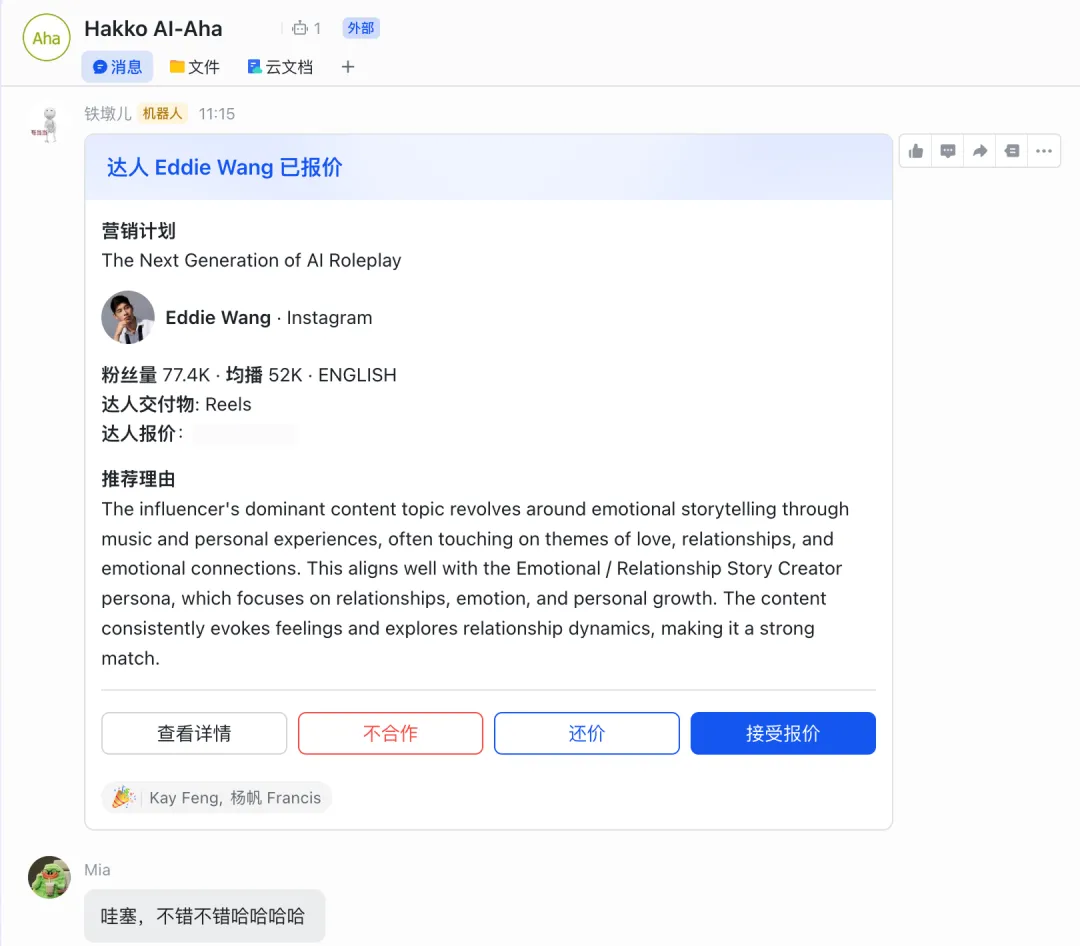
TL;DR - AhaCreator launched deeper Feishu integration for its AI-agent platform, automating overseas influencer discovery, outreach, negotiation, and campaign tracking. It matters because the platform aims to make large, cross-border hardware marketing campaigns manageable while retaining human oversight for exceptions.

  • Feishu cards surface approvals for creator selection, pricing, content, and results directly in existing workflows.
  • AI agents automate creator matching and execution using campaign requirements, multimodal content analysis, pricing history, and performance data.
  • A four-layer risk system combines pre-screening, continuous monitoring, human intervention, and payment or refund controls.
  • A cited deployment matched over 1,000 product-owning creators across 19 countries within 48 hours.

How RingCentral builds AI-native work from engineering to ops

Rank 50 · Content 50 · Popularity N/A

TL;DR - OpenAI highlights RingCentral’s use of ChatGPT Work and Codex to support AI-native workflows across engineering and operations. The brief description indicates faster AI product development and more centralized operational intelligence, but provides no quantitative results.

  • Codex is used to accelerate engineering and AI product development.
  • ChatGPT Work supports workflows spanning engineering and operations.
  • RingCentral aims to centralize operational knowledge and intelligence.
  • The provided content does not specify implementation details or measured gains.

LLMs & Foundation Models 6

Representative image for 刚刚,DeepSeek V4 Pro正式版发布,多项对标Fable 5

刚刚,DeepSeek V4 Pro正式版发布,多项对标Fable 5

Rank 68 · Content 75 · Popularity N/A

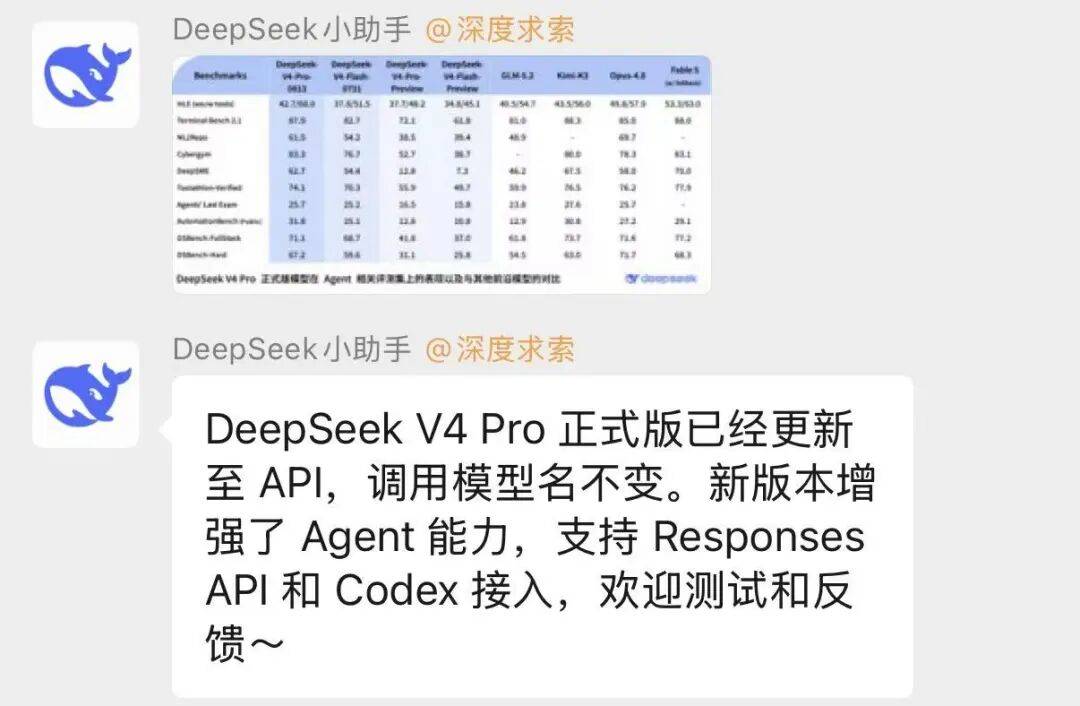
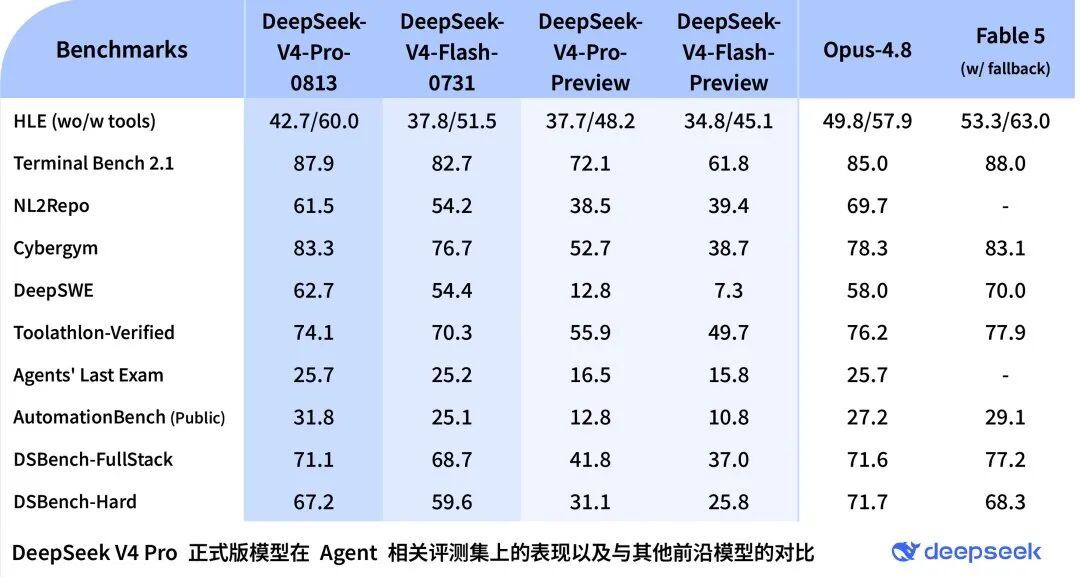
TL;DR - DeepSeek released the production version of V4 Pro via API, emphasizing strong coding and agent performance at low prices. The report claims it approaches or exceeds competing frontier models on several benchmarks, though no official blog or detailed methodology was available.

  • The API model is DeepSeek-V4-Pro-0813.
  • Reported benchmarks include HLE, Terminal Bench, CyberGym, and DeepSWE.
  • Pricing is ¥3 per million input tokens, ¥0.025 with cache hits, and ¥6 per million output tokens.
  • User testing reportedly found a highly compressed, less readable chain-of-thought style, possibly reducing token usage.

RT by @ylecun: Yesterday was my 40th birthday, and there is no best gift than Meta turning toward…

Rank 68 · Content 75 · Popularity N/A

TL;DR - Meta is reopening model weights, starting with Muse Glimmer, a locally runnable 30B dense model, and plans to release Muse Spark 1.2. The move signals renewed emphasis on open-weight foundation models.

  • Muse Glimmer uses a dense 30-billion-parameter architecture.
  • Its weights are available for local deployment.
  • Meta says Muse Spark 1.2 weights will be released soon.
  • No benchmarks, licensing terms, or technical evaluations are provided.
Representative image for RT by @huggingface: As always, NVIDIA Nemotron 3.5 Lightning is open and customizable. This…

RT by @huggingface: As always, NVIDIA Nemotron 3.5 Lightning is open and customizable. This…

Rank 68 · Content 75 · Popularity N/A

TL;DR - NVIDIA Nemotron 3.5 Lightning is now available on Hugging Face with open, customizable weights, training data, and recipes. This gives developers more control to inspect, adapt, and deploy the model.

  • The release is a 30B-A3B model using NVFP4.
  • Model weights, data, and recipes are included.
  • Availability on Hugging Face supports open-source access and customization.
Representative image for 刚刚!Ilya首个模型曝光了

刚刚!Ilya首个模型曝光了

Rank 61 · Content 65 · Popularity N/A

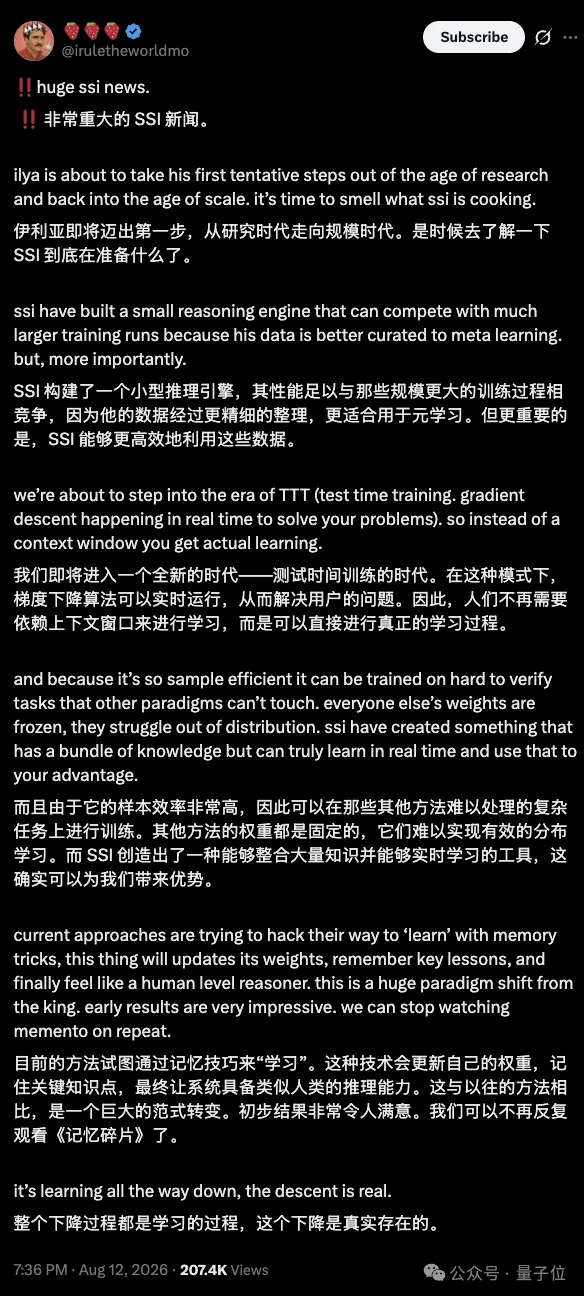
TL;DR - An unverified leak claims Ilya Sutskever’s SSI is developing a small inference model that learns during deployment through test-time training (TTT). If confirmed, it could shift scaling from static pretraining and longer contexts toward continual adaptation.

  • The rumored model learns “how to learn” from curated data, then updates some weights while solving tasks.
  • SSI may expose the current version to select users in August, but conflicting reports say the release could be delayed.
  • The approach reportedly resembles TTT-E2E, which treats context as training data and compresses information into model weights through next-token prediction.
  • SSI has not confirmed the model, its capabilities, or claims that it can safely avoid harmful learning and catastrophic forgetting.
Representative image for 「用初中数学讲明白AI」第5章:万亿道题的考试——大模型怎么训练出来的

「用初中数学讲明白AI」第5章:万亿道题的考试——大模型怎么训练出来的

Rank 61 · Content 65 · Popularity N/A

TL;DR - An accessible explainer describes how large language models progress from random parameters to useful text generators through next-token prediction at massive scale. It connects core training mechanics with the substantial data, compute, and financial costs involved.

  • Pretraining repeatedly computes prediction loss, backpropagates gradients, and updates parameters according to a learning-rate schedule.
  • GPT-3-scale training uses tens of terabytes of text, thousands of GPUs, and millions of dollars in estimated costs.
  • Decoding methods and temperature control the tradeoff between deterministic, repetitive output and more varied but potentially unreliable text.
  • A pretrained model fundamentally continues text; instruction fine-tuning and alignment are needed to make it behave like a helpful assistant.
Representative image for 有人称中签宇树不敢发朋友圈:怕被嫉妒;DeepSeek V4 Pro正式版上线;美国政府设备重新允许使用TikTok!特朗普:我在TikTok一直霸榜第一

有人称中签宇树不敢发朋友圈:怕被嫉妒;DeepSeek V4 Pro正式版上线;美国政府设备重新允许使用TikTok!特朗普:我在TikTok一直霸榜第一

Rank 54 · Content 55 · Popularity N/A

TL;DR - This Chinese technology-news roundup highlights major AI model releases, including DeepSeek V4 Pro and Alibaba’s open-weight Qwen3.8-2.4T-A95B. It also covers new agent products, AI infrastructure, and enterprise adoption.

  • DeepSeek V4 Pro adds stronger agent capabilities, tool calling, JSON output, a 1M-token context window, and up to 384K output tokens.
  • Alibaba released Qwen3.8-2.4T-A95B weights, featuring a 2.4T-parameter MoE architecture with 95B active parameters and a native 256K context.
  • Alibaba launched infrastructure capable of running models above 2T parameters, while Tencent previewed Hy4 and began limited testing of a WeChat AI agent.
  • Samsung reportedly used Claude to reduce one semiconductor verification task from over a month to two days, while warning that model outputs require strict controls.

Multimodal & Generative 8

Representative image for RT by @huggingface: Meta is back with Muse Glimmer: a 30B open-source multimodal model built for…

RT by @huggingface: Meta is back with Muse Glimmer: a 30B open-source multimodal model built for…

Rank 75 · Content 85 · Popularity N/A

TL;DR - Meta introduced Muse Glimmer, a 30B open-source multimodal model designed for local, agentic use, with day-one Hugging Face support. An early demo equips the model with tools and asks it to quantize itself.

  • The model has 30B parameters and supports multimodal workloads.
  • Its stated focus combines local deployment with agentic tool use.
  • Hugging Face is providing launch-day ecosystem support.
  • No benchmark results or quantization outcomes are provided in the post.
Representative image for Putting sign language AI into users’ hands

Putting sign language AI into users’ hands

Rank 71 · Content 80 · Popularity N/A

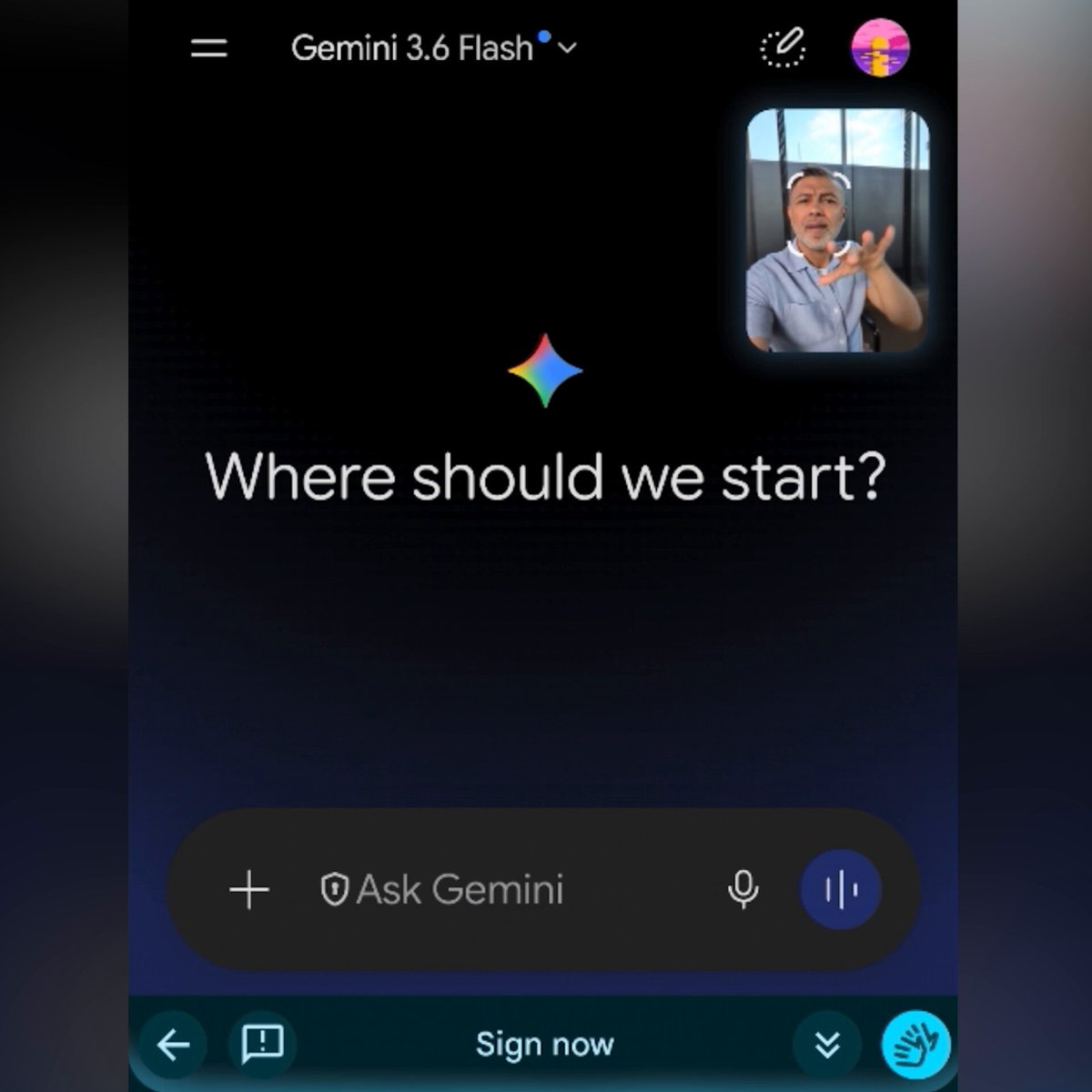
TL;DR - Google DeepMind introduced sign-language-to-text (SL2T), a model powering new accessibility features for Deaf and hard-of-hearing users. The limited announcement does not provide technical details or evaluation results.

  • Converts sign language into text.
  • Powers user-facing sign language features.
  • Targets improved accessibility for Deaf and hard-of-hearing users.
  • Model architecture, supported sign languages, and performance metrics are not specified.
Representative image for R to @GoogleDeepMind: SL2T is state-of-the-art on academic benchmarks, plus it's optimized for…

R to @GoogleDeepMind: SL2T is state-of-the-art on academic benchmarks, plus it's optimized for…

Rank 68 · Content 75 · Popularity N/A

TL;DR - Google DeepMind says SL2T achieves state-of-the-art academic benchmark results for sign-language-to-text translation while supporting practical scenarios such as one-handed signing. Its hybrid design performs body-pose tracking on-device for privacy, then translates poses into text on servers.

  • Targets real-world mobile use, including signing while holding a phone.
  • Keeps video-derived body-pose tracking on the device.
  • Sends pose information—not raw video—to servers for text translation.
  • Benchmark details and quantitative results are not provided here.
Representative image for Seedance 2.5海外火出圈,0帧起手实拍级,视频抽卡时代结束了!

Seedance 2.5海外火出圈,0帧起手实拍级,视频抽卡时代结束了!

Rank 64 · Content 70 · Popularity N/A

TL;DR - Seedance 2.5 is a newly released video-generation API that improves realism, prompt adherence, temporal consistency, and 30-second cinematic storytelling. Its reduced randomness could make AI video more practical for production workflows such as advertising.

  • Produces more natural skin, lighting, textures, and physically plausible state changes.
  • Maintains character identity and spatial relationships through long shots and scene transitions.
  • Better preserves detailed actions, emotional pacing, and causal continuity in 30-second generations.
  • Overseas platforms including Runway, Higgsfield, Luma, OpenArt, and Magnific reportedly integrated the API quickly.
Representative image for 阿里Yuvion VL登顶多模态安全:8B越级超越397B模型

阿里Yuvion VL登顶多模态安全:8B越级超越397B模型

Rank 63 · Content 75 · Popularity 34

TL;DR - Alibaba introduced Yuvion VL, a Qwen3-VL-based model family specialized for multimodal content and AI safety. Its 8B and 32B variants reportedly outperform much larger general-purpose models on safety benchmarks through adversarial data, contrastive fine-tuning, and targeted reasoning training.

  • Yuvion VL uses a three-stage pipeline: knowledge-enhanced pretraining, instruction tuning with C2FT contrastive learning, and reasoning SFT plus reinforcement learning.
  • C2FT dynamically mines model-specific confusing examples and trains across image groups to improve fine-grained visual-semantic discrimination.
  • The 32B model averaged 76.9 on open safety evaluations and 82.8 on internal evaluations spanning 58 benchmarks; the 8B model reportedly surpassed Qwen3.5-Plus on several safety tasks.
  • Its YVRE evaluation framework covers general multimodal ability, open safety benchmarks, and industrial content-safety scenarios.
Representative image for 引领智能手机迈入具身交互时代 全球首款机器人手机荣耀Robot Phone发布

引领智能手机迈入具身交互时代 全球首款机器人手机荣耀Robot Phone发布

Rank 61 · Content 65 · Popularity N/A

TL;DR - Honor launched the Robot Phone, combining a motorized four-degree-of-freedom camera gimbal, a system-level AI agent, and ARRI-developed imaging features. It aims to make smartphones physically interactive devices that can perceive, act, track subjects, and execute cross-app tasks.

  • Agentic OS and YOYO Pro support multimodal perception, task planning, cross-application execution, and installable developer-created skills.
  • The compact titanium gimbal enables gesture-aware movement, automated framing, subject tracking, and natural-language camera control.
  • ARRI collaboration adds LogC3, Wide Gamut 3, ARRI Looks, 10-bit 4:2:2 video, and professional monitoring tools.
  • Prices start at RMB 9,999, with general availability scheduled for August 18, 2026.

LFM2.5-VL-3B for Better and Faster Vision Capabilities for the Edge

Rank 57 · Content 60 · Popularity N/A

TL;DR - Hugging Face highlights Liquid AI’s LFM2.5-VL-3B, a 3B-parameter vision-language model aimed at faster, improved visual capabilities on edge devices. With no article content provided, specific benchmarks and technical details cannot be verified.

  • Targets multimodal vision-language workloads in resource-constrained edge environments.
  • Its 3B-parameter size suggests an emphasis on balancing capability with deployment efficiency.
  • The title claims better and faster vision performance, but provides no supporting results here.
Representative image for 360纳米大片流水线携手《知识就是力量》发布“知力·纳米”科普科幻AI大片创作平台

360纳米大片流水线携手《知识就是力量》发布“知力·纳米”科普科幻AI大片创作平台

Rank 54 · Content 55 · Popularity N/A

TL;DR - 360 and Knowledge Is Power magazine launched “Zhili·Nano,” an institutional AI platform for turning authoritative science content into educational and science-fiction videos. It combines a curated knowledge base, specialized agents, and an end-to-end production workflow.

  • Covers scripting, asset creation, storyboarding, video generation, and final assembly.
  • Uses modular AI “crew” agents for roles such as writing, cinematography, characters, scenes, and storyboards.
  • Supports audience-specific rewriting, terminology explanation, and assisted scientific fact-checking.
  • Adds institutional features for permissions, project workflows, asset management, publishing, and content certification.

Efficiency & Systems 5

Qwen3.8首日可用,助力存量算力长期有用:智源FlagOS开源开放生态共享

Rank 75 · Content 85 · Popularity N/A

TL;DR - FlagOS released Day-0 support for Alibaba’s 2.4T-parameter Qwen3.8 model across nine AI-chip platforms. Its unified open-source stack and INT8 quantization help deploy the model on diverse, including older, hardware.

  • Supports BF16, FP8, and INT8 variants with cross-chip accuracy alignment and deployment validation.
  • FlagOS-Compressor provides BF16/FP8-to-INT8 quantization paths and adapted inference operators.
  • W8A8 quantization reduces memory and bandwidth demands, addressing hardware that lacks FP8 support.
  • FlagOS says its Day-0 process cuts multi-chip model enablement to under 24 hours.
Representative image for 完成Modular收购,高通瞄准数据中心、基础设施、个人及工业AI

完成Modular收购,高通瞄准数据中心、基础设施、个人及工业AI

Rank 75 · Content 85 · Popularity N/A

TL;DR - Qualcomm completed its acquisition of Modular, combining efficient AI hardware with a unified software stack for deploying generative and agentic workloads from edge devices to data centers.

  • Modular’s platform targets heterogeneous CPU, GPU, NPU, and custom-chip environments.
  • Qualcomm plans to expand its AI platform across data centers, edge infrastructure, and personal and industrial systems.
  • Mojo, MAX, and Modular Cloud will retain their existing products and brands with additional Qualcomm investment.
  • Modular CEO Chris Lattner will lead Qualcomm’s advanced AI software and platforms business.
Representative image for RT by @huggingface: Local AI is exploding! Transformers.js, that we've been building @huggingface…

RT by @huggingface: Local AI is exploding! Transformers.js, that we've been building @huggingface…

Rank 68 · Content 75 · Popularity N/A

TL;DR - Hugging Face says Transformers.js has surpassed 10 million monthly downloads, nearly 10× its level six months earlier. The growth signals rising adoption of private, browser-based AI inference that avoids cloud compute costs.

  • Transformers.js runs AI models locally inside web browsers.
  • Hugging Face has developed the open-source library for three years.
  • Local execution can reduce cloud-compute demand and keep user data private.
  • The post frames local AI as increasingly relevant amid compute shortages and cybersecurity risks.
Representative image for 4.8亿美元砸向端侧算力!Agent芯片新贵冲出重围

4.8亿美元砸向端侧算力!Agent芯片新贵冲出重围

Rank 57 · Content 60 · Popularity N/A

TL;DR - Singapore-based Acrab raised $130 million in Series B funding, bringing total funding above $480 million, as its first edge-AI chip GΞLIX 1 and Agent Box system move toward mass production. The company targets low-latency, privacy-sensitive agent workloads that increasingly run locally rather than entirely in the cloud.

  • GΞLIX 1 emphasizes heterogeneous CPU-NPU coordination, unified memory, long-context prefill, and agent orchestration—not only peak NPU performance.
  • Acrab claims 700 TOPS and 1,416 tokens/s prefill for Gemma 26B A4B under its specified long-context test; these self-reported results await independent verification.
  • Agent Box combines the chip with local models, runtime tooling, multimodal interaction, long-term memory, tool use, and agent orchestration.
  • New funding will expand production and the developer ecosystem while accelerating Acrab’s next-generation AI computing platform.
Representative image for 联想集团Q1再创史上最佳业绩,AI服务器业务迎来爆发期

联想集团Q1再创史上最佳业绩,AI服务器业务迎来爆发期 🔗 2 sources

Rank 54 · Content 55 · Popularity N/A

TL;DR — 联想集团实现创纪录的 fiscal Q1 业绩,营收同比增长43%,调整后净利润增长176%。AI基础设施、推理需求及超大规模客户支出成为主要增长动力。

  • 季度营收达1834亿元人民币,调整后净利润超过73亿元人民币。
  • 基础设施方案业务集团营收创纪录地达到579亿元,运营利润率为9.1%。
  • AI相关营收同比增长60%至634亿元,约占总营收35%;AI服务营收增长141%。
  • 联想重点布局混合式AI基础设施、推理与Token生成效率,同时推进AI PC和企业智能体。

注: DrugAI来源描述的是Aureka Biotechnologies融资及AI药物研发,与联想Q1业绩并非同一项工作,故未合并。

AI Infrastructure 1

Representative image for 砸3.37万亿元!英伟达拉上华尔街六大金主,把GPU炒成硬通货

砸3.37万亿元!英伟达拉上华尔街六大金主,把GPU炒成硬通货

Rank 64 · Content 70 · Popularity N/A

TL;DR - Nvidia and six major financial institutions plan an independent financing platform capable of mobilizing over $500 billion for AI infrastructure. The model treats GPU-based “AI factories” as revenue-generating, financeable assets, potentially widening access to compute without burdening customers’ balance sheets.

  • Apollo, BlackRock, Blackstone, Brookfield, Goldman Sachs, and KKR will independently underwrite projects based on demand, utilization, cash flow, and residual value.
  • Nvidia will supply its computing platform and may offer limited residual-value support, while financial partners provide long-term third-party capital.
  • Nvidia argues CUDA upgrades, broad workload compatibility, and hardware redeployability extend GPU systems’ useful economic life and preserve residual value.
  • The $500 billion figure represents potential capital mobilized over time—not Nvidia revenue, a single fund, or a firm commitment to specific customers.

AI for Mathematics 1

Representative image for Claude一举扫清2000阶以下哈达玛矩阵!AI开始清空数学待解列表

Claude一举扫清2000阶以下哈达玛矩阵!AI开始清空数学待解列表

Rank 75 · Content 85 · Popularity N/A

TL;DR - Three mathematicians working with Claude reportedly constructed Hadamard matrices for all 12 previously unresolved orders below 2,000, including the long-standing smallest gap at order 668. The results passed exact computational checks, but the method and Claude’s role await a full technical report.

  • The matrices contain only ±1 entries, with every pair of distinct rows having inner product zero.
  • The reported orders are 668, 716, 892, 1132, 1244, 1388, 1436, 1676, 1772, 1916, 1948, and 1964.
  • Independent reproduction decoded and verified all 12 matrices using exact integer arithmetic.
  • Epoch AI provisionally marked FrontierMath’s order-668 open problem as AI-solved, while noting that the construction’s generalizability remains unknown.

Accessibility AI 1

Representative image for SL2T is our breakthrough sign language-to-text model powering new features for Deaf and hard of…

SL2T is our breakthrough sign language-to-text model powering new features for Deaf and hard of…

Rank 71 · Content 80 · Popularity N/A

TL;DR - Google DeepMind’s SL2T sign language-to-text model is powering new Android accessibility features. Starting on Pixel 11, users can sign in American Sign Language and receive English text through Gboard and Live Transcribe.

  • Designed for Deaf and hard-of-hearing users.
  • Converts signed video input into text.
  • Initial language support is American Sign Language-to-English.
  • Integrates directly with Android typing and transcription tools.

Autonomous Vehicles 1

小马智行第四代无人重卡量产,未来三年实现「千辆运营」目标

Rank 57 · Content 60 · Popularity N/A

TL;DR - Pony.ai unveiled its fourth-generation autonomous heavy truck and aims to operate 500–1,000 trucks within three years. The expansion tests whether its Robotaxi technology and fleet experience can make driverless freight commercially viable at scale.

  • The trucks reuse over 80% of Pony.ai’s Robotaxi code, hardware, and operational capabilities.
  • Initial deployments target long-haul freight, bulk-cargo routes in northwest China, and port transport.
  • Pony.ai offers ADaaS “virtual driver” technology and TaaS managed transportation services.
  • The company expects long-haul routes to offer the largest opportunity due to driver-hour limits, labor shortages, and continuous-operation requirements.

Embodied AI 1

Representative image for 具身数据来了实战派!40天2轮融资数千万,瞄准物理AI基础设施

具身数据来了实战派!40天2轮融资数千万,瞄准物理AI基础设施

Rank 50 · Content 50 · Popularity N/A

TL;DR - Embodied-AI data infrastructure startup SCALEFORCE raised tens of millions of yuan to develop MatrixOS and expand its physical-world data production network. It targets the shortage, quality, and cross-robot portability of multimodal interaction data needed to train embodied models.

  • MatrixOS combines cross-robot data alignment, automated quality optimization, and centralized management of large-scale collection nodes.
  • The company reports its ADA engine improved real-robot multi-scenario success from 65% to 92%, while its GDP quality engine achieved an 80% usable-data conversion rate.
  • Its human-centric collection system synchronizes vision, touch, force, and behavior data at sub-millisecond precision, with more than 95% workflow automation.
  • Funding will support MatrixOS development, data-network expansion, and hiring; the company has also begun customer deployments and international expansion.

Embodied Robotics 1

Representative image for 具身智能本体的重要性和技术差距,可能被大大低估了

具身智能本体的重要性和技术差距,可能被大大低估了

Rank 50 · Content 50 · Popularity N/A

TL;DR - Lingyu Intelligence’s TA2 robot highlights how reliable, open, deployable hardware can be as important as models and data for embodied AI. Its low-latency control, synchronized data pipeline, and model-ready interfaces aim to shorten real-world deployment cycles.

  • TA2 reportedly won all three industrial tasks in the “Shenzhi Cup,” demonstrating speed, millimeter-level precision, and sustained operation.
  • Unified interfaces support teleoperation and model inference, while synchronized multimodal logging produces training-ready data.
  • The platform has validated end-to-end deployment of open models including π0 and π0.5, with adaptation code available to developers.
  • Public-network teleoperation enables human takeover for difficult cases and can generate valuable long-tail training data.

Neuro-Symbolic AI 1

Representative image for 中国大厂消失在赞助商名单,却在不莱梅重构 AI 的灵魂丨IJCAI 2026

中国大厂消失在赞助商名单,却在不莱梅重构 AI 的灵魂丨IJCAI 2026

Rank 57 · Content 60 · Popularity N/A

TL;DR - A preview of IJCAI 2026 argues that Chinese companies are shifting investment from model scaling and conference sponsorships toward reasoning, planning, robustness, and explainability research with practical applications.

  • Symbolic-AI-related areas reportedly account for about 20.8% of main-track papers, including reasoning, planning, constraint solving, and search.
  • Ant, Tencent, Meituan, and JD are applying explainability, logic-guided reinforcement learning, and combinatorial optimization to fraud detection, healthcare, logistics, and multi-agent coordination.
  • Neuro-symbolic methods are positioned as a way to add logical rigor and rule awareness where larger models alone still hallucinate or behave unreliably.
  • The article identifies commercial multi-agent systems and explainable, privacy-conscious AI as other major conference themes.

Research Funding 1

NIH limits funding for research on the health effects of public policy

Rank 55 · Content 60 · Popularity 43

TL;DR - The NIH has restricted funding for research examining how public policy affects health, saying policymakers are no longer “mission relevant.” The change leaves dozens of biomedical research grants uncertain.

  • Reported by Nature and published on 11 August 2026.
  • The policy affects research linking government decisions to health outcomes.
  • Dozens of existing grants are reportedly in limbo.
  • The limited item text does not specify affected projects, funding amounts, or final grant decisions.
Top highlights — Opinions

LLM Agents 2

Representative image for AI时代的工作要靠自己创造!斯坦福AI经济学家:下一代开发者,要学会给一群Agent找事做,更大的机会是复制高手的工作方法

AI时代的工作要靠自己创造!斯坦福AI经济学家:下一代开发者,要学会给一群Agent找事做,更大的机会是复制高手的工作方法

Rank 61 · Content 65 · Popularity N/A

TL;DR - Stanford economist Erik Brynjolfsson argues that AI amplifies human intent rather than replacing the need for judgment. Developers will increasingly define problems, coordinate fleets of agents, and turn expert workflows into reusable organizational knowledge.

  • Agents can execute well-scoped tasks, but humans must set goals, constraints, success metrics, and rollback conditions.
  • Multi-agent workflows require task decomposition, dependency management, conflict resolution, and rigorous output validation.
  • Runbooks, review checklists, decision records, and failure examples can encode expert judgment for agents to reuse.
  • Small teams gain substantial execution capacity from agents, making prioritization and accountability even more important.
Representative image for 当流量税被 API 拿走,字节和谷歌的护城河还剩什么?

当流量税被 API 拿走,字节和谷歌的护城河还剩什么?

Rank 57 · Content 60 · Popularity N/A

TL;DR - The article argues that AI agents are shifting internet monetization from human attention and ad clicks toward paid APIs, transaction fees, and controlled data access. ByteDance and Google may preserve their moats by making agents depend on their commerce infrastructure and real-time information services.

  • ByteDance is portrayed as converting content, inventory, payments, and ordering into an API-based transaction loop, charging agents for access and completed sales.
  • Google’s potential advantage lies in real-time search, maps, geospatial data, and structured knowledge that ground agent decisions in current conditions.
  • Hardware-backed authentication, behavioral fingerprinting, connection signatures, and page obfuscation can distinguish or impede automated clients.
  • The article predicts a “To A” economy where data rights, agent ecosystems, infrastructure, and API permissions replace attention as key platform assets.

LLMs & Foundation Models 1

Representative image for 连夜实测DeepSeek V4 Pro 正式版,低于预期,不推荐接入Codex

连夜实测DeepSeek V4 Pro 正式版,低于预期,不推荐接入Codex

Rank 71 · Content 80 · Popularity N/A

TL;DR - A hands-on review finds DeepSeek V4 Pro inexpensive and operationally robust, but disappointing as a primary Codex model due to limited progress visibility, aggressive reuse of prior context, and weaker-than-expected frontend and writing performance.

  • A 41.39M-token API test achieved 100% request success, 52.3K tok/s aggregate throughput, and roughly 96% cache hits for ¥8.5.
  • Reasoning comprised 84.5% of output tokens, while sparse user-facing updates made long-running tasks difficult to monitor.
  • The model repeatedly reused artifacts and conclusions from earlier sessions, improving efficiency but raising concerns about stale or inappropriate context reuse.
  • Latency reached 4.9 seconds at p50 and 12.3 seconds at p99 under the reported workload; frontend generation and writing also trailed expectations.

Open-Weight Models 1

Representative image for RT by @_akhaliq: We are in an insane run of open-weight drops. Every modality, open source is…

RT by @_akhaliq: We are in an insane run of open-weight drops. Every modality, open source is…

Rank 68 · Content 75 · Popularity N/A

TL;DR - A roundup argues that open-weight AI is accelerating across language, video, voice, and safety. The releases combine stronger agentic performance with permissive licenses, local deployment, long contexts, and lower memory requirements.

  • DeepSeek-V4-Flash-0731 reports major gains on Terminal-Bench 2.1 and DeepSWE, approaching Opus-4.8 on Agents’ Last Exam.
  • Several MoE and low-bit models target efficient local inference, including Liquid AI’s 2.69B model and Deepgrove’s ternary-weight reasoner.
  • New multimodal releases span video generation, full-duplex speech with live tool calling, and policy-conditioned safety moderation.
  • Many highlighted models use MIT or Apache 2.0 licenses, supporting broader deployment and experimentation.